• By Donald Zuhn

    Washington - Capitol #3Last week, a coalition of
    more than 100 companies and organizations including the Biotechnology Industry
    Organization (BIO), the California Healthcare Institute (CHI), and Eli Lilly
    & Company, sent a letter to Congressional leaders to express their "opposition
    to recent legislative proposals expanding the America Invents Act's 'covered
    business method patent' program." 
    The letter contends that "[t]hese proposals could harm U.S.
    innovators — a driving force of economic growth and job creation in this
    country — by unnecessarily undermining the rights of patent holders."  The make-up of the coalition was interesting
    in that it included industry groups, organizations, and companies in the medical
    devices, pharmaceuticals, and biotechnology industries, as well as expected
    representatives from the technology, communications, manufacturing, financial services, and software
    industries.

    The Transitional Program for
    Covered Business Method Patents, which was established by § 18 of the
    Leahy-Smith America Invents Act, provides a transitional post-grant review
    proceeding for reviewing the validity of covered business method patents, which
    the section defines as "a patent that claims a method or corresponding
    apparatus for performing data processing or other operations used in the
    practice, administration, or management of a financial product or service,
    except that the term does not include patents for technological inventions."  To date, bills "to make improvements to
    the transitional program for covered business method patents" have been
    introduced in both the House (H.R. 2766)
    and Senate (S. 866).
    The Senate bill, entitled the Patent Quality Improvement Act of 2013, was
    introduced in May by Sen. Charles Schumer (D-NY), and the House bill, entitled
    the Stopping the Offensive Use of Patents (STOP) Act, was introduced in July by
    Rep. Darrell Issa (R-CA).  Both bills
    would change the definition of a covered business method patent to "a
    patent that claims a method or corresponding apparatus for performing data
    processing or other operations used in the practice, administration, or management
    of an
    enterprise, product, or
    service, except that the term does not include
    patents for technological inventions" (change in bold and italics).  H.R. 2766 would also eliminate the sunset
    provision of the transitional program (as well as establish a pro bono program at the USPTO "to
    assist financially under-resourced resellers, users, implementers,
    distributors, or customers of an allegedly infringing product or process").  H.R. 2766 has been referred to the House
    Committee on the Judiciary, and S. 866 has been referred to the Senate Subcommittee
    on Courts, Intellectual Property, and the Internet.

    The coalition letter, which
    was sent to Sen. Patrick Leahy (D-VT), Chairman of the Senate Committee on the
    Judiciary; Sen. Chuck Grassley (R-IA), Ranking Member of the Senate Committee
    on the Judiciary; Rep. Bob Goodlatte (R-VA), Chairman of the House Committee on
    the Judiciary; and Rep. John Conyers, Jr. (D-MI), Ranking Member of the House
    Committee on the Judiciary, argues that the above legislation proposes to make
    the transitional proceedings of § 18 permanent and expand the definition of
    'covered business method patent' such that "any party sued for or charged
    with infringement can always challenge an extremely broad range of
    patents at the USPTO" (emphasis in original).  The letter suggests that the proposed change
    to the program "would have far-reaching implications, because data
    processing is integral to everything from cutting-edge cancer therapies to
    safety systems that allow cars to respond to road conditions in real time to
    prevent crashes," and contends that "[s]ubjecting data processing
    patents to the CBM program would thus create uncertainty and risk that
    discourage investment in any number of fields where we should be trying to spur
    continued innovation."  The
    coalition letter also notes that the change could also impact the relationship
    of the United States with its trading partners, because "it is clear that if this
    discriminatory treatment of a select category of patents opposed by special
    interests in the United States were to be made a permanent feature of U.S. law,
    it would create a harmful precedent for our trading partners to enact
    exceptions in their laws to protect special interests in their countries."

  •         By Sherri Oslick

    Gavel About Court Report:  Each week we will report briefly on recently filed biotech and pharma cases.

    Alcon
    Research, Ltd. et al. v. Wockhardt Ltd. et al.

    1:13-cv-01452;
    filed September 12, 2013 in the Southern District of Indiana

    • Plaintiffs: 
    Alcon Research, Ltd.; Alcon Pharmaceuticals, Ltd.
    • Defendants: 
    Wockhardt Ltd.; Wockhardt Bio AG; Wockhardt Bio Ltd.; Wockhardt USA LLC

    Infringement
    of U.S. Patent Nos. 6,995,186 ("Olopatadine
    Formulations for Topical Administration," issued on February 7, 2006) and
    7,402,609 (same title, issued July 22, 2008) following a Paragraph IV
    certification as part of Wockhardt's filing of an ANDA to manufacture a generic
    version of Alcon's Pataday® (olopatadine hydrochloride ophthalmic solution,
    used to treat ocular itching associated with allergic conjunctivitis).  View the complaint here.


    Novozymes A/S
    et al. v. Boli Bioproducts USA, LLC

    4:13-cv-01786;
    filed September 11, 2013 in the Eastern District of Missouri

    • Plaintiffs: 
    Novozymes A/S; Novozymes North America, Inc.
    • Defendant: 
    Boli Bioproducts USA, LLC

    Infringement
    of U.S. Patent No. 6,255,084 ("Thermostable Glucoamylase," issued
    July 3, 2001) based on Boli's manufacture and sale of its BOLI GA 130
    glucoamylase product.  View the complaint here.


    Alkem
    Laboratories Ltd. v. NPS Pharmaceuticals, Inc
    .
    1:13-cv-06487;
    filed September 10, 2013 in the Northern District of Illinois

    Declaratory
    judgment of non-infringement and invalidity of U.S. Patent No. 6,071,970 ("Compounds
    Active at a Novel Site on Receptor-Operated Calcium Channels Useful for
    Treatment of Neurological Disorders and Diseases," issued June 6, 2000)
    based on Alkem's Paragraph IV certification as part of its filing of an ANDA to
    manufacture generic versions of Janssen's Nucynta® and Nucynta®  ER (tapentadol hydrochloride, used for the
    management of moderate to severe acute pain in adults).  View the complaint here.


    Ferring B.V.
    v. Actavis, Inc. et al.

    3:13-cv-00477;
    filed September 6, 2013 in the District Court of Nevada

    • Plaintiff: 
    Ferring B.V.
    • Defendants: 
    Actavis, Inc.; Watson Laboratories, Inc.; Andrx Corp.; Watson Laboratories,
    Inc. – Florida; Watson Pharma, Inc.

    Infringement
    of U.S. Patent Nos. 8,487,005 ("Tranexamic Acid Formulations," issued
    July 16, 2013), 7,947,739 (same title, issued May 24, 2011), 8,022,106 (same
    title, issued September 20, 2011), and 8,273,795 (same title, issued September
    25, 2012) following a Paragraph IV certification as part of Watson's filing of
    an ANDA to manufacture a generic version of Ferring's Lysteda® (tranexamic
    acid, used to treat heavy menstrual bleeding). 
    View the complaint here.

  • CalendarSeptember 23-24, 2013 – International Congress on
    Paragraph IV Litigation
    *** (Momentum) – New York, NY

    September 26, 2013 – Supreme Court IP Review (IIT Chicago-Kent
    College of Law) – Chicago, IL

    September 26, 2013 – Inducing
    Infringement: Latest Developments
    (Intellectual Property Owners Association) – 2:00 to 3:00 pm (ET)

    October 1, 2013 – 2013 Intellectual Property
    Continuing Legal Education Seminar
    (DuPont and the Widener
    University School of Law) – Wilmington, DE

    October 3,
    2013 – Resolving
    IP Disputes: Calling for an Alternative Paradigm
    (University of Missouri School of Law's Center
    for the Study of Dispute Resolution and Journal of Dispute Resolution) – University of Missouri
    School of Law

    October
    3-4, 2013 – Paragraph IV Disputes*** (American Conference
    Institute) – Chicago, IL

    October
    9, 2013 – Biosimilars: Navigating FDA's Evolving
    Approval Pathway, Protecting Patents and Trade Secrets
    (Strafford) – 1:00 to 2:30 pm (EDT)

    October 10, 2013 – Recent Judicial Decisions
    Impacting Technology Licensing
    (McDonnell
    Boehnen Hulbert & Berghoff LLP) – 10:00
    to 11:15 am (CT)

    October 15-17, 2013 – Business of
    Biosimilars
    *** (Institute for
    International Research) – Boston, MA

    October 22, 2013 – Patent 'Trolls' Under Fire: Strategies,
    Tactics and Legislation Impacting University Patents & Licensing
    (Technology
    Transfer Tactics) – 1:00 to 2:00 pm (Eastern)

    October 29, 2013 – IP Due Diligence in M&A Transactions —
    Conducting IP Investigations and Leveraging Results During Deal Negotiations
    (Strafford) – 1:00 to 2:30 pm (EDT)

    October
    31, 2013 – Strategic Use of Patent Reissue After the AIA
    — Correcting Errors in Patents, Determining Whether and When to Pursue a
    Reissue Application, and Mastering the Recapture Rule
    (Strafford) – 1:00 to 2:30 pm (EDT)

    November 4-5, 2013 – FDA Boot Camp Devices Edition*** (American Conference
    Institute) – Chicago, IL

    November 4-5, 2013 – Trade Secrets: Protecting Your Intellectual Capital and Confidential
    Business Information
    *** (American Conference
    Institute) – Chicago, IL

    November 6-8, 2013 – 2013 Fall Intellectual Property
    Counsels Committee (IPCC) Conference
    (Biotechnology
    Industry Organization) – Washington, DC

    November 17-20, 2013 – Creating and Leveraging Intellectual Property in Developing Countries: A Power Tool for Social and
    Economic Growth
    *** (Companies and IP Commission and National
    IP Management Office of South Africa) – Durban, South Africa

    December 9-10, 2013 – Patent Infringement Litigation Summit (Legal iQ (IQPC)) – San Francisco, CA

    ***Patent Docs is a media partner of this conference or CLE

  • Strafford #1Strafford
    will be offering a webinar/teleconference entitled "Strategic Use of Patent Reissue After the AIA
    — Correcting Errors in Patents, Determining Whether and When to Pursue a
    Reissue Application, and Mastering the Recapture Rule" on October
    31, 2013 from 1:00 to 2:30 pm (EDT).  Thomas L. Irving of Finnegan Henderson
    Farabow Garrett & Dunner; Donna M. Meuth, Senior Patent Counsel,
    Intellectual Property for Eisai, Andover; Erika H. Arner of Finnegan Henderson
    Farabow Garrett & Dunner; and Deborah M. Herzfeld of Finnegan Henderson
    Farabow Garrett & Dunner will discuss the America Invents Act's
    (AIA) impact on the patent reissue process, the pros and cons of using reissue
    to correct patent errors, the rule against recapture, and the effect on reissue.  The webinar will review the following
    questions:

    • What factors should be considered when determining
    whether to start the reissue process?
    • What are the implications of the AIA changes for
    patent reissue?
    • What are the risks and limitations of using
    reissue proceedings to resolve patent validity issues?

    The
    registration fee for the webinar is $297 ($362 for registration and CLE processing).  Those registering by October 4, 2013 will
    receive a $50 discount.  Those interested
    in registering for the webinar, can do so here.

  • IPO #2The
    Intellectual Property Owners Association (IPO) will offer a one-hour webinar entitled
    "Inducing
    Infringement: Latest Developments" on September 26, 2013 beginning
    at 2:00 pm (ET).  A panel consisting of Eric
    Weisblatt of Wiley Rein LLP, Ted Sichelman of the University of San Diego Law
    School, and Joseph Kirincich of Avaya will consider the following questions:


    What has been the impact of Global-Tech
    v. SEB
    so far at district courts?

    Have plaintiffs been able to meet the higher bar of "willful
    blindness" to prove inducement?

    How have successful plaintiffs overcome the higher bar?

    What is both the immediate and long-term effect on patent litigation of Commil's holding about a good faith
    belief in invalidity?  For instance, were
    the jury instructions wrong in many cases since SEB and will some defendants attempt to have those cases retried?

    Should corporations revert to getting an opinion of counsel about invalidity
    upon receipt of letter of notice alerting them to possible infringement,
    reversing the trend toward "doing without" that was set in motion by
    the Federal Circuit's 2007 Seagate
    opinion on the standard for willfulness?

    What are best practices for opinion letters now?

    The
    registration fee for the webinar is $120 (government and academic rates are
    available upon request).  Those
    interested in registering for the webinar can do so here.

  • Strafford #1Strafford
    will be offering a webinar/teleconference entitled "IP Due Diligence in M&A Transactions —
    Conducting IP Investigations and Leveraging Results During Deal Negotiations"
    on October 29, 2013 from 1:00 to 2:30 pm (EDT). 
    Carey C. Jordan of McDermott
    Will & Emery and Jeffrey A. Wolfson of Haynes Boone will provide
    guidance to counsel conducting intellectual property (IP) due diligence for
    merger and acquisition (M&A) deals, and outline best practices for
    conducting the IP investigation and leveraging investigation results in
    negotiating pricing and other deal terms. 
    The webinar will review the following questions:

    • What are the best approaches for counsel to
    identify the IP assets to review during due diligence?
    • How should counsel address IP ownership questions that arise during due
    diligence?
    • What impact will the America Invents Act have on the due diligence
    process?
    • How can counsel leverage information obtained during the due diligence
    process in deal negotiations?

    The
    registration fee for the webinar is $297 ($362 for registration and CLE processing).  Those registering by October 4, 2013 will
    receive a $50 discount.  Those interested
    in registering for the webinar, can do so here.

  • Technology
    Transfer Tactics will be offering a webinar entitled "Patent 'Trolls' Under Fire: Strategies,
    Tactics and Legislation Impacting University Patents & Licensing"
    on October 22, 2013 from 1:00 to 2:00 pm (Eastern).  Scott A. McKeown and Kevin B. Laurence of
    Oblon Spivak will cover the following topics:


    The latest on anti-troll initiatives, including executive orders, proposed
    legislation, and USPTO actions;

    AIA's impact on patent assertion and patent valuation;

    How anti-troll initiatives will affect licensing activity;

    Why and how software-related patents may need rethinking and careful claim
    drafting;

    How Vermont's passage of an anti-troll bill may resonate nationwide;

    Dealing with new post-grant challenges to your patents;

    How Nebraska's warning on patent assertion affected frivolous infringement
    claims;

    The optimal response to a troll's demand letter;

    How your own patent assertion decisions and strategies may be impacted;

    Initial assessment of troll infringement claims;

    Counterclaiming based on Unfair Trade Practices;

    Changing standards for functional claims;

    Assessing other options for counterattack; and

    When does a university cross the line into patent assertion territory.

    The
    registration fee for the webinar is $197. 
    Those interested in registering for the webinar, can do so here.

    Technology Transfer Tactics

  • Myriad
    Genetics v. Ambry Genetics Corp
    . and Myriad Genetics v. Gene By Gene Ltd.

    By Kevin E. Noonan

    Ambry GeneticsLast month, Ambry Genetics and
    Gene By Gene responded to Myriad's motion for preliminary injunction in a 109
    page brief that sets out its invalidity case as well as the basis for its
    antitrust counterclaims.  Supported by
    declarations from numerous luminaries and illuminaries in the gene patenting
    debate (including several of the individual plaintiffs in the Myriad case, and
    anti-gene patenting economist and Nobel Prize winner Joseph Stiglitz), the
    brief makes its points good and bad in an exhaustive fashion.  Not surprisingly, the brief focuses on the
    Supreme Court's decision in the AMP v. Myriad Genetics case, categorical
    exclusion being the easiest and most direct for the defendants to prevail.  The brief also alleges invalidity for
    anticipation or obviousness and non-infringement, as well as challenging Myriad's
    claims of irreparable harm, the balance of the hardships and the public
    interest, the latter based on the generic testing being "critical to
    patient care" (indeed, as in AMP, the intuitively persuasive argument is that patients will benefit, regardless
    of the evidence for or against that proposition).
    Gene by GeneThe brief leads with its most
    compelling argument:  that the Supreme Court's Myriad decision drew the patent
    eligibility line at whether a claimed DNA molecule had the same sequence as the
    molecule as it is found in nature, not whether the molecule was
    synthesized in the laboratory (the latter argument was persuasive to Judge
    Moore at the Federal Circuit).  Less so
    is their reading of the applicability of the Court's Mayo decision, which defendants' argue invalidate Myriad's claims
    because the steps of amplifying and sequencing DNA was "well-understood,
    routine and conventional."  While
    certainly not yet settled, Myriad's method claims are expressly outside the
    Supreme Court's Myriad decision and
    could fall within the scope of "applications"
    of the determination of the BRCA gene sequences the Court seemed to view with
    considerably more favor that the genomic DNA claims in the Myriad decision.

    The brief challenges Myriad even as to
    the statement of facts, in enumerated fashion and asserts its own Statement of
    Facts, supported by several declarations by putative experts.  Many of these facts reconstruct the
    development of genetic diagnostic testing in the early 1990's, purporting that
    such testing was "widely used" and that the genetic variation in the
    BRCA genes was known prior to Myriad's patents (providing part of the factual
    bases for defendants' invalidity contentions).  Additional facts include mapping
    studies that located the BRCA 1 and BRCA 2 genes to within 2-6 centiMorgans of
    chromosome-specific markers.  (The
    speciousness of this argument is illustrated by the following graphic
    illustrating imperfectly the differences in scale between kilobases and
    centiMorgans):

    Image
    Interestingly, Gene By Gene's factual
    statement is framed in what the company "intends" to do, rather than
    is actually doing with regard to BRCA testing.  The defendants also assert so-called "equitable" factual
    considerations regarding harm to them if enjoined, the fact that Myriad has not
    sued other putative providers, and that many patients "who want BRCA 1/2
    testing cannot afford Myriad's BRCA 1/2 test price," and that Myriad's
    tests do not identify up to 10% of (rearrangement) mutations (begging the
    question of whether Myriad's asserted claims encompass such testing).  And the brief cites San Francisco geneticist
    Robert Nussbaum regarding Myriad's proprietary genetic mutation database to
    support its argument that Myriad's frequency of variant of unknown significance
    cannot be verified.

    Defendants' legal arguments regarding
    Myriad's asserted composition of matter (probes and primer) claims start (and
    could end) with the Supreme Court's Myriad
    decision as the underpinnings of their argument that Myriad is not likely to
    prevail on the merits.  Defendants'
    interpretation of the Supreme Court's Myriad
    decision (if correct, which it likely is) is dispositive:

    If the DNA primer nucleotide
    sequence created in the lab corresponds to a natural DNA nucleotide sequence,
    then it is an unpatentable product of nature under Myriad.

    Defendants cite portions of the
    specifications of the patents-in-suit as well as Myriad's arguments before the District Court, Federal Circuit, and Supreme Court to establish the distinction
    between natural and non-naturally occurring DNA, with genomic DNA and
    oligonucleotide primers in the former category and cDNA in the latter
    category.  Under this analysis, the
    primers and probes recited in Myriad's asserted composition of matter claims
    fall within the scope of patent-ineligible subject matter according to the
    Supreme Court's Myriad decision.  In this way, defendants argue that claims 29
    and 30 of the '492 patent and claims 16 and 17 of the '282 patent are invalid
    as being directed to patent-ineligible subject matter (albeit based on one of
    the more strikingly inaccurate quotes from the Court's Myriad decision, no doubt being one of the factors that prompted
    Justice Scalia's concurrence).  Unfortunately, the brief also reiterates the Court's misjudgment
    regarding the significance of the informational content of the primers as being
    dispositive, which might be compelling if the genetic information was itself
    either patent eligible or patented.

    Turning
    to the method claims, defendants' arguments focus on the Court's Mayo v. Prometheus decision, in a manner
    that ignores portions of the Myriad
    decision that arguably distinguish Mayo from Myriad's asserted method
    claims.  According to defendants, Myriad's
    method claims are patent-ineligible for reciting a law of nature using only "well-understood,
    routine and conventional methods," specifically PCR amplification and
    nucleotide sequencing.  In defendants'
    view, they are merely an "artifice of patent drafting" (proving if
    nothing else that Supreme Court Justices should avoid dicta illustrating their
    prejudices more than illuminating the law), arguing that as dependent claims
    from method claims invalidated by the District Court and Federal Circuit (and
    not reviewed by the Supreme Court), these claims are also patent
    ineligible.  Defendants analogize the
    BRCA genes with previously unknown laws of nature, which are then analyzed
    using "well-understood, routine and conventional" PCR and sequencing
    methods.  Where this analysis falls
    apart, of course, is that the subject matter of the Mayo claims was in all
    aspects "well-understood, routine and conventional."  Here, the "law
    of nature" is that some mutations are associated with disease and others
    are not; the distinction with the Mayo claims is that the isolated BRCA genes
    themselves were not in the prior art, in contrast with the step of administering
    6-thioguanine to Crohn's disease patients.  And there is no support for the proposition that, because the isolated
    BRCA genes themselves are not patent-eligible the method for determining a risk
    of disease by detecting certain mutations would not be.  Importantly, the Supreme Court suggested that
    these types of claims may be patent eligible precisely because Myriad was the
    first to identify the BRCA genes:

    [T]his case does not involve patents on
    new applications of knowledge about the BRCA1 and BRCA2 genes.  Judge
    Bryson aptly noted that, "[a]s the first party with knowledge of the
    [BRCA1 and BRCA2] sequences, Myriad was in an excellent position to claim
    applications of that knowledge. Many of its unchallenged claims [including the
    ones asserted in Myriad's complaint against Ambry and Gene By Gene] are limited
    to such applications."

    It
    is also relevant that defendants attempt to bootstrap the District Court
    decision on claims arguably much broader and less specific than the
    now-asserted claims against Myriad, which would reward defendants for the AMP plaintiffs' strategic decision not to include these claims in its
    complaint.

    Defendants
    also argue that Myriad's asserted composition of matter claims are invalid
    under §§ 102, 103 and/or 112.  Regarding § 102, defendants first
    assert particular priority dates for specific claims based on the presence of
    specific disclosure in various applications in the priority chain of Myriad's
    asserted patents.  Defendants then assert
    prior art, available at these several dates, in support of their anticipation
    arguments.  None of this art discloses isolated
    human chromosomal DNA within the scope of the patent claims, i.e., that were
    sufficiently circumscribed in the vicinity of the BRCA genes that would have
    permitted the genes to be sequenced with the technology available in the
    1992-1996 time frame.  And indeed, the
    BRCA genes were not; ironically, one of the arguments asserted against Myriad
    in other contexts is that Myriad was not the first to isolate the BRCA 2 gene
    and that there is some question about its priority over Mary Claire King's lab
    regarding the BRCA 1 gene.  However,
    because the asserted claims recite primers that amplify "all or a portion"
    of the BRCA 1 gene, some of these allegations are sufficiently specific
    regarding disclosure of primers for chromosome 17 markers that turned out to be
    portions of the BRCA genes that they may support a determination that Myriad
    has not shown a likelihood of success on the merits with regard to the
    assertion of these claims.  In this
    regard, the arguments for the BRCA 1 claims are more likely to be persuasive
    than the arguments for the BRCA 2 claims, insofar as the primers for the
    chromosome 13 marker disclosed in the prior art are located entirely within an
    intron.

    Defendants
    direct their obviousness attack under § 103 to Myriad's method
    claims.  Here, the argument is that the
    amplifying and sequencing steps would have been obvious as a solution to the
    problem of identifying disease-associated BRCA 1 and BRCA 2 gene
    mutations.  The obviousness of the BRCA
    genes is indicated by the knowledge in the art that there were genes on
    chromosomes 13 and 17 associated by genetic linkage analysis with a higher risk
    of developing ovarian and breast cancer, respectively.  Finding the genes amounted to nothing more
    than "tedious, but straightforward [] mapping of human traits,"
    according to plaintiffs.  Most of this
    argument is precatory in nature "[h]aving stood on the shoulders of
    giants, Plaintiffs sought to claim the kingdom," and defendants reiterate
    their mantra of "using well-understood, routine and conventional"
    methods to isolate BRCA genomic DNA.  This is not the test, however; indeed, the argument runs contrary to the
    express language of the statute, wherein "[p]atentability shall not be
    negatived by the manner in which an invention is made."  The conventionality vel non of the methods would certainly be relevant for claims to
    methods of isolating BRCA gene DNA, but the methods themselves are irrelevant
    to the non-obviousness of the genes themselves.  (It is amusing that defendants contend that "[t]he sizable
    investment by Plaintiffs' corporate partners and the federal government
    evidences (sic) Plaintiff's
    reasonable expectation of success in isolating the BRCA genes.")  And In
    re Kubin
    is not to the contrary (despite defendants' argument), insofar as
    the facts in that case involved a next generation of cDNA (not genomic) cloning
    and had the benefit of specific antibodies to the gene product not present for
    the BRCA genes.  Having asserted the
    obviousness of the genes themselves, defendants then assert that the methods
    claimed by Myriad would also have been obvious (again equated with the "well-understood,
    routine and conventional").

    With
    regard to certain claims (including claim 5 of the '721 patent) defendants
    argue that the existence in the prior art of methods that detected variants in
    the BRCA1 gene not associated with
    disease renders obvious claims directed to variants that are associated with disease, "because it would have been
    obvious to identify additional polymorphisms."  And Myriad's own '282 patent is cites as § 102(e)
    prior art in asserting some of these obviousness arguments.  Whatever else can be said about this
    litigation, it is clear that Myriad's claims will get a full assessment of
    their patentability under the substantive portions of the patent statute.

    Finally,
    defendants argue that certain of Myriad's asserted patent claims (including
    claim 7 of the '282 patent and claim 30 of the '492 patent) are invalid under § 112
    for indefiniteness for being insolubly ambiguous with regard to amplification
    of exons and introns.  Claim 4 of the '155
    patent is asserted to be invalid for failure to satisfy the written description
    requirement (by reciting only variants that do
    not
    lead to an increase susceptibility for cancer).

    Turning
    to non-infringement, defendants allege that Myriad has not "pinpointed
    specific evidence" to support infringement of its asserted composition of
    matter claims, characterizing Myriad's assertions as "speculations"
    regarding defendants' allegedly infringing activities.  Defendants argue, for example, that the composition
    claim term that the primers are "derived from" or "isolated from"
    the human BRCA genes to mean "wholly derived from" (of "wholly
    isolated from") and thus the presence of heterologous sequences in Ambry's
    and Gene By Gene's primers place their methods outside the scope of literal
    infringement.  Regarding the method
    claims, defendants argue that there is a similar lack of specificity regarding
    evidence of infringement.  And insofar as
    Myriad's claims are directed to analyzing mRNA or cDNA (as in claim 8 of the '441
    patent and claim 4 of the '857 patent), defendants argue that neither one of
    them determines BRCA gene sequences from that source, and in other instances
    (claim 5 of the '721 patent and claims 2 and 4 of the '155 patent) defendants
    argue that they don't "compare patient sequences to contiguous cDNA
    sequences."  In their most
    interesting argument, defendants assert that they do not infringe because "they
    do not use or intend to use probes specific for any known variations of BRCA1
    that predispose a patient to certain cancers," "[t]hat is, the
    probes that Ambry and Gene by Gene uses or will use will only identify BRCA1
    and are not specific for any particular allele, as required by the claim."

    In
    the final portion of the brief, defendants turn to the other requirements for
    obtaining a preliminary injunction:  irreparable harm, the balance of the
    hardships tipping in favor of Myriad, and the public interest.  The irreparable harm argument emphasizes
    Myriad's position as a "monopolist" and the amount of money Myriad
    has made (and cites Myriad's Dr. Skolnick's unfortunate interview with a POV
    journalist enshrined in the documentary film "In the Family").  Defendants also cite the institutional
    inertia attendant upon Myriad's agreements with insurance companies and other
    providers that are not capable of shifting providers quickly (although the
    price difference could certainly be expected to do so, and slow adoption has
    not been the case with other examples, such as generic replacement of patented
    drugs).  Defendants emphasize the
    benefits their lower priced tests confer on patients, and the possibility of "meaningful second opinion testing"
    (emphasis in brief).  Defendants
    challenge Myriad's assertion of the risk of "reputational" harm, and
    further argue that Myriad's "inconsistent" enforcement of its
    patents (Myriad allegedly is permitting "at least five other laboratories"
    to provide BRCA gene testing) mitigates against its allegations of "irreparable
    harm."  The balance of the
    hardships, according to defendants is not with Myriad, due to its profits over
    the past 17 years, but with Ambry and Gene By Gene, who will lose the "first
    mover" advantage of their early entry into the market and Ambry's $46.7
    million investment (an argument undercut by their earlier argument that "at
    least five other laboratories" are providing BRCA gene testing).

    Defendants
    of course emphasize the public interest in this "life-saving technology":

    This is precisely the kind of case where
    consideration of the public interest compels denial of injunctive relief.  Indeed, courts have rejected injunctive relief on public interest grounds where
    removal of the accused product or process could have serious consequences on
    public heath — even when the patentee has satisfied its burden as to the other
    factors.  See, e.g., Hybritech, Inc. v. Abbott Labs., 849 F.2d 1446,
    1458 (Fed. Cir. 1988).

    This
    argument is followed by statistics on the number of women at risk of breast
    cancer and the number who are expected to die from the disease.

    Somewhat
    curiously, defendants argue that the Court should deny the injunction because
    doctors and patients prefer their testing over Myriad's (despite their earlier
    contention that Gene By Gene is not yet offering the test).  The basis for this "preference" is
    that Ambry and Gene By Gene will offer "multi-gene" testing, which
    defendants characterize as "comprehensive testing."  In their final argument, defendants assert
    that Myriad does not offer "transparency, access and affordability"
    in its testing, which defendants will offer to the public's benefit.

    Unfortunately,
    the brief ends with citations to arguments that Myriad's patents have harmed
    innovation because they have "blocked important follow on scientific
    research, hindered collaborative data collection and sharing, halted patient screenings
    at cancer diagnostic facilities, and prevented others from developing and/or
    offering additional, alternative, and more affordable technologies."  The bases for at least some of these
    arguments are that Myriad enforced its patents against academic medicine that
    intended to charge its patients, activities clearly constituting infringement.  And these assertions fly in the face of the
    more than 10,000 scientific research papers on the BRCA genes while Myriad's
    patents have been in force.

    Myriad
    has replied, and that brief will be the subject of a future post.

  • By Andrew Williams

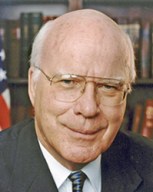
    Leahy, PatrickIn
    case it was not clear that Congress is serious about combatting the perceived
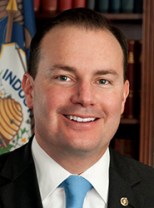
    problem of "patent trolls," Sen. Patrick Leahy (Vermont) and Sen.
    Mike Lee (Utah) published an opinion piece this week on the POLITICO.com
    website, which is now entitled "America's Patent Problem."  Both Senators are members of the Senate
    Judiciary Committee, chaired by Sen. Leahy (at right), the committee which has
    jurisdiction over patents, copyrights, and trademarks.  The article started from the premise that there
    are patent holders that are abusing the system, and that this abuse has resulted
    in a drag on the economy.  The example of
    "patent misuse" that the article highlighted is a patent holder that
    insists that Wi-Fi routers infringe its patents.  Sen. Leahy and Sen. Lee (below) took the position
    that, even if this patent holder's infringement allegations are legitimate, it
    should only be allowed to sue the companies that make and sell the routers, not
    the small businesses that are using these routers.  But, the small business examples to which the
    authors pointed included "hotels or small coffee shops" — entities
    which others have referred to as "end-users" of the technology.  It is hard to believe, though, that these
    small businesses are using these routers for non-commercial purposes.  Even if the "hotels and coffee shops"
    don't charge their customers for the use of the Wi-Fi, it is almost certain
    that they seek to attract customers with the service.  More importantly, a patent holder's rights
    are not limited to preventing the making and selling of a patented
    product.  Instead, 35
    Lee, MikeU.S.C. § 271(a)
    provides that "whoever without authority makes, uses, offers to
    sell, or sells any patented invention, within the United States or imports into
    the United States any patented invention during the term of the patent
    therefor, infringes the patent" (emphasis added).  Thus, it is unclear what the justification is
    for excluding such "end-users" in this case, especially when the "end-users"
    is more likely than not using this technology for commercial purposes.  The Senators did not provide an answer.

    To
    be fair, we are not taking any position on the merits of the case to which this
    example refers.  Indeed, the Senators
    themselves did not provide any specifics; for example, no parties or patent
    numbers are cited.  Instead, Senators Leahy
    and Lee focused on the fact that certain patent holders are targeting small
    businesses for the sole reason that the cost of settling can be far less than
    defending against a lawsuit.  This may be
    true.  However, it is difficult to
    distinguish between such alleged tactics and the licensing efforts of "legitimate
    patent holders."  Instead, the
    authors concluded (without much explanation) that "this misuse of the
    patent system" does not belong to "the patent system provided for in
    our Constitution."

    Dudas, JonBut
    is this true?  Not if an article that
    appeared on the Forbes website on Tuesday is to be believed.  Former undersecretary of commerce and
    director of the U.S Patent and Trademark Office Jon Dudas (at right), and author of the
    book "Rembrandts in the Attic," David Kline, wrote a piece entitled "Thank
    the Founding Fathers for the Open Market in Patents
    ."  Contrary to the sentiment expressed by
    Senators Leahy and Lee, and almost every report in the mainstream press, Mr.
    Dudas and Mr. Kline (below) explained that the founding fathers not only anticipated
    non-practicing entities, they encouraged them.  Of course, these are the same founding fathers that provided for a
    patent system in the Constitution, and helped to draft that first patent
    act.  The authors pointed out that the
    young American economy needed a kick-start because, at that time, "the
    U.S. had a lower standard of living than many South American countries."  The founders looked to the British patent
    system, but according to Bowdoin College historian Zorina Khan, this system had
    high fees ("11 times the per capita income of the average citizen")
    and a working requirement (they had to practice the invention).  The article continued by citing the work of
    historians Naomi Lamoreaux from Yale and the late Kenneth Sokoloff of UCLA, who
    explained that the founders wanted to design a system that would "stimulate
    the inventive genius and entrepreneurial energy of the common man," even if
    such individuals could not commercialize their own inventions.  They accomplished this by instituting fees
    much lower than in Britain, not imposing a
    Kline, Davidworking requirement, and by
    expressly allowing the sale and licensing of patent rights.  The article continued to cite the work of
    professors Lamoreaux and Sokoloff, who explained that new intermediaries (think
    non-practicing entities) "'lowered the transaction costs and improved the
    efficiency' of the trade in and commercialization of patented technology."  Mr. Dudas and Mr. Kline concluded that this
    system, which is currently embodied by universities and industry NPEs, has
    sparked many new products and businesses over years.

    Mr.
    Dudas and Mr. Kline warned, therefore, that not all non-practicing entities
    should be lumped together into the designation of "Patent Troll."  Nevertheless, this appears to be exactly what
    Congress is doing.  Senators Leahy and
    Lee explained that their committee is working "on a bipartisan basis"
    to address this so-called Patent Troll problem.  In addition, they are coordinating with the Representative Bob
    Goodlatte, chairman of the House Judiciary Committee.  The stated goal for this legislation is to "make
    it harder for bad actors to succeed, while preserving what has made America's
    patent system great."  Of course,
    that is easier said than done, and the difficulty is narrowly crafting such
    legislation to specifically address the perceived problem without also
    ensnaring all of the so-call "legitimate patent holders," or without introducing
    unexpected negative consequences for the patent system as a whole.  Some of the suggested legislation includes
    increasing transparency of patent ownership, protecting the end-users when the
    manufacturers should be the real defendants, and improving the process for
    reviewing patents at the Patent Office (although it is unclear why Sen. Leahy
    did not mention the post-issuance review procedures of the Leahy-Smith America
    Invents Act in his article).  We have
    previously reported on some of the proposed legislation, and we will continue
    monitor and report on the activity of Congress.  It is likely that with so much momentum and apparent public support, there
    will probably be some sort of bill passed in the next year or so.  We can only hope that in doing so, Congress
    does not toss out the proverbial baby with the bathwater.

    For additional information regarding this and other related topics, please see:

    • "The GAO Issues a Report on Patent Litigation Trends — It Turns Out that the Sky Is Not Falling," August 29, 2013
    • "New Patent Litigation Bill Introduced in House," July 16, 2013
    • "Congress Continues Efforts to "Reform" U.S. Patent Law," June 10, 2013
    • ""When the Patent System is Attacked!" — The White House Task Force on High-Tech Patent Issues," June 4, 2013
    • "The More the Merrier: The Journal Joins the Times in Complaining about Patents," April 20, 2011
    • "In Defense of Patents (And Even Their "Trolls")," Fenruary 21, 2007

  • By Donald Zuhn

    USPTO Implements PPH 2.0 Programs
    with NRIP and DKPTO

    PPH LogoOn September 12, the U.S.
    Patent and Trademark Office announced
    the implementation of a Patent Prosecution Highway (PPH) 2.0 program with the
    Nicaraguan Registry of Intellectual Property (NRIP).  On May 1, the USPTO also announced
    the implementation of a PPH 2.0 program with the Danish Patent and Trademark
    Office (DKPTO).  The implementation of
    the PPH 2.0 programs with the NRIP, which commenced on September 5, 2013 and
    will run indefinitely, and the DKPTO, which commenced on June 3, 2013 and will
    run indefinitely, brings the number of PPH 2.0 participating offices to fifteen,
    including the USPTO, Canadian Intellectual Property Office (CIPO), Danish
    Patent and Trademark Office (DKPTO), European Patent Office (EPO), German
    Patent and Trade Mark Office (DPMA), Japan Patent Office (JPO), Intellectual
    Property Office of the Philippines (IPOPHL), IP Australia (IPAU), Korean
    Intellectual Property Office (KIPO), National Board of Patents and Registration
    of Finland (NBPR), Portugal National Institute of Industrial Property
    (INPI-PT), Federal Service on Intellectual Property, Patents & Trademarks
    of Russia (ROSPATENT), Spanish Patent and Trademark Office (SPTO), and United
    Kingdom Intellectual Property Office (UKIPO).

    In order to participate in
    any of the PPH 2.0 programs in the USPTO, applicants must satisfy the following
    requirements:

    1.  One of the other
    PPH 2.0 participating offices has determined that at least one claim is
    allowable/patentable (under the PPH 2.0 program, applicants no longer need to submit
    a copy of the allowed claim or any English translation thereof).

    2.  The application
    before the PPH 2.0 participating office (i.e.,
    containing the allowable/patentable claim) and the U.S. application for which
    participation in the PPH 2.0 program is being requested must have the same
    priority/filing date.

    3.  All claims on
    file, as originally filed, or as amended in the U.S. application must
    sufficiently correspond to one or more of the claims indicated as allowable in
    the application filed in the PPH 2.0 participating office (the USPTO notice
    states that "[a] claim is considered to 'sufficiently correspond' where,
    accounting for differences due to translations and claim format, the claim in
    the U.S. application is of the same or similar scope as a claim indicated as
    allowable in the application filed in the PPH 2.0 participating
    office").  Under the PPH 2.0 program, applicants must submit a claims
    correspondence table (in English), indicating how all the claims in the U.S.
    application correspond to the allowable/patentable claims in the application
    filed in the PPH 2.0 participating office.

    4.  Examination of the
    U.S. application for which participation in the PPH 2.0 program is being
    requested has not yet begun.

    5.  The applicant has
    filed a request to participate in the PPH 2.0 program.

    6.  The applicant must
    submit a copy of the office action issued just prior to the "Decision to
    Grant a Patent" (along with an English translation, which may be a machine
    translation) for the application before the PPH 2.0 participating office (under
    the PPH 2.0 program, applicants no longer need to submit a statement that the
    English translation is accurate).

    7.  The applicant must
    submit an information disclosure statement listing all documents cited in the
    office action of the PPH 2.0 participating office.

    8.  All of the
    documents described above must be filed via the EFS-Web and indexed using the
    document description:  "Petition to make special under Patent Pros
    Hwy."

    Additional information
    regarding the PPH 2.0 program with NRIP can be found here.


    USPTO Continues PPH Programs
    with IPOCZ, ILPO, and PRV

    IPOCZOn September 11, the U.S.
    Patent and Trademark Office announced
    the continuation of a patent prosecution highway (PPH) pilot program and a PPH
    pilot program based on Patent Cooperation Treaty (PCT) work products (PCT-PPH) with
    the Industrial Property Office of the Czech Republic (IPOCZ).  The USPTO-IPOCZ PPH permits an applicant
    having an application whose claims have been allowed in the IPOCZ to fast track
    the examination of an application in the USPTO, such that the latter
    application is examined out of turn.  In particular, an applicant
    receiving a ruling from the IPOCZ that at least one claim in an application is
    patentable may request that the USPTO fast track the examination of
    corresponding claims in the corresponding application in that office.  Under the PCT-PPH pilot program, an applicant
    receiving a written opinion or international preliminary examination report in
    a PCT application that indicates at least one claim in the PCT application has
    novelty, inventive step, and industrial applicability, where the USPTO was the
    International Searching Authority or the International Preliminary Examining
    Authority, may request that the IPOCZ fast track the examination of
    corresponding claims in an application filed with the IPOCZ.  Both pilot
    programs have been extended indefinitely.

    ILPOOn August 1, the USPTO
    announced the
    continuation of a PCT-PPH pilot program with the Israel Patent Office (ILPO).  On June 1, the USPTO also announced
    the continuation of a PCT-PPH pilot program with the Swedish Patent and
    Registration Office (PRV).  Both PCT-PPH pilot
    programs have been extended indefinitely.

    PRVThe USPTO currently has twenty-five
    PPH programs (full or pilot) in place with IP Australia (IP AU), the Austrian
    Patent Office (APO), the Canadian Intellectual Property Office (CIPO), China's
    State Intellectual Property Office (SIPO), the Colombian Superintendence of
    Industry and Commerce (SIC), the Industrial Property Office of the Czech
    Republic (IPOCZ), the Danish Patent and Trademark Office (DKPTO), the European
    Patent Office (EPO), the National Board of Patents and Registration of Finland
    (NBPR), the German Patent and Trade Mark Office (DPMA), the Hungarian Intellectual
    Property Office (HIPO), the Icelandic Patent Office (IPO), the Israel Patent
    Office (ILPO), the Japan Patent Office (JPO), the Korean Intellectual Property
    Office (KIPO), the Mexican Institute of Industrial Property (IMPI), the
    Nicaraguan Registry of Intellectual Property (NRIP), the Norwegian Industrial
    Property Office (NIPO), the Intellectual Property Office of the Philippines
    (IPOPHL), the Portugal National Institute of Industrial Property (INPI-PT), the
    Russian Federal Service for Intellectual Property, Patents and Trademarks
    (ROSPATENT), the Intellectual Property Office of Singapore (IPOS), the Spanish
    Patent and Trademark Office (SPTO), the Taiwan Intellectual Property Office
    (TIPO), and the United Kingdom Intellectual Property Office (UK IPO).  The
    USPTO has also established thirteen PCT-PPH programs with other patent
    offices:  IP AU, APO, CIPO, SIPO, IPOCZ, EPO, NBPR, ILPO, JPO, KIPO, the
    Nordic Patent Institute (NPI), ROSPATENT, SPTO, and the Swedish Patent and
    Registration Office (PRV).  Additional information regarding the various
    PPH and PCT-PPH programs, as well as links to the appropriate request forms to
    be used for each program, can be found here.


    USPTO Implements PCT-PPH
    with CIPO

    CIPOOn May 17, the U.S. Patent
    and Trademark Office announced that it
    was establishing a PCT-PPH pilot program with the Canadian Intellectual
    Property Office (CIPO).  Under the new pilot program, which went into
    effect on January 31, an applicant receiving a written opinion or international
    preliminary examination report in a PCT application that indicates at least one
    claim in the PCT application has novelty, inventive step, and industrial applicability,
    where the USPTO or CIPO was the International Searching Authority or the
    International Preliminary Examining Authority, may request that the other
    office fast track the examination of corresponding claims in an application
    filed with that office.  The USPTO- CIPO PCT-PPH pilot program is scheduled
    to expire on January 30, 2015, but may be extended if necessary to adequately
    assess the feasibility of the program.


    USPTO Establishes Permanent
    PCT-PPH Program with NBPR

    NBPR (Finland) SealEarlier this year, the U.S.
    Patent and Trademark Office announced
    that it was establishing a permanent PCT-PPH program with the National Board of
    Patents and Registration of Finland (NBPR), effective as of January 24, 2013.  In making the announcement, the USPTO noted
    that "[t]he results of the PCT-PPH pilot program showed that applicants
    have been able to expeditiously obtain a patent at an early stage by utilizing
    petition to make special procedures, based on claims in a corresponding PCT
    application that were found to have novelty, inventive step, and industrial
    applicability by either the USPTO or the NBPR acting as the International
    Searching Authority (ISA) or International Preliminary Examining Authority
    (IPEA)," adding that "[t]he results of the PCT-PPH pilot program
    further show that the USPTO and the NBPR have been able to reduce duplication
    of search efforts by exploiting the search and examination results in PCT
    applications to the maximum extent practicable."