• By Michael Borella

    Tesla MotorsOn June 12, Tesla CEO Elon Musk announced that the company "will not initiate patent lawsuits against anyone who, in good faith, wants to use our technology."  This move was hailed by some as a win for those who support reform of an allegedly broken patent system.


    But the truth is more complicated.

    Tesla is not dedicating its patents to the public.  Instead, Tesla appears to be promising not to sue potential infringers of its patents so long as those parties maintain "good faith."  Tesla's press release does not define what Mr. Musk means by good faith, nor does it set forth any licensing procedures for a party wanting to use Tesla's patented technology.  Consequently, should a competitor sue Tesla for infringement, Tesla has probably maintained the ability to assert its patents in a countersuit.  Perhaps of more concern is what happens if Tesla sells its patents.  Are good faith users then subject to lawsuits?

    Further, Mr. Musk announced on a later conference call that the company will continue to pursue patents and put them "into what is essentially an open source category."  So Tesla is not exiting the patent game, just employing a different strategy.

    It is not uncommon for holders of a proprietary technology to share it with competitors in order to grow a market.  Many standards bodies exist for such a purpose, and require that participants license their standards-essential patents on a fair and non-discriminatory basis.

    Tesla has found itself in a difficult situation.  While it holds about 42% of the electric car market, that segment is less than 1% of the overall vehicle market.  In order for Tesla to grow and become more successful, the adoption of electric cars needs to be more widespread.  For instance, if Tesla ends up holding 20% of an electric car market that is 10% of the overall vehicle market, its effective market share will have roughly quintupled.

    And Tesla does need electric car technology to become mainstream in order to succeed.  Its flagship Model S starts at $69,900, well above what the vast majority of car owners worldwide can afford.  One of Tesla's stated goals is to sell a $30,000 electric car.  But to do so it requires a worldwide ecosystem of parts suppliers, mechanics, charging stations, and other partners.  Tesla needs economies of scale, especially for its battery technology, which is a significant portion of the cost of a Model S.  Allowing others a limited dip into its patent portfolio will help make this a reality.

    As an ostensible reason for Tesla's move, Musk claimed that patents "serve merely to stifle progress, entrench the positions of giant corporations and enrich those in the legal profession, rather than the actual inventors."  He did not address, however, why the technology industry as a whole continues to grow, as evidenced by recent record-breaking stock values, billion-dollar acquisitions, and successful initial public offerings, despite this purported stifling of progress.

    There is no doubting the brilliance and leadership of Mr. Musk, who is also the founder of Paypal and Space X.  Casting the policy change as an indictment of the patent system has been lauded by the technology industry media and their mainstream counterparts.  But Musk's proclamation is also a savvy business move, well-calculated to help Tesla grow its business.  Any benefit to other companies is a side-effect.

  •         By Sherri Oslick

    Gavel About Court Report:  Each week we will report briefly on recently filed biotech and pharma cases.

    Glenmark Generics Ltd. et al. v. Ferring, B.V.
    3:14-cv-00422; filed June 9, 2014 in the Eastern District of Virginia

    • Plaintiffs:  Glenmark Generics Ltd.; Glenmark Generics Inc., USA
    • Defendant:  Ferring, B.V.

    Declaratory judgment of unenforceability of U.S. Patent No. 7,022,340 ("Pharmaceutical Composition as Solid Dosage Form and Method for Manufacturing Thereof," issued April 4, 2006) in conjunction with Glenmark's Paragraph IV certification as part of its filing of an ANDA to manufacture a generic version of Sanofi-Aventis' DDAVP® Tablets (desmopressin acetate, used as antidiuretic replacement therapy in the management of central diabetes insipidus and for the management of the temporary polyuria and polydipsia following head trauma or surgery in the pituitary region).  View the complaint here.

    Gilead Sciences, Inc. et al. v. Mylan Inc. et al.
    1:14-cv-00099; filed June 9, 2014 in the Northern District of West Virginia

    • Plaintiffs:  Gilead Sciences, Inc.; Emory University
    • Defendants:  Mylan Inc.; Mylan Pharmaceuticals Inc.

    Gilead Sciences, Inc. et al. v. Mylan Inc. et al.
    1:14-cv-03928; filed June 2, 2014 in the Southern District of New York

    • Plaintiffs:  Gilead Sciences, Inc.; Emory University
    • Defendants:  Mylan Inc.; Mylan Pharmaceuticals Inc.

    The complaints in these cases are substantially identical.  Infringement of U.S. Patent Nos. 6,642,245 ("Antiviral Activity and Resolution of 2-Hydroxymethyl-5-(5-fluorocytosin-1-yl)-l,3-oxathiolane," issued November 4, 2003), 6,703,396 ("Method of Resolution and Antiviral Activity of 1,3-Oxathiolane Nucleoside Enantiomers," issued March 9, 2004), and 8,592,397 ("Compositions and Methods for Combination Antiviral Therapy," issued November 26, 2013) following a Paragraph IV certification as part of Mylan's filing of an ANDA to manufacture a generic version of Gilead's Truvada® (emtricitabine and tenofovir disoproxil fumarate, used for the treatment of HIV-1 infection in adults).  View the SDNY complaint here.

    Warner Chilcott Co. et al. v. Amneal Pharmaceuticals LLC et al.
    1:14-cv-00718; filed June 6, 2014 in the District Court of Delaware

    • Plaintiffs:  Warner Chilcott Co. LLC; Warner Chilcott (US) LLC
    • Defendants:  Amneal Pharmaceuticals LLC; Amneal Pharmaceuticals of New York LLC

    Infringement of U.S. Patent No. 6,106,864 ("Pharmaceutical Formulations Containing Darifenacin," issued August 22, 2000) following a Paragraph IV certification as part of Amneal's filing of an ANDA to manufacture a generic version of Warner Chilcott's Enablex® (darifenacin, used to treat symptoms of overactive bladder).  View the California Anchen Pharmaceuticals complaint here.

    Warner Chilcott Co. v. Lupin Atlantis Holdings SA et al.
    1:14-cv-01827; filed June 6, 2014 in the District Court of Maryland

    • Plaintiff:  Warner Chilcott Co., LLC
    • Defendants:  Lupin Atlantis Holdings SA; Lupin Ltd.; Lupin Pharmaceuticals, Inc.

    Infringement of U.S. Patent No. 6,667,050 ("Chewable Oral Contraceptive," issued December 23, 2003) following a Paragraph IV certification as part of Lupin's filing of an ANDA to manufacture a generic version of Warner Chilcott's Minastrin® 24 Fe (ethinyl estradiol and norethindrone acetate, used for oral contraception).  View the complaint here.


    Cipher Pharmaceuticals Inc. et al. v. Actavis Laboratories FL, Inc. et al.
    1:14-cv-03653; filed June 6, 2014 in the District Court of New Jersey

    • Plaintiffs:  Cipher Pharmaceuticals Inc.; Galephar Pharmaceutical Research, Inc.; Ranbaxy, Inc.; Ranbaxy Pharmaceuticals, Inc.
    • Defendants:  Actavis Laboratories FL, Inc.; Andrx Corp.; Actavis, Inc.; Actavis Pharma, Inc.

    Infringement of U.S. Patent No. 7,435,427 ("Pharmaceutical Semi-Solid Composition of Isotretinoin," issued October 14, 2008) following a Paragraph IV certification as part of Actavis' filing of an ANDA to manufacture a generic version of Ranbaxy's Absorica® (isotretinoin, used for the treatment of severe recalcitrant nodular acne).  View the complaint here.


    Amarin Pharma, Inc. et al. v. Teva Pharmaceuticals USA, Inc.
    2:14-cv-03251; filed June 6, 2014 in the Eastern District of Pennsylvania

    • Plaintiffs:  Amarin Pharma, Inc.; Amarin Pharmaceuticals Ireland Ltd.
    • Defendant:  Teva Pharmaceuticals USA, Inc.

    Infringement of U.S. Patent Nos. 8,293,728 ("Methods of Treating Hypertriglyceridemia," issued October 23, 2012), 8,318,715 (same title, issued November 27, 2012), 8,357,677 (same title, issued January 22, 2013), 8,367,652 (same title, issued February 5, 2013), 8,377,920 (same title, issued February 19, 2013), 8,399,446 (same title, issued March 19, 2013), 8,415,335 (same title, issued April 9, 2013), 8,426,399 (same title, issued April 23, 2013), 8,431,560 (same title, issued April 30, 2013), 8,440,650 (same title, issued May 14, 2013), 8,501,225 ("Stable Pharmaceutical Composition and Methods of Using Same," issued August 6, 2013), 8,518,929 ("Methods of Treating Hypertriglyceridemia," issued August 27, 2013), 8,524,698 (same title, issued September 3, 2013), 8,546,372 (same title, issued October 1, 2013), 8,551,521 ("Stable Pharmaceutical Composition and Methods of Using Same," issued October 8, 2013), and 8,617,594 (same title, issued December 31, 2013) following a Paragraph IV certification as part of Teva's filing of an ANDA to manufacture a generic version of Amarin's Vascepa® (icosapent ethyl, used as an adjunct to diet to reduce triglyceride levels in adult patients with severe hypertriglyceridemia).  View the complaint here.


    Teva Women's Health et al. v. Lupin Ltd.
    1:14-cv-04055; filed June 4, 2014 in the Southern District of New York

    • Plaintiffs:  Teva Women's Health; Teva Branded Pharmaceutical Products R & D, Inc.
    • Defendant:  Lupin Ltd.; Lupin Pharmaceuticals, Inc.

    Infringement of U.S. Patent Nos. 8,415,332 ("Methods of Hormonal Treatment Utilizing Ascending-Dose Extended Cycle Regimens," issued April 9, 2013) and 8,450,299 (same title, issued May 28, 2013) following a Paragraph IV certification as part of Lupin's filing of an ANDA to manufacture a generic version of Teva's Quartette® (levonorgestrel/ethinyl estradiol and ethinyl estradiol, used for oral contraception).  View the complaint here.  [NB: The complaint was voluntarily dismissed 6 days after it was filed.]

  • CalendarJune 16, 2014 – "Limelight Networks, Inc. v. Akamai Technologies, Inc. — Implications of the Landmark Patent Decision" (Law Seminars International) – 2:00 to 3:00 pm (Eastern).

    June 17, 2014 – "Indefiniteness after In re Packard and Nautilus" (Intellectual Property Owners Association) – 2:00 to 3:00 pm (ET)

    June 18, 2014 – "Reviewing Fact Issues of Claim Construction — Will the Supreme Court Defer to Federal Circuit Precedent?" (ABA Roundtable) – Palo Alto, CA/Silicon Valley & Richmond, VA

    June 19, 2014 – "Double Patenting: Defeating Double Patenting Rejections and Avoiding Terminal Disclaimer" (Strafford) – 1:00 to 2:30 pm (EDT)

    June 23-26, 2014 – BIO International Convention (Biotechnology Industry Organization) – San Diego, CA

    June 25-26, 2014 – International Forum on Pharma Patent Extensions*** (C5) – London, England

    June 30, 2014 – "Drafting Patent Claims After In re Packard: Navigating the New PTO Regime for Evaluating Indefiniteness" (Strafford) – 1:00 to 2:30 pm (EDT)

    July 9, 2014 – "Nautilus and Limelight: The Supreme Court Keeps Chipping Away at Patentees" (McDonnell Boehnen Hulbert & Berghoff LLP) – 10:00 to 11:15 am (CT)

    July 9-11, 2014 – Fundamentals of Patent Prosecution 2014: A Boot Camp for Claim Drafting & Amendment Writing (Practising Law Institute) – San Francisco, CA

    July 20-22, 2014 – 2014 Annual Meeting & Conference (National Association of Patent Practitioners) – Alexandria, Virginia.

    August 13-15, 2014 – Advanced Patent Law Seminars (Chisum Patent Academy) - Seattle, WA

    August 18-20, 2014 – Advanced Patent Law Seminars (Chisum Patent Academy) - Seattle, WA

    ***Patent Docs is a media partner of this conference or CLE

  • IPO #2The Intellectual Property Owners Association (IPO) will offer a one-hour webinar on "Indefiniteness after In re Packard and Nautilus" on June 17, 2014 beginning at 2:00 pm (ET).  A panel consisting of Prof. Dennis Crouch of the University of Missouri School of Law; Stephen Maebius of Foley & Lardner LLP, and Micky Minhas of Microsoft Corp. will help practitioners understand the bottom line for patent practice of this spring's two important appellate decisions addressing the standard for indefiniteness under § 112.

    The registration fee for the webinar is $130 (government and academic rates are available upon request).  Those interested in registering for the webinar can do so here.

  • LSI - Law Seminars International - blueLaw Seminars International (LSI) will be offering a one-hour telebriefing on "Limelight Networks, Inc. v. Akamai Technologies, Inc. — Implications of the Landmark Patent Decision" on June 16, 2014 from 2:00 to 3:00 pm (Eastern).  Scott M. Alter of Faegre Baker Daniels LLP will moderate a panel that includes David M. Rosenblatt, Assistant General Counsel/Intellectual Property, Thomson Reuters Corporation; and Aaron D. Van Oort of Faegre Baker Daniels LLP.  The panel will analyze the decision in Limelight, provide advice for companies on induced infringement scenarios that have (and have not) been impacted by the decision, consider the potential fate of current law regarding joint infringement.

    A Q&A will follow the presentation and last for up to 30 minutes.

    The registration fee is $150 per caller and $100 for each additional person on the same line who desires continuing education credit.  Those interested in registering for the telebriefing, can do so here.

  • Whither the Meaning of "a" as a Claim Term

        By Kevin E. Noonan

    Every once in a while a Federal Circuit panel construes a common claim term contrary to how it has been construed in prior precedent, usually based on the particular situation or circumstance the Court is addressing and consistent with the scope and meaning of the claim as supported by the claim term's plain meaning, use in the specification, and prosecution history.  And as a consequence, commentators, pundits, and CLE providers create a flurry of activity surrounding whether there is now a new rubric of patent claim construction thus created (along with dire warnings that only if patent practitioners adhere to the recommendations arising from this "new" precedent can valid claims be acquired).  Such an instance has arisen in the Court's Braintree Labs v. Novel Labs case, involving the meaning of the shortest claim limitation, the indefinite article "a."

    Braintree LaboratoriesThis is an ANDA case relating to the product SUPREP® Bowel Prep Kit, a colonic purgative used in preparation for colonoscopies or other procedures requiring a clean inner lumen of the colon.  This product is a combination of magnesium sulfate, potassium sulfate, and sodium sulfate, and has as an advantage over prior art products that it can be administered in relatively small amounts (100-500 mL) but does not cause severe shifts in electrolyte levels, which in prior art products had produced "heart failure, kidney failure, neurological impairment, and even death."  Claim 15 of U.S. Patent No. 6,946,149 is representative:

    A composition for inducing purgation of the colon of a patient, the composition comprising from about 100 mL to about 500 mL of an aqueous hypertonic solution comprising an effective amount of Na2SO4, an effective amount of Mg SO4, and an effective amount of K2SO4, wherein the composition does not produce any clinically significant electrolyte shifts and does not include phosphate. (Italics in original, indicating claim terms construed by the District Court.)

    The District Court construed certain claim terms, granted summary judgment of infringement against ANDA filer Novel Labs, and held that the claims were not invalid for indefiniteness, anticipation, or obviousness over certain prior art.

    Novel LaboratoriesThe Federal Circuit affirmed in part, reversed in part, vacated in part, and remanded, in an opinion by (now Chief) Judge Prost, joined in part by Judges Dyk, who filed an opinion dissenting in part to a portion of the majority opinion; Judge Moore dissented.  The opinion affirmed construction of the term "purgation" to mean less than complete colonic cleansing using 100-500mL of the composition (the kit contained 473 mL bottles that were diluted before use; it was uncontested that both bottles were needed for complete cleansing).  The opinion held the District Court's construction of the term "clinically significant electrolyte shifts" was incorrect by including "other untoward effects" along with "alterations in blood chemistry that are outside the normal upper or lower limits of their normal range or other untoward effects."  Rather, the opinion adopted a construction that limited the claim to mean ""alterations in blood chemistry that are outside the normal upper or lower limits of their normal range or other untoward effects."  This change did not alter the correctness of the District Court's determination regarding Novel's failure to establish invalidity on anticipation, obviousness, or indefiniteness grounds, however.

    The third construed claim term, the meaning of "a patient," did require the panel to vacate the lower court's grant of summary judgment of infringement to the patentee however.  First, the District Court imported the term "a patient" (words contained in the preamble) into their construction of the "clinically significant electrolyte shifts" term and application of the construed claims to the accused infringing article.  In its application of the claim term the District Court held that the term requires that "clinically significant electrolyte shifts" had been experienced by at least one patient, adopting the conventional construction for the word "a" as meaning "one or more."  This construction was incorrect, according to the majority opinion (which Judge Moore did not join) because it would permit the accused infringer to be charged with infringement liability "even if 99 patients out of 100 experienced clinically significant electrolyte shifts, as long as one patient did not."  In addition to the illogic of such a conclusion, the majority found support in the language of the specification and the claims, from which the panel majority concluded that the term must mean "the general class of persons to whom the patented compositions are directed, i.e., a patient population" (relying, inter alia, on language from the specification that the "objective was to find a well tolerated orally administered colonic purgative that . . . avoided the risks of upset or electrolyte balance in patients" (emphasis in opinion)).  Because there was evidence of record that some individuals actually experienced "clinically significant electrolyte shifts," the panel vacated and remanded to the District Court for "further factual findings" on this issue.

    Judge Moore dissented based on this construction of the word "a" as it modifies the word "patient" in the claims.  According to her dissent, Judge Moore believes that the plain meaning of the word must be "one or more than one" and that the majority was in error in construing the term to exclude "one" patient.  She cited precedent for this position, including 01 Communique Lab., Inc. v. LogMeIn, Inc., 687 F.3d 1292, 1297 (Fed. Cir. 2012); SanDisk Corp. v. Kingston Tech. Co., Inc., 695 F.3d 1348, 1360–61; Baldwin Graphic Sys., Inc. v. Siebert, Inc., 512 F.3d 1338, 1342 (Fed. Cir. 2008); Tivo, Inc. v. EchoStar Commc'ns Corp., 516 F.3d 1290, 1303–04 (Fed. Cir. 2008); and Insituform Techs., Inc. v. Cat Contracting, Inc., 99 F.3d 1098, 1105–06 (Fed. Cir. 1996) that "a" means "one or more than one" absent inventor lexicography or express disclaimer of scope, citing Thorner v. Sony Computer Entm't Am. LLC, 669 F.3d 1362, 1365 (Fed. Cir. 2012).  She also found far less express use of the term "patient" solely in the plural in the specification or prosecution; indeed, her dissent cited several instances where the patentee used the singular ("a patient" or "a recipient") instead of the plural in this regard.  Judge Moore disregarded the majority's concern with their hypothetical that the construction she advanced would find infringement if "99 out of 100 patients experienced clinically significant electrolyte shifts," which her opinion dismissed as being "a question of damages, not infringement," citing precedent to the effect that sporadic or "rare" infringement does not purge infringement but rather lowers the amount of damages for the infringement.  In the context of ANDA litigation, Judge Moore realized that her interpretation could lead to the unpalatable consequence that a formulation that only avoids "clinically significant electrolyte shifts" in as little as one patient would be infringing and subject to the "de facto injunction" provided by the Hatch-Waxman Act.

    Aberrant constructions of the word "a" have arisen before in the Federal Circuit's jurisprudence, including the case of Abtox v. Exitron (Fed. Cir. 1997).  In that case, the question was whether a claim reciting "a metallic gas-confining chamber" in claim 3 of U.S. Patent No. 4,931,261 encompassed embodiments comprising a second chamber:

    Apparatus for sterilization of medical devices and materials in a gas plasma comprising
            a metallic gas-confining chamber having a non-metallic portion,
            a microwave energy source including a microwave cavity positioned to couple microwave energy into said chamber through said non-metallic portion, and
            means for holding said medical devices and materials to be sterilized within said chamber volume and away from said microwave cavity, and including a perforated electrical shielding member positioned within said chamber and in close proximity to said microwave energy source to provide a portion of the internal volume of said chamber shielded from and away from said microwave energy providing a field free zone containing said devices and materials.

    In that case, the Federal Circuit held, in an opinion by Judge Rader, joined by Judges Mayer and Michel, that the term "a metallic gas-confining chamber" did not encompass a device having separate chambers for the medical devices to be sterilized and the source of neutral particle plasma.  The Court based its unanimous decision on the language of the examples and drawings contained in the specification, which showed that embodiments of the claimed device comprising microwave excitation of a gas to produce plasma only comprised a single chamber and thus the word "a" did not have its ordinary meaning of "one or more."  The absence of express disclaimer (because this interpretation clearly relied on inference) or lexicography led some to opine that the Court had altered its traditional interpretation of the term, and resulted in (perhaps felicitously) more precise definitions in patent specifications where the term "a" was intended to mean one or more."

    The exclusion of "one" from the construction of the word "a" in the Braintree case has likewise raised concerns, in this case for the Biotechnology Industry Organization (BIO) and the Pharmaceutical Researcher and Manufacturers of America (PhRMA), who have filed an amicus brief urging the Federal Circuit to rehear the issue (by the panel or en banc).  According to their brief, the panel majority's construction "creates a conflict with [prior] precedent," "ignores basic science [in its rationale}," and "upset settled expectations [that] under[lie] enormous investment."  The brief recites the same cases cited by Judge Moore in her dissent and more, and asserts that by not addressing Judge Moore's arguments the panel majority "provided no guidance for determining when its new rule of construction will apply" or provided "any other apparent limit on how far the majority's new rule extends" (and then recited the many other articles that could fall within this purportedly new rule of construction).  The brief rebuts the "absurdity" rationale proffered by the majority by noting that "not all drugs work for all people," exemplifying this statement with the success or lack thereof of the combination of caffeine, aspirin, and acetaminophen at alleviating migraines (which is not effective for all migraine sufferers).  The brief foresees additional needs for litigation in many other patent cases to determine infringement under circumstance where a substantial proportion of a "population" would not respond to a drug (noting classes of drugs, such as anticancer drugs for which there are a significant proportion of patient populations who are non-responders).  Finally, the brief expounds on the "unsettled expectations" produced (in its members and otherwise) by the Court's decision in this case.

    Whether or not this case is reviewed by the panel, the full Federal Circuit Court of Appeals, or even the Supreme Court, its claim construction decision once again illustrates the difficulties inherent in deciding the scope and meaning of claim terms in view of each patent's unique specification and prosecution history.  Perhaps that is the lesson for these "outlier" claims:  that there are no absolutes in claim construction upon which the patent drafter can rely, and each claim should be scrutinized during prosecution and drafting with a view that a court may at some later date need to determine what the claims were intended to exclude.  Which is not such a bad way to craft or prosecute patent claims.

    Braintree Laboratories, Inc. v. Novel Laboratories, Inc. (Fed. Cir. 2014)
    Panel: Circuit Judges Dyk, Prost, and Moore
    Opinion for the court by Circuit Judge Prost; opinion concurring in part, dissenting in part, and concurring in the result by Circuit Judge Dyk; dissenting opinion by Circuit Judge Moore

  • [Ed. On May 9, the U.S. Patent and Trademark Office held a four-hour long forum to receive public feedback on the Myriad-Mayo Guidance, which was issued by the Office on March 4.  According to the Office's Guidance webpage, the forum was intended to provide an opportunity for stakeholders to present their interpretation of the impact of Supreme Court precedent on the complex legal and technical issues involved in subject matter eligibility analyses during patent examination.  Our coverage of the forum can be found here.  Dr. Anthony D. Sabatelli of Dilworth IP LLC, who appeared in the forum's first group of presenters, allowed Patent Docs to republish the following article on the forum.]

    By Anthony D. Sabatelli* —

    USPTO Building FacadeIt has now been a week since the U.S. Patent and Trademark Office held its public forum on the March 4th Guidance For Determining Subject Matter Eligibility Of Claims Reciting Or Involving Laws of Nature, Natural Phenomena, & Natural Products (the Guidance.  I was invited to present at this Forum, where I provided comments before the USPTO on the necessity for the Guidance, how the Guidance can be improved, and also provided cautions to prevent its misapplication.  I had previously written about the Guidance in an earlier article on this site (see "How to Patent Grapefruit Juice: the New USPTO Guidance for Patent Eligible Subject Matter is Both Sticky and Sour").

    Now that the dust has settled and the press and others have been publishing their commentary, I would like to share some thoughts from the perspective as both a speaker and attendee.  According to the USPTO, there were about 80 attendees at the forum and an additional 400 hundred viewing via a live webcast.  A copy of the agenda and the presentations (including my own) are available on the USPTO's webpage devoted to the Guidance.

    USPTO Deputy Director Michelle Lee provided welcoming remarks.  Andrew Hirshfeld, Deputy Commissioner for Patent Examination Policy, provided a high level overview of the Guidance and the USPTO's rationale for issuing it.  This was followed by an in-depth review by Raul Tamayo, Senior Legal Advisor for the Office of Patent Legal Administration.  The USPTO presentations were followed by three groups of invited public presentations, including Q&A, an open public forum period, and closing remarks by Commissioner Hirshfeld.  I presented during the first group of the invited presentations.  The entire program ran about four hours.

    The USPTO speakers emphasized that it was necessary to issue the Guidance as reasonably soon as possible and pointed out that this supplanted the interim memo of June 14, 2013, that was issued the day after the Myriad decision came down from the Supreme Court.  Commissioner Hirshfeld also explained that the process for informing and training the examining corps on this topic is iterative and that the work product will continue to evolve.

    Most of the commentary from the invited speakers, as well as the general public, was critical of the Guidance.  A common theme expressed was that the Guidance is not workable and is not helpful for practitioners to give advice to their clients.  In fact, several comments suggested withdrawal and there was even a point blank request from one speaker to do so.  Commissioner Hirshfeld stated that the USPTO was "unlikely to withdraw the guidelines," indicating it would "not be productive to do so."  However, he invited further comments and suggestions from the public, and pointed out that the USPTO would be accepting written comments through June 30th.

    In my presentation, one of the concerns I had raised is that the Guidance seems to be confusing the § 101 threshold inquiry of patent eligibility with the subsequent patentability determination (i.e., the determinations for § 102 novelty, § 103 obviousness, etc.).  I discussed how the Guidance factor analysis could be misapplied by bringing in these patentability determinations under the guise of the threshold § 101 inquiry.  I suggested the need for appropriate oversight, examiner training, and applicant recourse, to prevent such misapplication.  Other presenters commented that the Guidance failed to give consideration to the function of claimed subject matter by putting the emphasis solely on structural differences.  Other concerns were raised with respect to diagnostics and natural-product derived pharmaceuticals.

    It became very clear from the forum that the USPTO realized it should have sought public input on the Guidance before issuing it.  Commissioner Hirshfeld acknowledged this oversight and continues to actively seek further commentary and recommendations from the public.  I would therefore urge anyone with a strong opinion on the Guidance, whether positive or negative, to provide their written feedback to the USPTO.  Comments can be submitted via the USPTO's webpage (cited above).  The deadline for doing so is June 30, 2014.  In view of the public forum and the request for additional public comments, it is my hope the USPTO will next issue a "revised draft Guidance" for further public comment before finalizing.

    * Dr. Sabatelli is a Partner with Dilworth IP.

  • Court Upholds PTO Determination That Reissue Cannot Cure Improper Terminal Disclaimer

    By Kevin E. Noonan

    Federal Circuit SealDespite thirty years of efforts by the Federal Circuit to bring consistency and transparency to patent law (and the last dozen years of the Supreme Court's efforts to the contrary), in many respects patent law remains "full of traps for the unwary."  A recent Federal Circuit decision, affirming final rejection by the U.S. Patent and Trademark Office in a narrowing reissue application illustrates one such trap (and a particular type of unwariness).

    The case involved a reissue application filed under 35 U.S.C. § 251 for U.S. Patent No. 7,236,568, having claims directed to "[a m]iniature x-ray source with improved output stability and voltage standoff."  During the original prosecution, applicants had filed a terminal disclaimer over the claims of U.S. Patent No. 6,658,086.  As with all terminal disclaimers, the one at issue attested that the claims of the later '568 patent would be enforceable "only for and during such period" as the earlier '086 and '568 patents were co-owned.  37 C.F.R. § 1.321(c).  This provision is intended to prevent an accused infringer from being sued by separate patent owners having claims that are not patentably distinct.  (This consideration also explains why terminal disclaimer practice survives the change in patent law from the previous regime awarding a 17 year patent term for each patent to the current law, where the term of a granted patent in the U.S. is twenty years from the earliest filing date — with some not relevant exceptions.  This change voided the alternative purpose of terminal disclaimers, that is to prevent a patentee from extending the statutory patent term by obtaining claims of patentably-indistinct scope having overlapping 17-year terms.)

    The reason patentees filed the reissue application was that the two patents were not and never were co-owned.  As part of the reissue procedure, the inventors filed a "reissue declaration," purporting to set forth an "error" in the patent that made it defective and that was to be cured by reissue, said error being the filing of the terminal disclaimer (as set forth in the opinion, in this first declaration the applicants stated that they "inadvertently and without deceptive intent filed a Terminal Disclaimer over [the '086 patent], which was not commonly owned by the owners of [the '568 patent] currently at issue."  There was no offer to file a "corrected" terminal disclaimer.  This assertion was insufficient, the examiner deciding that it was "not an error upon which a reissue can be based."  In response to rejection by the examiner, applicants filed a petition with the Commissioner for Patents to permit them to replace the terminal disclaimer of record with one identical in all respects except that the replacement did not contain the provision (as noted, required by PTO regulations) that the '568 patent would be enforceable only during such time that it was commonly owned with the '086 patent.  The Office denied this petition a total of three times, each time on the grounds that the statement was required in a valid terminal disclaimer.

    In response to PTO rejection of the reissue as being unsupported by a proper declaration, applicants submitted a substitute, setting forth as the defect allowance of the '568 patent claims in the first place, due to the defective terminal disclaimer.  In their response, applicants cancelled several of the granted claims and submitted substitute claims, which were not accepted, and after additional submissions during prosecution finally submitted narrower claims amended to overcome the asserted obviousness-type double patenting grounds (as well as another attempt to file a terminal disclaimer lacking the "co-owned" language), illustrating the pitfall here:  wherein such claims in a co-pending continuation application or that had been granted in a patent defective on other grounds might have been considered; here, applicants could not satisfy the predicate grounds for permitting them to file a reissue application in the first place.  This last attempt was also unsuccessful; the examiner rejected the proffered claims on the grounds that the alleged "defect" (the terminal disclaimer) was not a proper basis for filing a reissue application.  This rejection was affirmed by the Patent Trial and Appeal Board (in a decision that emphasized the "voluntary and intentional" aspects of a terminal disclaimer filing) and appeal to the Federal Circuit followed.

    The Federal Circuit affirmed, in an opinion by Judge Taranto joined by Judges Bryson and Hughes.  Starting with the text of the statute, the opinion grounds its decision to affirm on the panel's determination that the asserted basis for error, that the terminal disclaimer was "ineffective or invalid" is "simply incorrect in the most straightforward sense," i.e., because any defect could be "cured" by having the two patents be co-owned.  The Court also found the terminal disclaimer to be valid, insofar as it contained all the required assertions and averments necessary to be given effect by the PTO to overcome the asserted obviousness-type double patenting rejection.  In addition, the terminal disclaimer fulfilled the policy objective of preventing third party accused infringers from being subject to "multiple infringement suits by different assignees asserting essentially the same patented invention," citing In re Hubbell, 709 F.3d 1140, 1145 (Fed. Cir. 2013).

    The Court identified the asserted defect in the terminal disclaimer to be that the patentees could not enforce the patent "themselves" (i.e., absent common ownership with the '086 patent) and that this was not the outcome the patentees desired to achieve.  This is, the panel says, not a basis for reissue but rather "no more than a statement of a now-regretted choice," which was not a proper ground for reissue or "error" as the statue required.  This is because the nexus between the error and the patent defect is that the specification, drawings or claims are defective (or, for the claims, unduly broad) due to the error.  While not stating that defects resulting from "applicant's choices" can never be the basis for a reissue application, the Court does assert that "not every choice that produces inoperativeness or invalidity by reason of a specification, drawing, or claiming problem (within the meaning of section 251) can qualify" but only those based on error.  Drawing on case law, the opinion states that:

    [F]or purposes of narrowing re-issue-qualifying choices to those involving "error," it is important whether deficient understandings, by the applicants or their agents, gave rise to the patenting choice that reissue is being invoked to correct.  In the authorities that the applicants here feature, false or inadequate understandings about then-existing facts or law evidently underlay the aspects of the original patent sought to be altered by reissue.

    The Court has previously held that reissue was unavailable for an applicant had not been able to identify any "deficient understanding" behind the error; "[i]n such cases, the reissue application was held inadequate as being no more than an effort to reverse a later-regretted choice made in obtaining the original patent," citing Miller v. Bridgeport Brass Co., 104 U.S. 350, 355 (1881); In re Serenkin, 479 F.3d 1359, 1364 (Fed. Cir. 2007); In re Mead, 581 F.2d 251, 257 (CCPA  1978); and In re Orita, 550 F.2d 1277, 1280 (CCPA 1977).

    Here, the Court concludes, "the applicants have not identified any deficient understanding as leading to the issuance of [the] original claims with the terminal disclaimer," and hence there was no basis under the statute for a reissue examination.  The Court characterizes the facts as showing that the applicants had the choice of amending the claims to overcome the obviousness-type double patenting rejection, or filing a terminal disclaimer.  Having chosen to do the latter, and without any showing of any misunderstanding regarding what they were doing, or any mistake with regard to the ownership status of the prior patent and their application:

    [T]he applicants — knowing that the patents were not commonly owned — intentionally surrendered a possible right (the ability to obtain all or some of the '568 patent claims in a form enforceable independently of the '086 patent) in exchange for a benefit (overcoming an obviousness-type double-patenting rejection of several of the proposed claims).

    All the patentees are trying to do here is "simply to revise a choice they have made," and, without more, this is not an "error" that the reissue statute was enacted to remedy.

    In re Dinsmore (Fed. Cir. 2014)
    Panel: Circuit Judges Taranto, Bryson, and HughesOpinion by Circuit Judge Tarnato

  • By Jon Schuchardt* —

    Nothing endures but change.    –Heraclitus
    Plus ça change, plus c'est la même chose.    –Jean-Baptiste Alphonse Karr

    Federal Circuit SealWhen I was your age, and Pluto was a planet, "obvious to try" was not the standard for evaluating patentability under 35 USC § 103.  In KSR v. Teleflex, the US Supreme Court qualified this by rejecting the Federal Circuit's "TSM" test in favor of a more flexible standard.  Thereafter, a skilled person might respond to a "design need" or "market pressure" to solve a problem having only a "finite number of predictable solutions."  Such an application of "common sense" would be unpatentable and "obvious to try."  Perhaps your patience has also worn thin in considering the possibilities?

    Recent Federal Circuit decisions continue to shape the law of obviousness and the meaning of "obvious to try."  Here are three examples:

    1.  Leo Pharmaceuticals v. Rea (Fed. Cir., August 12, 2013)

    In Leo, the CAFC reversed a Board decision that held Leo's patent obvious in an inter partes reexamination challenge.  The invention related to a psoriasis treatment that combined a Vitamin D analog, a corticosteroid, and a non-aqueous solvent (polyether, fatty alcohol, or fatty ester).  The prior art taught that Vitamin D treatments required high pH (8), while corticosteroids needed low pH (4-5).  Consequently, physicians prescribed a two-drug regimen that suffered from poor patient compliance.  In evaluating the art, the Board reasoned that the skilled person would have been able to choose what ingredients to include or exclude in formulating Vitamin D analogs and steroids.

    "To the contrary," wrote Chief Judge Rader, "the breadth of these choices and the numerous combinations indicate that these disclosures would not have rendered the claimed invention obvious to try."  Citing In re Cyclobenzaprine litigation: "where the prior art, at best gives only general guidance as to the particular form of the claimed invention or how to achieve it, relying on an obvious-to-try theory to support an obviousness finding is impermissible."  While the prior art had identified Vitamin D analogs and steroids as effective for treating psoriasis, "the same prior art gave no direction as to which of the many possible combination choices were likely to be successful."

    2.  Sanofi-Aventis v. Glenmark (Fed. Cir., April 21, 2014)

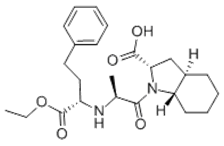
    Generic drug maker Glenmark admitted infringement at trial but argued that Sanofi-Aventis's patent (US 5,721,244) covering its Tarka® antihypertension drug (a combination of a calcium antagonist and trandalopril) was invalid under Section 103.  The structure of trandalopril includes a bicyclic octahydroindole moiety:

    Figure1
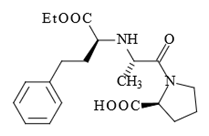
    Prior art compositions used with calcium antagonists included otherwise structurally similar single-ring pyrrolidine analogs such as enalopril:

    Figure2Glenmark urged that the district court erred as a matter of law because the combination of trandalopril and a calcium antagonist was "obvious to try."  In particular, Glenmark argued that because monocyclic inhibitors such as enalopril were known, it was obvious to try combinations of any calcium antagonist and any known ACE inhibitor, including trandalopril.

    The '244 patent described the compounds and provided exemplary formulations, but it gave no performance results or any indication of advantages of the claimed compositions compared with known alternatives.  As luck would have it, the compounds were eventually found to have advantages.

    At trial, expert witnesses (not surprisingly) disagreed about whether it would have mattered to the skilled person to have one ring or two to fill the pocket of the ACE enzyme to inhibit its activity.  The parties did not dispute that the claimed combination had longer-lasting effectiveness and improved kidney and blood vessel function that were not suggested by the prior art.

    Nonetheless, Glenmark argued that the combination was unpatentable as a matter of law, and the patent owner's later discovery or unexpected or advantageous properties could not be relied upon to demonstrate nonobviousness.  "That is incorrect," wrote Judge Newman, "patentability may consider all of the characteristics possessed by the claimed invention, whenever those characteristics become manifest."  Citing KSR, the court reminded us that "obvious to try" requires a "finite (and small in the context of the art) number of options" that are "easily traversed."

    3.  Hoffmann LaRoche v. Apotex et al. (Fed. Cir., April 11, 2014)

    The CAFC affirmed (2:1) a New Jersey district court's summary judgment ruling that patents owned by Hoffmann-La Roche covering Boniva®, its once-a-month drug for treating osteoporosis, were invalid under 35 U.S.C. § 103.  Ibandronate, a bisphosphonate, was approved by the FDA in 2005.  After generic drug manufacturers submitted ANDAs to the FDA seeking approval to manufacture ibandronate prior to expiration of the patents, Roche sued for infringement.

    Despite Roche's arguments that a once-monthly 150-mg dose of ibandronate provided an unexpected improvement in bioavailability of the drug compared with the usual 2.5-mg daily dose, the district court concluded that once-a-month dosing of ibandronate was established in the prior art, and that a combination of references suggested that the 150-mg monthly dose was "obvious to try."  The lower court ruled that Roche's bioavailability argument, which was raised for the first time at oral argument, "does not rise to the level of a mere scintilla, and it is not sufficient to defeat the motion for summary judgment."

    The Federal Circuit agreed that a monthly 150-mg dose was obvious.  It cited trade journal articles and earlier patents that described monthly dosing of bisphosphonates, including ibandronate, as a solution for poor patient compliance with daily regimens.  The court found a 2001 article by Riis on intermittent versus daily dosages persuasive.  Riis concluded that "it is the total dose over a predefined period and not the dosing regimens that is the determining factor for effect on bone mass and architecture after ibandronate treatment."  After considering Riss and references that taught to use 5 mg per day or 35 mg per week, the court concluded that a monthly 150 mg dose was at the very least "obvious to try," and there was a reasonable expectation of success in treating osteoporosis with the once-a-month 150-mg dose.  The court also dismissed Roche's argument that the art suggested adverse gastrointestinal side effects of higher doses of bisphosphonates.  While the bioavailability argument had some appeal, the majority considered it insufficient to "rebut the strong showing that the prior art disclosed monthly dosing and that there was a reason to set the dose at 150 mg."

    Judge Newman's patience was obviously "tried" because she posted a stinging dissent.  The ruling "violates the principles of Graham v. John Deere Co.  . . . (all factors must be considered) . . . violates the guidance of KSR  . . . (the standard of obvious-to-try requires a limited number of specified alternatives offering a likelihood of success in light of the prior art and common sense)" and invokes "hindsight to reconstruct the patented subject matter."  Judge Newman remarked that the FDA "refused to approve the 5 mg dose due to its toxic effects.  Surely this leads away from the obviousness of a single dose thirty times larger."  She disposed of key references and criticized the majority's reliance on the Riis study:  "Riis makes no suggestion that the once-a-month dosing at the high dosage used by Roche could replace Riis' elaborate procedure."  The evidence of long-felt need, failure of others, and commercial success provided by Roche was "unrebutted" by the challengers' experts.  "Their only argument was that it would have been "obvious to try" the Roche method.  "The extensive experimentation with other regimens and dosages demonstrates that this selection was not obvious to try."

    Predictably, in the post-KSR world, district courts struggle with what it means to be "obvious to try."  However, as the cases discussed above demonstrate, even the Federal Circuit judges still disagree about what is "obvious to try" and therefore unpatentable.  Like our definition of "planet," the law of obviousness evolves, and the only thing we can be sure of (aside from death and taxes) is that change endures.

    Dr. Schuchardt Partner with Dilworth IP.

  •         By Sherri Oslick

    Gavel About Court Report:  Each week we will report briefly on recently filed biotech and pharma cases.

    Amarin Pharma, Inc. et al v. Teva Pharmaceuticals USA, Inc.
    3:14-cv-03558; filed June 4, 2014 in the District Court of New Jersey

    • Plaintiffs:  Amarin Pharma, Inc.; Amarin Pharmaceuticals Ireland Ltd.
    • Defendant:  Teva Pharmaceuticals USA, Inc.

    Infringement of U.S. Patent Nos. 8,293,728 ("Methods of Treating Hypertriglyceridemia," issued October 23, 2012), 8,318,715 (same title, issued November 27, 2012), 8,357,677 (same title, issued January 22, 2013), 8,367,652 (same title, issued February 5, 2013), 8,377,920 (same title, issued February 19, 2013), 8,399,446 (same title, issued March 19, 2013), 8,415,335 (same title, issued April 9, 2013), 8,426,399 (same title, issued April 23, 2013), 8,431,560 (same title, issued April 30, 2013), 8,440,650 (same title, issued May 14, 2013), 8,501,225 ("Stable Pharmaceutical Composition and Methods of Using Same," issued August 6, 2013), 8,518,929 ("Methods of Treating Hypertriglyceridemia," issued August 27, 2013), 8,524,698 (same title, issued September 3, 2013), 8,546,372 (same title, issued October 1, 2013), 8,551,521 ("Stable Pharmaceutical Composition and Methods of Using Same," issued October 8, 2013), and 8,617,594 (same title, issued December 31, 2013) following a Paragraph IV certification as part of Teva's filing of an ANDA to manufacture a generic version of Amarin's Vascepa® (icosapent ethyl, used as an adjunct to diet to reduce triglyceride levels in adult patients with severe hypertriglyceridemia).  View the complaint here.

    Bristol-Myers Squibb Co. v. Aurobindo Pharma U.S.A., Inc. et al
    3:14-cv-03585; filed June 4, 2014 in the District Court of New Jersey

    • Plaintiff:  Bristol-Myers Squibb Co.
    • Defendants:  Aurobindo Pharma U.S.A., Inc.; Aurobindo Pharma Ltd.

    Infringement of U.S. Patent No. 6,087,383 ("Bisulfate Salt of HIV Protease Inhibitor," issued July 11, 2000), licensed to BMS, following a Paragraph IV certification as part of Aurobindo's filing of an ANDA to manufacture a generic version of BMS' Reyataz® (atazanavir bisulfate, used to treat HIV infection).  View the complaint here.

    Astrazeneca AB v. Apotex Corp. et al.
    0:14-cv-61309; filed June 4, 2014 in the Southern District of Florida

    • Plaintiff:  Astrazeneca AB
    • Defendants:  Apotex Corp.; Apotex, Inc.

    AstraZeneca AB v. Teva Pharmaceuticals USA Inc.
    1:14-cv-00695; filed June 2, 2014 in the District Court of Delaware

    AstraZeneca AB v. Apotex Corp et al.
    1:14-cv-00698; filed June 2, 2014 in the District Court of Delaware

    • Plaintiff:  AstraZeneca AB
    • Defendants:  Apotex Corp.; Apotex Inc.

    Astrazeneca AB v. Aurobindo Pharma Ltd. et al.
    3:14-cv-03434; filed May 24, 2014 in the District Court of New Jersey

    • Plaintiff:  Astrazeneca AB
    • Defendants:  Aurobindo Pharma Ltd.; Aurobindo Pharma U.S.A., Inc.

    Astrazeneca AB v. Watson Laboratories, Inc. et al.
    3:14-cv-03428; filed May 24, 2014 in the District Court of New Jersey

    • Plaintiff:  Astrazeneca AB
    • Defendants:  Watson Laboratories, Inc.; Actavis, Inc.; Actavis LLC

    The complaints in these cases are substantially identical.  Infringement of U.S. Patent No. 7,951,400 ("Coated Tablet Formulation and Method," issued May 31, 2011) following a Paragraph IV certification as part of defendants' filing of an ANDA to manufacture a generic version of AstraZeneca's Onglyza® (saxagliptin hydrochloride, used as an adjunct to diet and exercise to improve glycemic control in adults with type 2 diabetes mellitus).  View the Aurobindo complaint here.

    Helsinn Healthcare SA et al v. Mylan Inc. et al.
    1:14-cv-00709; filed June 4, 2014 in the District Court of Delaware

    • Plaintiffs:  Helsinn Healthcare SA; Roche Palo Alto LLC
    • Defendants:  Mylan Inc.; Mylan Institutional LLC

    Infringement of U.S. Patent Nos. 7,947,724 ("Liquid Pharmaceutical Formulations of Palonosetron," issued May 24, 2011), 7,947,725 (same title, issued May 24, 2011), 7,960,424 (same title, issued June 14, 2011), 8,598,219 (same title, issued December 3, 2013), and 8,729,094 (same title, issued May 20, 2014) following a Paragraph IV certification as part of Mylan's filing of an ANDA to manufacture a generic version of Helsinn's Aloxi® (palonosetron hydrochloride intravenous solution, used to prevent chemotherapy induced nausea and vomiting).  View the complaint here.

    AstraZeneca Pharmaceuticals LP et al v. Sandoz Inc. et al.
    3:14-cv-03547; filed June 3, 2014 in the District Court of New Jersey

    • Plaintiffs:  AstraZeneca Pharmaceuticals LP; AstraZeneca UK Ltd.; AstraZeneca AB
    • Defendants:  Sandoz Inc.; Sandoz International GmbH

    Infringement of U.S. Patent Nos. 6,774,122 ("Formulation," issued August 10, 2004), 7,456,160 (same title, issued November 25, 2008), 8,329,680 (same title, issued December 11, 2012), and 8,466,139 (same title, issued June 18, 2013) following a Paragraph IV certification as part of Sandoz's filing of an ANDA to manufacture a generic version of AstraZeneca's Faslodex® (fulvestrant injection, used to treat hormone receptor positive metastatic breast cancer in postmenopausal women with disease progression following antiestrogen therapy).  View the Sandoz complaint here.

    Astrazeneca AB v. Sun Pharma Global FZE et al.
    3:14-cv-03552; filed June 3, 2014 in the District Court of New Jersey

    • Plaintiff:  AstraZeneca AB
    • Defendants:  Sun Pharma Global FZE; Sun Pharmaceutical Industries Ltd.; Caraco Pharmaceutical Laboratories Ltd.

    AstraZeneca AB v. Mylan Pharmaceuticals Inc.
    1:14-cv-00094; filed June 3, 2014 in the Northern District of West Virginia

    The complaints in these cases are substantially identical.  Infringement of U.S. Patent Nos. RE44,186 ("Cyclopropyl-Fused Pyrrolidine-Based Inhibitors of Dipeptidyl Peptidase IV and Method," issued April 30, 2013). 7,951,400 ("Coated Tablet Formulation and Method," issued May 31, 2011), and 8,628,799 (same title, issued January 14, 2014) following a Paragraph IV certification as part of Sun's filing of ANDAs to manufacture generic versions of AstraZeneca's Onglyza® (saxagliptin hydrochloride, used as an adjunct to diet and exercise to improve glycemic control in adults with type 2 diabetes mellitus) and Kombiglyze XR (saxagliptin and metformin hydrochloride, extended-release, used as an adjunct to diet and exercise to improve glycemic control in adults with type 2 diabetes mellitus).  View the Sun complaint here.

    AstraZeneca AB v. Amneal Pharmaceuticals LLC
    1:14-cv-00697; filed June 2, 2014 in the District Court of Delaware

    AstraZeneca AB v. Sun Pharma Global FZE et al.
    1:14-cv-00694; filed June 2, 2014 in the District Court of Delaware

    • Plaintiff:  AstraZeneca AB
    • Defendants:  Sun Pharma Global FZE; Sun Pharmaceutical Industries Ltd.; Caraco Pharmaceutical Laboratories Ltd.

    AstraZeneca AB v. Mylan Pharmaceuticals Inc.
    1:14-cv-00696; filed June 2, 2014 in the District Court of Delaware

    The complaints in these cases are substantially identical.  Infringement of U.S. Patent Nos. RE44,186 ("Cyclopropyl-Fused Pyrrolidine-Based Inhibitors of Dipeptidyl Peptidase IV and Method," issued April 30, 2013) and 7,951,400 ("Coated Tablet Formulation and Method," issued May 31, 2011) following a Paragraph IV certification as part of defendants' filing of an ANDA to manufacture a generic version of AstraZeneca's Onglyza® (saxagliptin hydrochloride, used as an adjunct to diet and exercise to improve glycemic control in adults with type 2 diabetes mellitus).  View the Amneal complaint here.

    Eaton Veterinary Pharmaceutical Inc. v. Diamondback Drugs of Delaware LLC et al.
    2:14-cv-01208; filed June 2, 2014 in the District Court of Arizona

    • Plaintiff:  Eaton Veterinary Pharmaceutical Inc.
    • Defendants:  Diamondback Drugs of Delaware LLC; Diamondback Drugs LLC; Michael R Blaire; Rory J Albert

    Infringement of U.S. Patent No. 6,930,127 ("Veterinary Treatment of Ophthalmic Disease in Animals Using Topical Tacrolimus" issued August 16, 2005) based on Daimondback's sale of a tacrolimus-containing non-aqueous substance for the treatment of ophthalmic disease in animals.  View the complaint here.

    Forest Laboratories Inc. et al v. Ranbaxy Inc. et al.
    1:14-cv-00686; filed May 30, 2014 in the District Court of Delaware

    • Plaintiffs:  Forest Laboratories Inc.; Forest Laboratories Holdings Ltd.; Adamas Pharmaceuticals Inc.
    • Defendants:  Ranbaxy Inc.; Ranbaxy Laboratories Ltd.; Teva Pharmaceuticals USA Inc.

    Infringement of U.S. Patent Nos. 8,168,209 ("Method and Composition for Administering an NMDA Receptor Antagonist to a Subject," issued May 1, 2012), 8,173,708 (same title, issued May 8, 2012), 8,283,379 ("Method and Compositions for the Treatment of CNS-Related Conditions," issued October 9, 2012), 8,329,752 ("Composition for Administering an NMDA Receptor Antagonist to a Subject," issued December 11, 2012), 8,362,085 ("Method for Administering an NMDA Receptor Antagonist to a Subject," issued January 29, 2013), and 8,598,233 (same title, issued December 3, 2013) following a Paragraph IV certification as part of Ranbaxy's filing of an ANDA to manufacture a generic version of Forest's Namenda XR® (memantine hydrochloride extended release, used for the treatment of moderate to severe dementia of the Alzheimer's type).  View the complaint here.

    Otsuka Pharmaceutical Co. v. Wockhardt Bio AG et al.
    1:14-cv-03445; filed May 30, 2014 in the District Court of New Jersey

    • Plaintiff:  Otsuka Pharmaceutical Co.
    • Defendants:  Wockhardt Bio AG; Wockhardt USA LLC; Wockhardt Ltd.

    Infringement of U.S. Patent No. 8,642,760 ("Low Hygroscopic Aripiprazole Drug Substance and Process for the Preparation Thereof," issued February 4, 2014) following a Paragraph IV certification as part of Wockhardt's filing of an ANDA to manufacture a generic version of Otsuka's Abilify® (aripiprazole, used to treat bipolar disorder and schizophrenia).  View the complaint here.