• Strafford #1Strafford will be offering a webinar/teleconference entitled "Inducement to Infringe in Hatch-Waxman Litigation: Strategies for Patent Drafting, Prosecution and Litigation" on August 21, 2014 from 1:00 to 2:30 pm (EDT).  David P. Frazier, Ph.D., Thomas L. Irving, and Robert F. Shaffer of Finnegan Henderson Farabow Garrett & Dunner will provide patent counsel with guidance on claim and label language; to proactively coordinate patent, regulatory and clinical personnel; and to maintain consistency between claims and likely or actual label language throughout patent prosecution and label negotiation with the FDA.  The webinar will review the following questions:

    • What can be learned from the AstraZeneca v. ApotexBayer Schering v. Lupin, and Commil USA v. Cisco Systems Inc. decisions?
    • What are the best approaches to maintain consistency between claims and likely or actual label language?
    • What steps can be taken to maintain the coordination of patent, regulatory and clinical personnel throughout the patent prosecution and label negotiation with the FDA?

    The registration fee for the webinar is $297 ($362 for registration and CLE processing).  Those interested in registering for the webinar, can do so here.

  •         By Sherri Oslick

    Gavel About Court Report:  Each week we will report briefly on recently filed biotech and pharma cases.

    Cubist Pharmaceuticals Inc. v. Fresenius Kabi USA LLC
    1:14-cv-00914; filed July 11, 2014 in the District Court of Delaware

    Infringement of U.S. Patent Nos. 6,468,967 ("Methods for Administration of Antibiotics," issued October 22, 2002), 6,852,689 (same title, issued February 8, 2005), 8,058,238 ("High Purity Lipopeptides," issued November 15, 2011), and 8,129,342 (same title, issued March 6, 2012) following a Paragraph IV certification as part of Fresenius' filing of an ANDA to manufacture a generic version of Cubist's Cubicin® (daptomycin for injection, used for the treatment of skin infections caused by certain Gram-positive microorganisms).  View the complaint here.

    Merck Sharp & Dohme Corp. v. Hospira Inc.
    1:14-cv-00915; filed July 11, 2014 in the District Court of Delaware

    Merck Sharp & Dohme Corp. v. Sandoz Inc.
    1:14-cv-00916; filed July 11, 2014 in the District Court of Delaware

    The complaints in these cases are substantially identical.  Infringement of U.S. Patent No. 5,952,323 ("Carbapenem Antibiotic," issued September 14, 1999) following a Paragraph IV certification as part of defendants' filing of an ANDA to manufacture a generic version of Merck's Invanz® (ertapenem, used for the treatment of complicated intra-abdominal infections, complicated skin and skin structure infections, community acquired pneumonia, complicated urinary tract infections, and acute pelvic infections, and for the prophylaxis ofvsurgical site infection following elective colorectal surgery).  View the Hospira complaint here.

    Acorda Therapeutics Inc. et al. v. Alkem Laboratories Ltd. et al.
    1:14-cv-00917; filed July 11, 2014 in the District Court of Delaware

    • Plaintiffs:  Acorda Therapeutics Inc.; Alkermes Pharma Ireland Ltd.
    • Defendants:  Alkem Laboratories Ltd.; Ascend Laboratories LLC

    Acorda Therapeutics Inc. et al. v. Aurobindo Pharma Ltd. et al.
    1:14-cv-00909; filed July 10, 2014 in the District Court of Delaware

    • Plaintiffs:  Acorda Therapeutics Inc.; Alkermes Pharma Ireland Ltd.
    • Defendants:  Aurobindo Pharma Ltd.; Aurobindo Pharma USA Inc.

    The complaints in these cases are substantially identical.  Infringement of U.S. Patent Nos. 5,540,938 ("Formulations and Their Use in the Treatment of Neurological Diseases," issued July 30, 1996), 8,007,826 ("Sustained Release Aminopyridine Composition," issued August 30, 2011), 8,354,437 ("Method of Using Sustained Release Aminopyridine Compositions," issued January 15, 2013), 8,440,703 (same title, issued May 14, 2013), and 8,663,685 ("Sustained Release Aminopyridine Composition," issued March 4, 2014) following a Paragraph IV certification as part of defendants' filing of an ANDA to manufacture a generic version of Acorda's Ampyra® (dalfampridine extended release, used to improve walking in patients with multiple sclerosis).  View the Aurobindo complaint here.

    Luitpold Pharmaceuticals, Inc. v. Apotex Corp. et al.
    2:14-cv-04409; filed July 11, 2014 in the District Court of New Jersey

    • Plaintiff:  Luitpold Pharmaceuticals, Inc.
    • Defendants:  Apotex Corp.; Apotex Inc.; Recordati Ireland Ltd.

    Infringement of U.S. Patent No. 6,333,044 ("Therapeutic compositions for intranasal administration which include KETOROLAC®," issued December 25, 2001) following a Paragraph IV certification as part of Apotex's filing of an ANDA to manufacture a generic version of Luitpold's Sprix® (ketorolac tromethamine nasal spray, used for the management of moderate to moderately severe pain that requires analgesia at the opioid level).  View the complaint here.

    Duchesnay Inc. et al. v. Actavis Laboratories FL, Inc. et al.
    2:14-cv-04384; filed July 11, 2014 in the District Court of New Jersey

    • Plaintiffs:  Duchesnay Inc.; Duchesnay USA Inc.
    • Defendants:  Actavis Laboratories FL, Inc.; Actavis, Inc.; Actavis Pharma, Inc.

    Infringement of U.S. Patent No. 6,340,695 ("Rapid Onset Formulation," issued January 22, 2002) following a Paragraph IV certification as part of Actavis' filing of an ANDA to manufacture a generic version of Duchesnay's Diclegis® (doxylamine succinate and pyridoxine hydrochloride delayed-release tablets, used for the treatment of nausea and vomiting of pregnancy in women who do not respond to conservative management).  View the complaint here.

    Otsuka Pharmaceutical Co., Ltd. v. Mylan Inc. et al.
    1:14-cv-04508; filed July 11, 2014 in the District Court of New Jersey

    • Plaintiff:  Otsuka Pharmaceutical Co., Ltd.
    • Defendants:  Mylan Inc.; Mylan Pharmaceuticals Inc.; Mylan Laboratories Ltd.

    Infringement of U.S. Patent Nos. 8,017,615 ("Low Hygroscopic Aripiprazole Drug Substance and Process for the Preparation Thereof," issued September 13, 2011), 8,580,796 (same title, issued November 12, 2013), 8,642,760 (same title, issued February 4, 2014), 7,053,092 ("5-HT1A Receptor Subtype Agonist," issued May 30, 2006), and 8,642,600 ("Method of Treating Autism," issued February 4, 2014) following a Paragraph IV certification as part of Mylan's filing of an ANDA to manufacture a generic version of Otsuka's Abilify® (aripiprazole, used to treat bipolar disorder and schizophrenia).  View the complaint here.

    Merck Sharp & Dohme Corp. v. Fresenius Kabi USA LLC
    1:14-cv-00905; filed July 9, 2014 in the District Court of Delaware

    Infringement of U.S. Patent No. 5,691,336 ("Morpholine Compounds Are Prodrugs Useful As Tachykinin Receptor Antagonists," issued November 25, 1997) following a Paragraph IV certification as part of Fresenius' filing of an ANDA to manufacture a generic version of Merck's Emend® (fosaprepitant dimeglumine for injection, used in the prevention of acute and delayed nausea and vomiting associated with initial and repeat courses of highly emetogenic cancer chemotherapy including high-dose cisplatin, and to prevent nausea and vomiting associated with initial and repeat courses of moderately emetogenic cancer chemotherapy).  View the complaint here.


    Alza Corp. v. Pack Pharmaceuticals, LLC
    2:14-cv-04327; filed July 9, 2014 in the District Court of New Jersey

    Infringement of U.S. Patent No. RE44,459 ("Method For Lowering Blood Glucose," reissued August 27, 2013), licensed to Pfizer, following a Paragraph IV certification as part of Pack's filing of an ANDA to manufacture a generic version of Pfizer's Glucotrol XL® (glipizide extended release tablets, used to improve glycemic control in adults with type 2 diabetes mellitus).  View the complaint here.

    Takeda Pharmaceutical Co. Ltd. et al. v. Sun Pharma Global FZE et al.
    3:14-cv-04616; filed July 9, 2014 in the District Court of New Jersey

    • Plaintiffs:  Takeda Pharmaceutical Co. Ltd.; Takeda Pharmaceuticals U.S.A., Inc.; Takeda Pharmaceuticals America, Inc.
    • Defendants:  Sun Pharma Global FZE; Sun Pharmaceutical Industries, Ltd.; Caraco Pharmaceutical Laboratories, Ltd.

    Infringement of U.S. Patent Nos. 6,328,994 ("Orally Disintegrable Tablets," issued December 11, 2001), 7,431,942 ("Orally Disintegrable Tablets," issued October 7, 2008), 7,399,485 ("Rapidly Disintegrable Solid Preparation," issued July 15, 2008), and 7,875,292 ("Orally Disintegrable Tablets," issued January 25, 2011) following a Paragraph IV certification as part of Sun's filing of an ANDA to manufacture a generic version of plaintiffs' Prevacid® SoluTab (lansoprazole delayed release orally disintegrating tablets, used to treat ulcers, gastroesophageal reflux disease, erosive esophagitis, and pathological hypersecretory conditions, including Zollinger-Ellison syndrome).  View the complaint here.

  • By Kevin E. Noonan

    Federal Circuit SealThe Supreme Court has made a sport of reversing the Federal Circuit over the past decade or so, and other than reserved (and sometimes not so reserved) statements by members of the lower court, the Federal Circuit has (properly) deferred to the Supreme Court's decisions without much protest (albeit occasionally being able to demonstrate the difficulties in implementing the Court's holdings; see Alice Corp. v. CLS Bank Int'l).  In a recent case regarding a U.S. Patent and Trademark Office obviousness determination, the Federal Circuit may have made such a statement in support of its jurisprudence, more by omission than expressly.

    The claims at issue involved a composite material as claimed in representative claim 1:

    1.    A nonwoven material comprised of fibers having a surface comprising a polyethylene blend, said fibers being selected from the group consisting of monocomponent fibers, bicomponent fibers or mixtures thereof, said nonwoven material having a fuzz/abrasion less than or equal to 0.0214(BW) + 0.2714 mg/cm2 when the material comprises monocomponent fibers and said nonwoven material having a fuzz/abrasion less than or equal to 0.0071(BW) + 0.4071 mg/cm2 when the material consists of bicomponent fibers, wherein the fibers are from 0.1 to 50 denier and wherein the polymer blend comprises:
        a.    from 26 weight percent to 80 weight percent (by weight of the polymer blend) of a first polymer which is a homogeneous ethylene/α-olefin interpolymerhaving:
            i.    a melt index of from about 1 to about 1000 grams/10 minutes, and
            ii.    a density of from 0.915 to 0.950 grams/centimeter3, and
        b.    from 74 to 20 percent by weight of a second polymer which is an ethylene homopolymer or an ethylene/α-olefin interpolymer having:
            i.    a melt index of from about 1 to about 1000 grams/10 minutes, and
            ii.    a density which is at least 0.01 grams/centimeter3 greater than the density of the first polymer
        wherein the overall melt index of the polymer blend is greater than 18 grams/10 min.

    The PTAB affirmed the Examiner's determination that certain claims were obvious over the cited prior art (the Maugans reference, in view of U.S. Patent Application Publication No. 2003/0003830).

    The limitations at issue in this appeal were the recited ranges of weight percentage and density of the first polymer component of the material.  The Examiner found and the PTAB agreed that the recited weight percentage ranges in the prior art (0.5-25 weight percent), although not overlapping with the ranges recited in the claims (26-80 weight percent), did not have a "patentably distinguishable difference" between them, and that the claimed material would have been obvious to one having ordinary skill in the art.  On the other hand, the density ranges in the prior art (0.855 – 0.950 g/cm3) did overlap with the ranges recited in some of the claims.  Further, the PTAB affirmed the Examiner's findings that the applicants had not demonstrated unexpected results that overcame the asserted prima facie obviousness determination.

    The Federal Circuit disagreed with the Board's decision, in an opinion by Judge O'Malley joined by Judge Hughes (Judge Rader, originally on the panel did not contribute or join the decision); in its decision, the Federal Circuit vacated the obviousness rejection for all but two of the claims at issue.  After setting out the standards for examination (wherein the Office has the initial burden of asserting a prima facie case of obviousness and the applicant has the opportunity to rebut this determination if and only if the Office has established the prima facie case), the opinion addressed both grounds (weight percent and density) upon which the Office had asserted its putative prima facie case.

    Regarding the weight percentage limitation, the panel noted that certain of the claims did and others did not recite weight percentage ranges that overlapped the prior art.  For the claims where the ranges do not overlap, the panel held that the art did not support the asserted obviousness rejection.  Simply put, close is not enough, without some teaching in the art that there was some basis for the skilled worker to believe a material having a weight percentage of 26% would have "the same or similar properties" as one having the 25% taught in the prior art.  The Federal Circuit distinguished the three cases cited by the Board in support of its position: "(1) In re Woodruff, 919 F.2d 1575 (Fed. Cir. 1990), (2) Titanium Metals Corp. of America v. Banner, 778 F.2d 775 (Fed. Cir. 1985), and (3) In re Peterson, 315 F.3d 1325 (Fed. Cir. 2003)."  Regarding the Woodruff case, the panel perceived that in that case ranges of "about 1-5%" permitted "concentrations slightly above 5%" to be encompassed by the claims, which thus overlapped with prior art that recited a range of ">5-25%."  In the Titanium Metals case, "single points," not ranges, were recited and disclosed by the prior art.  Under these circumstances, "the prior art establishe[d] two measures — which were themselves not far apart — and the claim simply adopted a measure between those end points."  The opinion analogized this situation to the case of prior art that recited a range and the claims at issue reciting a value falling with the prior art range.  This situation does not exist with regard to the weight percentages recited in this case (either for the prior art or claimed ranges) and thus the panel held that this case citation did not support the Board's position.  Finally, in the Petersen case, the claimed ranges "either fully or at least partially overlapped" the prior art ranges.  However, while the opinion acknowledges that "[i]t is well-established that a prima facie case of obviousness exists when the claimed and prior art ranges overlap," the further statement that "obviousness exists when the claimed range and the prior art range do not overlap but are close enough such that one skilled in the art would have expected them to have the same properties" was dicta, and thus the Petersen case did not support the Board's obviousness determination.

    The opinion does recognize that there will be instances where the art teaches that such ranges are approximate or that values or ranges close to but not encompassed within an expressly recited prior art range can still support a finding of obviousness, but "the PTAB cites to no such evidence" in this case.  Accordingly:

    Depending on the technology, even small differences in formulations can be meaningful.  Where differences clearly exist and there is no evidence that they are either not meaningful or one of skill in the art would know to discard the limits set by the prior art, proximity alone is not enough to establish a prima facie case of obviousness.

    Turning to the density limitation, the applicants did not dispute that the Office had established a prima facie case of obviousness because here the recited range (0.951 – 0.950 g/cm3) did overlap with the prior art range (0.855 – 0.950 g/cm3).  Thus, the question before the panel was whether the applicants had rebutted the prima facie case by a showing of unexpected results.  Here, the Federal Circuit held that the applicants had not done so.  According to the opinion, the difference in the panel's decision rested in part on the different standards of review; whereas the question of whether the Office had established a prima facie case with regard to the weight percentage issue was one of law, the question of whether applicants had made a sufficient showing of unexpected results with regard to the density issue was one of fact, for which the Federal Circuit was compelled to review the PTAB's decision for substantial evidence.  In this case, applicants had shown but a 15% improvement in performance using embodiments falling within the scope of the range disclosed and claimed in their application, and the Board held and the Federal Circuit affirmed that "Appellants' reliance on the 15 percent improvement in the abrasion performance does not reach the level of unexpected results to overcome the finding of obviousness."  Moreover, the Board held and the Federal Circuit agreed that applicants failed to show unexpected results "over the entire claimed range" (emphasis in opinion).  "Appellants cannot rely on a single point within a large range to prove unexpected results for the entire range," according to the opinion, and "for an applicant to overcome a prima facie case of obviousness through unexpected results in a range that overlaps with a range disclosed in the prior art, the applicant must "show that the [claimed] range is critical, generally by showing that the claimed range achieves unexpected results relative to the prior art range," citing In re Woodruff.  Because applicants here had not done so, the panel agreed that there was substantial evidence that they did not provide sufficient evidence of unexpected results to rebut the Office's prima facie obviousness determination.

    While this outcome is not remarkable, even a cursory review of the cases cited in this opinion reveals that not one were decided after the Supreme Court's decision in KSR v. Teleflex, a case recognized as having changed the standards for deciding when a claim in obvious.  All of the cited cases, including Peterson, Woodruff, Titanium Metals, In re Kumar, 418 F.3d 1361 (Fed. Cir. 2005); In re Oetiker, 977 F.2d 1443 (Fed. Cir. 1992); In re Glaug, 283 F.3d 1335 (Fed. Cir. 2002); In re Piasecki, 745 F.2d 1468 (Fed. Cir. 1984); In re Geisler, 116 F.3d 1465 (Fed. Cir. 1997); In re Clemens, 622 F.2d 1029 (CCPA 1980) and In re Soni, 54 F.3d 746 (Fed. Cir. 1995), are prior to the KSR decision, many of them from the "golden age" of the Court's history when Judges like Markey and Rich were writing the opinions.  Perhaps the most direct indication that the panel was content to remind litigants that its patent jurisprudence is (in large part) alive, well and not reversed by the Supreme Court is the citation of In re Dembiczak, 175 F.3d 994, 998 (Fed. Cir. 1999), a case involving a trash bag imprinted with a large pumpkin logo for discarding leaves in autumn.  This case was almost a poster child for those members of the bar and academy who believed that the Federal Circuit's standards for non-obviousness had become too lax, and yet the panel here cites this case for the black letter proposition that "[w]hether an invention is obvious under 35 U.S.C. § 103 is a legal conclusion based on underlying findings of fact."  Whether the implications recognized here were intentional or accidental may be making too much of this reading of the judicial tea leaves, but it would be refreshing for a court as battered by its superior court over areas where the lower court has an acknowledged special expertise to occasionally provide a reminder of that expertise and the mandate for harmonizing U.S. patent law that it supports.

    In re Patel (Fed Cir 2014)
    Nonprecedential disposition
    Panel: Circuit Judges O'Malley and Hughes (Circuit Judge Raderdid not participate in this decision)
    Opinion by Circuit Judge O'Malley

  •         By Sherri Oslick

    Gavel About Court Report:  Each week we will report briefly on recently filed biotech and pharma cases.

    Acorda Therapeutics Inc. v. Actavis Laboratories FL Inc.
    1:14-cv-00882; filed July 7, 2014 in the District Court of Delaware

    Infringement of U.S. Patent Nos. 8,007,826 ("Sustained Release Aminopyridine Composition," issued August 30, 2011), 8,354,437 ("Method of Using Sustained Release Aminopyridine Compositions," issued January 15, 2013), 8,440,703 (same title, issued May 14, 2013), and 8,663,685 ("Sustained Release Aminopyridine Composition," issued March 4, 2014) following a Paragraph IV certification as part of Actavis' filing of an ANDA to manufacture a generic version of Acorda's Ampyra® (dalfampridine extended release, used to improve walking in patients with multiple sclerosis).  View the complaint here.

    Sanofi-Aventis U.S. LLC et al. v. Eli Lilly and Company
    1:14-cv-00884; filed July 7, 2014 in the District Court of Delaware

    • Plaintiffs:  Sanofi-Aventis U.S. LLC; Sanofi-Aventis Deutschland GmbH
    • Defendants:  Eli Lilly and Company

    Infringement of U.S. Patent Nos. 7,476,652 ("Acidic Insulin Preparations Having Improved Stability," issued January 13, 2009), 7,713,930 (same title, issued May 11, 2010), 7,918,833 ("Pen-Type Injector," issued April 5, 2011), 8,512,297 (same title, issued August 20, 2013), 8,556,864 ("Drive Mechanisms Suitable for Use in Drug Delivery Devices," issued October 15, 2013), 8,603,044 ("Pen-Type Injector," issued December 10, 2013), and 8,679,069 (same title, issued March 25, 2014) following a Paragraph IV certification as part of Lilly's filing of an NDA (under § 505(b)(2) of the Food, Drug and Cosmetic Act) to manufacture an insulin glargine for injection in a prefilled insulin delivery device, comparable to Sanofi's Lantus® and Lantus® SoloSTAR® products (insulin glargine [rDNA origin] for injection, used to treat diabetes).  View the complaint here.


    Eli Lilly and Company et al. v. HEC Pharm Co., Ltd. et al.
    1:14-cv-01135; filed July 7, 2014 in the Southern District of Indiana

    • Plaintiffs:  Eli Lilly and Company; Daiichi Sankyo Co., Ltd.; Daiichi Sankyo, Inc.; Ube Industries, Ltd.
    • Defendants:  HEC Pharm Co., Ltd.; HEC Pharm USA Inc.

    Infringement of U.S. Patent No. 8,404,703 ("Medicinal Compositions Containing Aspirin," issued March 26, 2013) following a Paragraph IV certification as part of HEC's filing of an ANDA to manufacture a generic version of Lilly's Effient® (prasugrel hydrochloride, to be used in combination with aspirin for the reduction of thrombotic cardiovascular events in certain patients with acute coronary syndrome (ACS) who are to be managed with percutaneous coronary intervention).  View the complaint here.  [NB: The case was voluntarily dismissed after defendants converted their Para IV Certification to a Para III Certification.]

    Helsinn Healthcare S.A. et al. v. Dr. Reddy's Laboratories, Ltd. et al.
    3:14-cv-04274; filed July 7, 2014 in the District Court of New Jersey

    • Plaintiffs:  Helsinn Healthcare S.A.; Roche Palo Alto LLC
    • Defendants:  Dr. Reddy's Laboratories, Ltd.; Dr. Reddy's Laboratories, Inc.

    Infringement of U.S. Patent No. 8,729,094 ("Liquid Pharmaceutical Formulations of Palonosetron," issued May 20, 2014) following a Paragraph IV certification as part of Dr. Reddy's filing of an ANDA to manufacture a generic version of Helsinn's Aloxi® (palonosetron hydrochloride intravenous solution, used to prevent chemotherapy induced nausea and vomiting).  View the complaint here.

    Allos Therapeutics, Inc. et al. v. Dr. Reddy's Laboratories, Inc. et al.
    1:14-cv-04273; filed July 7, 2014 in the District Court of New Jersey

    • Plaintiffs:  Allos Therapeutics, Inc.; Sloan-Kettering Institute For Cancer Research; Southern Research Institute; SRI International, Inc.
    • Defendants:  Dr. Reddy's Laboratories, Inc.; Dr. Reddy's Laboratories, Ltd.

    Infringement of U.S. Patent Nos. 6,028,071 ("Purified Compositions of 10-propargyl-10-deazaaminopterin and Methods of Using Same in the Treatment of Tumors," issued February 22, 2000), 7,622,470 ("Treatment of T-cell Lymphoma Using 10-porpargyl-10-deazaaminopterin," issued November 24, 2009), and 8,200,078 (same title, issued October 30, 2012) following a Paragraph IV certification as part of Dr. Reddy's filing of an ANDA to manufacture a generic version of Allos' Folotyn® (pralatrexate, used to treat patients with relapsed or refractory peripheral T-cell lymphoma).  View the complaint here.

    Otsuka Pharmaceutical Co., Ltd. v. Sun Pharmaceutical Industries Ltd. et al.
    1:14-cv-04307; filed July 7, 2014 in the District Court of New Jersey

    • Plaintiff:  Otsuka Pharmaceutical Co., Ltd.
    • Defendants:  Sun Pharmaceutical Industries Ltd.; Sun Pharma Global Inc.; Sun Pharma Global PZE; Sun Pharma USA; Caraco Pharmaceutical Laboratories, Ltd.

    Infringement of U.S. Patent Nos. 8,017,615 ("Low Hygroscopic Aripiprazole Drug Substance and Process for the Preparation Thereof," issued September 13, 2011), 8,580,796 (same title, issued November 12, 2013), and 8,642,760 (same title, issued February 4, 2014) following a Paragraph IV certification as part of Sun's filing of an ANDA to manufacture a generic version of Otsuka's Abilify® (aripiprazole, used to treat bipolar disorder and schizophrenia).  View the complaint here.

    Sanofi et al. v. Amneal Pharmaceuticals LLC et al.
    1:14-cv-00875; filed July 3, 2014 in the District Court of Delaware

    • Plaintiffs:  Sanofi; Sanofi-Aventis US LLC
    • Defendants:  Amneal Pharmaceuticals LLC; Amneal Pharmaceuticals of New York LLC; Amneal Pharmaceuticals Co. India Private Ltd.

    Infringement of U.S. Patent Nos. 8,318,800 ("Solid Pharmaceutical Compositions Containing Benzofuran Derivatives," issued November 27, 2012), 8,410,167 ("Use of Dronedarone for the Preparation of a Medicament for Use in the Prevention of Cardiovascular Hospitalization or of Mortality," issued April 2, 2013), and 8,602,215 ("Methods for Reducing the Risk of an Adverse Dronedarone/Beta-Blockers Interaction in a Patient Suffering from Atrial Fibrillation," issued December 10, 2013) following a Paragraph IV certification as part of Amneal's filing of an ANDA to manufacture a generic version of Sanofi's Multaq® (dronedarone, used to reduce the risk of hospitalization for atrial fibrillation in patients in sinus rhythm with a history of paroxysmal or persistent atrial fibrillation).  View the complaint here.

    Sanofi et al. v. Unimark Remedies Ltd.
    1:14-cv-00876; filed July 3, 2014 in the District Court of Delaware

    • Plaintiffs:  Sanofi; Sanofi-Aventis US LLC
    • Defendant:  Unimark Remedies Ltd.

    Infringement of U.S. Patent Nos. 7,323,493 ("Solid Pharmaceutical Composition Containing Benzofuran Derivatives," issued January 29, 2008), 8,318,800 ("Solid Pharmaceutical Compositions Containing Benzofuran Derivatives," issued November 27, 2012), 8,410,167 ("Use of Dronedarone for the Preparation of a Medicament for Use in the Prevention of Cardiovascular Hospitalization or of Mortality," issued April 2, 2013), and 8,602,215 ("Methods for Reducing the Risk of an Adverse Dronedarone/Beta-Blockers Interaction in a Patient Suffering from Atrial Fibrillation," issued December 10, 2013) following a Paragraph IV certification as part of Unimark's filing of an ANDA to manufacture a generic version of Sanofi's Multaq® (dronedarone, used to reduce the risk of hospitalization for atrial fibrillation in patients in sinus rhythm with a history of paroxysmal or persistent atrial fibrillation).  View the complaint here.

    Novo Nordisk Inc. et al. v. Teva Pharmaceuticals USA, Inc.
    3:14-cv-04248; filed July 3, 2014 in the District Court of New Jersey

    • Plaintiffs:  Novo Nordisk Inc.; Novo Nordisk Femcare AG
    • Defendant:  Teva Pharmaceuticals USA, Inc.

    Infringement of U.S. Patent Nos. 7,018,992 ("Hormone Composition," issued March 28, 2006) and  5,860,946 ("Instrument for Inserting a Suppository," issued January 19, 1999) following a Paragraph IV certification as part of Teva's filing of an ANDA to manufacture a generic version of Novo Nordisk's Vagifem® (estradiol vaginal tablets, used to treat atrophic vaginitis due to menopause).  View the complaint here.

    Teva Women's Health, Inc. et al. v. Famy Care Ltd. et al.
    1:14-cv-04981; filed July 2, 2014 in the Southern District of New York

    • Plaintiffs:  Teva Women's Health, Inc.; Teva Branded Pharmaceutical Products R&D, Inc.
    • Defendants:  Famy Care Ltd.; Mylan Pharmaceuticals, Inc.; Mylan Inc.

    Infringement of U.S. Patent Nos. 8,415,332 ("Methods of Hormonal Treatment Utilizing Ascending-Dose Extended Cycle Regimens," issued April 9, 2013) and 8,450,299 (same title, issued May 28, 2013) following a Paragraph IV certification as part of defendants' filing of an ANDA to manufacture a generic version of Teva's Quartette® (levonorgestrel/ethinyl estradiol and ethinyl estradiol, used for oral contraception).  View the complaint here.

  • By Andrew Williams

    Sandoz #1In what is thought to be the first application accepted under the new biosimilar pathway created by the Biologics Price Competition and Innovation (BPCI) Act, Sandoz announced last Thursday that the U.S. Food and Drug Administration (FDA) has accepted its application to market a version of the protein filgrastim.  Sandoz, a Novartis Group company, already markets a biosimilar filgrastim outside the U.S. under the brand name ZARZIO®.  The reference product is Amgen's NEUPOGEN®, a 175 amino acid recombinant methionyl human granulocyte colony-stimulating factor (r-metHuG-CSF), which Amgen reports is identical to the predicted natural DNA sequence of G-CSF from humans, except for the N-terminal methionine required to grow in E. coli.  In addition, because NEUPOGEN® is produced in E. coli, it differs from human G-CSF because it is not glycosylated.  G-CSFs bind to specific cell-surface receptors, thereby acting on hematopoietic cells to stimulate proliferation, differentiation commitment, and some end-cell functional activation.  Endogenous G-CSF is produced by monocytes, fibroblasts, and endothelial cells and regulates the production of neutrophils within the bone marrow.  According to the Amgen's package insert, NEUPOGEN® has several indications, including "to decrease the incidence of infection, as manifested by febrile neutropenia, in patients with nonmyeloid malignancies receiving myelosuppressive anti-cancer drugs associated with a significant incidence of severe neutropenia with fever"; "for reducing the time to neutrophil recovery and the duration of fever, following induction or consolidation chemotherapy treatment of adults with AML"; "to reduce the duration of neutropenia and neutropenia-related clinical sequelae‚ e.g.‚ febrile neutropenia in patients with nonmyeloid malignancies undergoing myeloablative chemotherapy followed by marrow transplantation"; "for the mobilization of hematopoietic progenitor cells into the peripheral blood for collection by leukapheresis"; and "for chronic administration to reduce the incidence and duration of sequelae of neutropenia (eg‚ fever‚ infections‚ oropharyngeal ulcers) in symptomatic patients with congenital neutropenia‚ cyclic neutropenia‚ or idiopathic neutropenia."

    Of course, the pharmaceutical industry has been watching these developments closely, and everyone has been wondering when, or even if, a biosimilar application would be accepted.  The BPCI Act was signed into law over four years ago as part of the Affordable Care Act, and with each passing year, there has been questions whether any company would take advantage of this new system.  The FDA did not help matters in 2012 when it released its draft guidance for implementing the follow-on biologic drug pathway mandated by the statute.  In the first place, the FDA was very slow in providing its draft guidance.  It took about two years for the initial draft guidance in 2012, and in fact it was not until earlier this year, nearly an additional two years later, that the FDA followed up with new draft guidance (see "FDA Releases Draft Guidance on Biosimilars").  Moreover, it appeared that the FDA's requirements to show that a drug is either "biosimilar" or "interchangeable" have been too vague, and ultimately might end up being too onerous.  As a result, the concern was that it might be simpler for a company to file a new Biologics License Application ("BLA") instead of a "follow-on" application pursuant to the statute.

    One of the main issues is in differentiating whether a follow-on drug is merely "biosimilar," or whether it is "interchangeable."  According to the FDA, a biosimilar drug is a biological product that is highly similar to a reference product with no clinically meaningful differences in terms of safety, purity, and potency.  Interchangeability, on the other hand, means that a biological product is biosimilar, can be expected to produce the same clinical result in any given patient, and the safety and reduced efficacy risks of alternating or switching are not greater than with repeated use of the reference product.  Of course, interchangeability is the desired goal necessary to make the new system work.

    Even though Sandoz's filgrastim application was the first announced (by Sandoz) to be accepted by the FDA, it is currently not possible to be certain that it was because such information is not made publically available by the FDA.  Instead, according to the statutory scheme, the application filer and the reference product sponsor are required to participate in a series of exchanges after acceptance to determine which patents are necessary to litigate.  It is only after this process is concluded that a lawsuit can be filed by the reference product sponsor.  This process can take on the order of half a year.  Therefore, we might not know for sure whether the filgrastim application is the first such application until sometime early next year.  We will, of course, continue to monitor the case and provide any updates as they occur.

  •         By Sherri Oslick

    Gavel About Court Report:  Each week we will report briefly on recently filed biotech and pharma cases.

    GlaxoSmithKline LLC et al. v. Glenmark Generics Inc. USA
    1:14-cv-00877; filed July 3, 2014 in the District Court of Delaware

    • Plaintiffs:  GlaxoSmithKline LLC; SmithKline Beecham (Cork) Ltd.
    • Defendant:  Glenmark Generics Inc. USA

    GlaxoSmithKline LLC et al. v. Teva Pharmaceuticals USA Inc.
    1:14-cv-00878; filed July 3, 2014 in the District Court of Delaware

    • Plaintiffs:  GlaxoSmithKline LLC; SmithKline Beecham (Cork) Ltd.
    • Defendant:  Teva Pharmaceuticals USA Inc.

    The complaints in these cases are substantially identical.  Infringement of U.S. Patent No. RE40,000 ("Method of Treatment for Decreasing Mortality Resulting from Congestive Heart Failure," reissued January 8, 2008) based on defendants' manufacture and sale of a generic version of GSK's Coreg® (carvedilol, used to treat congestive heart failure), for some time with label that included a heart failure indication (part of a Section viii carve-out in defendants' ANDA) and based on defendants marketing their product as therapeutically equivalent to and fully substitutable for GSK's COREG® tablets.  View the Glenmark complaint here.


    Merck Sharp & Dohme Corp. v. Teva Pharmaceuticals USA Inc.
    1:14-cv-00874; filed July 2, 2014 in the District Court of Delaware

    Infringement of U.S. Patent No. 6,127,353 ("Mometasone Furoate Monohydrate, Process for Making Same and Pharmaceutical Compositions," issued October 3, 2000) following a Paragraph IV certification as part of Teva's filing of an ANDA to manufacture a generic version of Merck's Nasonex® (mometasone furoate monohydrate metered nasal spray, used to treat diseases of the upper airways, including allergic and nonallergic rhinitis).  View the complaint here.

    ViiV Healthcare UK Ltd. et al. v. Aurobindo Pharma Ltd. et al.
    1:14-cv-00868; filed July 2, 2014 in the District Court of Delaware

    • Plaintiffs:  ViiV Healthcare UK Ltd.; ViiV Healthcare Co.
    • Defendants:  Aurobindo Pharma Ltd.; Aurobindo Pharma USA Inc.

    Infringement of U.S. Patent No. 6,294,540 ("Carbocyclic Nucleoside Hemisulfate and its Use in Treating Viral Infections," issued September 25, 2001) following a Paragraph IV certification as part of Aurobindo's filing of an ANDA to manufacture a generic version of Viiv's Epzicom® (abacavir sulfate and lamivudine, used to HIV infection in humans).  View the complaint here.

    Pfizer Inc. et al. v. Aurobindo Pharma Ltd. et al.
    1:14-cv-00872; filed July 2, 2014 in the District Court of Delaware

    • Plaintiffs:  Pfizer Inc.; Wyeth LLC; Pfizer Pharmaceuticals LLC; PF Prism C.V.; Pfizer Manufacturing Holdings LLC
    • Defendants:  Aurobindo Pharma Ltd.; Aurobindo Pharma USA Inc.

    Infringement of U.S. Patent Nos. 7,879,828 ("Tigecycline Compositions and Methods of Preparation," issued February 1, 2011) and 8,372,995 ("Crystalline Solid Forms of Trigecycline and Methods of Preparing Same," issued February 12, 2013), licensed to Pfizer, following a Paragraph IV certification as part of Aurobindo's filing of an ANDA to manufacture a generic version of Pfizer's Tygacil® (tigecycline injectible, used for the treatment of complicated skin and skin structure infections, complicated intra-abdominal infections, and community-acquired bacterial pneumonia).  View the complaint here.

    Teijin Ltd. et al. v. Prinston Pharmaceutical Inc.
    1:14-cv-00854; filed July 1, 2014 in the District Court of Delaware

    • Plaintiffs:  Teijin Limited; Teijin Pharma Ltd.; Takeda Pharmaceuticals USA Inc.
    • Defendant:  Prinston Pharmaceutical Inc.; Prinston Pharmaceutical Inc.

    Infringement of U.S. Patent No. 6,225,474 ("Polymorphs of 2-(3-cyano-4-isobutyloxyphenyl)-4-methyl-5-thiazolecarboxylic acid and Method of Producing the Same," issued May 1, 2001) following a Paragraph IV certification as part of Prinston's filing of an ANDA to manufacture a generic version of Takeda's Uloric® (febuxostat, used for the chronic management of hyperuricemia in patients with gout).  View the complaint here.

    AstraZeneca AB v. Par Pharmaceutical Inc.
    1:14-cv-00845; filed June 30, 2014 in the District Court of Delaware

    Infringement of U.S. Patent No. 7,951,400 ("Coated Tablet Formulation and Method," issued May 31, 2011) following a Paragraph IV certification as part of Par's filing of an ANDA to manufacture a generic version of AstraZeneca's Onglyza® (saxagliptin hydrochloride, used as an adjunct to diet and exercise to improve glycemic control in adults with type 2 diabetes mellitus).  View the complaint here.

    Forest Laboratories Inc. et al. v. Aurobindo Pharma USA Inc. et al.
    1:14-cv-00833; filed June 27, 2014 in the District Court of Delaware

    • Plaintiffs:  Forest Laboratories Inc.; Forest Laboratories Holdings Ltd.; Merz Pharmaceuticals GmbH; Merz Pharma GmbH & Co. KGaA
    • Defendants:  Aurobindo Pharma USA Inc.; Aurobindo Pharma Ltd.

    Infringement of U.S. Patent No. 5,061,703 ("Adamantane Derivatives in the Prevention and Treatment of Cerebral Ischemia," issued on October 29, 1991), following a paragraph IV certification as part of Aurobindo's filing of an ANDA to manufacture a generic version of Forest's Namenda® (memantine hydrochloride, used for the treatment of moderate to severe dementia of the Alzheimer's type).  View the complaint here.

    UCB Inc. et al. v. Apotex Corp. et al.
    1:14-cv-00834; filed June 27, 2014 in the District Court of Delaware

    • Plaintiffs:  UCB Inc.; UCB Pharma GmbH; Research Corporation Technologies Inc.; Harris FRC Corp.
    • Defendants:  Apotex Corp.; Apotex Inc.

    Infringement of U.S. Patent No. RE38,551 ("Anticonvulsant Enantiomeric Amino Acid Derivatives," issued July 6, 2004) following a Paragraph IV certification as part of Apotex's filing of an ANDA to manufacture a generic version of UCB's Vimpat® (lacosamide, used as adjunctive therapy in the treatment of partial-onset seizures in people with epilepsy aged 17 years and older).  View the complaint here.


    Par Pharmaceutical Inc. v. Novartis Pharmaceuticals Corp. et al.
    1:14-cv-00843; filed June 27, 2014 in the District Court of Delaware

    • Plaintiff:  Par Pharmaceutical Inc.
    • Defendants:  Novartis Pharmaceuticals Corp.; Novartis AG; Novartis Pharma AG; Novartis International Pharmaceutical Ltd.; LTS Lohmann Therapie-Systeme AG

    Declaratory judgment of non-infringement and invalidity of U.S Patent No. 6,316,023 ("TTS Containing an Antioxidant," issued November 13, 2001) in conjunction with Par's Paragraph IV certification as part of its filing of an ANDA to manufacture a generic version of Novartis' Exelon® Patch (rivastigmine tartrate, used to treat mild to moderate dementia of the Alzheimer's type, and mild to moderate dementia associated with Parkinson's disease).  View the complaint here.

    Senju Pharmaceutical Co., Ltd. et al. v. Lupin, Ltd. et al.
    1:14-cv-04149; filed June 26, 2014 in the District Court of New Jersey

    • Plaintiffs:  Senju Pharmaceutical Co., Ltd.; Senju Pharmaceutical Co., Ltd.; Bausch & Lomb Pharma Holdings Corp.
    • Defendants:  Lupin, Ltd.; Lupin Pharmaceuticals, Inc.

    Infringement of U.S. Patent No. 8,669,290 ("Aqueous Liquid Preparation Containing 2-amino-3-(4-bromobenzoyl)phenylacetic acid," issued March 11, 2014) following a Paragraph IV certification as part of Lupin's filing of an ANDA to manufacture a generic version of B&L's Prolensa® (bromfenac ophthalmic solution, used to treat postoperative inflammation and reduction of ocular pain in patients who have undergone cataract surgery).  View the complaint here.

  • CalendarJuly 30, 2014 – "Ask the Office: New Guidance on Functional Claiming" (American Bar Association Section of Intellectual Property Law) – 1:00 to 2:30 pm (ET)

    July 30, 2014 – "Alice Corp. v. CLS Bank: Patent Eligibility of Software-Related Inventions" (Strafford) – 1:00 to 2:30 pm (EDT)

    August 7, 2014 – "Battling Patent Trolls: Leveraging AIA, State and Federal Legislative Action, and Other Key Developments" (Strafford) – 1:00 to 2:30 pm (EDT)

    August 13-15, 2014 – Advanced Patent Law Seminars (Chisum Patent Academy) - Seattle, WA

    August 18-19, 2014 - Advanced Patent Prosecution Workshop 2014: Claim Drafting & Amendment Writing (Practising Law Institute) – San Francisco, CA

    August 18-20, 2014 – Advanced Patent Law Seminars (Chisum Patent Academy) - Seattle, WA

    August 19, 2014 – "Alice Corp. v. CLS Bank International: General Purpose Computers Cannot Save Inventions Directed to Abstract Ideas" (McDonnell Boehnen Hulbert & Berghoff LLP) – 10:00 to 11:15 am (CT)

    August 28, 2014 – "Alice Corp. vs. CLS Bank: What’s Eligible, What’s Not, and What’s Still to be Determined?" (Technology Transfer Tactics) – 1:00 to 2:00 pm (ET)

    September 7-9, 2014 – 42nd Annual Meeting (Intellectual Property Owners Association) – Vancouver, Canada.

    September 11-12, 2014 - Advanced Patent Prosecution Workshop 2014: Claim Drafting & Amendment Writing (Practising Law Institute) – Chicago, IL

    September 18-19, 2014 – FDA Boot Camp (American Conference Institute) – Boston, MA

    September 30 – October 1, 2014 – Paragraph IV Disputes Master Symposium (American Conference Institute) – Chicago, IL

    ***Patent Docs is a media partner of this conference or CLE

  • Technology Transfer Tactics will be offering a webinar entitled "Alice Corp. vs. CLS Bank: What’s Eligible, What’s Not, and What’s Still to be Determined?" on August 28, 2014 from 1:00 to 2:00 pm (ET).  Patent Docs author Dr. Kevin E. Noonan and Patent Docs contributor Dr. Michael Borella of McDonnell Boehnen Hulbert & Berghoff LLP will offer insight and clarify the decision as well as the PTO's recently issued guidelines stemming from the case.  The webinar will address:

    • How the Alice Corp. decision impacts the future of:
        – Software patents
        – Other business method patents
        – Patent troll (NPE) activity
    • How to conduct a test for patentability according to the Court's ruling
    • Determining if your patent claim describes an "inventive step"
    • How claims must be drafted to achieve eligibility
    • Detailed review of the PTO’s recent Alice-based guidelines for examinations

    The registration fee for the webinar is $197.  Those interested in registering for the webinar, can do so here.

    Technology Transfer Tactics

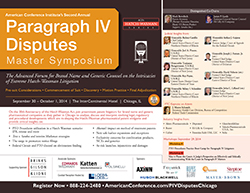
  • Chicago #2American Conference Institute (ACI) will be holding its 2nd Annual Paragraph IV Disputes master symposium from September 30 to October 1, 2014 in Chicago, IL.  ACI faculty will provide insights into:

    • PTO Procedures utilization in a Hatch-Waxman scenario: IPR, reissue, and more;
    Teva v. Sandoz and interim Markman strategies;
    • The surge in premature notice filings;
    • Federal Circuit and PTO discord on obviousness finding;
    • Akamai's impact on method of treatment patents;
    • New safe harbor expansions and exceptions;
    • Exclusivity concerns for combination products, NCEs, and generics; and
    • At-risk launches, injunctions, and damages.

    Brochure CoverThe conference will offer presentations on the following topics:

    • Oyez, Oyez, Oyez!: Review of Key Supreme Court Cases that May Alter the Course of Paragraph IV Litigation
    • Brand Name and Generic Interpretations of The Changing Paradigm for Generic Market Entry: Identifying New Due Diligence Concerns Relative to ANDA Drug Targets and Anticipating New Paragraph IV Challenges
    • It's All About Timing: Exploring the Surge in Premature Paragraph IV Notice Filings and Its Consequences
    Teva v. Sandoz — A Debate on the Standard of Review for Claim Construction: De Novo vs. Deferential
    • Exploring the Use of Reissue Applications to Amend Invalidity Findings in The District Courts
    • Analyzing the Evolving Utilization of IPR and Other PTO Proceedings in Paragraph IV Litigation: Brand Name and Generic Perspectives
    • Understanding the Importance of Abiding by Local Rules: A Magistrate's Perspective
    • A View From the Bench: The Judges Speak
    • Obviousness, Obliviousness and Obscurity: Exploring New Developments Double-Patenting Type Obviousness and Federal Circuit and PTO Discord on Obvious Findings Relative to Prior Art
    • Experts, Problems of Proof, Dispositive Motions and Markman Hearings: Addressing Common Dilemmas Encountered in A Paragraph IV Trial
    • Understanding How the Supreme Court's Decision in Limelight v. Akamai Will Impact ANDA Litigation Involving Method of Treatment Patents
    • FTC Keynote: Reverse Payment Settlements and Other Antitrust Concerns Impacting Paragraph IV Litigation in the Wake of Actavis — to be presented by J. Maren Schmidt, Attorney, Health Care Division, Bureau of Competition, Federal Trade Commission
    • The Ever Shifting Boundaries of the Safe Harbor: Determining the Scope of 271 (e)(1) Protections Relative to Paragraph IV Litigation Post Classen and Momenta
    • New Exclusivity Challenges for Brand Names and Generics: Exploring Their Implications for Paragraph IV Challenges
    • The Uncertain Future of At-Risk Launches: A Study of Injunctive Relief, Damages and the Impact of Protonix
    • Ethical Considerations for Paragraph IV Matters Before the PTO and District Courts: Looking Beyond Inequitable

    In addition, two pre-conference workshops will be offered on September 29, 2014.  The first, entitled "PTO Procedures Practice Boot Camp for Paragraph IV Litigators" will be offered from 8:30 am to 12:00 pm, and the second, entitled "May it Please the Court: A Judge’s Perspective on Effectively and Ethically Communicating With the Court In Paragraph IV Matters," will be offered from 2:00 to 5:30 pm.

    The agenda for the Paragraph IV Disputes master symposium can be found here.  More information regarding the workshops can be found here.  A complete brochure for this conference, including an agenda, detailed descriptions of conference sessions, list of speakers, and registration form can be obtained here.

    ACI - American Conference InstituteThe registration fee for the conference is $2,395 (conference alone), $2,995 (conference and one workshop), or $3,595 (conference and both workshops).  Those registering by August 4, 2014 will receive a $400 discount, and those registering by September 8, 2014 will receive a $200 discount.  Patent Docs readers who reference the discount code "PD200" will receive $200 off the current price tier when registering.  Those interested in registering for the conference can do so here, by e-mailing CustomerService@AmericanConference.com, by calling 1-888-224-2480, or by faxing a registration form to 1-877-927-1563.

    Patent Docs is a media partner of the Paragraph IV Disputes master symposium.

  • Strafford #1Strafford will be offering a webinar/teleconference entitled "Battling Patent Trolls: Leveraging AIA, State and Federal Legislative Action, and Other Key Developments" on August 7, 2014 from 1:00 to 2:30 pm (EDT).  Michael L. Kiklis and Scott A. McKeown of Oblon Spivak McClelland Maier & Neustadt will discuss recent developments and new tools to battle so-called patent trolls, including the America Invents Act (AIA), and recent state and congressional action, and discuss the impact of these efforts and offer best practices for combating patent trolls before and during litigation.  The webinar will review the following questions:

    • How will the enactment of state laws impact patent troll litigation?
    • How can counsel act to proactively minimize the threat of patent troll litigation?
    • What defense strategies are effective in combating patent trolls in litigation?

    The registration fee for the webinar is $297 ($362 for registration and CLE processing).  Those interested in registering for the webinar, can do so here.