• By Donald Zuhn

    USPTO SealIn a notice published in the Federal Register last month (80 Fed. Reg. 6475), the U.S. Patent and Trademark Office announced that it is launching a comprehensive and enhanced patent quality initiative.  As part of this initiative, the Office is requesting comments from the public to direct the Office's efforts towards enhancing patent quality.  The notice indicates that such efforts are aimed at improving patent operations and procedures, enhancing the customer experience, and improving existing quality metrics.

    The notice on the new initiative explains that the Office is launching:

    [A] new, wide-ranging initiative to enhance the quality of patents issued by the USPTO.  High quality patents permit certainty and clarity of rights, which in turn fuels innovation and reduces needless litigation.  Moreover and importantly, for the first time in recent history, the USPTO has the financial resources to consider longer-term and more expensive improvements to patent quality by leveraging the sustainable funding model provided by the fee setting provisions in the America Invents Act.  The USPTO also has made steady progress in reducing both the backlog of unexamined patent application and patent pendency.  The current backlog of unexamined patent applications has dropped from a high of more than 764,000 in January 2009 to presently less than 605,000.  Similarly, the pendency from filing to a disposition has dropped from a high of 34.5 months in August 2010 to currently 27.1 months.  While the agency still has progress to make in further reducing both the backlog and pendency, the confluence of these events make it the optimal time for the USPTO to pursue this enhanced quality initiative.

    The notice also explains that the initiative is targeting three aspects of patent quality, which the Office refers to as "patent quality pillars."  These pillars include: (1) excellence in work products (i.e., issued patents and Office actions), (2) excellence in measuring patent quality, and (3) excellence in customer service.

    With respect to the Office's request for public comments, the notice states that the Office welcomes feedback regarding the following questions:

    • Are there aspects of enhanced quality other than the three "pillars" that should guide the Office's enhanced quality initiative?

    • Are there any new or necessary changes to existing procedures that the Office should consider to improve the efficiency and effectiveness of the examination process?

    • What should be included at the time of application filing in order to enhance patent quality?

    The notice also contains a discussion of eleven examples of the Office's ongoing efforts to improve the quality of issued patents:

    (1) Providing more robust training to examiners (e.g., Patent Examiner Technical Training Program, training on Cooperative Patent Classification (CPC) system);

    (2) Developing training modules on claim clarity and functional claiming and providing legal training on the new provisions of the America Invents Acts and on subject matter eligibility in view of recent judicial rulings;

    (3) Launching the voluntary glossary pilot program;

    (4) Engaging in pilot programs (e.g., Quick Path IDS Program (QPIDS) and After Final Consideration Pilot (AFCP));

    (5) Implementing programs to take advantage of the search and examination work done in corresponding applications filed in other intellectual property offices (e.g., Patent Prosecution Highway (PPH) program and Common Citation Document program (CCD));

    (6) Actively promoting interviews between applicants and examiners throughout prosecution (e.g., First Action Interview Pilot Program);

    (7) Expanding assistance to independent inventors (e.g., educational programs hosted by the Office of the Innovation Development and through the Pro Se Pilot Examination Unit);

    (8) Providing numerous call centers (e.g., Inventors Assistance Center, Application Assistance Unit; America Invents Act (AIA) Contact Center and HELP–AIA hotline);

    (9) Exploring the use of crowdsourcing to uncover hard-to-find prior art and improving the preissuance submissions process (including the development of an improved electronic user interface for making submissions);

    (10) Measuring and reporting a Quality Composite Metric composed of seven factors: (i) the final disposition review; (ii) the in-process review; (iii) the first action on the merits (FAOM) search review; (iv) the complete FAOM review; (v) the external quality survey; (vi) the internal quality survey; and (vii) the quality index report; and

    (11) Implementing the Patents End-to-End Program (PE2E) and investigating the design and implementation of an improved notification system that would provide additional prosecution-related alerts to patent applicants in real-time.

    A more detailed discussion of the above efforts can be found in the notice.  (In addition, many of the programs listed above have been discussed elsewhere on Patent Docs.)

    The notice also describes six new quality proposals for which the Office is seeking comments:

    (1) Applicant Requests for Prosecution Review of Selected Applications — a mechanism for an applicant to request an Office of Patent Quality Assurance (OPQA) prosecution review of a particular application where the applicant believes that the application contains an issue that would benefit from such a review;

    (2) Automated Pre-Examination Search — given that computerized searching algorithms and database technologies have advanced significantly in recent years, the Office is seeking input on new tools that might be useful to conduct a pre-examination search (currently, examiners may request that the Office's Scientific and Technical Information Center (STIC) perform an automated pre-examination search using a computerized linguistic tool, called the Patent Linguistic Utility Service (PLUS));

    (3) Clarity of the Record — an identification of procedures that could be made part of standard examination practices to improve the clarity of the prosecution record, including:

    • Making claim construction explicit in the record, including the scope of claim terms, claim preambles, and functionally defined clauses (e.g., wherein clauses).

    • Further detail in the recordation of interviews, pre-appeal conference decisions, and appeal conferences, including identifying which arguments presented in the interview overcome individual rejections of record.

    • Where a statement of the reasons for allowance is necessary, providing a more detailed summary of the reasons for allowing a claim; for example, identifying the amendment, argument, or evidence that overcomes a rejection of record, so as to clearly communicate to the public the examiner's reasons why the claimed invention is patentable;

    (4) Review of and Improvements to Quality Metrics;

    (5) Review of the Current Compact Prosecution Model and the Effect on Quality — determining whether the current compact prosecution model should be modified, including, for example, "feedback on the desirability of a procedure by which an applicant might pay for entry of an additional response that may or may not require an examiner interview to further prosecution in an application before a final rejection is issued, thereby providing for at least two non-final Office actions in an application";

    (6) In-Person Interview Capability With All Examiners — conducting in-person interviews at additional locations, such as at regional libraries that have partnered with the Office to serve as repositories for patent materials (e.g., Boston Public Library, Chicago Public Library, and Los Angeles Public Library).
    USPTO Building FacadeThe notice also indicates that the initiative will include a two-day "Quality Summit" on March 25-26, 2015, to be held at the Madison Building on the Office's Alexandria, VA campus.  The Summit will also be webcast (with details regarding the webcast to be provided closer to the Summit).  Those interested in attending the Summit should send an e-mail to:  WorldClassPatentQuality@uspto.gov by March 18, 2015.  The notice provides the following agenda for the Summit (click on agenda to enlarge):
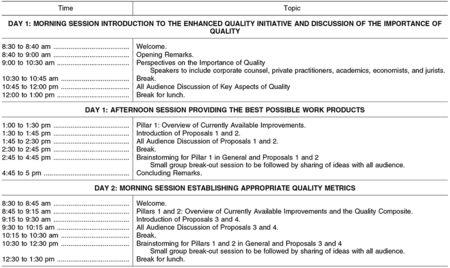
    Agenda_1

    Agenda_2
    Written comments regarding the enhanced quality initiative should be sent by e-mail to: WorldClassPatentQuality@uspto.gov, or by regular mail addressed to:  Mail Stop Comments — Patents, Commissioner for Patents, P.O. Box 1450, Alexandria, Virginia 22313–1450, marked to the attention of Michael Cygan, Senior Legal Advisor, Office of Patent Legal Administration, Office of the Deputy Commissioner for Patent Examination Policy.  In order to be ensured of consideration, written comments must be submitted by May 6, 2015.  Comments will be posted on the Office's Enhanced Patent Quality Initiative website.

    Patent Docs plans to provide additional coverage of certain portions of the Quality Summit.
  • By Andrew Williams

    Senate SealYesterday, Sen. Christopher Coons (D-DE), Sen. Richard Durbin (D-IL), and Sen. Mazie Hirono (D-HI) introduced the "Support Technology and Research for Our Nation's Growth (STRONG) Patents Act of 2015."  What is unique about this bill (as opposed to the flurry of patent reform bills we have been seeing) is that the STRONG Patents Act appears to have the best interests of patent owners at heart, while also including provisions that appear to be somewhat narrowly tailored to the address the so-called "patent troll" problem.

    Needless to say, it is unlikely that this Senate bill will get any traction.  The bill barely matches up to the House's Innovation Act, and does not include several of the hot-button legislative fixes such as attorney-fee shifting and heighted-pleading standards (beyond the elimination of Form 18).  It is also likely that other members of the Senate will introduce their version of the Innovation Act any day now.  And the chance of such a bill being passed in the now Republican-controlled Senate has increased dramatically since the midterm elections.

    This may have been the purpose behind the introduction of the STRONG Patents Act.  The opponents of sweeping patent litigation reform appeared to have been caught off guard in 2013 when the version of the Innovation Act introduced in that Congress sailed through the House.  Senate Democrats had more time to respond, but were able to do little more than ask pointed questions in committee meetings and Senate hearings.  In contrast, the STRONG Patents Act is a concrete piece of legislation they can point to that serves as an alternative to Rep. Goodlatte's vision for patent reform.  And even if it is unlikely to pass, it can serve as a counterbalance to the anti-patent troll, anti-patent owner legislation being proffered elsewhere.  Perhaps this bill will help bring everybody to the center to address the patent troll problem (to the extent it still exists) without having the consequence (hopefully unintended) of hobbling the rest of the patent system along with it.  We will have to wait and see.

    Findings

    The STRONG Patents Act begins with several observations that are lacking in the patent reform bills.  Instead of beginning with the axiomatic pronouncement that the patent system is broken, the authors highlight the importance of a strong patent system to the "exceptional innovation environment in the United States," and noting that it "is an essential part of the country's economic success."  It continues by listing some of the non-legislative changes that have already or soon will have an impact on the "patent troll" problem, such as changes to the rules governing pleadings and discovery being discussed by the Judicial Conference of the United States, and the recent Supreme Court cases that significantly reduced the burden to recover attorney fees.  Finally, these "Findings" highlight the goal of avoiding any unintended consequences that may have stemmed from past legislative efforts.  Specifically, the bill finds that "efforts by Congress to reform the patent system without careful scrutiny create a serious risk of making it more costly and difficult for legitimate innovators to protect their patents from infringement, thereby weakening United States companies and the United States economy."

    Anti-Patent Troll Provisions

    What is noticeably lacking from the STRONG Patents Act is the kitchen-sink approach to patent litigation reform to address the so-called patent troll problem.  In fact, the only provision directly related to patent litigation that is not pro-patent is the call for the elimination of Form 18, to the extent it has not already been eliminated.  Instead, this bill focuses on bad faith demand letters, in a section entitled "Targeting Rogue and Opaque Letters."  And, instead of the draconian penalty of patent invalidation found in some other bills, this version provides that bad faith demand letters "shall be an unfair or deceptive act or practice" under that Federal Trade Commission Act.  Correspondingly, enforcement power is conferred on the Federal Trade Commission.  At the same time, the bill preempts the various state laws that have recently sprung up, and the enforcement of these state laws by the various state attorneys general.  Instead, the state attorneys general are authorized to bring a civil action in Federal court pursuant to this provision.

    Nevertheless, the bill seeks to avoid a "chilling effect" on the assertion of all patent rights.  Instead, it appears narrowly tailored to address bad-faith demands.  For example, it will be a violation of this section if a demand-letter sender states or represents "in bad faith" that it has enforcement rights in the patent when it does not, or that legal action already has or will be taken.  Of course, "good-faith" demand letters can also contain threats of legal action to protect legitimate patent rights.  Correspondingly, the bill provides for an affirmative defense "if the sender can demonstrate that such statements, representations, or omissions were misstates made in good faith."  Examples of this include evidence of written communication in the usual course of business that do not violate this statute.

    PTAB Reform

    A significant portion of the STRONG Patent Act is directed to reform of proceedings before the PTAB, such as inter partes review ("IPR") and post-grant review ("PGR").  Some of these new provisions will not be controversial.  For example, like the Innovation Act, this bill calls for the elimination of the broadest reasonable interpretation ("BRI") standard for claim construction in IPRs and PGRs.  Instead, the PTAB would be required to use the same standard as is used in Federal court.  However, this bill also appears to strengthen the rights of patent holders, which may be more controversial.  For example, this bill applies the presumption of validity to challenged patents, thereby requiring clear and convincing evidence to establish the unpatentability of previously issued claims.  Also, the patent owner would be entitled to substitute a reasonable numbers of claims as a matter of course, likely in response to the dearth of granted motions to amend by the Board thus far.  Under this scheme, it would apparently fall to the petitioner to challenge the validity of any proposed claims, albeit with a "preponderance of the evidence" standard.  However, the original intent behind these new IPR and PGR proceedings as outlined in the America Invents Act was to provide a mechanism to challenge "bad patents" that should not have issued in the first place.  Because many of these new provisions appear to be at cross-purposes with this goal, it is unlikely that they all will be adopted.

    We will continue to monitor the progress of this bill and others like it as they progress through Congress.

  • By Cambria Alpha-Cobb* and Anthony D. Sabatelli** —

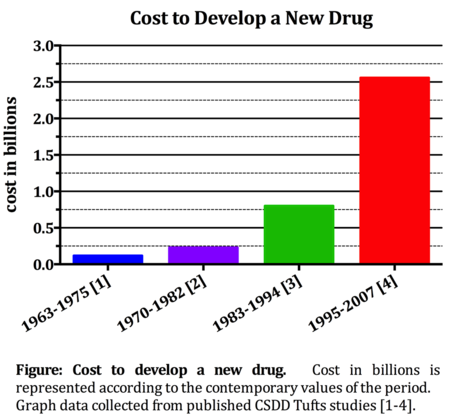
    Late last year, the Tufts Center for the Study of Drug Development (CSDD) released a number that would cause jaws to drop all around the healthcare world.  The estimated cost for developing a new drug was an astounding $2.558 billion.  Can we believe this number?  If this high price is the new reality, how can drug developers protect their investment?  More importantly, is your patent portfolio up to the challenge of protecting this huge investment?

    As the cost of bringing a new drug to market soars, it is becoming ever more important for drug developers to ensure that their development efforts are adequately protected.  Even though the FDA awards up to five years of regulatory exclusivity upon approval of a new drug compound (twelve years for a biologic), this period is often far too short for a drug innovator to recoup their development costs.  Therefore, it is essential that drug developers construct a well thought out patent strategy.  This strategy should fully consider managing the product life cycle for a new drug from the earliest development efforts through to the mature stages of marketing when the drug is facing competition from generic manufactures.

    The process of building a patent portfolio strategic enough to protect a drug franchise can be very involved and expensive.  For example, a single patent that is filed, prosecuted, and maintained across a reasonably broad group of the major market countries of the world can easily cost over a million dollars.  However, such an investment still only represents less than 1 percent of the total drug development costs according to the Tufts' figure — clearly a wise investment.

    To fully comprehend the impact and importance of this study, it is necessary to understand where it comes from.  The Tufts CSDD is a non-profit, multi-disciplinary research group associated with the academic institute of Tufts University.  This research group has been gathering and analyzing a variety of information around the quality and efficiency of drug R&D since the 1970s.  The CSDD studies are expectantly waited for and used by public policy makers and drugs developers, among others.  This recent study randomly selected drugs tested in humans and analyzed the cost of their development within a designated time period.  The CSDD is in a unique position to provide this sort of analysis as it has used comparable methodology to record and analyze components of drug development for forty years.  This mass accumulation of similarly acquired information has allowed for analogous studies of the development process and how it has transformed over time.

    Drug-Development-Costs-Graph
    This most recent cost estimate included 106 investigational new drugs from 10 organizations around the world that were tested in humans between 1995 and 2007.  This $2.558 billion figure was calculated from an average $1.4 billion in out-of-pocket costs and $1.2 billion in returns that investors forego during the development and approval process.  The inclusion of post approval development, involving new indication testing, formulations, and dosage strengths, adds another $312 million, bringing the grand total life-cycle cost of developing a new drug to nearly $3 billion.

    As stated above, in the U.S. and some other countries, drug developers can hope to recover some of this cost via the exclusivity period granted for the development and approval of a new drug.  But is this enough?  Only 20% of approved medicines generate revenues that exceed the average R&D investment (Michael Rosenblatt).  Without adequate patent protection, few can hope to recover these costs.  Clearly, a solid, well-executed patent portfolio is needed to augment this regulatory exclusivity.  Many would argue that without this system of both patent and regulatory exclusivity, innovation would slow as this high investment cost is enough to disincentivize even the best ideas.

    Can we believe this number?

    Upon the announcement of this ten-digit number, the researchers and their results were quickly criticized, being interpreted as a ploy by pharmaceutical companies to justify the high costs of new drugs.  The fact that 40% of the CSDD's funding comes from pharmaceutical and biotechnology firms led many to question the reality behind this argument and to do their own fact checking.  However, Bruce Booth, a Forbes contributor and partner at Atlas Venture, published his own estimate, coming up with a $2.5 billion number, factoring in rates of program success, timelines for each phase of R&D, and direct spend on projects.  As other such independent estimates have emerged, citing similar costs, the skepticism around this study has diminished and the reality of the number is sinking in.

    In order to understand this reality, we need to examine the possible explanations as to why it is so pricey.  We plotted the cost to develop a new drug as reported in 1979, 1991, 2003 and now in 2014 CSDD Tuft's studies to really demonstrate the almost exponential increase over the past decades (see Figure).  The cost to develop a new drug has more than doubled since the last Tufts analysis, published in 2003, where the cost was equal to $1.044 billion in 2013 dollars (DiMasi 2003).  As an explanation for this dramatic increase, the Tufts study cites a general trend in increasing costs due to greater out-of-pocket costs.  Included in these costs are the increases in clinical trial complexity and size, higher costs of inputs from the medical sector, a greater focus on targeting chronic and degenerative diseases and increased testing required by insurers for comparative effectiveness data, among others.  Additionally, the CSDD cites higher failure rates in the human trials.  This means that more drugs must be screened, more trials must be run, and more capital must be spent in order to bring just one drug to market.  The $2.6 billion estimate reflects, as it should, the cost of both successful and unsuccessful R&D projects.  Therefore, the estimate reflects even those drugs with failed trials whose development was halted early, and whose developing company recouped little or none of the development investment.

    How should we react to this number?

    Regardless of the exact number of zeros behind the estimate, the conclusion is the same:  the cost to bring a drug to market is very large.  Much of this study's criticism comes from the accusation that pharmaceutical researchers and manufacturers will use this study to justify the high cost of drugs.  This argument, of course, assumes that the price of drugs is directly linked to the costs incurred during research and development.  As the former president of Pfizer Global Research and Development, John LaMattina states, "pricing should be based not on R&D costs but on the value a drug delivers to patients."

    LaMattina goes on to argue that the real value of the Tufts study lies in the increasing of public awareness to the long, expensive, and high-risk endeavor that drug-development encompasses.  A common argument is that patent monopolies control and unfairly manipulate the cost of drugs that would be relatively cheap in the free market.  This study however is direct evidence in contrary to that argument.  How could one hope to see a cheaper drug on the market when the R&D costs are so high?

    No company would take on the gamble of the drug development process were it not for the exclusivity granted to the developer upon approval by the FDA.  The U.S. patent system provides additional incentive to develop, innovate, and further the benefits of modern medicine, even when the costs are high.  Painting an accurate estimation of drug R&D not only leads to a public awareness of the risks involved, but also emphasizes why patenting strategies are so important for drug developers.

    As we previously mentioned, the cost for protection also pales in comparison to the development costs.  This protection is essential for redemption of a significant portion of the development costs.

    Knowing the high cost of drug development probably will not and cannot lead to changes in the R&D process or costs.  If drug researchers and manufacturers want to lower the cost, the solution is to develop faster and cheaper!  But that is easier said than done.  This exposure of the high cost of drug development is a wake up call and reminder to the world that new, life-saving drugs are expensive to develop.  Even if this study cannot bring cheaper drugs to our doorstep, it brings into the public eye the uncertainty of drug development and better describes the risks, capital, and time behind every bottle of pills that we take for granted.

    * Dr. Cambria Alpha-Cobb is a Technology Specialist at Dilworth IP
    ** Dr. Sabatelli is a Partner with Dilworth IP


    [1] Hansen, R.W., 1979. The pharmaceutical development process: estimates of current development costs and times and the effects of regulatory changes. In: Chien, R.I. (Ed.), Issues in Pharmaceutical Economics. Lexington Books, Lexington, MA, pp. 151–187.
    [2] DiMasi, J.A., Hansen, R.W., Grabowski, H.G., Lasagna, L., 1991. Cost of innovation in the pharmaceutical industry. Journal of Health Economics 10, 107–142. http://www.ncbi.nlm.nih.gov/pubmed/10113009
    [3] DiMasi JA, Hansen RW, Grabowski HG.  The price of innovation: new estimates of drug development costs.  Journal of Health Economics 2003;22(2):151-85. http://www.ncbi.nlm.nih.gov/pubmed/12606142
    [4] http://csdd.tufts.edu/news/complete_story/pr_tufts_csdd_2014_cost_study

  • Filing of IDS after Response to Restriction Requirement Constitutes Failure to Engage in Reasonable Efforts to Conclude Prosecution

    By Donald Zuhn

    Gilead SciencesLast week, in Gilead Sciences, Inc. v. Lee, the Federal Circuit affirmed the decision by the District Court for the Eastern District of Virginia granting summary judgment to the Director of the U.S. Patent and Trademark Office that the Office had properly calculated the Patent Term Adjustment (PTA) for U.S. Patent No. 8,148,374.  The '374 patent, which is directed to the compound cobicistat, is owned by Gilead Sciences, Inc.

    The instant appeal involved 35 U.S.C. § 154(b)(2)(C), which reduces the PTA accrued by a patent as a result of the applicant's delay during prosecution.  In particular, § 154(b)(2)(C)(i) "reduce[s the PTA] by a period equal to the period of time during which the applicant failed to engage in reasonable efforts to conclude prosecution of the application" (emphasis added).  Section 154(b)(2)(C)(iii), which is also relevant, states that "[t]he Director shall prescribe regulations establishing the circumstances that constitute a failure of an applicant to engage in reasonable efforts to conclude processing or examination of an application."

    During prosecution of the application that issued as the '374 patent, the Examiner issued a restriction requirement, and Gilead responded by selecting one of four groups of claims for examination.  Fifty-seven days later, Gilead filed an IDS.  (The transaction history for the '374 patent indicates that Gilead submitted IDSs on eight other occasions — including on the day the response to the restriction requirement was filed — and that a non-final rejection was mailed by the Office 27 days after the IDS was filed.)  Once the '374 patent issued, the Office determined that there were 245 days of "A Delay" (PTO delay), 406 days of "B Delay" (for failing to issue patent within three years of its filing date), a reduction of 35 days for overlapping A and B Delay, and a further reduction of 57 days for applicant delay resulting from the period between Gilead's response to the restriction requirement and the subsequent IDS.

    Gilead challenged the Office's PTA determination, arguing that the subsequent IDS did not cause any actual delay and therefore should not have been subtracted from its PTA.  The Office rejected Gilead's argument, countering that the subsequent IDS constituted a failure to engage in a reasonable efforts to conclude prosecution as required by 37 C.F.R. § 1.704(c)(8).  Among the "[c]ircumstances that constitute a failure of the applicant to engage in reasonable efforts to conclude processing or examination of an application," § 1.704(c)(8) provides that the "[s]ubmission of a supplemental reply or other paper, other than a supplemental reply or other paper expressly requested by the examiner, after a reply has been filed" shall result in the "reduc[tion of the PTA] by the number of days, if any, beginning on the day after the date the initial reply was filed and ending on the date that the supplemental reply or other such paper was filed."  The Office, therefore, considered the IDS filed after Gilead's response to the restriction requirement to be "a supplemental reply or other paper" under § 1.704(c)(8).  The District Court granted the Office's motion for summary judgment, finding that Gilead had failed to show that the Office's interpretation of § 154(b)(2)(C) was unreasonable.

    On appeal, the Federal Circuit reminded that in reviewing an agency's statutory interpretation, it must apply the two-step framework established in Chevron, U.S.A., Inc. v. Natural Resources Defense Council, Inc., 467 U.S. 837 (1984).  In Chevron step-one, the Court must determine whether Congress addressed the precise question at issue.  The District Court determined that the precise question at issue was whether filing a supplemental IDS after submitting a reply to a restriction requirement constitutes a failure to engage in reasonable efforts to conclude prosecution of the application.  Instead of addressing whether the District Court's determination of the precise issue was correct, Gilead argued that the statute only allowed for patent term adjustments in instances where the applicant's conduct actually delayed the conclusion of prosecution.  Gilead based this argument on its reading of the surrounding statutory language, statutory purpose, and legislative history.  The Federal Circuit, however, rejected Gilead's arguments, determining instead that "Congress has not addressed the precise question at issue in this case — whether a failure to engage in reasonable efforts requires conduct that actually causes delay."

    Proceeding to Chevron step-two, the Federal Circuit next examined whether the Office's answer to the question was based on a permissible construction of the statute, noting that "[a]t this stage of the Chevron analysis, judicial deference to an agency's construction of a statutory scheme is afforded considerable weight."  The Court first pointed to § 154(b)(2)(C)(iii), in which "Congress expressly delegated authority to the PTO by granting authority to '[t]he Director [to] prescribe regulations establishing the circumstances that constitute a failure of an applicant to engage in reasonable efforts to conclude processing or examination of an application.'"  The Court observed that § 1.704(c)(8) "encompasses the precise situation in this case — the filing of a supplemental IDS after submission of a reply to a restriction requirement," and therefore concluded that "a reasonable interpretation of the statute is that Congress intended to sanction not only applicant conduct or behavior that result in actual delay, but also those having the potential to result in delay irrespective of whether such delay actually occurred."  Moreover, the Court noted that:

    Gilead's argument also fails because it frames the issue solely in terms of the patentee's application, without recognizing that an Examiner is required to review a significant number of applications during a limited period of time.  . . .  Although an applicant's conduct may not actually result in delaying the issuance of that applicant’s patent, such conduct may have negative externalities for other patent applicants because it could result in delaying the issuance of their patents [emphasis in original].

    The Court also noted that "[b]ecause the A Delay provision of the statute penalizes the PTO if the examiner fails to respond within four months of the applicant's response to a restriction requirement, any relevant information received after an initial response to a restriction requirement 'interferes with the [PTO's] ability to process an application.'"  The Court therefore determined that "[t]he regulation is a reasonable interpretation of the statute because the filing of a supplemental IDS after an initial reply to a restriction requirement further adds to the list of documents the PTO must consider before responding to the restriction requirement," and concluded that the Office's construction of the statute was reasonable.  The Court therefore affirmed the District Court's decision granting summary judgment to the Director.

    Because an Examiner is "on the clock" from the moment an application is filed or an applicant commences national stage (albeit in the latter circumstance as a result of the AIA Technical Corrections Act), and must issue an Office Action within 14 months of the filing or commencement date in order to avoid Office delay, one wonders whether the Court would consider the filing of an IDS at any point after the filing or commencement date to raise the same issues as the IDS in the instant case (and if not, whether the only difference between these two situations is the 10 additional months of examination time).  One also wonders whether the Court would consider the filing of an IDS after a response to an informalities notice (such as a Notice of Missing Parts) to raise the same issues as the IDS in the instant case (despite the possibility that the Examiner might not pick up the case for almost a year after the IDS is filed).  One further wonders how the Court might reconcile § 1.704(c)(6), which appears to require actual delay ("[s]ubmission of a preliminary amendment or other preliminary paper less than one month before the mailing of an Office action under 35 U.S.C. 132 . . . that requires the mailing of a supplemental Office action . . ."; emphasis added), with § 1.704(c)(8).  These questions, however, (as several prior questions involving the PTA rules, see, e.g., Wyeth v. Kappos, ArQule v. Kappos, Novartis AG v. Lee) must wait for another case and another day.

    Gilead Sciences, Inc. v. Lee (Fed. Cir. 2015)
    Panel: Circuit Judges Dyk, Wallach, and Hughes
    Opinion by Circuit Judge Wallach

  •         By Sherri Oslick

    Gavel About Court Report:  Each week we will report briefly on recently filed biotech and pharma cases.

    Shire LLC v. Par Pharmaceutical, Inc. et al.
    1:15-cv-01454; filed February 25, 2015 in the District Court of Massachusetts

    • Plaintiff:  Shire LLC
    • Defendants:  Par Pharmaceutical, Inc.; Par Pharmaceutical Companies, Inc.

    Infringement of U.S. Patent Nos. RE42,096 ("Oral Pulsed Dose Drug Delivery System," issued February 1, 2011) and RE41,148 (same title, issued February 23, 2010) following a Paragraph IV certification as part of Par's filing of an ANDA to manufacture a generic version of Shire's Adderall XR® (a combination of dextroamphetamine saccharate, amphetamine aspartate monohydrate, dextroamphetamine sulfate, and amphetamine sulfate, used to treat attention deficit hyperactivity disorder).  View the complaint here.

    Cephalon Inc. v. Sandoz Inc. et al.
    1:15-cv-00178; filed February 23, 2015 in the District Court of Delaware

    • Plaintiff:  Cephalon Inc.
    • Defendants:  Sandoz Inc.; Accord Healthcare Inc.; Intas Pharmaceuticals Ltd.; InnoPharma Inc.; Agila Specialties Inc.; Onco Therapies Limited; Glenmark Pharmaceuticals Ltd.; Glenmark Generics S.A.; USA Eurohealth International SARL; West-Ward Pharmaceutical Corp.; Glenmark Generics Ltd.; Glenmark Generics Inc USA

    Cephalon Inc. v. Dr Reddy's Laboratories Ltd et al.
    1:15-cv-00179; filed February 23, 2015 in the District Court of Delaware

    • Plaintiff:  Cephalon Inc.
    • Defendants:  Dr Reddy's Laboratories Ltd; Dr Reddy's Laboratories Inc.; Emcure Pharmaceuticals Ltd.; Emcure Pharmaceuticals USA Inc.; Pharmascience Inc.; Hospira Inc.; Breckenridge Pharmaceutical Inc.; Natco Pharma Ltd.; Hetero Labs Ltd.; Hetero USA Inc.; Sun Pharmaceutical Industries Ltd.; Actavis LLC; Sagent Pharmaceuticals Inc.; Wockhardt Bio AG; Wockhardt Ltd.; Wockhardt USA LLC; Sun Pharma Global FZE

    The complaints in these cases are substantially identical.  Infringement of U.S. Patent Nos. 8,669,279 ("Solid Forms of Bendamustine Hydrochloride," issued March 11, 2014), 8,883,836 (same title, issued November 11, 2014), and 8,895,756 ("Bendamustine Pharmaceutical Compositions," issued November 25, 2014) following a Paragraph IV certification as part of defendants' filing of an ANDA to manufacture a generic version of Cephalon's Treanda® (bendamustine hydrochloride, used to treat chronic lymphocytic leukemia and non-Hodgkin's lymphoma).  View the Sandoz complaint here.

    Ferring Pharmaceuticals Inc. et al. v. Par Pharmaceutical Inc.
    1:15-cv-00173; filed February 20, 2015 in the District Court of Delaware

    • Plaintiffs:  Ferring Pharmaceuticals Inc.; Ferring International Center SA
    • Defendant:  Par Pharmaceutical Inc.

    Infringement of U.S. Patent Nos. 8,450,338 ("Granular Compositions of Sodium Picosulfate and Potassium Bicarbonate and Uses Thereof," issued May 28, 2013) and 8,481,083 ("Granular Compositions of Magnesium Oxide and Citric Acid and Uses Thereof," issued July 9, 2013) following a Paragraph IV certification as part of Par's filing of an ANDA to manufacture a generic version of Ferring's Prepopik® (sodium picosulfate, magnesium oxide and citric acid, used for the cleansing of the colon as a preparation for colonoscopy in adults).  View the complaint here.

    Fresenius Medical Care Holdings, Inc v. Novel Laboratories, Inc.
    1:15-cv-10472; filed February 20, 2015 in the District Court of Massachusetts

    Fresenius Medical Care Holdings, Inc. v. Novel Laboratories, Inc.
    3:15-cv-01361; filed February 20, 2015 in the District Court of New Jersey

    The complaints in these cases are substantially identical.  Infringement of U.S. Patent No. 6,576,665 ("Encapsulated Calcium Acetate Caplet and a Method for Inhibiting Gastrointestinal Phosphorous Absorption," issued June 10, 2003) following a Paragraph IV certification as part of Novel's filing of an ANDA to manufacture a generic version of Fresenius' PhosLo® GelCaps (calcium acetate, used to treat renal failure) and infringement of U.S. Patent No. 6,875,445 ("Encapsulated Calcium Acetate Caplet and a Method for Inhibiting Gastrointestinal Phosphorous Absorption," issued April 5, 2005) based on Novel's anticipated manufacture and sale of its generic PhosLo®.  View the D. Mass. complaint here.

    Jazz Pharmaceuticals, Inc. et al. v. Roxane Laboratories, Inc.
    2:15-cv-01360; filed February 20, 2015 in the District Court of New Jersey

    • Plaintiffs:  Jazz Pharmaceuticals, Inc.; Jazz Pharmaceuticals Ireland Ltd.
    • Defendant:  Roxane Laboratories, Inc.

    Infringement of U.S. Patent Nos. 8,461,203 ("Microbiologically Sound and Stable Solutions of Gamma-Hydroxybutyrate Salt for the Treatment of Narcolepsy," issued June 11, 2013), 8,772,306 ("Method of Administration of Gamma Hydroxybutyrate with Monocarboxylate Transporters," issued July 8, 2014), and 8,859,619 ("Microbiologically Sound and Stable Solutions of Gamma-Hydroxybutyrate Salt for the Treatment of Narcolepsy," issued October 14, 2014) following a Paragraph IV certification as part of Roxane's filing of an ANDA to manufacture a generic version of Jazz's Xyrem® (sodium oxybate, used to treat narcolepsy).  View the complaint here.


    Cosmo Technologies Ltd. et al. v. Actavis Laboratories FL, Inc.
    2:15-cv-01312; filed February 19, 2015 in the District Court of New Jersey

    • Plaintiffs:  Cosmo Technologies Ltd.; Santarus, Inc.
    • Defendant:  Actavis Laboratories FL, Inc.

    Infringement of U.S. Patent Nos. 7,410,651 ("Controlled Release and Taste Masking Oral Pharmaceutical Composition," issued August 12, 2008), 7,431,943 (same title, issued October 7, 2008), 8,293,273 (same title, issued October 23, 2012), 8,784,888 (same title, issued July 22, 2014), 8,895,064 (same title, issued November 25, 2014), and RE43,799 (same title, issued November 13, 2012) following a Paragraph IV certification as part of Actavis' filing of an ANDA to manufacture a generic version of Santarus' Uceris® (budesonide, used to treat mildly to moderately active ulcerative colitis).  View the complaint here.

  • CalendarMarch 3, 2015 – "Patent Eligibility Requirements in Life Sciences" (Maschio & Soames) – 2:00 pm CST (Chicago)

    March 3, 2015 – "Hatch-Waxman and Biologic Strategies at the PTAB" (Intellectual Property Owners Association) – 2:00 to 3:00 pm (ET)

    March 3, 2015 – "Best Practices to Secure Allowance of Patent Application Claims Using Evidence" (American Intellectual Property Law Association) – 12:30 – 2:00 pm (ET)

    March 4, 2015 – "Patent Eligibility Requirements in Life Sciences" (Maschio & Soames) – 12:00 noon AEDT (Melbourne) and 12:00 noon GMT (London)

    March 4, 2015 – "The New Patent Litigation: Litigating Before the Patent Trial And Appeal Board" (American University Washington College of Law) – Washington, DC

    March 4-5, 2015 – Medical Device Patents*** (American Conference Institute) – Chicago, IL

    March 5, 2015 – "Drafting and Prosecuting Patent Applications to Withstand PTAB Scrutiny — Building Reasonable Claim Construction to Avoid Unpatentability and Using Declarations to Survive Post Grant Proceedings" (Strafford) – 1:00 to 2:30 pm (EST)

    March 5-6, 2015 – Advanced Patent Law Seminar (Chisum Patent Academy) – Cincinnati, OH

    March 6, 2015 – Twenty-Fifth Annual Trade Secrets Seminar (Intellectual Property Law Association of Chicago) – Chicago, IL

    March 10, 2015 – 25th Annual Conference on USPTO Law and Practice (PTO Day) (Intellectual Property Owners Association & U.S. Patent and Trademark Office) – Washington, D.C.

    March 10-11, 2015 – FDA Boot Camp*** (American Conference Institute) – New York, NY

    March 18, 2015 – "Professionalism, Privilege, and Duty of Candor before the USPTO" (American Intellectual Property Law Association) – 12:30 – 2:15 pm (ET)

    March 19, 2015 – "Abstract Ideas after Alice Corp. v. CLS Bank Int'l: The USPTO Issues Interim Guidance and Examples" (McDonnell Boehnen Hulbert & Berghoff LLP) – 10:00 am to 11:15 am (CT)

    March 19, 2015 – "Parallel Patent Proceedings Before the PTAB and Federal Court Post-AIA — Navigating Litigation Stays, Discovery and Settlements Concurrent With PTAB Review" (Strafford) – 1:00 to 2:30 pm (EDT)

    March 25-26, 2015 – Post-Grant PTO Proceedings*** (American Conference Institute) – New York, NY

    March 30-31, 2015 – Post-Grant Patent Challenges at the PTAB*** (Momentum) – San Jose, CA

    April 27-29, 2015 – M&A and Strategic Alliances in the Life Sciences Industries*** (American Conference Institute) – New York, NY

    ***Patent Docs is a media partner of this conference or CLE

  • AIPLA #1The American Intellectual Property Law Association (AIPLA) will be offering a webinar entitled "Professionalism, Privilege, and Duty of Candor before the USPTO" on March 18, 2015 from 12:30 – 2:15 pm (ET).  William R. Covey, Director of Office of Enrollment & Discipline, U.S. Patent & Trademark Office; Honorable Thomas L. Giannetti, Administrative Patent Judge, U.S. Patent & Trademark Office; Mercedes K. Meyer of Drinker Biddle & Reath, LLP; and ​William F. Smith of BakerHostetler will address the following:  (1) ex parte communications, (2) how to approach the bench or the examiner, (3) conflicts of interest, how they arise and how to handle them in a professional manner, (4) duty of candor to the USPTO and fixing your mistakes, (5) keeping current, and (6) fraud.

    The registration fee for the program is $145 (AIPLA member rate) or $175 (non-member rate).  Those interested in registering for the program, can do so here.

  • Strafford #1Strafford will be offering a webinar/teleconference entitled "Parallel Patent Proceedings Before the PTAB and Federal Court Post-AIA — Navigating Litigation Stays, Discovery and Settlements Concurrent With PTAB Review" on March 19, 2015 from 1:00 to 2:30 pm (EDT).  Michael L. Kiklis and Eric W. Schweibenz of Oblon Spivak McClelland Maier & Neustadt will provide guidance to patent counsel involved in challenging or defending patent validity on the impact of concurrent proceedings at the USPTO and in the courts on stays, discovery and settlements, and offer best practices for dealing with concurrent litigation and USPTO proceedings.  The webinar will review the following questions:

    • What litigation tactics can counsel employ to challenge or defend patent validity?
    • What are the implications for discovery and settlement when patents are challenged in concurrent proceedings?
    • What challenges do counsel face when challenging or defending patent validity in concurrent proceedings?

    The registration fee for the webinar is $297 ($362 for registration and CLE processing).  Those interested in registering for the webinar, can do so here.

  • IPLACThe Intellectual Property Law Association of Chicago (IPLAC) will be offering its Twenty-Fifth Annual Trade Secrets Seminar on March 6, 2015 from 1:300 to 4:30 pm (Central) at The John Marshall Law School in Chicago, IL.  R. Mark Halligan of Fisher Broyles, LLP and Kyle Gilster of Husch Blackwell LLP will discuss current trends and recent trade secrets case law as well as federal trade secret legislation.  The registration fee for the program is $20 for IPLAC members, $30 for non-members, and $5 for students.  Those interested in registering for event can do so by here.  Additional information regarding the event can be found here.

  • American University Washington College of Law #1The American University Washington College of Law will be hosting its fourth annual Patent Law Symposium on "The New Patent Litigation: Litigating Before the Patent Trial And Appeal Board" on March 4, 2015 at the American University Washington College of Law in Washington, DC.  The program will offer the following panel sessions:

    • The New Patent Litigation: Practice at the Patent Trial and Appeal Board
    • The PTAB, by the Numbers: Statistical Analyses of Inter Partes Reviews — panel includes Patent Docs author Kevin Noonan
    • Claim Deconstruction: Claim Construction at the Board after Cuozzo

    In addition, David Kappos, Former Director, U.S. Patent and Trademark Office will provide a video introduction, and the symposium will conclude with a presentation by Teresa Stanek Rea, Former Director & Undersecretary of Commerce, U.S. Patent and Trademark Office.

    Additional information about the symposium can be found here.  There is no registration fee for the symposium, but those interested in attending must register (the fee for CLE accreditation is $165).  Those interested in registering, can do so here.