• By Andrew Williams

    Sandoz #1As we reported earlier this week, the U.S. Food and Drug Administration ("FDA") approved the first biosimilar application — an application by Sandoz to market a biosimilar version of Amgen's NEUPOGEN® (filgrastrim) biologic drug product.  This is the first such application to be approved using the new biosimilar pathway created by the Biologics Price Competition and Innovation Act ("BPCIA").  However, whether Sandoz will be able to begin marketing its new drug is in question because the U.S. District Court for the Northern District of California is scheduled to hear arguments related to a motion for preliminary injunction filed by Amgen on Friday, March 13, 2015.

    AmgenMuch like with Hatch-Waxman statute for small-molecule pharmaceuticals, the BPCIA includes both an abbreviated drug approval process and a mechanism by which the parties can address any patent claims while the drug is being approved.  However, as we reported earlier this year, Sandoz chose to avail itself of the first part of the statute, thereby reducing the time and cost required to obtain approval or its drug, but it unilaterally chose to forego the second part of the statute and did not supply Amgen with a copy of its biosimilar application.  This, of course, thwarted Amgen's ability to avail itself of the statutorily-mandated patent exchanges — the so-called biosimilar "patent dance."  Sandoz also alleged that it provided Amgen with its 180-day notice of commercial marketing, as required by the BPCIA, in July of 2014 before its application was approved.  It is unclear, therefore, when Sandoz will actually be able to begin selling its new drug product, or if it does launch at risk, what will happen to the market if Amgen is successful in its current litigation with Sandoz.  It is also unclear whether the BPCIA will become a viable mechanism to bring cheaper follow-on drugs to the market if applicants are allowed to unilaterally "opt-out" of this delicately crafted system.

    Amgen v. Sandoz

    Amgen filed an action in the U.S. District Court for the Northern District of California on October 24, 2014 based on the failure of Sandoz to follow the disclosure procedures set out in the statute.  The first cause of action alleged in the complaint was that Sandoz's actions in filing its BLA and plans for launching its biosimilar drug product constituted a violation of California's state law of unfair competition.  Specifically, Amgen alleged that Sandoz both (1) used the abbreviated pathway but refused to comply with the statutory requirements of the BPCIA and (2) failed (or will fail to) meet the obligation to provide notice of commercial marketing.  Either of these will be the direct cause of economic injury, according to Amgen.  Amgen also asserted a cause of action for conversion, which can be simplistically thought of as an allegation of theft, based on Sandoz's use of Amgen's information related to safety, purity, and potency.  If Sandoz does not adhere to the patent exchange provisions of the BPCIA, the argument goes, it should not be entitled to rely on the efforts of the reference product sponsor.  Finally, Amgen alleged infringement of U.S. Patent No. 6,162,427, but reserved the right to assert additional patents based on information obtained during discovery.  Among other things, Amgen is seeking an injunction to prevent Sandoz from marketing ZarxioTM.

    Sandoz responded by defending its decision to not participate in the statutory scheme because it did not want to share its BLA or manufacturing process with a future competitor, even though the BPCIA contains confidentiality provisions and limits the ability of recipients to disclosure any obtained information.  Specifically, Sandoz alleged that "[p]roviding the biosimilar application to the reference product sponsor is an option, not a requirement."  It supported this position by citing to the statutorily-mandated "penalty" for not complying with the disclosure requirements:

    If a subsection (k) applicant fails to provide the application and information required under paragraph (2)(A), the reference product sponsor, but not the subsection (k) applicant, may bring an action under section 2201 of Title 28, for a declaration of infringement, validity, or enforceability of any patent that claims the biological product or a use of the biological product.

    42 U.S.C. § 262(l)(9)(C).  If the disclosure was mandatory, according to Sandoz, this section would be superfluous.  Sandoz also contended that it gave Amgen notice of commercial marketing back in July of 2014, and that nothing in the statute required that approval have already been obtained.

    After the Answer by Sandoz, Amgen filed a motion for partial judgment under Rule 12(C), or alternatively, for partial summary judgement.  The issues that Amgen is seeking to be addressed by this motion are:

    (1) whether "provision of the BLA and manufacturing information under subsection 262(l)(2)(A) [is] mandatory, as the statute provides, or optional, as Sandoz contends, and is Sandoz's failure to provide that information while availing itself of the benefits of the abbreviated subsection (k) pathway by reference to Amgen's prior-licensed filgrastim product an unlawful business practice under Cal. Bus. & Prof. Code § 17200 et seq.";

    (2) whether Sandoz's notice of commercial marketing given before its filgrastim product is licensed under subsection (k) a breach of 42 U.S.C. § 262(l)(8)(A), and, if so, is that statutory breach an unlawful business practice under Cal. Bus. & Prof. Code § 17200 et seq."; and

    (3) whether Sandoz should be allowed to bring counterclaims seeking declaratory judgments of non-infringement and invalidity, even though it failed "to provide the BLA and manufacturing information" to Amgen.

    In addition, likely prompted by the imminent approval of the Sandoz application, Amgen filed a motion for a preliminary injunction on February 5, 2015 to prevent Sandoz from entering the market before these issues can be resolved by the Court.  In order to determine the appropriateness of a preliminary injunction, a court must weigh four factors: (1) likelihood of success on the ultimate merits of the case, (2) irreparable harm, (3) the public interest, and (4) the balance of equities.

    Amgen contended that it will succeed on the merits because Congress set forth mandatory requirements in the BPCIA for biosimilar applicants, and Sandoz blatantly ignored them.  Amgen also asserted that the harm it will suffer by Sandoz's failure to provide its application is the type of harm the statute was meant to protect against in the first place:  the entry of a biosimilar competitor without the ability to seek an injunction on the full breadth of its patent portfolio.  As a result, Amgen alleged that its research and development will suffer, that its new products will be harmed, that the price of its filgrastim products will be permanently and irrevocably eroded, and that it will suffer damages to its customer relationships and loss of goodwill.  Finally, Amgen contended that both the public interest will not be served by "permitting lawlessness," and that the balance of equities counsel against allowing Sandoz to ignore the statute.

    In response, Sandoz asserted that its actions have been fully consistent with both the text and the purpose behind the BPCIA.  It chose to forgo the optional disclosure requirements with full knowledge that it was also giving up the protections afforded by the statute.  For example, if Sandoz had participated in the so-called patent dance, it would have been able to limit the number of patents that Amgen could litigation.  Instead, Amgen could (and did) immediately bring an infringement action on any patent.  Sandoz also contended that any alleged harm that Amgen faces is self-inflicted because Amgen ignored every offer by Sandoz to provide its application, albeit under different terms of confidentiality.  Moreover, according to Sandoz, any harm alleged by Amgen was either too speculative or could ultimately be compensated with money damages.  Sandoz also argued that the public would be disserved by an injunction because it would be deprived of an alternative to Amgen's filgrastim products.  Likewise, Sandoz alleged that the balance of hardships tip in its favor because it will be prevented from launching for another 13 months or longer.

    Even though the Court will hear arguments on these issues on March 13, Sandoz has reportedly indicated that it will not launch until the earlier of April 10, 2015, or a favorable ruling on the pending motions.  This is, of course, not the first time Sandoz has appeared to sidestep the requirements of the BPCIA.  As we reported last year, it attempted to obtain a declaratory judgment action against Amgen prior to filing an application to market a biosimilar version of Enbrel®.  The District Court for the Northern District of California dismissed that case on jurisdictional grounds as essentially premature, and the Court of Appeals for the Federal Circuit affirmed.  It will be interesting to see if the Court will also thwart Sandoz's current plan of avoiding the patent-exchange provisions of the BPCIA, or whether it will side with Sandoz, thereby paving the way for the commercial marketing of the first approved biosimilar application.

    We will continue to monitor this case and report on the outcome of the present motions in a future post.     

  • By Kevin E. Noonan

    Shrouded in secrecy and spawning more than its share of dystopian conspiracy theories, the Trans-Pacific Partnership (TPP) treaty — being negotiated by the U.S. and eleven foreign governments (Australia, Brunei, Canada, Chile, Japan, Malaysia, Mexico, New Zealand, Peru, Singapore, and Vietnam) — is, like many such treaties, intended to reduce barriers to trade between trading partners and increase the free flow of goods between nations.

    Although Wikileaks has released putative draft versions of portions of the treaty, it seems most prudent to wait until the treaty has been completed before commenting; after all, there have been twenty rounds of negotiations (most recently in Ottawa, Canada on July 3-13, 2014), and Taiwan and Korea have also indicated an interest in joining the negotiations.

    But of course various stakeholders in the different countries negotiating the treaty have their own agendas and many are concerned that the product of this treaty with have unexpected (if not entirely unintended) consequences (see, for example, NAFTA and GATT/TRIPS and the WTO it spawned).  President Obama has asked Congress for so-called "fast track" authorization for the treaty, which if granted would short circuit much of the debate that could be expected in this Congress for almost anything this President tries to do.

    Organizing-for-ActionIn addition, much of the President's natural political base is at best skeptical about these treaties in general and this treaty in particular, a skepticism only enhanced by the secrecy with which it is being negotiated.  As an indication of the seriousness with which the Administration takes this treaty, a non-profit group called "Organizing for Action," representing the President, sent the following e-mail to members, supporters and others, in the President's name:

    When I ran for this office, I heard from Americans who felt left behind by trade agreements of the past.

    It's those people I'm thinking about as I lay out the framework for a new trade agenda that will be guided by one simple principle: putting American workers first.

    I've made it clear that I won't sign any agreement that doesn't live up to that.

    The Trans-Pacific Partnership we're working on would be the most progressive trade agreement in American history — with the strongest labor, environmental, and intellectual property standards yet. It's designed to protect jobs and help grow the economy by focusing on working and middle-class families.

    This is a complex issue with a lot at stake for Americans, and I want voices like yours to be part of the conversation. On Monday, David Simas, one of my closest advisors, is getting on the phone with OFA supporters to talk more about what this policy means.

    Send OFA questions or concerns you have — and David will get a chance to address as many as he can on Monday's call.

    This is a chance to make sure that the United States — and not a competitor like China — gets to write the rules for the world economy in the 21st century.

    Here's why that matters:

        — It levels the playing field for American workers. This plan will make it easier to sell goods made in America to some of the most dynamic and fastest-growing markets in the world: 95 percent of the world's consumers live outside the United States.

        — It reflects American values. All countries that sign the Trans-Pacific Partnership must adopt strict labor rules if they want to send their goods to the United States. That means enforceable regulations to ensure acceptable working conditions, such as a minimum wage, maximum hours, and workplace safety. Workers will have the right to form unions and bargain collectively.

        — It's good to the environment. This plan goes well beyond protections from past agreements, and contains enforceable commitments to protect our oceans, forests, and endangered wildlife.

    For me, it's important that our trade policy is consistent with my top priority as president: making sure that more hard-working Americans have a chance to get ahead.

    Exports of American products supported 11.7 million American jobs in 2014 — those are good, middle-class jobs that pay up to 18 percent more than other jobs. And of the companies that export goods, 98 percent are small businesses.

    There's a lot more to talk about, so I hope you'll join the conversation.

    Ask a question, or voice your thoughts — and OFA will collect them for the call on Monday:

    http://my.barackobama.com/Ask-A-Trade-Question

    Thank you,

    Barack Obama

    The President has asked for questions.  It seems only fair for interested parties to supply them.

  • By Donald Zuhn

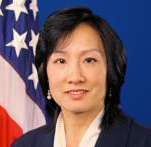
    Michelle LeeOne day after the U.S. Senate confirmed her nomination as Director of the U.S. Patent and Trademark Office, Deputy Director Michelle Lee provided the luncheon address at the 25th Annual Conference on USPTO Law and Practice (PTO Day), an event co-sponsored by the Intellectual Property Owners Association (IPO) and USPTO.  For those who were unable to attend PTO Day, the Deputy Director's remarks have been made available on the USPTO website.

    The Deputy Director's published remarks touch on a number of developments at the USPTO in the past year.  She begins by discussing the Office's new Enhanced Patent Quality Initiative, encouraging attendees to read the Office's Federal Register notice on the initiative (a summary of this notice can be found here).  The Deputy Director notes that the "new initiative is built around three core elements:  Excellence in prosecution services; excellence in customer service; and excellence in quality measurement."  With respect to the first element, she points out that the Office is seeking public input regarding three proposals:  (1) To provide a mechanism for an applicant to request USPTO's quality assurance team to review a particular application; (2) To require an enhanced automated pre-examination search that leverages the latest in search technologies; and (3) To enhance the clarity and completeness of the prosecution record.  Concerning the second proposal, the Deputy Director suggests that search results from the enhanced search could be given to the applicant to allow the applicant the opportunity to amend the claims before the examiner begins substantive examination.  As for the third proposal, the Deputy Director notes that the clarity and completeness of the prosecution record could be enhanced "by making claim construction explicit in the record; providing further details of the interview between applicant and examiner; or requiring a statement for the reasons for allowance."

    The Deputy Director also reminds practitioners and applicants that the Office will be holding a two-day Patent Quality Summit on March 25-26, and closes the patent quality discussion by pointing out that a new senior executive position — Deputy Commissioner for Patent Quality — had been created at the USPTO, and that Ms. Valencia Martin-Wallace, an electrical engineer with more than 20 years experience in the office as an examiner, TC Director, and Assistant Deputy Commissioner for Patent Operations, has been appointed to the post.

    The Deputy Director's remarks next focus on the Patent Trial and Appeal Board (PTAB).  She indicates that "[t]he PTAB has been quite busy meeting a greater-than-expected demand for the AIA authorized trials," noting that as of mid-February, the PTAB had received nearly 2,500 inter partes review filings and nearly 300 covered business method filings.  She declares that "[i]t's pretty clear why these proceedings have proven so popular," noting that they "provide a faster and more affordable means to challenge issued patents," and adding that:

    The PTAB is issuing a claim construction (by way of our decision to institute) in a mere six months.  Compare that to the pace of the so-called Rocket Docket, the Eastern District of Virginia, where the parties will find the process taking about 12 months, or in other federal courts where the proceedings can drag on for three years or more.

    The Deputy Director also announces that the Office will be issuing interim PTAB rules to provide "'quick fixes' based upon public feedback as well as suggestions from our own judges," to be followed by a second package of proposed rules to address "more challenging changes."

    Briefly touching on the issue of patent reform, the Deputy Director declares that such reform is still necessary, but that "any legislative changes to our patent system need to take into account changes that have already occurred in the courts and administratively including at the USPTO."

    Towards the end of her remarks, the Deputy Director discusses the Office's Open Data Initiative, noting that the USPTO "house[s] a treasure trove of data."  She explains that the Office is "moving forward on ways to better disclose and disseminate that data, as well as making better use of it ourselves."

    The full text of the Deputy Director remarks from the PTO Day address can be found here.

  •         By Sherri Oslick

    Gavel About Court Report:  Each week we will report briefly on recently filed biotech and pharma cases.

    Janssen Biotech, Inc. et al. v. Celltrion Healthcare Co., Ltd. et al.
    1:15-cv-10698; filed March 6, 2015 in the District Court of Massachusetts

    • Plaintiffs:  Janssen Biotech, Inc.; New York University
    • Defendants:  Celltrion Healthcare Co., Ltd.; Celltrion, Inc.; Hospira Inc.

    Infringement of U.S. Patent Nos. 6,284,471 ("Anti‐TNFa Antibodies And Assays Employing Anti‐TNFa Antibodies," issued September 4, 2001), 7,223,396 ("Methods of Treatment of Fistulas in Crohn's Disease with Anti‐TNF Antibodies," issued May 29, 2007), 5,807,715 ("Methods And Transformed Mammalian Lymphocyte Cells For Producing Functional Antigen-Binding Protein Including Chimeric Immunoglobulin," issued September 15, 1998), 7,598,083 ("Chemically Defined Media Compositions," issued October 6, 2009), 6,900,056 ("Chemically Defined Medium for Cultured Mammalian Cells," issued May 31, 2005), and 6,773,600 ("Use of Clathrate Modifier, To Promote Passage of Proteins During Nanofiltration," issued August 10, 2004) based on defendants' filing of an aBLA to manufacture and sell a biosimilar to Janssen's Remicade® (infliximab, used to treat rheumatoid arthritis, ulcerative colitis, Crohn's disease, ankylosing spondylitis, psoriatic arthritis, and plaque psoriasis).  View the complaint here.

    Novartis AG et al. v. HEC Pharm Co., Ltd. et al.
    2:15-cv-01647; filed March 5, 2015 in the District Court of New Jersey

    • Plaintiffs:  Novartis AG; Novartis Pharmaceuticals Corp.; Mitsubishi Tanabe Pharma Corp.; Mitsui Sugar Co., Ltd.
    • Defendants:  HEC Pharm Co., Ltd.; HEC Pharm Group; HEC Pharm USA Inc.

    Infringement of U.S. Patent No. 5,604,229 ("2-Amino-1,3-Propanediol Compound and Immunosuppressant," issued February 18, 1997) following a Paragraph IV certification as part of HEC's filing of an ANDA to manufacture a generic version of Novartis' Gilenya® (fingolimod hydrochloride, used to reduce the frequency of clinical exacerbations and to delay the accumulation of physical disability in patients with relapsing forms of multiple sclerosis).  View the complaint here.


    Boehringer Ingelheim Pharma GmbH & Co. KG et al. v. Breckenridge Pharmaceutical, Inc.
    2:15-cv-01647; filed March 5, 2015 in the District Court of New Jersey

    • Plaintiffs:  Boehringer Ingelheim Pharma GmbH & Co. KG; Boehringer Ingelheim International GmbH; Boehringer Ingelheim Pharmaceuticals, Inc.
    • Defendant:  Breckenridge Pharmaceutical, Inc.

    Infringement of U.S. Patent No. 6,087,380 ("Disubstituted Bicyclic Heterocycles, the Preparations and the Use Thereof as Pharmaceutical Compositions," issued July 11, 2000) following a Paragraph IV certification as part of Breckenridge's filing of an ANDA to manufacture a generic version of Boehringer's Pradaxa® (dabigatran etexilate mesylate, used to reduce the risk of stroke and systemic embolism in patients with non-valvular atrial fibrillation).  View the complaint here.

    Vivus, Inc. v. Actavis Laboratories FL, Inc. et al.
    2:15-cv-01636; filed March 4, 2015 in the District Court of New Jersey

    • Plaintiff:  Vivus, Inc.
    • Defendants:  Actavis Laboratories FL, Inc.; Actavis, Inc.; Actavis PLC

    Infringement of U.S. Patent Nos. 8,895,057 ("Escalating Dosing Regimen for Effecting Weight Loss and Treating Obesity," issued November 25, 2014) and 8,895,058 ("Low Dose Topiramate/Phentermine Composition and Methods of Use Thereof," issued November 25, 2014) following a Paragraph IV certification as part of Actavis' filing of an ANDA to manufacture a generic version of Vivus' Qsymia® (phentermine and topiramate extended-release capsules, used as an adjunct to a reduced-calorie diet and increased physical activity for chronic weight management).  View the complaint here.

    Otsuka Pharmaceutical Co., Ltd. v. Amneal Pharmaceuticals LLC et al.
    1:15-cv-01585; filed March 2, 2015 in the District Court of New Jersey

    • Plaintiff:  Otsuka Pharmaceutical Co., Ltd.
    • Defendants:  Amneal Pharmaceuticals LLC; Amneal Pharmaceuticals India PVT. Ltd.; MSN Pharmachem PVT. Ltd.; MSN Laboratories PVT. Ltd.

    Infringement of U.S. Patent Nos. 8,017,615 ("Low Hygroscopic Aripiprazole Drug Substance and Process for the Preparation Thereof," issued September 13, 2011), 8,580,796 (same title, issued November 12, 2013), 8,642,760 (same title, issued February 4, 2014), and 8,759,350 ("Carbostyril Derivatives and Serotonin Reuptake Inhibitors for Treatment of Mood Disorders," issued June 24, 2014) following a Paragraph IV certification as part of Amneal's filing of an ANDA to manufacture a generic version of Otsuka's Abilify® (aripiprazole, used to treat bipolar disorder and schizophrenia).  View the complaint here.

    Purdue Pharma L.P. v. Actavis Laboratories UT Inc.
    1:15-cv-00192; filed February 27, 2015 in the District Court of Delaware

    Infringement of U.S. Patent Nos. RE41,408 ("Method of Providing Sustained Analgesia with Buprenorphine," issued June 29, 2010), RE41,489 (same title, issued August 10, 2010), and RE41,571 (same title, issued August 24, 2010) following a Paragraph IV certification as part of Actavis' filing of an ANDA to manufacture a generic version of Purdue Pharma's Butrans® (buprenorphine transdermal, used for the management of pain severe enough to require daily, around-the-clock, long-term opioid treatment and for which alternative treatment options are inadequate).  View the complaint here.

    AstraZeneca Pharmaceuticals LP et al. v. Macleods Pharmaceuticals, Ltd. et al.
    2:15-cv-01513; filed February 27, 2015 in the District Court of New Jersey

    • Plaintiffs:  AstraZeneca Pharmaceuticals LP; AstraZeneca UK Ltd.
    • Defendants:  Macleods Pharmaceuticals, Ltd.; Macleods Pharma USA, Inc.; AB Pharmaceuticals, LLC

    Infringement of U.S. Patent No. 5,948,437 ("Pharmaceutical Compositions Using Thiazepine," issued September 7, 1999) following a Paragraph IV certification as part of Macleod's filing of an ANDA to manufacture a generic version of AstraZeneca's Seroquel® XR (quetiapine fumarate, used to treat schizophrenia and bipolar disorder).  View the complaint here.

  • By Kevin E. Noonan

    FDAOn Friday, the Food and Drug Administration approved a biosimilar version of Amgen's Neupogen® (filgrastim) product for sale in the U.S.  This is the first biosimilar to be approved under the provisions of the Biologics Price Competition and Innovation Act (BPCIA), which was part of the healthcare reform package passed in 2010 and commonly referred to as "Obamacare."  Sandoz (a division of Novartis) will sell its biosimilar under the brand name Zarxio™.

    AmgenThe drug is a recombinantly produced version of human granulocyte colony stimulating factor (methionyl-human granulocyte colony stimulating factor or r-metHuG-CSF) and is used to stimulate neutrophil production in patients undergoing chemotherapy.  Amgen has obtained FDA approval for Neupogen® for treating the following five conditions:

    • Cancer patients receiving myelosuppressive chemotherapy;
    • Cancer patients with acute myeloid leukemia receiving induction or consolidation chemotherapy;
    • Cancer patients undergoing bone marrow transplantation;
    • Patients undergoing autologous peripheral blood progenitor cell collection and therapy; and
    • Patients with severe chronic neutropenia.

    Sandoz #2Sandoz provided the FDA with a wide variety of evidence of biosimilarity since it filed its application under Section 351(k) of the Public Health Service Act last July; this evidence included "structural and functional characterization, animal study data, human pharmacokinetic and pharmacodynamics data, clinical immunogenicity data and other clinical safety and effectiveness data" and, importantly, an absence of immunogenicity in human subjects, together demonstrating the biosimilarity of Sandoz product Neupogen® according to the FiercePharma website.  In particular, Sandoz performed a head-to-head comparison between its biosimilar drug and Neupogen® showing a level of biosimilarity sufficient for the FDA to approve Zarxio™ for all of Amgen's approved indications.

    Neupogen® is a $1.2-1.4 billion dollar per year product for Amgen and part of the significance of FDA approval is economic.  Industry estimates have Sandoz selling Zarxio™ for 15-30% less than Amgen's current price, which estimates are expected to reduce the cost of the drug by an equivalent amount once this biosimilar becomes accepted by physicians.  Unlike conventional "generic," generally small molecule, drugs (which cause upwards of 90% reductions in drug prices from the innovator brand price), biosimilar drugs are both more complex than small molecule drugs and are administered by physicians (typically by injection) and thus continue to actively involve medical personnel during a course of treatment.  Consequently, physician acceptance of biosimilar drugs is much more of an issue than for generic drugs and thus market penetrance is expected to be delayed for 1-5 years, even by Sandoz.  These estimates are in line with industry expectations for biosimilar drugs in general; for example, Express Scripts has estimated that while U.S. healthcare costs may be reduced by about $250 million between 2015 and 2025, biosimilar sales worldwide will only increase from $1.3 billion to $35 billion by 2020, even taking into account the robust approval climate for biosimilar drugs on Europe (where the EMEA has approved 21 biosimilar drugs over the past 10 years; it should be noted that cost savings in Europe from biosimilars amount to about a 10% reduction).

    (For those paying attention, another reason that marketing of Sandoz's Zarxio™ product may be delayed is that Amgen and Sandoz are embroiled in litigation over whether Sandoz is required to participate in the litigation provisions of the BPCIA); that case is ongoing (see "'No Clinically Meaningful Differences': The First Accepted Biosimilar Application Has Been Recommend for FDA Approval").

    The other basis for considering approval of Zarxio™ to be significant is that, as the first biosimilar approved, it will be a bellwether for how well the FDA has implemented the BPCIA and performed in its role in protecting public health.  The complexity of both biologic drugs themselves (which typically comprise thousands of atoms; the chemical formula of filgrastim for example is C845H1343N223O243S9) and the methods by which they are made (typically using recombinant cells expressing genetically engineered genes transferred from one organism (here, human) to another such as bacteria) provide much greater challenges for the agency in performing its review of safety, potency and efficacy.  While the EMEA in Europe has successfully approved biosimilar drugs for a decade, in the U.S. doubts are likely to remain until experience (both the agency's and the public's) has shown them to be unfounded.

    There is one aspect of the FDA's approval of Zarxio™ that remains controversial, and that is the non-proprietary (or common) name the agency has given to Sandoz's product.  The name, filgrastrim-sndz, has been called a "placeholder" by the agency because it has not yet decided whether to give different names to biosimilar versions of branded biologic drugs (as innovator biotechnology companies have advocated to ensure that any adverse events be properly ascribed to the biosimilar) or to use the same name as the innovator biologic drug (as urged by groups like the Generic Pharmaceutical Association (GPhA) and health organization to minimize the chance of confusion by medical personnel).  These sentiments were voiced on Friday by Ralph G. Neas, President and CEO of GPhA, who stated that his organization "reiterate[s] our stance that the Agency's departure from the currently accepted international nonproprietary name (INN) system could disrupt the ability to track and dispense these medicines, risking provider confusion and patient safety."

    One thing the FDA did not do was approve Zarxio™ as an interchangeable product, because inter alia the agency has not yet developed standards for making this determination.  In addition to the absence of "no clinically meaningful differences" required to be shown between the branded (or reference product sponsor's) product and the biosimilar drug for approval as a biosimilar, to be interchangeable there must be no differences in outcomes when a patient is switched to an interchangeable biosimilar drug product than occur when the innovator's product is administered.  Interchangeability when achieved will have the advantage that switching to the interchangeable version will not require physician approval and will be eligible for at least a one-year exclusivity period for the successful interchangeable biosimilar applicant.

    This is but the first of many biosimilar approvals waiting FDA action; these include applications by Apotex for its version of Neupogen® (which was accepted by the FDA last month and is sold in Europe under the name Grastofil) as well as a biosimilar version of Amgen's Neulasta® (a PEGylated version of the molecule).  Pundits and politicians have pontificated about the benefits to be had by adopting a biosimilar approval pathway in the U.S., and those predictions have begun the process of being tested with approval of Zarxio™.

  • CalendarMarch 10, 2015 – 25th Annual Conference on USPTO Law and Practice (PTO Day) (Intellectual Property Owners Association & U.S. Patent and Trademark Office) – Washington, D.C.

    March 10-11, 2015 – FDA Boot Camp*** (American Conference Institute) – New York, NY

    March 11, 2015 – "Key Developments in Biosimilar Litigation" (Momentum) – 1:00 to 2:00 pm (EDT)

    March 18, 2015 – "Professionalism, Privilege, and Duty of Candor before the USPTO" (American Intellectual Property Law Association) – 12:30 – 2:15 pm (ET)

    March 19, 2015 – "Abstract Ideas after Alice Corp. v. CLS Bank Int'l: The USPTO Issues Interim Guidance and Examples" (McDonnell Boehnen Hulbert & Berghoff LLP) – 10:00 am to 11:15 am (CT)

    March 19, 2015 – "Parallel Patent Proceedings Before the PTAB and Federal Court Post-AIA — Navigating Litigation Stays, Discovery and Settlements Concurrent With PTAB Review" (Strafford) – 1:00 to 2:30 pm (EDT)

    March 24, 2015 – "Leveraging Inter Partes Review Petition Denials — Lessons From PTAB Full or Partial Denials to Avoid Institution of an IPR or Avoid a Denial" (Strafford) – 1:00 to 2:30 pm (EDT)

    March 25-26, 2015 – Post-Grant PTO Proceedings*** (American Conference Institute) – New York, NY

    March 30-31, 2015 – Post-Grant Patent Challenges at the PTAB*** (Momentum) – San Jose, CA

    March 31, 2015 – "Overcoming Sect. 101 Rejections Post-Alice Corp. — Leveraging USPTO Guidance and Recent Decisions to Meet Sect. 101 Patent Eligibility Requirements" (Strafford) – 1:00 to 2:30 pm (EDT)

    March 31, 2015 – "Trade Secret or Patent Protection? Making the Right Choice for Your University’s Innovations" (Technology Transfer Tactics) – 1:00 to 2:00 pm (Eastern)

    April 27-29, 2015 – M&A and Strategic Alliances in the Life Sciences Industries*** (American Conference Institute) – New York, NY

    ***Patent Docs is a media partner of this conference or CLE

  • Strafford #1Strafford will be offering a webinar/teleconference entitled "Overcoming Sect. 101 Rejections Post-Alice Corp. — Leveraging USPTO Guidance and Recent Decisions to Meet Sect. 101 Patent Eligibility Requirements" on March 31, 2015 from 1:00 to 2:30 pm (EDT).  Charles Bieneman of Bejin Bieneman, Denise M. Kettelberger of Sunstein Kann Murphy & Timbers, and Katherine M. Kowalchyk, Ph.D. of Merchant & Gould will provide guidance for patent counsel for overcoming §101 rejections, and review recent case law and USPTO guidance on §101 patent eligibility and offer strategies to address §101 rejections.  The webinar will review the following questions:

    • What impact has the Alice Corp. decision had on §101 rejections?
    • What guidance does the USPTO's memorandum on Preliminary Examination Instructions in light of Alice Corp. provide?
    • What other strategies should patent counsel implement to overcome §101 rejections?
    • How can patent counsel guide applicants in reducing the likelihood of rejection?

    The registration fee for the webinar is $297 ($362 for registration and CLE processing).  Those registering by March 13, 2015 will receive a $50 discount.  Those interested in registering for the webinar, can do so here.

  • Strafford #1Strafford will be offering a webinar/teleconference entitled "Leveraging Inter Partes Review Petition Denials — Lessons From PTAB Full or Partial Denials to Avoid Institution of an IPR or Avoid a Denial " on March 24, 2015 from 1:00 to 2:30 pm (EDT).  Erika H. Arner, Thomas L. Irving, Cory C. Bell, and Jill K. MacAlpine, Ph.D. of Finnegan Henderson Farabow Garrett & Dunner will provide patent counsel with an analysis of the ever-increasing number of PTAB denials and partial denials and offer take-home lessons applicable in practitioners' daily practice.  The webinar will review the following questions:

    • How can practitioners use the lessons of the PTAB denials to learn what patent owners are doing to achieve their ultimate success: An IPR petition denial?
    • What can petitioners learn from the partially denied IPR institution decisions?
    • How can practitioners prosecute applications and claims to enhance likelihood of denial of IPRs and PGR petitions?

    The registration fee for the webinar is $297 ($362 for registration and CLE processing).  Those interested in registering for the webinar, can do so here.

  • Technology Transfer TacticsTechnology Transfer Tactics will be offering a webinar entitled "Trade Secret or Patent Protection? Making the Right Choice for Your University’s Innovations" on March 31, 2015 from 1:00 to 2:00 pm (Eastern).  Peter J. Toren of Weisbrod, Matteis and Copley, PLLC will present options for the protection of university IP and opportunities for co-existence between patents and trade secrets and address the following topics:

    • What is a trade secret?
        – Methods of protection
        – Challenges in the university environment
    • Patents v. Trade Secrets: Choosing which is best for you
        – Benefits and risks for each choice
        – Faculty issues
    • Factors to consider:
        – Enforcement
        – When others try to patent your trade secrets
        – Cost factors: obtaining a patent vs keeping your secret confidential
        – Exclusivity
        – Scope
        – University mission
    • Benefits and drawbacks of protecting a trade secret now and deciding to patent later
    • Will Congress finally enact a federal trade secret law?
        – Why does it matter?

    The registration fee for the webinar is $197.  Those interested in registering for the webinar, can do so here.

  • MomentumMomentum will be offering a webinar entitled "Key Developments in Biosimilar Litigation" on March 11, 2015 from 1:00 to 2:00 pm (EDT).  Louis E. Fogel, Paul D. Margolis, Steven R. Trybus of Jenner & Block will discuss the market for biosimilars and explore issues being considered by both innovators and companies who plan to bring biosimilars to the U.S. market.  The panel will also explore arguments being made and considered in interpreting the Biologics Price Competition and Innovation Act (BPCIA), including a discussion of the key rulings, pending motions and arguments in the Amgen v. Sandoz cases relating to the BPCIA.

    There is no fee for the webinar.  Those interested in registering for the webinar, can do so here.