• AIPLA #1The American Intellectual Property Law Association (AIPLA) Law School Online Programming Subcommittee will be offering an online program on "PCT Filing and International Patent Prosecution" on April 1, 2015.  Samson Helfgott of Katten Muchin Rosenman, LLP will focus on the why, when, how, what and where to foreign file a patent application, including providing strategies for foreign filing cost reduction and tips for preparation of a "global" patent application.  The program, which is geared at providing "practice ready" training and education for law students, is administered in partnership with eleven participating law schools and with AIPLA's Education Committee, New Lawyers Committee, Law Students Committee, and Online Programs Committee.  This series includes a simultaneous in-person and live video conference.  A list of participating law schools can be found here.

    The registration fee for the program is $35 (non-member students) or free (student members).  Those interested in registering for the program, can do so here.

  • By Andrew Williams

    AmgenUnited States District Judge Seeborg of the Northern District of California denied Amgen's motion for a preliminary injunction today in the Amgen v. Sandoz case, thereby paving the way for the marketing of the first biosimilar in the United States.  The Judge also agreed with the interpretation of the Biologics Price Competition and Innovation Act ("BPCIA") proffered by Sandoz, and as a result denied several motions by Amgen for partial judgement on the pleadings.  This decision poses the real concern that no biosimilar applicant will ever chose to participate in the disclosure provisions and patent exchanges dictated by the BPCIA — the so-called biosimilar "patent dance."  It also raises the question whether any BLA holder will ever be able to secure a preliminary injunction preventing a launch of a biosimilar product while the corresponding patent litigation plays out.

    Sandoz #1To set the stage, earlier this month the U.S. Food and Drug Administration ("FDA") approved the Sandoz's biosimilar application to market a biosimilar version of Amgen's NEUPOGEN® (filgrastrim) biologic drug product (see "FDA Approves Sandoz Filgrastim Biosimilar").  This was, of course, the first such application to be approved using the new biosimilar pathway created by the BPCIA.  Sandoz announced last July that the FDA had accepted its application.  However, even though Sandoz chose to avail itself of the first part of the BPCIA statute in filing the application, thereby reducing the time and cost required to obtain approval of its drug, it unilaterally chose to forego the second part of the statute and did not supply Amgen with a copy of its biosimilar application or related disclosures.  Sandoz also informed Amgen in July 2014 that it would likely begin commercially marketing its drug product by the second quarter of this year.

    Amgen filed the present case in October 24, 2014, premised mainly on the failure of Sandoz to follow the disclosure procedures set out in the statute.  Amgen alleged that it was a violation of California's state law of unfair competition for Sandoz to both (1) use the abbreviated pathway but refuse to comply with the statutory requirements of the BPCIA and (2) to fail (or to soon fail) to meet the obligation to provide notice of first commercial marketing.  Amgen also asserted a cause of action for conversion based on Sandoz's use of Amgen's information related to safety, purity, and potency.  Finally, Amgen alleged infringement of U.S. Patent No. 6,162,427, but reserved the right to assert additional patents based on information obtained during discovery.  Among other things, Amgen sought an injunction to prevent Sandoz from marketing ZarxioTM.

    As we reported last week, after the Answer by Sandoz, Amgen filed a motion for partial judgment under Rule 12(C), or alternatively, for partial summary judgement.  The issues that Amgen sought to be addressed by this motion were: (1) whether "provision of the BLA and manufacturing information under subsection 262(l)(2)(A) [is] mandatory," (2) whether Sandoz's notice of commercial marketing given before its filgrastim product is licensed was effective, and (3) whether Sandoz should be allowed to bring counterclaims seeking declaratory judgments of non-infringement and invalidity, even though it failed "to provide the BLA and manufacturing information" to Amgen.  In addition, likely prompted by the imminent approval of the Sandoz application, Amgen filed a motion for a preliminary injunction on February 5, 2015 to prevent Sandoz from entering the market before these issues can be resolved by the Court.  The Court held a hearing last week, on Friday, March 13, 2015, and issued its order today, March 19, 2015.

    In determining that the patent dance was not mandatory, the Court began by providing the history and purpose behind the BPCIA.  Tellingly, the Court focused on the ramifications established by the new statute if either party chose not to participate, or terminated participation, in the biosimilar patent dance.  Moreover, even though the statute used the word "shall" with regard to this pathway, the Court highlighted the benefits that a biosimilar applicant would lose by not engaging in this process.  "That compliance allows an applicant to enjoy a temporary safe harbor from litigation and, potentially, to resolve or narrow patent disputes outside court proceedings," favored Sandoz's interpretation of the BPCIA, the Court concluded.  Slip Opinion at 9.  The Court also appeared swayed by the length of time that the patent dance would take to reach Federal Court — up to 230 days after acceptance of the application by the FDA.  In this case, the suit could not have been filed until around mid-March 2015.  Finally, the Court pointed out that "shall" does not necessarily always mean mandatory.  Instead, it found it a "fair" reading that "shall" only applies to the proscribed procedures if both parties wish to take advantage of the dance.  "[I]n other words, these procedures are 'required' where the parties elect to take advantage of their benefits, and may be taken way when parties 'fail.'"  Id.

    With regard to the 180-Day Notice of First Commercial Marketing, as required by the BPCIA, the Court also sided with Sandoz's interpretation.  Amgen had argued that such notice can only be provided after the biosimilar application had been approved.  The Court again was swayed by the timing that would result from such a conclusion.  A BLA applicant is already afforded twelve years of marketing exclusivity based on the data it presents to the FDA.  In other words, the FDA cannot approve a biosimilar application until twelve years has elapsed after licensure.  To require a biosimilar application to wait another 180 days would extend this period of exclusivity by half a year.  If Congress had intended for infringement suits to commence only after approval, according to the Court, they could have been more explicit in the statute.

    Because the Court found that Sandoz has not behaved "wrongfully," it both denied Amgen's motions related to the state law claims for unlawful business practices and conversion, and dismissed Amgen's related claims with prejudice pursuant to a cross-motion by Sandoz.  In addition, with regard to Amgen's assertion that the counterclaims for declaratory judgments of noninfringement and invalidity brought by Sandoz were barred by the statute, the Court again sided with Sandoz.  As the Court pointed out, counterclaims are not the same as commencing a lawsuit, and therefore the statute was silent on the issue.  Moreover, according to the Court, if it were to have barred these claims, it would have raised serious due process concerns.

    Finally, the Court denied Amgen's motion for a preliminary injunction, which would have prevented Sandoz from marketing its biosimilar drug product.  Amgen had alleged that it would suffer several harms if Sandoz was allowed to launch, including (1) the inability to undertake research and development for new drugs, (2) diverting sales representatives from selling new products in order to compete with Sandoz for filgrastim market share, (3) being required to drop the price of Neupogen to remain competitive, and (4) damage to customer relationships and goodwill should Amgen win and subsequently raise its price back to current levels.  The Court stated that "[n]ot only are such harms at best highly speculative; they are based on the as-yet unproven premise that Sandoz has infringed a valid patent belonging to Amgen."  With regard to the 400 or more potential patents covering the drug that Sandoz may be infringing, Amgen "has not raised these contentions for a disposition at this juncture."  Id. at 18.  "It must, therefore, be assumed that no such infringement has occurred."  Id.  The Court, therefore, concluded that "there exists no substantive bar to market entry for Sandoz's biosimilar filgrastim . . . ."  Id.

    This last ruling is troubling from the perspective of a BLA holder.  The Hatch-Waxman act, on which the BPCIA is loosely fashioned, provides 30 months for concluding any related litigation before the generic applicant can launch.  Moreover, if that amount of time is insufficient, Courts will often grant preliminary injunctions to bridge any gaps.  The innovator company will also usually have some idea about the generic product because the ANDA filer is required to provide notice that it certified to the FDA that one or more of the patents covering the product are either not infringed or are invalid.  In the biosimilar case, if the follow-on applicant choses to not disclose its application and related documents, and choses not to participate in the patent dance, the innovator company will likely have no idea which of its patents will cover the biosimilar drug product.  If this uncertainty isn't resolved in the 180-day notice period, it may not be able to assert its patents in federal court before approval of the biosimilar application.  This will only be truer if the heightened pleading requirements contained in the Innovation Act actually pass.  As such, similar results are likely to occur again.  Following this case, district courts will be reticent to grant injunction because of the "assumption" that infringement has not occurred.  With the deck stacked against the BLA holder, this case also begs the question whether any biosimilar applicant will ever chose to participate in the patent dance.  Because such applicants can apparently avoid disclosing their confidential business information, and apparently be able to avoid preliminary injunctive relief, the answer is probably "no."

  • District Court Overrules PTO Interpretation of 35 U.S.C. § 120

    By Kevin E. Noonan

    District Court for the District of DelawareJudge Richard Andrews, District Court Judge for the District of Delaware rendered a decision on a motion for summary judgment in Immersion Corp. v. HTC Corp. that, if affirmed, could put many more patents at risk than Myriad, Mayo, and Alice combined.  In his decision, Judge Andrews construed 35 U.S.C. § 120 to prohibit filing a continuation application on the day its immediate parent granted, contrary to established U.S. Patent and Trademark Office practice.  The Court refused to grant the Office any deference in the matter and also seemed to strip the patentee of the presumption of validity (not surprising, insofar as that presumption is based on the concept that an administrative agency is presumed to perform its tasks properly).  This case is another example that one of the consequences of the past decade of Supreme Court disdain for anything patent has unleashed the tyranny of the judiciary on the patent system, with the result that protecting innovation is more uncertain than at any time in the Federal Circuit era.

    35 U.S.C. § 120 reads as follows:

    An application for patent for an invention disclosed in the manner provided by section 112 (a) (other than the requirement to disclose the best mode) in an application previously filed in the United States, or as provided by section 363, which names an inventor or joint inventor in the previously filed application shall have the same effect, as to such invention, as though filed on the date of the prior application, if filed before the patenting or abandonment of or termination of proceedings on the first application or on an application similarly entitled to the benefit of the filing date of the first application and if it contains or is amended to contain a specific reference to the earlier filed application.  No application shall be entitled to the benefit of an earlier filed application under this section unless an amendment containing the specific reference to the earlier filed application is submitted at such time during the pendency of the application as required by the Director.  The Director may consider the failure to submit such an amendment within that time period as a waiver of any benefit under this section. The Director may establish procedures, including the payment of a surcharge, to accept an unintentionally delayed submission of an amendment under this section. [emphasis added]

    The requirement that such an application (which would encompass divisional, continuation and continuation-in-part applications) be filed "before the patenting or abandonment of or termination of proceedings on the first application" has been interpreted by the Patent and Trademark Office as including a filing date that is the same as date the "first application" issues.  This interpretation is set forth in the Manual of Patent Examining Procedures (MPEP) (which is not binding on the Court) relating to how PTO Rules of Practice (37 C.F.R. § 1.78) are applied:

    201.07   Continuation Application [R-11.2013]

    A continuation is a second application for the same invention claimed in a prior nonprovisional application and filed before the original prior application becomes abandoned or patented.  The continuation application may be filed under 37 CFR 1.53(b) (or 1.53(d) if the application is a design application).  The applicant in the continuation application must include at least one inventor named in the prior nonprovisional application.  The disclosure presented in the continuation must be the same as that of the original application; i.e., the continuation should not include anything which would constitute new matter if inserted in the original application.  The continuation application must claim the benefit of the prior nonprovisional application under 35 U.S.C. 120 or 365(c).  For more information on claiming the benefit of a prior nonprovisional application, see MPEP § 201.11.  . . .

    211.01(b)   Claiming the Benefit of a Nonprovisional Application

    I.   COPENDENCY

    When a later-filed application is claiming the benefit of a prior-filed nonprovisional application under 35 U.S.C. 120, 121, or 365(c), the later-filed application must be copending with the prior application or with an intermediate nonprovisional application similarly entitled to the benefit of the filing date of the prior application.  Copendency is defined in the clause which requires that the later-filed application must be filed before: (A) the patenting of the prior application; (B) the abandonment of the prior application; or (C) the termination of proceedings in the prior application.  If the prior application issues as a patent, it is sufficient for the later-filed application to be copending with it if the later-filed application is filed on the same date, or before the date that the patent issues on the prior application.  . . .

    In the Immersion case, the patents challenged by Defendant HTC were U.S. Patent Nos. 8,059,105; 8,031,181; and 7,982,720, all of which claimed priority to an application (granting as U.S. Patent No. 7,148,875) that was filed on August 6, 2002, the same day that the parent, U.S. Patent No. 6,429,846 granted.  Defendant HTC argued that the '105, '181, and '720 patents were not entitled to priority to the '875 and hence the '846 patents and that the PTO's interpretation of § 120 was contrary to the plain language of the statute and that the later-filed continuations were not entitled to the priority date of the '846 patent.  Foreign counterparts of the '846 patent had published more than one year before the August 6, 2002 filing date of the '875 patent, and thus without the priority claim the '105, '181, and '720 patents were anticipated under 35 U.S.C. § 102.

    Judge Andrews' decision that HTC was correct in challenging the priority of the '105, '181, and '720 patents was based in his determination that the PTO was not entitled to deference under Chevron U.S.A., Inc. v. Natural Resources Defense Council, Inc., 467 U.S. 837 (1984) ("Chevron deference") because the statute is not silent or ambiguous on the question of when a continuation application must be filed to preserve the priority chain: simply put, "before" means "before" and not "before or on the same day as."  At least part of the Court's reasoning was based on putting the burden to show entitlement to the priority claim on the patentee, citing Tech. Licensing Corp. v. Videotek, Inc., 545 F.3d 1316, 1329 (Fed. Cir. 2008); PowerOasis, Inc. v. T-Mobile USA, Inc., 522 F.3d 1299, 1305-06 (Fed. Cir. 2008).  However, this apportionment of the burden of proof seems to be contrary to the statutory presumption of validity (35 U.S.C. § 283).  And the District Court here may have committed the same error discussed in the Tech. Licensing case regarding the holding of the PowerOasis decision:

    In affirming the trial court's judgment, this court's opinion noted that the trial court "held that PowerOasis had the burden of proving that it is entitled to claim priority to the filing date of the Original application."  522 F.3d at 1303.  In our affirmance, however, we stated that once T-Mobile satisfied its initial burden of production by coming forward with evidence that the MobileStar Network was anticipatory prior art, "the burden was on PowerOasis to come forward with evidence to the contrary."  Id. at 1305 (emphasis added).  We then concluded that the "district court therefore correctly placed the burden on PowerOasis to come forward with evidence to prove entitlement to claim priority to an earlier filing date."  Id. at 1305-06 (emphasis added).

    Nevertheless, Gennum is not alone in reading PowerOasis to have modified the traditional burdens rule so that the patentee has the burden of persuasion to prove it was entitled to the earlier filing date.  Carefully read, however, PowerOasis says nothing more than, and should be understood to say, that once a challenger (the alleged infringer) has introduced sufficient evidence to put at issue whether there is prior art alleged to anticipate the claims being asserted, prior art that is dated earlier than the apparent effective date of the asserted patent claim, the patentee has the burden of going forward with evidence and argument to the contrary.  As we noted earlier, it is a longstanding rule of patent law that, because an issued patent is by statute presumed valid, a challenger has the burden of persuasion to show by clear and convincing evidence that the contrary is true.  That ultimate burden never shifts, however much the burden of going forward may jump from one party to another as the issues in the case are raised and developed.  Correctly understood, PowerOasis is fully consistent with this understanding; until such time as these rules are abrogated by statute, by this court sitting en banc, or by the Supreme Court, the opinion in PowerOasis could not be otherwise.

    Immersion could not show evidence (such as by an Express Mail receipt) of when the continuation applications were filed, and this failure also contributed to the District Court's decision against it.  But this too is of questionable provenance as a basis for making the priority determination, because the Court's discussion of this issue involved whether the continuation(s) were filed before the patent issued on the issue date, i.e., apparently looking for evidence regarding the time of day and implicating the Defendant's argument that a patent should be deemed to grant at 12:01 A.M.

    For many reasons it can be expected that the Federal Circuit will need to decide whether the District Court's decision in Immersion was correct, particularly because the only other district court decision on the issue came to the opposite conclusion and deferred to the Office's interpretation of the statute, in MOAEC, Inc. v. MusicIP Corp., 568 F. Supp. 2d 978, 982 (W.D. Wis. 2008).  And previously, the Federal Circuit avoided the issue by deciding that appeal on other grounds, in Encyclopaedia Britannica, Inc. v. Alpine Electronics of Am., Inc., 609 F.3d 1345, 1352 (Fed. Cir. 2010) ("[The court will] leave for another day whether filing a continuation on the day the parent issues results in applications that are co-pending as required by the statute.").

    In some measure the questions the Court will need to address are not questions of patent law but rather of administrative law, as the District Court recognized, and those questions will involve the extent to which the judiciary should (or must) defer to the actions of administrative agencies in interpreting and executing their enabling statutes.  The Supreme Court has already determined, in Dickinson v. Zurko (1999), that the relationship between the Federal Circuit and the PTO is governed by the Administrative Procedures Act (holding that the Act did not exempt the Court from deferring to the Office's factual determinations), but even the Court did not prohibit the Federal Circuit from modulating its application of the Act as needed.  Indeed, while the level of deference (substantial evidence for the Office's factual findings) is much higher than the complete lack of deference the Court used before the Zurko decision, it is also much less deferential than the "arbitrary and capricious" standard set out in the Act, 5 U.S.C. § 706(2)(A).

    And in practice the Federal Circuit has been surprisingly deferential to the Office, routinely in obviousness cases but also in cases where the Office asserted it prerogatives with regard to its own rules.  The most significant example was during the "claims and continuation proposed rules" debacle, which most will recall involved the District Court for the Eastern District of Virginia enjoining the Office from implementing the rules (see "GSK Secures Injunction").  What may be forgotten was that the Federal Circuit reversed the District Court on the grounds that the Office was entitled to Chevron deference regarding whether it was empowered under 35 U.S.C. § 2 to implement most of the proposed rules, and even suggested ways in which those rules falling outside the Office's rulemaking scope could be amended to pass muster (see "Tafas v. Doll (Fed. Cir. 2009)").  It was only because David Kappos, the new Director, decided not to implement the rules that the patent community avoided their pernicious effects.

    More recently, the Court affirmed the Office's decision not to permit a patentee from withdrawing an improvidently filed (statutory) terminal disclaimer in Japanese Foundation for Cancer Research v. Lee (Fed. Cir. 2014).  In that case, the Court stated that it could not "substitute its judgment for that of the agency," citing Bowman Transp., Inc. v. Ark.-Best Freight Sys., Inc., 419 U.S. 281, 285 (1974), in applying "arbitrary and capricious" and "abuse of discretion" standards of review (although its review of the Office's interpretation of the patent statute was "without deference," citing Liesegang v. Sec'y of Veterans Affairs, 312 F.3d 1368 (Fed. Cir. 2003)).  "[W]e must sustain an agency action evincing rational reasoning and consideration of relevant factors" according to the decision, based on the Supreme Court's dictates in Bowman Transp., Inc. v. Arkansas-Best Freight Sys., Inc., 419 U.S. 281, 285 (1974), and Citizens to Preserve Overton Park v. Volpe, 401 U.S. 402, 416 (1971).

    Perhaps more importantly, this case gives the Federal Circuit, and ultimately the Supreme Court, the opportunity in an instant to destroy countless continuing applications properly filed under the rules promulgated by the administrative agency charged with execution of the patent laws.  And recent history tells us that courts, particularly the Supreme Court, has no difficulty "upsetting the settled expectations" of those who place their intellectual property at risk by disclosing it with the understanding that the patent laws will give them exclusivity in return.  Such action, unlike retroactive application of changes to the statute, does not implicate a "taking" nor entitle a former patentee to any recompense.  But it would reduce the value of many patent portfolios in an instant, which cannot be considered to be the right outcome by any except the most rabid of the anti-patent constituency.  While the courts have the responsibility to interpret the laws, they also have the responsibility to interpret those laws in context, with a view towards stare decisis, and also with deference to the capacity of Congress to address such issues if indeed they need to be addressed.  Of all the threats to innovation caused by the recent judicial attacks on the patent system this is one that may have the most widespread potential for mischief and causing real harm to real innovation.  With luck, the Federal Circuit will recognize that and return to its former posture of championing the patent system in America.

    Immersion Corp. v. HTC Corp. (D. Del. Feb. 11, 2015)
    Motion for Summary Judgment granted

  • By Andrew Williams

    EnzoWhen can a district court's factual findings related to the extrinsic evidence in a claim construction determination not be given deference by the Federal Circuit?  At least one situation is when the findings do not "override" "the totality of the specification," especially when the specification "clearly indicates . . . the purpose of [the] invention . . . ."  This is what the Federal Circuit held earlier this week in the Enzo Biochem Inc. v. Applera Corp. case.  Writing for the majority, Chief Judge Prost noted that the intrinsic evidence for a patent related to modifying polynucleotides to be used with nucleic acid probes suggested that the claims could only be directed to detection by indirect means (such as with biotin/avidin or antibody/antigen complexes).  As a result, the District Court's claim construction was vacated, as was the jury verdict of infringement, and the case was remanded for further findings based on the new claim construction.  Judge Newman dissented, pointing out that if the expert testimony was given its proper deference, the correct outcome would have been affirmance.

    Applera #1This case has been going on for over 10 years (2004), when Enzo and Yale University filed suit against Applera and Tropix for infringement of U.S. Patent No. 5,449,767 (the '767 patent), among others, in the U.S. District Court for the District of Connecticut.  In fact, this is not the first time this case has been before the Federal Circuit.  In 2010, this Court reversed a summary judgment determination that the '767 patent was invalid, although the invalidity and non-infringement determination of other patents were upheld (see "Enzo Biochem, Inc. v. Applera Corp. (Fed. Cir. 2010)").  Ultimately, the case went to trial, and the jury returned a verdict for Enzo in the amount of around $48.5 million.  In early 2014, Judge Arterton added pre-judgement interest in the amount of around $12.5 million, for a total of around $61 million.

    The '767 patent was directed to "Modified Polynucleotides and Methods of Preparing Same."  As the opinion explains, these modified polynucleotides can be used in probes, which can be used to identify the presence of nucleic acids in a sample.  For example, these probes can be used to sequence DNA.  Previously, the probes were labeled with radioactive isotopes, although this was not ideal because they were hazardous, expensive, and unstable.  Measuring the radioactive signal was a form of direct detection.  The polynucleotides of the present patent instead contained a nucleotide with a constituent "A" that was "at least three carbon atoms and represent[ed] at least one component of a signaling moiety capable of producing a detectable signal."  At issue was the District Court's claim construction of this term from 2006, as well as the phrase "signaling moiety."  Put simply, the issue was whether the claim terms covered just indirect detection, or both direct and indirect.

    Independent Claim 1 was (with the relevant language underlined):

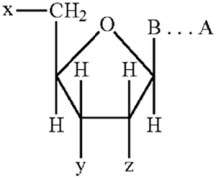
    1.  An oligo- or polynucleotide containing a nucleotide having the structure:

    Structure    wherein B represents a 7-deazapurine or a pyrimidine moiety covalently bonded to the C1 '-position of the sugar moiety, provided that whenever B is a 7-deazapurine, the sugar moiety is attached at the N9 -position of the 7-deazapurine, and whenever B is a pyrimidine, the sugar moiety is attached at the N1 -position of the pyrimidine;
        wherein A comprises at least three carbon atoms and represents at least one component of a signaling moiety capable of producing a detectable signal;
        wherein B and A are covalently attached directly or through a linkage group that does not substantially interfere with the characteristic ability of the oligo- or polynucleotide to hybridize with a nucleic acid and does not substantially interfere with formation of the signalling moiety or detection of the detectable signal, provided also that if B is 7-deazapurine, A or the linkage group is attached to the 7-position of the deazapurine, and if B is pyrimidine, A or the linkage group is attached to the 5-position of the pyrimidine;
        wherein one of x and y represents

    Structures
        and the other of x and y is absent or represents –OH or –H; and
        wherein z represents H– or HO–.

    The Court started with the language of the claim, noting that "at least one component" indicates that the signaling moiety has multiple parts.  Also, the fact that the attachment of "A" does not interfere with the formation of the signaling moiety suggests that the claimed compound does not include a "formed" signaling moiety.  Judge Newman pointed out, however, that the use of the phrase "at least one" has been consistently interpreted to mean "one or more."  Also troubling was the context of claim 1 in relation to its dependent claims.  The first set of claims was drawn to indirect detection embodiments, such as claim 3:

    3. An oligo- or polynucleotide of claim 1 wherein A is a ligand.

    Claim 67, however, represented a set of dependent claims that were drawn to direct detection.

    67. An oligo- or polynucleotide of claim 1 or 48 wherein A comprises an indicator molecule.

    If claim 1 can have dependent claims drawn to both direct and indirect detection, the District Court reasoned, the claim certainly cannot be limited to just one of these.  The Federal Circuit, however, was dismissive of District Court's reliance on these claims.  The Federal Circuit concluded that "dependent claims cannot broaden an independent claim from which they depend."  It is unclear, however, why these dependent claims were not be used to define the scope of claim 1 in the first place.

    The Court continued by looking to the specification.  It is black letter patent law that the description of a preferred embodiment should not be used to limit the claims to that particular embodiment.  In this case, though, the Federal Circuit stated that the "background portion of the specification further describes the invention," which was used to support the narrowing of claim 1 to indirect detection mechanisms.  The section of the specification cited is reproduced here:

    To circumvent the limitations of radioactiviely labeled probes or previously utilized chemical and biological probes, a series of novel nucleotide derivatives that contain biotin, iminobiotin, lipoic acid, and other determinants attached covalently to the pyrimidine or purine ring have been synthesized.  These nucleotide derivatives, as well as polynucleotides and coenzymes that contain them, will interact specifically and uniquely with proteins such as avidin or antibodies.  The interaction between modified nucleotides and specific proteins can be utilized as an alternative to radioisotopes for the detection and localization of nucleic acid components in many of the procedures currently used in biomedical and recombinant-DNA technologies.

    Nowhere in this section does it mention "the present invention," much less can this be considered a clear disavowal of the claim scope that might cover direct detection methods.

    The Federal Circuit also pointed to the fact that the specification only discusses indirect detection.  However, the Court ignored example 9, which the District Court concluded, "based on expert testimony," teaches direct detection.  "[T]his sole factual finding does not override our analysis of the totality of the specification, which clearly indicates that the purpose of this invention was directed towards indirect detection, not direct detection."  Whether a claim term can be limited by "the purpose of" the invention is an interesting question, but the Teva case required the Federal Circuit to give deference to findings of fact.  Reliance on what an expert says about the meaning of the specification would appear to be just the type of evidence that should be entitled to the "clear error" standard.  In fact, Judge Newman pointed out that the majority did not cite to any contrary evidence to support a reversal of the District Court.  In addition, she pointed out that the majority also ignored Applera's expert, Dr. Kricka, who conceded on cross-examination that "several parts of the original application disclosed compounds that allowed for direct detection."  The Court relied, in part, on the fact that Enzo did not raise this argument on appeal.  However, is that significant, especially when the Court was explicitly interpreting claims in view of Teva, yet in a manner inconsistent with the District Court's fact findings.

    As much as there was concern in the community when the Teva case came down that attorneys would be motivated to set up as many facts as possible in a claim construction proceeding, it is equally true that appellees should be motivated to cite to the district court's reliance on those factual findings.  Conversely, a party seeking to reverse a claim construction determination should establish how the correct construction is clear from the claim language alone, and therefore no deference is due.  Perhaps the soundness of these propositions is the best take-away lesson that can be gleaned from this case.

    Enzo Biochem Inc. v. Applera Corp. (Fed. Cir. 2015)
    Panel: Chief Judge Prost and Circuit Judges Newman and Linn
    Opinion by Chief Judge Prost; dissenting opinion by Circuit Judge Newman

  • By Donald Zuhn

    USPTO SealEarlier this year, the U.S. Patent and Trademark Office published a final rule in the Federal Register (80 Fed. Reg. 1346) to revise the rules of practice to implement the Federal Circuit's decision in Novartis AG v. Lee.  In Novartis, the Federal Circuit agreed with the USPTO that "no [patent term] adjustment time is available for any time in continued examination, even if the continued examination was initiated more than three calendar years after the application's filing" (i.e., the filing of an RCE tolls the B Delay clock even if the RCE was filed more than three years after the application was filed).  However, the Federal Circuit agreed with Novartis "that the 'time consumed by continued examination' should be limited to the time before allowance, as long as no later examination actually occurs."

    The final rule indicates that the rules of practice have been revised "to provide that the time consumed by continued examination does not include the time after the mailing date of a notice of allowance, unless the applicant files a request for continued examination under 35 U.S.C. 132(b) after such allowance," stating that "the submission of a request for continued examination after any notice of allowance has been mailed will constitute a failure of an applicant to engage in reasonable efforts to conclude processing or examination of an application and thus result in a reduction of any period of patent term adjustment."  The final rule points out that an RCE filed after a notice of allowance has been mailed will not constitute a failure of an applicant to engage in reasonable efforts to conclude processing or examination of an application when the RCE is "filed solely to submit information cited in a patent office communication in a counterpart application that is submitted to the Office within thirty days of receipt of the patent office communication."

    The final rule follows the Office's publication of a notice of proposed rulemaking last July, in which the Office sought comments from the public regarding proposed changes to the rules of practice.  In response to its request for comments, the Office received eight written submissions from the public.  The final rule addresses sixteen discrete comments culled from these submissions (see pages 1349-55 of the final rule notice).

    In explaining why RCEs filed after allowance are treated differently than RCEs filed prior to allowance in response to one comment, the Office notes that "the filing of a request for continued examination after the mailing of a notice of allowance removes the application from the issue process and prevents the Office from issuing the patent, which adds to the pendency of the application as well as the pendency of other applications since examination resources must be diverted from other applications to the application in which the request for continued examination was filed after a notice of allowance was filed."  In response to another comment suggesting that applicants should not be penalized for filing an RCE to request correction of an error in the claims or the failure of the Office to provide an initialed copy of an information disclosure statement, or to respond to an amendment under § 1.312, the Office reminds applicants that:

    A request for continued examination should never be filed simply to obtain correction of a notice of allowability or a response to an amendment under § 1.312.  An applicant may simply call the examiner to obtain the correction (such as a supplemental notice of allowability correctly indicating the allowed claims or an initialed copy of an information disclosure statement) or a response to the amendment under § 1.312 (or call the supervisory patent examiner or technology center director if the call to the examiner is unavailing).

    In addressing the last comment, the Office provided some important clarification regarding the types of papers that may — or may not — be submitted after a notice of allowance without the applicant being considered to have failed to engage in reasonable efforts to conclude processing or examination of the application.  In particular, the final rule states that:

    [T]he submission of the following papers after a notice of allowance will not be considered a failure to engage in reasonable efforts to conclude processing of examination of the application under § 1.704(c)(10): (1) An Issue Fee(s) Transmittal (PTOL–85B); (2) a power of attorney; (3) a power to inspect; (4) a change of address; (5) a change of entity status (micro, small, non-small); (6) a response to the examiner's reasons for allowance or a request to correct an error or omission in the ''Notice of Allowance'' or ''Notice of Allowability''; (7) status letters; (8) requests for a refund; (9) an inventor's oath or declaration; (10) an information disclosure statement with a statement in compliance with § 1.704(d); (11) the resubmission by applicant of unlocatable paper(s) previously filed in the application (§ 1.251); (12) a request for acknowledgment of an information disclosure statement in compliance with §§ 1.97 and 1.98, provided that the applicant had requested that the examiner acknowledge the information disclosure statement prior to the notice of allowance, or the request for acknowledgement was applicant's first opportunity to request that the examiner acknowledge the information disclosure statement; (13) comments on the substance of an interview where the applicant-initiated interview resulted in a notice of allowance; and (14) letters related to government interests (e.g., those between NASA and the Office).

    The final rule notes that three of the above papers (i.e., written status inquiries, requests for refund, an inventor's oath or declaration) had been previously considered as a failure to engage in reasonable efforts to conclude processing and examination of the application, but that such papers would no longer be considered as such "due to the changes that have been brought about by the electronic filing and processing of patent applications."  The final rule also provides a list of papers that when submitted after a notice of allowance has been mailed will constitute a failure to engage in reasonable efforts to conclude processing or examination of an application.  In particular, the final rules states that:

    An exemplary listing of such papers includes: (1) An amendment under § 1.312; (2) a paper containing a claim for priority or benefit or request to correct priority or benefit information (e.g., a new or supplemental application data sheet filed to correct foreign or domestic benefit information); (3) a request for a corrected filing receipt; (4) a certified copy of a priority document; (5) drawings; (6) a letter relating to biologic deposits; (7) a request to change or correct inventorship; and (8) an information disclosure statement not accompanied by a statement in compliance with § 1.704(d).

    A listing of the specific rules changes can be found on pages 1356-57 of the final rule.  The final rule indicates that the changes to 37 C.F.R. § 1.703 set forth in the final rule took effect on January 9, 2015, and that the changes to 37 C.F.R. § 1.704 set forth in the final rule took effect on March 10, 2015.

  •         By Sherri Oslick

    Gavel About Court Report:  Each week we will report briefly on recently filed biotech and pharma cases.

    Otsuka Pharmaceutical Co., Ltd. v. Sandoz Inc. et al.
    1:15-cv-01716; filed March 9, 2015 in the District Court of New Jersey

    • Plaintiff:  Otsuka Pharmaceutical Co., Ltd.; Sandoz Inc.
    • Defendants:  Sandoz Private Ltd.; Sandoz International GmbH

    Infringement of U.S. Patent Nos. 8,017,615 ("Low Hygroscopic Aripiprazole Drug Substance and Process for the Preparation Thereof," issued September 13, 2011), 8,580,796 (same title, issued November 12, 2013), 8,642,760 (same title, issued February 4, 2014), and 8,759,350 ("Carbostyril Derivatives and Serotonin Reuptake Inhibitors for Treatment of Mood Disorders," issued June 24, 2014) following a Paragraph IV certification as part of Sandoz's filing of an ANDA to manufacture a generic version of Otsuka's Abilify® (aripiprazole, used to treat bipolar disorder and schizophrenia).  View the complaint here.

    Allergan Sales, LLC v. Sandoz, Inc.
    2:15-cv-00347; filed March 9, 2015 in the Eastern District of Texas

    Infringement of U.S. Patent Nos. 7,030,149 ("Combination of Brimonidine Timolol For Topical Ophthalmic Use," issued April 18, 2006), 7,320,976 (same title, issued January 22, 2008), 7,642,258 (same title, issued January 5, 2010), and 8,748,425 (same title, issued June 10, 2014) following a Paragraph IV certification as part of Sandoz's amendment of its ANDA to manufacture a generic version of Allergan's Combigan® (brimonidine tartrate/timolol maleate ophthalmic solution, used to treat glaucoma).  View the complaint here.

    Baxter Healthcare Corp. et al. v. Sagent Pharmaceuticals Inc.
    1:15-cv-02076; filed March 9, 2015 in the Northern District of Illinois

    • Plaintiffs:  Baxter Healthcare Corp.; Baxter International Inc.; Baxter Healthcare S.A.
    • Defendant:  Sagent Pharmaceuticals Inc.

    Baxter Healthcare Corp. et al. v. Sagent Pharmaceuticals Inc.
    1:15-cv-01684; filed March 6, 2015 in the District Court of New Jersey

    • Plaintiffs: Baxter Healthcare Corp.; Baxter International Inc.; Baxter Healthcare S.A.
    • Defendant: Sagent Pharmaceuticals Inc.

    The complaints in these cases are substantially identical.  Infringement of U.S. Patent Nos. 6,310,094 ("Ready-to-Use Esmolol Solution," issued October 30, 2001) and 6,528,540 ("Esmolol Formulation," issued March 4, 2003) following a Paragraph IV certification as part of Sagent's filing of an ANDA to manufacture a generic version of Baxter's Brevibloc® (esmolol hydrochloride, used for the rapid control of the heart rate in patients with atrial fibrillation or atrial flutter in perioperative, postoperative, or other emergent circumstances where short term control of the heart rate with a short-acting agent is desirable).  View the New Jersey complaint here.

    Otsuka Pharmaceutical Co., Ltd. v. Wockhardt Bio AG et al.
    3:15-cv-01690; filed March 6, 2015 in the District Court of New Jersey

    • Plaintiff:  Otsuka Pharmaceutical Co., Ltd.
    • Defendants:  Wockhardt Bio AG; Wockhardt USA LLC; Wockhardt Ltd.

    Infringement of U.S. Patent Nos. 8,759,350 ("Carbostyril Derivatives and Serotonin Reuptake Inhibitors for Treatment of Mood Disorders," issued June 24, 2014) and 7,053,092 ("5-HT1A Receptor Subtype Agonist," issued May 30, 2006) following a Paragraph IV certification as part of Wockhardt's filing of an ANDA to manufacture a generic version of Otsuka's Abilify® (aripiprazole, used to treat bipolar disorder and schizophrenia).  View the complaint here.

    Biomarin Pharmaceutical Inc. et al. v. Par Pharmaceutical, Inc.
    3:15-cv-01706; filed March 6, 2015 in the District Court of New Jersey

    • Plaintiffs:  Biomarin Pharmaceutical Inc.; Merck & Cie
    • Defendant:  Par Pharmaceutical, Inc.

    Infringement of U.S. Patent Nos. 7,566,462 ("Stable Tablet Formulation," issued July 28, 2009), 7,566,714 ("Methods and Compositions for the Treatment of Metabolic Disorders," issued July 28, 2009), 7,612,073 ("Methods of Administering Tetrahydrobiopterin, Associated Compositions, and Methods of Measuring," issued November 3, 2009), 7,727,987 (""Crystalline Forms of (6R)-L-Erythro-Tetrahydrobiopterin Dihydrochloride," issued June 1, 2010), 8,003,126 ("Stable Table Formulation," issued August 23, 2011), 8,067,416 ("Methods and Compositions for the Treatment of Metabolic Disorders," issued November 29, 2011), RE43,797 ("Methods of Administering Tetrahydrobiopterin," issued November 6, 2012), and 8,318,745 ("Crystalline Forms of (6R)-L-Erythro-Tetrahydrobiopterin Dihydrochloride," issued November 27, 2012) following a Paragraph IV certification as part of Par's filing of an ANDA to manufacture a generic version of BioMarin's Kuvan® (sapropterin dihydrochloride, used to reduce blood phenylalanine levels in patients with hyperphenylalaninemia due to tetrahydrobiopterin- (BH4-) responsive phenylketonuria).  View the complaint here.

  • CalendarMarch 18, 2015 – "Professionalism, Privilege, and Duty of Candor before the USPTO" (American Intellectual Property Law Association) – 12:30 – 2:15 pm (ET)

    March 19, 2015 – "Abstract Ideas after Alice Corp. v. CLS Bank Int'l: The USPTO Issues Interim Guidance and Examples" (McDonnell Boehnen Hulbert & Berghoff LLP) – 10:00 am to 11:15 am (CT)

    March 19, 2015 – "Parallel Patent Proceedings Before the PTAB and Federal Court Post-AIA — Navigating Litigation Stays, Discovery and Settlements Concurrent With PTAB Review" (Strafford) – 1:00 to 2:30 pm (EDT)

    March 24, 2015 – "Leveraging Inter Partes Review Petition Denials — Lessons From PTAB Full or Partial Denials to Avoid Institution of an IPR or Avoid a Denial" (Strafford) – 1:00 to 2:30 pm (EDT)

    March 25-26, 2015 – Post-Grant PTO Proceedings*** (American Conference Institute) – New York, NY

    March 30-31, 2015 – Post-Grant Patent Challenges at the PTAB*** (Momentum) – San Jose, CA

    March 31, 2015 – "Overcoming Sect. 101 Rejections Post-Alice Corp. — Leveraging USPTO Guidance and Recent Decisions to Meet Sect. 101 Patent Eligibility Requirements" (Strafford) – 1:00 to 2:30 pm (EDT)

    March 31, 2015 – "Trade Secret or Patent Protection? Making the Right Choice for Your University’s Innovations" (Technology Transfer Tactics) – 1:00 to 2:00 pm (Eastern)

    April 9, 2015 – "Conducting and Analyzing Patent Searches — Strategies for Validity, Patentability, Infringement, FTO and State-of-the-Art Searches" (Strafford) – 1:00 to 2:30 pm (EDT)

    April 15-17, 2015 – 2015 Spring Intellectual Property Counsels Committee (IPCC) Conference (Biotechnology Industry Organization) – St. Louis, MO

    April 16, 2015 – "Patent Subject Matter Eligibility: Navigating the New USPTO Guidance — Analyzing Subject Matter and Avoiding Rejection Under the USPTO's Detailed Framework" (Strafford) – 1:00 to 2:30 pm (EDT)

    April 27-29, 2015 – M&A and Strategic Alliances in the Life Sciences Industries*** (American Conference Institute) – New York, NY

    ***Patent Docs is a media partner of this conference or CLE

  • Biotechnology Industry Organization (BIO)The Biotechnology Industry Organization (BIO) will be holding its 2015 Spring Intellectual Property Counsels Committee (IPCC) Conference on April 15-17, 2015 in St. Louis, MO.

    The conference will offer presentations on the following topics:

    Wednesday, April 15:

    • Can Congress Fix the Patent Law Mess? (Pre-Conference Workshop) — Patent Docs author Donald Zuhn of McDonnell Boehnen Hulbert & Berghoff LLP will moderate a panel consisting of Janet Gongola, Patent Reform Coordinator, U.S. Patent & Trademark Office; Len Smith, Chief Business and Legal Officer, Heliae, and Patent Docs author Kevin Noonan of McDonnell Boehnen Hulbert & Berghoff LLP (workshop sponsored by McDonnell Boehnen Hulbert & Berghoff LLP)

    Thursday, April 16:

    • Strategic Aspects of the New EU Unified Patent Court
    • AIA Today
    • Claim Construction Now and Other Case Law Updates
    • Economic Espionage and Biotechnology:  A Growing Threat (luncheon keynote)
    • Rethinking Biopharma Patent Licenses
    • At the Hop:  DJ's, (Inter) Parties, and (Patent) Dances

    Friday, April 17:

    • Recent Developments in IPR and Their Effect on the Life Sciences
    • Emerging Ethical Dilemmas in Patent Prosecution

    In addition, there will be a welcome reception at the Flamingo Bowl from 5:30 pm to 7:30 pm on April 15, and a dinner reception at the Anheuser Busch Brewery Tour Center from 5:30 pm to 9:00 pm on April 16.

    A program agenda for this conference, including a list of speakers and descriptions of the presentations and events can be obtained here.

    Registration information can be found here.  Additional information regarding the conference can be found at the conference website.

    BIO IPCC

  • Strafford #1Strafford will be offering a webinar/teleconference entitled "Patent Subject Matter Eligibility: Navigating the New USPTO Guidance — Analyzing Subject Matter and Avoiding Rejection Under the USPTO's Detailed Framework" on April 16, 2015 from 1:00 to 2:30 pm (EDT).  Amelia Feulner Baur, Ph.D of McNeill Baur, Leslie McDonell of Finnegan Henderson Farabow Garrett & Dunner, and  Donna M. Meuth, Associate General Counsel for Eisai will examine the new USPTO Interim Guidance and the analysis for determining patent subject matter eligibility, provide best practices for applying the new guidelines in application drafting and prosecution, and provide insight into how the Interim Eligibility Guidance may impact strategies involving owned or in-licensed intellectual property.  The webinar will review the following questions:

    • How do the Myriad/Mayo Guidelines and the new Interim Guidance change the landscape for patentable subject matter?
    • How can counsel show "significant difference" from a natural material, law or phenomenon?
    • How will examiners apply the new guidance?
    • What are best practices for drafting and prosecuting involved applications?
    • How does the Interim Guidance effect strategy involving owned and licensed IP?

    The registration fee for the webinar is $297 ($362 for registration and CLE processing).  Those registering by March 20, 2015 will receive a $50 discount.  Those interested in registering for the webinar, can do so here.

  • Strafford #1Strafford will be offering a webinar/teleconference entitled "Conducting and Analyzing Patent Searches — Strategies for Validity, Patentability, Infringement, FTO and State-of-the-Art Searches" on April 9, 2015 from 1:00 to 2:30 pm (EDT).  Thomas L. Irving and Cory C. Bell of Finnegan Henderson Farabow Garrett & Dunner will provide guidance to patent counsel on structuring and conducting patent searches, discuss reporting of search results, and offer best practices for analyzing patent searches to maximize patent protection.  The webinar will review the following questions:

    • What are the benefits and pitfalls of classification searching and keyword searching?
    • What are the critical considerations when determining what, when and where to search?
    • What are the key components of an effective search strategy, analytical process, and follow-up steps to ensure a successful patent application?

    The registration fee for the webinar is $297 ($362 for registration and CLE processing).  Those interested in registering for the webinar, can do so here.