• USPTO SealThe American Intellectual Property Law Association (AIPLA) and U.S. Patent and Trademark Office will be co-hosting a series of cross-country roadshows in August in Santa Clara, CA (August 24); Dallas, TX (August 26); and Alexandria, VA (August 28).  The Santa Clara roadshow is being co-sponsored by the High Tech Law Institute of Santa Clara Law and the Dallas roadshow is being co-sponsored by the IP Section of the Dallas Bar Association.  The full-day program will focus on enhancing patent quality (morning session) and conducting AIA trials (afternoon session) with AIPLA #1numerous speakers from the USPTO and private practice.  The program for the roadshows includes presentations on the following topics:

    Part I.  Patent Quality Initiative, Version 2.0:  What it Means to You

    • The USPTO's Enhanced Patent Quality Initiative
    • Achieving Clarity of Record; Best Practices for Drafting Quality Patent Applications
    • Improving Patent Quality Through Remote Examiner Interviews
    • The PTO's New Quality Metrics

    • Lunch and Keynote Speaker: Russ Slifer, Deputy Under Secretary of Commerce and Deputy Director, USPTO

    Part II.  Trials at the Patent Trial and Appeal Board:  New Rules, Hot Issues and a Live Hearing

    • State of the Board
    • Proposed Rule Changes at the Patent Trial and Appeal Board
    • The Bar's Response to Proposed Rule Changes; Audience Questions and Feedback
    • Hot Issues in PTAB Trials: Coordination of District Court and PTAB; Appeals to the Federal Circuit; Any Changes Imposed by Patent Reform; Other Issues
    • Introduction to Live Hearing
    • Live PTAB Hearing

    The registration fee for the program is $225 (AIPLA member rate), $375 (non-member rate), $35 (student rate), or $95 (government rate).  Those interested in registering for the program, can do so here.

  • PLI #1Practising Law Institute (PLI) will be holding a seminar on Developments in Pharmaceutical and Biotech Patent Law 2015 on September 18, 2015 in San Francisco, CA and on October 2, 2015 in New York, NY.  The San Francisco session will also be offered as a webcast.  Topics to be covered at the seminar include:

    • How IPRs relate to ANDA and biosimilar litigation;
    • Preparing to face IPRs;
    • Top pharmaceutical and biotech court decisions from 2014 and 2015;
    • Biosimilars: The approval process, data exclusivity and patent litigation;
    • Recent Supreme Court decisions and the Court's continued focus on patent law;
    • Evolution of the lower courts' approach to indefiniteness and claim construction in view of recent Supreme Court decisions and what it means in pharmaceutical and biotech cases;
    • Patentable subject matter under Section 101 in the aftermath of Myriad and Mayo;
    • Update on USPTO Patentability Guidelines on patentable subject matter;
    • Claim drafting, litigation and legislation in view of recent Section 101 case law;
    • Ethical considerations impacting patent practice, including false declarations and data in patent applications, best mode violations after the AIA, advanced conflict waivers specific to IP matters; and
    • Pre-pleading investigations, document retention, and the use of experts.

    A program schedule and list of speakers for each of the locations can be found here.

    The registration fee for the conference is $1,695.  Those interested in registering for the conference can do so at the PLI website.

  • AIPLA #1The American Intellectual Property Law Association (AIPLA) will be offering a webinar on "Biosimilars: Regulation, Litigation and New Developments Patent Practitioners and Regulatory Attorneys Should Know" on August 27, 2015 from 12:30 – 2:00 pm (Eastern).  Debora Plehn-Dujowich of Prismatic Law Group, PLLC, James C. Shehan of Hyman Phelps & McNamara, and Sanya Sukduang of Finnegan Henderson Farabow Garrett & Dunner, LLP will review the FDA regulatory pathway for biosimilars in the U.S. and how biosimilar applicants may use data obtained abroad in certain cases.  Issues surrounding litigation for biosimilars will also be covered, such as whether the "patent dance" is optional, and whether other routes such as PTAB trials should be pursued.  Recent developments in biosimilar applications in the U.S. and abroad will also be reviewed, as well as the new Guidance documents published by the FDA.

    The registration fee for the program is $95 (AIPLA member rate) or $150 (non-member rate).  Those interested in registering for the program, can do so here.

  • By Donald Zuhn

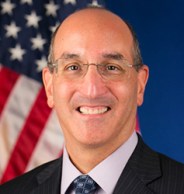
    Hirshfeld, DrewThe U.S. Patent and Trademark Office announced earlier today that U.S. Secretary of Commerce Penny Pritzker has appointed Deputy Commissioner for Patent Examination Policy Drew Hirshfeld to be the new Commissioner for Patents effective immediately.  Mr. Hirshfeld should be familiar to readers of this space for his role, as Deputy Commissioner for Patent Examination Policy, in helping to develop and explain the Office's guidance regarding the examination of claims for subject matter eligibility under 35 U.S.C. § 101.  Mr. Hirshfeld may also be recognizable as the signatory for the Office's "Guidance For Determining Subject Matter Eligibility Of Claims Reciting Or Involving Laws of Nature, Natural Phenomena, & Natural Products" (or "Myriad-Mayo Guidance"), which was issued in March of 2014; the "Preliminary Examination Instructions in view of the Supreme Court Decision in Alice Corporation Pty. Ltd. v. CLS Bank International," which was issued in June of 2014; and the "2014 Interim Guidance on Patent Subject Matter Eligibility," which was issued last December and which supplemented the Alice guidance and superseded the Myriad/Mayo guidance.

    Mr. Hirshfeld also oversaw the Office of Patent Legal Administration (PCT), Office of Petitions, Office of the Manual of Patent Examining Procedure, Office of PCT Legal, and Office of Patent Quality Assurance.  According to the Office's announcement, Mr. Hirshfeld also played a key role in the creation of the position of Deputy Commissioner for Patent Quality to help the USPTO focus on improving patent quality, and helped implement multiple provisions of the Leahy-Smith America Invents Act of 2011, including the provisions for First-Inventor-to-File, Preissuance Submissions, Inventor's Oath/Declaration, and Supplemental Examination.  Prior to being named Deputy Commissioner, Mr. Hirshfeld served two years as the USPTO Chief of Staff, managing operations and intergovernmental communications for then-Director of the USPTO David Kappos.  He also served as a Supervisory Patent Examiner as well as a Group Director of Technology Center 2100, overseeing Computer Networking and Database workgroups.  Mr. Hirshfeld began his career at the USPTO in 1994 as a patent examiner.  He earned a Bachelor of Science in Mechanical Engineering from the University of Vermont and a Juris Doctor from the Western New England College School of Law.

    Mr. Hirshfeld replaces retired Commissioner Margaret "Peggy" Focarino, the first woman to serve as Commissioner for Patents since the position's creation in 1790, who retired earlier this month after 38 years with the Patent Office.

  • By Kevin E. Noonan

    USPTO SealPursuant to the Notice published in the Federal Register today, the U.S. Patent and Trademark Office provided additional materials related to the Office's interpretation of what does (and what does not) satisfy the subject matter eligibility requirement of 35 U.S.C. § 101 (as interpreted by the Supreme Court).  What was not made available were materials related to interpreting the metes and bounds of the statute with regard to natural products or diagnostic methods.  Instead the Office provided the three Appendices referenced in the Notice directed to the effects of the Supreme Court's Alice v. CLS Bank decision.

    Appendix 1 sets forth seven additional examples (in excess of the twenty previously set forth by the Office) related to Alice-type claims.  These include examples taken from Parker v. Flook and Diamond v. Diehr as well as hypothetical examples and cases decided in the inferior courts.

    Appendix 2 is a comprehensive index of all 27 of the Examples from the Office, set forth in tabular form for ease of appreciation of how the Office is making its decisions.

    Appendix 3 has some relevance to the biotech and diagnostic methods audience, which lists nine Supreme Court decisions and thirty-six Federal Circuit and CCPA decisions related to subject matter eligibility.

    PTO sources indicate that the expected biotech and diagnostic methods materials are still in process and are expected to be put up on the PTO website in future.  The extent to which there may be internal dissension regarding such materials, or the effect of Drew Hirschfield's ascension to be Commissioner of Patents on this delay are unknown.

    Patent Docs plans to provide additional information regarding the examples of Appendices 1 and 2 in subsequent posts.

  • By Kevin E. Noonan

    USPTO SealThe U.S. Patent and Trademark Office will publish a Notice on July 30th that the Office is updating their procedures for determining subject matter eligibility.  A copy of this Notice can be found here.  The update will contain three appendices:

    • Appendix 1 provides new examples that are illustrative of major themes from the comments received by the Office concerning its Revised Guidance published December 16, 2014 (2014 Interim Guidance on Patent Subject Matter Eligibility, 79 FR 74618 (Dec. 16, 2014)) (see "USPTO Issues Interim Guidance on Subject Matter Eligibility").

    • Appendix 2 provides a comprehensive index of examples for use with the 2014 Interim Patent Eligibility Guidance, including new and previously issued examples.

    • Appendix 3 lists and discusses selected eligibility cases from the Supreme Court and the U.S. Court of Appeals for the Federal Circuit.

    These appendices are likely to be posted here on the USPTO website.

    According to the Notice, the Office received "over sixty" comments regarding the December 16, 2014 Interim Guidance provoked that encompassed six major "themes":

    (1) requests for additional examples, particularly for claims directed to abstract ideas and laws of nature;

    (2) further explanation of the markedly different characteristics analysis;

    (3) further information regarding how examiners identify abstract ideas;

    (4) discussion of the prima facie case and the role of evidence with respect to eligibility rejections;

    (5) information regarding application of the 2014 Interim Patent Eligibility Guidance in the Patent Examining Corps; and

    (6) explanation of the role of preemption in the eligibility analysis, including a discussion of the streamlined analysis.

    This Update is intended to address these themes.

    The Office is also soliciting comments, expected to have a deadline of 90 days after the publication date of the Notice (October 28, 2015).

    As stated in the Notice:

    Comments on the July 2015 Update: Subject Matter Eligibility must be sent by electronic mail message over the Internet addressed to: 2014_interim_guidance@uspto.gov.  Electronic comments submitted in plain text are preferred, but also may be submitted in ADOBE® portable document format or MICROSOFT WORD® format.  The comments will be available for viewing via the Office's Internet Web site (http://www.uspto.gov).

    The USPTO contacts are Raul Tamayo, Senior Legal Advisor, Office of Patent Legal Administration, who can be reached by telephone at 571-272-7728, or Michael Cygan, Senior Legal Advisor, Office of Patent Legal Administration, who can be reached by telephone at 571-272- 7700.

  • By Donald Zuhn

    USPTO SealEarlier this month, the U.S. Patent and Trademark Office announced two new collaborations with the Japan Patent Office.  In a press release issued on July 1, the USPTO announced an agreement with the JPO in which the JPO will act as an available International Searching Authority (ISA) and International Preliminary Examining Authority (IPEA) for certain international applications filed with the USPTO as the Receiving Office (RO/US), under the Patent Cooperation Treaty.

    The agreement, which took effect on July 1, 2015 and will run until June 30, 2018, will provide applicants with an additional option for applications in which the claims are directed to the field of green technology as defined by certain International Patent Classification classes.  Under the agreement, an applicant may choose the JPO as competent authority for a given application if the application is submitted in English, the claims are directed to the field of green technology, and the JPO has not received more than 5,000 international applications from the USPTO during the three year period of the agreement, not more than 300 applications per quarter during the first year, and not more than 475 application per quarter during the second and third years.  The USPTO noted that further details regarding the International Patent Classification classes that will define the field of green technology under the agreement will be made available on the USPTO website.

    JPO 1In a notice published in the Federal Register (80 Fed. Reg. 39752), the USPTO announced that it was initiating a Collaborative Search Pilot Program (CSP) with the JPO to study whether the exchange of search results between the two offices for corresponding counterpart applications will improve patent quality and facilitate the examination of patent applications in both offices.  The notice indicates that during the pilot program, each office will conduct a search for its corresponding counterpart application and exchange the results with the other office before either office issues a communication on patentability.  The pilot program will take effect on August 1, 2015 and last for two years, with participating applications limited to 400 per year.

    The USPTO will use the First Action Interview Pilot Program (FAI) in this search results work sharing pilot program, because its procedure bifurcates the determination and evaluation of a prior art search from the notice of rejection.  Applicants wishing to participate in the program will also have to file a Petition to Make Special (via the EFS-Web).  However, the USPTO indicated that the petition fee will be waived for applications participating in the pilot program.  Additional requirements for participation in the pilot program can be found on pages 39754-55 of the USPTO's notice.

    Additional information regarding the CSP with the JPO (as well as a similar program with the Korean Intellectual Property Office) can be found here.

  • By Donald Zuhn

    Congressional Budget OfficeEarlier this month, the Congressional Budget Office (CBO) issued a cost estimate for the Innovation Act (H.R. 9).  The bill, which was introduced in February, was reported by the House Committee on the Judiciary in June.  The CBO noted that implementing H.R. 9 would cost an estimated $3 million between 2016 and 2020.  This cost estimate, however, excludes costs to the U.S. Patent and Trademark Office, which were separately identified in the report.  The $3 million per year cost estimate would cover the preparation of several studies and reports, and administrative costs incurred by the Administrative Office of the United States Courts (AOUSC) and the Government Accountability Office (GAO).  The CBO estimated that H.R. 9 would cost the USPTO about $7 million per year to implement, which would cover changes such as the development of new databases to make information about patent ownership and litigation available on the USPTO website.  Because the USPTO has some fee collection authority, the CBO noted that the net budgetary effect of implementing the bill on the USPTO would not be significant.

    House of Representatives SealAccording to the report, the CBO expects that "by requiring inventors to be more specific in pleadings to the court, awarding attorney fees to the prevailing party, and limiting discovery early in an infringement proceeding, the bill would affect the decisions of inventors to initiate lawsuits for patent infringement."  The CBO indicated that H.R. 9 would impose a mandate on both public and private entities because the USPTO would charge fees to offset the costs incurred to collect and make some information related to patent ownership and litigation publicly available, as well as change administrative procedures related to patents that would result in increased patent fees.  Of the $7 million per year the CBO estimates will be required to comply with this mandate, the CBO determined that less than $150,000 of the costs would accrue to public entities, with the remainder accruing to private entities.

  •         By Sherri Oslick

    Gavel About Court Report:  Each week we will report briefly on recently filed biotech and pharma cases.

    Hetero Labs Ltd, Unit V et al. v. Pharmacia & Upjohn Co. LLC
    1:15-cv-05396; filed June 18, 2015 in the Northern District of Illinois

    • Plaintiffs:  Hetero Labs Ltd, Unit V; Hetero USA, Inc.
    • Defendant:  Pharmacia & Upjohn Co. LLC

    Declaratory judgment of non-infringement of U.S. Patent Nos. 6,514,529 ("Oxazolidinone Tablet Formulation," issued February 4, 2003) and 6,559,305 ("Linezolid – Crystal Form II," issued May 6, 2003) in conjunction with Hetero's filing of an ANDA to manufacture a generic version of Pfizer's Zyvox® (linezolid, used to treat bacterial infections).  View the complaint here.  [NB: The complaint was later voluntarily dismissed.]

    Meda Pharmaceuticals Inc. v. Roxane Laboratories, Inc.
    1:15-cv-00510; filed June 17, 2015 in the District Court of Delaware

    Infringement of U.S. Patent Nos. 8,017,073 ("Compositions Comprising Azelastine and Methods of Use Thereof," issued December 6, 2011) and 8,518,919 (same title, issued August 27, 2013) following a Paragraph IV certification as part of Roxane's filing of an ANDA to manufacture a generic version of Meda's Astepro® (azelastine hydrochloride nasal spray, used to treat hay fever and allergy symptoms).  View the complaint here.


    Par Pharmaceutical Inc. et al. v. Breckenridge Pharmaceutical Inc. et al.
    1:15-cv-00486; filed June 12, 2015 in the District Court of Delaware

    • Plaintiffs:  Par Pharmaceutical Inc.; Alkermes Pharma Ireland Ltd.
    • Defendants:  Breckenridge Pharmaceutical Inc.; TWi Pharmaceuticals Inc.; TWi Pharmaceuticals USA Inc.

    Infringement of U.S. Patent No. 9,040,088 ("Nonoparticulate Megestrol Formulations," issued May 26, 2015) in conjunction with defendants' filing of an ANDA to manufacture a generic version of Par's Megace ES® (megestrol acetate, used for the treatment of appetite loss, severe malnutrition, or unexplained, significant weight loss in AIDS patients).  View the complaint here.

  • CalendarJuly 29, 2015 – "Teva: The Real Impact on Claim Construction Tactics in the PTAB, Federal Courts, and ITC" (American Intellectual Property Law Association) – 12:30 – 2:00 pm (Eastern)

    July 29, 2015 – "Protecting Your Trade Secrets: Strategies and Tools to Avoid Costly Litigation" (Commercial Law WebAdvisor) – 1:00 to 2:30 pm (Eastern)

    July 29, 2015 – "Sweeping Developments in Patent Reform Agenda: The Innovation Act and the PATENT Act — A 2015 Perspective" (The Knowledge Group) – 3:00 to 5:00 pm (ET)

    July 29, 2015 – "Where to Challenge Patents? International Post Grant Practice — Strategic Considerations Before the USPTO, EPO, SIPO and JPO" (Practising Law Institute) – 1:00 to 2:00 pm (Eastern)

    July 30, 2015 – "Advanced Issues for Patent Claim Construction: Leveraging Recent Court Guidance — Navigating New Standard of Review, Interplay With Litigation and Choice of Law, and Continuation Application" (Strafford) – 1:00 to 2:30 pm (EDT)

    August 6, 2015 – "Maximizing Patent Prosecution Opportunities in Europe: Tactics for Counsel When Drafting U.S.-Origin Applications — Navigating Differing USPTO and EPO Legal Standards While Maintaining U.S. Patent Strategy" (Strafford) – 1:00 to 2:30 pm (EDT)

    August 10-11, 2015 – "Advanced Patent Prosecution Seminar 2015: Claim Drafting & Amendment Writing" (Practising Law Institute) – San Francisco, CA

    August 11, 2015 – Patent Quality Chat webinar series – Measuring Patent Quality – noon to 1:00 pm (EDT)

    August 13, 2015 – "Defending Patents in IPR Proceedings — Leveraging Motions to Amend and Preliminary Responses, Weighing Secondary Considerations" (Strafford) – 1:00 to 2:30 pm (EDT)

    August 12-14, 2015 – Advanced Patent Law Seminar (Chisum Patent Academy) – Seattle, WA

    August 20, 2015 – "Inducement to Infringe in Patent Litigation: Protecting IP Rights — Lessons from Commil USA v. Cisco Sys. Inc. and Leveraging Opinions of Counsel" (Strafford) – 1:00 to 2:30 pm (EDT)

    August 27, 2015 – "Meet the New Boss. Same as the Old Boss? Not Even Close under New Mayo/Alice Regime for § 101" (McDonnell Boehnen Hulbert & Berghoff LLP) – 10:00 am to 11:15 am (CT)

    September 10-11, 2015 - "Advanced Patent Prosecution Seminar 2015: Claim Drafting & Amendment Writing" (Practising Law Institute) – Chicago, IL

    September 24-25, 2015 - Advanced Patent Law Seminar (Chisum Patent Academy) – Washington, DC

    ***Patent Docs is a media partner of this conference or CLE