• USPTO SealThe U.S. Patent and Trademark Office will be offering a virtual panel discussion on the duty of disclosure and duty of reasonable inquiry on February 23, 2023 from 3:00 pm to 4:00 pm ET.  Kimberly Braslow of AstraZeneca & Vice Chair of the AIPLA Food and Drug Committee will moderate a panel consisting of Robert A. Clarke, Mary Till, and Matthew Sked of the USPTO Office of Patent Legal Administration, and Ronald K. Jaicks of the USPTO Office of Enrollment and Discipline.  The panel will discuss and answer frequently asked questions that the USPTO has received from stakeholders regarding the duty of disclosure and duty of reasonable inquiry.

    Those interested in registering for the webinar can do so here.

  • By Kevin E. Noonan –
    Federal Circuit SealMinerva and Hologic, competitors selling devices used for ablating uterine endometrial tissue, are notable for their dispute last year that gave the Supreme Court an opportunity to reassess an established patent law doctrine, assignor estoppel (reminiscent of the Court's review of the Federal Circuit's standard for obviousness in KSR Int'l v. Teleflex).  As with KSR and obviousness, the Court's decision on assignor estoppel did not do significant violence to the doctrine, but made it less certain and more difficult for courts to apply it consistently.

    But Hologic and Minerva are, after all, competitors, and while they had a role to play in influencing patent law, their interests are properly their private businesses and fortunes, and in addition to the earlier case they were also embroiled in patent litigation over a different patent, U.S. Patent No. 9,186,208.  Minerva had no more luck with that case, however, the District Court deciding on summary judgment that the patent was invalid for having been used in public more than a year before its earliest priority date (under the "public use" bar in pre-AIA 35 U.S.C. § 102(b)).  Yesterday, the Federal Circuit affirmed the District Court judgment in a decision captioned Minerva Surgical, Inc. v. Hologic, Inc. & Cytyc Surgical Products, LLC.

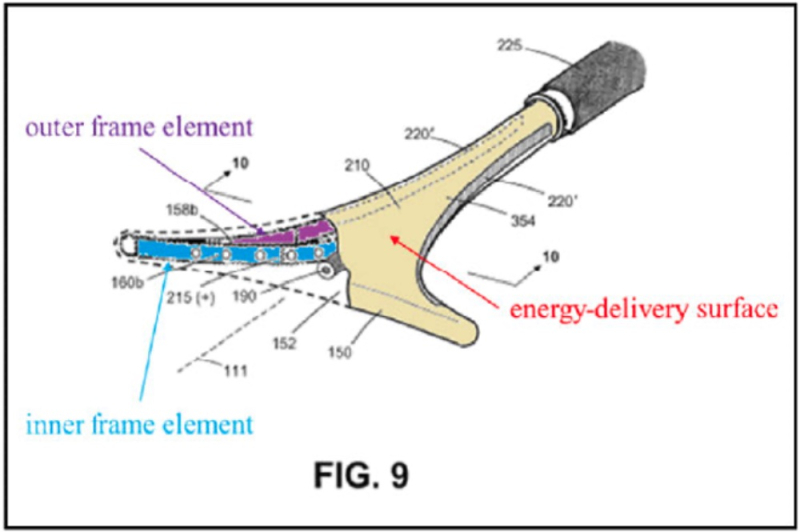
    The claimed device was illustrated in the opinion by Figure 9 in the patent:

    Fig. 9
    and the claims represented by Claim 13:

    A system for endometrial ablation comprising:
        an elongated shaft with a working end having an axis and comprising a compliant energy-delivery surface actuatable by an interior expandable-contractable frame;
        the surface expandable to a selected planar triangular shape configured for deployment to engage the walls of a patient's uterine cavity;
        wherein the frame has flexible outer elements in lateral contact with the compliant surface and flexible inner elements not in said lateral contact, wherein the inner and outer elements have substantially dissimilar material properties.

    (where the underlined terms were the subject of the Court's analysis of invalidity).

    The District Court's decision on summary judgment was based on Minerva's behavior satisfying the prongs of the test enunciated by the Supreme Court in Pfaff v. Wells Elecs., Inc., 525 U.S. 55, 67–68 (1998), that the invention was in public use by being disclosed to the public without any restrictions or confidentiality provisions more than one year from its earliest priority date, and that the invention was "ready for patenting" (i.e., what was disclosed was the claimed invention) when it was disclosed.  With regard to the latter prong, the device had ""the inner and outer elements have substantially dissimilar material properties" (abbreviated in the opinion as the "SDMP" term) which the District Court construed as meaning that the "inner and outer frame elements have different thickness and different composition."  The facts establishing the public disclosure prong recited Minerva's participation in a trade show — the 38th Global Congress of Minimally Invasive Gynecology sponsored by the American Association of Gynecologic Laparoscopists and held November 16-19, 2009 (abbreviated in the opinion as "AAGL 2009") and testimony by one of the inventors that after some failures by the time of AAGL 2009 the device disclosed at the trade show were nearly "perfect."  Minerva had a booth at the show and several (15) "fully functional" devices that were extensively demonstrated on ex vivo uteri to an audience of doctors and industry participants, a presentation by the Chairman of Minerva's Medical Advisory Board, and an "Investigator's Brochure" that "provided a detailed description of the Aurora device and identified that its frame elements were made of 'Stainless steel (420 and 17-4)'" (consistent with CAD drawings prepared during development by Minerva and that the District Court found disclosed the SDMP feature recited in the claims).

    Based on these facts, the District Court found no disputed material facts and granted Hologic's motion for summary judgment of invalidity.

    In the Federal Circuit's opinion by Judge Reyna, joined by Judges Prost and Stoll, the Court agreed with the District Court that Hologic had established evidence satisfying the requirements for invalidating public use more than a year before Minerva's earliest priority date.  Relying on Delano Farms Co. v. California Table Grape Comm'n, 778 F.3d 1243, 1247 (Fed. Cir. 2015), and Dey, L.P. v. Sunovion Pharms., Inc., 715 F.3d 1351, 1355 (Fed. Cir. 2013), the panel asserted that the standard was the invention was "accessible to the public or was commercially exploited" by the inventor, "shown to or used by an individual other than the inventor under no limitation, restriction, or obligation of confidentiality" under Am. Seating Co. v. USSC Grp., Inc., 514 F.3d 1262 (Fed. Cir. 2008).  As to the "ready for patenting" prong, the Court cited Hamilton Beach Brands, Inc. v. Sunbeam Prods., Inc., 726 F.3d 1370, 1379 (Fed. Cir. 2013), for the persuasiveness of there being drawings and working prototypes of the claimed invention at the time of the disclosure.

    The Court rejected Minerva's three assertions of error:  that the disclosure at AAGL 2009 was not a public disclosure; that the disclosure of the device did not have the claimed SMDP feature; and that the invention was not ready for patenting because Minerva was still improving the invention at the time of AAGL 2009.  As for the nature of the disclosure, the panel found dispositive that the "nature of and public access to activities involving" the disclosure were consistent with a public use because the audience consisted of "attendees who were critical to Minerva's budding business—such as potential investors and physicians—and Minerva had every incentive to showcase the Aurora devices to these attendees as best as it could."  The extensiveness of the disclosure also supported a determination of public use, disclosing the operation of fifteen functional devices at Minerva's booth over several days of the trade show, as well as "meetings with interested parties" and a technical presentation.  This was more than "mere display," according to the Federal Circuit in contrast to Motionless Keyboard Co. v. Microsoft Corp., 486 F.3d 1376 (Fed. Cir. 2007) cited by Minerva.  The panel rejected Minerva's contention that the disclosure was insufficient because observers were not permitted to "closely observe[] or physically handle[]" them, stating that "public use may also occur where, as here, the inventor used the device such that at least one member of the public without any secrecy obligations understood the invention," citing Netscape Commc'ns Corp. v. Konrad, 295 F.3d 1315, 1319–21 (Fed. Cir. 2002).  Summarizing, the opinion states that "[t]he inescapable conclusion of the detailed feedback Minerva received on the Aurora device is that Minerva allowed knowledgeable individuals to scrutinize the invention enough to recognize and understand the SDMP technology Minerva later sought to patent."

    In addition, the opinion cites in support of the activities at AAGL 2009 constituting a public disclosure that on the record at the District Court "there were no 'confidentiality obligations imposed upon' those who observed the . . . device," nor did Minerva assert that the trade show had in place the "type of informal confidentiality obligations we have recognized in prior cases" to constitute sufficient confidentiality to rebut the existence of public disclosure, citing Bernhardt, L.L.C. v. Collezione Europa USA, Inc., 386 F.3d 1371, 1380–81 (Fed. Cir. 2004).

    Finally on the disclosure prong, the Court found no genuine issue regarding disclosure of devices having the claimed SMDP feature, which was conceived prior to AAGL 2009 and regarding which there was evidence that the devices that were displayed had this feature (based inter alia on evidence that Minerva brought "fully functional" devices to the trade show).

    With regard to the "ready for patenting" prong, the Court considered the record to show that the devices disclosed were "working prototypes" supported by inventor testimony explaining their function and incorporation of the SMDP feature and how they were used (i.e. with extirpated uteri).  To Minerva's argument that what it did not demonstrate was ablations on "live humans" the opinion counters (somewhat weakly) that "nothing in the intrinsic record indicating that the '208 patent is limited to devices only usable on live human tissue" (what else would be the device's "intended purpose"?) despite additional "fine tuning" and "later refinements" which did not rebut reduction to practice under Hamilton Beach and Atlanta Attachment Co. v. Leggett & Platt, Inc., 516 F.3d 1361, 1367 (Fed. Cir. 2008).  Similarly unavailing was Minerva's contention that the device was not ready for patenting because it was not FDA approved.  And the opinion states that, regardless of these considerations the disclosed devices were ready for patenting because the evidence of "drawings and detailed descriptions" in the inventors' notebooks were "more than enough to enable a person of skill in the art to practice the claimed invention" under the Court's Hamilton Beech precedent.

    Minerva Surgical, Inc. v. Hologic, Inc. (Fed. Cir. 2023)
    Panel: Circuit Judges Prost, Reyna, and Stoll
    Opinion by Circuit Judge Reyna

  • By Kevin E. Noonan –

    Federal Circuit SealJudge Giles Sutherland Rich, famous for many things (including being the principal author of the 1952 Patent Act and in particular Section 103, which cabined at least for a while the Supreme Court’s penchant for invalidating patents to such an extent that Justice Jackson remarked that the only valid patent was one the Court had not had an opportunity to invalidate, Jungersen v. Ostby & Barton Co., 335 U.S. 560, 572 (1949)) is perhaps most well-known for his aphorism that "the name of the game is the claim."  An illustration of the wisdom of this phrase is the recent decision by the Federal Circuit affirming the District Court's invalidation of asserted claims on subject matter eligibility grounds in Chromadex, Inc. v. Elysium Health, Inc.

    The case arose over U.S. Patent No. 8,197,807, directed to dietary supplements comprising nicotinamide ribonucleotide (which is converted in the body to nicotinamide adenine dinucleotide, or NAD+), a co-enzyme commonly known as vitamin B3:
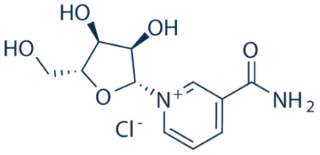
    Structure
    Representative claim 1 at issue was set forth in the opinion:

    1.  A composition comprising isolated nicotinamide riboside in combination with one or more of tryptophan, nicotinic acid, or nicotinamide, wherein said combination is in admixture with a carrier comprising a sugar, starch, cellulose, powdered tragacanth, malt, gelatin, talc, cocoa butter, suppository wax, oil, glycol, polyol, ester, agar, buffering agent, alginic acid, isotonic saline, Ringer’s solution, ethyl alcohol, polyester, polycarbonate, or polyanhydride, wherein said composition is formulated for oral administration and increased NAD+ biosynthesis upon oral administration.

    After construing the term "isolated nicotinamide ribonucleotide" (or "[NR]") to mean "[NR] that is separated or substantially free from at least some other components associated with the source of [NR]," the District Court granted summary judgment to defendant Elysium for failure of the claims to recite patent eligible subject matter under 35 U.S.C. § 101, on the grounds that isolated nicotinamide ribonucleotide is a product of nature declared ineligible under the rubrics set forth by the Supreme Court in Ass'n for Molecular Pathology v. Myriad Genetics, Inc., 569 U.S. 576, 589 (2013).

    The Federal Circuit affirmed in an opinion by Judge Prost joined by Judges Chen and Stoll.  The opinion sets forth a comparison between the elements of the claim and milk, a natural product the panel considered manifestly patent ineligible as a product of nature:

    Table
    The opinion characterizes the claims as being "very broad" and to read on milk with only one difference, i.e., that the nicotinamide ribonucleotide is not isolated.

    The Federal Circuit relied on the Supreme Court's Myriad decision and contrasted it with the Court's decision in Diamond v. Chakrabarty, 447 U.S. 303, 309 (1980), in reaching its decision.  In Chakrabarty, the claimed microorganism was not naturally occurring, having been genetically manipulated to encode enzymes capable of digesting "multiple components of crude oil," inter alia, in oil spills, citing as the standard that the claimed bacterium was "a nonnaturally occurring manufacture or composition of matter—a product of human ingenuity having a distinctive name, character and use."  Here, as in Myriad, the claimed nicotinamide ribonucleotide while having been "isolated" was not different and distinct enough "structurally or functionally from its natural counterpart in milk" to be patent eligible.  The Federal Circuit recognized in this opinion one important distinction expressly introduced into subject matter eligibility considerations for natural products by the Supreme Court in its Myriad opinion, that "mere" isolation is not enough to confer eligibility.  This rubric was at odds with how Judge Rich understood natural product eligibility to be determined; after all, in his most famous eligibility case (the companion to Chakrabarty, a case captioned In re Bergy) there was no question raised that "merely" isolated lincomycin antibiotic was eligible.

    The opinion also references another post-Myriad natural product opinion, Natural Alternatives Int'l, Inc. v. Creative Compounds, LLC, 918 F.3d 1338, 1342 (Fed. Cir. 2019), where the Federal Circuit held the claims patent eligible.  In Natural Alternatives, the Court recognized that claims to a natural product (beta-alanine) were patent-eligible for reciting "specific treatment formulations that incorporate[d] natural products" and that those formulations "ha[d] different characteristics and c[ould] be used in a manner that beta-alanine as it appears in nature cannot."  Moreover, in that case "natural products ha[d] been isolated and then incorporated into a dosage form"—"between about 0.4 grams to 16 grams"—"with particular characteristics"—namely, to "effectively increase[] athletic performance."  The Court found those "markedly different characteristics distinguished the claimed supplements from natural beta-alanine and preserved the claims' validity."

    Those distinctions made all the difference for the Federal Circuit, wherein the opinion noted that the distinctions argued by Chromadex did not require that the claimed composition contained any minimum quantity of nicotinamide ribonucleotide or that the claimed composition increased NAD+ biosynthesis (something that milk itself also did).  The primary deficiency recognized by the panel is that "the claims simply do not reflect the distinctions Appellants rely on," including that "they do not require any specific quantity of isolated NR" and that the term nicotinamide ribonucleotide as construed by the District Court did not require purification from lactalbumin whey protein argued as a distinction by Chromadex.

    Having arrived at its determination, the panel went on to apply the formalism of the two-part test enunciated by the Supreme Court in Mayo Collaborative Servs. Prometheus Labs., Inc., 566 U.S. 66, 77–80 (2012), and Alice Corp. Pty. Ltd. v. CLS Bank Int'l, 573 U.S. 208, 217 (2014), in support of its decision.  Not surprisingly, the Federal Circuit came to the same conclusion, finding reliance on the "natural law" that nicotinamide ribonucleotide compositions cause an increase in NAD+ in vivo.

    There may be some comfort for the patentee in that the application resulting in this patent has an earliest priority date of April 20, 2005, many years prior to the Supreme Court's Myriad decision, or that there is another patent in the family, U.S. Patent No. 8,383,086, that claims oral pharmaceutical formulations of nicotinamide ribonucleotide.  But an analysis that patent lawyers have been doing long before Myriad's enhanced considerations of subject matter eligibility were those concerning novelty and non-obviousness.  The table contained in the opinion suggests that the claims had "bare-bones" novelty at best and the lone distinction, incorporation of "isolated" nicotinamide ribonucleotide, appears a thin reed to support an assertion of non-obviousness.  While this is just another illustrative example of how the Court could have reached the policy goals in Mayo and Alice (and perhaps Myriad, come to that) using other portions of the patent statute, it also shows that Justice Breyer's apprehension about the "clever draftsman" were both warranted and perhaps the best (only?) bulwark innovators have against summary invalidation of their patents under Section 101.

    Chromadex, Inc. v. Elysium Health, Inc. (Fed. Cir. 2023)
    Panel: Circuit Judges Prost, Chen, and Stoll
    Opinion by Circuit Judge Prost

  • By Aaron Gin

    USPTO SealOn February 14, 2023, the U.S. Patent and Trademark Office published a notice in the Federal Register (88 Fed. Reg. 9492) requesting public comments about 1) the current state of Artificial Intelligence (AI) and Emerging Technologies (ET); and 2) associated inventorship issues that may arise with the advance of such technologies.

    The notice outlines the motivation and context for the request for comments.  Namely, the notice describes the USPTO-organized AI/ET Partnership meeting held in June 2022.  During that meeting, a panel session on "Inventorship and the Advent of Machine Generated Inventions" led to conversations about AI's increasing role in innovation in areas such as drug discovery, chip design, etc.  Meeting contributors identified situations in which AI systems can output patentable inventions or contribute at the level of a joint inventor.  Additionally, the notice provides a brief summary of recent District Court and Federal Circuit cases regarding the inventorship of AI generated inventions.  Yet further, the notice references calls from Senators Coons and Tillis to create a USPTO / U.S. Copyright Office national commission to consider changes in existing law to incentivize AI-related innovations and creations.

    The notice offers further stakeholder engagement sessions around AI-enabled innovations and inventorship.  Additionally, the notice encourages academic scholarship around these topics and announces plans to publish a special issue of the Journal of the Patent and Trademark Office Society.

    The notice includes several questions such as:

    1.  How is AI, including machine learning, currently being used in the invention creation process?
    2.  How does the use of an AI system in the invention creation process differ from the use of other technical tools?
    3.  If an AI system contributes to an invention at the same level as a human who would be considered a joint inventor, is the invention patentable under current patent laws?
    4.  Is there a need for the USPTO to expand its current guidance on inventorship to address situations in which AI significantly contributes to an invention?

    Comments must be submitted through the Federal eRulemaking Portal at www.regulations.gov, docket number PTO-P-2022-0045.

    For additional information regarding this topic, please see:

    USPTO Alert, February 13, 2023
    USPTO webpage on Artificial Intelligence

  • By Kevin E. Noonan –

    A change in the weather is known to be extreme
    But what's the sense of changing horses in midstream?
    I'm going out of my mind, oh, oh
    With a pain that stops and starts
    Like a corkscrew to my heart
    Ever since we've been apart

    "You're a Big Girl Now," Blood on the Tracks, Bob Dylan

    Federal Circuit SealIn perhaps one of his most infelicitous lyrics* Bob Dylan inserted the adage that it is unwise to change horses in midstream.  This lesson comes to mind with regard to the Federal Circuit's decision late last year regarding an attempt to pursue a new theory of infringement just weeks before trial would commence (which attempt failed) in Astellas US LLC v. Hospira, Inc.

    The case involved ANDA litigation brought by Gilead Sciences, Inc., Astellas US LLC and Astellas Pharma US, Inc. against Hospira for infringement of U.S. Patent Nos. 8,106,183; RE47,301; and 8,524,883 claiming a particular polymorph (termed Form A, a monohydrate) of regadenoson, an A2A adenosine receptor agonist that is a coronary vasodilator used to mimic cardiac stress and sold as Lexiscan®.  The formula for Hospira's generic regadenoson contained Form G as its active pharmaceutical ingredient (API) that would not infringe Astellas's asserted claim (the basis for Hospira's Paragraph IV certification), made by a process converting crude regadenoson to Form F (another polymorph) to Form G.  Plaintiff's initial theory of the case was that Hospira's generic drug nevertheless infringed the asserted claims, because Form A was made inadvertently by Hospira's third party supplier of an intermediate product and consequently the Form A polymorph was incorporated into Hospira's final generic product (on the basis that when these compounds "are exposed to a sufficient amount of water, including water in the air . . . and in reagents, they will convert to Form A").  In response to Hospira amending the Drug Master File (DMF) portion of its ANDA prior to trial (in an attempt to make Astellas's infringement showing harder to establish, wherein the new DMF recited that its manufacturing process had been optimized to "limit the presence of water"), Astellas asserted an alternative theory alleging that Form A arose as part of Hospira's compounding process in making its generic regadenoson.

    The District Court granted Hospira's motion to strike Astellas's newly presented infringement contentions and expert testimony and evidence, with the case going to trial on Astellas's original infringement theory.  The District Court found Hospira did not infringe according to Astellas's original infringement contentions, and Astellas appealed solely on the issue of whether the District Court's preventing their assertion of their alternative infringement theory and contentions and expert evidence associated therewith was an abuse of discretion.

    The Federal Circuit ruled that the District Court had not abused its discretion and affirmed the judgment in favor of Hospira, in an opinion by Judge Dyk joined by Judges Reyna and Cunningham.  The opinion notes that the District Court granted Astellas extra fact discovery in response to Hospira's change in its ANDA, but in addition to taking this discovery, Astellas submitted its new infringement contentions and expert evidence related to these contentions.  On the procedural issue of whether Astellas's motion was untimely, the Court recited the circumstances the panel relied upon in finding no abuse of discretion by the District Court.  These included testimony by Astellas's expert in the initial discovery phase that he was offering no opinion regarding whether Form A was made during Hospira's compounding process as well as several timing issues.  These included that Astellas proffered its alternative theory a year after the close of fact discovery and six months after expert discovery closed, and waited 14 months after Hospira's document disclosure, six months after learning of Hospira's ANDA change and two months after receiving Hospira's actual ANDA amendments.  In addition, Astellas waited "more than a month" after the District Court's grant of supplemental discovery prompted by Hospira's ANDA change.  Under these circumstances, the Federal Circuit stated that:

    There was no reason, other than Astellas's own litigation choices, that the compounding infringement theory could not have been asserted earlier.

    This is not a case where Astellas relied on new information disclosed in the ANDA amendment to craft a new theory of infringement.  Instead, Astellas simply decided that the ANDA amendment would make it harder to prove its original infringement theory and decided to try a new theory related to a process not changed by the amendment.

    Based in a supplementary discovery order the District Court had issued against another defendant (who later settled) in this case who had amended its ANDA, the Federal Circuit considered the supplementary discovery order here to have been limited to Hospira's changes to its ANDA and was not broad enough to be used to develop Astellas's alternative infringement theories or proffer expert evidence in support thereof, as well as representations by Astellas to the District Court regarding the limited extent of this discovery.  On this issue the Federal Circuit based its affirmance of the District Court striking Astellas's alternative infringement contention and expert evidence on  the "great deference . . . given to a district court's interpretation of its own order," citing WRS, Inc. v. Plaza Entertainment, Inc., 402 F.3d 424 (3rd Cir. 2005).

    The Federal Circuit similarly rejected Astellas's arguments that, timely or not, it was an abuse of the District Court's discretion to exclude its alternative theory of infringement.  Applying Third Circuit law, the Court considered whether Astellas had not satisfied the factors required in the Third Circuit under Meyers v. Pennypack Woods Home Ownership Assn, 559 F.2d 894 (3rd Cir. 1977):

    (1) "the prejudice or surprise in fact of the party against whom the excluded witnesses would have testified" or the excluded evidence would have been offered; (2) "the ability of that party to cure the prejudice"; (3) the extent to which allowing such witnesses or evidence would "disrupt the orderly and efficient trial of the case or of other cases in the court"; (4) any "bad faith or willfulness in failing to comply with the court's order"; and (5) the importance of the excluded evidence.

    Here, the Federal Circuit held that, while there was no finding under factor (4) of bad faith, the other factors supported the exercise of the District Court's discretion to preclude Astellas's alternative infringement theory.  These included clear evidence that Hospira was surprised by the alternative theory and was prejudiced thereby in view of the time remaining before trial, particularly in view of Astellas's expert's earlier testimony that he had no opinion regarding whether the Form A polymorph arose in Hospira's compounding process and there being insufficient time to perform the testing necessary to show that this conversion did not take place.  The Court also considered the prejudice to other parties to the litigation if the District Court postponed trial long enough for Hospira to complete this testing.  The opinion states that regarding factor (3) Astellas had not presented any persuasive evidence that the District Court erred in finding disruption of the court's calendar, and that Astellas had not shown that the evidence was sufficiently important to satisfy factor (5) (the opinion voicing reasons why the panel was not convinced that the excluded evidence would have been helpful for Astellas in establishing infringement).

    Ultimately the decision came down to the District Court's discretion, and the Federal Circuit was unwilling to second guess that court absent more compelling evidence than Astellas was able to provide.

    Astellas US LLC v. Hospira, Inc. (Fed. Cir. 2022)
    Nonprecedential disposition
    Panel: Circuit Judges Dyk, Reyna, and Cunningham
    Opinion by Circuit Judge Dyk

    * Of course he also wrote this lyric on that album, so maybe it was just a phase:

    They say I shot a man named Gray
    And took his wife to Italy
    She inherited a million bucks
    And when she died they came to me
    Can I help it if I'm lucky?

    "Idiot Wind"

  • By Donald Zuhn –-

    USPTO Eliminates CFR Provisions Regarding Voluntary CLE Certification

    USPTO SealIn a notice published in the Federal Register (88 Fed. Reg. 4906) last month, the U.S. Patent and Trademark Office issued a final rule adopting an interim final rule that the Office published in the Federal Register in November, that eliminated provisions of the Code of Federal Regulations related to voluntary continuing legal education (CLE) certification and recognition for registered patent practitioners and individuals granted limited recognition to practice in patent matters before the Office.  The final rule will take effect on February 27, 2023.

    The notice sets out a brief history of the voluntary CLE certification provision, recounting that in August 2020 the Office implemented 37 C.F.R. § 11.11(a)(3), which provided that patent practitioners could voluntarily certify completion of CLE to the USPTO Director for the Office of Enrollment and Discipline.  In October 2020, the Office published CLE guidelines, and then in June 2021, the Office published a notice that voluntary CLE certification would begin in the spring of 2022.  However, in December 2021, the Office published another notice that indefinitely delayed implementation of voluntary CLE certification, and in November 2022, the Office published the interim rule eliminating the voluntary CLE certification and recognition provisions from the CFR.  The most recent notice amends 37 C.F.R. § 11.11(a)(1) and (a)(3) to eliminate provisions concerning the voluntary CLE certification for registered patent practitioners and persons granted limited recognition to practice in patent matters before the Office under 37 C.F.R. § 11.9.

    The notice, however, also states that "[i]n the future, the Office may reconsider CLE reporting for patent practitioners, and nothing in this notice is intended to restrict or prohibit such action at a later time."


    USPTO, JPO, and KIPO Extend Expanded CSP Program

    JPOIn a notice published in the Federal Register (88 Fed. Reg. 2892) last month, the U.S. Patent and Trademark Office announced that the USPTO, Japan Patent Office (JPO), and Korean Intellectual Property Office (KIPO) have agreed to extend the Expanded Collaborative Search Pilot (CSP) program through October 31, 2024.  The Expanded CSP program provides Applicants who cross-file with the USPTO and either the JPO or KIPO with search results from each partner IP office early in the examination process.  The Program is designed to accelerate examination and provide Applicants with more comprehensive prior art by combining the search expertise of USPTO, JPO, and KIPO examiners before issuing a first Office action.  The USPTO noted that requests to participate in the Expanded CSP program that were filed between October 31, 2022 and January 18, 2023 will be considered.

    KIPO #2The USPTO also announced that in response to feedback provided by Applicants in the United States, Korea, and Japan that the petition process for the Expanded CSP program could be improved, specifically with respect to the requirement that Applicants petition each partner IP office separately, the USPTO, JPO, and KIPO developed combined petition forms:  PTO/437–JP for the USPTO/JPO pilot program and PTO/437–KR for the USPTO/KIPO pilot program.  Applicants wishing to participate in either the USPTO/JPO or USPTO/KIPO programs need only submit one petition to one of the two offices in each program.

    The changes to the Expanded CSP program took effect on January 18, 2023.  The notice also indicated that each partner IP office will continue to grant no more than 400 requests per year per partner office for the duration of the pilot.  In addition, the notice indicated that the request for participation in the Expanded CSP program must be granted by both the IP office in which the request is directly filed and the partner IP office prior to any examination of the counterpart applications in either office.  For additional information regarding the Expanded CSP, Applicants should consult the Expanded Collaborative Search Pilot Program Extension (86 Fed. Reg. 8183) that was published on February 4, 2021.


    USPTO Continues Email Address for PCT Questions

    USPTOIn a notice issued last month, the U.S. Patent and Trademark Office announced the extension of its pilot to provide an email address — PCTHelp@uspto.gov — for submitting inquiries about the Patent Cooperation Treaty (PCT) and international and national stage applications.  The email address will continue to be offered until January 1, 2024.

    According to the Office's notice, the email address is being offered to improve the overall customer service experience of those needing information regarding the PCT and international and national stage applications.  The Office notes that since 1993, it has also maintained a PCT Help Desk for telephonic inquiries regarding PCT issues.  The annual call volume at the PCT Help Desk has been as high as 40,910 calls per year, with an average of over 22,000 calls annually over the last three fiscal years.  The email address was created in response to customer feedback, which sought a reduction in wait times with the PCT Help Desk, an extension in the hours of availability of the PCT Help Desk to accommodate customers on the West Coast and overseas, and to better utilize modern communication mechanisms such as email.

    The Office notes that the email address is not intended for case-specific or time-sensitive inquiries, but rather is intended for general inquiries.

  • CalendarFebruary 14, 2023 – "Orange Book Listing Recent Developments — Impact on Prosecution of Pharmaceutical U.S. Patent Applications, Subsequent Orange Book Listings, Hatch Waxman Litigation" (Strafford) – 1:00 to 2:30 pm (EST)

    February 14, 2023 – "The Myth of the Meritocracy Part 2 — Countering Myths and Overcoming Bias" (Intellectual Property Owners Association) – 2:00 pm to 3:00 pm (ET)

    February 15, 2023 – "Best Practices for Searching Non-Patent Literature" (Patent Information Users Group, Inc.) – 10:00 am to 11:00 am (EST)

    February 15, 2023 – 2023 Patent Litigation Report (Lex Machina) – 9:00 am (PDT)

    February 16, 2023 – "IPO Black History Month Event: Successes and Challenges Faced by Leaders in the Black IP Community" (Intellectual Property Owners Association Black IP Professionals Resource Group) – 2:00 pm to 3:00 pm (ET)

    March 21-22, 2023 – National Forum on IP, Funding and Tech Strategies for Novel Therapeutic Modalities and Gene Therapies (American Conference Institute) – Boston, MA

  • Strafford #1Strafford will be offering a webinar entitled "Orange Book Listing Recent Developments — Impact on Prosecution of Pharmaceutical U.S. Patent Applications, Subsequent Orange Book Listings, Hatch Waxman Litigation" on February 14, 2023 from 1:00 to 2:30 pm (EST).  Adriana L. Burgy, Mark J. Feldstein, Thomas L. Irving, and Jill K. MacAlpine of Finnegan Henderson Farabow Garrett & Dunner, and Sarah Hooson of Merck Sharp & Dohme will guide patent counsel on recent Orange Book developments; discuss Orange Book listing practices and the implications for patent prosecution, listing, and litigation; and examine contemporary thought about Form 3542 and pitfalls to avoid.  The webinar will review the following issues:

    • What are the changes and anticipated changes to the Orange Book?
    • What strategies should counsel employ when listing pharmaceutical patents in the Orange Book?

    The registration fee for the webcast is $347.  Those interested in registering for the webinar, can do so here.

  • IPO #2The Intellectual Property Owners Association (IPO) will offer a one-hour webinar entitled "The Myth of the Meritocracy Part 2 — Countering Myths and Overcoming Bias" on February 14, 2023 from 2:00 pm to 3:00 pm (ET).  Alex Lodge of Cargill, Inc.; Denise Robinson of The Still Center LLC; and Sanjiv Sarwate of Dell Technologies will explore how misguided confidence in meritocracy affects critical decisions and alternative paradigms that can ameliorate those effects.

    There is no registration fee for the webinar.  However, those interested in attending the webinar should register here.

  • PIUGPatent Information Users Group, Inc. (PIUG) will be offering a webinar on "Best Practices for Searching Non-Patent Literature" from 10:00 am to 11:00 am (EST) on February 15, 2023.  Christine Geluk at Librarian At Your Service LLC will explore database choices patent information professionals have for their patentability search (aka prior art) checklist, with an emphasis on publicly available databases.  The webinar will provide general search strategies for each database, and on several NPL types.

    The registration fee for the webinar is $129 for non-members or $79 for PIUG members.  Those interested in attending the webinar can register here.