• ExL EventsExL Events will be holding its 3rd Due Diligence Summit for Life Sciences on May 18-19, 2016 in Boston, MA.  The conference will offer presentations on the following topics:

    • Develop a Road Map for an Efficient and Comprehensive Intellectual Property Due Diligence Investigation
    • On-Site Visits — Shared Learnings to Help Optimize Your Due Diligence
    • Understand the Role of Investment Banks and External Advisors in the Due Diligence Process
    • Panel: Best Practices for Working with External Partners
    • The Biotech Perspective — How to Make the Case for Your Product for Licensing or Acquisition
    • Case Study: Develop an Alliance Management Action Plan
    • Case Study: Zimmer Biomet’s Post-Merger Integration of the Dental Group
    • Panel: The Different Approaches to Integration Planning
    • Best Practices for Identifying and Evaluating Potential Business Development Opportunities
    • Panel: Strategic Approaches to Reduce Risks and Ensure Success when Identifying and Assessing a Target
    • Critical Operational Aspects of the Out-Licensing Process to Ensure Success
    • Explore Risk-Based Methodologies for Medical Device Valuations
    • Consolidation, Divestitures and Leveraging Out-Licensing as an Effective Portfolio Management Strategy
    • Case Study: Bayer’s In-Licensing Deal with Ionis Pharmaceuticals
    • Best Practices for Mid-Sized Companies Preparing to Acquire or In-License a Product

    An agenda for the conference can be found here.  A complete brochure for this conference, including an agenda, detailed descriptions of conference sessions, and list of speakers can be obtained here.

    The registration fee for the conference is $2,095.  Those interested in registering for the conference can do so here [http://exlevents.com/3rd-due-diligence-summit-for-life-sciences/pricing/].

    Patent Docs is a media partner of the Due Diligence Summit for Life Sciences.

  • Strafford #1Strafford will be offering a webinar/teleconference entitled "Challenging Pending Patent Applications: When, Where and What Type — Navigating Third-Party Submissions, Protests and Derivation Proceedings for Pre-Grant Applications" on May 26, 2016 from 1:00 to 2:30 pm (EDT).  Adriana L. Burgy, Thomas L. Irving, and Leslie A. McDonell of Finnegan Henderson Farabow Garrett & Dunner will examine the determination of challenging patent applications pre-grant and the factors that should be considered when making the decision to challenge, and discuss preissuance submissions of relevant prior art, protests and derivation proceedings as well as the risks and ramifications of challenging pending patent applications.  The webinar will review the following issues:

    • What is the basis of the challenge to the pending application?
    • What role does this have in determining the path of the pre-grant challenge?
    • What are the potential risks involved in challenging a pending patent application?
    • What factors should counsel consider when determining when and where to challenge a pending application?

    The registration fee for the webinar is $297.  Those interested in registering for the webinar, can do so here.

  • PLI #1Practising Law Institute (PLI) will be offering a seminar entitled: "Patent Eligibility, Prior Art and Obviousness 2016: Current Trends in Sections 101, 102 and 103" on May 10, 2016 in New York, NY and on June 14, 2016 in San Francisco, CA.  The San Francisco seminar will also be webcast.  The seminar includes not only the important touchstones of prior art and obviousness, but also patent eligibility post-Alice.  PLI faculty will provide predictions about what will happen during a patent's enforcement period now that the U.S. Supreme Court has taken an interest in the patent system, and give practical tips as to how best to find clarity where there often isn't any.  The seminar will address the following topics:

    • The Supreme Court and PTO Guidelines and Section 101 — the moving target;
    • 102 and its dates: is there a "grace period"?
    • Understanding the "effective filing date" in global terms;
    • Analyzing "old" 102: Is it really gone or is it preserved in other forms?
    • A comprehensive review of KSR and 103;
    • Impact of proper and improper benefit claims on the prior art date of a reference and the effective filing date of the application being examined; and
    • Application of the new 101 and 103 guidance post-Myriad, Mayo, Alice and KSR retrospectively.

    PLI faculty will offer presentations on the following topics:

    • 35 USC 101: The Complete Guideline Breakdown of Alice, Myriad and Mayo
    Section 102: Inside and outside the PTO — the AIA and the future
    KSR and 103: Tools you can use?
    • 35 USC 103 and the CAFC
    • The Concept of Old 102(e) Recast as New 102 (a)(2) as Implemented by New 102(d): Effects of Priority Under 119, 120, 121, 365

    The registration fee for the seminar or webcast is $1,695.  Those interested in registering, can do so here.

  • By Andrew Williams

    "You Can Arrange the Menu, the Venue, the Seating"
    Federal Circuit SealThe above slightly-modified quote is from a lyric sung by Thomas Jefferson in the Tony-award nominated musical "Hamilton" (with apologies to Lin Manual Miranda) — the song being one that highlights the behind-closed-doors political horse-trading that helped establish the young nation.  Of course, as the first Secretary of State, Thomas Jefferson was essentially the first Commissioner of Patents, but unfortunately Mr. Miranda did not include a song describing the awarding of the first patent on July 31, 1790.  Fast forward more than 225 years, and the subject of venue for patent infringement lawsuits is still being questioned.  (OK, we will admit that the relationship of this case to the Hamilton musical is a stretch, but come on — 16 Tony nominations!).  In a recent case, In re TC Heartland, the Federal Circuit concluded that Congress did not restrict what could be considered a proper venue when it passed the Federal Courts Jurisdiction and Venue Clarification Act of 2011.  Perhaps not completely coincidentally, Congress is currently considering doing just that — restricting venue for patent suits — with S. 2733, the "Venue Equity and Non-Uniformity Elimination Act of 2016," in an effort to restrict so-called "patent trolls" from using favorable districts that are otherwise only tangentially related to the cause of action.  We have previously highlighted that bill and its potential implications (see "The VENUE Act — A Last-Ditch Attempt at Patent Reform?").

    The In re TC Heartland case stemmed from a lawsuit brought by Kraft Foods Group Brands LLC against TC Heartland, LLC and Heartland Packaging Corp. in the U.S. District Court for the District of Delaware.  TC Heartland is incorporated in Indiana, and has its headquarters in Carmel, Indiana.  In fact, other than approximately 2% of its alleged infringing product ending up in Delaware, TC Heartland argued that it had no other contacts with that state.  As a result, it moved to either dismiss the complaint for lack of personal jurisdiction, or to dismiss the action on venue grounds or transfer venue to the Southern District of Indiana.  On August 13, 2015, Magistrate Judge Burke had recommended denying the motion, and Chief Judge Stark subsequently adopted the report in all respects.  TC Heartland followed that up with a petition to the Federal Circuit for a writ of mandamus to either dismiss or transfer the case.

    In order to understand TC Heartland's arguments related to venue, it is important to review the venue statute and its history.  Venue for patent litigation is controlled by 28 U.S.C. § 1400(b):

    Any civil action for patent infringement may be brought in the judicial district where the defendant resides, or where the defendant has committed acts of infringement and has a regular and established place of business.

    28 U.S.C. § 1400(b).  Also at issue was the general venue statute, Section 1391, specifically:

    (2) an entity with the capacity to sue and be sued in its common name under applicable law, whether or not incorporated, shall be deemed to reside, if a defendant, in any judicial district in which such defendant is subject to the court's personal jurisdiction with respect to the civil action in question and, if a plaintiff, only in the judicial district in which it maintains its principal place of business.

    28 U.S.C. § 1391(c).  Initially, in Fourco Glass Co. v. Transmirra Products Corp., 353 U.S. 222 (1957), the Supreme Court held that the general statute does not override the specific statute, and therefore the residence of an accused infringing corporation was its place of incorporation.  In 1988, Congress amended 28 U.S.C. § 1391 to add "[f]or the purposes of venue under this chapter" before the beginning of the above-quoted language.  As such, the Federal Circuit held in VE Holding Corp. v. Johnson Gas Appliance Co., 917 F.2d 1574 (Fed. Cir. 1990), that § 1391(c) now governs the definition of "resides" in 1400(b).  This made any forum available for a patent infringement action, provided the district court had personal jurisdiction over the defendant.  Finally, as previously mentioned, Congress subsequently passed the Federal Courts Jurisdiction and Venue Clarification Act of 2011, making two changes relevant to the present case.  First, the newly added language was changed to read "[f]or all venue purposes," and second, § 1391(a) was amended to include the language: "Applicability of section. — Except as otherwise provided by law."

    First, TC Heartland argued that by removing the language "[f]or purposes of venue under this chapter," Congress meant to overturn the VE Holding decision.  After all, the argument went, the Federal Circuit in that case had relied heavily on that language in its opinion in that case.  Of course, the Federal Circuit pointed out that the new language ("[f]or all venue purposes") was broadening, and not narrowing.  As such, the Court found that Congress did not make any change to the definition of corporate residence as provided for in § 1400.

    Second, TC Heartland argued that by including the "applicability" section above, Congress meant to include federal common law within the "otherwise provided by law" exception.  Without deciding whether this was correct, the Federal Circuit pointed out that TC Heartland's position relied on an alleged intent of Congress to codify the Supreme Court's Fourco Glass decision.  The flaw in this logic, the Federal Circuit pointed out, was that Fourco Glass was no longer the law because of the intervening 1988 amendment and the Federal Circuit's VE Holding case.  In other words, "the common law definition of corporate residence for patent cases was superseded by a Congressional one."  There was, therefore, no longer any federal common law that could be codified by the new language.  The Federal Circuit also noted that TC Heartland provided no evidence that Congress meant to codify Fourco Glass.

    Finally, TC Heartland alleged that the Supreme Court redefined what the venue statute meant in Atlantic Marine Const. Co. v. U.S. Dist. Court for W. Dist. Of Texas, 134 S. Ct. 568 (2013).  The relevant language was quoted in its entirety by the Federal Circuit in the present case:  "Section 1391 governs 'venue generally,' that is, in cases where a more specific venue provision does not apply.  Cf., e.g., § 1400 (identifying proper venue provision for copyright and patent suits)."  This language was from a footnote, and was characterized by the Federal Circuit as dicta.  More importantly, the Federal Circuit pointed out that the general statute of § 1391(c) was not replacing by § 1400, because it could not do so, but rather this section only operates to define where a corporation resides, when that term is found within § 1400.

    TC Heartland also alleged that the case should have been dismissed because of a lack of personal jurisdiction.  Barring that, TC Heartland argued, the Delaware Court should only have specific personal jurisdiction over 2% of the case based on TC Heartland's sales that ended up in the state.  The Federal Circuit pointed out that the Beverly Hills Fan case was controlling, and that it was bound to follow it.  Nevertheless, the Court did point out that, if TC Heartland was correct, then "to resolve nationwide the same issues as in this Delaware infringement suit, Kraft would have to bring separate suits in all other states in which Heartland's allegedly infringing products are found."  It is not surprising that the Court did not adopt such a rule of personal jurisdiction.

    As mentioned above, and as we previously reported, certain members of Congress are seeking to make changes to the venue statute along lines similar to those argued by TC Heartland.  In fact, most likely a function of coincidence, Judge Moore during oral argument commented that the changes TC Heartland was seeking might be more appropriately made by Congress.  Within days of that comment, the VENUE bill was introduced.  Interestingly, Judge Moore, who wrote the opinion, cited the introduction of the VENUE bill as evidence that Congress did not intend to codify Fourco in the 2011 amendments.  This argument would appear circular at best, and a case of the tail wagging the dog at worst.  Still, even though the provision appears to have support from both parties, with the election year in full swing it is unlikely that any headway will be made on the VENUE bill until at least 2017.

    In re TC Heartland (Fed. Cir. 2016)
    Panel:  Circuit Judges Moore, Linn, and Wallach
    Order by Circuit Judge Moore

  • By Kevin E. Noonan

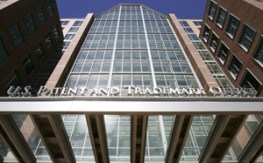
    USPTO Building FacadeOn April 27th, the U.S. Patent and Trademark Office held a Patent Quality Community Symposium at the Office in Alexandria, VA (consistent with its efforts to disseminate its workforce into regional offices, the offices in Detroit, Dallas, Boulder and Palo Alto participated by video conference).  The Symposium was timed to coincide with the first anniversary of the inauguration of the Office's quality initiative; details of that initiative can be found on the USPTO website; a recording and slides for the Symposium can be found here.

    The Symposium opened with a welcome by Valencia Martin Wallace, Deputy Commissioner for Patent Quality, followed by Opening Remarks by Michelle Lee, Under Secretary of Commerce for Intellectual Property and Director of the USPTO.  Director Lee's comments were, appropriately, brief and aspirational.  She spoke of the Office making "sensible enhancements" to quality, assuring the audience that "all ideas would be considered, big and small."  These ideas included ensuring clarity of the record, using internal quality control to ensure correctness of the Office's decisions, and identifying the best prior art by work-sharing with other patent offices.  These enhancements also included creation of the position of Deputy Commissioner for Patent Quality.

    The Director was followed by a discussion of enhancements to searching and training, presented by Maria Holtmann, Director of International Programs and Don Hajec, Assistant Deputy Commissioner for Patent Operations.  These enhancements include automated searches, to save time and give examiner prior art, using "adaptive technology" and eliminating "insofar as possible" subjectivity (and presumably variability) in an Art Unit examiner to examiner.  Also discussed was the Office of International Patent Cooperation (OIPC), which facilitates cooperation with other Patent Offices.  The Office is currently operating pilot programs with the Japanese (JPO) and Korean (KIPO) offices; in these programs, search results are shared with applicants prior to initial examination, with a stated goal of promoting consistency and earlier decisions.  There are five offices participating in the "global dossier" program (the European (EPO) and Chinese (SIPO), in addition to the JPO, KIPO and USPTO), and the Office has solicited input from the AIPLA, IPO, and WIPO on this program.  The speakers characterized these efforts as providing a "one-stop" access for all applications in these countries for examiners and the public; the examiners have an additional site having the same data.  The hope is for consistency and the ability to find "hard-to-find" foreign art.

    Mr. Hajec spoke about improving the extent to which Office personnel understand the underlying technology.  These efforts include electronic information centers for non-patent literature; chat rooms; access to foreign art, biotech sequences, and translations; and technical and legal training for examiners.  This is provided by outside technology professionals on a pro bono basis (and suggests a method for introducing examiners to new technology that could, under the right circumstances, facilitate prosecution of applications).  Also mentioned was the Site Experience Education (SEE) program, where examiners visit companies and other technology centers for meetings with inventors and technologists.  The Office has allocated $10K for examiner training (budget dependent) and stakeholder training on patenting process (STEPP) led by PTO trainers and training materials.  Current Office efforts in this regard involve training on the proper application of 35 U.S.C. § 112(f), with plans to extend this to explication of the broadest reasonable interpretation standard, written description, enablement, and indefiniteness, and further plans to improve the clarity and consistency of reasons for allowance.  Somewhat ominously Mr. Hajec mentioned workshops on patent eligibility.

    Next up was Robin Evans, Director, Technology Center 2800 who spoke about prosecution enhancements, particularly efforts to improve the clarity of the record.  These include the After Final program (which Ms. Evans said was "very popular"); the Patent Ombudsman program, with 1900 inquiries answered per week; and interviews, which increased from an average of 13 hours to 27 hours per examiner from 2008-2015 (and with 30% of disposals having had interviews, albeit without specifying whether this included abandonments).  The use of WebEx and the regional offices were cited as factors related to this increase in interviews.  She also mentioned the use of e-Petitions and references on the Office website concerning contact persons and links to statistics regarding success of different types of petitions under various circumstances.  Finally, in her talk she returned to the theme of improving the clarity of the record using a pilot program beginning in March and running until August with 130 randomly selected examiners and 45 SPEs.  This program is aimed at 1) enhanced claim interpretation; 2) more precise reasons for allowance; 3) better interview summaries; and 4) pre-exam interview at the examiner's option regarding search.  The examiners in the program will be given specific training and their outcomes will be compared with a control group of examiners not involved in the program; this comparison will be performed by QEM managers.  The program will also track the time it takes to provide these enhancements.

    Jack Harvey, Acting Assistant Deputy Commissioner for Patent Operations spoke about using outcomes from PTAB review of granted patents to improve patent examination.  He spoke of developing a "feedback loop" in later related applications based on patents having undergone post-grant review; he also discussed expanding this program to include litigation results.  In a pilot program, examiners of such "child" applications will be given access to the art cited in such reviews as well as expert testimony and the parties' arguments.  This program was launched in the last week of April involving about 400 applications.

    Brian Hanlon, Director of the Office of Patent Legal Administration and Russ Slifer, Deputy Under Secretary of Commerce for Intellectual Property and Deputy Director of the USPTO furthered the discussion of improving examination and evaluation of examination.  The metrics cited by these speakers included clarity, transparency and simplicity, and focused on a new metric instrument, the Master Review Form (which participants had an opportunity to use in an after-lunch workshop).  They also discussed case studies to be focused on single issues performed by the Office but to include stakeholders' experience (and thus to be different from current quality assurance reviews).  These initial efforts will be focused on Sec. 101 eligibility and compliance with guidelines; consistency between Art Units regarding how Sec. 101 is being applied; "compact prosecution" related to Sec. 101 (which was explained to mean first Office Actions without art being cited, on the basis that if the examiner could establish ineligibility then citation of (and searching for) prior art would be a waste of resources); clarity with regard to the motivation to combine references in Sec. 103 rejections; reviewing compliance with the written description requirement in continuation applications; and the consistency of how the Office applies Sec. 112(f) before and after examiner training.  These initial areas of Office focus were culled from 130 suggestions by 110 stakeholders, according to these officials.  Mr. Slifer specifically presented how the Office was using big (and open) data to evaluate patent quality, related to publicly available data; data accessibility is being provided by a developer website.  These data will be used to identify inconsistencies, measure training impact, validate assumptions and identify problems, according to Mr. Slifer.

    Marty Rater, Chief Statistician, Office of Patent Quality Assurance spoke on quality metrics as a means for measuring improved patent quality.  This discussion focused on the Master Review Form and Mr. Rater presented the Office's metrics of preventing reopening of prosecution, reducing rework and having consistent decision making, wherein the outliers are reduced but eliminating anomalies is not a practical goal.  He mentioned that the Office wanted stakeholder and other feedback, and in this regard had reinstituted an external quality survey directed at "frequent filers," i.e., applicants filing six or more applications per year.  Mr. Rater noted some outcomes (such as a reduction in the quality of rejections under Sec. 101) and spoke about perceived consistencies (vel non).  These statistics included only 20% of respondents believing there was no inconsistency in how patentability standards were applied, but that the perception of patent quality was increasing from 2006-2015 (from 31% to 54% believing quality was good, and 21% to 9% believing it was bad).

    This discussion was the prelude to an interactive session where participants were given an examination fact pattern and then used the Master Review Form to rate the quality of the examination.  As part of this exercise the Office solicited suggestions for improvement as well as identification of those aspects of the form that were the most likely to improve patent quality.

    The last session of the day was a practitioner panel moderated by Mr. Slifer; the panel included Rick Nydegger, Workman Nydegger; Bill Bunker, Knobbe Martens; Laura Sheridan, Google; Tim Wilson, SAS; and this author.  Panel members varied in their comments, with some members stating their belief that the quality of patent specifications was poor and others contending that applicants had an incentive to seek overbroad claims having vague terms.  This author noted that these concerns may be technology specific to some degree; in the biotech and pharma space the rigorous application of Sec. 101 (utility) and 112 (written description) reduces any tendency for vague or overbroad claims to be sought, and the value of these patents (due to their long obsolescence horizons) put a premium on obtaining patents whose validity would withstand challenge.

    The day concluded with remarks by Drew Hirshfeld, Commissioner for Patents, who spoke about his impressions of the efforts PTO employees make to ensure patent quality today and throughout his time at the Office.

    Patent quality is one of those topics, like Mom and apple pie that almost everyone believes in and supports.  However it is also a politically charged topic, and many assert that U.S. patent quality is poor.  Notably, however, no one ever complains that the quality of the patents they are getting is poor; rather it is always someone else (frequently a competitor) who is getting such poor quality patents.  That is the nature of an exclusionary right:  the people who are excluded are usually not happy about it and would like to believe that such exclusion is unwarranted.  There can be no doubt that efforts by the Office to improve clarity and correctness in the patenting process are important, but coming up with appropriate and useful metrics for assessing the patent quality metrics discussed during the Symposium is a much harder task.

  • "Quick Look Test" Used by District Court to Support Lack of Preemption and Find Software Claims Patent Eligible

    By Joseph Herndon

    CAF3S2M3On April 15, 2016, the U.S. District Court for the Northern District of California issued an Order Denying a Motion to Dismiss because the patent at issue, U.S. Patent No. 5,870,087, was found to be directed to patent eligible subject matter.

    The '087 patent, entitled "MPEG Decoder System and Method having a Unified Memory for Transport Decode and System Controller Functions," is directed to methods for reconstructing frame data for memory saving benefits.  Full-motion digital video requires a large amount of storage and data transfer bandwidth.  Thus, video systems use various types of video compression algorithms to reduce the amount of necessary storage and transfer bandwidth.  Prior art MPEG video decoder systems have generally included a separate memory for transport and system controller functions.  The '087 patent describes that it has generally not been possible to combine these memories, due to size limitations.  Thus, the '087 patent describes new ways to reconstruct frame data that enables saving memory and usage of a single memory for the MPEG decoder system.

    Claim 10 is representative and reproduced below.

    10.  A method for performing video decoding in an MPEG decoder system which includes a single memory for use by transport, decode and system controller functions, the method comprising:
        receiving an MPEG encoded stream;
        demultiplexing one or more multimedia data streams from the encoded stream, wherein said demultiplexing one or more multimedia data streams from the encoded stream operates using a first unified memory;
        performing MPEG decoding on the multimedia data streams, wherein said performing MPEG decoding operates using said first unified memory; and
        a system controller controlling operations within the MPEG decoder system, wherein said controlling operations accesses code and data from said first unified memory;
        wherein said demultiplexing one or more multimedia data streams, said performing MPEG decoding, and said controlling operations each use said first unified memory.

    The Defendant filed the Motion to Dismiss alleging that claims 1, 5, 7-11, and 16 of the '087 patent are invalid under 35 U.S.C. § 101 as not being directed to patent eligible subject matter.

    The District Court followed the Supreme Court's two-step framework for determining whether there is § 101 patent invalidity.  First, it is determined whether the claims at issue are directed to a patent-ineligible concept — i.e., a law of nature, a natural phenomenon, or an abstract idea.  If so, then the court moves on to the second step, that is, to determine if the additional elements beyond the patent-ineligible concepts (if any) transform the nature of the claim into a patent-eligible application (i.e., a search for an inventive concept — that is, an element or combination of elements that is sufficient to ensure that the patent in practice amounts to significantly more than a patent upon the ineligible concept itself).

    The Defendant asserted § 101 patent invalidity on the basis that the claims at issue are trying to patent an abstract idea, or an idea having no particular concrete or tangible form — namely, integrating multiple memories into a single/unified memory.

    As seen in many court orders and decisions, the District Court here complained that the step one inquiry may be a complicated matter if only because it is not clear what abstract means in the first place, and the step one inquiry is further complicated by the fact that it is not always easy to say what a patent claim is "directed to."

    The District Court stated a summary of prior decisions that attempted to define how to perform step one including (1) that a court must consider the claims "in their entirety to ascertain whether their character as a whole is directed to excluded subject matter"; (2) a court must identify and define whatever fundamental concept appears wrapped up in the claims; (3) a court must identify the purpose of the claim — in other words, determine what the claimed invention is trying to achieve; (4) a court should recite a claim's purpose at a reasonably high level of generality; and (5) a court should apply step one as a sort of quick look test, the purpose of which is to identify a risk of preemption and ineligibility.

    With these varying degrees of applications of step one, in the instant case, the District Court turned to the purpose of the claims.  The District Court simply stated:

    [T]he purpose of the claims at issue is to decompress digital video using a single memory.  That is the gist of the invention at issue.  Given this purpose, the Court is satisfied that there is no genuine risk of preempting future research and development — i.e., Avago is not simply claiming an abstract idea in the attempt to lay claim to a building block of future research and development; the invention has specific configuration, not a broad abstract idea.

    The District Court did not extrapolate further into the analysis, but rather stated that because the Defendant failed to establish that the claims at issue are directed to a patent-ineligible concept, i.e., an abstract idea, the Court need not address step two of Alice which embodies the inventive concept test.

    Thus, Defendant's Motion to Dismiss based on a challenge to the validity of the '087 patent under 35 U.S.C. § 101 was denied.

    Looking at the reasoning given by the Court of the "purpose of the claims at issue is to decompress digital video using a single memory", it is hard to see how this was not found to be an abstract idea.  Step one of the Alice test has been considered easy to show, and most courts have given little weight to any arguments, but instead focus on the step two inventive concept analysis.  But here, the District Court used preemption as reasoning to support a finding that the claims were not directed to an abstract idea.  Use of preemption as a sole reason to support patent eligibility is rare and against the USPTO guidelines.

    The Federal Circuit has followed the Supreme Court's lead in rejecting arguments that a lack of total preemption equates with eligibility, at least within buySAFE, Inc. v. Google, Inc., 765 F.3d 1350 (Fed. Cir. 2014), and Ultramercial, Inc. v. Hulu, LLC, 772 F.3d 709 (Fed. Cir. 2014).  Even though the District Court in this case found preemption arguments persuasive, the '087 patent claims are likely to be challenged again.

    All claimed components, other than the integrated memory, appear to be admitted by the '087 Patent to be well known in the art, as indicated in the '087 patent's own "MPEG BACKGROUND" section.  Thus, had step one of the Alice test been found to be true (i.e., the claims are directed to an abstract idea), then the claims most likely would have also failed step two (i.e., inventive concept) and would have been found to be patent ineligible. 

    Avago Technologies General IP (Singapore) Pte Ltd. v. Asustek Computer, Inc. (N.D. Cal. 2016)
    Order Granting Plaintiff's Motion to Reconsider (Avago I); and Denying Dfendant's Motion to Dismiss (Avago II) by District Judge Edward M. Chen

  • By Donald Zuhn –-

    Supreme Court Building #2In response to Sequenom's March 21 petition for certiorari seeking Supreme Court review of the Federal Circuit's decision in Ariosa Diagnostics, Inc. v. Sequenom, Inc. (see "Sequenom Petitions for Certiorari"), a total of twenty-two amicus briefs have been filed encouraging the Court to grant certiorariAmicus briefs were due on April 20.  Links to each of the filed briefs can be found below:

    • Brief for Amici Curiae Eli Lilly and Company, Eisai Inc., Upsher-Smith Laboratories, Inc., Pfizer Inc., and Etiometry, Inc. in Support of Petitioner (brief)

    • Brief of Amicus Curiae by The Chartered Institute of Patent Attorneys in Support of the Petitioner (brief)

    • Brief for Amicus Curiae Intellectual Property Owners Association in Support of Petition (brief)

    • Brief of Amicus Curiae Dr. Ananda Mohan Chakrabarty in Support of the Petitioner (brief)

    • Brief of The Bioindustry Association Joined by Europabio, Ausbiotech, Swiss Biotech Association, Hollandbio, Biotecanada, and The Japan Bioindustry Association as Amici Curiae in Support of Granting the Petition (brief)

    • Brief of Amicus Curiae New York Intellectual Property Law Association in Support of Petitioner (brief)

    • Brief of Metabolon, Inc. as Amicus Curiae in Support of Petitioner (brief)

    • Brief of Amicus Curiae Coalition for 21st Century Medicine in Support of Sequenom, Inc. (brief)

    • Brief of Novartis AG as Amicus Curiae in Support of Petitioner (brief)

    • Brief of Microsoft Corporation as Amicus Curiae in Support of Petitioner (brief)

    • Brief of Professors Jeffrey A. Lefstin and Peter S. Menell as Amici Curiae in Support of Petition for A Writ of Certiorari (brief)

    • Brief for Murgitroyd & Company as Amicus Curiae in Support of Petitioner (brief)

    • Brief for Amici Curiae Biotechnology Innovation Organization, Pharmaceutical Research and Manufacturers of America and The Association of University Technology Managers in Support of Petition for A Writ of Certiorari (brief)

    • Brief of Amici Curiae Amarantus Bioscience Holdings, Inc., Exo Incubator, Inc., and Michael Heltzen in Support of Petitioner (brief)

    • Brief of Amici Curiae Population Diagnostics, Inc., Avant Diagnostics, Inc., Personalis, Inc., Linda Bruzzone, and Erin Marie Mading in Support of Petitioner (brief)

    • Brief of JYANT Technologies, Inc. as Amicus Curiae in Support of Petitioner Sequenom, Inc. (brief)

    • Brief of 19 Law Professors as Amici Curiae in Support of Petition for A Writ of Certiorari (brief)

    • Brief of Professor Timo Minssen and Robert M. Schwartz with 10 European and Australian Law Professors as Amici Curiae in Support of Petitioner (brief)

    • Brief of Amicus Curiae The Institute of Professional Representatives before the European Patent Office in Support of Neither Party (brief)

    • Brief of Federal Circuit Bar Association as Amicus Curiae in Support of Petition for A Writ of Certiorari (brief)

    • Brief for Amici Curiae Wisconsin Alumni Research Foundation, Indiana University Research and Technology Corporation, and San Diego Intellectual Property Law Association in Support of Petitioner (brief)

    • Brief of Amicus Curiae Boston Patent Law Association in Support of Sequenom, Inc.'s Petition for A Writ of Certiorari (brief)

    Patent Docs thanks Kaye Scholer for making copies of the briefs available on its website.  Summaries of selected briefs will be provided in future posts.

    For additional information regarding this topic, please see:

    • "Guest Post: Coalition for 21st Century Medicine Comments on Expected Ariosa Cert Petition," April 3, 2016
    • "Sequenom Petitions for Certiorari," March 21, 2016
    • "Ariosa v Sequenom — A Path to the Supreme Court?" December 14, 2015
    • "Federal Circuit Denies Rehearing En Banc in Ariosa v. Sequenom," December 2, 2015
    • "Natera Responds to Sequenom's Petition for Rehearing En Banc," October 25, 2015
    • "Ariosa Diagnostics Responds to Sequenom's Petition for Rehearing En Banc," October 21, 2015
    • "Amicus Briefs in Support of Sequenom's Petition for Rehearing En Banc: JYANT Technologies, Inc.," September 29, 2015
    • "Amicus Briefs in Support of Sequenom's Petition for Rehearing En Banc: NYIPLA," September 28, 2015
    • "On Ariosa and Natural Products," September 27, 2015
    • "Amicus Briefs in Support of Sequenom's Petition for Rehearing En Banc: Novartis AG," September 23, 2015
    • "Amicus Briefs in Support of Sequenom's Petition for Rehearing En Banc: Paul Gilbert Cole," September 22, 2015
    • "Amicus Briefs in Support of Sequenom's Petition for Rehearing En Banc: Bioindustry Association," September 20, 2015
    • "Amicus Briefs in Support of Sequenom's Petition for Rehearing En Banc: WARF, Marshfield Clinic, and MCIS, Inc.," September 17, 2015
    • "Amicus Briefs in Support of Sequenom's Petition for Rehearing En Banc: BIO and PhRMA," September 16, 2015
    • "Amicus Briefs in Support of Sequenom's Petition for Rehearing En Banc: Amarantus Bioscience Holdings, Personalis, Inc., and Population Diagnostics, Inc.," September 15, 2015
    • "Amicus Briefs in Support of Sequenom's Petition for Rehearing En Banc: Coalition for 21st Century Medicine," September 14, 2015
    • "Amicus Briefs in Support of Sequenom's Petition for Rehearing En Banc: IPO," September 8, 2015
    • "Amicus Briefs in Support of Sequenom's Petition for Rehearing En Banc: Professors Lefstin and Menell," September 6, 2015
    • "Amicus Briefs in Support of Sequenom's Petition for Rehearing En Banc: 23 Law Professors," September 3, 2015
    • "Amici Support Sequenom's Petition for Rehearing En Banc," August 28, 2015
    • "Sequenom Requests Rehearing En Banc," August 18, 2015
    • "Ariosa Diagnostics V Sequenom and Isis Innovation — A European View," July 2, 2015
    • "Ariosa Diagnostics, Inc. v. Sequenom, Inc. (Fed. Cir. 2015)," June 22, 2015
    • "Ariosa v. Sequenom — Ariosa's Responsive Brief," November 11, 2014
    • "Amicus Briefs Urging Reversal Filed in Ariosa Inc v. Sequenom, Inc.," March 6, 2014
    • "Sequenom Files Opening Brief in Appeal of Summary Judgment on Section 101 Grounds," January 30, 2014
    • " Patent Eligible Subject Matter in the District Courts: Ariosa Genetics v. Sequenom (N.D. Cal. 2013)," November 5, 2013

  • By Donald Zuhn –-

    USPTO SealIn a notice published in the Federal Register (81 Fed. Reg. 16142) last month, the U.S. Patent and Trademark Office announced that new patent quality metrics were being designed for use in FY2017 and that the Office was seeking comments from stakeholders regarding the new metrics.  The new patent quality metrics will focus on the correctness and clarity of Office actions, which will be assessed through the use of a standardized review form.  The new metrics and review form are being developed as part of the Office's Enhanced Patent Quality Initiative.

    The Office's notice provides a brief overview of the development of patent quality assessment at the USPTO, noting that prior to FY2005, "the USPTO quality metric was solely directed to the correctness of the final output of the examination process that would result in a patent: An allowed application."  From FY2005 to FY2009, the Office employed two quality metrics, evaluating the correctness of an examiner's determination of an application's allowance of an application and the quality of the actions taken during the course of examination.  In FY2010, these two metrics were modified to also focus on final Office actions and the quality of non-final Office actions during prosecution, with quality analysis performed on randomly selected actions by the USPTO's Office of Patent Quality Assurance (OPQA).  OPQA reviewers examined selected actions to determine whether all required claim rejections were properly made in compliance with U.S. patent law.  From FY2011 to FY2015, the Office employed a Composite Quality Metric, which provided a single comprehensive metric representing the overall state of patent examination quality, and which was composed of seven total factors: (1) The final disposition review, (2) the in-process review, (3) the first action on the merits (FAOM) search review, (4) the complete FAOM review, (5) the external quality survey, (6) the internal quality survey, and (7) an aggregation of five factors from the USPTO's Quality Index Report (QIR).  The Office's QIR metric uses a statistical analysis of occurrences of certain types of events (e.g., reopening after final Office actions, consecutive non-final Office actions, consecutive restriction requirements) based on data available through the USPTO’s Patent Application Locating and Monitoring (PALM) system.

    Since the launch of the USPTO's Enhanced Patent Quality Initiative, the Office has been focusing on improving the internal metrics used to evaluate patent examination quality and on improving the communication of patent examination quality measurements to the public.  As part of the Initiative, the Office has proposed new metrics for use in FY2017.  The new metrics will continue to assess the correctness of an examiner's determinations in a given Office action, with increased attention on assessing whether the examiner clearly set forth his or her reasoning in a given Office action.  In addition, the Office will continue to review randomly selected actions for improperly made rejections and for failure to make rejections where required by statute, as well as assessing the propriety of the examiner's search, any interpretation of claim language under 35 U.S.C 112(f), any determination that an action is made final, any restriction or election of species requirement, the sufficiency of the recordation of any interview, and the propriety of any reasons for allowance of an application.

    In assessing the above factors, the Office will employ a single standardized review form, the Master Review Form, which will contain criteria for recording the correctness for each of the substantive patentability requirements, and for recording the clarity of each of those decisions and the supporting rationales set forth in the Office action under review.  A list of the correctness and clarity items in the draft proposed version of the Master Review Form can be found here.  The Office's notice requests feedback from stakeholders regarding the elements of the proposed Master Review Form.

    In addition to feedback regarding the Master Review Form, the Office is also seeking public feedback regarding the following questions:

    (1)  Whether the USPTO is moving in the right direction by choosing to focus on two core metrics: A work product metric representing correctness of actions, and a clarity metric that more thoroughly explores the sufficiency of the examiner’s reasoning in an Office action.
    (2) Which of the proposed clarity and correctness review items in the proposed standardized Master Review Form should be used as the key drivers of patent examination quality metrics?
    (3) How can patent metrics best provide objective, rather than subjective, measurements of quality- related features in clarity and correctness reviews?

    The Office's notice indicates that written comments from stakeholders must be received on or before May 24, 2016.  Comments should be sent by e-mail to: QualityMetrics2017@uspto.gov or by regular mail addressed to: Mail Stop Comments—Patents, Commissioner for Patents, P.O. Box 1450, Alexandria, VA, 22313–1450, marked to the attention of Michael Cygan, Senior Legal Advisor, Office of Patent Legal Administration, Office of the Deputy Commissioner for Patent Examination Policy.  The Office requests that comments include the name and affiliation of the individual submitting the comments and an indication of whether the comments represent the views of the individual or the individual's organization.  Submitted comments will be made available here.

  • CalendarMay 4, 2016 – "POPRs and the New PTAB Final Rules: Maximizing the Impact of POPRs in IPR Petitions" (Strafford) – 1:00 to 2:30 pm (EDT)

    May 4, 2016 – "Protection 360: The interplay between patent protection, licensing, and trade secret protection in light of the current regulatory and legal environment" (American Intellectual Property Law Association) – 12:30 – 2:00 pm (Eastern)

    May 5, 2016 – "Federal Trade Secret Law: Getting It Right Early" (Intellectual Property Owners Association) – 2:00 to 3:00 pm (ET)

    May 10-12, 2016 - Fundamentals of Patent Prosecution 2016: A Boot Camp for Claim Drafting & Amendment Writing (Practising Law Institute) – Chicago IL

    May 11, 2016 – "Patents After the AIA: Evolving Law and Practice – Part 3" (American Intellectual Property Law Association) – 12:30 to 2:00 pm (Eastern)

    May 18, 2016 – "The PTAB Front and Center at the Federal Circuit and the Supreme Court: The First Year of Appellate Review" (McDonnell Boehnen Hulbert & Berghoff LLP) – 10:00 am to 11:15 am (CDT)

    June 15-17, 2016 - Fundamentals of Patent Prosecution 2016: A Boot Camp for Claim Drafting & Amendment Writing (Practising Law Institute) – New York, NY

    July 6-8, 2016 - Fundamentals of Patent Prosecution 2016: A Boot Camp for Claim Drafting & Amendment Writing (Practising Law Institute) – San Francisco, CA

    ***Patent Docs is a media partner of this conference or CLEC

  • PLI #1Practising Law Institute (PLI) will be holding its Fundamentals of Patent Prosecution 2016: A Boot Camp for Claim Drafting & Amendment Writing seminar on May 10-12, 2016 in Chicago, IL, on June 15-17, 2016 in New York, NY, and on July 6-8, 2016 in San Francisco, CA.  The three-day program, which is directed to patent prosecuting and litigating attorneys and patent agents with or without a Patent Office registration number or little patent experience, will focus on teaching the basics of claim drafting, patent application preparation and prosecution, as well as a review of recent developments in the law.  A litigator's perspective is also presented to show how drafting and prosecution can influence the development, and often the outcome, of subsequent patent litigation.  The seminar will feature lectures in the morning followed by small clinic sessions in the afternoon, with day 1 focusing on invention disclosures and patent preparation, day 2 on prosecution and issuance, and day 3 on litigation and opinion drafting.  Lectures will explain:

    • How to decide which elements of the invention should be included in the patent application and which aspects should be featured in the claims;
    • How to prosecute an application to obtain allowance of an enforceable patent;
    • How to interview an Examiner;
    • How to use reissues, reexamination supplemental examinations, Inter Partes review and other post-issuance proceedings;
    • How to anticipate patent litigation issues during the patent prosecution process; and
    • How to approach patent opinion drafting.

    PLI faculty will offer presentations on the following topics:

    • Taking Invention Disclosures
    • Overview of Claim Drafting and Preparation of Patent Application
    • Claim Drafting
    • Review of Model Claims
    • Patent Prosecution
    • Conducting the Examiner Interview
    • Review of Model Amendment
    • Patent Prosecutor Ethics
    • Litigation Issues

    A program schedule and list of speakers for each of the locations can be found herePatent Docs authors Kevin Noonan (Chicago co-chair) and Donald Zuhn will be presenting on day 1 at the Chicago seminar.

    The registration fee for the conference is $1,895.  Those interested in registering for the conference can do so at the PLI website.