• Karlsruhe_bundesverfassungsgerichtIt was reported yesterday that the German Constitutional Court has asked the German Federal President not to ratify the Unified Patent Court Agreement (UPCA) for the time being.  The request is the result of a complaint (Az.:2BvR 739/17) made to the Constitutional Court by an unnamed person.  Details of the complaint are somewhat unclear at present, but the Court is reported to consider the complaint "not wholly without merit" ("nicht von vorneherein aussichtslos").

    In order for the UPCA to come into force, ratification by both Germany and the UK is still required.  The preparatory committee of the UPC has already confirmed that the preliminary timetable set out in March is no longer achievable and that the UPC will not begin to operate before the end of 2017.  This latest setback will likely delay the coming into force of the UPCA yet further, probably at least until spring 2018.

    This article was reprinted with permission from J A Kemp.

    Image of Bundesverfassungsgericht, Karlsruhe (Federal Constitutional Court in Karlsruhe, Germany) by Tobias Helfrich, from the Wikipedia Commons under the Creative Commons Attribution-Share Alike 3.0 Unported license.

  • By Kevin E. Noonan and Andrew Williams

    Supreme Court Building #3Earlier today, the Supreme Court handed down its opinion in Sandoz Inc. v. Amgen Inc., marking the first time the Court has interpreted the Biologics Price Competition and Innovation Act ("BPCIA") for the approval of biosimilar drugs.  The Court described the statute as "a carefully calibrated scheme for preparing to adjudicate, and then adjudicating, claims of infringement" related to biosimilar applications.  This process begins with the disclosure by the biosimilar applicant of the aBLA and related information in order to "enable the sponsor to evaluate the biosimilar for possible infringement of patents it holds on the reference product . . . ."  Nevertheless, the Court held that the reference product sponsor ("RPS") cannot seek enforcement of the disclosure provision in 42 U.S.C. § 262(l)(2)(A) by injunction under federal law.  This was essentially the result reached by Federal Circuit.  However, the Supreme Court reversed and remanded the question whether the disclosure provision was enforceable under state law, or whether the BPCIA pre-empted any state law claim.  With regard to the 180-day notice-of-commercial-marketing provision of the statute, the Court reversed the Federal Circuit and held that the notice may be provided "either before or after receiving FDA approval."

    As background, for those who have not being paying close attention for the past three years, in 2014, Sandoz became the first company to file a BLA pursuant to the BPCIA's abbreviated pathway found at 42 U.S.C. § 262(k).  This application was for approval to market a biosimilar version of Amgen's NEUPOGEN® (filgrastrim) biologic drug product.  NEUPOGEN® is a 175 amino acid recombinant methionyl human granulocyte colony-stimulating factor (r-metHuG-CSF), and is often prescribed for cancer patients on chemotherapy at times when they are at most risk of infection because their white blood cell count is low.  However, despite availing itself of this pathway for FDA approval, Sandoz refused to participate in the patent resolution component (the disclosure and information exchange provisions, also known affectionately as the "patent dance"), alleging that it was not a mandatory component.  Amgen responded by filing suit on October 24, 2014, requesting in part a preliminary injunction to prevent Sandoz from entering the market before the issues can be resolved by the Court.  United States District Judge Seeborg of the Northern District of California denied Amgen's motion, ruling that the disclosure and notice provisions of the BPCIA were not mandatory.  And, in a seriously fractured decision, the Federal Circuit agreed (see "Federal Circuit Decides Amgen v. Sandoz (in an opinion that will make neither party happy)").

    Patent Dance

    The first question considered by the Court was:

    Is an Applicant required by 42 U.S.C. § 262(l)(2)(A) to provide the Sponsor with a copy of its biologics license application and related manufacturing information, which the statute says the Applicant "shall provide," and, where an Applicant fails to provide that required information, is the Sponsor's sole recourse to commence a declaratory-judgment action under 42 U.S.C. § 262(l)(9)(C) and/or a patent-infringement action under 35 U.S.C. § 271(e)(2)(C)(ii)?

    However, the Court essentially sidestepped the question of whether "shall" means "shall" and instead held that an RPS cannot seek enforcement of this section by injunction under federal law.  The Supreme Court essentially agreed with the Federal Circuit that the BPCIA provides the exclusive federal remedy for failure to disclose the required information by authorizing an RPS to bring an immediate declaratory-judgement action.

    If a subsection (k) applicant fails to provide the application and information required under paragraph (2)(A), the reference product sponsor, but not the subsection (k) applicant, may bring an action under section 2201 of Title 28, for a declaration of infringement, validity, or enforceability of any patent that claims the biological product or a use of the biological product.

    42 U.S.C. § 262(l)(9)(C).

    The Supreme Court continued, however, by concluding that the Federal Circuit erred in relying on 35 U.S.C. § 271(e)(4) as precluding state law remedies.  As the Supreme Court explained, failure to disclose the aBLA and related information is not part of the artificial act of infringement established in § 271(e)(2)(c):

    It shall be an act of infringement to submit—

    i) with respect to a patent that is identified in the list of patents described in section 351(l)(3) of the Public Health Service Act (including as provided under section 351(l)(7) of such Act), an application seeking approval of a biological product, or

    (ii) if the applicant for the application fails to provide the application and information required under section 351(l)(2)(A) of such Act, an application seeking approval of a biological product for a patent that could be identified pursuant to section 351(l)(3)(A)(i) of such Act,

    if the purpose of such submission is to obtain approval under such Act to engage in the commercial manufacture, use, or sale of a drug, veterinary biological product, or biological product claimed in a patent or the use of which is claimed in a patent before the expiration of such patent.

    35 U.S.C. § 271 (e)(2)(c).  As the Court put it: "The flaw in the Federal Circuit's reasoning is that Sandoz's failure to disclose its application and manufacturing information was not an act of artificial infringement, and thus was not remediable under § 271(e)(4)."  Instead, the artificial infringement is the act of submitting the application.  The language in the statute regarding noncompliance with § 262(l)(2)(A) is not an element of infringement, but rather "merely assists in identifying which patents will be the subject of the artificial infringement suit."  As a result, the exclusive remedies outlined in § 271(e)(4) for this artificial infringement do not apply.  Instead, the Supreme Court remanded this issue back to the Federal Circuit to determine whether an injunction is available under state law to enforce § 262(l)(2)(A), or whether state law enforcement is preempted by BPCIA.  If the Federal Circuit does determine that state-law remedies are pre-empted, biosimilar applicants will be able to continue withholding information required by the BPCIA without threat of enforcement of that provision.

    Notice of Commercial Marketing

    The second question before the Court was whether a biosimilar applicant could give the 180-day Notice of Commercial Marketing prior to FDA approval, or whether such notice would not be effective until FDA approval (as the Federal Circuit held below).  This question was related to interpretation of another part of the statute, 42 U.S.C § 262(l)(8)(A):

    The subsection (k) applicant shall provide notice to the reference product sponsor not later than 180 days before the date of the first commercial marketing of the biological product licensed under subsection (k) [emphasis in opinion].

    Sandoz had provided this notice prior to obtaining FDA approval, and the District Court agreed with Sandoz that this notice was effective.  Sandoz's biosimilar, under the brand name Zarxio®, obtained FDA approval on March 5, 2015 and under the District Court's interpretation of the statute Sandoz was free to enter the market (an outcome prevented by an injunction granted by the Federal Circuit pending its decision on appeal).  The Federal Circuit had agreed with Amgen that notice could only effectively be given after the biosimilar product has been approved by the FDA.  According to the Federal Circuit, while in other portions of the statute the biosimilar product is referred to as "the biological product that is the subject of the application," in subsection (l)(8)(A) the statute reads "the biological product licensed under subsection (k)."  The change in language indicated to the Federal Circuit that "[i]f Congress intended paragraph (l)(8)(A) to permit effective notice before the product is licensed, it would have used the 'subject of' language."  The appellate court appreciated that Congress made this distinction at least in part because it is only after licensure that "the product, its therapeutic uses, and its manufacturing processes are fixed," something that even the biosimilar applicant does not know with certainty when it applies for FDA approval.  In addition, "[g]iving notice after FDA licensure, once the scope of the approved license is known and the marketing of the proposed biosimilar product is imminent, allows the RPS to effectively determine whether, and on which patents, to seek a preliminary injunction from the court."  This permits "a fully crystallized controversy" between the parties to have arisen when suit is filed, and "provides a defined statutory window during which the court and the parties can fairly assess the parties' rights prior to the launch of the biosimilar product."  Interpreting the statute as advanced by Sandoz would, on the contrary, result in a situation where "the RPS would be left to guess the scope of the approved license and when commercial marketing would actually begin."

    Sandoz presented this question to the Court in its certiorari petition:

    Whether notice of commercial marketing given before FDA approval can be effective and whether, in any event, treating Section 262(l)(8)(A) as a stand-alone requirement and creating an injunctive remedy that delays all biosimilars by 180 days after approval is improper.

    The Supreme Court reversed.  The Court's analysis regarding the 180-day notice provisions of the statute was straightforward.  The Court held that the Federal Circuit had misinterpreted the statutory language by imposing a requirement for FDA approval before proper notice could be given.  According to the opinion, the reference in the statute to a licensed biosimilar product was to the term "commercial marketing" not "notice," and thus just imposed the requirement that a product be licensed before it is marketed.  With this interpretation the notice was not tied to a product having been licensed before notice was given, as the Federal Circuit had held, but to the unremarkable reality that the product had to be licensed before it was sold.  The Supreme Court found only one timing requirement in the statute, that notice must be provided 180 days prior to marketing the biosimilar product.  The opinion recognized the Federal Circuit opinion to contain a second timing requirement, that FDA had approved the biosimilar.  This second requirement was not in the statute according to the Court and hence requiring approval was a misinterpretation of the statutory language by the Federal Circuit.  This conclusion was supported for the Court by the structure of subsection §262(l)(8)(B) ("After receiving notice under subparagraph (A) and before such date of the first commercial marketing of such biological product, the reference product sponsor may seek a preliminary injunction" (emphasis added)).  According to the opinion, Congress would have used this structure in its language for §262(l)(8)(A) if it intended the provision to have the interpretation applied by the Federal Circuit.

    Outside this question of statutory interpretation, the Court identified the policy arguments raised by the parties and the government, and refused to be persuaded by the plausible contentions set forth therein.  Rather, the Court recommended that Congress is the appropriate body for making these policy distinctions and advised the parties to go there to effect a change in the law.

    Justice Breyer filed a brief concurring opinion, directed to his concerns (voiced during oral argument) that Congress had delegated to FDA responsibility for interpreting the statute, based in part on its greater expertise.  The Justice thus invited the agency to "depart from, or to modify, today's interpretation" under the appropriate circumstance, citing National Cable & Telecommunications Assn. v. Brand X Internet Services, 545 U. S. 967, 982–984 (2005), to support his interpretation of the agency's authority in this regard.

    Sandoz Inc. v. Amgen Inc. (2017)
    Opinion of the Court by Justice Thomas; concurring opinion by Justice Breyer

  • Claims Directed to Providing Financing for Allowing a Customer to Purchase a Car found Invalid under 35 U.S.C. § 101

    By Joseph Herndon

    Federal Circuit SealIn a precedential opinion, the Federal Circuit affirmed a final written decision of the Patent Trial and Appeal Board ("Board") in a Covered Business Method ("CBM") review proceeding in which claims were held to be directed to patent-ineligible subject matter under 35 U.S.C. § 101.

    Credit Acceptance Corp. ("CAC") is the assignee of U.S. Patent No. 6,950,807, which includes both system and method claims directed to providing financing for allowing a customer to purchase a product selected from an inventory of products maintained by a dealer.  In one embodiment, the products are vehicles for sale at a car dealership.  The invention involves maintaining a database of the dealer's inventory, gathering financing information from the customer, and presenting a financing package to the dealer for each individual product in the dealer's inventory.

    Certain claims, such as the claims at issue here, involve the application of these steps using elements such as a "database," a "user terminal," and a "server."  For example, representative claim 25 provides:

    25.  A system for generating financing packages provided by a financing party, for a customer purchase of a product from a dealer's inventory of a plurality of products, the system comprising:
        a database for storing information related to products in the dealer's inventory including a dealer cost associated with each product;
        a user terminal, communicatively coupled to said database, for receiving financial information about the customer in relation to said products; and
        a server having access to the data in the database adapted to communicate with the user terminal over a network, whereby the financial information about the customer may be transmitted to the server, the server generating a financing package for each product in the dealer's inventory and transmit financing terms for each financing package to the user terminal via the network for presentation to the user for immediate purchase, wherein the server is further configured such that the financing terms of each financing package include an advance amount to be paid to the dealer by said financing party if the customer purchases the product associated with the financing package.

    The Board determined that claims 10–12 and 14–33 of the '807 patent were directed to patent-ineligible subject matter under 35 U.S.C. § 101.  CAC appealed that decision.

    To determine whether the claims were patent-eligible, the Federal Circuit followed the two-step Alice/Mayo analysis.  First, a determination is made of whether the claims at issue are directed to an abstract idea.  If so, in a second step is performed for a search for an inventive concept — i.e., an element or combination of elements that is sufficient to ensure that the patent in practice amounts to significantly more than a patent upon the ineligible concept itself.

    Abstract Idea

    The Board determined that the claims were directed to the abstract idea of "processing an application for financing a purchase."  The Federal Circuit agreed.  The Federal Circuit did not see any meaningful distinction between this type of financial industry practice and "the concept of intermediated settlement" held to be abstract in Alice, or the "basic concept of hedging" held to be abstract in Bilski v. Kappos.

    CAC suggested that the claims are not abstract because they "improve[] the functionality of the general purpose computer by programming fundamentally new features."  But the Federal Circuit found that this is so only in the sense that the claims permit automation of previously manual processing of loan applications.

    The background portion of the '807 patent specification explains that under present methods for selling cars and trucks, the financing process begins with the salesperson completing a credit application, and this involves receiving detailed financial information from the customer.  The specification continues to describe a known process that occurs when the first application is rejected:  resubmitting applications to different lending institutions, submitting applications for other vehicles in the dealer's inventory, and submitting applications with changed financing terms.

    Prior cases have made clear that mere automation of manual processes using generic computers does not constitute a patentable improvement in computer technology.  Using computers as tools to perform an abstract idea is not going to satisfy section 101.

    Here, the invention's communication between previously unconnected systems — the dealer's inventory database, a user credit information input terminal, and creditor underwriting servers, was not considered to be an improvement in computer technology.  Rather, the focus of the claims is on the method of financing, and the recited generic computer elements are invoked merely as a tool.

    CAC also asserted that claim 25 is not directed to an abstract financial process, but rather to configuring a computer system to combine data from multiple electronic data sources to synthesize a comprehensive report of structures for a dealer and a creditor to co-finance a purchase.  But the Federal Circuit commented that collecting information, including when limited to particular content (which does not change its character as information), is within the realm of abstract ideas, and the output of data analysis can also be abstract.

    Inventive Concept

    At step two of the Alice framework, the Board concluded that the claims did not recite an inventive concept.  Again, the Federal Circuit agreed.

    The Federal Circuit noted that the use and arrangement of conventional and generic computer components recited in the claims — such as a database, user terminal, and server — does not transform the claim, as a whole, into "significantly more" than a claim to the abstract idea itself.

    CAC asserted that prior to the '807 patent, because computers were unable to perform the claimed process, automobile financing was manual, iterative, and laborious.  CAC suggested that the invention solves this problem because it provides software that allows computers to supplant and enhance the existing series of manual steps of securing financing — a task they were previously not configured to perform.

    But the Federal Circuit found that merely configuring generic computers in order to supplant and enhance an otherwise abstract manual process is precisely the sort of invention that the Alice Court deemed ineligible for patenting.  Relying on a computer to perform routine tasks more quickly or more accurately is insufficient to render a claim patent eligible.

    Significantly, the Federal Circuit noted that the claims do not provide details as to any non-conventional software for enhancing the financing process.  Also, the Federal Circuit found that CAC did not clearly identify any particular inventive concept in the ordered combination that it alleges the Board overlooked.

    Thus, the Federal Circuit concluded that the challenged claims of the '807 patent are not directed to patent-eligible subject matter under 35 U.S.C. § 101.

    Estoppel

    This case also included arguments of estoppel, by CAC, alleging that Westlake (the petitioner) should have been barred from challenging certain claims of the '807 patent in the CBM in light of a prior CBM proceeding which was instituted on different claims of the '807 patent.

    However, the Federal Circuit noted that a CBM review proceeds in stages:  first, the Board decides whether to institute a review, and second, if review is instituted, the proceeding enters a trial stage and the Board later issues a "final written decision" under 35 U.S.C. § 328(a).  Once the Board issues a final written decision, the estoppel statute applies.

    The Federal Circuit found that a final written decision on instituted claims is not a final determination on the patentability of non-instituted claims.  Because a final written decision does not determine the patentability of non-instituted claims, it follows that estoppel does not apply to those non-instituted claims in future proceedings before the PTO.

    Credit Acceptance Corp. v. Westlake Services (Fed. Cir. 2017)
    Panel:  Circuit Judges Dyk, Mayer, and Reyna
    Opinion for the court by Circuit Judge Dyk; opinion dissenting-in-part by Circuit Judge Mayer (the dissent concerns a jurisdictional issue that was raised in the appeal, and which is not addressed here)

  • CalendarJune 12-14, 2017 – Summit on Biosimilars*** (American Conference Institute) – New York, NY

    June 13, 2017 – European biotech patent law update (D Young & Co) – 4:00 am, 7:00 am, and 12:00 pm (ET)

    June 13, 2017 – Patent Quality Chat webinar series (U.S. Patent and Trademark Office) – 12:00 to 1:00 pm (ET)

    June 13, 2017 – "Venue Transfers and Section 1400(b) — After Heartland" (Intellectual Property Owners Association) – 2:00 to 3:00 pm (ET)

    June 14, 2017 – "Laying Your Claim: Best Practices for Patent Claim Construction in a Post-Teva World" (Dilworth IP) – 1:00 to 2:00 pm (EDT)

    June 15, 2017 – "ITC as a PTAB Antidote: Navigating Competing Administrative Trial Strategies & Pitfalls — Threading the New Patent Monetization Needle" (Strafford) – 1:00 to 2:30 pm (EDT)

    June 15, 2017 – "TC Heartland: A Deep-Dive into Next-Level Issues for Companies in an Integrated Economy" (Foley & Lardner) – 7:00 to 8:00 pm (CDT)

    June 22, 2017 – "Conflicts in Patent Prosecution: Avoiding the Ethical Pitfalls — Minimizing Risks of Malpractice Liability and Ethics Sanctions" (Strafford) – 1:00 to 2:30 pm (EDT)

    August 10-11, 2017 – Advanced Patent Law Seminar (Chisum Patent Academy) – Seattle, WA

    August 14-15, 2017 – Advanced Patent Law Seminar (Chisum Patent Academy) – Seattle, WA

    ***Patent Docs is a media partner of this conference or CLE

  • IPO #2The Intellectual Property Owners Association (IPO) will offer a one-hour webinar entitled "Venue Transfers and Section 1400(b) — After Heartland" on June 13, 2017 from 2:00 to 3:00 pm (ET).  Kenneth Adamo of Kirkland & Ellis LLP, Brett Johnson of Winston & Strawn LLP, and Bill Sigler of Fisch Sigler LLP will consider the implications of the recent U.S. Supreme Court decision in Heartland.  Taking the latest developments into account, the panelists will consider:

    • Pending cases: the options, as defined by timing, waivers, judges' discretion, the declaratory judgment option for defendants in new venues, whether plaintiffs should file in a new proper venue, mandamus petitions to the Federal Circuit and the appellate court's likely solutions;

    • New cases: the renewed emphasis on the second prong of Section 1400 — "where the defendant has committed acts of infringement and has a regular and established place of business" — now that the first prong (where the defendant "resides") is limited by Heartlandto the defendant's place of incorporation.  This will include a quick look at the frequent legal fights over venue that took place in the decades between the U.S. Supreme Court's decision in Fourco (1957) and the Federal Circuit's now-discredited liberalization of venue in VE Holding (1990).

    The registration fee for the webinar is $135 (government and academic rates are available upon request).  Those interested in registering for the webinar can do so here.

  • Strafford #1Strafford will be offering a webinar/teleconference entitled "Conflicts in Patent Prosecution: Avoiding the Ethical Pitfalls — Minimizing Risks of Malpractice Liability and Ethics Sanctions" on June 22, 2017 from 1:00 to 2:30 pm (EDT).  Philip Furgang of Furgang & Adwar and Dr. Sandra P. Thompson of Slater Hersey & Lieberman will provide guidance to IP counsel on the conflicts issues that often arise in patent prosecutions, and outline best practices to identify and address the risks — and to minimize conflicts that can lead to malpractice liability and ethical violations.  The webinar will review the following topics:

    • What policies and practices should counsel have in place to identify potential conflicts in patent prosecutions?
    • What steps can patent prosecutors take to minimize the risk of subject matter conflicts?
    • How should patent counsel respond after identifying conflicts?

    The registration fee for the webinar is $297.  Those interested in registering for the webinar, can do so here.

  • Joe-MatalThe Department of Commerce announced late today that Secretary Wilbur Ross has named Joseph Matal as Interim USPTO Director.  Mr. Matal is currently Associate Solicitor General in the Office, and worked as a staffer for Senators Kyl, Sessions, and Fitzgerald.  He also wrote a monograph describing the legislative history of the Leahy-Smith America Invents Act (A Guide to the Legislative History of the America Invents Act: Part I and Part II).

  • BIO International Convention_shortIn less than two weeks, the Biotechnology Innovation Organization (BIO) will be kicking off its annual BIO International Convention in San Diego, CA — the Convention takes place on June 19-22, 2017.  Founded in 1993, BIO is a nonprofit association seeking supportive biotechnology policies on behalf of biotechnology companies, academic institutions, state biotechnology centers and related organizations across the United States and in more than 30 other nations.  The BIO International Convention serves to educate the public and policymakers about biotechnology, while fostering partnering meetings and other business development activities to keep the biotech industry growing.

    Descriptions of the Convention's 125+ Breakout Sessions and six Super Sessions can be obtained here.  Among the sessions that may be of interest to Patent Docs readers are:

    San DiegoMonday, June 19

    The Evolution of Technology Transfer in Support of Economic Engagement  (Translational Research Track) — 1:45 to 2:45 pm (Room 6D)

    Tuesday, June 20

    The State of Biotechnology Patenting in the United States, and Future Directions (Intellectual Property Track) — 10:45 am to 12:00 pm (Room 1B) — panel includes Patent Docs author Dr. Kevin Noonan of McDonnell Boehnen Hulbert & Berghoff LLP

    Innovation and the Human Microbiome: Patent Eligibility and IP Protection (Intellectual Property Track) — 1:45 to 2:45 pm (Room 1B)

    Building Value Through International IP Protection: Obtaining, Extending, Protecting and Challenging Patents on the World Stage (Intellectual Property Track) — 3:00 to 4:00 pm (Room 1B)

    Of Rats and Men: The Success Story of Human Therapeutic Antibodies Produced in the Omnirat (Intellectual Property Track) — 4:00 to 5:00 pm (Room 7B)

    Subject-Matter Eligibility: Where Do We Go Now? (Intellectual Property Track) — 4:15 to 5:15 pm (Room 1B)

    Wednesday, June 21

    Brexit: What Might it Mean for Patent Prosecution, Litigation and Transactions in Europe? (Intellectual Property Track) — 10:45 am to 12:00 pm (Room 1B)

    The Trade and Investment Policies of the Trump Administration (Super Session) — 12:15 to 1:30 pm (Room 6A)

    Keeping it Under Wraps: Protecting, Asserting and Creating Value from Your Trade Secret (Intellectual Property Track) — 1:45 to 2:45 pm (Room 1B)

    Modulating Our Immune System to Fight Disease (Next Generation Biotherapeutics Track) — 1:45 to 2:45 pm (Room 6C)

    Biosimilars IP Litigation: Where We've Been and Where We're Heading (Intellectual Property Track) — 3:00 to 4:00 pm (Room 1B)

    Microbiome 2.0: Going Beyond Bugs as Drugs (Next Generation Biotherapeutics Track) — 4:15 to 5:15 pm (Room 6C)

    Thursday, June 22

    Precision Medicine: Regulatory and Reimbursement Challenges  (Personalized Medicine & Diagnostics Track) — 9:00 to 10:30 am (Room 6D)

    Will the Challenges of Delivering the Personalized Genetic Medicines of Tomorrow Outweigh the Promise of Today? (Next Generation Biotherapeutics Track) — 9:00 to 10:30 am (Room 6C)

    The Scientific American WorldVIEW Super Session: Wrapping Up and Looking Forward (Super Session) — 1:00 to 2:15 pm (Room 6A)

    As part of the Convention, more than 1,800 biotech companies, organizations, and institutions will participate in the BIO Exhibition.  A searchable list of exhibitors can be found here.  Information regarding registration and pricing can be obtained herePatent Docs authors Donald Zuhn, Kevin Noonan, and Andrew Williams, and Patent Docs contributors Josh Rich and Grant Drutchas will be attending BIO as part of the MBHB contingent, and will be reporting on a few of the sessions listed above.  Patent Docs readers who may be attending BIO are encouraged to stop by the MBHB booth (#1728).

    BIO - Good Times on Tap 2011In addition, the Docs will be attending the MBHB reception at Dublin Square Irish Pub (554 4th Ave., San Diego) on Tuesday, June 20 from 8:00 pm to 1:00 am.  Additional information about the reception, including invitations for the event, can be picked up at the MBHB booth.

  • By Andrew Williams

    PfizerOn May 25, 2017, the FDA's Oncologic Drug Advisory Committee recommended approval of biologics license application ("BLA") 125545 submitted by Hospira Inc., a Pfizer company, for Retacrit, a proposed biosimilar to Amgen Inc.'s Epogen/Procrit (epoetin alfa).  According to a press release from Pfizer, the committee "recommended approval of the Company's proposed epoetin alfa biosimilar across all indications."  Pfizer had sought approval for treatment of anemia due to Chronic Kidney Disease (CKD), for treatment of anemia due to zidovudine in HIV-infective patients, for treatment of anemia in patients with non-myeloid malignancies, and to reduce the need for allogenic RBC transfusions among patients with perioperative hemoglobin.  If ultimately approved, Retacrit would become the sixth biosimilar in the U.S.  And if the experience with the previous five biosimilars is any indication, the FDA should be expected to approve the present application in the next couple of months.  Retacrit would also be the second biosimilar for Pfizer, which began selling Celltrion's biosimilar INFLECTRA® in late 2016.  As Pfizer's representative Diem Nguyen said in the press release:  "Following the approval and launch of INFLECTRA® (infliximab-dyyb) in 2016, this positive recommendation — a first for a proposed ESA [erythropoiesis-stimulating agent] biosimilar — marks an important milestone for Pfizer's U.S. biosimilars portfolio."

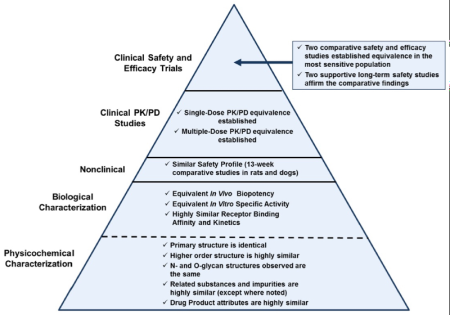
    The Retacrit application would also represent the longest delay between submission and approval.  BLA 125545 was originally submitted in December 2014, and according to a Complaint filed by Amgen in September 2015, the application was accepted sometime on or before February 23, 2015.  But on October 27, 2015, Pfizer announced that it had received a complete response letter (CRL) from the FDA that required more evidence to support approval.  According to Pfizer's FDA Advisory Committee Briefing Document, the CRL "requested additional data and sensitivity analysis to align with the most current FDA expectations and to ensure the robustness of the data demonstrating biosimilarity of Epoetin Hospira to the Epogen/Procrit reference product."  This included information in the categories of:  manufacturing process, analytical, clinical pharmacology, clinical efficacy, and clinical immunogenicity.  In response, Pfizer obtained the additional scientific evidence, which it summarized in the following figure that it said "establishes the biosimilarity of Epoetin Hospira to the Epogen/Procrit reference product."

    Image
    Marketing of the drug will likely be delayed because of the requirement to give the 180-day notice of commercial marketing.  In anticipation, though, Amgen filed a motion for preliminary injunction on May 26, 2017, because (as it alleged in the original underlying Complaint (at paragraph 66)):  "Hospira has indicated that it intends to violate the statute by categorically refusing to provide Amgen with a legally operative notice of commercial marking under 42 U.S.C. § 262(l)(8)(A)."  Of course, according to the Federal Circuit's Amgen v. Sandoz ruling, Hospira cannot give notice until after the FDA has approved the product.  But this requirement may change this month when the Supreme Court issues its decision in the Sandoz v. Amgen case.  The Delaware Court also denied Amgen's request for discovery related to Hospira's manufacturing process that was not supplied during the patent dance.  The appeal from that decision was heard by the Federal Circuit in April 2017, and an opinion is expected within the next few months.

    As a reminder, both this author and Kevin Noonan will be attending the American Conference Institute's 8th Annual Summit on Biosimilars next week, June 12-14, 2017 in New York, NY.  Dr. Noonan is co-chair of the conference and will be on a panel reviewing the first 18 months of biosimilars (and looking ahead).  If you are attending, please say hello.  As a reminder, Patent Docs readers are entitled to a 10% discount off of registration using discount code P10-999-PTD17, but hurry because registration is closing soon.

  • By Kevin E. Noonan

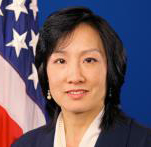
    Lee  MichelleSeveral news outlets are reporting that Michelle Lee, Undersecretary of Commerce and Director of the U.S. Patent and Trademark Office, has resigned.  Director Lee submitted a her resignation to the Trump Administration in January but almost immediately withdrew it, and has remained as a holdover from the Obama Administration since that time.

    Director Lee was appointed by President Obama in 2015, having served as Director of the Office's Silicon Valley satellite office, and before that as Deputy General Counsel and Head of Patents and Patent Strategy at Google.  Under her watch the USPTO implemented many of the provisions of the America Invents Act and instituted programs intended to improve patent quality and efficient examination (see "USPTO Launches Enhanced Patent Quality Initiative" and "USPTO Holds Patent Quality Symposium").

    Director Lee has been rumored to be under consideration for other positions in the Trump Administration, but there have been no reports that any offers for such positions have been extended or are forthcoming.