• USPTO SealThe Rocky Mountain Regional Office and Technology Center (TC) 2600 will be holding a combined Customer Partnership Meeting from 8:15 am to 3:00 pm (MT) on July 17, 2018 at the Rocky Mountain Regional Office in Denver, CO.  TC 2600 examination for patent applications including Communications.

    The event is free, open to the public, and will be webcast to include viewing sessions at USPTO Headquarters in Alexandria, VA and USPTO regional offices in Dallas, Detroit, and San Jose.  Those wishing to attend the meeting can register here.  Additional information regarding the customer partnership meeting can be found here.

  • ACIAmerican Conference Institute (ACI) will be holding is 4th Annual Post-Grant PTO Proceedings Conference on July 17-18, 2018 in Washington, D.C.  ACI faculty will help attendees:

    • Analyze has the recent Supreme Court decision will alter the future of PTAB practice;
    • Review cases that are held concurrently in both the PTAB and District Court, and examine the statistics of upheld decisions by the Federal Circuit;
    • Compare the strategies adopted by leading technology, pharmaceutical, and medical device companies for working through PTAB proceedings;
    • Successfully structure cases and utilize proper language and motions to assure a well-reasoned decision;
    • Understand the more complicated and up-and-coming issues of which all PTAB attorney must be aware;
    • Identify best practices for successful post-grant proceedings;
    • Analyze recent rulings by the Federal Circuit and PTAB to figure out what they mean for PTAB practice moving forward; and
    • Examine the ethical requirements for reviewing and signing documents and the role of non-legal staff members.

    In particular, ACI's faculty will offer presentations on the following topics:

    • Keynote Address — The Honorable David Ruschke, Chief Judge, Patent Trial and Appeal Board, U.S. Patent and Trademark Office
    • Supreme Court Update: Analysis and Impact of Oil States and SAS Institute
    Analyzing the Landscape of the Courts: A Look at the Recent Relationship between the PTAB, District Courts, and the Federal Circuit
    • In-House Round Table Part 1: The Tech Perspective
    • Off the Record: Perspective on the Current State of Affairs and Recent Rulings from Former PTAB Judges
    • Practice Points for Handling Nuanced and Cutting Edge Areas in PTAB Practice
    • A View from the Bench: Judicial Insight Into PTAB Litigation
    • In-House Round Table Part 2: The Life Science Perspective
    • Recent Rulings by the Court: Aqua, Regis Mohawk Tribe, and What Comes Next?
    • Exploring Ethical Requirements When Working Through the Patent and Trademark Process

    An agenda for the conference can be found here.  A complete brochure for this conference, including an agenda, detailed descriptions of conference sessions, list of speakers, and registration form can be obtained here.

    The registration fee is $2,295.  Patent Docs readers are entitled to a 10% discount off of registration using discount code P10-999-PTD18.  Those interested in registering for the conference can do so here, by e-mailing CustomerService@AmericanConference.com, or by calling 1-888-224-2480.

    Patent Docs is a media partner of ACI's 4th Annual Post-Grant PTO Proceedings conference.

  • ACIAmerican Conference Institute (ACI) will be holding the 5th annual Women Leaders in Life Sciences Law conference on July 25-27, 2018 in Boston, MA.  ACI faculty will help attendees:

    • Get legal updates across all practice areas in the life sciences;
    • Devise practical strategies for guiding your company through the latest business trends;
    • Develop tactics for handling the new wave of M&As in the life science industry;
    • Prepare for the future of life science: digital heath;
    • Learn tried and true skills from effective mentors;
    • Learn proven techniques for networking and building your resume;
    • Become an ally to the next generation of women in your field; and
    • Discover strategies for successfully and expediently handling sexual harassment problems in the workplace.

    In particular, ACI's faculty will offer presentations on the following topics:

    • Fireside Chat with the Hon. Tanya R. Kennedy, President of the National Association of Women Judges and Supreme Court Justice of the Supreme Court of New York County Civil Term;
    • Year in Review: 2017-2018 Legal Update by Practice Area;
    • Growing Your Women’s Group: Expanding Your Reach and Increasing Interest;
    • The New Face of M&A in the Life Sciences Industry: Impacts from Antitrust to IP and Beyond;
    • The Impact of the “Me Too” Movement on the Life Sciences Industry;
    • Latest Business Initiatives and Their Legal Implications;
    • Tales from the Front Lines: Changing Negative Situations into Success Stories;
    • Women Leaders in the Public Sector: 2018 Priorities and the Unique Obstacles They Face;
    • Digital Health: Staying Ahead of the Future of Life Sciences;
    • Bridging the Generational Gap: Working Across the Divide to Move Everyone Forward; and
    • Getting Ahead: Tips for Reaching the Top from Mentors of All Types

    In addition, three pre-conference workshops will be offered on July 25, 2018, from 9:00 am to 12:00 noon, 1:00 pm to 2:30 pm, and 3:00 to 6:00 pm, respectively.  The first workshop is entitled "'What I Wish I Had Known': Advice from Inspirational Life Science General Counsel," the second workshop is entitled "Networking as a Woman: Clear-Cut Tools for Enhancing Your Experience and Making it Count," and the third workshop is entitled "'POKERprimaDIVAS' Gain an Edge, Build Confidence, Develop Negotiating Skills – If you want to be in the game, you have to be at the table."

    An agenda for the conference and additional information regarding the workshops can be found here.  A complete brochure for this conference, including an agenda, detailed descriptions of conference sessions, list of speakers, and registration form can be obtained here.

    The registration fee is $1,295 (conference alone), $400 ("What I Wish I Had Known" workshop), $199 each ("Networking As A Women" and "POKERprimaDIVAS" workshops), and $1,995 (All Access Pass: conference and all 3 Workshops).  Patent Docs readers are entitled to a 10% discount off of registration using discount code P10-999-PTD18.  Those interested in registering for the conference can do so here, by e-mailing CustomerService@AmericanConference.com, or by calling 1-888-224-2480.

    Patent Docs is a media partner of ACI's 5th Annual Conference on Women Leaders in Life Science Law.  In addition, Patent Docs notes that MBHB attorneys Alison Baldwin, Paula Fritsch, Lisa Hillman, Sarah Fendrick, and Jelena Janjic Libby will be attending this conference.

  • EPO-EPCOppedahl Patent Law Firm LLC will be offering a webinar on "Biotech/pharma subject-matter — Patentability at the EPO and how to avoid pitfalls for US based applicants" on July 17, 2018 from 7:30 to 9:30 am (Mountain Time).  Sandra Pohlman of df-mp (Munich, Germany) and Klaus-Peter Döpfer, Director Biotechnology, EPO will look at the patentability of biotech/pharma subject‑matter under the European Patent Convention (EPC) and discuss exceptions to patentability.  The webinar will enable participants to draft claims that comply with the EPC encompassing subject-matter such as plants/animals, (stem) cells, micro‑organisms, methods of surgery and diagnosis, antibodies and nucleic acids and medical uses thereof, personalised medicine and dose regimens.  The webinar will also deal with PCT applications as the basis for European applications, including possible pitfalls.

    While there is no cost to participate in the program, advance registration is required.  Those interested in attending the webinar can register here.

  • Strafford #1Strafford will be offering a webinar entitled "Labeling and Induced Infringement in Pharma Patent Litigation and Protecting IP Rights" on July 19, 2018 from 1:00 to 2:30 pm (EDT).  Thomas L. Irving, Shana K. Cyr, and Barbara R. Rudolph of Finnegan Henderson Farabow Garrett & Dunner will guide patent counsel on the implications of recent cases for labeling and discuss strategic considerations of label language, and offer best practices for labeling.  The webinar will review the following issues:

    • What impact will recent decisions have on label language?
    • What impact will recent decisions have on claim drafting?
    • How do use codes fit in?
    • What strategic considerations should patent owners keep in mind when labeling drugs?

    The registration fee for the webcast is $297.  Those interested in registering for the webinar, can do so here.

  • By Kevin E. Noonan –

    The Biologics Price Competition and Innovation Act (BPCIA) was enacted as part of the Affordable Care Act (colloquially called "Obamacare," Public Law 111-148) (see "House Passes Health Care Reform Bill — Biosimilar Regulatory Pathway Makes Cut, Pay-for-Delay Ban Does Not").  It gave the U.S. for the first time a pathway for FDA approval of alternatives to biologic drugs (termed "biosimilars" because the complexity of these molecules precludes the atom-for-atom identity of small molecule generic drugs), codified at 42 U.S.C. § 262(k), as well as provisions for resolving patent disputes between innovator biologic drug companies (termed "reference product sponsors" in the Act) and biosimilar applicants (codified at 42 U.S.C. § 262(l)).

    Nine years later, after promulgation of several Guidances by the FDA regarding how it will (and has) implemented the biosimilar pathway, it is reasonable to review what the BPCIA hath wrought.  While the litigation provisions have been the source of some controversy (and arguably have played out in ways not envisioned when the Act was passed), the biosimilar pathway has been somewhat successful in bringing a first generation of biosimilar drugs to market.  For example, as of December 2017 there were 59 biosimilar products enrolled in the FDA's Biosimilar Development Program:

    Figure 1
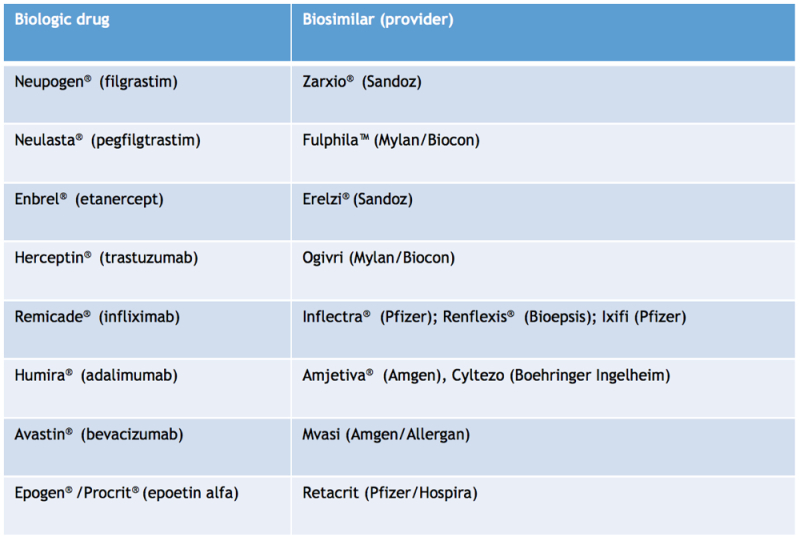
    And as of June 2018, 24 biosimilar applications have been filed and eleven biosimilar drugs have received FDA approval.

    Table 1
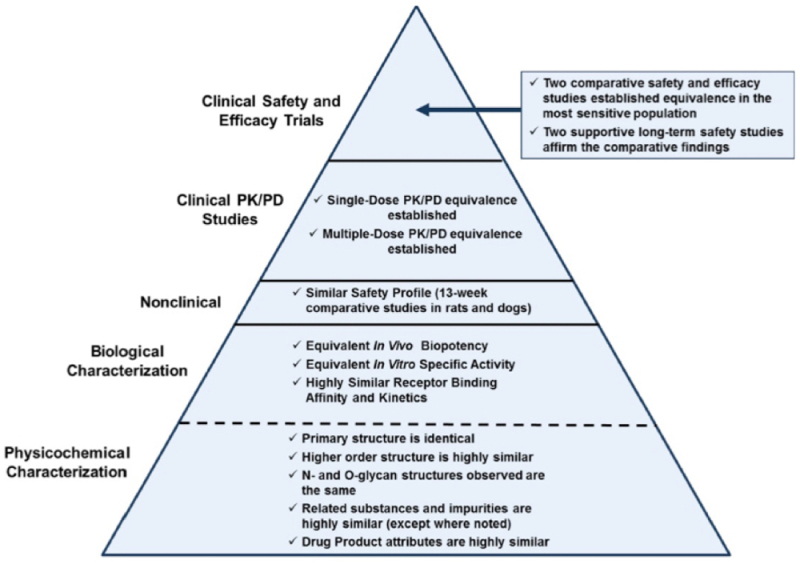
    FDA approval of these drugs has been relatively rapid, typically taking 10-20 months from FDA acceptance to approval.  There have been some outliers; Pfizer/Hospira's Retacrit® (a biosimilar of Epogen®/Procrit®) was under FDA review for 42 months.  Most (but not all) of these FDA-approved biosimilars have also been approved in Europe (some quite a while ago, paradoxically including Retacrit® which was approved in Europe in 2007).  The FDA decided early in its implementation process that it would accept clinical and other comparative data previously submitted to European regulators, supplemented by so-called "bridging studies," in the FDA approval process. Such studies were submitted for Sandoz's Zarxio® (filgrastim-sndz) and Erelzi® (etanercept-szzs) biosimilars, for example.  Several products (Amgen's Amjetiva® (adalimumab-atto), Pfizer/Celltrion's Inflectra® (infliximab-dyyb), and Merck/Samsung Bioepsis's Renflexis® (infliximab-abda)) were supported by double-blind clinical studies comparing the biosimilar to EU-licensed and RPS-sourced biologic drugs.

    The prolonged regulatory saga for Retacrit® illustrates the extent to which the FDA can require a biosimilar applicant to satisfy its purity, safety, and efficacy standards for a biosimilar product:

    Figure 2
    Mere approval is not sufficient, of course; many but not all of these drugs are on the market in competition with the reference biologic drug.  These include Zarxio® (filgrastim-sndz) (in competition with Amgen's Neupogen®), which launched in September 2015, and Inflectra® (infliximab-dyyb) (in competition with J&J/Janssen's Remicade®), which launched in November 2016; each of these biosimilars are sold at a 15% discount from the reference biologic drug price.  Renflexis® (infliximab-abda) (another Remicade® competitor) launched at risk (i.e., while patent litigation was on-going) at a 35% discount, and Amjetiva® (adalimumab-atto) is scheduled to enter the market in competition with AbbVie's Humira® in January 2023 as the result of a settlement agreement between the parties.  Several other approved biosimilars are not yet on the market, however; these include Boehringer Ingelheim's Humira® biosimilar, Cyltezo® (adalimumab-abdm); Amgen/Allergan's Avastin® biosimilar, Mvasi (bevacizumab-awwb) (Amgen/Allergan); and Mylan/Biocon's Herceptin® biosimilar, Ogivri (trastuzumab-dkst), despite a global licensing agreement with Genentech entered into on March 31, 2017; and Hospira's Epogen® biosimilar, Retacrit® (epoetin alfa-epbx).  In addition, Pfixer has decided not to enter the marketplace with its Remicade® biosimilar, Ixifi, which would also compete with Pfizer's other Remicade® biosimilar, Inflectra®.

    Fourteen biosimilar (§ 262(k)) applications are currently pending:

    Table 2
    These applications have encountered more challenges on their approval pathways; several of them have received Complete Response Letters from the FDA (indicating that the agency will not approve the application under 21 C.F.R. §§ 314.125 or 314.127), and many have been pending longer than the 10-20 month average experienced by the already-approved biosimilars.

    Biosimilar litigation is also proceeding and provides a reason that some of the approved biosimilars are not yet on the market (including Erelzi®, Cyltezo®, Mvasi, and Mylan/Biocon's Neulasta® biosimilar, Fulphila™).  Consistent with expectations during passage of the BPCIA, there is also active litigation involving reference product sponsors and biosimilar applicants:

    Table 3
    So far, approved biosimilars and pending biosimilar applications have been concentrated amongst the top U.S. biologic drugs, but there are several such drugs that are among these top drugs and have no prospective biosimilar competitors:

    Table 4
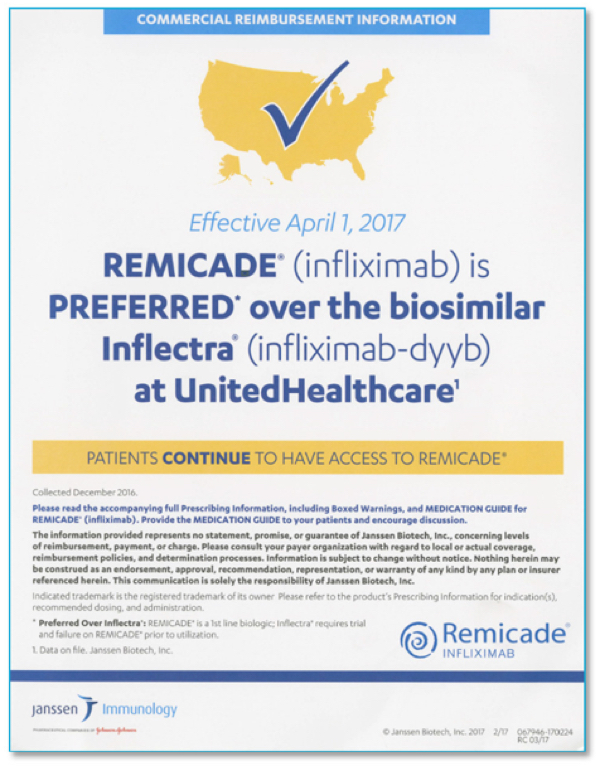
    Finally, it must be recognized that other considerations can and have arisen, particularly antitrust concerns.  Pfizer filed suit against Johnson & Johnson and Janssen Biotech for antitrust violations related to alleged anticompetitive activities surrounding competition between Remicade® and Inflectra®.  Pfizer alleged that the defendants engaged in "improper exclusionary tactics," including exclusionary contracts, coercive rebate policies with insurers, hospitals, clinics ("fail first" restrictions), exclusionary rebates, bundling, and coverage restrictions.  This advertisement hasn't helped:

    Figure 3
    Pfizer's four-count complaint alleged Sherman Act Section 2 violations for monopolization and attempted monopolization; Clayton Act violations for entering into exclusive contracts; and Sherman Act Section 1 violations for entering into agreements in restraint of trade.  Pfizer has asked the court for $150 million in damages, attorneys' fees, costs, and an injunction.  J&J/Janssen has responded with a motion to dismiss under Fed. R. Civ. Pro. 12(b)(6) based in pleadings deficiencies under Ashcroft v. Iqbal and Bell Atlantic Corp. v. Twombly.  Substantively, defendants allege that Pfizer did not show antitrust injury or anticompetitive behavior, and that their actions were just robust capitalist competition.  The motion has been pending since November 2017, and the court has stayed discovery while considering the motion.

    Within the last year, the number of approved biosimilars in the U.S. has more than doubled, and with the number of pending biosimilar applications it is likely that this trend will continue.  One aspect of the BPCIA has not yet come to pass, a designation of any biosimilar as being interchangeable.  The FDA released draft Guidance directed to the standards it is considering for awarding an interchangeability designation in January 2017 (see Considerations in Demonstrating Interchangeability with a Reference Product); a Final Guidance is expected in 2019.

    *Adapted from a talk given at the American Conference Institute's 9th Annual Conference on Biosimilars, held in New York, New York on June 25-27, 2018.

  • By Nicole Grimm, George "Trey" Lyons, III, and Brett Scott

    GW PharmaceuticalsOn June 25, 2018, GW Pharmaceuticals plc and its U.S. subsidiary, Greenwich Biosciences, made history in the cannabis industry by winning FDA approval of the drug Epidiolex, a cannabidiol (CBD) oral solution for the treatment of seizures associated with two rare forms of childhood-onset epilepsy (Lennox-Gastaut syndrome and Dravet syndrome).[1]  Both Lennox-Gastaut syndrome and Dravet syndrome are debilitating forms of epilepsy that have been known to be difficult to treat.  Epidiolex is the first FDA-approved drug containing plant-derived CBD, a non-psychoactive cannabinoid naturally produced by cannabis plants.

    In approving Epidiolex, the FDA voiced support for further research and studies on medical uses for cannabis through its approval process.  According to FDA Commissioner Scott Gottlieb:

    Controlled clinical trials testing the safety and efficacy of a drug, along with careful review through the FDA's drug approval process, is the most appropriate way to bring marijuana-derived treatments to patients . . . .  We'll continue to support rigorous scientific research on the potential medical uses of marijuana-derived products and work with product developers who are interested in bringing patients safe and effective, high quality products.[2]

    However, Commissioner Gottlieb cautioned that the FDA is prepared to take action against illegal CBD-products marketed with unproven medical claims.

    FDA approval of Epidiolex may also prompt the Drug Enforcement Administration (DEA) to reschedule CBD from a Schedule I drug under the Controlled Substances Act, which would be another historic event for the cannabis industry.  And, in spite of Attorney General Jeff Sessions's continuing war on cannabis, President Trump has indicated support for such a shift.[3]

    Rescheduling Epidiolex is necessary for the drug to become available to patients in the U.S.  As part of the approval process, the FDA, through the Department of Health and Human Services, makes recommendations to the DEA regarding scheduling based on scientific and medical studies of scheduled substances such as Epidiolex.  In turn, the DEA is required to make a scheduling determination.  Additionally, in making its determination, the DEA will likely consider the results of clinical and nonclinical studies regarding the abuse potential of CBD that GW Pharmaceuticals conducted as part of its application for Epidiolex.  Although the FDA did not indicate whether it provided a favorable scheduling recommendation for Epidiolex, GW Pharmaceuticals stated in its press release that it expects the DEA to reschedule the drug in the next 90 days.

    Rescheduling Epidiolex from a Schedule I drug may have implications for GW Pharmaceuticals' intellectual property surrounding the drug as well.  First, enforcing cannabis patents in federal district courts remains a grey area in the industry since cannabis is currently classified as a Schedule I drug.  By rescheduling Epidiolex, the drug will become legally available by prescription, and GW Pharmaceuticals should be able to enforce the patents covering Epidiolex like any other pharmaceutical patent.  In turn, the company may also experience an increase in inter partes review (IPR) proceedings to challenge patents in its portfolio.  As we have previously discussed, one of GW Pharmaceutical's patents involving treating partial seizure by administering CBD is already involved in an IPR proceeding.

    Additionally, while the USPTO has categorically declined to grant trademarks based on the cannabis plant itself (and derivatives thereof), as well as cannabis goods and services that contribute to federally illegal activity (often referred to as those that "touch the plant"), rescheduling cannabis-based pharmaceuticals like Epidiolex may help eliminate any hurdles faced in obtaining federal trademark protection for such pharmaceuticals.  Indeed, unlike Schedule I drugs, scheduled prescription drugs have a legal use in commerce and are therefore routinely granted federal trademark protection.  In fact, the USPTO has already granted a trademark for Epidiolex; but note, in doing so the drug was described broadly, without referring to federally prohibited subject matter (e.g., cannabis), and instead referring to, for example, "medicinal herbs" and "medicinal infusions for the treatment of epilepsy."

    Either way, right now the approval and tentative rescheduling of Epidiolex is a step in the right direction and could pave the way for other cannabis-based drugs to gain FDA approval and open up new treatment options for patients suffering from a variety of diseases moving forward.

    [1] http://ir.gwpharm.com/news-releases/news-release-details/gw-pharmaceuticals-plc-and-its-us-subsidiary-greenwich

    [2] https://www.fda.gov/NewsEvents/Newsroom/PressAnnouncements/ucm611046.htm

    [3] See, e.g., https://www.wsj.com/articles/jeff-sessions-struggles-to-get-planned-marijuana-crackdown-going-1528628400

  • By Kevin E. Noonan –

    Supreme Court Building #3Yesterday, the Supreme Court granted certiorari on Helsinn Healthcare's petition to overturn the Federal Circuit's decision in Helsinn Healthcare v. Teva Pharmaceuticals that its patents were invalid by application of the on-sale bar under 35 U.S.C. 102(b).  The Question Presented in the petition was as follows:

    Whether, under the Leahy-Smith America Invents Act, an inventor's sale of an invention to a third party that is obligated to keep the invention confidential qualifies as prior art for purposes of determining the patentability of the invention.

    Helsinn Healthcare S.A. v. Teva Pharmaceuticals USA Inc., Docket No. 17-1229.

    The issue is specifically related to the question of whether the AIA changed the application of the on-sale bar.  By granting cert., the Court opens up the possibility for a decision that extends further than that (see, for example, AMP v. Myriad Genetics).

    To recap, the case arose over ANDA litigation regarding Teva's intention to market a generic version of Helsinn's intravenous formulations of palonosetron used to reduce chemotherapy-induced nausea and vomiting ("CINV").  There were four patents-in-suit:  U.S. Patent Nos. 7,947,724, 7,947,725, 7,960,424, and 8,598,219; only the '219 patent was allowed and granted under the AIA changes in U.S. patent law.

    A prior art patent (U.S. Patent No. 5,202,333) taught that palonosetron was useful for treating CINV; the patents-in-suit were directed to novel formulations comprising "unexpectedly low concentrations of palonosetron."  Claim 2 of the '725 patent is representative of the pre-AIA patents-in-suit:

    2.  A pharmaceutically stable solution for reducing emesis or reducing the likelihood of emesis comprising:
        a)  0.05 mg/mL palonosetron hydrochloride, based on the weight of the free base, in a sterile injectable aqueous carrier at a pH of from 4.5 to 5.5;
        b)  from 0.005 mg/mL to 1.0 mg/mL EDTA; and
        c)  mannitol in an amount sufficient to tonicify said solution, in a concentration of from about 10 mg/ml to about 80 mg/ml.

    Claim 1 is representative of the '219 patent (post-AIA):

    1.  A pharmaceutical single-use, unit-dose formulation for intravenous administration to a human to reduce the likelihood of cancer chemotherapy- induced nausea and vomiting, comprising a 5 mL sterile aqueous isotonic solution, said solution comprising:
        palonosetron hydrochloride in an amount of 0.25 mg based on the weight of its free base;
        from 0.005 mg/mL to 1.0 mg/mL EDTA; and
        from 10 mg/mL to about 80 mg/mL mannitol,
        wherein said formulation is stable at 24 months when stored at room temperature.

    It is undisputed that each asserted claim covers the 0.25 mg dose of palonosetron.  Helsinn entered into contract for supplying the claimed formulation prior to critical date, but contingent on FDA approval (which was not obtained until after the critical date).

    The District Court found a sale or offer for sale prior to the critical date, but that the invention was not ready for patenting with regard to the pre-AIA patents, and that the AIA had changed the on-sale bar to require a public sale or offer for sale.  Although the existence of the agreement and its terms were publicly known, the parties had not disclosed the 0.25 mg palonosetron dose before the critical date.  The District Court thus rejected Teva's invalidity contentions based on the § 102(b) on-sale bar.

    The Federal Circuit reversed, in an opinion by Judge Dyk joined by Judges Mayer and Moore.  Using the framework set forth by the Court in Medicines Co. v. Hospira, the panel found that the invention was "on sale" prior to the critical date by applying "the law of contracts as generally understood" and "those activities that would be understood to be commercial sales and offers for sale 'in the commercial community.'"  Under this analysis, the Court had little difficulty deciding that there had been a sale before the critical date.  The contingent nature of FDA approval did not refute this conclusion, the Court saying that commercial practice, exemplified by provisions of the Uniform Commercial Code, contemplate "purported present sale of future goods . . . [which] operates as a contract to sell," UCC § 2– 105(2), and that "[a] contract for sale that includes a condition precedent is a valid and enforceable contract," citing BG Grp., PLC v. Republic of Argentina, 134 S. Ct. 1198, 1207 (2014).  The opinion also cited the Court's own precedent regarding the existence of a sale despite the presence of conditions precedent to commercial transfer of goods, such as Enzo Biochem, Inc. v. Gen-Probe, Inc., 424 F.3d 1276 (Fed. Cir. 2005), and C.R. Bard, Inc. v. M3 Sys., Inc., 157 F.3d 1340 (Fed. Cir. 1998).

    The Court also rejected Helsinn's contention that the AIA changed the on-sale bar calculus to limit its application to public sales.  Noting that confidential sales did not per se prevent application of the on-sale bar prior to enactment of the AIA (citing, inter alia, In re Caveney, 761 F.2d 671, 673–74 (Fed. Cir. 1985)), the opinion rejected arguments by Helsinn and amici (including the U.S. government) that the AIA changed the law, which were based almost exclusively on statements from the Congressional record (which were directed not to on-sale activities but to public use).  It did not help Helsinn's argument in this regard that the panel identified Supreme Court precedent directly contrary to their position, i.e., Pennock v. Dialogue, 27 U.S. (2 Pet.) 1, 19 (1829).  Accordingly, the opinion states that "[w]e conclude that, after the AIA, if the existence of the sale is public, the details of the invention need not be publicly disclosed in the terms of sale" and thus invalidity of the '219 patent was not properly determined by the District Court.

    With regard to the question of whether the invention claimed in the patents in suit was "ready for patenting" prior to the critical date, the panel decided that it was, based on the invention having been reduced to practice before the critical date.  This decision depended, in part, on the parties' stipulation that "they would contest ready for patenting 'only with respect to the limitations and intended uses of "reducing emesis or reducing the likelihood of emesis" and '"to reduce the likelihood of cancer chemotherapy-induced nausea and vomiting" of the asserted claims' and not "'for any other reason.'"  The panel noted that its case law distinguished the standard needed to show reduction to practice with regard to whether a pharmaceutical invention would work for its intended purpose and the standard for FDA approval of a new drug, citing Scott v. Finney, 34 F.3d 1058, 1063–64 (Fed. Cir. 1994).  Specifically, the standard is that the invention "works for its intended purpose 'beyond a probability of failure' but not 'beyond a possibility of failure.'"  The Federal Circuit found the District Court erred by applying the FDA standard rather than the proper patent standard in making its (erroneous) determination that the invention was not "ready for patenting" before the critical date.  This conclusion was supported by Helsinn's own documents (including portions of the patents' prosecution histories), pre-litigation statements and testimony.  And the opinion notes that, if the standard applied by the District Court was correct, Helsinn could not have filed a valid application prior to the critical date, and "[s]uch a standard would preclude the filing of meritorious patent applications in a wide variety of circumstances."

    (It is important to note that this case is another example of patentees making statements before the Patent Office aimed at validating priority claims and overcoming prior art that are at odds with positions they need to take in litigation, here to overcome invalidation under the § 102(b) on-sale bar.)

    The Court is expected to hear the case during its October 2018 term, with a decision prior to this time next year.

  • By Michael Borella

    Federal Circuit SealMost software inventions are functional in nature.  The focus is not on what the invention is so much as what it does.  The same physical hardware can be programmed by way of software to carry out an infinite number of different operations.  Thus, it is not uncommon for software inventions to be claimed as methods.  But when such inventions are claimed from the point of view of hardware carrying out a method, the patentee runs the risk of the claims being interpreted under 35 U.S.C § 112(f) (pre-AIA § 112 paragraph 6) as being in "means-plus-function" form.  This, of course, can effectively narrow the scope of the claims to embodiments disclosed in the specification and equivalents thereof.  Also, such claims can be found invalid if the specification does not disclose sufficient structure to support the embodiments.

    Zeroclick sued Apple in the Northern District of California, contending infringement of U.S. Patent Nos. 7,818,691 and 8,549,443.  The District Court concluded that the asserted claims invoked § 112(f), lacked the necessary structure, and were thus invalid.  Zeroclick appealed.

    As stated by the Federal Circuit "[t]he '691 and '443 patents relate to modifications to the graphical user interfaces of devices such as computers and mobile phones, modifications that allow the interfaces to be controlled using pre-defined pointer or touch movements instead of mouse clicks."  To that point, example claims of the '691 and '443 patents respectively recite:

    2.  A graphical user interface (GUI), which may comprise an update of an existing program, that may fully operate a GUI by a two step method of movement of a pointer (0) to operate one or more functions within the GUI,
        wherein, said existing program is any existing program that can operate the movement of the pointer (0) over a screen (300) and has one or more functions operated by one or more other methods apart from said two step method, and/or one or more functions operated by said one or more other methods in said existing program can be updated to operate by said two step method,
        wherein said GUI executes one or more functions within the GUI by the completion of the following said two step method:
            first said pointer (0) is immediately adjacent or passes within a control area (1), which is an area of the screen (300) that may be any size including from a pixel on the screen (300) to occupying the whole screen (300), and
            second by the completion of a subsequent movement of said pointer (0) according to a specified movement generates a 'click' event, thereby triggering one or more functions within the GUI.

    19.  A device capable of executing software comprising:
        a touch-sensitive screen configured to detect being touched by a user's finger without requiring an exertion of pressure on the screen;
        a processor connected to the touch-sensitive screen and configured to receive from the screen
        information regarding locations touched by the user's finger;
        executable user interface code stored in a memory connected to the processor;
        the user interface code executable by the processor;
        the user interface code being configured to detect one or more locations touched by a movement of the user's finger on the screen without requiring the exertion of pressure and determine therefrom a selected operation; and
        the user interface code is further configured to cause one or more selected operations, which includes one or more functions available to the user interface code of the device, to deactivate while the user's finger is touching one or more locations on the screen.

    While construing the claims, the District Court stated that the features of a "program that can operate the movement of the pointer (0)" and "user interface code being configured to detect one or more locations touched by a movement of the user's finger on the screen without requiring the exertion of pressure and determine therefrom a selected operation" were properly interpreted under § 112(f).

    In reviewing the District Court's holding, the Federal Circuit relied heavily on Williamson v. Citrix Online, LLC.  This case made it clear that:

    To determine whether § 112, para. 6 applies to a claim limitation, our precedent has long recognized the importance of the presence or absence of the word 'means.'  The failure to use the word 'means' creates a rebuttable presumption that § 112, ¶ 6 does not apply.  But the presumption can be overcome, and § 112, ¶ 6 will apply, if the challenger demonstrates that the claim term fails to recite sufficiently definite structure or else recites function without reciting sufficient structure for performing that function.

    Furthermore, "[w]hen evaluating whether a claim limitation invokes § 112, ¶ 6, the essential inquiry remains whether the words of the claim are understood by persons of ordinary skill in the art to have a sufficiently definite meaning as the name for structure."  This inquiry is to consider factual evidence both intrinsic and extrinsic to the patent.  The Federal Circuit's main beef with the District Court is that the latter failed to carry out the inquiry or make any factual findings.

    Notably, neither of the features that the District Court interpreted under § 112(f) used the word "means," which gives rise to the presumption that § 112(f) does not apply.  Nonetheless, "Apple argued that the limitations must be construed under § 112, ¶ 6, but provided no evidentiary support for that position . . . [a]ccordingly, Apple failed to carry its burden, and the presumption against the application of § 112, ¶ 6 to the disputed limitations remained unrebutted."

    Similarly, the District Court also failed to rebut the presumption, as "its determination that the terms must be construed as means-plus-function limitations is couched in conclusory language" and relied on Apple's arguments without providing any supporting evidence for its conclusion.

    The District Court's specific language included the statements:

    The Court concludes that the term 'program that can operate the movement of the pointer (0)' is a means-plus-function term because the claim itself fails to recite any structure whatsoever, let alone 'sufficiently definite structure.'

    and

    Because the use of the phrase 'user interface code' provides the same 'black box recitation of structure' as the use of the word 'module' did in Williamson, and the claim language provides no additional clarification regarding the structure of the term, the Court concludes that 'user interface code' constitutes a means-plus-function term.

    According to the Federal Circuit, the District Court erroneously "treated 'program' and 'user interface code' as nonce words, which can operate as substitutes for 'means' and presumptively bring the disputed claims limitations within the ambit of § 112."  The appeals court found three distinct problems with doing so.

    "First, the mere fact that the disputed limitations incorporate functional language does not automatically convert the words into means for performing such functions."  Notably, many structural components or devices are named after the functions they perform.

    "Second, the court's analysis removed the terms from their context, which otherwise strongly suggests the plain and ordinary meaning of the terms."  Particularly, the terms "program" and "user interface code" were not used in the claim as nonce terms, but instead refer to "conventional graphical user interface programs or code, existing in prior art at the time of the inventions."  And as explained in the specifications, the claimed invention was an improvement to such interfaces and code.

    "Third, and relatedly, the district court made no pertinent finding that compels the conclusion that a conventional graphical user interface program or code is used in common parlance as substitute for 'means.'"  The Federal Circuit suggested that use of a broader term, such as "module", in place of "program" and "user interface code" would have likely have invoked § 112(f).

    For these reasons, the Federal Circuit reversed the District Court and remanded the case for further proceedings.

    Zeroclick, LLC v. Apple Inc. (Fed. Cir. 2018)
    Panel: Circuit Judges Reyna, Taranto, and Hughes
    Opinion by Circuit Judge Hughes

  • By Kevin E. Noonan and George "Trey" Lyons, III

    Supreme Court Building #2On Friday, the Supreme Court reversed the judgment of the Federal Circuit in WesternGeco LLC v. ION Geophysical Corp.  Justice Thomas (joined by Chief Justice Roberts and Justices Kennedy, Ginsburg, Alito, Sotomayor, and Kagan) held that, based on the "focus" of 35 U.S.C. § 284 of the Patent Act (the general damages provision) when read in light of domestic infringement under 35 U.S.C. § 271(f)(2) (barring exportation of components specifically adapted for a patented invention), a patent owner could recover lost foreign profits.  The decision overruled the Federal Circuit's general practice of interpreting damages under § 271(f)(2) in the same fashion as § 271(a) (the general infringement provision, which does not allow patent owners to recover lost foreign profits).

    Background

    The case arose over patent owner WesternGeco LLC's four patents relating to positioning systems for marine seismic streamer technology deployed behind ships to create three-dimensional maps of the ocean floor to facilitate natural resource exploration and management.  See U.S. Patent No. 7,293,520; 7,162,967; 7,080,607; and 6,691,038.  WesternGeco uses the technology to perform services for oil and gas companies based on these three-dimensional maps both domestically and abroad, but does not sell or license this technology.

    In 2007, ION Geophysical Corp. began selling a competing system by manufacturing the system components in the U.S. and shipping them to companies to assemble abroad.  Once assembled, ION's competing system performed services indistinguishable from WesternGeco's and thus was able to successfully compete with WesternGeco in foreign markets.

    In 2009, WesternGeco sued ION in the Southern District of Texas for infringing all four patents under §§ 271(f)(1) and (f)(2).  At trial, WesternGeco proved that it had lost at least ten specific survey contracts due to ION's infringement.  After a three and a half week trial, the jury returned a verdict in favor of WesternGeco, finding that ION had infringed all four patents under §§ 271(f)(1) and (2) and awarded $93.4 million in lost profits based on the foreign contracts and a reasonable royalty of $12.5 million for the patented article.  ION's post-trial motion to set aside the $93.4 million in foreign lost profits portion of the verdict led to the instant appeal, where ION argued that WesternGeco could not recover damages for lost profits because § 271(f) does not apply extraterritorially.

    The District Court denied the motion but the U.S. Court of Appeals for the Federal Circuit reversed the award of lost-profits damages, citing its previous precedent in Power Integrations, Inc. v. Fairchild Semiconductor Int'l, Inc., 711 F. 3d 1348 (Fed. Cir. 2013), barring the recovery of lost foreign profits under § 271(a).  Specifically, the majority of the appellate panel (Judges Dyk and Hughes) reasoned that § 271(f) should be interpreted similarly to how the Court had interpreted § 271(a), as both were "designed" to put patent infringers "in a similar position" under § 284.  Judge Wallach dissented, noting that the majority's view was unduly rigid for the foreign impact of domestic infringement under § 271(f), as it barred the District Court from "considering foreign lost profits even when those lost profits bear a sufficient relationship to domestic infringement," which "encourages market inefficiency[] and threatens to deprive plaintiffs of deserved compensation in appropriate cases."[1]  WesternGeco successfully petitioned for certiorari.

    Judge Wallach's criticism of the rigidity with which the Federal Circuit applied this rule, when read in context of what § 271(f)(2) was crafted to address (end-around foreign assembly and infringement of U.S.-exported components), was pervasive in the cert. petition and the proceedings before the Court.  Of particular impact was the focusing of domestic infringement under § 271(f)(2) that led to domestic harm to U.S. patent owners in foreign markets.  An important analogy that focused the Court's attention at oral argument (and one that may well have carried the day), was given by Zachary Tripp, Assistant to the U.S. Solicitor General, in which he argued that a hypothetical French tourist left unable to work in France due to injuries sustained while visiting the U.S. would still be able to recover damages under U.S. tort law—even though the lost wages would occur in France.[2]

    The Majority

    In line with this reasoning, as well as Judge Wallach's criticisms of the rigidity of the Federal Circuit's analysis of § 271(f)(2), the Supreme Court reversed the Federal Circuit's decision below.  In its decision, despite the "presumption against extraterritoriality" in the enforcement of federal statutes, the majority exercised its discretion to bypass the first prong of RJR Nabisco, Inc. v. European Community, 136 S. Ct. 2090, 2101 (2016) ("whether the presumption against extraterritoriality has been rebutted"), and found under the second prong ("whether the case involves a domestic application of the statute"), that foreign lost profits due to domestic acts of infringement under § 271(f)(2) should not be categorically barred.

    Specifically, the majority reiterated the facts presented and that "the focus of § 284, in a case involving infringement under § 271(f)(2), is on the act of exporting components from the United States."  WesternGeco, at 7 (emphasis added).  In this context, because the infringing act happens domestically, any lost profits (foreign or otherwise) based on that domestic infringement were merely a domestic application of § 284.  Id. at 7-8 ("domestic infringement [under § 271(f)(2)] is 'the objec[t] of the statute's solicitude' in this context . . . [and t]he conduct in this case that is relevant to that focus clearly occurred in the United States . . . [t]hus, the lost-profits damages . . . were a domestic application of § 284").

    Furthermore, in the majority's view, to receive adequate compensation for such domestic acts of infringement under § 284, patent owners such as WesternGeco can and should recover damages that "'plac[e] [the patent owner] in as good a position as he would have been in' if the patent had not been infringed"—i.e., "the difference between [its] pecuniary condition after the infringement, and what [its] condition would have been if the infringement had not occurred."  Id. at 9.  Thus, because WesternGeco demonstrated the loss of at least ten specific foreign contracts based on ION's domestic act of supplying the components that infringed WesternGeco's patents, the Court held that the foreign lost-profits damages that were awarded to WesternGeco were permissible—as a domestic application of § 284 vis-à-vis § 271(f)(2).  Id. at 9-10.

    The majority, however, emphasized the narrowness of the holding by expressly declining to address the permissibility of such damages due to extraterritorial inducement (i.e., the intersection of § 284 and § 271(f)(1)) and/or "the extent to which other doctrines, such as proximate cause, could limit or preclude damages in [this or other] cases."  See, e.g., id. at 3 n.1, 7 n.2, and 9 n.3.

    The Dissent

    None of the current Supreme Court Justices can fairly be said to be particularly pro-patent; indeed, it seems that the Justices are more comfortable with the pervasive effect of antitrust principles, particularly academic ones, and their application to patent law analysis (see, e.g., FTC v. Actavis).  Justice Gorsuch, the newest Justice, evinced the same penchant for construing patent law within the narrow confines of its antitrust boundaries in his dissent to Justice Thomas's majority opinion in WesternGeco LLC v. Ion Geophysical Corp., in his reasoning, his diction, and his partner in dissent, Justice Breyer (who authored, among other decisions, Actavis and Mayo Collaborative Services v. Prometheus Laboratories, Inc.).

    The dissent is just slightly shorter than the majority opinion (albeit not by much), and in it Justices Gorsuch and Breyer take issue with the majority's decision permitting a patentee to be sued for damages for the use abroad of a patented article infringed under the provisions of 35 U.S.C. § 271(f)(2).  His language evokes the classic concerns about the effect of patents on competition, writing, inter alia, that "[a] U. S. patent provides a lawful monopoly" in the U.S. only, and that WesternGeco "assumes it could have charged monopoly rents abroad" based on its U.S. patent.  "Permitting damages of this sort would effectively allow U. S. patent owners to use American courts to extend their monopolies to foreign markets," he warns, and this "would invite other countries to use their own patent laws and courts to assert control over our economy" (a legitimate worry if this is indeed the impact of the majority's decision).  Justice Gorsuch believes the majority erred, despite the Congressional intent that § 271(f) impose patent infringement liability for acts occurring abroad that have the statutory predicate basis in activities occurring within the U.S.

    As in the majority opinion, the dissent looks to other provisions of the patent statute for support for Justice Gorsuch's position.  And of course the Justice finds such support, because but for the § 271(f) exception, the Patent Act is replete with limitations against extraterritorial extension of U.S. law, both implicit and explicit.  The real issue between the majority and the dissent is whether the damages accruing from Ion Geographic's infringement find a patent law remedy.  The majority believes that the predicate infringement under § 271(f)(2) entitles WesternGeco to those ancillary damages; Justices Gorsuch and Breyer do not.

    The Justice points out that the Court has decided against permitting extraterritorial extensions of U.S. patent law before, all occurring before passage of § 271(f).  These include Brown v. Duchesne, 19 How. 183 (1857) (infringement happening on board a ship on the high seas), despite unavailing argument to the contrary by the Solicitor General ("I am unpersuaded," Justice Gorsuch writes, in a footnote); Birdsall v. Coolidge, 93 U. S. 64 (1876); and Yale Lock Mfg. Co. v. Sargent, 117 U. S. 536 (1886) ("the leading case on lost profits damages").  Justice Gorsuch also rejects the argument that § 271(f)(2) provides an exception; the Justice thinks that the statute merely "modifies the circumstances when the law will treat an invention as having been made within the United States" but does not broaden the scope of activities for which a patentee can seek compensation in damages.  The dissent characterizes as a "bedrock rule that foreign uses of an invention (even an invention made in this country) do not infringe a U. S. patent" (emphasis in the dissent) and that § 271(f)(2) does not (and cannot) change that.

    In further support of his argument, Justice Gorsuch then sets forth a "parade of horribles" that he envisions could arise in the wake of the majority's decision.  These include instances where there could be "greater recovery when a defendant exports a component of an invention in violation of §271(f)(2) [in the Justice's example, a chip for use in a cell phone] than when a defendant exports the entire invention in violation of §271(a)."  Calling it "some springboard" for potential liability, Justice Gorsuch posits that "supplying a single infringing product from the United States would make ION responsible for any foreseeable harm its customers cause by using the product to compete against WesternGeco worldwide, even though WesternGeco's U. S. patent doesn't protect it from such competition," as evidenced the disparity between the damages the jury awarded here for lost profits ($93.4 million) and royalties ($12.5 million).  Warming to the topic, Justice Gorsuch speculates regarding a situation where a patented prototype chip is made in the U.S. and all further activities occur abroad:

    Under the terms of the Patent Act, the developer commits an act of infringement by creating the prototype here, but the additional chips it makes and sells outside the United States do not qualify as infringement.  Under WesternGeco's approach, however, the patent owner could recover any profits it lost to that foreign competition—or even three times as much, see §284— effectively giving the patent owner a monopoly over foreign markets through its U. S. patent.

    This (over)application is an invitation for foreign patentees to act reciprocally against U.S. industries, creating infringement liability enforced by foreign courts that will harm the U.S. economy.

    There is certainly some validity in Justice Gorsuch's apprehension of how the inferior courts might improperly expand the majority's opinion beyond its scope.  That has certainly been the case regarding the Court's recent decisions on other provisions of the statute (see Ariosa Diagnostics, Inc. v. Sequenom, Inc., for example).  But in many ways this case is an outlier, wherein infringement of the claimed device gave the infringer the ability to compete with the patentee for services rather than for sales of the infringing article.  And this distinction may make all the difference in whether Justice Gorsuch's apprehensions come to pass.

    Conclusion

    For the time being, one practical consequence of this decision is that U.S. patent owners may now recover foreign lost profits tied to domestic acts of infringement under § 271(f)(2).

    WesternGeco LLC v. ION Geophysical Corp. (2018)
    Opinion by Justice Thomas, joined by Chief Justice Roberts and Justices Kennedy, Ginsburg, Alito, Sotomayor, and Kagan; dissenting opinion by Justice Gorsuch, joined by Justice Breyer

    [1] WesternGeco L.L.C. v. ION Geophysical Corp., 837 F.3d 1358, 1369 (Fed. Cir. 2016) (Wallach, J. dissenting), cert. granted sub nom, WesternGeco LLC v. ION Geophysical Corp., 138 S. Ct. 734 (2018), and rev'd sub nom, WesternGeco LLC v. ION Geophysical Corp., No. 16-1011, 2018 WL 3073503 (U.S. June 22, 2018).

    [2] For further analysis on this point, see, e.g., Dennis Crouch, WesternGeco v. Ion Geophysical: Foreign Damages and a French Tourist, PatentlyO (April 17, 2018).