• By Andrew Williams

    IPO #2In a document entitled the "Push Forward Report," the Intellectual Property Owners Association ("IPO") Women in IP Committee pointed out that "[w]omen are under-represented in Science, Technology, Engineering, and Mathematics (STEM) fields, including in the ranks of patent and licensing attorneys."  In response to this concern, this IPO committee has prepared and shared tools that are designed to help build and expand on current practices to benefit women and diversity.  These resources, found here, address concerns of implicit bias, provide recommendations for what both companies and law firms can do to support women in speaking with influence, analyze how work-life balance considerations may impact talent review and attorney development, and provide suggestions for counteracting the problem of "vague feedback" that women tend to receive in contrast to the granular detail generally received by men.

    Implicit bias is "the unconscious attitudes or stereotypes that affect our understanding, actions, and decision," according to a White Paper produced by the Women in IP committee's Push Forward subcommittee ("Implicit Bias in the Legal Profession").  This report explains that there are different types of implicit bias.  For example, there is confirmation bias, which causes people to pay more attention to information that confirms existing beliefs and disregard information that is contradictory.  In addition, there is attribution bias that causes people to find more favorable behaviors and circumstances of their "in groups," and judge as less favorable those from their "our groups."  Availability bias causes people to default to "top of mind" information, such as picturing a man when asked to think of a "leader."  Finally, the report identified affinity bias as a form of implicit bias caused by the tendency of people to gravitate towards and develop relationships with people that share similar interests and backgrounds.  This can result in a "'mirrortocracy' – not a meritocracy."  Implicit bias not only impacts the career paths or women, but of "LGBTQ, racially/ethnically diverse, and disabled lawyers."

    The IPO resources include a toolkit on identifying and addressing implicit bias, which consists of a comprehensive PowerPoint, entitled "Implicit Bias & Ethical Duties of Lawyers," which was presented at the IPO Annual Meeting last September in San Francisco, CA.  First, the presentation explains what implicit bias is and how to identify it.  Also included is an identification of laws and ethical rules that are impacted by implicit bias.  But in addition to the help in recognizing implicit bias, this presentation provides suggestions for overcoming such bias, referred to as "de-biasing tips."  These include instituting procedures during the hiring process to remove any reference to gender and/or race, or using a voice modulator to mask gender in early rounds of interviews; and increasing retention or women and minorities by encouraging matching with sponsors, offering clear and constructive feedback, and adoption of succession plans that are inclusive.

    The IPO resources also include a toolkit to address "speaking with influence."  The Push Forward report identified two significant issues that have prevented women from fully contributing in the workplace.  First, upper management can end up discounting the contributions of women, even if unintentionally.  Second, women can end up being reluctant to share their opinions due to concerns of being ignored or drowned out.  Organizations need to support women to "speak with influence," because women are being prevented from fully contributing to their workplace, and in addition to impacting these women, it is also depriving the organization of valuable ideas.  The provided toolkit includes a video and the accompanying PowerPoint slides that conclude with recommendations for what employers and employees can do to support women speaking with influence.  These include facilitating informal interactions, instituting no-interruptions rules, and adopting practices that focus on ideas not speakers.

    Another issue addressed by the IPO resources is the impact of work-life balance on talent review and attorney development.  The toolkit also includes a video and accompanying PowerPoint slides on this topic.  However, the material points out that this is not just a women's issue, because everyone should be included in the dialogue regardless of whether they have children, and everyone at a firm or company can benefit from work-life balance.  The Push Forward report and toolkit focused on the problem that, during performance reviews and development discussions, work-life balance considerations can influence rating and development opportunities, even when firms and companies may have written policies relating to leave, flex time, and working from home.  Suggestions for addressing the problem include ensuring that alternative work schedule policies are formalized, seeking to eliminate bias in evaluations by outlining the specific criteria being relied upon before beginning an evaluation, and ensuring equal opportunities related to development by assigning a staff member to work closely with employees on alternative schedules.

    Finally, the IPO Women in IP committee sought to identify and address the problem of vague feedback that can disproportionately impact women.  Too often, feedback for women is not tied to outcomes but rather includes general statements, such as "you are too aggressive," or "you had a great year."  To overcome this problem, the Push Forward report and accompanying toolkit suggested that evaluators outline specific criteria being relied upon before starting evaluations, discuss three to five specific outcomes for all employees, and systematically tie feedback to business and goal outcomes (whether positive or negative).  Moreover, evaluators are encouraged to treat people in similar roles the same, including equalizing references to technical accomplishments and capabilities, and writing similar length reviews for all employees.  In addition, to overcome a tendency of some women to assume that their good work will always be noticed and rewarded, employees should all complete a self-review of performance so that they can highlight accomplishments that may or may not have been overlooked.  For employees being evaluated, the toolkit suggests that they be specific in their own self-evaluation, that they be proactive in obtaining feedback from supervisors, that they clarify expectations and get them in writing, and that they maintain records.

    On a related note, the American Conference Institute's 5th annual Women Leaders in Life Sciences Law begins this week on July 25-27, 2018 in Boston, MA, during which similar issues will be discussed.  As a reminder, MBHB attorneys Alison Baldwin, Paula Fritsch, Ph.D., Lisa Hillman, Ph.D., Sarah Fendrick, Ph.D., and Jelena Janjic Libby, Ph.D. will be attending this conference.  Also, Patent Docs readers are entitled to a 10% discount off of registration using discount code P10-999-PTD18 –– but hurry because registration is closing soon.
  • Federal Circuit Rejects Use of Tribal Immunity to Shield Patents in IPR Proceedings

    By Kevin E. Noonan –

    Federal Circuit SealThe Federal Circuit issued its opinion on Friday in St. Regis Mohawk Tribe v. Mylan Pharmaceuticals, affirming the decision by the Patent Trial and Appeal Board (PTAB) of the U.S. Patent and Trademark Office that denied the Tribe's motion to terminate Mylan's inter partes review (IPR) proceedings as being barred by tribal sovereign immunity.

    The issue arose over IPR Nos. IPR2016-01127, IPR2016-01128, IPR2016-01129, IPR2016-01130, IPR2016-01131, and IPR2016-01132 (and parallel IPRs filed by Petitioners Teva Pharmaceuticals USA, Inc. and Akorn, Inc., which had been joined with Mylan's IPRs) instituted against U.S. Patent Nos. 8,685,9308,629,1118,642,5568,633,1628,648,048, and 9,248,191 respectively.  After the PTAB instituted IPRs against these six patents owned by Allergan and directed to its Restasis® product, Allergan assigned its rights in the patents to the Tribe in return for a license (see "Allergan Avails Itself of Sovereign Immunity").  The Tribe argued unsuccessfully before the Board that as rightful owner of the patents the Board lost jurisdiction based on tribal sovereign immunity (see "Mohawk Nation Exercises Sovereign Immunity in Inter Partes Review").  The Board held that, as an issue of first impression, the Tribe had not borne its burden of showing it was entitled to the requested relief, and that the nature of the license left all substantive patent rights with Allergan, and thus that the company could amply represent the Tribe's rights even in its absence (see "PTAB Denies St. Regis Mohawk Tribe's Motion to Terminate IPRs based on Sovereign Immunity").

    The Federal Circuit affirmed, in an opinion by Judge Moore joined by Judges Dyk and Reyna.  The opinion acknowledges the existence of tribal sovereign immunity affirmed by the Supreme Court, including Santa Clara Pueblo v. Martinez, 436 U.S. 49, 58 (1978), and Okla. Tax Comm'n v. Citizen Band Potawatomi Indian Tribe of Okla., 498 U.S. 505, 509 (1991), but that the immunity "does not extend to actions brought by the federal government," citing E.E.O.C. v. Karuk Tribe Hous. Auth., 260 F.3d 1071, 1075 (9th Cir. 2001), and United States v. Red Lake Band of Chippewa Indians, 827 F.2d 380, 383 (8th Cir. 1987).  In particular, tribal sovereign immunity "does not apply where the federal government acting through an agency engages in an investigative action or pursues an adjudicatory agency action" according to the opinion, citing Pauma v. NLRB, 888 F.3d 1066 (9th Cir. 2018), and Fed. Power Comm'n v. Tuscarora Indian Nation, 362 U.S. 99, 122 (1960), as well as Karuk Tribe Hous. Auth.  But this exception to tribal sovereign immunity does not constitute a "blanket rule" regarding the application of tribal sovereign immunity as illustrated by Fed. Maritime Comm'n v. S.C. State Ports Auth., 535 U.S. 743, 754–56 (2002).

    The FMC case formed the basis of the panel's opinion, appropriate seeing as the Tribe had used this case to support its sovereign immunity assertion (albeit that case involved state sovereign immunity).  The panel drew its distinction on the quality of IPRs as being more akin to federal administrative proceedings (in which the Federal government is the "superior sovereign" and tribal immunity does not apply) than these proceedings are to a dispute between private parties, in which a government agency plays an adjudicatory role (as in the FMC precedent).  The opinion distinguishes IPRs from the circumstances in FMC based on the "hybrid" nature of IPRs, as the Supreme Court characterized these proceedings in Cuozzo Speed Techs., LLC v. Lee, 136 S. Ct. 2131, 2143–44 (2016).  The Supreme Court continued its explication of the nature of IPRs in its two recent decisions on these proceedings, Oil States Energy Services v. Greene's Energy Group, LLC, 138 S. Ct. 1365 (2018), and SAS Institute Inc. v. Iancu, 138 S. Ct. 1348 (2018).  Under these precedents, the panel concluded that there were sufficient similarities between IPRs and administrative agency proceedings (here, wherein the USPTO reconsiders the propriety of granting the challenged patents) and sufficient differences from more adjudicatory proceedings (including the "broad" and "complete discretion" vested in the Director on whether to institute an IPR, the absence of any requirement that either party continue to participate once an IPR has been instituted, and procedural differences relating to, inter alia, evidentiary and discovery rules) for tribal sovereign immunity not to apply.  The "government's central role" in IPRs and the Director's unreviewable discretion (rather than the insistence of a private party) in deciding whether to institute IPR proceedings were considerations leading to the panel's conclusion that "IPR is more like an agency enforcement action than a civil suit brought by a private party" and tribal sovereign immunity could not shield the Tribe from the IPRs.  (And the opinion notes that the Director is "politically accountable," sub silentio acknowledging the public policy aspects of the question, both in controlling increased drug prices and the ability of Native American tribes to participate in facets of the economy outside casinos and tourism.)

    Also relevant to the panel's opinion is the capacity of the PTAB to continue IPRs after institution even if the petitioner (Cuozzo) or patent holder (Reactive Surfaces Ltd. v. Toyota Motor Corp., IPR2017-00572, Paper 32 (PTAB July 13, 2017)) declines to participate.  Finally, "substantial" differences in procedure between IPRs and district court litigation (wherein similarities between administrative agency action and district court litigation was used to support tribal sovereign immunity in FMC) was another basis for the Federal Circuit's opinion ("An IPR hearing is nothing like a district court patent trial.").

    The opinion avoided Mylan's other arguments, including that the assignment and re-licensing of these patents was a sham intended by the parties to avoid reexamination of these patents to thwart Congressional goals of improving patent quality by providing a means to invalidate improvidently granted patents.  The opinion also pointedly states that its decision was limited to tribal sovereign immunity and that the Court "leave[s] for another day" the question of whether States can assert their Eleventh Amendment immunity against IPR proceedings (which the Court is slated to hear in the upcoming Ericsson v. University of Minnesota appeal).

    Judge Dyk wrote a concurring opinion, expressing his views on the history of reexamination proceedings before the USPTO as being consistent with the panel's decision to uphold the Board's refusal to recognize tribal sovereign immunity in this case.

    It is very likely that the Tribe will file a petition for certiorari to the Supreme Court.  In view of the importance of the issue of the proper scope of tribal sovereign immunity (and the Court's recent penchant for patent law cases), there is a good chance that the final decision on this matter has not been rendered.

    Meanwhile, it can be expected that the Federal Circuit will lift the stay on the PTAB IPR proceedings that it entered while this appeal was pending (see "Federal Circuit Issues Stay in St. Regis Mohawk Tribe Sovereign Immunity Appeal").  And in due course the PTAB will hold oral hearings and issue its Final Written Decision, no doubt invalidating the claims and patents at issue.

    Saint Regis Mohawk Tribe v. Mylan Pharmaceuticals Inc. (Fed. Cir. 2018)
    Panel: Circuit Judges Dyk, Moore, and Reyna
    Opinion by Circuit Judge Moore; concurring opinion by Circuit Judge Dyk

  • CalendarJuly 24, 2018 – "Proving and Avoiding Inequitable Conduct and Unclean Hands in Patent Prosecution and Litigation" (Strafford) – 1:00 to 2:30 pm (EDT)

    July 24, 2018 – "WesternGeco and Lost Profits: Fair Compensation for Domestic Infringement or Extraterritorial Extension of Patent Rights?" (Practising Law Institute) – 1:00 – 2:00 pm (Eastern)

    July 25, 2018 – "Protecting and Licensing University Patents in a Post-Oil States and SAS World" (Technology Transfer Tactics) – 1:00 to 2:00 pm (ET)

    July 25-27, 2018 – Women Leaders in Life Sciences Law conference (American Conference Institute) – Boston, MA

    July 26, 2018 – Semiconductor Customer Partnership Meeting (U.S. Patent and Trademark Office) – 8:30 am to 3:00 pm (ET)

    July 27, 2018 – "Is Your Patent Portfolio SPC Ready?" (J A Kemp) – 3:30 to 4:30 pm (Greenwich Mean Time)

    July 31, 2018 – "Structuring Freedom to Operate Opinions: Reducing Risk of Patent Infringement — Combating Troubling FTO Results, Overcoming Potential Roadblocks, Addressing Impact of Post-Grant Process on FTO Opinions" (Strafford) – 1:00 to 2:30 pm (EDT)

    August 9, 2018 – "Hatch-Waxman Litigation and 30-Month Stays: Multiple Stays, Late-Listed Patents, and More" (Strafford) – 1:00 to 2:30 pm (EDT)

    August 16-17, 2018 – "Advanced Patent Prosecution Workshop 2018: Claim Drafting & Amendment Writing" (Practising Law Institute) – San Francisco, CA

    September 21, 2018 – "USPTO Post-Grant Patent Trials 2018: Change & Recalibration" (Practising Law Institute) – New York & Groupcasts in Philadelphia, Indianapolis, New Brunswick, NJ, Pittsburgh, and Mechanicsburg, PA

    September 27-28, 2018 – "Advanced Patent Prosecution Workshop 2018: Claim Drafting & Amendment Writing" (Practising Law Institute) – Chicago, IL

  • J A KempJ A Kemp will be offering a webinar entitled "Is Your Patent Portfolio SPC Ready?" on July 27, 2018 from 3:30 to 4:30 pm (Greenwich Mean Time).  Graham Lewis and Chris Milton of J A Kemp will use case studies to illustrate their tips for preparing your patent portfolio to take maximum advantage of the Supplementary Protection Certificate (SPC) system.  The webinar will also address the following topics:

    • Optimising patent claims for SPC purposes
    • Choosing the right patent for your SPC application
    • Planning ownership for multiple SPCs
    • Strategic use of divisional applications to maximise SPC term
    • Third party considerations

    Those wishing to register can do so here.

  • Strafford #1Strafford will be offering a webinar entitled "Structuring Freedom to Operate Opinions: Reducing Risk of Patent Infringement — Combating Troubling FTO Results, Overcoming Potential Roadblocks, Addressing Impact of Post-Grant Process on FTO Opinions" on July 31, 2018 from 1:00 to 2:30 pm (EDT).  Doris Johnson Hines of Finnegan Henderson Farabow Garrett & Dunner and Laura A. Labeots of Husch Blackwell will guide patent counsel preparing freedom to operate (FTO) opinions for companies developing new products, and outline best practices for drafting FTO opinions to reduce infringement risks.  The webinar will review the following issues:

    • What are best practices for patent counsel when analyzing FTO issues and structuring FTO opinions?
    • What is the impact of the post-grant process on FTO opinions?
    • When should counsel seek FTO opinions to protect new research and products from infringement claims?

    The registration fee for the webcast is $297.  Those interested in registering for the webinar, can do so here.

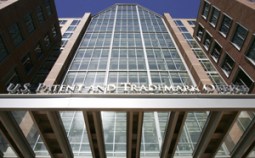
  • USPTO Building FacadeThe U.S. Patent and Trademark Office will be holding a Semiconductor Customer Partnership Meeting from 8:30 am to 3:00 pm (ET) on July 26, 2018 at the USPTO headquarters in Alexandria, VA.  The semiconductor workgroup examines solid-state devices and manufacturing processes, memory storage and retrieval, and lasers technologies.  The Customer Partnership Meeting will address the following topics:

    • Appeal and pre-appeal processes — SPE Alex Sofocleous and TQAS Darren Schuberg
    • Certainty in search and CPC — SPE Brett Feeney
    • Interview tools and process — SPE William Kraig
    • TC2800 quality with MQAS Brian Sircus and Supervisory RQAS and TC2800 Quality Lead Cassandra Spyrou
    • Panel discussion of topics
    • Patent prosecution topic from an external stakeholder (TBD)

    The event is free, open to the public, and will be webcast.  Those wishing to attend the meeting can register here.  Additional information regarding the customer partnership meeting can be found here.

  • Strafford #1Strafford will be offering a webinar entitled "Hatch-Waxman Litigation and 30-Month Stays: Multiple Stays, Late-Listed Patents, and More" on August 9, 2018 from 1:00 to 2:30 pm (EDT).  Shana K. Cyr and Barbara R. Rudolph of Finnegan Henderson Farabow Garrett & Dunner will guide patent counsel on the 30-month stay in Hatch-Waxman Act litigation, discuss the circumstances where the FDA will grant a stay — and those where it will not, and the panel will discuss when a stay may extend beyond 30 months and when it may be shortened.  The webinar will review the following issues:

    • Can a "defective" complaint trigger the stay?
    • Can a late-listed patent give rise to a stay?
    • Is a generic drug applicant subject to a second 30-month stay if it converts a Paragraph III certification to a second Paragraph IV?
    • What is the impact of the stay expiring while the litigation is pending?
    • What is the impact of the litigation ending while the stay is in place?
    • What impact does a USPTO decision or pending USPTO proceedings have on a stay?

    The registration fee for the webcast is $297.  Those interested in registering for the webinar, can do so here.

  • By Michael Hinrichsen*, Anthony D. Sabatelli**, and
    Jonathan Schuchardt*** —

    Buried amidst the flurry of recent Federal Circuit subject matter eligibility decisions is a question that could significantly change how Section 101 is applied in patent litigation.  Specifically, the issue is whether performing Step 2 of the Mayo/Alice test can require a factual inquiry.  If upheld, this interpretation of Alice could make patent litigation much more complicated and expensive.  In fact, Section 101 inquiries could become convoluted mini-trials in their own right — similar to how Markman hearings are performed today.

    Determining whether a patent covers an ineligible concept requires applying the two-step Mayo/Alice test formulated by the Supreme Court in Mayo v. Prometheus and Alice Corp. v. CLS Bank.  This test consists of two steps:  1) determining whether an invention is directed to a patent-ineligible concept (natural law, natural phenomenon, or abstract idea), and if it is, then 2) determining, after considering the elements of each claim both individually and as an "ordered combination," whether the additional elements "transform the nature of the claim into a patent eligible application."  Step 2 is satisfied when the claim limitations involve more than performance of "well-understood, routine, [or] conventional activities previously known to the industry" (quoting Berkheimer v. HP, decided February 8, 2018).  Previous Section 101 inquiries in patent litigation have conducted this process entirely within the preliminary stages of a trial, either during the pleadings or on a summary judgment motion and have treated the matter entirely as a question of law.  Parties challenging the validity of a patent could simply assert that some step was routine or conventional without providing any evidence to support this contention.  The CAFC's recent decisions in Berkheimer v. HP, Aatrix v. Green Shades, and Automated Tracking Solutions v. Coca-Cola are the first to posit that whether an element of a claimed invention is 'inventive' is "a question of law which may contain underlying facts" (quoting Berkheimer).

    In Berkheimer, the validity of a patent ultimately hinged upon whether a particular feature of the claimed invention could be considered inventive.  According to the panel, conventionality is determined by what others skilled in the art were doing at the time the invention was made, i.e., a question of fact.  Berkheimer argued that summary judgment was not appropriate because genuine issues of material fact remained regarding whether the claimed invention was well-understood, routine, and conventional, a question for which HP had offered no evidence.  The Court distinguished between what is known and what is "well-understood, routine and conventional."  Judge Moore writes:  "Whether a particular technology is well-understood, routine, and conventional goes beyond what was simply known in the prior art.  The mere fact that something is disclosed in a piece of prior art, for example, does not mean it was well-understood, routine, and conventional."

    Aatrix, decided February 14, 2018, doubled down on the Berkheimer decision, holding that a factual inquiry had to be performed to establish whether a step was genuinely unconventional.  While the case was remanded during the pleadings phase of Aatrix (as opposed to during a summary judgment as in Berkheimer) the reasoning underlying the decision was essentially the same.  During pleadings before the District Court, Aatrix attempted to file an amended complaint that it claimed contained information relevant for determining the eligibility of the disputed invention.  The District Court denied the motion to amend.  The CAFC ruled that it was necessary for courts to consider any evidence relevant to determining the eligibility of a patent, and therefore, such amendments had to be permitted.  In Aatrix, the District Court also ruled that the patents in dispute were invalid before claim construction could be performed.  The CAFC disagreed:  "If there are claim construction disputes at the 12(b)(6) stage . . . either the court must proceed by adopting the non-moving party's constructions . . . or the court must resolve the disputes to whatever extent is needed to conduct the § 101 analysis, which may well be less than a full, formal claim construction."

    While this fact vs. law debate may seem esoteric and inconsequential, it has strong implications for how Section 101 inquiries are performed.  As Judge Reyna points out in his dissent in Aatrix, "[o]ur precedent is clear that the § 101 inquiry is a legal question."  Making the Section 101 inquiry factual "opens the door in both steps of the Alice inquiry for the introduction of an inexhaustible array of extrinsic evidence, such as prior art, publications, other patents, and expert opinion."  Judge Reyna is also concerned that a patent holder "facing a 12(b)(6) motion may simply amend its complaint to allege extrinsic facts that, once alleged, must be taken as true, regardless of its consistency with the intrinsic record."

    Automated Tracking Solutions ("ATS"), decided February 16, 2018 (non-precedential), offers a counter to Judge Reyna's complaints and may balance the concerns of patent holders and challengers moving forward.  In this case, ATS pursued a strategy similar to that warned against by Judge Reyna in Aatrix, claiming that an element of its inventory control system was unconventional in the hopes of transforming Step 2 of Alice into a factual dispute.  However, ATS was unable to point to any individual component or combination of components in its system that was novel, and the specification described the invention as depending upon standard technology.  Lacking any supporting evidence, the Court concluded that there was no genuine factual dispute and thus no reason to perform a factual inquiry.

    Troubling questions continue to emanate from the factual vs legal question debate.  Will other panels support this view of Step 2 of Alice?  To date, all supporting decisions have been penned by Judge Moore.  Additionally, HP has filed a petition for an en banc review.  If upheld, it is unclear what level of evidence would be required for a court to conclude that a factual inquiry is necessary.  Based on Berkheimer, it appears that if a specification describes a claimed feature as novel and that feature is eligible for consideration as an inventive concept, this may suffice to establish a genuine issue of material fact.  It is unclear how such a factual inquiry would proceed, however, or what kind of evidence and how much of it would be required to establish that a claimed element is 'inventive.'  Regardless of how these inquiries are eventually performed, if upheld, treating Step 2 of Alice as a legal question with factual underpinnings will undoubtedly complicate Section 101 inquiries.

    * Dr. Hinrichsen received a Ph.D. in Molecular Biophysics and Biochemistry from Yale University.  Dr. Hinrichsen's thesis research was focused on using protein design to develop novel methods for imaging proteins and genomic loci in living cells.  Prior to attending Yale, Dr. Hinrichsen graduated with a B.S. in Chemistry from the College of New Jersey.
    ** Dr. Sabatelli is a Partner with Dilworth IP.
    *** Dr. Schuchardt is a Partner with Dilworth IP.

  • Storage Units Do Not Satisfy Second Prong of Cray Test for Establishing "Regular and Established Place of Business"

    By Donald Zuhn

    District Court for the Southern District of New YorkEarlier this year, in CDX Diagnostic, Inc. v. United States Endoscopy Group, Inc., District Judge Nelson S. Roman of the U.S. District Court for the Southern District of New York granted a Motion to Dismiss for Improper Venue pursuant to Federal Rule of Civil Procedure 12(b)(3) filed by Defendants United States Endoscopy Group, Inc. ("Defendant") and John Does 1-30.  In its Motion, Defendant argued that the patent infringement action filed by Plaintiffs CDx Diagnostic, Inc.; Shared Medical Resources, LLC; and CDx Medical IP, Inc. against Defendants should be dismissed for improper venue.  In particular, while Defendant conceded sales of allegedly infringing product into the Southern District of New York, it argued that Plaintiffs had failed to demonstrate that Defendant has a regular and established place of business within the Southern District of New York.

    The District Court noted that for purposes of patent cases, venue is governed by 28 U.S.C. § 1400(b), which states that "[a]ny civil action for patent infringement may be brought in the judicial district where the defendant resides, or where the defendant has committed acts of infringement and has a regular and established place of business" (emphasis in Opinion).  Citing Fourco Glass Co. v. Transmirra Prod. Corp., 353 U.S. 222, 226 (1957), the Court explained that a domestic corporation resides in its "state of incorporation only," pointing out that the Supreme Court in TC Heartland LLC v. Kraft Foods Grp. Brands LLC, 137 S.Ct. 1514, 1517 (2017), had indicated that this definition was not supplanted by amendments to the general venue statute, 28 U.S.C. § 1391(c).  As a result, the Supreme Court in TC Heartland reaffirmed its holding in Fourco Glass that a domestic corporation's residence for purposes of patent venue is only the State in which it was incorporated.

    With respect to the instant case, Plaintiffs acknowledged that Defendant is incorporated in Ohio, and therefore that venue would be proper only if Defendant committed acts of infringement in the Southern District of New York and had a regular and established place of business in the District.  In view of Defendant's concession that it sold allegedly infringing products in the Southern District of New York, the only issue for the District Court to resolve was whether Defendant had a regular and established place of business in the District.  Citing In re Cray Inc., 871 F.3d 1355, 1360 (Fed. Cir. 2017), the District Court noted that the test for establishing the existence of a "regular and established place of business" requires a showing that: (1) there is a physical place in the district; (2) it must be a regular and established place of business; and (3) it must be the place of the defendant.

    After applying the Cray test to the instant case, the District Court determined that "Plaintiffs cannot meet this burden because they cannot demonstrate the second prong of the test."  With respect to the first and third prongs of the Cray test, the Court explained that "the storage units identified by Plaintiffs are likely 'physical places in the district' prong, insofar as they are 'building[s] or []part[s] of a building set apart for any purpose,'" adding that "Plaintiffs also demonstrated that Defendant pays for these storage units, . . . leading to a conclusion that the storage units are 'of the defendant.'"  However, with respect to the second prong, the Court noted that "the storage units are not 'regular and established places of business', because Plaintiffs have failed to demonstrate that Defendant 'actually engage[s] in business from [either] location,'" adding that "[w]hile Defendant's customer service reps may 'typically' retrieve materials from the storage units to visit customers within this District, . . . no 'employee or agent of [Defendant actually] conduct[s] business at' the storage units, whatsoever" (emphasis in Opinion).  The Court therefore concluded that venue was improper.

    Finding that venue was improper, and in view of Plaintiffs' withdrawal of their opposition and consent to a dismissal without prejudice (Plaintiffs withdrew their opposition in a letter submitted one day before the Court issued its Opinion & Order), the District Court granted Defendant's Motion to Dismiss for Improper Venue.  The Court permitted Plaintiffs to refile in the appropriate venue in compliance with the mandates of 28 U.S.C. § 1400(b).

    CDx Diagnostic, Inc. v. United States Endoscopy Group, Inc. (S.D.N.Y. 2018)
    Opinion & Order by District Judge Roman

  • Plaintiffs Litigation Position on Defendant's Equitable Estoppel Defense Not Objectively Unreasonable

    By Donald Zuhn

    District Court for the Central District of CaliforniaLast month, in Akeso Health Sciences, LLC v. Designs for Health, Inc., District Judge S. James Otero of the U.S. District Court for the Central District of California denied a Motion for Exceptional Case Determination and Award of Attorneys' Fees filed by Defendant Designs for Health, Inc. ("DFH").  In its Motion, DFH argued that the case should be deemed "exceptional" within the meaning of 35 U.S.C. § 285, and that DFH should therefore be awarded attorneys' fees.

    Akeso had filed suit against DFH for infringement of U.S. Patent No. 6,500,450, which relates to a dietary supplement for the treatment of migraine headache, asserting that DFH's manufacture and sale of the migraine treatment product Migranol indirectly infringed the asserted claims due to various instructions and implications on the label.  DFH had responded to the Akeso's complaint by filing a motion for summary judgment, asserting that Akeso should be equitably estopped from asserting the '450 patent due to Akeso's ten-year delay in filing suit.  The District Court granted DFH's motion for summary judgment, finding that equitable estoppel barred Akeso's suit.  In particular, the Court found that the adversarial stance of a cease-and-desist letter to DFH, followed by the significant length of delay in enforcement, qualified as misleading conduct for the purpose of an equitable estoppel analysis (see "Akeso Health Sciences, LLC v. Designs for Health, Inc. (C.D. Cal. 2018)," June 18, 2018).

    Following the Court's grant of summary judgment in favor or DFH, DFH filed its Motion for Exceptional Case Determination and Award of Attorneys' Fees, Akeso then filed an opposition to DFH's Motion, and DFH filed a reply to Akeso's opposition.  The District Court noted that in DFH's Motion, DFH asserted that the case should be deemed "exceptional" for three reasons.  First, DFH Defendant argued that Akeso failed to conduct a reasonable pre-suit investigation, as evidenced by Akeso's failure to consider or conduct discovery into DFH's affirmative defense of equitable estoppel, and that Akeso's litigation position that equitable estoppel would not apply was not objectively unreasonable.  Second, DFH argued that Akeso's filing of nine separate actions for patent infringement within two years of the expiration of the '450 patent demonstrated subjective bad faith and oppressive litigation tactics.  Third, DFH argued that Akeso used artificially inflated calculations of "lost profits" damages to coerce DFH into a quick settlement, despite having no basis for these calculations.

    With respect to DFH's first argument, the District Court noted that in SCA Hygiene Prod. Aktiebolag v. First Quality Baby Prod., LLC, 137 S. Ct. 954 (2017), the Supreme Court extended its holding in Petrella v. Metro-Goldwyn-Mayer, Inc., 134 S. Ct. 1962 (2014) — where the Court held that the doctrine of laches cannot be used to bar a suit for copyright infringement that was properly brought within the Copyright Act's three-year statute of limitations — to actions for patent infringement, several months after the present suit was filed.  As in Petrella, the Supreme Court in SCA indicated that the doctrine of equitable estoppel was still available to provide protection against the more problematic practices of unscrupulous patentees.

    According to DFH, Akeso unreasonably relied on the Supreme Court's dicta in Petrella for the proposition that equitable estoppel only applies when a patent owner "engages in intentionally misleading representations" despite consistent Federal Circuit precedent that held that a period of silence in some circumstances can qualify as misleading conduct.  However, the District Court determined that:

    While Defendant's reliance on Petrella may have been misplaced, its position that the conduct described in this instance does not qualify as misleading was not objectively unreasonable.  While several Federal Circuit cases have addressed the issue, there is no clear holding on when silence, without affirmative misrepresentations, can be sufficiently misleading as to provide a basis for equitable estoppel.  In reaching its decision, the Court had to analyze several Federal Circuit decisions on the question and analogize the facts at issue to these cases.  Reasonable minds could have differed on the outcome.

    Regarding DFH's second argument that Akeso's filing of multiple infringement actions demonstrated subjective bad faith and oppressive litigation tactics, the District Court determined that neither Akeso's filing of nine separate actions nor its filing suit in California despite the fact that DFH's headquarters and state of incorporation are both located on the East Coast "necessarily demonstrate bad faith."  In particular, the Court stated that:

    A patent owner is entitled to enforcement of his patent whether the patent is twenty or two years away from expiry.  Absent conduct that would warrant equitable estoppel, which, as noted above, Plaintiff reasonably could have believed did not apply, a patent owner may choose to monetize his intellectual property at any time that he believes in his best interest.  Defendant has not adequately demonstrated that any of the nine lawsuits filed by Defendant were objectively baseless. . . .

    The Court added that "[f]iling a lawsuit in a forum where venue was appropriate under the law at the time of filing does not indicate bad faith."

    Finally, as to DFH's third argument that Akeso relied on artificially inflated damages calculations, the District Court explained that "plaintiffs generally have an incentive to overestimate the amount of damages they are entitled to if judgment is awarded in their favor," adding that "the amount of damages awarded to a plaintiff is almost always less than the requested amount, if not drastically so."  The Court also noted that DFH "has not pointed to any case that was found exceptional on the basis of an inflated damages calculation alone."

    Finding that DFH failed to meet its burden of proving that the case was "exceptional" within the meaning of § 285, the District Court denied DFH's Motion for Exceptional Case Determination and Award of Attorneys' Fees.

    Akeso Health Sciences, LLC v. Designs for Health, Inc. (C.D. Cal. 2018)
    Order Denying Defendants' Motion for Exceptional Case Determination and Award of Attorneys' Fees by District Judge Otero