• Claim for Scheduling Packet Data Communication Survives Patent Eligibility Challenge in Motion to Dismiss

    By James Korenchan

    Last week, in yet another patent case before Judge Rodney Gilstrap of the U.S. District Court for the Eastern District of Texas Marshall Division, the Court ruled that Defendants T Mobile USA, Inc. and T-Mobile US, Inc. (collectively, "T-Mobile") failed to show that a claim related to packet scheduling is patent ineligible under 35 U.S.C. § 101.

    T-Mobile had moved to dismiss claim 109 of U.S. Patent. No. RE46,206 (the '206 patent) (a reissue of U.S. Patent No. 7,251,218) as directed to ineligible subject matter.  In addition, T-Mobile, as well as Defendants Ericsson Inc. and Telefonaktiebolaget LM Ericsson, moved to dismiss all claims of U.S. Patent No. 7,359,971 and claim 1 of the '206 patent as barred by issue preclusion.  The Court carried the motion under issue preclusion grounds but denied the motion as to patent eligibility.

    The '206 patent relates generally to packet data communication based on end-user quality of service (QoS) requirements.  As described in the Background of the patent, packet switching — which breaks up network data traffic into "packets" for transmission from one device to another device for reassembly — uses available wireless network bandwidth more efficiently than circuit switching in that it enables many devices to share the available bandwidth.  The invention of claim 109 takes end-user QoS requirements into account when scheduling packet data to be transmitted over a shared bandwidth.  In particular, packets are classified according to such QoS requirements and then scheduled for upstream and downstream communication "according to a scheduling algorithm."

    For reference, claim 109 is provided below:

    109.  A method for scheduling packets comprising:
        classifying a plurality of packets according to end-user quality of service (QoS) requirements of said plurality of packets; and
        scheduling said plurality of packets for communication in at least one of an upstream direction and a downstream direction over a shared wireless bandwidth according to a scheduling algorithm.

    In their motion to dismiss, T-Mobile not only argued that claim 109 is directed to the abstract idea of "classifying information based on an end-user's service requirements and scheduling information," but that the claim is "so abstract" that it can be performed by the human mind or using pen and paper.  T-Mobile even provided a drawing to illustrate this point (complete with a hand holding a pencil, to drive the point home even further):

    FigureIn addition, T-Mobile analogized claim 109 to classifying mail according to customer service requirements and scheduling mail (similar to an analogy made in Intellectual Ventures I LLC v. Symantec Corp., which T-Mobile cited for support).  T-Mobile also cited to Federal Circuit decisions in Cyberfone Sys., LLC v. CNN Interactive Grp., Inc. and In re TLI Commc'ns LLC Patent Litig., the former of which found an abstract idea in "collecting information in classified form, then separating and transmitting that information in classified form," and the latter of which found an abstract idea in "classifying and storing digital images in an organized manner."  Emphasizing In re TLI, T-Mobile asserted that the concept of storing digital images could be substituted for scheduling information.

    In response, Intellectual Ventures argued that T-Mobile trivialized the invention and described the claims at too high a level.  Intellectual Ventures also argued that the invention makes little sense outside of the context of telecommunications, and overcomes a problem specifically arising in that realm — namely, that "different types of data packets have different ideal quality of service ("QoS") settings, which results in suboptimal data flow when, for example, voice packets and data packets are transferred over the same connection."  According to Intellectual Ventures, claim 109 specifically addresses this problem by requiring wireless networks to classify packets according to QoS requirements before scheduling the packets for communication.

    The Court agreed that "[the] '206 patent is directed to a technical solution to a technical problem" and was persuaded that the patent sufficiently describes the invention as such.  In particular, the Court cited to portions of the patent that discuss existing challenges that wireless networks face in delivering QoS to end-users, including network congestion.  The Court then elaborated:

    The '206 Patent is explicit in its solution to these problems.  Indeed, the first sentence, covering the field of the invention, states "The present invention relates generally to telecommunications and, more particularly, to a system and method for implementing a QoS aware wireless point-to-multi-point transmission system."  (emphasis added).  The "Summary of the Invention" states that "[t]he present invention is directed to an IP flow classification system used in a wireless telecommunications system.  More specifically, the IP flow classification system groups IP flows in a packet-centric wireless point to multi-point telecommunications system."  Accordingly, the '206 Patent makes clear that the patented invention is directed towards a technological solution to these stated problems.  Such solution is achieved by classifying, on a packet level, what the ideal quality of services characteristics are for each type of data in order to optimize data flow.  Under Rule 12(b)(6), the Court is required to take these affirmative statements as true.

    (citations omitted).

    The Court thus found that the '206 patent is directed to patent eligible subject matter and that the Defendants failed to show otherwise.

    Intellectual Ventures I LLC v. T Mobile USA, Inc. (E.D. Tex. 2018)
    Order Carrying-in-part and Denying-in-part Defendant's Motion to Dismiss by District Judge Gilstrap

  • Federal Circuit Affirms PTAB in Appeal of CRISPR Interference

    By Kevin E. Noonan

    Federal Circuit SealBarring the unlikely event that the Federal Circuit rehears en banc today's decision in Regents of the University of California v. Broad Institute, Inc. (or, even more unlikely, that the Supreme Court grants certiorari), the interference between the Broad Institute and the University of California/Berkeley is now concluded.  The Court affirmed the Patent Trial and Appeal Board's decision (see "PTAB Decides CRISPR Interference — No interference-in-fact"; "PTAB Decides CRISPR Interference in Favor of Broad Institute — Their Reasoning") that there is no interference-in-fact between the Broad's twelve patents (the Federal Circuit citing U.S. Patent No. 8,697,359 as being representative) and one application-in-interference and the University of California/Berkeley's pending application (Application No. 13/842,859).

    To recap, the Board found that there was no interference-in-fact based on these requirements:

    In this proceeding, to prevail on its argument that there is no interference, Broad must show that the parties' claims do not meet at least one of the following two conditions:

    1) that, if considered to be prior art to UC's claims, Broad's involved claims would not anticipate or render obvious UC's involved claims, or

    2) that, if considered to be prior art to Broad's claims, UC's involved claims would not anticipate or render obvious Broad's claims.

    Broad will prevail and a determination of no interference-in-fact will be made if a preponderance of the evidence indicates one of these conditions is not met.

    In considering the evidence before it, the PTAB gave great weight to contemporaneous, cautious statements in the art in view of Professor Doudna's disclosure of in vitro CRISPR activity regarding whether the system would work in eukaryotic cells.  Specifically, these statements convinced the Board that while the results "suggested the 'exciting possibility'" that CRISPR-Cas9 could be operative in eukaryotic cells, "it was not known whether such a bacterial system would function in eukaryotic cells."  And "[i]n another report, Doudna was quoted as stating that she had experienced 'many frustrations' getting CRISPR to work in human cells and that she knew that if she succeeded, CRISPR would be 'a profound discovery.'"  UC's assertion of other statements by their inventors that could be interpreted more positively did not convince the Board that there was a reasonable expectation of success in the art for getting the CRISPR-Cas9 system to work in eukaryotic cells, the Board stating that:

    Although the statements express an eagerness to learn the results of experiments in eukaryotic cells and the importance of such results, none of them express an expectation that such results would be successful.

    The Board swept aside Berkeley's arguments that this reasoning was flawed because the standard is not the inventor's expectations but those of the worker of ordinary skill by stating that "if the inventors themselves were uncertain, it seems that ordinarily skilled artisans would have been even more uncertain."  The Board also quoted Berkeley's expert as having said (contemporaneously with Professor Doudna's report of in vitro CRISPR activity):

    There is no guarantee that Cas9 will work effectively on a chromatin target or that the required DNA-RNA hybrid can be stabilized in that context.

    The Board concluded that "[w]e fail to see how 'no guarantee' indicates an expectation of success."

    Nor was the Board convinced based on the history of the development of CRISPR technology, which showed that many laboratories independent of the Doudna group quickly applied the new technology to manipulate eukaryotic cell genomic DNA:

    Regardless of how many groups achieved success in eukaryotic cells, we are not persuaded that such success indicates there was an expectation of success before the results from these experiments were known.  The unpublished results of research groups are not necessarily an indication of whether ordinarily skilled artisans would have expected the results achieved.  Instead of viewing such work as evidence of an expectation of success, we consider the number of groups who attempted to use CRISPR-Cas9 in eukaryotic cells to be evidence of the motivation to do so, an issue that is not in dispute.  We agree with Broad's argument that a large reward might motivate persons to try an experiment even if the likelihood of success is very low.

    On balance, the Board found that this evidence further supported their decision that there was insufficient evidence of a reasonable expectation of success to support Berkeley's allegation that their earlier work and publications would have rendered Broad's invention obvious.  This evidence was that "differences in gene expression, protein folding, cellular compartmentalization, chromatin structure, cellular nucleases, intracellular temperature, intracellular ion concentrations, intracellular pH, and the types of molecules in prokaryotic versus eukaryotic cells, would contribute to this unpredictability [regarding whether the CRISPR-Cas9 system would be operative in eukaryotic cells]."  In response to Berkeley's allegations that these considerations turned out not to be an impediment to CRISPR's activity in eukaryotic cells, the Board said "[t]he relevant question before us is whether those of skill in the art would have expected there to be problems before the experiments were done," not whether it turned out that the experiments were successful once they were tried.

    Finally, the Board rejected Berkeley's citation of other prokaryotic genetic modification systems found to work in eukaryotes, generally on the grounds that there was no "commonality" in these methods that would have refuted Broad's evidence that the skilled worker would not have had any reasonable expectation of success.

    The University appealed, and today the Federal Circuit affirmed, in an opinion by Judge Moore joined by Chief Judge Prost and Judge Schall.  After a recitation of a description of CRISPR (see "CRISPR Interference Declared" for a description of this technology) and the substantive and procedural posture before the PTAB, the Court addressed the legal arguments proffered by California in support of its argument against the PTAB's decision of no interference-in-fact.  As stated in the opinion,

    The case turns in its entirety on the substantial evidence standard.  The Board found a person of ordinary skill in the art would not have had a reasonable expectation of success in applying the CRISPR-Cas9 system in eukaryotic cells.  . . .  Given the mixture of evidence in the record, we hold that substantial evidence supports the Board's finding that there was not a reasonable expectation of success, and we affirm.

    The opinion then addressed California's two arguments contrary to the PTAB's decision:  "that the Board: (1) improperly adopted a rigid test for obviousness that required the prior art contain specific instructions, and (2) erred in dismissing evidence of simultaneous invention as irrelevant."  The Court based its opinion on the evidence presented by one of the Broad's experts with regard to the difference between prokaryotic and eukaryotic cells (which it recited extensively) "that rendered the application of the CRISPR-Cas9 system in eukaryotic cells unpredictable."  The issues these differences raised relevant to whether the skilled worker would have had a reasonable expectation of success in applying CRISPR to eukaryotic cells were also, according to the opinion, recognized by California's expert, including inter alia statements like "[t]here is no guarantee that Cas9 will work effectively on a chromatin target or that the required DNA-RNA hybrid can be stabilized in that context" and "whether the CRISPR-Cas9 system will work in eukaryotes 'remains to be seen' and '[o]nly attempts to apply the system in eukaryotes will address these concerns.'"  This evidence was supported, in the panels' opinion, from California's own inventors (including Jennifer Doudna) "acknowledging doubts and frustrations about engineering CRISPR-Cas9 systems to function in eukaryotic cells and noting the significance of Broad's success."  In addition, the Court noted evidence that other prokaryotic systems adapted to eukaryotic cells ("riboswitches, ribozyme systems, and group II introns") "either [had] limited efficacy or the technology required a specific strategy to adapt it for use in eukaryotic cells."  This evidence amounted to substantial evidence that the skilled worker would not have had a reasonable expectation of success in achieving CRISPR in eukaryotic cells.

    (The opinion recognizes that California had presented evidence in support of its position, but noted "[w]e are, however, an appellate body.  We do not reweigh the evidence.  It is not our role to ask whether substantial evidence supports fact-findings not made by the Board, but instead whether such evidence supports the findings that were in fact made.")

    The opinion also rejected California's arguments that the Board had used a rigid test that required specific instructions in the prior art and ignored the "inferences and creative steps" recognized as being relevant to an obviousness determination under the Supreme Court's decision in KSR Int'l Co. v. Teleflex Inc., 550 U.S. 398, 418, 420 (2007).  And with regard to "simultaneous invention" evidence (which California argues the Board ignored), the opinion states that while "[s]imultaneous invention may serve as evidence of obviousness when considered in light of all of the circumstances," citing Lindemann Maschinenfabrik GmbH v. Am. Hoist & Derrick Co., 730 F.2d 1452, 1460 (Fed. Cir. 1984), the existence of interferences means that simultaneous invention cannot, by itself, be evidence of obviousness.  The Federal Circuit rejected California's argument that evidence that six independent research groups applied CRISPR to eukaryotic cells "within a short period of time" after publication of Its discovery on prokaryotes rendered the Broad's claims obvious, and approved the legal rationale used by the PTAB:

    The Board explained that "[e]ach case must be decided in its particular context, including the characteristics of the science or technology, its state of advance, the nature of the known choices, the specificity or generality of the prior art, and the predictability of results in the area of interest."  . . . (quoting Abbott Labs. v. Sandoz, Inc., 544 F.3d 1341, 1352 (Fed. Cir. 2008)).  We do not see any error in this analysis.

    The consequence of this decision (assuming it is the final word) is that the status quo will remain:  the Broad will maintain its extensive CRISPR patent portfolio and the University's patent application (reciting claims broader than the Broad's and encompassing CRISPR without regard to the cells in which it is practiced) should grant as a patent in due course.  Under these circumstances, a third party wishing to practice the technology in eukaryotic cells (encompassing everything from yeast to man) would need a license from both the University and the Broad (absent the parties coming to an agreement on how their overlapping technologies will be licensed).  This circumstance cannot fail to retard commercial adoption of the techniques, providing further impetus for some sort of co-licensing agreement between the parties to be forged.

    Regents of the University of California v. Broad Institute, Inc. (Fed. Cir. 2018)
    Panel: Chief Judge Prost and Circuit Judges Schall and Moore
    Opinion by Circuit Judge Moore

  • By Bryan Helwig

    USPTO SealAbout the PTAB Life Sciences Report:  We will periodically report on developments at the PTAB involving life sciences patents.

    Par Pharmaceutical, Inc. v. Horizon Therapeutics, LLC

    PTAB Petition:  IPR2018-01550; filed August 21, 2018.  View Petition here.

    Patent at Issue:  U.S. Patent No. 9,561,197, "Methods of therapeutic monitoring of phenylacetic acid prodrug" describes methods of treating a nitrogen retention disorder by measuring a subject's plasma phenylacetic acid ("PAA") and phenylacetylglutamine ("PAGN") levels, and determining whether the dosage of a nitrogen scavenging drug needs to be adjusted based on whether the plasma PAA:PAGN ratio falls within a target range.

    Background:  Petitioner requests institution of inter partes review, seeking cancellation of claims 1 and 2 of the '197 patent as unpatentable under 35 U.S.C. § 103(a).  Petitioner alleges that the challenged claims merely apply known techniques to a known method of using glyceryl tri-[4-phenylbutyrate] (GPB) to treat urea cycle disorders.  Petitioner notes that in patients with urea cycle disorders, the clinical benefit of GPB derives from the ability of GPB to metabolize into PAA1, which conjugates with nitrogen to form PAGN and replace urea as a vehicle for carrying waste nitrogen out of the body.  This conjugation avoids the buildup of toxic ammonia in patients with defective urea cycle functionality.  Petitioner notes that the challenged claims generally recite methods of administering a dose of GPB in an amount effective to achieve a specific ratio of PAA to PAGN in the subject's plasma, in subjects whose PAA:PAGN plasma ratio is outside a specific range.


    Becton, Dickinson and Company v. bioMérieux SA

    PTAB Petition:  IPR2018-01566; filed August 21, 2018.  View Petition here.

    Patent at Issue:  U.S. Patent No. 8,367,337, "Detection of methicillin-resistant Staphylococcus aureus" is directed at improved tests for the detection of methicillin-resistant Staphylococcus aureus.  The patent provides a method of detecting in a sample a methicillin-resistant Staphylococcus aureus (MRSA) having an insertion of a SCCmec cassette within Staphylococcus aureus chromosomal DNA.  The patent claims methods for an amplification and detection reaction utilizing a first and second primer and a probe that hybridizes when a sample contains MRSA.

    Background:  Petitioner challenges claims 15 and 29-31 of the '337 patent and requested institution of inter partes review.  The claims are directed to methods of detecting methicillin-resistant Staphylococcus aureus (MRSA), a deadly antibiotic-resistant bacteria strain.  Petitioner alleges that the claimed methods utilize the known technique of multiplex DNA amplification to detect the presence or absence of two distinct DNA segments of the MRSA genome: (1) the junction between two pieces of DNA found in the MRSA genome, referred to herein as the "SCCmec junction" and (2) a region of the methicillin resistance gene, the mecA gene, wherein the presence of both DNA segments in a sample confirms that MRSA is present in the sample.  Petitioner further asserts that an important prior art reference was not of record during prosecution.


    Grunenthal GmbH v. Antecip Bioventures II LLC

    PTAB Petition:  PGR2018-00092; filed August 21, 2018.  View Petition here.

    Patent at Issue:  U.S. Patent No. 9,820,999, "Neridronic acid for treating complex regional pain syndrome" is directed at osteoclast inhibitors, such as neridronic acid, in an acid or salt form that can be used to treat or alleviate pain or related conditions, such as complex regional pain syndrome.

    Background:  The '999 patent covers methods of treating pain associated with complex regional pain syndrome (CRPS).  Petitioner alleges that before any of the '999 patent's priority applications were filed, it was well-known that bisphosphonate drugs, like neridronic acid, could be used to treat pain associated with CRPS.  Petitioner claims that because of this knowledge, the patent owner directed the '999 patent claims to effective treatment of pain associated with CRPS specifically triggered by fracture.  Petitioner further alleges that the use of neridronic acid to treat pain associated with CRPS triggered by fracture was already known in the art.  Petitioner states that data that Patent Owner used to purportedly support the '999 patent and its parent's claims allegedly came from a much earlier randomized, double-blind, placebo-controlled clinical trial published in 2012.  As a result, Petitioner requests post grant review and cancellation of '999 patent claims 1-30 as unpatentable under 35 U.S.C. §§ 112, 102, and/or 103.

    Related Matters:
    • Petitioner filed PGR against U.S. Patent No. 9,283,239, "Compositions for oral administration of zoledronic acid or related compounds for treating complex regional pain syndrome" on December 14, 2016 (PGR2017-00008).
    • Petitioner filed PGR against U.S. Patent No. 9,408,862, "Therapeutic compositions comprising imidazole and imidazolium compounds" on May 8, 2017 (PGR2017-00022).
    • Petitioner filed PGR against U.S. Patent No. 9,539,268, "Therapeutic compositions comprising imidazole and imidazolium compounds" on October 10, 2017 (PGR2018-00001).
    • Petitioner filed a PGR against U.S. Patent No. 9,707,245, "Neridronic acid for treating complex regional pain syndrome" on April 18, 2018 (PGR2018-00062).
    • The '999, '245, and '239 patents are all part of the same patent family.  Post-grant review was instituted against the ′239 patent.  The Board issued a final written decision finding all challenged claims unpatentable for lack of written description.  An institution decision is forthcoming in PGR2018-00062, against the '245 patent.
    • The '862 and '268 patents belong to a different patent family than the '999 patent, but share the same inventor and also cover methods of treating pain conditions with bisphosphonate drugs.  Post grant review was instituted against the '862 patent and the Board heard oral arguments on July 24, 2018.  Post grant review was instituted against the '268 patent PGR2018-00001 in May 2018.


    Luitpold Pharmaceuticals, Inc. v. Apicore US LLC

    PTAB Petition:  IPR2018-01640; filed August 31, 2018.  View Petition here.

    Patent at Issue:  U.S. Patent No. 9,353,050, "A process for the preparation of isosulfan blue" describes a process for preparation of an active pharmaceutical ingredient.  A process is also provided for preparation of the intermediate, 2-chlorobenzaldehyde-5-sulfonic acid, sodium salt of formula, used in the preparation thereof and a procedure for the isolation of benzaldehyde-2,5-disulfonic acid, di-sodium salt of the formula.  Also provided is a process for the preparation of an isoleuco acid of formula, which upon mild oxidation gives rise to isosulfan blue of pharmaceutical grade which can be used for preparation of pharmaceutical formulations.

    Background:  Petitioner seeks IPR against claims 1–18 of the '050 patent as unpatentable.  Petitioner claims that an isosulfan blue sodium salt ("ISB") product was FDA-approved and in pharmaceutical use since the early 1980s, long before the priority date of the '050 patent.  Petitioner claims that the only allegedly novel aspect of the challenged claims is the purity level and claims that no secondary considerations outweigh obviousness.

  • CalendarSeptember 11, 2018 – "How Notre Dame's IDEA Center Took University Start-Up Formation from Puny to Powerhouse: A Case Study in Performance Improvement" (Technology Transfer Tactics) – 1:00 pm to 2:00 pm (ET)

    September 12, 2018 – "Evolving PTAB Trial Practice: Navigating Complex Procedural Rules — Strategically Using Routine and Additional Discovery, Requests for Joinder, and Motions to Amend" (Strafford) – 1:00 to 2:30 pm (EDT)

    September 13, 2018 – "Blockchain and IP: Navigating Emerging Issues — Blockchain, DLT Platforms, Crypto-Tokens, Smart Contracts, and More" (Strafford) – 1:00 to 2:30 pm (EDT)

    September 13, 2018 – "The Revised PTAB Trial Practice Guide and Its Impact on Your Practice" (The Intellectual Property Owners Association) -  2:00 to 3:00 pm (ET)

    September 14, 2018 – "Trade Secrets: What Every IP Attorney and In-house Counsel Should Know" (John Marshall Law School Center for Intellectual Property, Information & Privacy Law ) – 9:00 am to 4:30 pm, Chicago, IL

    September 18, 2018 – "The Continued Influence of PTAB Proceedings on Bio/Pharma Patents" (McDonnell Boehnen Hulbert & Berghoff LLP) – 10:00 am to 11:15 am (CT)

    September 18, 2018 – "3D Printing: Implications for Patents, Trademarks, Trade Secrets and Copyrights — Challenges With Additive Manufacturing, Policing and Enforcement Strategies to Protect IP" (Strafford) – 1:00 to 2:30 pm (EDT)

    September 21, 2018 – "USPTO Post-Grant Patent Trials 2018: Change & Recalibration" (Practising Law Institute) – New York & Groupcasts in Philadelphia, Indianapolis, New Brunswick, NJ, Pittsburgh, and Mechanicsburg, PA

    September 23-25, 2018 – Annual Meeting (Intellectual Property Owners Association) – Chicago, IL

    September 24, 2018 – Biotechnology/chemical/pharmaceutical (BCP) customer partnership meeting (U.S. Patent and Trademark Office) – Alexandria, VA

    September 26, 2018 – "IP Audit Checklist: Best Practices to Identify, Protect, Monetize and Enforce University IP Assets" (Technology Transfer Tactics) – 1:00 pm to 2:00 pm (ET)

    September 27-28, 2018 – "Advanced Patent Prosecution Workshop 2018: Claim Drafting & Amendment Writing" (Practising Law Institute) – Chicago, IL

    September 27-28, 2018 – FDA Boot Camp (American Conference Institute) – Boston, MA

    October 2, 2018 – "Advice of Counsel Defense in Patent Litigation and Protecting Attorney-Client Privilege — Limiting Scope of Discovery, Safeguarding Confidential Communications and Information" (Strafford) – 1:00 to 2:30 pm (EDT)

    October 2-3, 2018 – Paragraph IV Disputes master symposium (American Conference Institute) – Chicago, IL

  • IPO #2The Intellectual Property Owners Association (IPO) will offer a one-hour webinar entitled "The Revised PTAB Trial Practice Guide and Its Impact on Your Practice" on September 13, 2018 from 2:00 to 3:00 pm (ET).  Hon. Michael Tierney, Lead Administrative Patent Judge, Patent Trial and Appeal Board, U.S. Patent and Trademark Office; Tarek Fahmi of Ascenda Law Group; and Eliot Williams of Baker Botts LLP will discuss the reasoning behind recent changes to the PTAB Trial Practice Guide and explain how these revisions will impact PTAB practice.  Among the major revisions to the Guide that will be addressed, are:

    • The introduction of a sur­reply to
the prior sequence of briefs
    • The circumscribed role to be played by expert evidence
    • The introduction of a new prehearing conference call, which some commentators predict has the potential to be as important as the main oral hearing
    • Clarifications regarding motions to strike and motions to exclude

    The registration fee for the webinar is $135 (government and academic rates are available upon request).  Those interested in registering for the webinar can do so here.

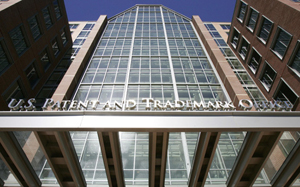
  • USPTO Building FacadeThe U.S. Patent and Trademark Office will be holding its next biotechnology/chemical/pharmaceutical (BCP) customer partnership meeting on September 24, 2018 at the USPTO Headquarters (Alexandria, VA).  The agenda for the meeting is as follows:

    • Welcoming and Opening Remarks (10:00 – 10:10 am EDT) – Gary Jones, Daniel Sullivan, and Andrew Wang, Directors, TC1600, USPTO

    • Obviousness of Biologics: Identifying the Biggest Challenges (10:10 – 11:00 am) — Carla Mouta-Bellum of Arrigo, Lee, Guttman & Mouta-Bellum LLP

    • Exemplary Obviousness Rationales Suggested in KSR (11:00 – 11:50 am) — Lora Driscoll, QAS, TC1600, USPTO

    • Lunch (11:50 am – 12:50 pm)

    • 112(f)-New Form Paragraphs (12:50 – 1:40 pm) — Marjorie Moran, QAS, TC1600, USPTO

    • Requirements for Information Under 37 CFR 1.105 and Responses to Said Requirements (1:40 – 2:40 pm) — Amjad Abraham, SPE, and Shubo (Joe) Zhou, SPE, TC1600, USPTO

    • Break (2:40 – 3:00 pm)

    • Accidental Infringement: the need for additional limitations in plant utility claims directed to chemical profiles or cultivars (3:00 – 3:50 pm) — Reggie Gaudino, Chief Science Officer, Steep Hill Labs, Inc.

    • Closing Remarks (3:50 – 4:00 pm) – Directors, TC1600, USPTO

    Additional information regarding the BCP customer partnership meeting, including registration information for those wishing to attend the meeting or register for online participation, can be found here.

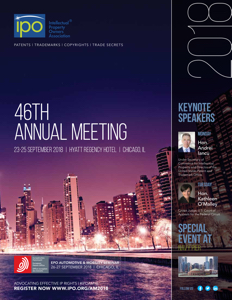
  • IPO Brochure CoverThe Intellectual Property Owners Association (IPO) will be holding its 46th Annual Meeting on September 23-25, 2018 in Chicago, IL.  Among the presentations being offered at the annual meeting are:

    • A Year in Review: Patent Case Law Update
    • AIA Estoppel: A New Flavor of Collateral Estoppel and/or Res Judicata?
    • The Intersection of IP and Open Source
    • Navigating the E-Discovery Minefield; International Litigation and Availability of Discovery Under 28 U.S.C. §1782
    • Business Methods (computer implemented inventions) Workshop
    • The Supreme AIA Update: A Triple-Header
    • The Practice of IP Law in the Age of Machine Learning, Knowledge Management, and Blockchain
    • Protecting Your Trade Secrets in Todays' Global Village
    • How Corporations Hedge Against Emerging Technology
    • Protecting Software in the Pharmaceutical and Health Care Industries
    • Global Dossier
    • Strategies for Addressing Gender Disparity in Patenting
    • Managing Risks of Willful Infringement: Practical Considerations and Guidelines
    • Attorney-Client Privilege: Considerations for General Communications and Communications During Patent Preparation and Prosecution
    • Time to Call 911 (Emergency!) on 101: Is Patent Eligibility Doctrine Undermining U.S. Leadership in Innovation?
    • Finding Common Ground: Best Practices for Efficiently Prosecuting Patent Applications at the USPTO
    • Portfolio Management: Strategy and Value Behind IP Audits
    • Ethics Session: Conflicts of Interest

    In addition, Andrei Iancu, Under Secretary of Commerce for Intellectual Property and Director of the U.S. Patent and Trademark Office will present a keynote address on September 24, and Hon. Kathleen O'Malley, Circuit Judge, U.S. Court of Appeals for the Federal Circuit will present a keynote address on September 25.

    A program for the meeting, including an agenda, descriptions of the scheduled sessions, and list of speakers, can be obtained here.

    The registration fee for the meeting is $500 (government/academic), $995 (IPO members), or $1,675 (non-members).  Those interested in registering for the meeting can do so here.

  • Strafford #1Strafford will be offering a webinar entitled "3D Printing: Implications for Patents, Trademarks, Trade Secrets and Copyrights — Challenges With Additive Manufacturing, Policing and Enforcement Strategies to Protect IP" on September 18, 2018 from 1:00 to 2:30 pm (EDT).  Elizabeth D. Ferrill of Finnegan Henderson Farabow Garrett & Dunner, Christopher Higgins of Orrick Herrington & Sutcliffe, and Marc H. Trachtenberg of Greenberg Traurig will examine 3D printing and its current and potential implications for patents, trademark, trade dress, trade secret, and copyrights, and offer guidance for developing enforcement strategies to police and protect IP rights in the emerging world of additive manufacturing.  The webinar will review the following issues:

    • How does 3D printing of products impact different types of intellectual property?
    • When determining which type of protection to seek, what factors related to 3D printing should IP counsel consider?
    • What steps should counsel take to police and protect IP in light of 3D printing?

    The registration fee for the webcast is $297.  Those interested in registering for the webinar, can do so here.

  • By Shin Hee Lee* and Anthony D. Sabatelli** —

    The global hair coloring product market is projected to grow into a 200 billion-dollar industry by 2025.  Coty reported in 2017 that more than half of all women color their hair regularly.  For example, these figures have reached 62% in the United States, 67% in the United Kingdom, 69% in Germany, and 88% in Russia.  An in-depth data analysis reported by Grand View Research, Inc. attributes this rapid growth to a global increase in the aging population, environmental insults such as air pollution, and new trends in the fashion industry.  Alongside the other lucrative sectors in the beauty industry that were discussed in our previous articles, "Patent Beauty: IP and the Cosmeceutical Industry" and "Patent Beauty: IP and Hair Care Products", the hair coloring sector also deserves a great amount of attention, especially in view of advancing technologies and the intellectual property covering it.

    Hair coloring products are categorized into three types:  temporary dyes, semi-permanent dyes, and permanent (oxidative) hair dyes.  Temporary dyes generally wash away after 1 or 2 shampooings because they only cover the surface of the hair.  Semi-permanent dyes penetrate into the hair shaft and can last up to 10 washings.  Permanent hair dyes chemically modify the hair shaft.  These dyes use oxidizing amines and phenols in combination with hydrogen peroxide to deliver penetrating dyes into the cortex of the hair.  Consumers can therefore choose the type of dye based on their needs, widely ranging from covering gray hair, creating highlights, providing subtle tone-up of the natural color, to performing a complete color transformation.  User-friendly coloring packs with step-by-step instructions are accessible for home use, whereas other consumers prefer having professional coloring done in a salon setting.

    Hair coloring products have a long history.  In ancient times people colored their hair with various plant extracts, but this often resulted in darkening the hair resulting in unpredictable colors.  Those seeking to lighten their hair resorted to harsh chemical treatments including caustic compounds.  In 1907, Eugene Schueller, a French chemist and founder of L'Oréal, introduced chemical hair dyes that enabled a large variety of colors and desirable results.  Coty, Henkel, Kao Corporation, Avon Products, Revlon, Goldwell, Wella, and Combe also joined the market and have become major vendors of hair coloring products.  These companies have not only been developing hair dye compounds, but also convenient methods for coloring the hair such as compact kits and specially designed dye applicators.

    Despite the effectiveness of chemical colorants, consumers have been concerned about hair damage as well as the potential health risks associated with their use.  These concerns have encouraged consumers to seek more natural and organic hair dyes.  A United States patent granted to the Natural Medicine Institute of Zhejiang Yangshentang in Hangzhou (US 9,345,654 B2) reports a natural dye product made of plant polyphenols, gardenia blue, cocoa pigment, purple sweet potato pigment, purple cabbage pigment or algae blue pigment.  A very intriguing hair dyeing composition was highlighted in the New York Times[1] a few months ago.  These compositions utilize graphene-based hair dyes developed by the Huang group of Northwestern University.  Graphene is a single atom thick layer of carbon in a molecular state, i.e., a very thin graphite layer.  It is a naturally dark material that creates a natural-looking black hair shade, something which has long been a challenge in the hair-dye industry.  This graphene hair dye is reported to exhibit durability comparable to permanent hair dyes, and may be more easily applied by spraying, brushing, and then drying.

    Natural and organic dyes are safe alternatives to existing synthetic dyes, but render a limited number of hair color options.  Researchers have been developing non-toxic synthetic dye molecules that are capable of achieving both safe and large array of hair colors.  Clairol, a Coty-owned brand, introduced an "allergy gentle" hair dye molecule called ME+ (2-methoxymethyl-p-phenylenediamine) in 2013.  It replaces two existing synthetic dye molecules (phenylenediamine and toluenediamine) that are in 90 percent of the permanent hair coloring products and which are believed responsible for most common hair dye allergies.

    Silicone technology and silicone-based polymers have found their way into a number of hair coloring products.  Many colorant packages include complementary conditioning and/or treatment hair conditioners comprised of silicone-based materials to minimize damage caused by the chemical dyes.  For example, the Procter & Gamble Company patented a process and kit for improved hair conditioning after coloring that utilizes functionalized silicones to condition oxidatively-treated hair (US 7,393.365 B2).  Procter & Gamble also disclosed a soluble solid hair coloring article containing, but not limited to, silicone-based polymers (US 8,444,716 B1).

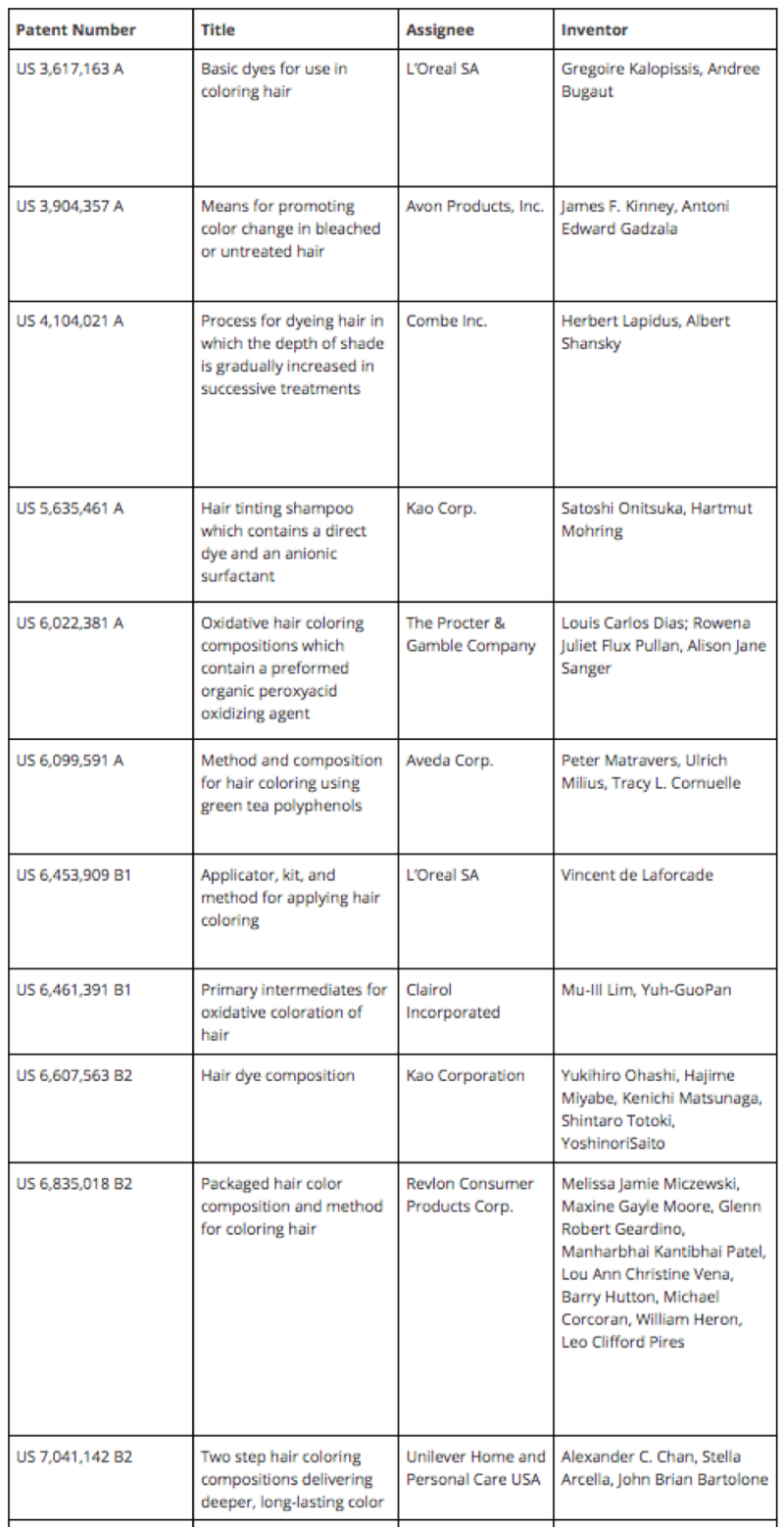
    Today, the novelty hair colorant market is arguably one of the largest profit sectors within the hair coloring market.  This market is expected to grow at a fast compound annual growth rate of over 20%.  Vibrant, blonde, brown, red, paste, metallic, ombre, highlights, balayage (a graduated highlighting effect), color melting, and black are the main categories for these novelty products.  Even the names of the hair colors themselves are extending from conventional terminologies to creative ones such as Iced Caramel Latte, Blackberry, Hollywood Opal, Bright Butterbeer, and many more.  Phillip Pelusi, a hair care expert, recently stated that "besides mastering the formulation and application techniques, keeping the color molecules intact longer will be the next biggest challenge for stylists and guests alike."  Whether it is a temporary dye or a permanent dye, preserving a new hair color while keeping the hair healthy still remains a big challenge for hair coloring developers.  Below are some patents for various hair coloring technologies.

    Table 1a Table 1b

    [1] Kaplan, "In Search of the Perfect Hair Dye," posted on the New York Times — reports on newly discovered graphene-based pigments by Dr. Jianxing Huang of Northwestern University.

    * Shin Hee Lee is a Ph.D. Candidate in the Chemistry Department at Yale University.  She is currently associated with the Yale Energy Sciences Institute, where she specializes in organic synthesis of novel light-harvesting dye molecules for solar cells.  Prior to attending Yale, Shin Hee obtained her B.S. in Chemistry with High Honors at the University of Michigan – Ann Arbor, during which she published patents and papers on developing synthetic methodologies for fluorinated small molecules.
    ** Dr. Sabatelli is a Partner with Dilworth IP

    For additional information regarding this topic, please see:

    • "Patent Beauty: IP and the Cosmeceutical Industry," May 3, 2018
    • "Patent Beauty: IP and Hair Care Products," June 21, 2018

  • By Kevin E. Noonan

    Red FoxThe red fox (Vulpes vulpes) has been the subject of a controlled breeding experiment in Russia, at the Institute of Cytology and Genetics of the Russian Academy of Sciences, to select for genetic determinants associated with domestication (principally, friendliness towards human beings; see, Dugatkin and Trut, 2017, How to Tame a Fox (and Build a Dog), University of Chicago Press).  The success of this program has provided a comparator for genetic experiments with conventional farm-bred red fox populations and aggressive foxes to identify these genes, as recently reported by an international group in Nature Genetics (see "Red fox genome assembly identifies genomic regions associated with tame and aggressive behaviours").  This study provides an interesting contrast with an earlier comparison (from a different group) between genomic DNA of the ancestral domesticated cat species, Felix sylvestris sylvestris and the common house cat Felis catus (see "Domestic Cat Genome Sequenced").

    In summary, the comparative study identified 103 chromosomal regions "with either significantly decreased heterozygosity in one of the three populations or increased divergence between the populations."  One particularly strong candidate to be a genetic determinant of "tame" behavior was identified as SorSC1, encoding the primary trafficking protein for AMPA glutamate receptors and neurexins in fox brain.  This result "suggests a role for synaptic plasticity in fox domestication," which seems reasonable.  Interestingly, other genes "likely to have been under selection" include those associated with neurological disorders in human beings, as well as genes previously identified as being involved in mouse behaviors and domestication in dogs (providing a compelling natural control group; the lineages of domesticated dogs and the red fox diverged about 10 million years ago, prior to domestication of Canis familiaris from the grey wolf about 15,000 years ago).  As the study notes, "[t]here is no evidence that the fox was domesticated historically," and indeed the fox has evolved to have the broadest geographic range of any member of the Carnivora.

    The study involved genomic DNA sequence comparisons of farm-bred foxes (which, while not still wild continue to exhibit fear or aggression towards humans) and two subsets of such foxes conditioned in diametrically opposed fashion for positive response to humans or aggression towards humans.  These animals have remained outbred throughout their development (~50 generations for friendly foxes and ~40 generations for unfriendly ones) and the foxes were otherwise not selected for any other traits (a distinction with the numerous dog breeds selected for many desired traits).  The genomic structure of foxes differs from the domesticated dog:  foxes have 16 pairs (38 pairs for dogs) of acrocentric (metacentric for dogs) autosomal chromosomes; each species has a pair of sex-determining chromosomes and the fox has an additional 0-8 supernumerary ("B") chromosomes.  These structural differences have made it difficult to compare fox and dog chromosomes histologically.

    This study provides genomic DNA assembly and annotation for the three types of foxes having three types of responses to humans.  The assembled fox genomic DNA revealed 21,418 protein coding genes and that 84% of the sequencing scaffolds map to one dog chromosome, 15% to two or more, and 1% could not be assigned.  A comparison of the three source genomes (10 foxes from each population) showed that there was "less divergence between the conventional and aggressive populations than between the tame and either the conventional or aggressive population" using single nucleotide polymorphism (SNP) comparisons (8,458,133 identified SNPs).  Of the 103 genomic regions identified as being associated with behavioral differences between these populations, "30 [were] identified in the tame population and 19 [were] identified in the aggressive population as showing a lower level of heterozygosity than would be expected due to genetic drift," and "[t]he longest regions were found on fox chromosomes 4, 8 and 14."

    Turning to genetic fine structure for genes associated with tameness or its opposite, the study showed that 80% of the genes detected were expressed in brain.  These included "[s]everal receptor-coding genes for glutamatergic (GRIN2BGRM6), GABAergic (GABBR1GABRA3GABRQ) and cholinergic (CHRM3CHRNA7) synapses."  Also detected were genes known to be associated with human neurological diseases (and hence related to behavior and changes therein), including "13 genes associated with autism spectrum disorder, 13 genes associated with bipolar disorder and three genes located at the border of the Williams–Beuren syndrome deletion in humans."  In addition, six fox genes were detected that had been implicated in aggressive behavior in mice.  Some of these genes were represented by alleles having missense mutations having different frequencies in the three populations, including "[t]wo missense mutations in the autism-associated CACNA1C gene, CACNA1C-SNP1 (Ile937Thr) and CACNA1C-SNP2 (Thr1875Ile), with the CACNA1C-SNP1 allele being found only in the tame population and the CACNA1C-SNP2 allele found in both the conventional and aggressive populations but not in the tame population."  The researchers also found that certain alleles of the SorCS1 gene were associated with interaction behavior that attracted attention after an interaction as opposed to avoidance, based on the presence of insertion/deletion (indel) markers in proximity of this gene.  The study shows identification of "one haplotype (olv) with a frequency of 60.6% in the tame population that was not observed in the aggressive population, two haplotypes (trq and lav) that were rare in tame but frequent in the aggressive population, and a fourth haplotype (pch) that was found in both populations."  The authors conclude that "[t]he function of SorCS1 as a global regulator of synaptic receptor trafficking supports the role of SorCS1 in the regulation of behavioural differences between tame and aggressive foxes."

    It seems apparent that such studies will be significant not only for identifying neurological changes that accompany domestication of animals, but also for better understanding genetic loci that may be implicated in human behaviors, including aggression.  Such understanding may lead to better ways to minimize the negative effects of unrestricted aggression in human populations.

    *Anna V. Kukekova, Jennifer L. Johnson, Xueyan Xiang, Shaohong Feng, Shiping Liu, Halie M. Rando, Anastasiya V. Kharlamova, Yury Herbeck, Natalya A. Serdyukova, Zijun Xiong, Violetta Beklemischeva, Klaus-Peter Koepfli, Rimma G. Gulevich, Anastasiya V. Vladimirova, Jessica P. Hekman, Polina L. Perelman, Aleksander S. Graphodatsky, Stephen J. O'Brien, Xu Wang, Andrew G. Clark, Gregory M. Acland, Lyudmila N. Trut & Guojie Zhang

    Image from British Wildlife Centre Wildlife by Airwolfhound, from the Wikimedia Commons under the Creative Commons Attribution-Share Alike 2.0 Generic license.