• Strafford #1Strafford will be offering a webinar entitled "Antibody Patenting After Amgen v. Sandoz: U.S. and European Perspectives — Meeting Written Description and Obviousness Requirements" on December 20, 2018 from 1:00 to 2:30 pm (EST).  Hazel Ford of Mathys & Squire and Jeffrey M. Jacobstein and Amanda K. Murphy of Finnegan Henderson Farabow Garrett & Dunner will provide guidance to patent counsel on the patentability requirements in the USPTO and EPO for claiming a broad genus of antibodies, recent case law that could impact those claims, and how to best protect antibody inventions in light of the recent developments.  The webinar will review the following issues:

    • How broadly can the applicant claim? How much support is needed on a filing?
    • What are the differences between U.S. requirements and EPO requirements?
    • What is a sufficient description of a genus? Can functional language be included?
    • When can post-filing data be used?

    The registration fee for the webcast is $297.  Those interested in registering for the webinar, can do so here.

  • By Kevin E. Noonan

    Supreme Court Building #2The Supreme Court's recent forays into patent law cases have evinced a tendency towards statutory construction analysis, whether regarding substantive law (see, e.g., WesternGeco LLC v. ION Geophysical Corp. (2018); Sandoz Inc. v. Amgen Inc. (2017); Impression Products, Inc. v. Lexmark International, Inc. (2017); TC Heartland LLC v. Kraft Foods Group Brands LLC (2017); SCA Hygiene Products Aktiebolag v. First Quality Baby Products, LLC (2017); Life Technologies Corp. v. Promega Corp. (2017); Halo Electronics, Inc. v. Pulse Electronics, Inc. and Stryker Corp. v. Zimmer, Inc. (2016); Kimble v. Marvel Entertainment, LLC (2015); and Commil USA, LLC v. Cisco Systems, Inc. (2015)) or the procedural niceties of Federal Circuit review and U.S. Patent and Trademark Office procedures (see Oil States Energy Services, LLC. v. Greene's Energy Group, LLC (2018); SAS Institute Inc. v. Iancu (2018); Cuozzo Speed Technologies LLC v. Lee (2016); Teva Pharmaceuticals USA, Inc. v. Sandoz Inc. (2015)).  This trend could be considered a marked improvement over the Court's penchant for imposing their views on patent eligibility displayed earlier in this decade (see "Supreme Court Issues Decision in Alice Corp. v. CLS Bank"; Association for Molecular Pathology v. Myriad Genetics, Inc. (2013); and Mayo Collaborative Services v. Prometheus Laboratories, Inc. (2012)).  Consistent with this latest inclination, the Court will decide the extent to which Congress changed what is novelty-destroying under U.S. patent law when it revised 35 U.S.C. § 102 under the Leahy-Smith America Invents Act (AIA) in 2012 in Helsinn Healthcare S.A. v. Teva Pharmaceuticals Inc.

    The Court heard oral argument in this case on Tuesday.  It is impossible to know, and even more foolhardy to guess, what the members of the Court are thinking from their questions during oral argument, but that cannot stop an attempted analysis of the aspects of the issues before them that naturally arises when reviewing an oral argument transcript.

    Kannon K. Shanmugam argued for Petitioner Helsinn; William M. Jay argued for Respondent Teva; and Malcolm L. Stewart, Deputy Solicitor General, argued for the Government.  The Chief Justice posed the first question to Mr. Shanmugam, noting that Helsinn's interpretation of the word "sale" in the statute (to mean sales to the general public) is not necessarily consistent with the plain meaning of the word (Mr. Shanmugam attempted to distinguish on the basis of their being a linguistic difference between "sale" and the statutory language "on sale").  New Justice Kavanaugh jumped on Mr. Shanmugam's hypothetical (regarding a purported private sale of Mr. Shanmugam's overcoat to Mr. Jay), disputing why that wouldn't be a sale ("it's pretty hard to say something that has been sold was not on sale").  Justice Breyer, referring to Helsinn's argument in the brief, questioned whether Helsinn's contentions that its position was supported by the Court's precedents ("we only have Justice Story, Learned Hand, and I guess various others, maybe John Marshall for all I know", which in vacuo seem pretty solid), and opined that "the purpose of this on-sale rule including private sales is to prevent people from benefiting from their invention prior to and beyond the 20 years that they're allowed."  Mr. Shanmugam countered that "the predominant purpose of the on-sale bar was preserving the public's access to inventions that have entered the public domain."  Justice Kavanaugh mentioned "commercial exploitation" as another aspect of the bar, and Justice Breyer interjected that such sales (like the one here) can be secret sales.  Mr. Shanmugam, attempting to provide clarification to Justice Ginsberg, said that Congress intended to "clarify" the scope of what would be considered to be "on sale" with, inter alia, the catchall phrase "or otherwise available to the public," which Justice Kavanaugh opined was "a terrible clarification," stating that there were many efforts during debate over the AIA to "actually change the 'on sale language, and all those failed."  Mr. Shanmugam countered by suggesting that the way Congress had revised the statute was appropriate to its purpose, which included "abrogating some of the outlying lower court decisions that had extended both the on-sale bar and the public use bar to cases where there was not public availability."  Mr. Shanmugam responded directly to Justice Kavanaugh's citation of an amicus brief by Mark Lemley (and other legal academics) that the on-sale bar always included secret sales, a statement challenged by Justice Breyer based on the Court's citation in its Bonito Boats case of Learned Hand's dichotomy that a patentee "has to go ahead and patent [her invention] or keep it a secret forever."  To Justice Breyer's accompanying hypothetical of an inventor selling her invention to multiple parties under confidentiality agreements, Mr. Shanmugam says his "submission is a much more modest one," to "correct the Federal Circuit's error, which is to say that public availability is not required."

    The Government argued next.  Justice Sotomayor responded negatively to Mr. Stewart's hypothetical, regarding sales of iPhones to distributors wherein being "on sale" should be considered to arise upon sales to consumers, saying that this might be true if you asked a consumer, but if you asked the industry they would say the phones were on sale when they were purchased by the distributor.  The Justice further said she has found no support for the Government's argument ("I've looked at the history cited in the briefs, I looked at the cases, I don't find it anywhere") and further said that the Government's assertion of the meaning of the statute was not the words Congress used.  Indeed, the words Congress did use, "on sale," were fraught with their historical meaning that did not support the Government's position.  Justice Kagan followed by asking whether the changes to the statute under the AIA were "capable of flipping [] settled law."  After further colloquy, Mr. Stewart conceded that the change in language would not be so capable, but only if he accepted Justice Kagan's assumption (and it's "a big assumption," the Justice herself conceded) that the law was indeed settled on the question of what activities fell under the on sale bar under prior law.  Justice Kavanaugh returned to the questioning, asking whether this wasn't "a classic example of trying to snatch victory from defeat in some of the legislative statements?" in view of Congress's failure to affirmatively revise the statute to exclude secret sales.  Mr. Stewart aptly (but not necessarily persuasively) responded, referring to how those failed proposals would have otherwise modified the statute to require that the invention be disclosed, even under circumstances where it would not upon sale.

    Mr. Jay argued last, leading with the simple proposition that "[a] product that is sold or offered for commercial sale is on sale."  Justice Alito questioned whether Respondent's position, if stated in statutory language not used by Congress ("on sale publicly or on sale privately"), "would be nonsense," because this phrase would be followed by "or otherwise available to the public" and "otherwise" should indicate that "all of the things that went before are public."  Mr. Jay responded by saying:

    So we think that the function of "otherwise" in the statute as amended [] is to acknowledge that there is overlap between the previous four categories and the new category of invalidating prior art that's being added, so as to make sure that the new category doesn't swallow or change the meaning of a prior one.

    This "new category" would include "An oral presentation at a conference without slides" and "a collaboration among many people on an app."  In Respondent's view, by including the phrase "or otherwise available to the public," Congress intended "to create new invalidating prior art disclosures that weren't invalidating before the AIA."  Mr. Jay clarified for Justice Sotomayor that the U.S. is the only country where "secret" prior art could be novelty destroying, and that "otherwise" is intended to "make clear that that new category was a residual category intended to catch things not already caught."  Various members of the Court (as is their wont) engaged counsel with an extended exercise in analogy-making, involving collections of sports ("football, baseball, swimming," Justices Alito and Breyer), coupled with a hypothetical catch-all of "amended to add 'or any other activity that involves the use of a ball,'" and a proscription against "peanut butter cookies, pecan pie[, and] brownies" (Justice Kagan), coupled with the question of whether the proscription would be violated by "nutless brownies."  Despite yeoman effort to address these analogies, Mr. Jay was able to forthrightly respond to Justice Kagan's question asking whether it was Respondent's position that "it's not even like a little bit doubtful what 'on sale' means?" by saying "[c]ertainly not by the time the AIA was enacted."  After additional colloquy with Justice Kavanaugh regarding whether the term "on sale" is ambiguous, Justice Gorsuch asked whether the Court should consider how the Patent Office has interpreted the statute regarding the on-sale bar.  Mr. Jay reminded the Justice that "[t]his Court has never given deference to the Patent Office on substantive questions of patentability, on what it takes to overcome the bars put in the statute by Congress where Congress has said you may not have a patent if X, Y, or Z" and that "this Court has any number of decisions in which it has held that a patent issued by the Patent Office in conformance with the — with the office's then examination guidelines were invalid."  Justice Kagan completed the Court's questioning of Mr. Jay by asking "would the prior secret sale of an invention by somebody other than the patentholder invalidate the patentholder's patent?", to which Mr. Jay answered "yes" (while acknowledging that "I've not seen cases like that because I think it would be exceptionally difficult to").

    Petitioner's rebuttal drew questioning only from Justice Breyer, regarding the meaning of the term "otherwise."  Argument concluded with rather jocular reference to the excellence of the briefs (Justice Breyer having earlier noted "I thought the bar really earned its pay on both sides") with the Chief Justice saying "I am sure we'll come up with an excellent opinion."

  • By Kevin E. Noonan

    Human evolution, once its occurrence was recognized over a century and a half ago, has long been a source of confusion, concern, and controversy (as well as fascination and wonder).  The recent explosion in our understanding of the human genome, and particularly genomes of humanity's ancestors, has refined the concept of what it means to be human.  For example, it has become common knowledge (thanks to 23andMe, Helix, and others) that modern humans contain small amounts (~2%) of DNA in common with Neanderthals, and that other forms, such as the Denisovans and Homo florensiensis, existed in historical time (i.e., tens of thousands rather than millions of years ago).  See D. Reich, "Who We Are and How We Got Here: Ancient DNA and the New Science of the Human Past" for a more detailed  description of these genomic relationships between branches of the human family tree.

    The genomic fossil record has revealed that Neanderthals and humans had two periods of extensive interbreeding in Europe and East Asia (after their divergence 500,000 to 800,000 years ago):  one that occurred ~100,000 years ago and another that happened ~50,000 years ago.  As evidenced by the small amount of heterologous (i.e., from the other subspecies) DNA maintained in modern humans, it has been postulated that "purifying selection" against maintenance of the bulk of this DNA was responsible for its elimination.  But the persistence of even the small amount of Neanderthal DNA remaining in modern humans raises the question of why this DNA was retained and if there was any functional (i.e., selected-for) component (as opposed to merely random persistence).

    Recently, researchers at the University of Arizona* and Stanford** studied the patterns of introgression (where in the genome) of human and Neanderthal DNA in samples from each human subspecies, in an article entitled, "Evidence that RNA Viruses Drove Introgression between Neanderthal and Modern Humans" in the journal Cell.  Their results showed enrichment of heterologous "insertion sequence (IS)" DNA at sites that encode virus-interacting proteins (VIPs), suggesting that human-Neanderthal interbreeding was associated with challenges for each species by novel viruses, and that the persistent DNA was somehow advantageous to the "host" species in overcoming or adapting to infection by such xenoviruses.  As stated in the paper, "[i]n line with the overall enrichment of Neanderthal ancestry at VIPs being due to adaptive introgression, we found a very strong excess of adaptive IS at VIPs compared to non-VIPs."

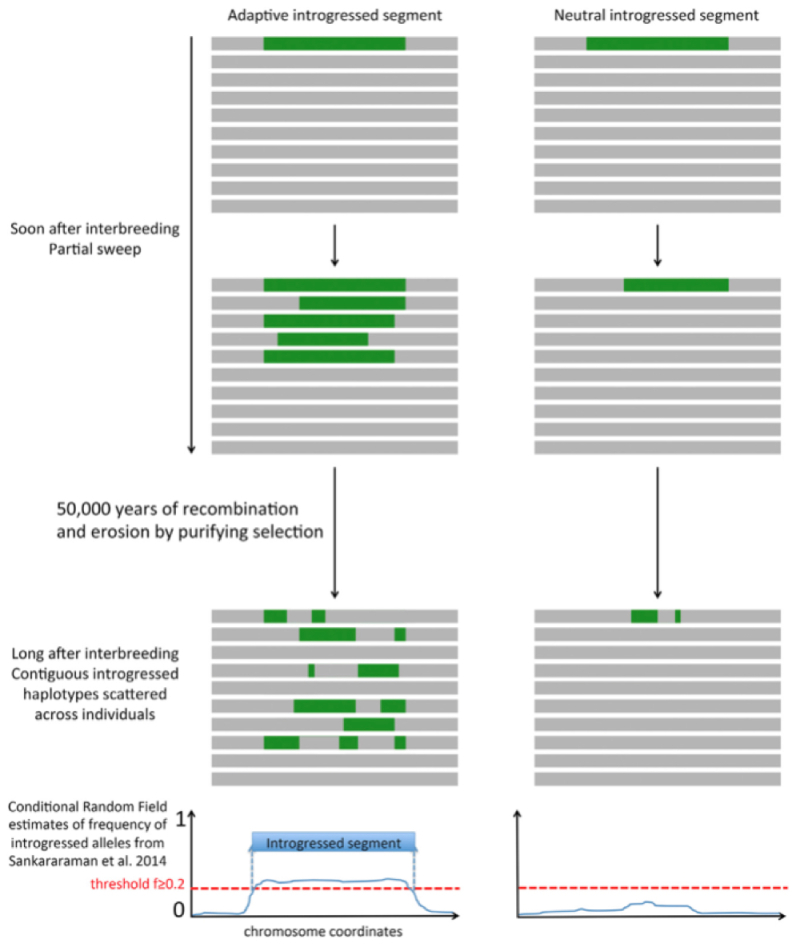
    Image 1The data presented showed 121 introgressed Neanderthal DNA segments longer than 100 kb that overlapped VIPs sequences in human samples from East Asia (compared with 66 such sequences expected by genomic distribution and probability models) and 103 such sequences (versus 68 expected) in samples from humans of European lineage.  This pattern is also observed for introgressions that are more likely to be adaptive (longer and at higher frequency), albeit occurring less often but with even higher relative enrichment levels (36 versus 11 expected segments in East Asian-derived DNA, and 19 versus 6 expected in European-derived DNA).  The authors concluded from these results that "out of all long and high-frequency IS from Neanderthals to modern humans, 15% to 32% (54 of 171) in East Asians and 12% to 25% (27 of 105) in Europeans have been positively selected in response to viruses" and that "[i]n total there are 171 and 105 long and high-frequency IS overlapping genes in East Asians and Europeans, respectively."  These researchers also tested for introgression of human DNA into the Neanderthal genome, using DNA from the single individual Neanderthal from the Altai Mountains, with similar (but less robust) outcomes.

    With regard to which viruses might have been responsible for the persistence of these introgression events, the researchers used 20 modern human viruses known to interact with ten or more VIPs, as proxies for the ancient related viruses that infected humans at the time of interbreeding, and ones that were "evenly distributed between RNA viruses (2,684 VIPs, of which 1,563 were specific for RNA viruses) and DNA viruses (2,547 VIPs, of which 1,426 were specific for DNA viruses)."  Their results showed no preference for RNA versus DNA virus VIPs from human DNA of East Asian origin, but did detect a "strong bias" for RNA virus VIPs from European-derived DNA in long, high-frequency IS.  These results were even more striking when the researchers excluded VIP genes known to interact with other microbial species (bacteria, Plasmodium) and human "immune genes."  Analyzing these RNA virus VIP genes more closely, the authors report that VIPs that interact with lentivirus (HIV), orthomyxovirus (influenza A) and flavivirus (hepatitis C) had ("by far") the highest number of VIPs associated with Neanderthal IS in the human genome.  (The authors are careful to note, however, that "[t]he enrichments of VIPs in IS represent statistical associations, and more evidence is required to demonstrate causality.")

    Delving even further into these interactions regarding the functions of the VIP genes associated with introgression, these researchers found that "a crucial early step of infection, ''virion attachment to host cell,'' was among the most strongly over-represented GO [Gene Ontology] functions among all VIPs, both in Europe (5 VIPs instead of 0.8 expected by chance[]), and in East Asia (4 VIPs versus 0.75 expected by chance[]."  On the other hand, those VIPs known to be involved in RNA virus attachment were all known to be involved with lentiviruses (ICAM1, CD209/DCSIGN, HSP90AB1, and CLEC4M), wherein CD209/DCSIGN, HSP90AB1, and CLEC4M interact with HVC; there was one DNA virus attachment VIP (PVRL2) detected.  Also reported were detection of VIPs involved in ''viral genome replication,'' which also showed strong over-representation in human DNA from European sources (17 VIPs versus 7.8 expected) and those known to interact with lentiviruses (17 LT-VIPs versus 6.9 expected).  They also report ("[i]ntriguingly") that "a large number of these 'viral genome replication' VIPs were again VIPs that interact with HCV as in the case for virion attachment (LTF, EIF2AK2/PKR, ATG5, MAVS, CD209/DCSIGN, CLEC4M, VAPB; all HCV VIPs: 7 versus 1.7 viral genome replication VIPs, []; HCV LT-VIPs: 7 viral genome replication VIPs versus 1.5 expected)."

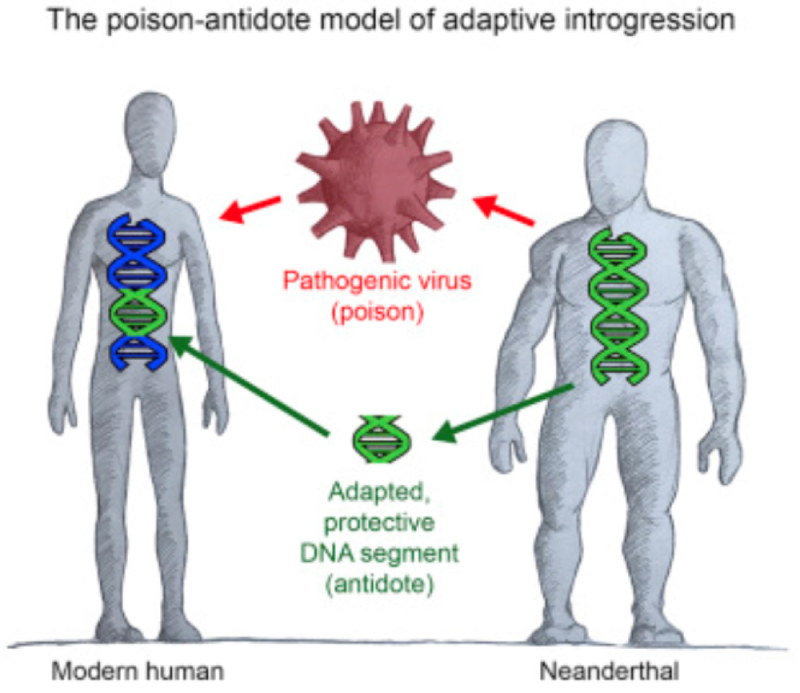
    A part of the conclusions these authors draw from these data is that they are consistent with the ''poison-antidote'' hypothesis, which suggests that "the interactions between modern humans and Neanderthals exposed each species to novel viruses while gene flow between the species afforded a measure of resistance by allowing VIPs that were already adapted to the presence of specific viruses in the donor species to cross species boundaries and provide adaptive function in the recipient species" (although they also caution that this interpretation is only "preliminary" and that they provide "only statistical association"), illustrated below:

    Image 2

    And they conclude with the following statement of the significance of their results (preliminary or not):

    [T]hese results suggest that the genomes of humans and other species contain signatures of past arms races with diverse viruses and other pathogens, making it possible to use host genomic signatures to study ancient interactions with ever present and ever shifting viral and other pathogens.  In this respect, it is worth noting that even though we focused on Neanderthal ancestry, we anticipate that it should also be possible to study the impact of ancient epidemics on introgression from Denisovans to modern humans, especially in populations such as Melanesians with a larger percentage of Denisovan ancestry[].  The results of such studies should provide important insights into the dynamics of past, present, and future epidemics [citation omitted].

    *D. Enard **D. Petrov

  • By David Schwartz* and Jeff Leuschner**

    Canadian FlagOn December 1, 2018, the Canadian government released its proposed new Patent Rules in the Canada Gazette, Part I.  This is one of the last steps necessary for implementing significant changes to Canada's patent law, which are expected to come into force in 2019.

    There will be many changes to Canadian patent law and practice.  In this article, we discuss the most notable changes expected, and some tips for safe and effective practice under the new rules.

    Six changes to look forward to

    The intent of many of the changes is to implement the Patent Law Treaty and to help minimize the risk of loss of rights.  Changes we look forward to include:

    1.  Restoration of priority will be available

    Currently, in order to make a valid priority claim in Canada, the Canadian patent application must be filed no more than 12 months after the filing date of the priority application.

    The new system will allow for the 12-month priority period to be extended to 14 months if the failure to meet the 12-month deadline was unintentional.  This change will bring Canadian practice into line with the right of restoration of priority provided for in Rule 49ter of the Regulations under the PCT.

    However, the Federal Court of Canada can reverse the restoration of priority and declare the priority claim invalid if it is later determined that the failure to meet the 12-month deadline was intentional.

    Tip: The "unintentional" standard for restoration of priority in Canada will likely be easier to meet than a "due care" standard applied by some other patent offices.  Consider Canada as a favourable choice for situations in which restoration of priority must be relied upon.

    2.  Easier to secure a filing date in Canada

    Under the current system, in order to obtain a filing date in Canada, the patent application must be in English or French, and a filing fee must be paid.

    The new system will relax this requirement for direct filings not entering through the PCT: if the filing fee is not paid, or if the patent application is not in English or French, then the Canadian Patent Office will still grant a filing date.

    It will also be possible to obtain a filing date on a day the Canadian Patent Office is closed, e.g., on a weekend or holiday, by filing the application electronically.  It will even be possible to defer filing a specification and drawings by instead making reference to a previously regularly filed application.

    However, most of these relaxed filing requirements will not apply to PCT national phase applications.  For example, it will remain necessary to pay the filing fee at the time of national entry and, if the international application is not in English or French, a translation into English or French must be submitted at the time of national entry.

    Tip: As discussed in greater detail below, restrictions will be placed on amendments after a translation is filed.  Care should be taken to ensure that all translations submitted to the Canadian Patent Office are free of errors.

    3.  Opportunity to submit missing content contained in a priority application

    A patent application occasionally is filed missing content, e.g., due to a clerical error when preparing the application.

    Under the new system, the applicant may add the missing content, without loss of the original filing date, if the addition is wholly contained in a priority document, and the addition is made within two months from filing or, if the Commissioner of Patents sends a notice indicating that a part of the application appears to be missing, within the earlier of two months from the notice or six months from filing.  The addition cannot add to the claims of the application.

    Tip: This procedure is only applicable to direct filings not entering through the PCT.  Advise immediately if missing content is discovered because the deadline to add the missing content may expire as soon as two months from filing.

    4.  Amendment after allowance practice streamlined

    Currently, only very limited amendments are permitted after an application is allowed.  In order to re-open prosecution, it is necessary to allow the issue fee deadline to pass such that the application becomes abandoned, and then reinstate the application.  This is complex and time-consuming.

    Under the new system, the procedure will be streamlined such that the notice of allowance can be withdrawn and prosecution re-opened simply upon payment of a fee within four months of the date of allowance (and before the issue fee is paid).

    Tip: Use the new simplified amendment after allowance procedure to add claims instead of filing a "voluntary" divisional application that could be rejected for obviousness double patenting.

    5.  Excess page fees will not apply to a sequence listing submitted in electronic form

    Currently, the issue fee is CAD $300 plus $6 for each page of specification and drawings in excess of 100.

    The fee schedule will be updated to clarify that the excess page fee does not apply to pages of a sequence listing submitted in electronic form.  This will come as welcome news to biotechnology patentees who have in some instances been stuck with exorbitant issue fees due to long electronic sequence listings.

    Tip: Consider deferring allowance of applications having very long sequence listings until after the new Rules come into force, in order to avoid excess page fees.

    6.  More certainty regarding the deadline to correct certain errors

    The current system allows for the correction of "clerical" errors, ultimately at the discretion of the Commissioner of Patents.  This has led to a complicated body of law concerning whether an error truly is "clerical" and, if it is, what if anything the Commissioner ought to do about it.

    The new system does remove the ability to request correction of "clerical" errors, but it introduces more certainty by establishing clear deadlines for correcting common types of errors.  For example, specific deadlines are set in relation to correcting errors in priority claims, correcting errors in the inventor and applicant, and correcting obvious errors found in the patent.

    Tip: Check filing documents and granted patents promptly, and advise immediately if an error is discovered.  In some cases, the window in which to correct an error is small.

    Six changes to prepare for

    Some of the expected changes will reduce the rights of patent applicants/patentees.  Changes we suggest you prepare for include:

    1.  No more 42-month national phase entry by right

    Under the current system, a PCT application can enter the Canadian national phase as late as 42 months from the priority date, although a late fee must be paid if the applicant enters the national phase more than 30 months from the priority date.

    Under the new system, the option to enter late by right is removed.  If the applicant fails to enter the national phase by the 30-month deadline, it is still possible to enter national phase within 42 months of the priority date, but only upon submitting a statement that the failure to enter the national phase by the 30-month deadline was unintentional.

    Tip: This change affects PCT applications having a filing date on or after the coming-into-force date of the new Rules.  For such applications, plan ahead for Canadian national phase entry no later than 30 months from the priority date.

    2.  More complex maintenance fee regime

    To maintain a Canadian application or patent, a maintenance fee is due each year beginning on the second anniversary of the filing date.  Under the current system, a missed maintenance fee may be paid up to 12 months late as a matter of right.  In the case of a pending application, this requires a request for reinstatement and reinstatement fee, whereas only a late fee is required in the case of a missed maintenance fee on a patent.

    The new system will have a benefit in that it will require the Canadian Patent Office to issue a late notice if a maintenance fee is missed.  Also, anyone will be able to pay a maintenance fee on a pending application.

    However, the new system adds complexity and uncertainty: if the maintenance fee deadline is missed, the deadline for late payment of the maintenance fee is not immediately known and therefore cannot be immediately docketed.  Instead, the deadline for late payment is dependent upon when the Canadian Patent Office issues the late notice.  If the deadline for late payment is also missed, then in order to restore rights, a submission showing "due care" must be filed within a prescribed period.  What constitutes "due care" is currently unknown, and restoring rights under the due care standard may be subsequently challenged in Federal Court.  Also, an exemption from infringement ("third party rights") may apply beginning six months after a missed maintenance fee payment, which is also a concept new to Canadian law.  Furthermore, because anyone will be able to pay a maintenance fee on a pending application, it will be more difficult to know with certainty whether a maintenance fee payment deadline has been met.

    Tip: Do not miss a maintenance fee deadline.  Take steps now to put in place robust procedures for the payment of maintenance fees on Canadian patent applications and patents.  Consider providing instructions to pay maintenance fees as they come due, absent positive abandonment instructions.  Additionally, consider providing instructions to pay the maintenance fee in the event that the Canadian Patent Office issues a notice indicating that the maintenance fee payment was missed (we anticipate the notice will be sent to the Canadian patent agent of record), and absent positive abandonment instructions.

    3.  More significant consequences if the deadline for requesting examination is missed

    Before a Canadian patent application is examined, examination must be requested and an examination fee paid.

    Under the current system, the deadline to request examination is five years from the filing date of the patent application.  If the deadline is missed, the application is abandoned, but may be reinstated as of right within 12 months.

    Under the new system, the deadline for requesting examination is reduced to four years from the filing date of the patent application.  The term for requesting examination in a divisional application filed after the original examination request deadline is reduced from six months to three months from the presentation date of the divisional application.  Also, complexities similar to those described above in relation to maintenance fees are introduced if the deadline for requesting examination is missed.  For example, missing the deadline to request examination could ultimately result in a situation in which third party rights and due care reinstatement applies.

    Tip: It may be advantageous to delay the examination request until close to the deadline so that examination can proceed on the basis of claims allowed in a corresponding application filed in another country.  However, do not miss the deadline for requesting examination.  Consider having standing instructions to request examination close to the deadline, absent positive abandonment instructions.

    4.  Strict limits on amendments when a translation is filed

    An amendment to a Canadian patent application must be reasonably inferred from the application as originally filed, assuming the amended subject matter is not admitted prior art.

    However, an additional requirement will be imposed under the new system: if a translation into English or French is filed, then any future amendment to the Canadian patent application must be reasonably inferred from both the application as originally filed (in the foreign language) and the filed translation.

    Tip: Take extra caution to ensure that the translation of your patent application is accurate and complete.

    5.  Certified copy of priority applications now required

    Under the new system, it will be necessary to submit a certified copy of each priority application to the Canadian Patent Office, unless a certified copy is otherwise made available through prescribed means.

    Submission of a certified copy to WIPO during the international phase of a PCT application will avoid the need for a certified copy during the Canadian national phase.  So this change will primarily impact direct filings, not entering through the PCT, in which a claim to priority is being made under the Paris Convention.  The deadline to submit the certified copy of each priority application in such a situation will be the later of four months from the filing date of the Canadian patent application and sixteen months from the date of the earliest priority application.

    The proposed Rules permit making a priority application available to the Canadian Patent Office in a digital library specified by the Commissioner of Patents, but details are still forthcoming.

    Tip: For direct filings not entering through the PCT, or if a certified copy was not filed in the international phase of a PCT application, provide a certified copy of each priority application with your original filing instructions.

    6.  Shortened prosecution deadlines

    The new system reduces the time the applicant will have to meet certain deadlines and to respond to certain requisitions.  The term for requesting examination will be reduced from five years to four years from the filing date.  Examiner's Reports will have a standard term for response of four months rather than six months.  The final fee will be due four months rather than six months from the notice of allowance.

    Tip: It may be possible to extend the time to respond to Examiner's Reports by an additional two months (i.e., six months from the date of the Report).  However, if such an extension of time is obtained, it will not be possible to request or continue accelerated examination under the "special order" procedure.

    Conclusion

    There is a 30-day public consultation on the proposed new Rules, ending on December 31, 2018.  Subsequently, the final Rules will be published in the Canada Gazette, Part II.  We presently anticipate that the new Rules may come into force later in 2019.  If you have any questions or would like further information, then please contact a member of our firm's Patent group.

    * David Schwartz is a partner in Smart & Biggar's Ottawa office.
    ** Jeff Leuschner is a senior associate in Smart & Biggar's Ottawa office.

    This article was reprinted with permission from Smart & Biggar.

  • By Donald Zuhn

    USPTO SealLast month, U.S. Patent and Trademark Office Director Andrei Iancu issued a notice on the "Authentication Changes for Registered Users of EFS-Web and Private PAIR."  Although most of the information provided in the Director's notice had been previously provided by the Office earlier this year (see "USPTO Moving to New Authentication System for EFS-Web and Private PAIR"), the notice served as a reminder about the new authentication system as the Office prepares to phase out the use of Public Key Infrastructure (PKI) certificates (which have been used by the Office since 2006), perhaps as early as December 31, 2018 (the Director's notice states that "[u]se of PKI certificates may no longer be available after December 31, 2018").

    When details of the new authentication system were first provided by the Office in October, the Office described the system as being safer and simpler than the old system, allowing for access to multiple USPTO systems with one consolidated sign-in, eliminating the need to share credentials by providing practitioners and their support staff with their own USPTO.gov accounts, and helping resolve browser compatibility issues.  The Office noted that the new system would provide users with access to the EFS-Web and Private PAIR until the full release of Patent Center, the next generation tool that will replace the EFS-Web and Private PAIR in 2020.

    In October, the Office also announced the release of a migration tool, which allows existing PKI digital certificate holders to link their USPTO.gov accounts to their current PKI digital certificates.  To migrate an existing PKI digital certificate, users must have a USPTO.gov account.  Users who need to create a USPTO.gov account can do so by following the steps under the "Create a USPTO.gov Account" tab at the Office's authentication change webpage.  Once a USPTO.gov account has been created, users can follow the steps under the "Migrate your PKI Certificate" tab at the Office's authentication change webpage (or refer to the Guide for Migration) to link that account to their PKI certificate.  The Office notes that users should allow 1–2 business days after the migration steps are finished for the migration process to be completed.  Once the process is completed, users will be able to sign into the EFS-Web or Private PAIR using their USPTO.gov account.  Users should use the following new links to sign into the EFS-Web or Private PAIR using their USPRTO.gov accounts:

    EFS-Web:
    https://efs-my.uspto.gov/EFSWebUIRegistered/EFSWebRegistered

    Private PAIR:
    https://ppair-my.uspto.gov/pair/PrivatePair

    Additional information regarding the new authentication process can be found in the Office's Patent Electronic System Access Document.  This resource includes information about USPTO.gov accounts; two-step authentication; signing in and signing out from USPTO systems; Patent Electronic Access roles for practitioners, support staff, and inventors; suspension of accounts; authorization; authentication steps; the sponsorship process (by which practitioners can grant or remove sponsorship for support staff individuals to work under their direction and control); and the Office's verification policy and identity proofing of sponsored support staff.  With respect to identity proofing, the Office notes that "[e]ach practitioner will be responsible for verifying the identity of the person using any sponsored support Staff account."

    When announcing the new authentication system in October, the Office cautioned practitioners that migration to link USPTO.gov accounts to PKI certificates should be completed by the end of October (although practitioners can still do so using the migration tool), sponsorship of support staff should be completed by the end of November (again, practitioners can still do so using the sponsorship tool that was released on November 1), and that PKI certificates are scheduled to be retired in December (which the Director's notice indicates may be phased out on December 31, 2018).

    The Director emphasizes in his notice that practitioners no longer have to share their credentials, and in fact, will no longer be permitted to share accounts with support staff, who will need to establish their own USPTO.gov accounts in order to access the EFS-Web Registered and Private PAIR.  USPTO.gov accounts will be used as the first step to log into EFS-Web Registered and Private PAIR, and the Director notes that "[u]sers who do not currently have a USPTO.gov account should take steps now to obtain an account."  The second step of the two-step authentication system will require users to choose to receive an e-mail or phone call which will provide a 6-digit code that is to be entered along with their USPTO.gov password.  The Director notes that users may also download a free authenticator app on their mobile phone to provide the additional secure verification.  According to the Office's authentication system FAQs webpage, the 6-digit code can be generated by a RFC 6238-compliant authenticator app.

    The Director's notice provides more information about the Office's sponsorship tool, which can be accessed here.  The sponsorship tool, which was made available by the Office on November 1, allows practitioners to grant or remove sponsorship for support staff individuals (under the direction and control of sponsoring practitioners) to work on their behalf.  In order to be sponsored, the support staff individual must have already created a USPTO.gov account.  The Director notes that each support staff member must have their own USPTO.gov account, and that accounts cannot be shared among support staff members.

    The notice closes by addressing the identify verification (or proofing) requirements of the new authentication system.  Under the identity proofing and enrollment process, the identity evidence and attributes of users of the Office's Patent Electronic System are collected, uniquely resolved to a single identity within a given population or context, then validated and verified.  The Director notes that current PKI certificate holders who migrate using the migration tool will be considered to have met the identity proofing requirements.  However, for support staff being sponsored by practitioners, the practitioner "will be responsible for proofing the identity of the person being sponsored."  The Director's notice indicates that "[e]ach sponsoring practitioner will establish a procedure for identity proofing sponsored users and maintain a record of that procedure."  The notice points out that identity proofing consists of three steps:  resolution of the prospective sponsored user's identity based upon identity evidence, validation of the evidence, and verification of the evidence.  Additional details regarding identity verification requirements can be found in the Office's Patent Electronic System Access Document.

    Users requiring assistance to create a USPTO.gov account should call the USPTO Contact Center (UCC) at 800-786-9199.  Users requiring assistance with migration should contact the Patent Electronic Business Center at ebc@uspto.gov or 866-217-9197.  Questions or comments related to the new authentication method may be sent to eMod@uspto.gov.  The Office has also been offering several informational sessions on authentication changes; a schedule of upcoming sessions can be found at the "Information sessions" tab at the Office's authentication change webpage.  A list of Frequently Asked Questions (FAQs) about the authentication change for EFS-Web and Private PAIR can be found here.

  • Federal Circuit Bar AssociationThe Federal Circuit Bar Association (FCBA) Rules Committee will be offering a webcast entitled "Nuts & Bolts of the Federal Circuit's Rules" on December 13, 2018 from 1:00 pm to 2:00 pm (EST).  Lucas C. Townsend, Partner of Gibson Dunn & Crutcher LLP will moderate a panel consisting of Peter R. Marksteinerm Circuit Executive and Clerk of Court, U.S. Court of Appeals for the Federal Circuit; and Jarrett B. Perlow, Chief Deputy Clerk, U.S. Court of Appeals for the Federal Circuit.  The panel will provide guidance on common issues and questions arising under the Rules, including a discussion on common filing issues and errors, recent changes to the Federal Circuit Rules, and recent changes to the brief filing process.

    The webinar is complimentary for FCBA members, $100 for government, academic, or retired practitioners, or $175 for private practitioners.  Those interested in registering for the webcast, can do so here.

  • Strafford #1Strafford will be offering a webinar entitled "Protecting IP Rights in Joint Development Agreements and Strategic Alliances — Structuring JDAs to Apportion Contributed, Joint and Derivative IP; Planning for Involuntary Early Endings; Avoiding Unintended Consequences" on December 13, 2018 from 1:00 to 2:30 pm (EST).  Sharon Tasman Prysant of Health & Technology Law Firm and Aaron K. Tantleff of Foley & Lardner will guide counsel on negotiating and structuring joint development agreements (JDAs) to allocate IP ownership, and discuss the key provisions of the JDA to protect IP rights and avoid unintended consequences.  The webinar will review the following issues:

    • What considerations should counsel keep in mind when negotiating the JDA?
    • What issues must be addressed by the JDA regarding IP ownership?
    • What obligations will the parties have in protecting the other party’s preexisting IP once the JDA is expired or terminated?

    The registration fee for the webcast is $297.  Those interested in registering for the webinar, can do so here.

  • By Kevin E. Noonan

    USPTO SealThe U.S. Patent and Trademark Office has released its 2018-2022 Strategic Plan, the first under new Director Andrew Iancu.

    Director Iancu provides an introductory Message in which he cites the grant of U.S. Patent No. 10,000,000 on June 19th of this year that "authenticates the brilliance of our Founding Fathers and serves as a testament to those who continue to bring forward their creative genius, imagination, and talent for the betterment of all."  While lauding the vitality of the Office's work in enabling inventors to contribute to the U.S. economy and the need for "predictable, reliable, and high-quality intellectual property (IP) rights," he notes that the USPTO needs to "continually challenge itself" to provide such patent rights.  He previews the Plan (which he calls "the roadmap for the future") by stating those goals: "(1) optimizing patent quality and timeliness, (2) optimizing trademark quality and timeliness, and (3) providing domestic and global leadership to improve IP policy, enforcement, and protection worldwide."

    The Plan begins with the Office's Mission and Vision, a statement of Strategic Goals, and Guiding Principles.  The Mission:

    Fostering innovation, competitiveness and job growth in the United States by conducting high quality and timely patent and trademark examination and review proceedings in order to produce reliable and predictable intellectual property rights; guiding intellectual property policy, and improving intellectual property rights protection; and delivering intellectual property information and education worldwide.

    and the Vision:

    Leading the nation and the world in intellectual property

    The Plan has three specific Goals and a Mission Support Goal:

    Goal I:    Optimize Patent Quality and Timeliness
    Goal II:    Optimize Trademark Quality and Timeliness
    Goal III:    Provide Domestic and Global Leadership to Improve Intellectual Property Policy, Enforcement, and Protection Worldwide

    Mission Support Goal: Deliver Organizational Excellence

    And finally in this Introductory Section, the Plan sets forth Guiding Principles:

    • Through a culture of quality, we promote excellence throughout the organization by valuing accurate and consistent results, primarily in the examination processes.

    • Through timeliness, we recognize the needs of our customers and stakeholders to have our products and services delivered at a time that meets their individual needs.

    • Through efficiency, we are sound financial stewards of the user fees paid by our customers, and we use the lowest number of inputs to create the greatest number of outputs, maximizing results.

    • Through effectiveness, we listen to our customers and stakeholders, and incorporate their feedback.

    • Through accountability, we measure our activities, accept responsibility for them, and disclose the results in a transparent manner.

    The Plan then sets forth the Office's intention in detail.  For Goal I, Optimize Patent Quality and Timeliness, the Plan sets forth the following Objectives, comprising Initiatives and Key Performance Indicators:

    Objective 1: Optimize Patent Application Pendency

    OBJECTIVE 1: OPTIMIZE PATENT APPLICATION PENDENCY

    Initiatives

    1. Optimize pendency and examination timeframes
    2. Align production capacity with incoming workload
    3. Leverage value obtained from international work products
    4. Identify and offer additional prosecution options

    Key Performance Indicators

    1. Balance pendency targets within patent term adjustment examination timeframes
    2. Define and implement a process for routing utility patent applications in light of the transition from U.S. classification to Cooperative Patent Classification
    3. Provide examiners with information from an applicant's other applications filed in the United States and internationally
    4. Achieve process efficiencies and quality improvements via available prosecution options


    Objective 2: Issue Highly Reliable Patents

    Initiatives

    1. Increase examiners' ability to obtain the best prior art during examination
    2. Improve content, delivery, and timeliness of technical and legal training to achieve more predictable outcomes
    3. Use patent quality data to identify areas for improvement to achieve more consistent outcomes
    4. Refine production standards to achieve patent quality expectations and goals
    5. Enhance transparency and communication of quality metrics

    Key Performance Indicators

    1. Ensure that examiners consistently apply current policies and follow established procedures
    2. Comprehensively study and adjust examination time goals to ensure optimal USPTO performance in patent pendency and quality
    3. Increase the effectiveness, evaluation, and reporting of quality


    Objective 3: Foster Innovation through Business Effectiveness

    Initiatives

    1. Enhance patent customer experience
    2. Optimize development and delivery of information technology tools, including artificial intelligence and machine learning, for internal users of patent systems to ensure that they have the tools they need for a thorough search and examination
    3. Enhance information technology interfaces available to external users of patent systems
    4. Improve searchable access to domestic and international patent application files, including the prior art and Office actions contained therein
    5. Retain and leverage nationwide talent
    6. Document and standardize best practices to facilitate succession planning
    7. Coordinate patent outreach efforts across the Patent organization and evaluate the impact of these efforts on the patent ecosystem

    Key Performance Indicators

    1. Complete initial implementation of Patents End-to-End
    2. Enhance assistance to independent inventors and small businesses during the prosecution of their applications
    3. Strengthen leadership values and behavior throughout


    Objective 4: Enhance Operations of the Trial and Appeal Board

    Initiatives

    1. Resolve appeals and inter partes matters in a timely manner
    2. Streamline procedures and standards where feasible and appropriate to ensure balance and predictability
    3. Emphasize overall written quality, well-supported reasoning of orders and opinions, and decisional consistency
    4. Increase internal and external engagement on Patent Trial and Appeal Board operations to promote understanding
    5. Develop and enhance tools to promote transparency and enable increased use of operational data
    6. Retain and leverage nationwide talent

    Key Performance Indicators

    1. Resolve all inter partes matters within statutory deadlines and improve appeal pendency
    2. Ensure quality of Patent Trial and Appeal Board decisions
    3. Pursue formal or informal collaborations and education opportunities with examiners and external stakeholders
    4. Improve Patent Trial and Appeal Board processes and procedures through enhanced automation tools and data use

    Goal II, Optimize Trademark Quality and Timeliness, also has four Objectives:

    Objective 1: Optimize Trademark Application Pendency

    Initiatives

    1. Align production capacity with incoming workload and inventory
    2. Work with customers to develop pendency goals that increase examination efficiency, maintain an optimal pendency level, and meet the expectations of the intellectual property community
    3. Optimize pendencies for all types of actions throughout the trademark process

    Key Performance Indicators

    1. Maintain first action pendency between 2.5 and 3.5 months with 12 months or less for disposal pendency
    2. Continue to evaluate timeliness
    3. Use forecasting and analytics to align staffing to pendency goals

    Objective 2: Issue High-Quality Trademarks

    Initiatives

    1. Continually improve quality measurements
    2. Provide targeted training (including legal training and education) to address quality issues
    3. Leverage analytics to drive training, process improvements, and consistency
    4. Leverage state-of-the-art technologies that support high-quality examination and registration

    Key Performance Indicators

    1. Maintain high-quality targets of 95.5 percent for first actions, with 97.0 percent for final compliance and 45.0 percent for exceptional office action
    2. Adopt data-driven analytics to enhance quality


    Objective 3: Foster Business Effectiveness

    Initiatives

    1. Develop innovative recruitment strategies for staffing trademark positions
    2. Develop leadership programs for succession planning, knowledge management, and employee engagement
    3. Develop a workforce equipped to leverage information technology modernization
    4. Focus information technology efforts on improving efficiencies in core business operations
    5. Enhance the customer experience
    6. Explore artificial and business intelligence to assist trademark customers
    7. Partner with customers to define and address needs

    Key Performance Indicators

    1. Create a customer-focused organization
    2. Strengthen workforce competencies (e.g., include education in diversity, talent, skills, empathy)
    3. Align process and service to improve the customer experience and efficiency


    Objective 4: Enhance Operations of the Trademark Trial and Appeal Board

    Initiatives

    1. Resolve appeals and inter partes matters in a timely manner
    2. Streamline processes and procedures where feasible and appropriate and ensure procedural predictability
    3. Emphasize overall written quality, well-supported reasoning of orders and opinions, and decisional consistency
    4. Maintain increased internal and external engagement on Trademark Trial and Appeal Board operations to promote customer understanding of process and procedure
    5. Document clear and comprehensive business requirements to facilitate enhancement of legacy information technology systems and prepare for next generation information technology systems
    6. Retain and leverage nationwide talent

    Key Performance Indicators

    1. Maintain a customer-focused organization
    2. Strengthen workforce competencies (e.g., include education in diversity, talent, skills, empathy)
    3. Align process and service to improve customer experience and efficiency

    Goal III, Provide Domestic and Global Leadership to Improve Intellectual Property Policy, Enforcement, and Protection Worldwide, has but two Objectives (being a more difficult goal insofar as it involves not only domestic issues but also interactions with foreign patent systems):

    Objective 1: Provide Leadership and Education on Domestic Intellectual Property Policy and Awareness

    Initiatives

    1. Provide domestic policy formulation and guidance on key issues in all fields of intellectual property enforcement and protection
    2. Engage other U.S. government agencies, stakeholders, and Congress on legislation that improves the intellectual property system
    3. Provide domestic education on intellectual property at all levels, including to U.S. government agencies, stakeholders, the public, and state and local communities
    4. Provide input to ongoing court considerations on key intellectual property issues
    5. Advocate for the value of intellectual property as a critical driver of innovation and creativity

    Key Performance Indicators

    1. Provide intellectual property education to U.S. businesses, educators, and audiences at all levels, including through increased participation in USPTO domestic education and outreach partnerships with other U.S. government agencies
    2. Facilitate U.S. government interagency efforts, lead stakeholder engagement on key intellectual property issues, and actively participate in U.S. government interagency efforts
    3. Provide expert legal and technical advice on key intellectual property issues to internal and external decision-makers


    Objective 2: Provide Leadership and Education on International  Intellectual Property Policy and Awareness

    Initiatives

    1. Provide international policy formulation and guidance on key issues in all fields of intellectual property enforcement and protection
    2. Provide leadership, support, and advice to the administration in negotiating and monitoring compliance with intellectual property agreements and intellectual property provisions in trade agreements
    3. Lead administration efforts at the World Intellectual Property Organization and other international organizations to improve intellectual property enforcement, protection, and cooperation worldwide
    4. Engage other governments to improve their intellectual property enforcement and protection, including by providing education and capacity building
    5. Work with Congress on matters pertaining to international agreements and their implementation
    6. Work with the administration to improve intellectual property enforcement and protection in countries of interest, including through the intellectual property attaché program
    7. Advocate for the value of intellectual property as a critical driver of innovation and creativity

    Key Performance Indicators

    1. Develop country-specific action plans to monitor priority economies' progress along the following dimensions:
        (a) institutional improvements of intellectual property office administration for advancing intellectual property rights,
        (b) improvements in intellectual property laws and regulations, (c) institutional improvements of intellectual property enforcement entities, (d) establishment of government-to-government cooperative mechanisms
    2. Provide training and information on best practices to protect and enforce intellectual property
    3. Further international work-sharing opportunities and cooperation with other intellectual property offices and relevant authorities, including through memoranda of understanding agreements
    4. Provide substantive input and expert legal and technical advice on key IP issues and in agreement and treaty negotiations
    5. Provide technical assistance and advice to members of Congress and key staff on key international intellectual property issues

    These Goals are supported by a Mission Support Goal, to Deliver Organizational Excellence, itself comprising four Objectives:

    Objective 1: Enhance Human Capital Management and Foster Employee Engagement

    Initiatives

    1. Optimize the performance culture
    2. Leverage best practices to attract, recruit, and retain an engaged, diverse, mission-focused, and talented workforce
    3. Optimize workspace to meet workforce needs
    4. Continue to strengthen our telework environment
    5. Enhance leadership capabilities to better develop, sustain, lead, and foster engagement and advocacy in the agency's diverse workforce
    6. Identify and deploy an engagement strategy that ensures all employees understand how their work relates to the USPTO mission

    Key Performance Indicators

    1. Increase USPTO employee engagement, cultural, and environmental metrics
    2. Develop and continue improvement in human capital management metrics and analytics
    3. Improve space efficiency and quality metrics
    4. Enhance quality and quantity of leadership programs and activities
    5. Improve telework management and participation methods, controls, and practices


    Objective 2: Optimize Speed, Quality, and Cost-effectiveness of Information Technology Delivery to Achieve Business Value

    Initiatives

    1. Involve the business unit experts in the information technology acquisition source selection process
    2. Refine the agency-wide information technology prioritization process
    3. Foster information technology innovation from our highly skilled workforce
    4. Maintain effective legacy systems during transition to their retirement
    5. Establish agency-wide data governance
    6. Strengthen the information technology development and implementation lifecycle

    Key Performance Indicators

    1. Strengthen key stakeholder relationships
    2. Develop and implement the USPTO Data Roadmap, including guidelines for data architecture and data management
    3. Develop an information technology portfolio status dashboard


    Objective 3: Enforce Financial Sustainability to Facilitate Effective USPTO Operations

    Initiatives

    1. Maintain the authority for fee-setting
    2. Obtain authority to spend all fees collected
    3. Ensure that the USPTO fee structure continuously meets the needs of the intellectual property environment of the future
    4. Optimize the management of financial resources
    5. Achieve optimal value from resources deployed to support USPTO operations

    Key Performance Indicators

    1. Demonstrate progress toward legislative solutions
    2. Complete comprehensive assessment of USPTO fee structure
    3. Ensure resources are continuously available to sustain operations


    Objective 4: Enhance the USPTO's Interactions with Internal or External Stakeholders and the Public at Large

    Initiatives

    1. Strengthen relationships with the Department of Commerce, the Office of Management and Budget, other federal agencies, and Congress
    2. Foster a culture across the USPTO for providing an outstanding customer experience
    3. Foster relationships with internal and external stakeholders
    4. Meet customer needs by timely delivery of intellectual property information and education to support and encourage growth of an innovation-based economy
    5. Strengthen the public's understanding of intellectual property, including increasing the public's knowledge of how intellectual property, and the product and services that the USPTO offers, support our innovation-based economy

    Key Performance Indicators

    1. Improve quantity and quality of, and return on, internal and external stakeholder relationships
    2. Enhance customer experience programs and metrics and improvement of the customer experience for internal and external USPTO customers

    The Plan also contains Accompanying Information that explicates the Strategic Planning Process, supported by relevant External Factors (Appendix A) and Background of the Strategic Framework (Appendix B).

    While the language of the Strategic Plan is replete with precatory and aspirational language of how the Office intends to achieve its Goals, it also advantageously contains sufficient specificity for the patent community and the public to be able to assess how well the Office satisfies the expectations raised in the Plan, and supplies the metrics to do so.  Director Iancu has raised expectations by his patent-supportive rhetoric since he assumed the position.  This Plan reflects those expectations and provides not only hope but also the basis for evaluating how well those hopes are realized.

  • By Kevin E. Noonan

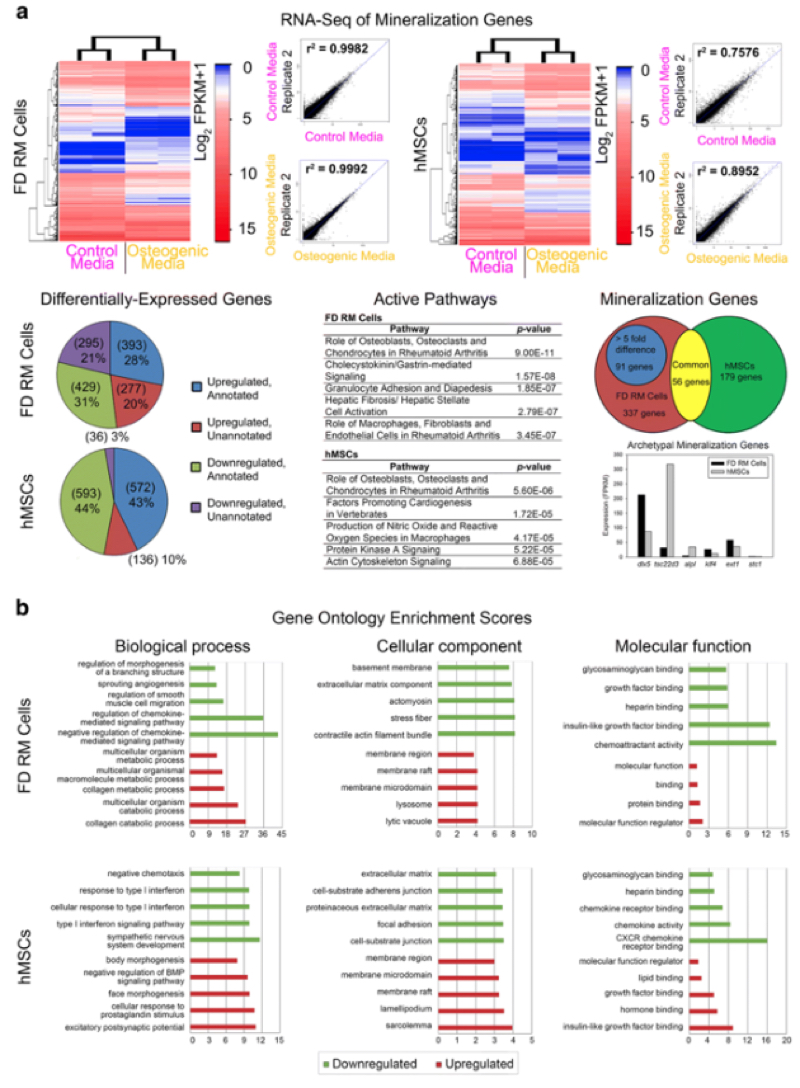
    Growth is one of the defining properties of being biologically alive, and the biology of growth involves both cellular proliferation and differentiation from stem cells to one or a plurality of differentiated cells making up a bodily tissue.  Examples range from regeneration of an arm in starfish (and in the related sea cucumber, the ability to propel its gastrointestinal tract to distract a predator) through phylogeny to the capacity of human liver to regrow after resection.  Even normal development involves production of new tissues, and in some species both aspects of this biological phenomenon can be appreciated.  For example, deer grow and regrow antlers, which can account for 28% of the animal's body weight, and their regrowth rates are so rapid that deer can produce 10 kg or more over 2-3 months.  Deer antlers and human bone, while showing very different growth rates (2 cm/day for deer antler, 2 cm/yr for femoral growth during puberty) and other features have in common intramembranous and endochondrial modes of ossification, and this similarity prompted a research group* to undertake a study comparing the pattern of expressed genes in deer antlers and human bone.  The results of this study, entitled "Identifying deer antler uhrf1 proliferation and s100a10 mineralization genes using comparative RNA-seq," were published on October 31 in Stem Cell Research and Therapy.

    Due to difficulties in elucidating the genes involved in antler production in the past, these researchers initiated their study by isolating reserve mesenchymal (RM) cells from fallow deer and human mesenchymal stem cells (hMSCs) and comparing RNA expression patterns in cultures of both cell types.  RM cells were chosen for the study because they expressed robust amounts of alkaline phosphatase (ALP) when contacted with bone morphogenic protein 2 (BMP-2) when assayed using immunofluorescence staining.  Cell growth for RM and hMSCs cultures were determined, and RM cells yielded 1.1-4.5 x 10⁵ cells after six day's growth in culture with a doubling time of 17.9-24.7 h and hMSCs yielded 1.2-3.9 x 10⁴ cells after six days in culture (10-fold fewer cells) and a doubling time of 37.8-60.1 h.  Differentiation studies showed RM cells differentiated into chondrocytes and osteocytes rather than adipocytes (the predominant differentiated cell type for hESCs).  In the presence of BMP-2, RM cells expressed ALP as well as osteocalcin, osteoblast-specific factor 1 and runt-related transcription factor, consistent with the results of the differentiation studies.  RM cells were also preferentially stained with Alizarin Red S in mineralization studies (1702.2.ug/mL) compared with hESCs (98.0 ug/mL).  These and other comparison of RM and hESCs supported the use of these two cell types for further studies of gene expression related to antler and bone growth in these two species.

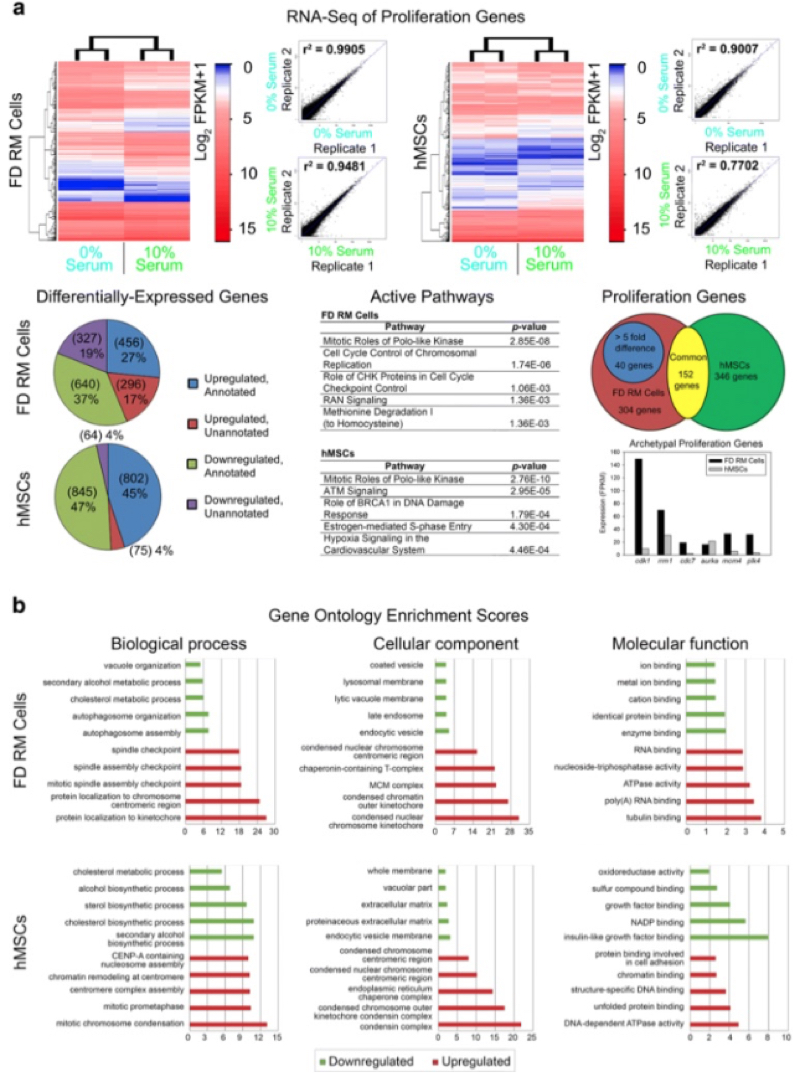
    Comparator RM and hMSCs cultures were assayed using RNA-seq methodology, which permits the complement of expressed RNA species in a cell to be determined and compared using a next-generation sequencing (NGS) approach:

    Image 1
    The results of these studies showed similar patterns of activation of proliferation-associated genes in both cell types, including cdk1rrm1cdc7aurka, and plk4.  Under conditions expected to promote mineralization both cells types showed "similar activation of osteogenic-associated pathways such as roles of osteoblastsosteoclasts, and chondrocytes in rheumatoid arthritis as well as the expression of typical osteogenic genes such as dlx5tsc22d3alplklf4ext1, and stc1."  Overall, these researchers identified 40 proliferation and 91 mineralization candidate genes from these two species:

    Image 2 Image 3
    These results were verified by immunofluorescence, gene over-expression and gene knockdown studies, using FD-derived proliferation candidate gene uhrf1 gene and mineralization candidate gene s100a10.  These results were consistent with the purported role in antler growth and regeneration suggested by gene expression patterns identified in in vitro cultured RM cells.

    The authors of this study suggest that "[t]he approach developed here may be broadly applied towards studying another biological phenomenon, and the genes identified with this approach will not only advance our understanding of mammalian bone regeneration but also offer promising therapeutic strategies for bone tissue engineering."  In addition, they speculate that "a similar comparison strategy can be applied to almost any tissue for identifying the contributions of uniquely expressed genes to a phenomenon of interest."  These sentiments are supported by the results set forth in this paper, where a previously intractable biological problem (identification of genes associated with deer antler growth) was successfully addressed using the combination of in vitro biological and RNA-seq approaches set forth herein.

    *Dai Fei Elmer Ker, Dan Wang, Rashmi Sharma, Bin Zhang, Ben Passarelli, Norma Nef, Chunyi Li, William Maloney,Stephen Quake and Yunzhi Peter Yang

  • By Kevin E. Noonan

    Federal Circuit SealHaving a court grant a preliminary injunction is frequently an important strategic victory for a patent plaintiff in an infringement suit.  The injunction not only eliminates a revenue stream for the accused infringer but also imposes other requirements (such as burdensome efforts to remove the alleged infringing article from the stream of commerce) that can (and indeed, are intended to) pressure the defendant to consider settlement.  But in order for a plaintiff to obtain an injunction, she must show a likelihood of prevailing on the merits, and in Indivior Inc. v. Dr. Reddy's Laboratories, S.A., the Federal Circuit recently found the District Court erred in finding such a likelihood, based on the patentee having disclaimed embodiments that encompassed the accused infringing article.

    The case arose in ANDA litigation over Indivior's suboxone film product Suboxone®, a rapidly dissolving film formulation of two active ingredients:  buprenorphine, which decreases a patient's need for opioids, and naloxone, which deters abuse; it is the leading treatment for opioid dependency according to the Federal Circuit opinion.  The challenge for such formulations is drug content uniformity, i.e., having the ingredients homogeneously distributed in the films, which are produced from larger sheets that are cut into individual dosage units based on a particular size and shape to provide the appropriate dose of each drug.  U.S. Patent Nos. 9,931,305 and 8,603,514 (which have identical specifications) cover Indivior's product (the '305 patent being the only patent at issue in the case), which disclose methods for mixing the drugs with a polymer, casting the mixture to produce a wet film, and then "controllably drying the film to produce a solid sheet having less than ten percent variance in active ingredient throughout any given area."  Relevant to the issues before the Court, prior art methods (involving drying the films by applying warm air to only the top surface) were inadequate to achieve content uniformity, with films produced in this manner having a "rippled" surface.  The invention overcame these limitations by "applying heat to the bottom of the film, introducing controlled microwaves, controlling the air flow above and beneath the film, and employing furnace filters."

    The parties had engaged in ANDA litigation involving the '514 patent brought in the District of Delaware; claim 62 of this patent in informative:

    62.  A drug delivery composition comprising:
        (i) a cast film comprising a flowable water-soluble or water swellable film-forming matrix comprising one or more so substantially water soluble or water swellable polymers; and a desired amount of at least one active;
        wherein said matrix has a viscosity sufficient to aid in substantially maintaining non-self-aggregating uniformity of the active in the matrix;
        (ii) a particulate active substantially uniformly stationed in the matrix; and
        (iii) a taste-masking agent selected from the group consisting of flavors, sweeteners, flavor enhancers, and combinations thereof to provide taste- masking of the active;
        wherein the particulate active has a particle size of 200 microns or less and said flowable water-soluble or water swellable film-forming matrix is capable of being dried without loss of substantial uniformity in the stationing of said particulate active therein; and
        wherein the uniformity subsequent to casting and drying of the matrix is measured by substantially equally sized individual unit doses which do not vary by more than 10% of said desired amount of said at least one active.

    The District Court held that Indivior had disclaimed (indeed, disparaged) conventional air drying methods in these claims, and on this basis construed "dried" (and "drying") to exclude embodiments that only used "conventional convection air drying from the top."  The District Court found that Dr. Reddy's did not infringe the claims of the '514 patent (a decision on appeal to the Federal Circuit).

    Reacting to this decision, Indivior amended claims in a pending application that matured into the '305 patent that replaced "dried" and "drying" with "continuously" and "continuously cast," as illustrated in claim 26 of the '305 patent:

    26.  A drug delivery composition comprising:
        (i) a continuously cast film produced on a manufacturing line comprising a flowable water-soluble or water swellable film-forming matrix comprising one or more substantially water soluble or water swellable polymers; and at least one active;
        wherein said matrix has a viscosity sufficient to aid in substantially maintaining non-self- aggregating uniformity of the active in the matrix;
        (ii) a particulate active substantially uniformly stationed in the matrix; and
        (iii) a taste-masking agent selected from the group consisting of flavors, sweeteners, flavor enhancers, and combinations thereof to provide taste- masking of the active;
        wherein the particulate active has a particle size of 200 microns or less and said flowable water-soluble or water swellable film-forming matrix is capable of being continuously cast on the manufacturing line without loss of substantial uniformity in the stationing of said particulate active therein; and
        wherein said uniformity of the continuously cast film is measured by substantially equally sized individual unit doses cut from the continuously cast film which do not vary by more than 10% of a desired amount of said at least one active.

    Indivior brought this ANDA suit against Dr. Reddy's in New Jersey based on the '305 patent claims; nevertheless, Dr. Reddy's launched at risk after the FDA approved its ANDA.  Indivior petitioned the District Court for a temporary restraining order (TRO) and a preliminary injunction (PI), both of which were granted (the TRO after a telephone conference between the parties and the Court, and the PI after a hearing).  As part of the District Court's determinations in support of granting the PI, the Court held that Indivior was likely to succeed on the merits that Dr. Reddy's product infringed the '305 patent claims and that those claims were not invalid nor unenforceable.  In construing the scope of the asserted '305 patent claims, the New Jersey Court declined to apply the Delaware Court's reasoning that Indivior's specification disclaimed embodiments encompassing Dr. Reddy's product, based in part on the '305 patent claim not reciting a "drying" limitation.  This different construction also supported the New Jersey Court's decision that a PI (and Indivior's lawsuit) was not barred under the doctrine of claim preclusion.  This appeal followed.

    The Federal Circuit reversed, in an opinion by Judge Stoll joined by Judge Lourie; Judge Newman filed a dissenting opinion.  The majority held that the District Court had abused its discretion in granting the PI, because in their view the '305 patent specification disclaimed conventional air-drying methods (such as those used by Dr. Reddy's) for producing such films.  This conclusion was supported by "remarks in the specification," specifically that such conventional methods did not solve the content uniformity problems in prior art drying methods.  Disclaimer (or, put another way, disavowal) requires that a specification be express ("make clear" that the inventor intends to disclaim part of the scope of a claim that would otherwise encompass certain embodiments based on the plain meaning of claim terms).  This must be more than merely expressing a patentee's preference with regard to certain features; characteristic of effective disclaimers are instances where "'the specification goes well beyond expressing the patentee's preference . . . [including, for example,] repeated derogatory statements about [a particular embodiment]," citing Openwave Sys., Inc. v. Apple Inc., 808 F.3d 509, 513 (Fed. Cir. 2015) (quoting Chicago Bd. Options Exch., Inc. v. Int'l Sec. Exch., LLC, 677 F.3d 1361, 1372 (Fed. Cir. 2012)).

    In this case (and in direct analogy to the Openwave Systems case and SciMed Life Sys., Inc. v. Advanced Cardiovascular Sys., Inc., 242 F.3d 1337, 1343–44 (Fed. Cir. 2001), "the '305 patent is 'rife with remarks that disparage, and therefore, disclaim' solely using conventional top air drying to form films," according to the majority opinion.  The opinion cited disclosure in the specification that "conventional drying methods themselves are unable to provide uniform films" and that such methods "produce a 'ripple effect' that results in 'an uneven, and therefore non-uniform film.'"  The opinion also cites two specific examples in the specification that illustrate the advantage of avoiding conventional top-only air drying in favor of the claimed methods that employed other drying geometries and methodologies; the opinion recites several portions of the specification to illustrate its points.

    The majority rejected Indivior's argument that these statements in the specification were not relevant to construing the asserted '305 patent claims because these claims did not recite "drying" or "dried."  The majority held that the substitute language, "continuously cast film," implicated the disclaimer of conventional drying because drying was part of the disclosed methods for producing a continuously cast film.  And the opinion states that "[t]he specification makes clear that a film produced using only conventional top air drying cannot satisfy the claim limitations."

    The majority also rejected Indivior's argument that "it is improper to import drying, a process limitation, into the '305 patent's composition claims because there is an absence of 'specific process language.'"  While acknowledging that "[a]s a general rule, product claims are not limited to the method of manufacture disclosed in the specification," citing Vanguard Prod. Corp. v. Parker Hannifin Corp., 234 F.3d 1370, 1372 (Fed. Cir. 2000), "process steps can be treated as part of a product claim if the patentee has made clear that the process steps are an essential part of the claimed invention," citing Andersen Corp. v. Fiber Composites, LLC, 474 F.3d 1361, 1375 (Fed. Cir. 2007).  That is the case here, in the majority's opinion, because a "continuously cast film" requires a process for achieving the end product.  The '305 patent discloses only an irrelevant extrusion method and a wet casting method, the product of which must be dried ("combining a polymer and a polar solvent, forming the combination into a film, and drying the film in a controlled manner").  Analogous to the Anderson case, the majority found that "Indivior's patent specification makes clear that the drying process is an essential part of the '305 claimed invention" in order to achieve content uniformity, which an expressly recited limitation in the '305 patent claims.

    In addition, the majority found that Indivior was barred by the claim preclusion doctrine because the '305 patent claims were patentably indistinct from the '514 patent claims held before the Delaware District Court not to be infringed by Dr. Reddy's products (a decision that follows inexorably from the majority's holding that replacing "dried" and "drying" with "continuously cast" did not distinguish the claims of the '305 patent from the earlier-asserted claims of the '514 patent).  Finally, the majority held that Indivior's filing a terminal disclaimer provided a "strong clue" that these claims were not patentably distinct.

    Judge Newman dissented.  In her opinion, the factors surrounding the District Court's grant of the PI (that "Dr. Reddy's Laboratories[] could readily be made whole by monetary payment if the injunction was imposed in error," that "Indivior could not recover its reputation and market share if the injunction was erroneously denied," and that Indivior had posted a $72 million bond protecting Dr. Reddy's from any adverse monetary consequences) were sufficient for the Court not to disturb the District Court's determination.  Judge Newman's opinion is based on the equitable nature of grant of a preliminary injunction, which requires appellate review on the propriety of a District Court's equitable discretion.  Here, Judge Newman chided her brethren for focusing on the substantive merits of Indivior's patent infringement allegations, supported by a decision of a different district court, "on a different patent with different claims" (and that is on appeal to the Federal Circuit), rather than on the equitable considerations in the case.

    Judge Newman was also not persuaded on the question of whether there was specification disclaimer.  In her view, the majority improperly imported a process limitation into a claim for a formulation:

    My colleagues select the drying method claimed in a different patent (the '514 parent patent) and place that limitation in the claims of the '305 patent, although the patentee expressly amended the '305 claims to remove the drying method.  My colleagues give the amended '305 claims identical scope to the claims of the '514 patent, the patent previously litigated in Delaware.  My colleagues then conclude that the '305 claims would have the same infringement position as the '514 claims were found to have in Delaware.  This is improper.  It is improper for a court to rewrite a product claim to contain a process limitation from the specification—here contained in a preferred but not sole embodiment—for it confounds the roles of the specification and the claims.  See Raytheon, 724 F.2d at 957.  "[I]f we once begin to include elements not mentioned in the claim, in order to limit such claim . . . , we should never know where to stop."  Phillips, 415 F.3d at 1312 (omission in original) (quoting McCarty v. Lehigh Valley R.R. Co., 160 U.S. 110, 116 (1895)) [citation to the record omitted].

    Judge Newman saw nothing improper in the amendments to the claims that ultimately granted as the '305 patent, replacing "dried" and "drying" with "continuously" and "continuously cast."  To her, these amendments broadened the scope of the claim so as not to be limited to any particular film-casting (or drying) method.

    Finally, Judge Newman disagreed with the majority on the issue of claim preclusion.  Citing precedent, she contended that it is improper to infer an admission from an applicant filing a terminal disclaimer; see, Ventana Medical Systems, Inc. v. Biogenex Laboratories, Inc., 473 F.3d 1173, 1184 n.4 (Fed. Cir. 2006).  Moreover, the status of the Delaware District Court's decision (being on appeal), raises the specter of the Court deciding Indivior's suit should be dismissed on issue preclusion grounds over a decision that might itself be overturned, citing Butler v. Eaton, 141 U.S. 240, 242–44 (1891), Levi Strauss & Co. v. Abercrombie & Fitch Trading Co., 719 F.3d 1367, 1372 (Fed. Cir. 2013), and 18A Charles A. Wright, et al., Federal Practice and Procedure § 4433 (2d ed. 2002).

    Finally, Judge Newman objected to the majority's refusal to consider the District Court's reasoning on the other equitable factors involved in a preliminary injunction determination:

    It is well settled that the granting of a temporary injunction, pending final hearing, is within the sound discretion of the trial court; and that, upon appeal, an order granting such an injunction will not be disturbed unless contrary to some rule of equity, or the result of improvident exercise of judicial discretion [citing Deckert v. Independence Shares Corp., 311 U.S. 282, 290 (1940)].

    Indivior Inc. v. Dr. Reddy's Laboratories, S.A. (Fed. Cir. 2018)
    Nonprecedential disposition
    Panel: Circuit Judges Newman, Lourie, and Stoll
    Opinion by Circuit Judge Stoll; dissenting opinion by Circuit Judge Newman