• MBHB Logo 2McDonnell Boehnen Hulbert & Berghoff LLP will be offering a live webinar entitled "Protecting Your Canna-IP: What You Should Know, Now" on May 21, 2019 from 10:00 am to 11:15 am (CT).  In this presentation, MBHB attorneys and Patent Docs contributors Nicole Grimm, George "Trey" Lyons III, and Brett Scott will address the unique challenges the cannabis industry faces in obtaining and enforcing intellectual property rights in this space.  This presentation will provide an overview of the current status of U.S. canna-patent, canna-trademark, and canna-copyright laws, which include:

    • Seeking federal and state trademark protection for cannabis brands.
    • Federal copyright protection for original works of authorship involving cannabis.
    • Patenting cannabis innovations, including devices and methods surrounding all aspects of the cannabis industry (as well as the plant itself).
    • Challenging and enforcing cannabis IP (particularly canna-patents) in light of recent PTAB and district court proceedings.

    While there is no fee to participate, attendees must register in advance.  Those wishing to register can do so here.  CLE credit is pending for the states of California, Illinois, New Jersey, New York, North Carolina, and Virginia.

  • By Kevin E. Noonan —

    Federal Circuit SealThe International Trade Commission, although having limited jurisdiction, can be a very powerful ally to U.S. industries facing foreign competition.  The Commission's power to interdict importation of infringing articles can keep them languishing at ports of entry and effect an injunction under circumstances where U.S. district courts' injunctive powers may be limited, for example under eBay v. MercExchange.  But the Commission's powers are circumscribed in other ways, as illustrated by the Federal Circuit's decision last week in Amarin Pharma, Inc. v. ITC involving the interplay between that jurisdiction and the Food and Drug Administration's plenary powers over regulating drugs.

    The case arose over importation by Royal DMS NV and other related off-shore companies (intervenors in the Federal Circuit appeal) of unregulated and unapproved "natural" analogs of Amarin's Vascepa® capsules, consisting of 1 gram of an ethyl ester form of eicosapentaenoic acid (the omega-3 acid commonly known as "EPA").  Amarin filed under oath a complaint with the ITC under Section 337 of the Tariff Act of 1930, that alleged importation of falsely labeled formulations of ethyl esters of eicosapentaenoic acid and false advertising related to the use of these capsules as dietary supplements.  According to Amarin, these capsules were in reality new drugs subject to FDA approval that had not been approved for use or sale in the U.S.  Specifically, the complaint contained two allegations:  "(1) that the importation and sale of the articles is an unfair act or unfair method of competition under § 337 because it violates § 43(a) of the Lanham Act, 15 U.S.C. § 1125(a), [] and (2) that importation of the articles violates the Tariff Act 'based upon the standards set forth in the FDCA'" (citations omitted).  Amarin sought an exclusion order pursuant to § 337(d) and a "cease and desist" order under § 337(f) (which if granted would prevent respondents from "importing, using, or selling" their product in the U.S.).

    The FDA responded to Amarin's complaint in a letter urging the ITC not to institute an investigation on the grounds that the Food, Drug, and Cosmetic Act does not authorize a private cause of action to enforce the FDCA.  The FDA contended that only the agency has that responsibility, and enforcement or interpretation of the FDCA is restricted to the FDA (and outside the ITC's jurisdiction), consistent with the Supreme Court's decision in POM Wonderful LLC v. Coca-Cola Co., 573 U.S. 102, 109 (2014).  Acceding to these arguments, the ITC refused to institute an investigation on Amarin's complaint and dismissed it.  This appeal, alternatively stylized as a petition for writ of mandamus, followed.

    The Federal Circuit affirmed, in an opinion by Chief Judge Prost and Judge Hughes; Judge Wallach dissented.  Chief Judge Prost's opinion begins with the panel majority's conclusion that the Court had appellate jurisdiction over this dispute (a position disputed by both the Intervenors and the ITC and the source of Judge Wallach's dissent).  Under the Court's jurisdictional statute, 28 U.S.C. § 1295(a)(6), the Federal Circuit has "exclusive jurisdiction 'to review the final determinations of the United States International Trade Commission relating to unfair practices in import trade, made under section 337 of the Tariff Act of 1930 (19 U.S.C. [§] 1337).'"  The jurisdiction question thus devolved to whether a decision not to institute an investigation satisfies the requirement under the statute for a "final determination," which has statutory support under 19 U.S.C. § 1337(c).  According to the Intervenors and the ITC, a final determination requires an investigation to have been instigated by the Commission.

    The panel majority held that the proper interpretation is found in the Court's Amgen Inc. v. ITC decision, 902 F.2d 1532 (Fed. Cir. 1990).  There, although the Commission instituted an investigation, it ultimately dismissed the complaint.  The majority interpreted its jurisdiction as requiring a final determination on the merits, and that the Commission's decision to dismiss the complaint was a final decision on the merits that satisfied the requirements of § 1295(a)(6); dismissal on different grounds here (the complaint being precluded by the FDCA) did not distinguish the jurisdictional posture in the panel majority's opinion.  And because the panel majority expected that any future complaint by Amarin on these same grounds would meet the same fate (preclusion by the FDCA) the ITC's decision was, for all intents and purposes, final.  Accordingly, the panel majority decided it could properly exert jurisdiction in this case.

    Intervenors and the ITC further argued that the Commission had a mandatory, non-discretionary duty to institute under 19 U.S.C. § 1337(b)(1) ("The Commission shall investigate any alleged violation of this section on complaint under oath or upon its initiative.").  But other provisions of the statute are inconsistent with this interpretation according to the panel majority, including § 1337(b)(3) (the Commission "may institute"); § 1330(d)(5) (an investigation is instituted if "one-half of the number of commissioners voting agree"); and 19 C.F.R. § 210.10(a)(1) (an investigation is instituted if the complaint is properly filed) (emphasis in opinion), and if not the complaint will be dismissed under 19 C.F.R. § 210.10(c)).  Citing Syntex Agribusiness, Inc. v. ITC, 659 F.2d 1038 (CCPA 1981), the opinion notes that the ITC can properly dismiss if the complaint does not assert sufficient facts in support thereof.  The panel majority thus held that "the Commission may decline to institute an investigation where a complaint fails to state a cognizable claim under § 337," i.e., institution is not mandatory.

    Turning to the merits, the panel majority held that the Commission properly dismissed the complaint because Amarin's allegations of unfair competition "cognizable under § 1337(a)(1)(A)" was precluded by the FDCA.  If Royal DSM's challenged merchandise was a nutritional supplement and not a new drug, then this merchandise would not fall within the provisions of the FDCA and the ITC would not be precluded from investigating Amarin's complaint.  But the basis of Amarin's complaint was that Royal DSM's merchandise was not a nutritional supplement but rather a new drug and thus the merchandise would fall within the purview of the FDCA and Amarin's complaint to the ITC was properly precluded.  Under POM Wonderful LLC v. Coca-Cola Co., 573 U.S. 102, 109 (2014), the FDCA provides that the FDA had "nearly exclusive enforcement authority" over the provisions of the FDCA, and private parties cannot bring suit to enforce the FDCA.  This interpretation of the scope (almost plenary) of the enforcement exclusion limited to the FDA under the FDCA in Lanham Act cases has been applied by the Ninth Circuit (PhotoMedex, Inc. v. Irwin, 601 F.3d 919 (9th Cir. 2010)); the Eighth Circuit (Alpharma, Inc. v. Pennfield Oil Co., 411 F.3d 934 (8th Cir. 2005)); and the Third Circuit (Sandoz Pharm. Corp. v. Richardson-Vicks, Inc., 902 F.2d 222 (3d Cir. 1990)).  The behaviors alleged in Amarin's complaint under the Lanham Act all required the ITC to make determinations on whether there were FDCA violations (for example, claiming status as a "dietary supplement," which requires FDA approval, as well as Amarin's allegations that Royal DSM's merchandise was a "new drug" that also requires FDA approval).  The facts here were similar to those in the PhotoMedex case, and the Federal Circuit panel majority held that the Ninth Circuit's reasoning regarding preemption was persuasive in this case.  Specifically, the panel majority held that "the alleged violations of § 337 are based entirely on—and could not exist without—the FDCA" and, as in PhotoMedex, the FDA has not issued guidance on an approval pathway or whether Royal DSM's merchandise constituted a new drug.  Saying that the Court "need [] go [no] further" than the PhotoMedex court, the panel majority held that "a complainant fails to state a cognizable claim under § 337 where that claim is based on proving violations of the FDCA and where the FDA has not taken the position that the articles at issue do, indeed, violate the FDCA.  Such claims are precluded by the FDCA."

    The panel majority also distinguished the Supreme Court's holding in POM Wonderful, saying that "[t]he allegations underlying the Lanham Act claim in POM Wonderful did not require proving a violation of the FDCA itself," unlike here, and that distinction was enough to reach the opposite outcome.  And the panel majority also set forth the legal difference between a case involving preemption (typically between a state law or regulation and a supervening Federal statute) and preclusion (where the question is which Federal statute controls, which was the question in this case).

    Judge Wallach dissented on the jurisdictional question.  His argument is purely textual:  the Tariff Act states that "[a]ny person adversely affected by a final determination of the [ITC] under subsection (d), (e), (f), or (g) of [§ 1337] may appeal such determination . . . to the United States Court of Appeals for the Federal Circuit" under § 1337(c); this excludes on its face decisions not to institute under § 1337(b) (as is the circumstance here and thus the Federal Circuit is without jurisdiction to consider Amarin's appeal).  Other case law, and legislative history, supports Judge Wallach's conclusion under his reasoning, and while he agrees with the majority that Amarin is not entitled to relief, he would base this outcome on Amarin's failure to establish it was entitled to the "extraordinary relief" of a writ of mandamus (for which the All Writs Act properly bestows jurisdiction on the Court).

    Amarin Pharma, Inc. v. ITC (Fed. Cir. 2019)
    Panel: Chief Judge Prost and Circuit Judges Wallach and Hughes
    Opinion by Chief Judge prost; dissenting opinion by Circuit Judge Wallach

  • By George "Trey" Lyons, III, Eric Moran, Nicole Grimm, and Brett Scott —

    USPTO SealLast week, the U.S. Patent and Trademark Office released its new guidelines on how it will examine federal trademark applications for cannabidiol (CBD) products in light of the 2018 Farm Bill.  While these new guidelines are encouraging for canna-businesses that manufacture, market, and sell CBD products, considering the carve outs and caveats included therein, it may end up creating more questions than it answers.  Below are a few key takeaways:

    The New Guidelines Delineate between Federal Trademark Protection for CBD Products Based on Source and THC Concentration

    From the outset, the new guidelines reiterate the USPTO's continuing prohibition of federal trademark protection for all parts of the currently-Schedule I substance, "'Marihuana' (commonly referred to as 'marijuana')."[1]  These are defined as:

    [A]ll parts of the plant Cannabis sativa L., whether growing or not; the seeds thereof; the resin extracted from any part of such plant; and every compound, manufacture, salt, derivative, mixture, or preparation of such plant, its seeds or resin [(subject to certain exceptions)].  21 U.S.C. §802(16).

    However, in light of the 2018 Farm Bill, "hemp" has been removed from this classification.  Under the new guidelines, "cannabis plants and derivatives such as CBD that contain no more than 0.3% THC on a dry-weight basis are no longer controlled substances under the CSA," but again "only if the goods are derived from 'hemp.'"  The USPTO also indicated that it will treat services involving hemp similarly to how it treats goods.  For applications involving hemp cultivation or production, the examining attorney will inquire into the Applicant's authorization to produce hemp. 

    Finally, Applicants (and/or their attorneys) will have to certify and/or specify in goods and services identifications that the goods or services sought to be protected comport with these requirements.

    The New Guidelines Are Retroactive

    The new guidelines also make clear that the date the 2018 Farm Bill was signed into effect, December 20, 2018, will be the watermark for if previously-filed federal trademark applications can benefit from the 2018 Farm Bill.  For applications filed on or after December 20, 2018, assuming a description of goods and services that comports with the new guidelines, everything should be compliant; but those filed before December 20, 2018 have a tougher path.

    Specifically, for those use-based applications filed before enactment of the 2018 Farm Bill, "that identify goods encompassing CBD or other cannabis products, registration will be refused due to the unlawful use or lack of bona fide intent to use in lawful commerce under the CSA."  However, the new guidelines allow applicants of such applications to amend the application to change: (1) the filing date to December 20, 2018 and, for applications based on use in commerce, (2) the filing basis to intent-to-use (as the USPTO will consider any such previously submitted use as illegal prior to the 2018 Farm Bill), to provide a proper, legal basis for registration.  The USPTO will also require applicants to amend goods identifications to "specify that the CBD or cannabis products contain less than 0.3% THC" and are derived from hemp.  Unfortunately for applicants of amended applications, the guidelines also require the USPTO to conduct a new search based on the amendments, including the new filing date.

    The New Guidelines Do Not Affect FDA Prohibitions for Consumable CBD Products

    The new guidelines also cautioned that consumable CBD products (for humans and pets) must also be legal under the Federal Food Drug and Cosmetic Act (FDCA) in order for marks covering such products to be registrable.  Specifically, because "foods or dietary supplements of a drug or substance undergoing clinical investigations without approval of the U.S. Food and Drug Administration (FDA) violates the FDCA," applicants will have to ensure compliance with the FDCA prior to applying for federal trademark protection under the new guidelines.

    Furthermore, the 2018 Farm Bill itself "explicitly preserved FDA's authority to regulate products containing cannabis or cannabis-derived compounds under the FDCA," as "CBD is an active ingredient in FDA-approved drugs and is a substance undergoing clinical investigations."  It is, therefore, difficult to imagine any consumable CBD product gaining federal trademark protection without FDCA compliance (whether by gaining FDA approval or falling under a class of good or services that do not require FDA approval). Currently, Epidiolex is the only FDA-approved drug containing an active ingredient (CBD) derived from a cannabis plant.

    However, all is not lost, as the FDA continues to acknowledge and address this challenging crossroad of the 2018 Farm Bill and CBD-based drugs and consumables.  So far, the FDA has taken several concrete new steps to address these issues, including:

    (1) Scheduling a public hearing on May 31, 2019 for CBD stakeholders to "share their experiences and challenges with these products, including information and views related to product safety," as well as provide a "broader opportunity for written public comment."[2]

    (2) Forming "a high-level internal agency working group to explore potential pathways for dietary supplements and/or conventional foods containing CBD to be lawfully marketed; including a consideration of what statutory or regulatory changes might be needed and what the impact of such marketing would be on the public health."[3]

    (3) Updating the FDA's website with "answers to frequently asked questions on this topic to help members of the public understand how the FDA's requirements apply to these [CBD] products."[4]

    (4) Issuing "multiple warning letters to companies marketing CBD products with egregious and unfounded claims that are aimed at vulnerable populations [including dangerous marketing efforts that CBD cures or otherwise slows the progression of diseases including cancer, Alzheimer's, and fibromyalgia, among others]."[5]

    Thus, while the tides may still be shifting, Applicants should carefully consider both the timing and content of any federal trademark application aimed at any CBD products that potentially need FDA approval.

    The New Guidelines Do Not Affect Current Prohibition for Federal Canna-Trademarks under the Lanham Act and CSA

    Finally, and frustratingly (albeit not surprisingly), the USPTO also confirmed that it is not revising its stance on federal trademark registration of cannabis related products and services.  By way of background, the USPTO has refused to register trademarks on cannabis goods or services, particularly those in the context of the cannabis product itself (e.g., a particular strain of leafy cannabis), due to the lack of any lawful uses of the applied for marks in commerce.  The Lanham Act expressly prohibits registration of illegal products and services, such as those still falling under the Controlled Substances Act (CSA).  And the new guidelines unequivocally reiterate this prohibition.

    That said, the new guidelines provide some additional guidance on how the USPTO will treat federal trademark applications in the canna-industry.  For applicants with pending applications for marks covering products or services that are now legal under the CSA, examination should proceed under the new requirements.  For those with marks covering products or services that may still be illegal under the CSA, but that may be legal under some state laws, federal protection is still elusive and applicants may need to seek protection under individual state trademark laws.  And, as the USPTO's examination has been historically inconsistent concerning cannabis products,[6] it is not a stretch of the imagination to think that the USPTO may continue to swing back toward more canna-friendly policies in the future.[7]

    [1] Unless otherwise indicated, all quotations come from the USPTO's "Examination Guide 1-19: Examination of Marks for Cannabis and Cannabis-Related Goods and Services after Enactment of the 2018 Farm Bill," a copy of which can be found here and is referred to herein as "the new guidelines."

    [2] Statement from FDA Commissioner Scott Gottlieb, M.D., on new steps to advance agency's continued evaluation of potential regulatory pathways for cannabis-containing and cannabis-derived products, FDA (April 2, 2019), available at https://www.fda.gov/news-events/press-announcements/statement-fda-commissioner-scott-gottlieb-md-new-steps-advance-agencys-continued-evaluation

    [3] Id.

    [4] Id.

    [5] Id.

    [6] Beginning in 2010, the USPTO invited applicants to apply for federal trademark registrations on cannabis goods and services by creating a new entry in its Acceptable Identification of Goods and Services Manual for: Class 5: "Processed plant matter for medicinal purposes, namely medical marijuana." See Justin Scheck, Patent Office Raises High Hopes, Then Snuffs Them Out, Wall Street Journal (July 19, 2010), available at http://www.wsj.com/articles/SB10001424052748704682604575368783687129488.  Within a matter of months, and countless applications later, a spokesperson for the USPTO, Peter Pappas, noted that the newly articulated class "raise[d] examination issues . . . was a mistake and [that the USPTO] ha[d] removed it."  Id.

    [7] For context, federal trademarks and service marks have been granted (and continue to be granted) in the context of ancillary products and services (e.g., cannabis apparel companies, and informational services/cannabis networking organizations).  Regardless, applicants should always be prepared to controvert USPTO rejections and readily show how the cannabis-related mark does not violate the CSA — no matter how strained the nexus between the goods or services offered by the applicant to the currently illegal product may be.

  • By Kevin E. Noonan —

    Federal Circuit SealEver since the Supreme Court handed down its decisions in Octane Fitness, LLC v. ICON Health & Fitness, Inc. and Highmark Inc. v. Allcare Health Mgmt. Sys., Inc. about five years ago, liberalizing (or at least simplifying) the law regarding awarding district court awards of attorneys' fees in patent cases under 35 U.S.C. § 285, those courts (and the Federal Circuit) have been assaying the metes and bounds of sanction-worthy behavior.  The Supreme Court's rubrics relied heavily on the sound discretion of the district court judge, another example of the Court's penchant for "knowing it when we see it" jurisprudence and (as applied to the attorneys' fees question) one without any guidance from the Court except to consider the "totality of the circumstances."  But, as expected, any behavior that could be characterized as "abusive" became much more in the § 285 crosshairs, particularly those involving plaintiffs suing a large number of putative defendants or that could be accused of performing a less than diligent pre-complaint filing investigation as required under the Federal Rules of Civil Procedure.  Both allegations were successfully made against plaintiffs Thermolife International LLC and the Board of Trustees of the Leland Stanford Junior University and affirmed by the Federal Circuit last week in Thermolife Int'l LLC v. GNC Corp.

    The case arose over Stanford's U.S. Patent Nos. 5,891,459, 6,117,872, 6,646,006, and 7,452,916, directed to "methods and compositions involving the amino acids arginine and lysine, to be ingested to enhance vascular function and physical performance"; the '459, 926, and '006 patents had expired before litigation ensued (but infringing activity during the life of these patents was plead).  The '006 patent claimed compositions, while the other patents-in-suit claimed methods of using the claimed compositions for achieving the desired physiological effects.  The following claims were recited as representative of the issues before the Court:

    Claim 1 of the '459 patent:

    1.  A method of improving vascular NO activity of the vascular system of a human host by enhancing endothelial NO, said method comprising:
        administering orally as a dietary supplement to said host in accordance with a predetermined regimen a prophylactic dose in an amount sufficient to enhance endogenous endothelial NO, L-arginine or L-arginine hydrochloride, as other than a natural food source and in the absence of other amino acids and polypeptides as other tha[n] dietary supplements, to enhance the level of endogenous NO in the vascular system [emphasis in opinion].

    Claim 1 of the '872 patent:

    1.  A method for enhancing physical performance of a mammal prior to said physical performance, said method comprising:
        administering to said mammal prior to said physical performance as the active ingredient an amino acid composition consisting of at least one amino acid selected [from] the group consisting of arginine and lysine of at least about 60 mg/kg/day within 24 h of said physical performance [emphasis in opinion].

    Claim 1 of the '916 patent:

    1.  A method of enhancing nitric oxide production comprising orally administering to a human host in need thereof a composition comprising L-arginine or a physiologically acceptable salt thereof, wherein (i) said composition includes an amount of L-arginine or its physiologically acceptable salt sufficient to increase the level of nitric oxide production in said human host and (ii) said composition is a dietary or food supplement or a pharmaceutical composition in a form suitable for oral administration selected from the group consisting of a pill, a powder, a liquid, and a capsule, wherein said administering provides a daily amount rang-ing from 1 to 12 grams of L-arginine or its physiologically acceptable salt and wherein the composition further comprises at least one additional compound associated with production of nitric oxide other than L-arginine or a physiologically acceptable salt thereof [emphasis in opinion].

    And claim 3 of the '006 patent:

    3.  A composition comprising L-arginine or a physiologically acceptable salt thereof and at least one additional compound associated with production of nitric oxide other than L-arginine or a physiologically acceptable salt thereof, said composition excluding other amino acids which are not precursors of nitric oxide, wherein said composition is in a form suitable for oral administration selected from the group consisting of a pill, a powder, a liquid, and a capsule [emphasis in opinion].

    Thermolife is the exclusive licensee of these patents and sued (over a 9-month period) multiple parties ("dozens" according to the Court, actually a total of 81, wherein a number of them settled for "seemingly small dollar amounts" that implied an intention by plaintiffs to obtain "nuisance-value settlements'), including surviving defendants GNC Corp., Hi-Tech Pharmaceuticals, Inc., and Vital Pharmaceuticals, Inc. for both direct (literal) infringement under 35 U.S.C. § 271(a) and indirect infringement under 35 U.S.C. §§ 271(b) and 271(c).  Relevant to the decisions in this case, plaintiffs alleged infringement by defendants' sale of specific products.

    After finding all of the asserted claims invalid for anticipation and/or obviousness (conclusions not challenged on appeal), the District Court entertained and granted prevailing defendants' motion for attorneys' fees supported by two arguments.  First, that there was no basis to assert infringement against the specified products because they contained less than the at least 1 gram of L-arginine (or its hydrochloride salt) per serving as required by the asserted claims.  This was evident by inspection (on the ingredients recited on the bottles) or by "publicly available" analytical methods.  Defendants asserted these contentions in support of their argument that "plaintiffs did not conduct an adequate pre-suit investigation into infringement."  Also, defendants argued that the case was exceptional because plaintiffs' own expert testified that amounts less than one gram per serving of L-arginine (or its hydrochloride salt) were ineffective to enhance nitric oxide production (and hence that the method claim were also not infringed).  Defendants also argued that plaintiffs' pattern of suing multiple defendants and settling for nuisance value recoveries was evidence that the District Court properly found the case to be exceptional.  Plaintiffs did not (indeed, according to the decision could not) challenge the facts defendants set forth to support their arguments, but argued that there was insufficient evidence to support the conclusion that they had sued multiple parties to improperly extract nuisance-value settlements.

    The District Court was persuaded by these arguments ("the pattern of action here is indeed one that strongly suggests Plaintiffs brought suit against many defendants without carefully reviewing their claims as a calculated risk that might yield nuisance-value settlements"; emphasis in opinion) and granted defendants' motion (amounting to awards of $903,890.13 to Hi-Tech and $406,131.76 to Vital; GNC did not move for attorneys' fees below).  This appeal followed, limited to the question of whether the District Court properly determined that this was a "special case" as required under the Supreme Court's Octane Fitness and Highmark decisions.

    The Federal Circuit affirmed, in a decision by Judge Taranto joined by Judges Bryson and Stoll.  The Court noted that this case was unusual as not being directed (as most attorneys' fees cases tend to be) to plaintiff attorneys' trial conduct (there having been no trial on infringement) but rather on the question of whether the lawsuit should have been filed in the first instance.

    As an initial matter, the Federal Circuit approved, as being properly within the exercise of the District Court's discretion, various procedural decisions below (striking trial counsel's untimely filed declaration regarding the extent of pre-filing investigation, for example).  Substantively, the panel held that the District Court had properly based its exceptional case determination on an issue (infringement) that had not been "fully litigated" in the underlying dispute, consistent with the Federal Circuit's decision in Lumen View Technology LLC v. Findthebest.com, Inc., 811 F.3d 479, 481–83 (Fed. Cir. 2016).  However, citing Spineology, Inc. v. Wright Med. Tech., Inc., 910 F.3d 1227, 1230 (Fed. Cir. 2018), the panel noted that while it is unusual to find support for an attorneys' fees award on unlitigated issues it is not an abuse of discretion by a district court.  And the Court noted that while such deference is not plenary:

    To be sure, due process and other procedural rights must be respected in deciding the exceptional-case question as a precondition to awarding fees against a losing party[, a]nd more process may well be needed on a fees motion when the issue presented as a basis for fees has not previously been litigated there is no such denial of plaintiffs' procedural due process rights in this instance [citation omitted].

    The panel also declined to impose ("retroactively") a requirement (unfulfilled here) of notice by plaintiffs (for example, by filing a Rule 11 motion) for their grounds of seeking attorneys' fees, inter alia, because of the unusual nature of this case where infringement was bifurcated in favor of a separate trial on validity.

    Next the Court held that the District Court's consideration of the inadequacy of plaintiffs' pre-filing investigation also occasioned no abuse of discretion, particularly the lower court's restriction to considering only claim 1 of the '459 patent.  Nor was there error in the District Court finding that infringement required administering L-arginine (or its hydrochloride salt) at dosages of 1 gram.  This determination the opinion bases on "science," not claim interpretation, finding support in trial testimony regarding the amount of L-arginine (or its hydrochloride salt) required to have the claimed effect.  And thus the failure of the accused infringing articles to provide this dosage constituted a failure to perform an adequate pre-filing investigation when plaintiffs accused the non-infringing articles (and their use) of infringement.  This conclusion was supported both by the concentration and dosage amounts recited on the labels of the accused infringing articles and the failure of plaintiffs to perform any of the publicly known analytical techniques that would have shown that the 1 gram dosage was not administered according to defendants' formulations and instructions (including the absence of arginine in any form in one of the accused products).

    With regard to the District Court's findings regarding litigation (mis)conduct, the opinion asserts that standing alone these would not be sufficient per se to support the award of attorneys' fees, particularly with regard to the number of suits and defendants and the (generally small) size of the awards.  But these activities were considered in the context of the rest of the evidence considered by the District Court, and in toto the award of attorneys' fees was not an abuse of discretion.

    Finding no abuse of discretion by the District Court, the Federal Circuit affirmed.

    Thermolife Int'l LLC v. GNC Corp. (Fed. Cir. 2019)
    Panel: Circuit Judges Taranto, Bryson, and Stoll
    Opinion by Circuit Judge Taranto

  • By Kevin E. Noonan —

    Federal Circuit SealLast Friday, the Federal Circuit affirmed a decision by the District Court that Defendants Actavis LLC and Teva Pharmaceuticals did not show by clear and convincing evidence that the claims asserted by Endo Pharmaceuticals Inc. and Mallinckrodt LLC were obvious, in Endo Pharmaceuticals Inc. v. Actavis LLC, over a strong dissent by Circuit Judge Stoll.

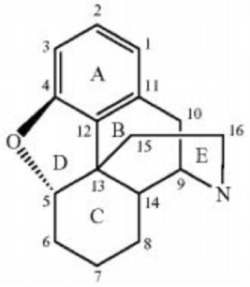
    The case arose in ANDA litigation over Mallinckrodt's U.S. Patent No. 8,871,779 licensed to Endo; the asserted claims were directed to methods for making morphinan-6-one products having low levels of α,β unsaturated ketones; relevant pharmaceuticals have the generic structure:

    Structure 1
    wherein the ketone is present at position 6 of the C ring and the α and β positions are numbered 7 and 8 in the formula, respectively.  Prior art methods of making such compounds resulted in deleterious impurities wherein the α and β positions were unsaturated, i.e., retaining "double bonds between the α and β carbon atoms" despite undergoing catalytic hydrogenation to reduce them.  Treatment of these compounds with heat in the presence of a sulfur-containing compound, according to the specification of the '779 patent, reduced these impurities to "acceptable levels" (less than 0.5%).  The asserted claims were set forth in the opinion as follows:

    1.  A hydrochloride salt of oxymorphone comprising less than 0.001% of 14-hydroxymorphinone.

    2.  The hydrochloride salt of claim 1 comprising less than 0.0005% of 14-hydroxymorphinone.

    3.  A pharmaceutical acceptable form comprising the oxymorphone hydrochloride according to claim 1.

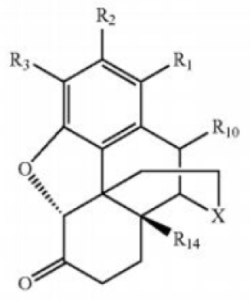
    4.  A hydrochloride salt of a morphinan-6-one com-pound corresponding to Formula (2):

    Structure 2comprising less than 0.001% measured by [high performance liquid chromatography] of [a compound] corresponding to Formula (3):

    Structure 3
    wherein the morphinan-6-one compound is oxymorphone and wherein X is —N(R17)—;
    R1 and R2 are hydrogen;
    R3 is hydroxy;
    R10 is hydrogen;
    R14 is hydroxy; and
    R17 is methyl.

    5.  The hydrochloride salt of claim 4 comprising less than 0.0005% of 14-hydroxymorphinone.

    6.  A pharmaceutical formulation comprising the oxymorphone hydrochloride according to claim 4.

    Defendants asserted three prior art references in support of their invalidity arguments.  The Weiss reference, a 1957 scientific publication, disclosed the use of catalytic hydrogenation to produce oxymorphone, a compound falling within the scope of the asserted claims that specifically addresses reducing α,β unsaturated ketones.  The Chapman reference, U.S. Patent Application Publication No. 2005/0222188, disclosed catalytic hydrogenation to reduce α,β unsaturated ketones of oxycodone into a salt form of the drug.  Finally, the Rapoport reference, a 1967 scientific publication, disclosed a process employing bisulfite addition to convert α,β unsaturated oxycodone to saturated oxycodone that uses solubility differences to separate the unsaturated from the saturated forms of the drug.  None of these references were sufficient to convince the District Court, which found that Actavis and the other Defendants did not prove by clear and convincing evidence that the claims were invalid under either §§ 102 or 103.  This appeal followed.

    The Federal Circuit affirmed, in an opinion by Judge Wallach joined by Judge Clevenger over Judge Stoll's dissent.  The majority first addressed the District Court's claim construction regarding the claim term "14-hydroxymorphinone" which Defendants argued was error, and then their argument that the District Court erred in its nonobviousness determination.  The District Court in this case relied on both intrinsic evidence (here, the claim language and specification) and extrinsic evidence (expert testimony from both plaintiff and defendants experts) in construing the term "14-hydroxymorphinone" to mean "14-hydroxymorphinone hydrochloride," i.e., the salt form of the drug.  Actavis and the other Defendants argued that the District Court should have interpreted the term using its plain meaning; the Federal Circuit majority disagreed.  According to the opinion, claims 1 and 2 expressly recite the hydrochloride salt of the drug, and claim 3 (dependent on claim 1) sets forth the structure instead of using the term "14-hydroxy-morphinone"; the remaining claims are consistent with the interpretation that the asserted claims only recite "14-hydroxy-morphinone" "as part of the salt-, or hydrochloride-, form of the claimed compounds" (emphasis in opinion).  Accordingly, the plain meaning of the claim language is consistent with the District Court's interpretation of the term "14-hydroxymorphinone" to mean "14-hydroxymorphinone hydrochloride."

    With regard to the specification, the panel majority found an express example (Example 3) that refers to the reaction(s) producing the claimed compounds as involving the hydrochloride salt of the drug.  Taken as a whole, however, the panel held that the use of the term in the "broader specification [was] relatively unsupportive of either proffered construction."  (In a footnote, the opinion explained that "neither the parties nor we have identified anything in the prosecution history that further elucidates the proper construction of this limitation.")

    Regarding the extrinsic evidence, the opinion cites admissions by Defendants' expert conceding that a person of ordinary skill would have understood that Example 3 described a reaction using the salt form of the drug.  As a consequence of these analyses, the Federal Circuit held that the District Court had not erred in construing the claim term "14-hydroxymorphinone" to mean "14-hydroxy-morphinone hydrochloride."

    Turning to the District Court's determination that Defendants had not carried their burden of establishing obviousness by clear and convincing evidence (the opinion explaining that the anticipation argument required the panel to agree with Defendants' construction and thus its decision to the contrary obviated the need to address this argument on appeal), the panel majority held that the District Court did not clearly err in finding that the skilled worker would not have had a reasonable expectation of success in achieving the claimed invention by combining the asserted prior art.  Specifically, the District Court held that the combination of the teachings of the Chapman reference to the reaction described in the Weiss reference would not satisfy the reasonable expectation requirement for establishing obviousness.  Additionally, the Rapoport reference did not teach that bisulfite could be used to reduce the unsaturated impurities known to exist in prior art synthetic method.  The panel majority held that the absence of "key reaction conditions" (according to Endo's expert) in the cited art as well as the absence of "purification to the degree claimed" in the '779 patent (according to testimony by both Endo's and Actavis's experts) supported the District Court's conclusion that Defendants failed to establish obviousness.  The opinion also credits the District Court's assessment of the Rapoport reference as not providing a reasonable expectation of success in using bisulfite treatment to remove oxycodone impurities that could achieve the purity levels claimed in the '779 patent, based on expert testimony.

    In an interesting footnote, the panel majority also described confidential communications from the Food and Drug Administration to opioid drug manufacturers that 1) were not public, and 2) did not disclose any methods for achieving reduced unsaturated contaminants that the panel majority (contrary to the District Court) determined were relevant to the obviousness inquiry.  Ultimately, the majority held that these communications were insufficient to satisfy the reasonable expectation of success needed for an obviousness determination, because inter alia, "the FDA communications recite a goal without teaching how the goal is attained" and "these communications would not have been enough to overcome the disclosures of Weiss, Chapman, and Rapoport, which indicate that a PHOSITA would not reasonably believe their disclosed methods were fruitful avenues to achieve the FDA-mandated oxymorphone purity level."  This conclusion was supported by testimony from the '779 patent inventors regarding the "extensive experimentation, involving much failure, [required] to ultimately produce [] oxymorphone" having the claimed purity levels with regard to α,β unsaturated ketone impurities.

    Judge Stoll dissented, based on the FDA's regulatory requirements which, in her view, set forth "every limitation of claim 1" of the '779 patent.  The District Court further erred in her opinion by "imposing a requirement that a reference must teach how to solve a problem to provide a motivation to combine, conflating enablement and reasonable expectation of success requirements with motivation" (emphasis in opinion).  And finally, Judge Stoll found error in the District Court "appl[ying] an erroneously heightened standard for reasonable expectation of success by requiring a 'definitive solution' and proof of actual success."  The Judge in her dissent acknowledged the deference due a district court's factual findings, but "such deference is not due where the trial court applies the incorrect standard to arrive at those findings."  After setting forth her reasoning concerning the District Court's errors in applying the standards for making a proper obviousness determination, Judge Stoll concluded by stating:

    This is not a typical Hatch-Waxman case where the patentee provided the public with a new drug, formulation, or manufacturing process.  While Mallinckrodt's patent specification is directed to a specific process for achieving the FDA's objective, Mallinckrodt did not claim that process.  Mallinckrodt instead claimed the FDA mandate.  The FDA sought to make oxymorphone safer for the public and Mallinckrodt took advantage by claiming the directive itself, securing exclusive rights to a drug first approved in 1959.  This is not the type of innovation that the patent system and the obviousness standard were designed to protect.

    Endo Pharmaceuticals Inc. v. Actavis LLC (Fed. Cir 2019)
    Panel: Circuit Judges Wallach, Clevenger, and Stoll
    Opinion by Circuit Judge Wallach; dissenting opinion by Circuit Judge Stoll

  • By Donald Zuhn —

    USPTO SealIn a notice published in the Federal Register (84 Fed. Reg. 17809) on April 26, the U.S. Patent and Trademark Office invited the public to provide comments and attend public hearings on the participation of women, minorities, and veterans in entrepreneurship activities and the patent system.  The Office intends to use the information it receives to prepare a study as required by the Study of Underrepresented Classes Chasing Engineering and Science (SUCCESS) Act.

    The SUCCESS Act (Public Law No. 115-273), which was enacted on October 31, 2018, directs the Under Secretary of Commerce for Intellectual Property and Director of the USPTO, in consultation with the Administrator of the U.S. Small Business Administration (SBA), to study and report to Congress on the number of patents applied for and obtained: (1) by women, minorities, and veterans; and (2) by small businesses owned by women, minorities, and veterans, as well as provide legislative recommendations to increase the number of women, minorities, and veterans who participate in entrepreneurship activities and apply for patents.  The USPTO's report must be submitted to Congress no later than October 31, 2019.  (The SUCCESS Act also amended the Leahy-Smith America Invents Act to extend the authority of the USPTO to set and adjust patent fees by eight years.)

    As part of the Office's information gathering process, the Office will be holding three public hearings.  The first public hearing will be held in Alexandria, VA, on May 8, 2019 from 9 am to 4 pm (EST); the second public hearing will be held in Detroit, MI, on May 16, 2019 from 9 am to 4 pm (EST); and the third public hearing will be held in San Jose, CA, on June 3, 2019 from 9 am to 4 pm (PST).  The public hearings will also be available via webcast, with information about the webcast to be posted here prior to the public hearing.

    Although the deadline to request an opportunity to give oral testimony at the hearings has passed, the Office is also requesting that the public provide written comments.  The deadline for submitting written comments is June 30, 2019.  Written comments, which should be identified as concerning the "SUCCESS Act Study," should be sent by email to successact@uspto.gov, or by regular mail addressed to Office of the Chief Economist, Mail Stop OPIA, Director of the U.S. Patent and Trademark Office, P.O. Box 1450, Alexandria, VA 22313-1450.  According to the Office's notice, the Office is seeking public comment on, inter alia, the following questions:

    (1) What public data are available to identify the number of patents applied for and obtained by women, minorities and veterans?

    (2) What public data are available to assess the social and private benefits that result from increasing the number of patents applied for and obtained by women, minorities, and veterans, as well as small businesses owned by these groups?

    (3) What social and private benefits would you identify as resulting from increasing the number of patents applied for and obtained by women, minorities, and veterans?

    (4) What social and private benefits to small businesses owned by women, minorities, and veterans would you identify as resulting from increasing the number of patents applied for and obtained by those businesses?

    (5) Should the USPTO collect demographic information on patent inventors at the time of patent application, and why?

    (6) To what extent, if at all, do educational and professional circumstances affect the ability of women, minorities, and veterans to apply for and obtain patents or to pursue entrepreneurial activities?

    (7) To what extent, if at all, do socioeconomic factors facilitate or hinder the ability of women, minorities, and veterans to apply for and obtain patents or to pursue entrepreneurial activities?

    (8) What entities or institutions, if any, should or should not play an active role in promoting the participation of women, minorities, and veterans in the patent system and entrepreneurial activities?

    (9) What public policies, if any, should the Federal Government explore in order to promote the participation of women, minorities, and veterans in the patent system and entrepreneurial activities?  Are there any public policies that the Federal Government should not explore?

    (10) What action could USPTO take to address the participation of women, minorities, and veterans in the patent system and entrepreneurial activities?

    (11) Are there policies, programs, or other targeted activities shown to be effective at recruiting and retaining women, minorities, and veterans in innovative and entrepreneurial activities?  Are there policies, programs, or other targeted activities that have proved ineffective?

  • CalendarMay 7-9, 2019 – Patent Fundamentals Bootcamp 2019: An Introduction to Patent Drafting, Prosecution, and Litigation (Practising Law Institute) – Chicago, IL

    May 8, 2019 – Biotechnology/chemical/pharmaceutical (BCP) customer partnership meeting (U.S. Patent and Trademark Office) – Alexandria, VA, and Detroit, MI

    May 9, 2019 – "AI: Protecting Inventions in China, Europe and the U.S." (Intellectual Property Owners Association) – 2:00 to 3:00 pm (ET).

    May 10, 2019 – "ITC Practice—What Every IP Attorney and In-House Counsel Should Know" (John Marshall Law School Center for Intellectual Property, Information & Privacy Law) – 9:00 am to 4:30 pm, Chicago, IL

    May 16-17, 2019 – Advanced Summit on Life Sciences Patents (American Conference Institute) – New York, NY

    June 12-14, 2019 – Patent Fundamentals Bootcamp 2019: An Introduction to Patent Drafting, Prosecution, and Litigation (Practising Law Institute) – Chicago, IL

    July 17-19, 2019 – Patent Fundamentals Bootcamp 2019: An Introduction to Patent Drafting, Prosecution, and Litigation (Practising Law Institute) – San Francisco, CA

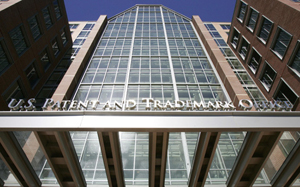
  • USPTO Building FacadeThe U.S. Patent and Trademark Office will be holding its next biotechnology/chemical/pharmaceutical (BCP) customer partnership meeting on May 8, 2019 at the USPTO Headquarters in Alexandria, VA, and the Midwest Regional Office in Detroit, MI.  The agenda for the meeting is as follows:

    • Welcoming and Opening Remarks (9:00 – 9:20 am EDT) — Damian Porcari, Director, Midwest Regional Office, and Andrew Wang, Gary Jones, and Daniel Sullivan, Directors, TC1600, USPTO

    • TC quality action plan (9:20 – 9:50 am) — Anne Gussow, QAS, TC1600, USPTO

    • Antibody decisions and the written description requirement (9:50 – 10:30 am) — Lora Driscoll, QAS, TC1600, USPTO

    • Break (10:30 am – 10:40 am)

    • Subject matter eligibility (35 U.S.C. § 101) – 2019 patent subject matter eligibility guidance (PEG) update (10:40 – 11:30 am) — Marjorie Moran, SPE, TC1600, USPTO

    • Lunch (11:30 am – 12:30 pm)

    • Subject matter eligibility (101) outside perspectives (12:30 – 1:20 pm) — Kathleen E. Chaffee, Patent Agent, Office of Technology Management, Washington University

    • 101 discussion panel (1:20 – 2:50 pm) — Andrew Wang, Director, TC1600 (moderator), Beverly A. Lyman, Chief Intellectual Property Counsel, Indiana University; Duane C. Marks, Patent Counsel, Bio-Products, Eli Lilly and Company; June Cohan, Senior Legal Advisor, OPLA; Marjorie Moran, SPE, TC1600

    • Break (2:50 – 3:00 pm)

    • Global Dossier (3:00 – 3:30 pm) — Nelson Yang, Acting Director, IPBS, OIPC

    • Cooperative Patent Classification (CPC) application in biotechnology (3:30 – 3:50 pm) — Melenie Gordon, SPE, TC1600 and Sue Liu, SPE, TC1600

    • Closing Remarks (3:50 – 4:00 pm) – Directors, TC1600, USPTO

    Additional information regarding the BCP customer partnership meeting, including registration information for those wishing to attend the meeting or register for online participation, can be found here.

  • IPO #2The Intellectual Property Owners Association (IPO) will offer a one-hour webinar entitled "AI: Protecting Inventions in China, Europe and the U.S." on May 9, 2019 from 2:00 to 3:00 pm (ET).  Jessica Meyers of Microsoft, Andreas Holzwarth-Rochford of Jones Day, and Roger Shang of Alibaba will address how to approach the challenge of obtaining Artificial Intelligence (AI) patent protection in three major jurisdictions, as well considering when the alternative of trade secret protection could be a better course to take, and consider various litigation scenarios, including the ongoing dispute in China between Zhizhen Network Technology and Apple that relates to Apple's Siri voice assistant app. The panel will use claim sets for actual AI inventions to compare and contrast patent law and practice among the three jurisdictions in two key areas for AI:

    • Patent eligibility, including the impact of the new USPTO guidelines put forth in January, and
    • Written description, enablement, and functional claiming.

    The registration fee for the webinar is $135 (government and academic rates are available upon request).  Those interested in registering for the webinar can do so here.

  • By Donald Zuhn —

    District Court for the District of DelawareLast month, in Bio-Rad Laboratories, Inc. v. 10X Genomics, Inc., District Judge Richard G. Andrews of the U.S. District Court for the District of Delaware denied a motion to dismiss and/or strike filed by Defendant 10X Genomics, finding that U.S. Patent Nos. 9,562,837 and 9,896,722 were not directed to patent-ineligible subject matter under 35 U.S.C. § 101.  The '837 and '722 patents, which are assigned to Plaintiff Bio-Rad Laboratories, are directed to assemblies and methods for handling samples in a way that reduces sample contamination and sample loss.  Asserted claim 1 of the '837 patent recites:

    1.  An assembly, the assembly comprising:
        a microchannel in a horizontal plane;
        at least one droplet formation module comprising a sample inlet, an immiscible fluid inlet, and a junction, wherein the junction is located between the sample inlet and the microchannel and the droplet formation module is configured to produce droplets comprising the sample surrounded by the immiscible fluid; and
        at least one downstream separation chamber comprising a droplet receiving chamber inlet and at least one droplet receiving outlet, wherein the separation chamber is upright to the microchannel and out of the horizontal plane;
        wherein the droplet formation module and the separation chamber are in fluid communication with each other via the microchannel; and wherein the separation chamber has a wider cross-section than the microchannel cross-section to accumulate a plurality of droplets comprising the sample and is of a volume sufficient to separate the plurality of droplets comprising the sample from the immiscible fluid within the separation chamber.

    Asserted claim 1 of the '722 patent recites:

    1.  A method of reducing contamination associated with sample handling, comprising:
        providing an aqueous fluid comprising a sample through a sample inlet;
        providing an immiscible fluid flowing through a main channel that is in fluidic communication with the sample inlet, wherein the main channel is in a horizontal plane;
        partitioning the aqueous fluid with the immiscible fluid to form a plurality of droplets in the main channel, wherein at least one droplet comprises a sample;
        flowing the droplets toward a downstream separation chamber that is in fluidic communication with the main channel,
        wherein the separation chamber has a wider cross-section than the main channel cross-section and the separation chamber is disposed perpendicular to the main channel; and
        separating the plurality of droplets from the immiscible fluid in the separation chamber based on the different densities of the droplets and the immiscible fluid.

    Bio-Rad initiated the dispute between the parties by filing a complaint against 10X Genomics for infringement of claim 1 of the '837 patent and claim 1 of the '722 patent.  10X Genomics responded by filing a motion to dismiss under Federal Rule of Civil Procedure 12(b)(6) for lack of patent eligibility under 35 U.S.C. § 101, or in the alternative, to dismiss and/or strike under Rules 12(b)(6) and/or 12(f) for failure to state a claim of induced, contributory, or willful infringement.

    With respect to patent eligibility, Judge Andrews noted that the framework laid out in Mayo Collaborative Servs. v. Prometheus Labs., Inc., 566 U.S. 66 (2012), "for distinguishing patents that claim laws of nature, natural phenomena, and abstract ideas from those that claim patent-eligible applications of those concepts" was reaffirmed by the Supreme Court in Alice Corp. Pty. v. CLS Bank Int'l, 573 U.S. 208 (2014).  In describing that framework, Judge Andrews explained that:

    First, the court must determine whether the claims are drawn to a patent-ineligible concept.  If the answer is yes, the court must look to "the elements of the claim both individually and as an 'ordered combination"' to see if there is an '"inventive concept'––i.e., an element or combination of elements that is 'sufficient to ensure that the patent in practice amounts to significantly more than a patent upon the [ineligible concept] itself."' [citations omitted]

    With respect to its motion to dismiss for lack of patent eligibility, 10X Genomics argued that the asserted patents are directed to "the natural phenomenon of allowing two different liquids of different densities to separate from each other."  Bio-Rad responded that the asserted patents are directed to the patent-eligible result of a method and apparatus to reduce sample contamination when handling samples.

    Applying the Mayo/Alice framework to the asserted patents, Judge Andrews agreed with Bio-Rad, finding that "[t]he Asserted Patents claim methods and an assembly designed to reduce contamination when handling samples," and that 10X Genomics' argument that the claims are directed to the natural phenomenon of allowing two different liquids of different densities to separate from each other "improperly oversimplifies the claims by reducing them to a single claim element."  Judge Andrews explained that "[w]hile the claims certainly utilize the separation of liquids with different densities to effect the desired outcome, this is insufficient to determine that the claims are wholly directed to a patent ineligible concept," adding that "here, '[t]he end result of the [] claims is not simply an observation or detection of the ability' of liquids to separate by density" (quoting Rapid Lit. Mgmt. Ltd. v. CellzDirect, Inc., 827 F.3d 1042, 1048 (Fed. Cir. 2016)).  Judge Andrews noted that "[t]he Federal Circuit has continued to endorse this distinction in recent cases" citing as examples the Federal Circuit's decisions in Athena Diagnostics, Inc. v. Mayo Collaborative Servs., LLC and Endo Pharms., Inc. v. Teva Pharms. USA, Inc. Finding that the recited steps and assembly of the asserted claims achieve an improved way of handling samples that reduces the sample contamination that would otherwise occur, Judge Andrews determined that the asserted patents are not directed to patent-ineligible subject matter under 35 U.S.C. § 101.

    Judge Andrews also denied 10X Genomics' motion to dismiss and/or strike portions of Bio-Rad's prayer for relief, finding that "Plaintiff's complaint merely preserves a broad range of potential remedies by requesting relief that could be granted, depending on the facts as ultimately proven."  Judge Andrews therefore denied 10X Genomics' motion to dismiss and/or strike.

    Bio-Rad Laboratories, Inc. v. 10X Genomics, Inc. (D. Del. 2019)
    Memorandum Order by District Judge Andrews