• By George "Trey" Lyons, III, Eric Moran, Nicole Grimm, and Brett Scott

    USPTO SealLast week, the U.S. Patent and Trademark Office released its new guidelines on how it will examine federal trademark applications for cannabidiol (CBD) products in light of the 2018 Farm Bill.  While these new guidelines are encouraging for canna-businesses that manufacture, market, and sell CBD products, considering the carve outs and caveats included therein, it may end up creating more questions than it answers.  Below are a few key takeaways:

    The New Guidelines Delineate between Federal Trademark Protection for CBD Products Based on Source and THC Concentration

    From the outset, the new guidelines reiterate the USPTO's continuing prohibition of federal trademark protection for all parts of the currently-Schedule I substance, "'Marihuana' (commonly referred to as 'marijuana')."[1]  These are defined as:

    [A]ll parts of the plant Cannabis sativa L., whether growing or not; the seeds thereof; the resin extracted from any part of such plant; and every compound, manufacture, salt, derivative, mixture, or preparation of such plant, its seeds or resin [(subject to certain exceptions)].  21 U.S.C. §802(16).

    However, in light of the 2018 Farm Bill, "hemp" has been removed from this classification.  Under the new guidelines, "cannabis plants and derivatives such as CBD that contain no more than 0.3% THC on a dry-weight basis are no longer controlled substances under the CSA," but again "only if the goods are derived from 'hemp.'"  The USPTO also indicated that it will treat services involving hemp similarly to how it treats goods.  For applications involving hemp cultivation or production, the examining attorney will inquire into the Applicant's authorization to produce hemp. 

    Finally, Applicants (and/or their attorneys) will have to certify and/or specify in goods and services identifications that the goods or services sought to be protected comport with these requirements.

    The New Guidelines Are Retroactive

    The new guidelines also make clear that the date the 2018 Farm Bill was signed into effect, December 20, 2018, will be the watermark for if previously-filed federal trademark applications can benefit from the 2018 Farm Bill.  For applications filed on or after December 20, 2018, assuming a description of goods and services that comports with the new guidelines, everything should be compliant; but those filed before December 20, 2018 have a tougher path.

    Specifically, for those use-based applications filed before enactment of the 2018 Farm Bill, "that identify goods encompassing CBD or other cannabis products, registration will be refused due to the unlawful use or lack of bona fide intent to use in lawful commerce under the CSA."  However, the new guidelines allow applicants of such applications to amend the application to change: (1) the filing date to December 20, 2018 and, for applications based on use in commerce, (2) the filing basis to intent-to-use (as the USPTO will consider any such previously submitted use as illegal prior to the 2018 Farm Bill), to provide a proper, legal basis for registration.  The USPTO will also require applicants to amend goods identifications to "specify that the CBD or cannabis products contain less than 0.3% THC" and are derived from hemp.  Unfortunately for applicants of amended applications, the guidelines also require the USPTO to conduct a new search based on the amendments, including the new filing date.

    The New Guidelines Do Not Affect FDA Prohibitions for Consumable CBD Products

    The new guidelines also cautioned that consumable CBD products (for humans and pets) must also be legal under the Federal Food Drug and Cosmetic Act (FDCA) in order for marks covering such products to be registrable.  Specifically, because "foods or dietary supplements of a drug or substance undergoing clinical investigations without approval of the U.S. Food and Drug Administration (FDA) violates the FDCA," applicants will have to ensure compliance with the FDCA prior to applying for federal trademark protection under the new guidelines.

    Furthermore, the 2018 Farm Bill itself "explicitly preserved FDA's authority to regulate products containing cannabis or cannabis-derived compounds under the FDCA," as "CBD is an active ingredient in FDA-approved drugs and is a substance undergoing clinical investigations."  It is, therefore, difficult to imagine any consumable CBD product gaining federal trademark protection without FDCA compliance (whether by gaining FDA approval or falling under a class of good or services that do not require FDA approval). Currently, Epidiolex is the only FDA-approved drug containing an active ingredient (CBD) derived from a cannabis plant.

    However, all is not lost, as the FDA continues to acknowledge and address this challenging crossroad of the 2018 Farm Bill and CBD-based drugs and consumables.  So far, the FDA has taken several concrete new steps to address these issues, including:

    (1) Scheduling a public hearing on May 31, 2019 for CBD stakeholders to "share their experiences and challenges with these products, including information and views related to product safety," as well as provide a "broader opportunity for written public comment."[2]

    (2) Forming "a high-level internal agency working group to explore potential pathways for dietary supplements and/or conventional foods containing CBD to be lawfully marketed; including a consideration of what statutory or regulatory changes might be needed and what the impact of such marketing would be on the public health."[3]

    (3) Updating the FDA's website with "answers to frequently asked questions on this topic to help members of the public understand how the FDA's requirements apply to these [CBD] products."[4]

    (4) Issuing "multiple warning letters to companies marketing CBD products with egregious and unfounded claims that are aimed at vulnerable populations [including dangerous marketing efforts that CBD cures or otherwise slows the progression of diseases including cancer, Alzheimer's, and fibromyalgia, among others]."[5]

    Thus, while the tides may still be shifting, Applicants should carefully consider both the timing and content of any federal trademark application aimed at any CBD products that potentially need FDA approval.

    The New Guidelines Do Not Affect Current Prohibition for Federal Canna-Trademarks under the Lanham Act and CSA

    Finally, and frustratingly (albeit not surprisingly), the USPTO also confirmed that it is not revising its stance on federal trademark registration of cannabis related products and services.  By way of background, the USPTO has refused to register trademarks on cannabis goods or services, particularly those in the context of the cannabis product itself (e.g., a particular strain of leafy cannabis), due to the lack of any lawful uses of the applied for marks in commerce.  The Lanham Act expressly prohibits registration of illegal products and services, such as those still falling under the Controlled Substances Act (CSA).  And the new guidelines unequivocally reiterate this prohibition.

    That said, the new guidelines provide some additional guidance on how the USPTO will treat federal trademark applications in the canna-industry.  For applicants with pending applications for marks covering products or services that are now legal under the CSA, examination should proceed under the new requirements.  For those with marks covering products or services that may still be illegal under the CSA, but that may be legal under some state laws, federal protection is still elusive and applicants may need to seek protection under individual state trademark laws.  And, as the USPTO's examination has been historically inconsistent concerning cannabis products,[6] it is not a stretch of the imagination to think that the USPTO may continue to swing back toward more canna-friendly policies in the future.[7]

    [1] Unless otherwise indicated, all quotations come from the USPTO's "Examination Guide 1-19: Examination of Marks for Cannabis and Cannabis-Related Goods and Services after Enactment of the 2018 Farm Bill," a copy of which can be found here and is referred to herein as "the new guidelines."

    [2] Statement from FDA Commissioner Scott Gottlieb, M.D., on new steps to advance agency's continued evaluation of potential regulatory pathways for cannabis-containing and cannabis-derived products, FDA (April 2, 2019), available at https://www.fda.gov/news-events/press-announcements/statement-fda-commissioner-scott-gottlieb-md-new-steps-advance-agencys-continued-evaluation

    [3] Id.

    [4] Id.

    [5] Id.

    [6] Beginning in 2010, the USPTO invited applicants to apply for federal trademark registrations on cannabis goods and services by creating a new entry in its Acceptable Identification of Goods and Services Manual for: Class 5: "Processed plant matter for medicinal purposes, namely medical marijuana." See Justin Scheck, Patent Office Raises High Hopes, Then Snuffs Them Out, Wall Street Journal (July 19, 2010), available at http://www.wsj.com/articles/SB10001424052748704682604575368783687129488.  Within a matter of months, and countless applications later, a spokesperson for the USPTO, Peter Pappas, noted that the newly articulated class "raise[d] examination issues . . . was a mistake and [that the USPTO] ha[d] removed it."  Id.

    [7] For context, federal trademarks and service marks have been granted (and continue to be granted) in the context of ancillary products and services (e.g., cannabis apparel companies, and informational services/cannabis networking organizations).  Regardless, applicants should always be prepared to controvert USPTO rejections and readily show how the cannabis-related mark does not violate the CSA — no matter how strained the nexus between the goods or services offered by the applicant to the currently illegal product may be.

  • By Kevin E. Noonan

    Federal Circuit SealEver since the Supreme Court handed down its decisions in Octane Fitness, LLC v. ICON Health & Fitness, Inc. and Highmark Inc. v. Allcare Health Mgmt. Sys., Inc. about five years ago, liberalizing (or at least simplifying) the law regarding awarding district court awards of attorneys' fees in patent cases under 35 U.S.C. § 285, those courts (and the Federal Circuit) have been assaying the metes and bounds of sanction-worthy behavior.  The Supreme Court's rubrics relied heavily on the sound discretion of the district court judge, another example of the Court's penchant for "knowing it when we see it" jurisprudence and (as applied to the attorneys' fees question) one without any guidance from the Court except to consider the "totality of the circumstances."  But, as expected, any behavior that could be characterized as "abusive" became much more in the § 285 crosshairs, particularly those involving plaintiffs suing a large number of putative defendants or that could be accused of performing a less than diligent pre-complaint filing investigation as required under the Federal Rules of Civil Procedure.  Both allegations were successfully made against plaintiffs Thermolife International LLC and the Board of Trustees of the Leland Stanford Junior University and affirmed by the Federal Circuit last week in Thermolife Int'l LLC v. GNC Corp.

    The case arose over Stanford's U.S. Patent Nos. 5,891,459, 6,117,872, 6,646,006, and 7,452,916, directed to "methods and compositions involving the amino acids arginine and lysine, to be ingested to enhance vascular function and physical performance"; the '459, 926, and '006 patents had expired before litigation ensued (but infringing activity during the life of these patents was plead).  The '006 patent claimed compositions, while the other patents-in-suit claimed methods of using the claimed compositions for achieving the desired physiological effects.  The following claims were recited as representative of the issues before the Court:

    Claim 1 of the '459 patent:

    1.  A method of improving vascular NO activity of the vascular system of a human host by enhancing endothelial NO, said method comprising:
        administering orally as a dietary supplement to said host in accordance with a predetermined regimen a prophylactic dose in an amount sufficient to enhance endogenous endothelial NO, L-arginine or L-arginine hydrochloride, as other than a natural food source and in the absence of other amino acids and polypeptides as other tha[n] dietary supplements, to enhance the level of endogenous NO in the vascular system [emphasis in opinion].

    Claim 1 of the '872 patent:

    1.  A method for enhancing physical performance of a mammal prior to said physical performance, said method comprising:
        administering to said mammal prior to said physical performance as the active ingredient an amino acid composition consisting of at least one amino acid selected [from] the group consisting of arginine and lysine of at least about 60 mg/kg/day within 24 h of said physical performance [emphasis in opinion].

    Claim 1 of the '916 patent:

    1.  A method of enhancing nitric oxide production comprising orally administering to a human host in need thereof a composition comprising L-arginine or a physiologically acceptable salt thereof, wherein (i) said composition includes an amount of L-arginine or its physiologically acceptable salt sufficient to increase the level of nitric oxide production in said human host and (ii) said composition is a dietary or food supplement or a pharmaceutical composition in a form suitable for oral administration selected from the group consisting of a pill, a powder, a liquid, and a capsule, wherein said administering provides a daily amount rang-ing from 1 to 12 grams of L-arginine or its physiologically acceptable salt and wherein the composition further comprises at least one additional compound associated with production of nitric oxide other than L-arginine or a physiologically acceptable salt thereof [emphasis in opinion].

    And claim 3 of the '006 patent:

    3.  A composition comprising L-arginine or a physiologically acceptable salt thereof and at least one additional compound associated with production of nitric oxide other than L-arginine or a physiologically acceptable salt thereof, said composition excluding other amino acids which are not precursors of nitric oxide, wherein said composition is in a form suitable for oral administration selected from the group consisting of a pill, a powder, a liquid, and a capsule [emphasis in opinion].

    Thermolife is the exclusive licensee of these patents and sued (over a 9-month period) multiple parties ("dozens" according to the Court, actually a total of 81, wherein a number of them settled for "seemingly small dollar amounts" that implied an intention by plaintiffs to obtain "nuisance-value settlements'), including surviving defendants GNC Corp., Hi-Tech Pharmaceuticals, Inc., and Vital Pharmaceuticals, Inc. for both direct (literal) infringement under 35 U.S.C. § 271(a) and indirect infringement under 35 U.S.C. §§ 271(b) and 271(c).  Relevant to the decisions in this case, plaintiffs alleged infringement by defendants' sale of specific products.

    After finding all of the asserted claims invalid for anticipation and/or obviousness (conclusions not challenged on appeal), the District Court entertained and granted prevailing defendants' motion for attorneys' fees supported by two arguments.  First, that there was no basis to assert infringement against the specified products because they contained less than the at least 1 gram of L-arginine (or its hydrochloride salt) per serving as required by the asserted claims.  This was evident by inspection (on the ingredients recited on the bottles) or by "publicly available" analytical methods.  Defendants asserted these contentions in support of their argument that "plaintiffs did not conduct an adequate pre-suit investigation into infringement."  Also, defendants argued that the case was exceptional because plaintiffs' own expert testified that amounts less than one gram per serving of L-arginine (or its hydrochloride salt) were ineffective to enhance nitric oxide production (and hence that the method claim were also not infringed).  Defendants also argued that plaintiffs' pattern of suing multiple defendants and settling for nuisance value recoveries was evidence that the District Court properly found the case to be exceptional.  Plaintiffs did not (indeed, according to the decision could not) challenge the facts defendants set forth to support their arguments, but argued that there was insufficient evidence to support the conclusion that they had sued multiple parties to improperly extract nuisance-value settlements.

    The District Court was persuaded by these arguments ("the pattern of action here is indeed one that strongly suggests Plaintiffs brought suit against many defendants without carefully reviewing their claims as a calculated risk that might yield nuisance-value settlements"; emphasis in opinion) and granted defendants' motion (amounting to awards of $903,890.13 to Hi-Tech and $406,131.76 to Vital; GNC did not move for attorneys' fees below).  This appeal followed, limited to the question of whether the District Court properly determined that this was a "special case" as required under the Supreme Court's Octane Fitness and Highmark decisions.

    The Federal Circuit affirmed, in a decision by Judge Taranto joined by Judges Bryson and Stoll.  The Court noted that this case was unusual as not being directed (as most attorneys' fees cases tend to be) to plaintiff attorneys' trial conduct (there having been no trial on infringement) but rather on the question of whether the lawsuit should have been filed in the first instance.

    As an initial matter, the Federal Circuit approved, as being properly within the exercise of the District Court's discretion, various procedural decisions below (striking trial counsel's untimely filed declaration regarding the extent of pre-filing investigation, for example).  Substantively, the panel held that the District Court had properly based its exceptional case determination on an issue (infringement) that had not been "fully litigated" in the underlying dispute, consistent with the Federal Circuit's decision in Lumen View Technology LLC v. Findthebest.com, Inc., 811 F.3d 479, 481–83 (Fed. Cir. 2016).  However, citing Spineology, Inc. v. Wright Med. Tech., Inc., 910 F.3d 1227, 1230 (Fed. Cir. 2018), the panel noted that while it is unusual to find support for an attorneys' fees award on unlitigated issues it is not an abuse of discretion by a district court.  And the Court noted that while such deference is not plenary:

    To be sure, due process and other procedural rights must be respected in deciding the exceptional-case question as a precondition to awarding fees against a losing party[, a]nd more process may well be needed on a fees motion when the issue presented as a basis for fees has not previously been litigated there is no such denial of plaintiffs' procedural due process rights in this instance [citation omitted].

    The panel also declined to impose ("retroactively") a requirement (unfulfilled here) of notice by plaintiffs (for example, by filing a Rule 11 motion) for their grounds of seeking attorneys' fees, inter alia, because of the unusual nature of this case where infringement was bifurcated in favor of a separate trial on validity.

    Next the Court held that the District Court's consideration of the inadequacy of plaintiffs' pre-filing investigation also occasioned no abuse of discretion, particularly the lower court's restriction to considering only claim 1 of the '459 patent.  Nor was there error in the District Court finding that infringement required administering L-arginine (or its hydrochloride salt) at dosages of 1 gram.  This determination the opinion bases on "science," not claim interpretation, finding support in trial testimony regarding the amount of L-arginine (or its hydrochloride salt) required to have the claimed effect.  And thus the failure of the accused infringing articles to provide this dosage constituted a failure to perform an adequate pre-filing investigation when plaintiffs accused the non-infringing articles (and their use) of infringement.  This conclusion was supported both by the concentration and dosage amounts recited on the labels of the accused infringing articles and the failure of plaintiffs to perform any of the publicly known analytical techniques that would have shown that the 1 gram dosage was not administered according to defendants' formulations and instructions (including the absence of arginine in any form in one of the accused products).

    With regard to the District Court's findings regarding litigation (mis)conduct, the opinion asserts that standing alone these would not be sufficient per se to support the award of attorneys' fees, particularly with regard to the number of suits and defendants and the (generally small) size of the awards.  But these activities were considered in the context of the rest of the evidence considered by the District Court, and in toto the award of attorneys' fees was not an abuse of discretion.

    Finding no abuse of discretion by the District Court, the Federal Circuit affirmed.

    Thermolife Int'l LLC v. GNC Corp. (Fed. Cir. 2019)
    Panel: Circuit Judges Taranto, Bryson, and Stoll
    Opinion by Circuit Judge Taranto

  • By Kevin E. Noonan

    Federal Circuit SealLast Friday, the Federal Circuit affirmed a decision by the District Court that Defendants Actavis LLC and Teva Pharmaceuticals did not show by clear and convincing evidence that the claims asserted by Endo Pharmaceuticals Inc. and Mallinckrodt LLC were obvious, in Endo Pharmaceuticals Inc. v. Actavis LLC, over a strong dissent by Circuit Judge Stoll.

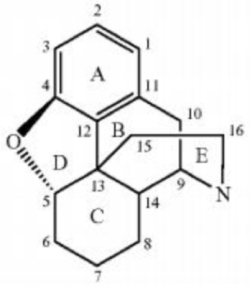
    The case arose in ANDA litigation over Mallinckrodt's U.S. Patent No. 8,871,779 licensed to Endo; the asserted claims were directed to methods for making morphinan-6-one products having low levels of α,β unsaturated ketones; relevant pharmaceuticals have the generic structure:

    Structure 1
    wherein the ketone is present at position 6 of the C ring and the α and β positions are numbered 7 and 8 in the formula, respectively.  Prior art methods of making such compounds resulted in deleterious impurities wherein the α and β positions were unsaturated, i.e., retaining "double bonds between the α and β carbon atoms" despite undergoing catalytic hydrogenation to reduce them.  Treatment of these compounds with heat in the presence of a sulfur-containing compound, according to the specification of the '779 patent, reduced these impurities to "acceptable levels" (less than 0.5%).  The asserted claims were set forth in the opinion as follows:

    1.  A hydrochloride salt of oxymorphone comprising less than 0.001% of 14-hydroxymorphinone.

    2.  The hydrochloride salt of claim 1 comprising less than 0.0005% of 14-hydroxymorphinone.

    3.  A pharmaceutical acceptable form comprising the oxymorphone hydrochloride according to claim 1.

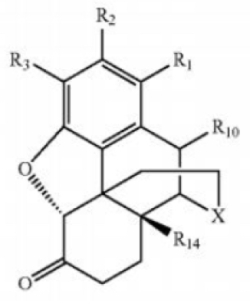
    4.  A hydrochloride salt of a morphinan-6-one com-pound corresponding to Formula (2):

    Structure 2comprising less than 0.001% measured by [high performance liquid chromatography] of [a compound] corresponding to Formula (3):

    Structure 3
    wherein the morphinan-6-one compound is oxymorphone and wherein X is —N(R17)—;
    R1 and R2 are hydrogen;
    R3 is hydroxy;
    R10 is hydrogen;
    R14 is hydroxy; and
    R17 is methyl.

    5.  The hydrochloride salt of claim 4 comprising less than 0.0005% of 14-hydroxymorphinone.

    6.  A pharmaceutical formulation comprising the oxymorphone hydrochloride according to claim 4.

    Defendants asserted three prior art references in support of their invalidity arguments.  The Weiss reference, a 1957 scientific publication, disclosed the use of catalytic hydrogenation to produce oxymorphone, a compound falling within the scope of the asserted claims that specifically addresses reducing α,β unsaturated ketones.  The Chapman reference, U.S. Patent Application Publication No. 2005/0222188, disclosed catalytic hydrogenation to reduce α,β unsaturated ketones of oxycodone into a salt form of the drug.  Finally, the Rapoport reference, a 1967 scientific publication, disclosed a process employing bisulfite addition to convert α,β unsaturated oxycodone to saturated oxycodone that uses solubility differences to separate the unsaturated from the saturated forms of the drug.  None of these references were sufficient to convince the District Court, which found that Actavis and the other Defendants did not prove by clear and convincing evidence that the claims were invalid under either §§ 102 or 103.  This appeal followed.

    The Federal Circuit affirmed, in an opinion by Judge Wallach joined by Judge Clevenger over Judge Stoll's dissent.  The majority first addressed the District Court's claim construction regarding the claim term "14-hydroxymorphinone" which Defendants argued was error, and then their argument that the District Court erred in its nonobviousness determination.  The District Court in this case relied on both intrinsic evidence (here, the claim language and specification) and extrinsic evidence (expert testimony from both plaintiff and defendants experts) in construing the term "14-hydroxymorphinone" to mean "14-hydroxymorphinone hydrochloride," i.e., the salt form of the drug.  Actavis and the other Defendants argued that the District Court should have interpreted the term using its plain meaning; the Federal Circuit majority disagreed.  According to the opinion, claims 1 and 2 expressly recite the hydrochloride salt of the drug, and claim 3 (dependent on claim 1) sets forth the structure instead of using the term "14-hydroxy-morphinone"; the remaining claims are consistent with the interpretation that the asserted claims only recite "14-hydroxy-morphinone" "as part of the salt-, or hydrochloride-, form of the claimed compounds" (emphasis in opinion).  Accordingly, the plain meaning of the claim language is consistent with the District Court's interpretation of the term "14-hydroxymorphinone" to mean "14-hydroxymorphinone hydrochloride."

    With regard to the specification, the panel majority found an express example (Example 3) that refers to the reaction(s) producing the claimed compounds as involving the hydrochloride salt of the drug.  Taken as a whole, however, the panel held that the use of the term in the "broader specification [was] relatively unsupportive of either proffered construction."  (In a footnote, the opinion explained that "neither the parties nor we have identified anything in the prosecution history that further elucidates the proper construction of this limitation.")

    Regarding the extrinsic evidence, the opinion cites admissions by Defendants' expert conceding that a person of ordinary skill would have understood that Example 3 described a reaction using the salt form of the drug.  As a consequence of these analyses, the Federal Circuit held that the District Court had not erred in construing the claim term "14-hydroxymorphinone" to mean "14-hydroxy-morphinone hydrochloride."

    Turning to the District Court's determination that Defendants had not carried their burden of establishing obviousness by clear and convincing evidence (the opinion explaining that the anticipation argument required the panel to agree with Defendants' construction and thus its decision to the contrary obviated the need to address this argument on appeal), the panel majority held that the District Court did not clearly err in finding that the skilled worker would not have had a reasonable expectation of success in achieving the claimed invention by combining the asserted prior art.  Specifically, the District Court held that the combination of the teachings of the Chapman reference to the reaction described in the Weiss reference would not satisfy the reasonable expectation requirement for establishing obviousness.  Additionally, the Rapoport reference did not teach that bisulfite could be used to reduce the unsaturated impurities known to exist in prior art synthetic method.  The panel majority held that the absence of "key reaction conditions" (according to Endo's expert) in the cited art as well as the absence of "purification to the degree claimed" in the '779 patent (according to testimony by both Endo's and Actavis's experts) supported the District Court's conclusion that Defendants failed to establish obviousness.  The opinion also credits the District Court's assessment of the Rapoport reference as not providing a reasonable expectation of success in using bisulfite treatment to remove oxycodone impurities that could achieve the purity levels claimed in the '779 patent, based on expert testimony.

    In an interesting footnote, the panel majority also described confidential communications from the Food and Drug Administration to opioid drug manufacturers that 1) were not public, and 2) did not disclose any methods for achieving reduced unsaturated contaminants that the panel majority (contrary to the District Court) determined were relevant to the obviousness inquiry.  Ultimately, the majority held that these communications were insufficient to satisfy the reasonable expectation of success needed for an obviousness determination, because inter alia, "the FDA communications recite a goal without teaching how the goal is attained" and "these communications would not have been enough to overcome the disclosures of Weiss, Chapman, and Rapoport, which indicate that a PHOSITA would not reasonably believe their disclosed methods were fruitful avenues to achieve the FDA-mandated oxymorphone purity level."  This conclusion was supported by testimony from the '779 patent inventors regarding the "extensive experimentation, involving much failure, [required] to ultimately produce [] oxymorphone" having the claimed purity levels with regard to α,β unsaturated ketone impurities.

    Judge Stoll dissented, based on the FDA's regulatory requirements which, in her view, set forth "every limitation of claim 1" of the '779 patent.  The District Court further erred in her opinion by "imposing a requirement that a reference must teach how to solve a problem to provide a motivation to combine, conflating enablement and reasonable expectation of success requirements with motivation" (emphasis in opinion).  And finally, Judge Stoll found error in the District Court "appl[ying] an erroneously heightened standard for reasonable expectation of success by requiring a 'definitive solution' and proof of actual success."  The Judge in her dissent acknowledged the deference due a district court's factual findings, but "such deference is not due where the trial court applies the incorrect standard to arrive at those findings."  After setting forth her reasoning concerning the District Court's errors in applying the standards for making a proper obviousness determination, Judge Stoll concluded by stating:

    This is not a typical Hatch-Waxman case where the patentee provided the public with a new drug, formulation, or manufacturing process.  While Mallinckrodt's patent specification is directed to a specific process for achieving the FDA's objective, Mallinckrodt did not claim that process.  Mallinckrodt instead claimed the FDA mandate.  The FDA sought to make oxymorphone safer for the public and Mallinckrodt took advantage by claiming the directive itself, securing exclusive rights to a drug first approved in 1959.  This is not the type of innovation that the patent system and the obviousness standard were designed to protect.

    Endo Pharmaceuticals Inc. v. Actavis LLC (Fed. Cir 2019)
    Panel: Circuit Judges Wallach, Clevenger, and Stoll
    Opinion by Circuit Judge Wallach; dissenting opinion by Circuit Judge Stoll

  • By Donald Zuhn

    USPTO SealIn a notice published in the Federal Register (84 Fed. Reg. 17809) on April 26, the U.S. Patent and Trademark Office invited the public to provide comments and attend public hearings on the participation of women, minorities, and veterans in entrepreneurship activities and the patent system.  The Office intends to use the information it receives to prepare a study as required by the Study of Underrepresented Classes Chasing Engineering and Science (SUCCESS) Act.

    The SUCCESS Act (Public Law No. 115-273), which was enacted on October 31, 2018, directs the Under Secretary of Commerce for Intellectual Property and Director of the USPTO, in consultation with the Administrator of the U.S. Small Business Administration (SBA), to study and report to Congress on the number of patents applied for and obtained: (1) by women, minorities, and veterans; and (2) by small businesses owned by women, minorities, and veterans, as well as provide legislative recommendations to increase the number of women, minorities, and veterans who participate in entrepreneurship activities and apply for patents.  The USPTO's report must be submitted to Congress no later than October 31, 2019.  (The SUCCESS Act also amended the Leahy-Smith America Invents Act to extend the authority of the USPTO to set and adjust patent fees by eight years.)

    As part of the Office's information gathering process, the Office will be holding three public hearings.  The first public hearing will be held in Alexandria, VA, on May 8, 2019 from 9 am to 4 pm (EST); the second public hearing will be held in Detroit, MI, on May 16, 2019 from 9 am to 4 pm (EST); and the third public hearing will be held in San Jose, CA, on June 3, 2019 from 9 am to 4 pm (PST).  The public hearings will also be available via webcast, with information about the webcast to be posted here prior to the public hearing.

    Although the deadline to request an opportunity to give oral testimony at the hearings has passed, the Office is also requesting that the public provide written comments.  The deadline for submitting written comments is June 30, 2019.  Written comments, which should be identified as concerning the "SUCCESS Act Study," should be sent by email to successact@uspto.gov, or by regular mail addressed to Office of the Chief Economist, Mail Stop OPIA, Director of the U.S. Patent and Trademark Office, P.O. Box 1450, Alexandria, VA 22313-1450.  According to the Office's notice, the Office is seeking public comment on, inter alia, the following questions:

    (1) What public data are available to identify the number of patents applied for and obtained by women, minorities and veterans?

    (2) What public data are available to assess the social and private benefits that result from increasing the number of patents applied for and obtained by women, minorities, and veterans, as well as small businesses owned by these groups?

    (3) What social and private benefits would you identify as resulting from increasing the number of patents applied for and obtained by women, minorities, and veterans?

    (4) What social and private benefits to small businesses owned by women, minorities, and veterans would you identify as resulting from increasing the number of patents applied for and obtained by those businesses?

    (5) Should the USPTO collect demographic information on patent inventors at the time of patent application, and why?

    (6) To what extent, if at all, do educational and professional circumstances affect the ability of women, minorities, and veterans to apply for and obtain patents or to pursue entrepreneurial activities?

    (7) To what extent, if at all, do socioeconomic factors facilitate or hinder the ability of women, minorities, and veterans to apply for and obtain patents or to pursue entrepreneurial activities?

    (8) What entities or institutions, if any, should or should not play an active role in promoting the participation of women, minorities, and veterans in the patent system and entrepreneurial activities?

    (9) What public policies, if any, should the Federal Government explore in order to promote the participation of women, minorities, and veterans in the patent system and entrepreneurial activities?  Are there any public policies that the Federal Government should not explore?

    (10) What action could USPTO take to address the participation of women, minorities, and veterans in the patent system and entrepreneurial activities?

    (11) Are there policies, programs, or other targeted activities shown to be effective at recruiting and retaining women, minorities, and veterans in innovative and entrepreneurial activities?  Are there policies, programs, or other targeted activities that have proved ineffective?

  • CalendarMay 7-9, 2019 – Patent Fundamentals Bootcamp 2019: An Introduction to Patent Drafting, Prosecution, and Litigation (Practising Law Institute) – Chicago, IL

    May 8, 2019 – Biotechnology/chemical/pharmaceutical (BCP) customer partnership meeting (U.S. Patent and Trademark Office) – Alexandria, VA, and Detroit, MI

    May 9, 2019 – "AI: Protecting Inventions in China, Europe and the U.S." (Intellectual Property Owners Association) – 2:00 to 3:00 pm (ET).

    May 10, 2019 – "ITC Practice—What Every IP Attorney and In-House Counsel Should Know" (John Marshall Law School Center for Intellectual Property, Information & Privacy Law) – 9:00 am to 4:30 pm, Chicago, IL

    May 16-17, 2019 – Advanced Summit on Life Sciences Patents (American Conference Institute) – New York, NY

    June 12-14, 2019 – Patent Fundamentals Bootcamp 2019: An Introduction to Patent Drafting, Prosecution, and Litigation (Practising Law Institute) – Chicago, IL

    July 17-19, 2019 – Patent Fundamentals Bootcamp 2019: An Introduction to Patent Drafting, Prosecution, and Litigation (Practising Law Institute) – San Francisco, CA

  • USPTO Building FacadeThe U.S. Patent and Trademark Office will be holding its next biotechnology/chemical/pharmaceutical (BCP) customer partnership meeting on May 8, 2019 at the USPTO Headquarters in Alexandria, VA, and the Midwest Regional Office in Detroit, MI.  The agenda for the meeting is as follows:

    • Welcoming and Opening Remarks (9:00 – 9:20 am EDT) — Damian Porcari, Director, Midwest Regional Office, and Andrew Wang, Gary Jones, and Daniel Sullivan, Directors, TC1600, USPTO

    • TC quality action plan (9:20 – 9:50 am) — Anne Gussow, QAS, TC1600, USPTO

    • Antibody decisions and the written description requirement (9:50 – 10:30 am) — Lora Driscoll, QAS, TC1600, USPTO

    • Break (10:30 am – 10:40 am)

    • Subject matter eligibility (35 U.S.C. § 101) – 2019 patent subject matter eligibility guidance (PEG) update (10:40 – 11:30 am) — Marjorie Moran, SPE, TC1600, USPTO

    • Lunch (11:30 am – 12:30 pm)

    • Subject matter eligibility (101) outside perspectives (12:30 – 1:20 pm) — Kathleen E. Chaffee, Patent Agent, Office of Technology Management, Washington University

    • 101 discussion panel (1:20 – 2:50 pm) — Andrew Wang, Director, TC1600 (moderator), Beverly A. Lyman, Chief Intellectual Property Counsel, Indiana University; Duane C. Marks, Patent Counsel, Bio-Products, Eli Lilly and Company; June Cohan, Senior Legal Advisor, OPLA; Marjorie Moran, SPE, TC1600

    • Break (2:50 – 3:00 pm)

    • Global Dossier (3:00 – 3:30 pm) — Nelson Yang, Acting Director, IPBS, OIPC

    • Cooperative Patent Classification (CPC) application in biotechnology (3:30 – 3:50 pm) — Melenie Gordon, SPE, TC1600 and Sue Liu, SPE, TC1600

    • Closing Remarks (3:50 – 4:00 pm) – Directors, TC1600, USPTO

    Additional information regarding the BCP customer partnership meeting, including registration information for those wishing to attend the meeting or register for online participation, can be found here.

  • IPO #2The Intellectual Property Owners Association (IPO) will offer a one-hour webinar entitled "AI: Protecting Inventions in China, Europe and the U.S." on May 9, 2019 from 2:00 to 3:00 pm (ET).  Jessica Meyers of Microsoft, Andreas Holzwarth-Rochford of Jones Day, and Roger Shang of Alibaba will address how to approach the challenge of obtaining Artificial Intelligence (AI) patent protection in three major jurisdictions, as well considering when the alternative of trade secret protection could be a better course to take, and consider various litigation scenarios, including the ongoing dispute in China between Zhizhen Network Technology and Apple that relates to Apple's Siri voice assistant app. The panel will use claim sets for actual AI inventions to compare and contrast patent law and practice among the three jurisdictions in two key areas for AI:

    • Patent eligibility, including the impact of the new USPTO guidelines put forth in January, and
    • Written description, enablement, and functional claiming.

    The registration fee for the webinar is $135 (government and academic rates are available upon request).  Those interested in registering for the webinar can do so here.

  • By Donald Zuhn

    District Court for the District of DelawareLast month, in Bio-Rad Laboratories, Inc. v. 10X Genomics, Inc., District Judge Richard G. Andrews of the U.S. District Court for the District of Delaware denied a motion to dismiss and/or strike filed by Defendant 10X Genomics, finding that U.S. Patent Nos. 9,562,837 and 9,896,722 were not directed to patent-ineligible subject matter under 35 U.S.C. § 101.  The '837 and '722 patents, which are assigned to Plaintiff Bio-Rad Laboratories, are directed to assemblies and methods for handling samples in a way that reduces sample contamination and sample loss.  Asserted claim 1 of the '837 patent recites:

    1.  An assembly, the assembly comprising:
        a microchannel in a horizontal plane;
        at least one droplet formation module comprising a sample inlet, an immiscible fluid inlet, and a junction, wherein the junction is located between the sample inlet and the microchannel and the droplet formation module is configured to produce droplets comprising the sample surrounded by the immiscible fluid; and
        at least one downstream separation chamber comprising a droplet receiving chamber inlet and at least one droplet receiving outlet, wherein the separation chamber is upright to the microchannel and out of the horizontal plane;
        wherein the droplet formation module and the separation chamber are in fluid communication with each other via the microchannel; and wherein the separation chamber has a wider cross-section than the microchannel cross-section to accumulate a plurality of droplets comprising the sample and is of a volume sufficient to separate the plurality of droplets comprising the sample from the immiscible fluid within the separation chamber.

    Asserted claim 1 of the '722 patent recites:

    1.  A method of reducing contamination associated with sample handling, comprising:
        providing an aqueous fluid comprising a sample through a sample inlet;
        providing an immiscible fluid flowing through a main channel that is in fluidic communication with the sample inlet, wherein the main channel is in a horizontal plane;
        partitioning the aqueous fluid with the immiscible fluid to form a plurality of droplets in the main channel, wherein at least one droplet comprises a sample;
        flowing the droplets toward a downstream separation chamber that is in fluidic communication with the main channel,
        wherein the separation chamber has a wider cross-section than the main channel cross-section and the separation chamber is disposed perpendicular to the main channel; and
        separating the plurality of droplets from the immiscible fluid in the separation chamber based on the different densities of the droplets and the immiscible fluid.

    Bio-Rad initiated the dispute between the parties by filing a complaint against 10X Genomics for infringement of claim 1 of the '837 patent and claim 1 of the '722 patent.  10X Genomics responded by filing a motion to dismiss under Federal Rule of Civil Procedure 12(b)(6) for lack of patent eligibility under 35 U.S.C. § 101, or in the alternative, to dismiss and/or strike under Rules 12(b)(6) and/or 12(f) for failure to state a claim of induced, contributory, or willful infringement.

    With respect to patent eligibility, Judge Andrews noted that the framework laid out in Mayo Collaborative Servs. v. Prometheus Labs., Inc., 566 U.S. 66 (2012), "for distinguishing patents that claim laws of nature, natural phenomena, and abstract ideas from those that claim patent-eligible applications of those concepts" was reaffirmed by the Supreme Court in Alice Corp. Pty. v. CLS Bank Int'l, 573 U.S. 208 (2014).  In describing that framework, Judge Andrews explained that:

    First, the court must determine whether the claims are drawn to a patent-ineligible concept.  If the answer is yes, the court must look to "the elements of the claim both individually and as an 'ordered combination"' to see if there is an '"inventive concept'––i.e., an element or combination of elements that is 'sufficient to ensure that the patent in practice amounts to significantly more than a patent upon the [ineligible concept] itself."' [citations omitted]

    With respect to its motion to dismiss for lack of patent eligibility, 10X Genomics argued that the asserted patents are directed to "the natural phenomenon of allowing two different liquids of different densities to separate from each other."  Bio-Rad responded that the asserted patents are directed to the patent-eligible result of a method and apparatus to reduce sample contamination when handling samples.

    Applying the Mayo/Alice framework to the asserted patents, Judge Andrews agreed with Bio-Rad, finding that "[t]he Asserted Patents claim methods and an assembly designed to reduce contamination when handling samples," and that 10X Genomics' argument that the claims are directed to the natural phenomenon of allowing two different liquids of different densities to separate from each other "improperly oversimplifies the claims by reducing them to a single claim element."  Judge Andrews explained that "[w]hile the claims certainly utilize the separation of liquids with different densities to effect the desired outcome, this is insufficient to determine that the claims are wholly directed to a patent ineligible concept," adding that "here, '[t]he end result of the [] claims is not simply an observation or detection of the ability' of liquids to separate by density" (quoting Rapid Lit. Mgmt. Ltd. v. CellzDirect, Inc., 827 F.3d 1042, 1048 (Fed. Cir. 2016)).  Judge Andrews noted that "[t]he Federal Circuit has continued to endorse this distinction in recent cases" citing as examples the Federal Circuit's decisions in Athena Diagnostics, Inc. v. Mayo Collaborative Servs., LLC and Endo Pharms., Inc. v. Teva Pharms. USA, Inc. Finding that the recited steps and assembly of the asserted claims achieve an improved way of handling samples that reduces the sample contamination that would otherwise occur, Judge Andrews determined that the asserted patents are not directed to patent-ineligible subject matter under 35 U.S.C. § 101.

    Judge Andrews also denied 10X Genomics' motion to dismiss and/or strike portions of Bio-Rad's prayer for relief, finding that "Plaintiff's complaint merely preserves a broad range of potential remedies by requesting relief that could be granted, depending on the facts as ultimately proven."  Judge Andrews therefore denied 10X Genomics' motion to dismiss and/or strike.

    Bio-Rad Laboratories, Inc. v. 10X Genomics, Inc. (D. Del. 2019)
    Memorandum Order by District Judge Andrews

  • By Donald Zuhn

    Federal Circuit SealLast week, in Neptune Generics, LLC v. Eli Lilly & Co., the Federal Circuit affirmed a determination by the U.S. Patent and Trademark Office Patent Trial and Appeal Board in an inter partes review that claims 1-22 of U.S. Patent No. 7,772,209 were not unpatentable for obviousness.  In affirming the Board's decision, the Federal Circuit found that the Board did not err in conducting its obviousness analysis and that substantial evidence supported the Board's factual findings.  The Federal Circuit also noted that the issue of subject matter eligibility was not properly before the Court.

    The '209 patent, which is owned by Eli Lilly & Co., is directed to methods of administering folic acid and a methylmalonic acid ("MMA") lowering agent, such as vitamin B12, before administering pemetrexed disodium, a chemotherapy agent, in order to reduce the toxic effects of pemetrexed, an antifolate.  Antifolates slow the ability of cells to divide by inhibiting enzymes that the cells use to make the components of DNA and RNA, but as a result, also have toxic effects that can be life threatening.  The two independent claims of the '209 patent recite:

    1.  A method for administering pemetrexed disodium to a patient in need thereof comprising administering an effective amount of folic acid and an effective amount of a methylmalonic acid lowering agent followed by administering an effective amount of pemetrexed disodium, wherein the methylmalonic acid lowering agent is selected from the group consisting of vitamin B12, hydroxycobalamin, cyano-10-chlorocobalamin, aquocobalamin perchlorate, aquo-10-cobalamin perchlorate, azidocobalamin, cobalamin, cyanocobalamin, or chlorocobalamin.

    12.  An improved method for administering pemetrexed disodium to a patient in need of chemotherapeutic treatment, wherein the improvement comprises:
        a)  administration of between about 350 μg and about 1000 μg of folic acid prior to the first administration of pemetrexed disodium;
        b)  administration of about 500 μg to about 1500 μg of vitamin B12, prior to the first administration of pemetrexed disodium; and
        c)  administration of pemetrexed disodium.

    Three petitions seeking inter partes review of the '209 patent were filed by Appellants Neptune Generics, LLC; Fresenius Kabi USA, LLC; and Mylan Laboratories Ltd.  The first petition asserted that claims 1–22 of the '209 patent are obvious in view of a 1999 article by Hilary Calvert, a 1998 abstract by Niyikiza et al. ("Niyikiza I"), a 1998 article by Worzalla et al., European Patent Application No. 0 595 005 A1 ("EP005"), and U.S. Patent No. 5,217,974.  The second petition asserted that the claims of the '209 patent are obvious in view of Niyikiza I, the '974 patent, and EP005.  The third petition asserted that the claims of the '209 patent are obvious over a 1999 article by Rusthoven et al. and EP005.  In the IPRs that were instituted, the Board concluded that the claims of the '209 patent were not established to be unpatentable for obviousness.  In particular, the Board concluded that while it was known in the art that pretreatment with folic acid reduces the toxicity associated with administration of an antifolate, like pemetrexed, there was no reason to also pretreat with vitamin B12 before administering pemetrexed to treat cancer.  The Board also found that the skepticism of others, particularly the FDA, supported a conclusion of nonobviousness.

    On appeal, Appellants focused on three references:  Niyikiza I, EP005, and another abstract by Niyikiza et al. ("Niyikiza II").  With respect to EP005, Appellants argued that the Board did not consider all that this reference teaches in finding that that the skilled artisan would not have been motivated to administer an MMA lowering agent, such as vitamin B12, in addition to folic acid.  In particular, Appellants argued that EP005 discloses administration of folic acid and vitamin B12 to lower homocysteine levels for all purposes.  The Federal Circuit, however, found that substantial evidence supported the Board's findings.  In particular, the Court determined that substantial evidence supported the Board's findings that elevated levels of homocysteine were known to be predictive of pemetrexed toxicity and elevated levels of MMA were understood not to be predictive of pemetrexed toxicity, that a skilled artisan would have understood that there was no observed correlation between vitamin B12 deficiency and pemetrexed-induced toxicity, and therefore, that the prior art did not provide a motivation for a skilled artisan to administer an MMA lowering agent, such as vitamin B12, in addition to folic acid.  With respect to EP005, the Federal Circuit pointed out that the Board had determined that this reference was concerned with the cardiovascular effects associated with elevated homocysteine levels, does not discuss antifolates generally, and only generally mentions certain cancers, explaining that "[g]iven the contrast between the specific, directly applicable teachings of Niyikiza II and the tangential, general statements of EP005, substantial evidence supports the Board's finding that EP005 did not provide information as to how pretreatment with folic acid and vitamin B12 would impact toxicity effects."

    Appellants also argued that the Board erred by not considering statements made by Lilly to the FDA concerning clinical trials of pemetrexed.  In particular, Appellants argued that Lilly had "inform[ed] the FDA that the prior art suggested that pretreating with folic acid and B12 was a no-risk, predictable way to lower pemetrexed-induced fatalities by lowering pretreatment homocysteine levels," and that Lilly's statements reflected the background knowledge of the skilled artisan and were indicators of the level of ordinary skill in the art.  In concluding that the Board did not err in declining to read the cited references in view of Lilly's statements to the FDA, the Federal Circuit noted that the statements were made more than five months after the critical date, and "[a]s the Board found, the views Lilly expressed about the prior art references in its communications are made through the lens of what they had invented."

    In finding that claims 1-22 of the '209 patent were not unpatentable for obviousness, the Board determined that the evidence of skepticism of others, particularly the FDA, supported a conclusion of nonobviousness.  During clinical trials for pemetrexed, in which a number of fatalities had occurred, Lilly recommended to the FDA that pemetrexed administration be supplemented with folic acid and vitamin B12, and the FDA responded that it did not support adding vitamins to the ongoing trial because the addition of vitamins was "risky."  Appellants argued that the Board erred in finding this evidence to be sufficient to support a finding of skepticism because the FDA allowed the trial to continue, and skepticism must be premised on whether it is "technically infeasible," "unworkable," or "impossible" that the claimed subject matter would work for its intended purpose.  The Federal Circuit, however, disagreed with Appellants, stating that their "position is not consistent with our caselaw, which recognizes a range of third-party opinion that can constitute skepticism," and finding that "[w]hile evidence that third parties thought the invention was impossible might be entitled to more weight, that does not mean the Board erred in giving weight to the skepticism evidence here."  The Federal Circuit therefore determined that the Board did not err in finding that skepticism supported a conclusion of nonobviousness.

    Finally, with respect to Appellants' argument that the claims are not directed to patentable subject matter (asserting that the issue was properly raised because eligibility is a question of law and that there were no factual issues that must be decided in the appeal), the Federal Circuit noted that the ground of patent eligibility arises under § 101, and therefore, that the Court was precluded from addressing the issue on appeal of an IPR.  The Federal Circuit therefore affirmed the Board's determination that claims 1-22 of the '209 patent were not unpatentable for obviousness.

    Neptune Generics, LLC v. Eli Lilly & Co. (Fed. Cir. 2019)
    Panel: Circuit Judges Moore, Wallach, and Hughes
    Opinion by Circuit Judge Moore

  • By Kevin E. Noonan

    U.S. Trade RepresentativeOn April 25th, Ambassador Robert Lighthizer, U.S. Trade Representative (USTR), issued the 2019 Special 301 Report.  In a press release, the USTR stated that "over the coming weeks, USTR will review the developments against the benchmarks established in the Special 301 action plans for countries that have been on the Priority Watch List for multiple years," and that for those countries found not to have addressed the concerns expressed by and attendant to placement on these lists, "USTR will take appropriate actions, such as enforcement actions under Section 301 of the Trade Act or pursuant to World Trade Organization or other trade agreement dispute settlement procedures, necessary to combat unfair trade practices and to ensure that trading partners follow through with their international commitments."

    According to the Executive Summary of the Report, "[a] top trade priority for the Administration is to use all possible sources of leverage to encourage other countries to open their markets to U.S. exports of goods and services, and provide adequate and effective protection and enforcement of U.S. intellectual property (IP) rights."  In tune with the more combative rhetoric on trade adopted by the Trump Administration, the Summary goes on to add that:

    This Report provides an opportunity to call out foreign countries and expose the laws, policies, and practices that fail to provide adequate and effective IP protection and enforcement for U.S. inventors, creators, brands, manufacturers, and service providers.  The identification of the countries and IP-related market access barriers in the Report and of steps necessary to address those barriers are a critical component of the Administration's aggressive efforts to defend Americans from harmful IP-related trade barriers.

    The Report cites four countries for particular consideration upon being placed on the Priority Watch List.  Regarding China, the Report characterizes placement on the list because in the Administration's view China needs "fundamental structural changes to strengthen IP protection and enforcement, including as to trade secret theft, online piracy and counterfeiting, the high-volume manufacture and export of counterfeit goods, and impediments to pharmaceutical innovation."  India is cited for "lack of sufficient measurable improvements to its IP framework on long-standing and new challenges that have negatively affected U.S. right holders over the past year," which include ones that "make it difficult for innovators to receive and maintain patents in India, particularly for pharmaceuticals, insufficient enforcement actions, copyright policies that do not properly incentivize the creation and commercialization of content, and an outdated and insufficient trade secrets legal framework."  Saudi Arabia was moved from the Watch List to the Priority Watch List this year, according to the Report, "for failing to address longstanding IP concerns and further deteriorating IP protection and enforcement within its borders" and specifically cites, "lack of IP protection for innovative pharmaceutical products, including the lack of adequate and effective protection against unfair commercial use, as well as unauthorized disclosure, of undisclosed test or other data generated to obtain marketing approval" and "rampant satellite and online piracy made available by illicit pirate service BeoutQ."  The Report highlights the deficiencies of Indonesia as a trading partner less particularly, merely citing a "reported lack of adequate and effective IP protection and enforcement" (presumably from comments received from particular constituencies who have done the "reporting" to the Administration).

    The Report is promulgated pursuant to Section 182 of the Trade Act of 1974, as amended by the Omnibus Trade and Competitiveness Act of 1988 and the Uruguay Round Agreements Act (enacted in 1994).  The Trade Representative is required under the Act to "identify those countries that deny adequate and effective protection for IPR or deny fair and equitable market access for persons that rely on intellectual property protection."  The Trade Representative has implemented these provisions by creating a "Priority Watch List" and "Watch List."  Placing a country on the Priority Watch List or Watch List is used to indicate that the country exhibits "particular problems . . . with respect to IPR protection, enforcement, or market access for persons relying on intellectual property."  These watch lists are reserved for countries having "the most onerous or egregious acts, policies, or practices and whose acts, policies, or practices have the greatest adverse impact (actual or potential) on the relevant U.S. products."

    The USTR reviewed "more than 100" of this country's trading partners and identified eleven countries on a "Priority Watch List" (increased by one from last year) and another 25 countries on the "Watch List" (also increasing by one from last year), all relating to deficiencies in intellectual property protection in these countries.  The Priority Watch List in the 2019 Report includes Algeria, Argentina, Chile, China, India, Indonesia, Kuwait, Russia, Saudi Arabia, Ukraine, and Venezuela, and removes Canada and Thailand from the list cited in the 2018 Report.  Countries on this list "present the most significant concerns this year regarding insufficient IP protection or enforcement or actions that otherwise limited market access for persons relying on intellectual property protection."  On the Watch List this year are Barbados, Bolivia, Brazil, Canada, Columbia, Costa Rica, Dominican Republic, Ecuador, Egypt, Greece, Guatemala, Jamaica, Lebanon, Mexico, Pakistan, Paraguay, Peru, Romania, Switzerland, Thailand, Turkey, Turkmenistan, United Arab Emirates, Uzbekistan, and Vietnam.  Canada, Thailand, and the United Arab Emirates were added, and Saudi Arabia was moved to the Priority Watch List this year.

    The Report also notes the USTR's continued efforts to enhance public engagement.  In addition to written comments (from 73 interested parties, including 25 trading partner governments), there was a public hearing on February 27, 2019 that heard testimony from "representatives of foreign governments, industry, and non-governmental organizations" (where the comments and a transcript and video of the hearing are available on the USTR website).

    The Report states that "[i]n virtually all countries identified in this Report, IP enforcement is lacking," due to, inter alia, "[in]adequate or effective border enforcement against counterfeit and pirated goods" (Brazil, China, Colombia, Hong Kong, India, Indonesia, Nigeria, Paraguay, Singapore, Thailand, Turkey, the UAE, and Vietnam), and that in such countries "customs officials lack authority to take ex officio action to seize and destroy such goods at the border or to take such action for goods in-transit."

    Particularly mentioned are copyright issues, including piracy (Argentina, Bulgaria, Canada, Chile, China, Colombia, Greece, India, Mexico, the Netherlands, Romania, Russia, Saudi Arabia, Switzerland, Ukraine, "and elsewhere") and unlicensed government use of copyrighted software (Argentina, Brazil, China, Costa Rica, Egypt, Greece, Indonesia, Kenya, Mexico, Nigeria, the Philippines, Romania, Russia, Thailand, and Vietnam).

    The Report also cites "restrictive patentability criteria" (Argentina, India, and Indonesia) and "a lack of effective protection against unfair commercial use, as well as unauthorized disclosure, of test or other data generated to obtain marketing approval for pharmaceutical and agricultural chemical products" (Argentina, China, India, and Saudi Arabia).

    As it did last year, the Report also chides India and China for inadequate trade secret protection, which puts "U.S. trade secrets at unnecessary risk" and "negative market access effects" from the European Union's geographical indications (GIs) protections.

    Somewhat paradoxically, this portion of the Report ends by stating that "the Office of the U.S. Trade Representative looks forward to working closely with the trading partners identified in this year's Report to address these and other priority concerns."

    Results of 2018 "Out of Cycle" reviews discussed in the Report (which "provide an opportunity to address and remedy such issues through heightened engagement and cooperation with trading partners and other stakeholders") include Columbia, which "made meaningful progress in enacting copyright reform legislation to meet CTPA obligations and is actively engaging stakeholders on Internet service provider (ISP) liability to address another CTPA commitment."  Kuwait did not fare so well, the USTR determining that while this country has "made some progress," the issue that prompted the review "had not been resolved."  For Malaysia, despite "numerous consultations with a view to resolving outstanding issues," the USTR has decided to extend review in 2019, in order to "consider the extent to which Malaysia is providing adequate and effective IP protection and enforcement, including with respect to patents."

    The Report contains two Sections (on "Developments in Intellectual Property Rights Protection and Enforcement" and "Country Reports") and two Annexes on particular issues (the statutory bases of the Report, and government technical assistance and capacity building efforts).  In Section I, the Report reiterates its raison d'etre, that:

    Intellectual property (IP) infringement, including patent infringement, trademark counterfeiting, copyright piracy, and trade secret theft, causes significant financial losses for right holders and legitimate businesses around the world.  IP infringement undermines U.S. competitive advantages in innovation and creativity, to the detriment of American businesses and workers.  In its most pernicious forms, IP infringement endangers the public, such as through exposure to health and safety risks from counterfeit products such as semiconductors, automobile parts, apparel, footwear, toys, and medicines.  In addition, trade in counterfeit and pirated products often fuels cross-border organized criminal networks and hinders sustainable economic development in many countries.  Fostering innovation and creativity is essential to U.S. economic growth, competitiveness, and the estimated 45 million American jobs that directly or indirectly rely on IP-intensive industries.  USTR continues to work to protect American innovation and creativity in foreign markets employing all the tools of U.S. trade policy, including the annual Special 301 Report.

    It then reviews "initiatives for strengthen IP protection and enforcement," which includes "examples of initiatives to strengthen IP protection and enforcement; illustrative best practices demonstrated by the United States and our trading partners; [and] U.S.-led initiatives in multilateral organizations; and bilateral and regional developments."  It also highlights areas of continued concern, including "counterfeits, online piracy, forced technology transfer, innovative pharmaceutical products and medical devices, and geographical indications (GIs)."  As in earlier years, it mentions how important IP protection is to innovations in the environmental sector.  Finally, Section I includes a discussion relating to "the importance of full implementation of the World Trade Organization (WTO) Agreement on Trade-Related Aspects of Intellectual Property Rights (TRIPS) and developments on the U.S. use of WTO dispute settlement procedures to resolve IP concerns."

    In a section entitled "IP Protection and Enforcement and Related Market Access Challenges," the Report discusses innovation in the pharmaceutical industry, medical devices and market access concerns.  In this regard, the Report states that "USTR has been engaging with trading partners to ensure that U.S. owners of IP have a full and fair opportunity to use and profit from their IP, including by promoting transparent and fair pricing and reimbursement systems."  These efforts have included "ensur[ing] robust IP systems; reduc[ing] market access barriers to pharmaceutical products and medical devices, including measures that discriminate against U.S. companies, are not adequately transparent, or do not offer sufficient opportunity for meaningful stakeholder engagement; and has pressed trading partners to appropriately recognize the value of innovative medicines and medical devices so that trading partners contribute their fair share to research and development of new treatments and cures" (echoing the "fair share" mantra recited by the President in stump speeches and tweets).  The Report calls out in this regard the following efforts in particular countries:

    • Canada and Mexico: in the context of renegotiating the North American Free Trade Agreement (NAFTA), secured strong IP provisions in the United States-Mexico-Canada Agreement (USMCA), including provisions that "ensure that national-level government processes for the listing and reimbursement of pharmaceutical products and medical devices are transparent, provide procedural fairness, are nondiscriminatory, and provide full market access for U.S. products";

    • Korea: as part of renegotiating the U.S.-Korea Free Trade Agreement (KORUS FTA), obtained a commitment to "amend its Premium Pricing Policy for Global Innovative Drugs" to "ensure fair and non-discriminatory treatment of pharmaceutical products";

    • Japan: engaged "to ensure transparency and fairness and address other concerns with respect to pharmaceutical and medical devices pricing and reimbursement policies";

    • China: "pressed" the Chinese on "a range of issues affecting the pharmaceutical sector, including on the need to implement an effective mechanism for the early resolution of potential patent disputes; provide effective protection against unfair commercial use, as well as unauthorized disclosure, of test or other data generated to obtain marketing approval for pharmaceutical products; and provide a reliable and effective means of extending the patent term to compensate for the marketing approval review period and for patent office delays";

    • India: engaged to secure "meaningful IP reforms on longstanding issues," which include patentability and compulsory licensing criteria, protection against unfair commercial use and unauthorized disclosure of test or other data generated to obtain marketing approval for pharmaceutical products;

    • Indonesia: "pressed" to resolve concerns regarding Indonesian patent law, including patentability criteria, compulsory licensing, and requirements for local manufacturing and use;

    • Argentina: "raised concerns" regarding (somewhat ironically) the scope of patentable subject matter, protection against unfair commercial use and, like in many emerging countries, unauthorized disclosure of "undisclosed test or other data generated to obtain marketing approval for pharmaceutical and agricultural chemical products";

    • Saudi Arabia: "engaged" (in view of transfer to the Priority Watch List, apparently somewhat unsuccessfully) regarding patent enforcement and protections against unfair commercial use, and also unauthorized disclosure of "undisclosed test or other data generated to obtain marketing approval for pharmaceutical products"; and

    • United Arab Emirates (UAE): sought (but did not receive?) confirmation that UAE will provide protection for pharmaceuticals through, inter alia, the Gulf Cooperation Council (GCC) patent system.

    Compulsory licensing again poses particular concerns with regard to pharmaceuticals and medical devices, according to the Report, because "[s]uch actions can undermine a patent holder's IP, reduce incentives to invest in research and development for new treatments and cures, unfairly shift the burden for funding such research and development to American patients and those in other markets that properly respect IP, and discourage the introduction of important new medicines into affected markets."  Even when compulsory licenses are justified they should be used in only "extremely limited circumstances" and only after attempting to negotiate with the rights holder; the Report cited these concerns particularly with Chile, Colombia, El Salvador, India, Indonesia, Malaysia, Russia, Turkey and Ukraine.

    More generally, the Report points to "non-transparent" and discriminatory practices and "unreasonable regulatory delay" as being of concern to the USTR and administration.  In contrast, national systems that accelerate approval based on regulatory in other countries are praised in the Report.

    The Report notes that stakeholders from the pharmaceutical and medical device industries have identified industries that have expressed concerns regarding the policies of several trading partners, including Algeria, Australia, Canada, China, Japan, Korea, New Zealand, and Turkey with regard to "issues related to pharmaceutical innovation and market access," citing specific examples falling within these general categories for each country.

    The Report next turns to technology transfer issues, including innovation by indigenous peoples and "localization."  In this portion of the Report, compulsory technology transfer is emphasized as causing difficulties for American innovators.  The Report identifies the anti-innovation cycle of imposing such measures to incentivize local innovation, which leads to create market entry barriers and thus discourages foreign (i.e., U.S.) investment, which not only hurts domestic industry in those countries but also can produce "non-market distortions" which in turn can lead to "suboptimal outcomes."  The Report sets forth a litany of these practices, including requirements for technology transfer as the price for regulatory or other governmental approval; permitting state-owned enterprises to seek "non-commercial terms" for IP licensing or otherwise; providing unfair competitive advantage to local industry (if only passively by permitting U.S. IP-rights infringement); permitting cyber-intrusions; giving preference to local products and services dependent on indigenous IP; "[m]anipulating" processes of standards to prefer local concerns; and conditioning regulatory approval or other governmental approvals on disclosure of confidential business information and then "failing to protect such information appropriately."  China, Indonesia, Nigeria, and Turkey are particularly cited for these concerns.

    Trade secret protection, or lack of it, is also a concern discussed in the Report.  It cites "growing need for trading partners to provide effective protection and enforcement of trade secrets" in "a wide variety of industry sectors, including 'ICT' [information and communications technologies], services, pharmaceuticals and medical devices, environmental technologies, and other manufacturing" areas.  The Report cites "various sources, including the U.S. Office of the National Counterintelligence Executive" for reporting these concerns, particularly with regard to China.  Trade secret theft can arise in "a variety of circumstances," including permitting (or not stopping) departing employees from taking with them trade secret information-containing electronic storage devices, failed joint ventures, cyber intrusion and computer hacking, misuse of trade secrets disclosed to government agencies as part of a regulatory approval process.  The Report notes particular difficulties in China and India regarding "effective remedies," or that (in some countries) government regulations or policies require disclosure of trade secrets such as software source code.  While asserting that "[t]he United States uses all trade tools available to ensure that its trading partners provide robust protection for trade secrets and enforce trade secrets laws," the Report cites on a positive note efforts by the European Union and Taiwan to strengthen their trade secret regimes. The USTR also "strongly supports" the work of the Organization for Economic Cooperation and Development (OECD)'s work on trade secret protection.

    The Report next addresses geographical indications (GIs) issues, saying that the U.S. "is working intensively through bilateral and multilateral channels" to improve U.S. access to a variety of goods having geographic specificity, particularly with regard to the European Union.  The EU GI "agenda remains highly concerning, because it significantly undermines the scope of trademarks and other IP rights held by U.S. producers and imposes barriers on market access for American-made goods that rely on the use of common names, such as parmesan or feta."  As a result, according to the Report, there are concerns "regarding the extent to which it impairs the scope of trademark protection," which (answering its own question) the Report states "undermines trademark protection and may result in consumer confusion to the extent that it permits the registration of GIs that are confusingly similar with prior trademarks."  The Report exemplifies these concerns regarding GI protection granted by the EU for a cheese called danbo, which the USTR states is made in many other countries but use of this name is restricted in the EU to particular (European) geographic source.  The Report asserts without characterization that the EU "pressures trading partners to prevent all producers, other than in certain EU regions, from using certain product names" (all of which relate to cheese, curiously), with as a consequence "American producers and traders either are effectively blocked from those markets or must adopt burdensome workarounds" (illustrated, unfortunately for the strength of the argument, by appending "-like" to the particular cheese name).  Part of the reason for U.S. concern is frankly admitted to be that "[t]he United States runs a significant deficit in food and agricultural trade with the EU," comparing $1 billion in cheese exports from the EU to the U.S. with $5 million in imports into the EU from the U.S.  More worrisome is the EU's extension of GI designations into other goods, including "non-agricultural products, including apparel, ceramics, glass, handicrafts, manufactured goods, minerals, salts, stones, and textiles."  Despite urging from the U.S., the EU amended its Common Agricultural Policy to pass much of the control over GIs to "interested EU Member States" (i.e., those in the protected geographical location) with an attendant "sharp[]" reduction in the period available to oppose a GI designation.  The Report also notes that the EU is pursuing its GI agenda in "multilateral and plurilateral bodies," including "expanding the World Intellectual Property Organization (WIPO) Lisbon Agreement for the Protection of Appellations of Origin and their International Registration to include GIs, thereby enshrining several detrimental aspects of EU law in that Agreement."  The Report characterizes these efforts as a "break with the long-standing WIPO practice of consensus-based decision-making" and consequently voted to "deny the United States and 160 other WIPO countries meaningful participation rights in the negotiations."

    The Report also notes that the U.S. response is to address the issue in so-called "free trade" agreements and bilateral agreements with other nations, including Argentina, Brazil, Canada, Chile, China, Colombia, Ecuador, Indonesia, Japan, Malaysia, Mexico, Morocco, Paraguay, the Philippines, Singapore, South Africa, Tunisia, Uruguay, and Vietnam.

    The Report next turns to online and broadcast piracy of copyrighted works, citing the "increased availability of broadband Internet connections around the world" as being a "boon" to the U.S economy and foreign trade.  But while advances in technology have enabled U.S. creative producers to better distribute copyrighted materials, it has also made the Internet "an extremely efficient vehicle for disseminating infringing content, thus competing unfairly with legitimate e-commerce and distribution services that copyright holders and online platforms use to deliver licensed content."  A variety of forms of this issue are discussed in the Report, which names China, India, Indonesia Mexico, Peru, Ukraine, and Vietnam for optical piracy; Canada, Mexico, the Netherlands, Saudi Arabia, Sweden, and Switzerland for "stream-ripping" (which is "the unauthorized converting of a file from a licensed streaming site into an unauthorized copy" and is now a "dominant" method for music piracy); and Argentina, Brazil, Chile, China, the Dominican Republic, Hong Kong, India, Indonesia, Mexico, Peru, Saudi Arabia, Singapore, Taiwan, the UAE, and Vietnam for the use of illicit streaming devices.  Also mentioned (without attribution to any particular country) is illegal Internet Protocol Television and signal theft by cable operators as significant sources of copyright.  Illicit camcording continues to be a particular concern in the Report, which asserts that "online piracy that damage legitimate trade are found in virtually every country listed in the Special 301 Report and include: the unauthorized retransmission of live sports programming online; the unauthorized cloning of cloud-based entertainment software, through reverse engineering or hacking, onto servers that allow users to play pirated content online, including pirated online games; and online distribution of software and devices that allow for the circumvention of technological protection measures (TPMs), including game copiers and mod chips that allow users to play pirated games on physical consoles."

    The final extensive discussion in the Report regards border control and criminal enforcement against counterfeiting.  Counterfeit goods (including "semiconductors and other electronics, chemicals, automotive and aircraft parts, medicines, food and beverages, household consumer products, personal care products, apparel and footwear, toys, and sporting goods") "make their way from China" and other countries, particularly those having an "ineffective or inadequate IP enforcement system."  Citing a March 2019 OECD study entitled "Trends in Trade in Counterfeit and Pirated Goods," the cost of such counterfeiting was $509 billion in 2016, which is equivalent to 3.3% of 2016 total global trade n(with China accounting for 57%, $239 billion, of that trade). The Report states that such counterfeit goods harm "consumers, legitimate producers, and governments," particularly with regard to medicines, automotive and airplane parts, and food and beverages" because the counterfeit products do not meet the "rigorous good manufacturing practices used for legitimate products."  The Report enunciates difficulties that arise due to the use of legitimate sources of trade ("legitimate express mail, international courier, and postal services") for transporting counterfeit goods in small consignments or shop unmarked goods to which a counterfeit trademark are affixed at their final destination.  These practices inhibit trademark enforcement efforts, particularly in countries that require a counterfeit to be "completed" at the time of importation and inspection at national borders.  The Report states that the U.S. continues to "urge" its trading partners to "undertake more effective criminal and border enforcement against the manufacture, import, export, transit, and distribution of counterfeit goods" and states that the Office engages trading partners bilaterally, through trade agreement and international organizations on this issue.  Another problem is the reentry into channels of commerce of counterfeit goods after they have been seized at national borders and transshipment through 'free trade zones"; the Report uses the UAE, particularly Dubai, as an example of this practice that accounted for $16 billion in counterfeit goods in 2016.  Particular instances of trade in counterfeit medicines and global patterns of such drugs (e.g., India being a major supplier of counterfeit drugs to African countries) are also discussed in the Report.

    Copyright administration and royalty payments, particularly with regard to collective management organizations (BMI, ASCAP) are next discussed, with concern arising that "CMO systems in several countries are reportedly flawed or nonoperational," citing India, the UAE, and Ukraine as examples.

    Trademarks and impediments to obtaining and enforcing them in some countries make up the next topic in the Report, with Brazil, China, India, Malaysia, and the Philippines, having "slow" opposition proceedings and Russia and Panama having no administrative opposition proceedings.  Even registering (i.e., making a record of) trademarks is problematic in some countries, with "unnecessary administrative and financial burdens" imposed on owners and there being unnecessary difficulties in maintaining and enforcing trademarks (albeit without naming any countries where these and other difficulties contained in the Report have arisen).  There are also issues with cybersquatting and particularly with country code top-level domain names (ccTLDs) for U.S. rights holders.  The governments of Argentina, Brazil, Chile, China, Costa Rica, Egypt, Greece, Indonesia, Kenya, Mexico, Nigeria, the Philippines, Romania, Russia, Thailand, Ukraine, and Vietnam are named for unlicensed use of software, and the Report cites a commercial value for such illicit use of software at $46 billion worldwide.

    The Report sets forth efforts related to initiatives for improving IP protection resulting in a country not being put on the Watch List (Tajikistan), or other significant steps (in Brazil, Chile, Columbia, Costa Rica, Greece, India, the Philippines, and Taiwan).  Also noted is participation by 75 member states in the 1991 Act of the International Union for the Protection of New Varieties of Plants Convention (UPOV 91), which member states to "grant IP protection to breeders of new plant varieties, known as breeder's rights."  The Report asserts that "[a]n effective plant variety protection system incentivizes plant-breeding activities, which leads to increased numbers of new plant varieties with improved characteristics such as high-yield, tolerance to adverse environmental conditions, and better food quality."  Also noted are the 100 parties to each of the WIPO Performances and Phonograms Treaty and the WIPO Copyright Treaty, which have "raised the standard of copyright protection around the world, particularly with regard to online delivery of copyrighted content."

    Section I of the Report also has a section of "Illustrative Best IP Practices by [U.S.] Trading Partners, which expressly recites Thailand and India for "[c]ooperation and coordination among national government agencies involved in IP issues"; Brazil, Malaysia, and Jamaica for "[s]pecialized IP enforcement units"; India, Paraguay, the Philippines, Spain, and Taiwan for "IP awareness and educational campaigns"; and several governments (Mexico, Romania, Singapore) for active participation of government officials in technical assistance and capacity building."

    The Report discusses multilateral (WTO) and regional (APEC) and bilateral (TIFA) agreements and specific instances where such agreements are being pursued in furtherance of U.S. trade objectives.

    Section I of the Report ends by mentioning the role of intellectual property and the environment and intellectual property and health as areas of concern raised by stakeholders in their comments.  The Report contains an affirmation of the provisions regarding IP and public health set forth in the Doha Declaration and states that "[t]he United States is firmly of the view that international obligations such as those in the TRIPS Agreement have sufficient flexibility to allow trading partners to address the serious public health problems that they may face."  And the final portion of this section of the Report discusses efforts at dispute resolution of IP matters under the GATT/TRIPS provisions as they are implemented by the WTO.

    Finally, the last portion of Section I of the Report relates to dispute settlement and enforcement.  It states that while the U.S. believes that "[t]he most efficient and preferred manner of resolving concerns is through bilateral dialogue," when that doesn't work "the United States will use enforcement tools including those provided under U.S. law, the WTO and other dispute settlement procedures, as appropriate."  Specifically cited is the August 14, 2017 Presidential Memorandum regarding an investigation by the USTR of "laws, policies, practices, or actions of the government of China that may be unreasonable or discriminatory and that may be harming American intellectual property rights, innovation, or technology development" (82 FR 39007) and its subsequent institution on August 18, 2017.  The Report notes that the investigation reported, in March 22, 2018, that "the investigation supports findings that acts, policies, and practices of the China related to technology transfer, intellectual property, and innovation covered in the investigation are unreasonable or discriminatory and burden or restrict U.S. commerce" and the subsequent actions of the Administration to impose tariffs on Chinese goods and WTO involvement in "market access and distribution for imported publications, movies, music, and audio-visual home entertainment products, such as DVDs and Blu-ray discs (AVHE products)."  Other enforcement actions, mostly of historical significance, are also discussed.

    Section II of the Report is a detailed, country-by-country discussion for each country on the Priority Watch List and the Watch List, relating to the activities (or lack thereof) of each country that results in placement of that country on these lists.

    As it has for the past several years (and across otherwise very different Administrations), the U.S. Trade Representative Special 301 Report provides insights into both the concerns of U.S. IP rights holders and the Administration's intentions to work with, cajole, coerce, or threaten other countries to increase protection for IP rights of U.S. IP rights holders.  For anyone paying adequate attention to these Reports year-to-year, the complaints, and even the language enunciating these complaints, remains dispiritingly the same, suggesting that despite pronouncements of small victories efforts to reduce unfair trade practices globally have fallen far short.  Nevertheless, as with last year's Report, the tone and tenor of this Report is robustly assertive regarding IP rights and America's intention to negotiate international agreements and confront its trading partners in ways that protect American innovation and commercial interests first and foremost regardless of consequences.

    For additional information regarding this and other related topics, please see:

    • "U.S. Trade Representative Releases 2018 Special 301 Report," April 29, 2018
    • "U.S. Trade Representative Issues 2017 Special 301 Report," May 4, 2017
    • "U.S. Trade Representative Issues 2016 Special 301 Report," May 19, 2016
    • "U.S. Trade Representative Issues 2015 Special 301 Report," April 30, 2015
    • "U.S. Trade Representative Issues 2014 Special 301 Report," May 19, 2014
    • "U.S. Trade Representative Issues 2013 Special 301 Report," May 30, 2013
    • "U.S. Trade Representative Issues 2012 Special 301 Report," May 1, 2012
    • "U.S. Trade Representative Releases Special 301 Report on Global IPR," May 4, 2011
    • "U.S. Trade Representative Releases Special 301 Report on Global IPR," May 19, 2010
    • "New Administration, Same Result: U.S. Trade Representative's Section 301 Report," May 6, 2009
    • "Congressmen Criticize U.S. Trade Representative over Special 301 Report," July 1, 2008
    • "U.S. Continues Efforts to Protect Patent Rights Abroad," April 29, 2008