• By Kevin E. Noonan

    Supreme Court Building #1The Federal Circuit during 2019 and 2020 has issued a spate of decisions on the proper application of the Doctrine of Equivalents (see, e.g., UCB, Inc. v. Watson Laboratories Inc. and Galderma Laboratories, L.P. v. Amneal Pharmaceuticals LLC) and its related limiting doctrines, prosecution history estoppel (Amgen Inc. v. Coherus BioSciences Inc. and Pharma Tech Solutions, Inc. v. Lifescan, Inc.) and the dedication-disclosure doctrine (Eagle Pharmaceuticals Inc. v. Slayback Pharma LLC and Indivior Inc. v. Dr. Reddy's Laboratories, S.A.).  There then followed, like night follows day, a slew of petitions for certiorari.  The Supreme Court has already denied cert in Actavis Laboratories FL, Inc. v. Nalproprion Pharmaceuticals, Inc., and on Monday, the Court showed equal disinterest in the issue, denying certiorari in Eli Lilly & Co. v. Hospira, Inc.

    To recap, this case arose in ANDA litigation over Eli Lilly's U.S. Patent No. 7,772,209 directed to "improved" methods for administering its anticancer drug Alimta® (pemetrexed disodium), a frequent target for generic drugmakers.  The drug itself, an antifolate metabolic inhibitor of thymidylate synthase, inhibits cell growth (normal and malignant) by interfering with production of DNA precursors and hence inhibiting replication.  The anticancer efficacy for this drug (like many anticancer drugs) relies on the greater replicative activity of cancer cells compared with normal cells.

    Pemetrexed, and its disodium salt, is not a new drug, being disclosed and claimed in U.S. Patent No. 5,344,932, and Eli Lilly's licensed U.S. Patent No. 4,997,838, that disclosed a large genus of structurally related compounds that encompass pemetrexed but did not disclose the molecule itself.  This reference also taught that "pharmaceutically acceptable bases," such as "alkali metals, alkali earth metals, non-toxic metals, ammonium, and substituted ammonium" could be prepared from the disclosed antifolate inhibitors.

    Eli Lilly's own investigations showed that Alimta® administration is nevertheless associated with significant side-effects, including "severe hematologic and immunologic side effects, resulting in infections, nausea, rashes, and even some deaths," which are not uncommon with antifolates according to the '209 patent specification.  The '209 patent claims methods for pemetrexed administration supplemented with folic acid and a methylmalonic acid-lowering agent (including, e.g., vitamin B12), "improved" to the extent that these side effects are reduced.  Claim 12 is representative:

    12.  An improved method for administering pemetrexed disodium to a patient in need of chemotherapeutic treatment, wherein the improvement comprises:
        a) administration of between about 350 μg and about 1000 μg of folic acid prior to the first administration of pemetrexed disodium;
        b) administration of about 500 μg to about 1500 μg of vitamin B12, prior to the first administration of pemetrexed disodium; and
        c) administration of pemetrexed disodium.

    In a parent application to the '209 patent, broader claims directed to methods for reducing antifolate toxicity recited administration of a broad class of antifolates with methylmalonic acid lowering agents with or without folic acid.  These claims were rejected as being anticipated by an earlier prior art reference or for being obvious over a combination of references.  In response, Eli Lilly amended the rejected claims to pemetrexed disodium and argued that the asserted art either did not recite the pemetrexed disodium or, for overcoming the obviousness rejection, that the art did not suggest vitamin supplementation.

    The defendants in ANDA litigation did not request FDA approval for pemetrexed disodium but for a different salt — the ditromethamine salt -– and argued to the agency that "their choice of the tromethamine cation was immaterial because pemetrexed dissociates from its counterion in solution" and that this salt was known to be safe for pharmaceutical use.  At trial against Dr. Reddy's Laboratories, the District Court construed the term "administration of pemetrexed disodium" to mean "liquid administration of pemetrexed disodium," which "is accomplished by dissolving the solid compound pemetrexed disodium into solution."  Using this construction, the District Court denied defendant's motion for summary judgment of noninfringement on the ground that Eli Lilly was not precluded by prosecution history estoppel to assert that Dr. Reddy's ditromethamine pemetrexed salt was an equivalent to Eli Lilly's claimed disodium salt.  The Court reasoned that the amendment made during the earlier prosecution was only tangentially related to the differences in these salts, the amendment being made to distinguish different antifolate species and not different salt forms thereof.  The District Court also rejected defendant's "dedication to the public" argument with regard to the earlier known antifolate compounds disclosed in the '838 patent because that patent disclosed a large genus comprising thousands of compounds.

    In litigation with Hospira, Eli Lilly argued both literal infringement as well as infringement under the doctrine of equivalents, based on Hospira's label that permitted pemetrexed ditromethamine to be reconstituted in saline.  Hospira conceded (subject to appeal) that its product would infringe, and the District Court granted summary judgment against Hospira on both literal infringement and infringement under the doctrine of equivalents.

    The Federal Circuit reversed-in-part (regarding literal infringement) and affirmed-in-part (regarding infringement under the Doctrine of Equivalents), in an opinion by Judge Lourie joined by Judges Moore and Taranto.  With regard to DOE infringement, the Court found that the District Court had not erred in finding the substitute salts to be equivalents. With regard to prosecution history estoppel, under Festo Corp. v. Shoketsu Kinzoku Kogyo Kabushki Co., 535 U.S. 722, 733 (2002) the question was whether the amendments made in the earlier patent from which the '209 patent claims priority were made for reasons related to patentability and do not fall within Supreme Court-recognized exceptions.

    Eli Lilly did not dispute that its amendments satisfied the fundamental requirements of behavior that raises the estoppel:  that "the amendment in question was both narrowing and made for a substantial reason relating to patentability."  But the District Court found and the Federal Circuit affirmed that prosecution history estoppel did not bar DOE infringement because the amendments made to the claims during prosecution "[bore] no more than a tangential relation to the equivalent in question," citing Festo.  Hospira and Dr. Reddy's Laboratories colorfully argued that "the tangential exception is not a patentee's-buyer's-remorse exception" and that the tangential relationship exception should be construed narrowly, but the Federal Circuit held that appellants had advanced a "too rigid" application of prosecution history estoppel.  The Court agreed with the District Court's assessment that Lilly had narrowed the claims of the earlier, related application to overcome rejection based on treatment with methotrexate, and that "the particular type of salt to which pemetrexed is complexed relates only tenuously to the reason for the narrowing amendment," which was to avoid prior art directed to methotrexate administration.  The panel also refused to adopt Dr. Reddy's position as a bright-line rule, stating that "such a bright-line rule is both contrary to the equitable nature of prosecution history estoppel, [citing Festo], and inconsistent with the equitable spirit that animates the doctrine of equivalents," citing Graver Tank & Mfg. Co. v. Linde Air Prods. Co., 339 U.S. 605, 608 (1950).

    The panel also rejected Dr. Reddy's Laboratories' argument that the "disclosure-dedication" rule, Johnson & Johnston Assocs. Inc. v. R.E. Serv. Co., 285 F.3d 1046, 1054 (Fed. Cir. 2002) (en banc), prevented Lilly from asserting its claims under the Doctrine of Equivalents.  The Federal Circuit agreed with Eli Lilly that this doctrine did not apply where, as here, the patent did not disclose the specific embodiment at issue (here, pemetrexed ditromethamine) and thus the patentee could not have dedicated it to the public.  Despite reference to earlier disclosure comprising about 50 antifolate compounds (none of them pemetrexed) and disclosure related to pharmaceutically acceptable salts thereof (but not ditromethamine), in the absence of express disclosure of pemetrexed ditromethamine the Court did not apprehend a "reason why a skilled artisan would set out on DRL's winding path to cobble together pemetrexed ditromethamine" and thus held that the dedication-disclaimer rule did not preclude Eli Lilly from asserting infringement under the doctrine of equivalents.

    This case provided a full-throated analysis of proper application of the DOE and both prosecution history estoppel and the disclosure-dedication rule.  The Supreme Court found no reason to disturb the Federal Circuit's treatment of its doctrines, providing a refreshing affirmance (or at least a resistance to meddle) for how the appellate court charged with harmonizing U.S. patent law had properly fulfilled its unique role in the Federal appellate regime on this issue.
  • To a Mouse, by Robert Burns

    House mouse
    Little, cunning, cowering, timorous beast,

    Oh, what a panic is in your breast!
    You need not start away so hasty
    With bickering prattle!
    I would be loath to run and chase you,
    With murdering paddle!

    I'm truly sorry man's dominion
    Has broken Nature's social union,
    And justifies that ill opinion
    Which makes you startle
    At me, your poor, earth-born companion
    And fellow mortal!

    I doubt not, sometimes, that you may steal;
    What then? Poor beast, you must live!
    An odd ear in twenty-four sheaves
    Is a small request;
    I will get a blessing with what is left,
    And never miss it.

    Your small house, too, in ruin!
    Its feeble walls the winds are scattering!
    And nothing now, to build a new one,
    Of coarse green foliage!
    And bleak December's winds ensuing,
    Both bitter and piercing!

    You saw the fields laid bare and empty,
    And weary winter coming fast,
    And cozy here, beneath the blast,
    You thought to dwell,
    Till crash! The cruel plough passed
    Out through your cell.

    That small heap of leaves and stubble,
    Has cost you many a weary nibble!
    Now you are turned out, for all your trouble,
    Without house or holding,
    To endure the winter's sleety dribble,
    And hoar-frost cold.

    But Mouse, you are not alone,
    In proving foresight may be vain:
    The best-laid schemes of mice and men
    Go often askew
    ,

    And leave us nothing but grief and pain,
    For promised joy!

    Still you are blessed, compared with me!
    The present only touches you:
    But oh! I backward cast my eye,
    On prospects dreary!
    And forward, though I cannot see,
    I guess and fear!

    By Kevin E. Noonan

    Measured by global dispersal alone, the common house mouse (Mus musculus ssp.) is the most successful invasive mammalian species.  Perhaps surprisingly, the origin and history of this dispersal in the Western world has not be fully elucidated, but it is clear that mice have dispersed throughout the world in concert with human migration (posing a dual threat to native species diversity).

    That situation has changed, in a report by an international cadre of researchers reported in Nature last month entitled "Tracking the Near Eastern origins and European dispersal of the western house mouse."  These researchers assessed 829 specimens from 43 archeological sites from Southwestern Asia and Southeastern Europe representing from 40,000 to 3,000 years before the present day, performing mitochondrial genetic analyses on 85 samples and combining these results with radiocarbon dating and geometric morphometrics numerical taxonomy.

    It has been known heretofore that M. musculus arose in the Indian subcontinent and differentiated during the Pleistocene into the three surviving mouse subspecies (M. m. domesticus, M. m. musculus, and M. m. castaneus).  The researchers report that the commensal behavior of the house mouse arose in the Levant about 14,500 years ago with hunter-gatherers in that region developing a more sedentary civilization (and they speculate that this promoted domestication of cats because those civilizations did not share Burns' sympathy for murine depredations of perhaps scarce proto-agricultural provisions).  Mouse coexistence with man was promoted by the emergence of human agriculture and agricultural settlements ~12,000 years ago and the invasion of Europe beginning with "stowaway" transmission to Cyprus about 10,800 years ago (followed by evidence of human introduction of cats to the island nation around 9,500 years ago).  The results of the historical researches reported here indicate that frank colonization of the European mainland began about 6,500 years ago in Eastern Europe and 4,000 years ago in Southwestern Europe with the development of "proto-urbanism" and trade (the authors again speculating that these developments also fostered human-facilitated dispersal of cats in Europe).

    These researchers presented data from "five key chronological phases of human history in the studied area: (1) the pre-sedentism period: 40,000–15,500 cal BP, (2) the early sedentary communities of hunter-gatherers: 15,500–12,000 cal BP, (3) the early agrarian economy and dispersal in the Near East and Cyprus: 12,000–8,500 cal BP, (4) the Neolithic dispersal towards Europe: 8,500–6,500 cal BP, and (5) the Late Neolithic/Bronze Age exchange and trade networks: 6,500–3,000 cal BP."

    The earliest fossil evidence was obtained from the Iranian Plateau from Middle and Paleolithic cave deposits left from birds of prey.  The earliest comingling of human and mouse remains were found around the Pleistocene-Holocene transition in sedentary open-air settlements of hunter-gatherers in both the Northern and Southern Levant.  Later M. musculus remains found in association with human settlements were found in "Pre-Pottery Neolithic (PPN)"farming villages in Southwest Asia and in Cyprus.  Mice were also found in association with human settlements in Transcaucasia between 5,000 and 4,000 BP.  These researchers found no spread of mice into the Eastern Mediterranean and Southeastern Europe beyond Cyprus during the Neolithic, with mice found in Greece from those times being the wild M. macedonicus species.  M. musculus invasion in the Aegean was delayed until the Bronze Age in Crete and Santorini, which the authors say suggests dispersal with humans through maritime networks (confirmed somewhat by a finding of a mouse mandible in the cargo of a shipwreck of the south shore of Asia Minor).  Again, somewhat surprisingly, the authors report that M. musculus musculus, rather than M. musculus domesticus, was the first subspecies to colonize Europe in association with human migration.

    Nevertheless, the pattern of human-mouse association in the Levant and Asia Minor during the Neolithic showed M. musculus domesticus in early human proto-urban context.  However the pattern of the evidence showed that it was "the impact of sedentism on ecosystems and the ecology of organisms (i.e. reduction of predation and competition pressures, climatic buffer etc.) [that] was the catalyst for the commensal relationship between mice and humans rather than the emergence of agriculture systems with large-scale grain storage" (something that arose two thousand years later than these Neolithic settlements).  In addition, M. musculus domesticus was limited to larger settlements, with M. macedonicus being found in smaller human settlements.  This is not to say that the emergence of human agriculture did not play a major role in the development of human-mouse commensalism; as the authors state, "[t]he occurrence of M. m. domesticus in all the [Neolithic settlements studied] suggests that the emergence of the agricultural system was the key driving force in the house mouse's commensal trajectory" and correlates with "plant cultivation of wild cereals and pulses [and] the emergence of the first settlement with communal buildings and cereal storage."  The advantages (for the mice) included "greater protection against predators and competitors, a buffer from temperature fluctuation, and a constant food supply due to large scale grain storage" from the PPN and, as a consequence, the house mouse became an "anthro-dependent organism."

    Regarding the lack of evidence that M. musculus domesticus followed the "mainland-island" pattern of invasion, the authors speculate that "neither the ecological niche nor the migrant flow could sustain this biological invasion model" because during the Neolithic settlements in mainland Greece and the Balkans were small settlements lacking communal food storage facilities.  In addition, indigenous M. macedonicus and M. spicilegus populations provided a competitive barrier to M. musculus domesticus invasion.  This changed "[o]nly [with] the intensification of maritime trade with the Near East driven by Bronze Age cities and the increasing size and stability of settlements associated with this migrant flow."  But the authors admit that the exact route by which M. musculus musculus invaded Europe is still not firmly established and possible routes include from the Transcaucusus and the western shores of the Black Sea and the Bosphorus.

    Finally, the paper considers the synergy between house mouse commensalism with human settlements and domestication of cats.  Formerly the locus (both temporal and spatial) of human cat domestication was the Nile Valley around 6,000 years ago.  Current information, including in this paper, is that humans domesticated cats in association with Neolithic settlements in the Levant and later proto-cities in Cyprus, with Felis sylvestris being introduced to the island about 11,000 years ago, which correlates with the earliest cereal cultivation and the earliest evidence of M. musculus domesticus in the island.  This pattern of cat introduction in response to mouse infestation of human settlements is supported by the presence of cats in Greece and the Balkans in the same timeframe (~6000 years ago) as the house mouse, the authors stating:

    We propose as a hypothesis that the earliest cat dispersal towards Europe was driven by M. m. musculus biological invasion during the Late Neolithic/Chalcolithic, when the size of the proto-urban settlements and the catchment for grain production generated rodent pests and therefore the need to tackle them with cat predation.  The later dispersal in continental Greece on the other hand could have been pushed by the later M. m. domesticus dispersal associated with the development of Bronze Age urbanisation and the need for pest control in the Balkan peninsula.

    The authors concede, "an extensive survey for cat remains associated with direct radiocarbon dating and high-throughput paleogenetics analyses to capture recent phylogeographic lineages within F.s.lybica needs to be pursued."  These include the following proposed (and likely currently pursued) studies, the prospects of which provide the conclusion of the paper:

    The models of origin and dispersal for the two house mouse sub-species in Southwestern Asia and Europe generated by this study need to be further tested using high-throughput sequencing and paleogenomic approaches.  Retrieving mitochondrial haplotypes from ancient house mouse will produce dated phylogeographic inferences about the colonization history of both sub-species in Europe and indirect clues about past human dispersal and trading networks.  Genome-wide studies of ancient commensal populations across Southwestern Asia and along a time series from the Late Glacial to the Iron Age will potentially allow the investigation of (1) the genetic signatures for the behavioural selection involved in the commensalism process, (2) specific phenotypic traits separating M. musculus sub-species from other wild species dwelling around the Mediterranean, such as the tail length, longer in M. musculus sub-species and (3) the amount of genetic isolation and introgression with autochtonous Mus species involved in the evolutionary process of the house mouse.

    * Thomas Cucchi, Katerina Papayianni, Sophie Cersoy, Laetitia Aznar-Cormano, Antoine Zazzo, Régis Debruyne, Rémi Berthon, Adrian Bălășescu, Alan Simmons, François Valla, Yannis Hamilakis, Fanis Mavridis, Marjan Mashkour, Jamshid Darvish, Roohollah Siahsarvi, Fereidoun Biglari, Cameron A. Petrie, Lloyd Weeks, Alireza Sardari, Sepideh Maziar, Christiane Denys, David Orton, Emma Jenkins, Melinda Zeder, Jeremy B. Searle, Greger Larson, François Bonhomme, Jean-Christophe Auffray & Jean-Denis Vigne

  • Impact of COVID-19 Pandemic on Patent Offices – June 14 Update

    By Donald Zuhn

    USPTO SealIn a notice posted on its website on Thursday, June 11, the U.S. Patent and Trademark Office announced that it was extending the time period for petitioning for certain rights of priority or benefit, as well as waiving the corresponding petition fee.  As the result of the President's declaration on March 13, 2020 of a national emergency under the National Emergencies Act due to the COVID-19 pandemic, the notice indicates that USPTO Director Andrei Iancu "determined that the emergency prejudiced the rights of applicants, patent owners, or others appearing before the USPTO in patent matters and may have prevented them from filing documents or fees with the Office," and that the effects of the COVID-19 pandemic created an extraordinary situation for affected patent applicants and patentees.  Therefore, the USPTO, pursuant to the Coronavirus Aid, Relief, and Economic Security Act (CARES Act) and 37 C.F.R. § 1.183, is providing an extension for petitioning for the restoration of certain rights of priority or benefit.

    The notice explains that to be entitled to a claim of priority to or benefit of a prior-filed foreign or provisional application, an application seeking priority or benefit must be filed within twelve months (or six months in the case of a design application claiming foreign priority) of the prior-filed foreign or provisional application.  After that period expires, U.S. patent law allows an applicant to two more months to file an application seeking priority or benefit along with a petition for restoration of the right to claim priority to or benefit of a prior-filed foreign or provisional application under 37 C.F.R. §§ 1.55(c) or 1.78(b), provided that the delay in filing the application seeking priority or benefit was unintentional.

    The notice extends the two-month period described above such that for certain nonprovisional applications claiming the benefit of a prior-filed foreign application under 35 U.S.C. § 119(a) or claiming the benefit of a prior-filed provisional application under 35 U.S.C. § 119(e), the two-month period under §§ 119(a) or 119(e) will run until the later of July 31, 2020, or the expiration of the two-month period set forth in §§ 119(a) or 119(e).  The extension provided by the notice only applies to nonprovisional applications for which the 12-month time period under 35 U.S.C. §§ 119(a) or 119(e) ended or will end between March 27, 2020, and July 30, 2020, inclusive of both dates, and provided that the nonprovisional application seeking priority of a prior-filed foreign or provisional application is accompanied by either a petition under 37 C.F.R. § 1.55(c) or a petition under 37 C.F.R. § 1.78(b), and a statement that the failure to timely file the application was due to the COVID-19 outbreak as defined in the Office's notice of April 28, 2020.  The notice also indicates that if the above requirements are met, the Office will waive the petition fee under 37 C.F.R. § 1.17(m) (currently $2,000 for large entities) for the petition under 37 C.F.R. § 1.55(c) or § 1.78(b).

    As we reported with respect to the Office's notice of April 28, 2020, the Office defines a delay in filing or payment as being "due to the COVID-19 outbreak":

    [I]f a practitioner, applicant, patent owner, petitioner, third party requester, inventor, or other person associated with the filing or fee was personally affected by the COVID-19 outbreak, including, without limitation, through office closures, cash flow interruptions, inaccessibility of files or other materials, travel delays, personal or family illness, or similar circumstances, such that the outbreak materially interfered with timely filing or payment.

    (see "USPTO Announces Further Extension of Certain Patent Deadlines").

    In addition to the relief described above for certain nonprovisional applications claiming the benefit of a prior-filed foreign or provisional application under 35 U.S.C. §§ 119(e) or 119(a), the Office is also providing some relief for certain International applications in which a petition under 37 C.F.R. § 1.452 has been filed to restore the right of priority.  In particular, with respect to International applications for which the time period for filing the International application ended or will end between March 27, 2020, and July 30, 2020, inclusive of both dates, if the application is filed within the two-month period set forth in 37 C.F.R. § 1.452, and is accompanied by a petition under 37 C.F.R. § 1.452 and a statement that the failure to timely file the application was due to the COVID-19 outbreak as defined in the Office's notice of April 28, 2020, the Office will waive the petition fee under 37 C.F.R. § 1.17(m).

    The notice advises applicants who file a petition under 37 C.F.R. §§ 1.55(c), 1.78(b), or 1.452 in accordance with the above provisions via the USPTO's patent electronic filing systems (EFS-Web or Patent Center) to use document code PET.RELIEF for the petition.  The Office also highly recommends that applicants use form PTO/SB/449 to make the required statement that the delay in filing was due to the COVID-19 outbreak.

    Comments and inquiries regarding the notice can be directed by e-mail to Covid19PatentsRelief@uspto.gov or by telephone (if e-mail submission of comments is not feasible) to the Office of Patent Legal Administration at 571-272-7704.


    Patent Docs
    will continue to monitor and report on patent-related developments related to the COVID-19 pandemic.  In addition, we encourage our readers to let us know about developments related to the COVID-19 pandemic at other patent offices.

    For additional information regarding this and other related topics, please see:

    • "Impact of COVID-19 Pandemic on Patent Offices – June 10 Update," June 10, 2020
    • "USPTO Announces Further Extension of Certain Patent Deadlines for Small and Micro Entities," May 27, 2020
    • "USPTO Announces COVID-19 Prioritized Examination Pilot Program," May 18, 2020
    • "USPTO Announces Further Extension of Certain Patent Deadlines," April 30, 2020
    • "Impact of COVID-19 Pandemic on Patent Offices and Federal Courts – April 12 UPDATE," April 12, 2020
    • "USPTO Answers FAQs on Extension of Patent Deadlines under CARES Act," April 6, 2020
    • "Impact of COVID-19 Pandemic on Patent Offices and Federal Courts – April 2 UPDATE," April 2, 2020
    • "USPTO Announces Extension of Certain Patent Deadlines," March 31, 2020
    • "Impact of COVID-19 Pandemic on Patent Offices and Federal Courts — March 29 UPDATE," March 29, 2020
    • "Impact of COVID-19 Pandemic on Patent Offices and Federal Courts — March 26 UPDATE," March 26, 2020
    • "Impact of COVID-19 Pandemic on Patent Offices and Federal Courts — March 19 UPDATE," March 19, 2020
    • "Impact of COVID-19 Pandemic on Patent Offices and Federal Courts — March 18 UPDATE," March 18, 2020
    • "Impact of COVID-19 Pandemic on Patent Offices and Federal Courts — March 17 UPDATE," March 17, 2020
    • "Impact of COVID-19 Pandemic on Patent Offices and Federal Courts – UPDATED," March 16, 2020
    • "Impact of COVID-19 Pandemic on Patent Offices and Federal Courts," March 15, 2020

  • CalendarJune 16, 2020 – "Patent Strategy: Optimising Life Sciences Patents" (Gowling WLG) – 9:00 to 10:00 am EDT

    June 17, 2020 – "Strategies for Speeding up or Slowing Down Patent Prosecution" (J A Kemp) – 16:30 to 17:30 pm GMT (Greenwich Mean Time)

    June 18, 2020 – "Ethical Issues in Litigation Funding: An Update" (Intellectual Property Owners Association) – 2:00 pm (EDT)

    June 18, 2020 – "How USPTO Examiner Type Affects Patents" (LexisNexis and IPWatchdog) – 12:00 pm (ET)

  • IPO #2The Intellectual Property Owners Association (IPO) will offer a one-hour webinar entitled "Ethical Issues in Litigation Funding: An Update" on June 18, 2020 at 2:00 pm (EDT).  Gaston Kroub of Kroub, Silbersher & Malykov, Lucian Pera of Adams and Reese, and Anthony Sebok of Cardozo Law School will analyze the legal ethics issues raised for lawyers by litigation funding, including the question of who controls the litigation; the traditional law of champerty; confidentiality and privilege; disclosure and client consent; and possible conflicts if the case litigator is the one negotiating the funding.

    The registration fee for the webinar is $135 (IPO member) or $150 (non-member) (government and academic rates are available upon request).  Those interested in registering for the webinar can do so here.

  • GowlingGowling WLG will be offering a webinar entitled "Patent Strategy: Optimising Life Sciences Patents" on June 16, 2020 from 9:00 to 10:00 am EDT.  John Norman will moderate a panel consisting of Ruben Dzhermakyan (Moscow, Russia), Paul Inman (London, UK), Thomas Mayer (Munich, Germany), Jian Xu (Beijing, China), and Sonia Ziesche (Vancouver, Canada) of Gowling will explore the scope of patent protection across jurisdictions and discuss how to draft patents with an eye to the future.  The panel will also highlight key issues in patent scope that arise from the Doctrine of Equivalence, discuss how the doctrine applies across jurisdictions, and offer tips on how to use the doctrine to your advantage.

    Those wishing to register can do so here.

  • LexisNexisLexisNexis and IPWatchdog will be offering a webinar entitled "How USPTO Examiner Type Affects Patents" on June 18, 2020 at 12:00 pm (ET).  Gene Quinn of IPWatchdog.com, Megan McLoughlin of LexisNexis® IP, and Dr. Michael Sartori of Baker Botts will discuss the impact of the type of examiner by exploring important milestones in the life cycle of a U.S. patent application through historical trends and counter-intuitive results, and help attendees to better understand how certain types of examiners at the USPTO allow and examine disproportionately more U.S. patents each year than other types of examiners, resulting in few examiners allowing many patents, and many examiners allowing few patents.  The panel will examine and discuss:

    • How the type of examiner you are assigned to can dramatically affect your prosecution outcomes
    • Predicting examiner behavior with the PatentAdvisor ETA™ metric
    • Using objective metrics to measure prosecution performance

    There is no registration fee for this webinar.  However, those interested in registering for the webinar, should do so here.

  • By Kevin E. Noonan

    The inherent, ineluctable unpredictability of biology can be the basis for biological patent claims being non-obvious (lacking the requisite "reasonable expectation of success"; see, e.g., OSI Pharmaceuticals v. Apotex) and for the greater quantum of disclosure necessary to satisfy the written description and enablement requirements of § 112 (see, e.g., Amgen v. Sanofi), despite complaints from the life sciences patent bar that these increased requirements are improper doctrinally and unfair.  These two different characteristics can be frequently in tension for patenting in the life sciences, it being difficult to maintain on the one hand that there is insufficient expectation of success for a claim to be obvious and on the other hand that deficiencies in disclosure can be appropriately supplemented by the knowledge of one of ordinary skill.

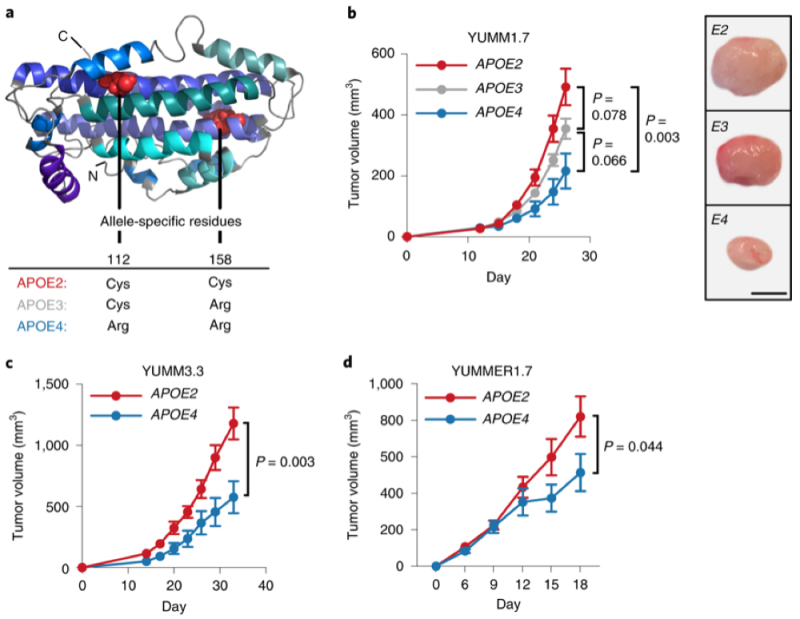
    This unpredictability was illustrated in a paper recently published in Nature Medicine, entitled "Common germline variants of the human APOE gene modulate melanoma progression and survival."  These authors* showed (somewhat paradoxically) that one variant of the human APOE gene (APOE2) was associated with a propensity for tumor cells to metastasize, while a different variant (APOE4), which has been known for several years to be associated with development of Alzheimer's disease (see Strittmatter et al., 1993, Proc. Natl. Acad. Sci. USA 90: 1977-81), exhibited a metastasis-inhibiting effect (and APOE2 itself can have a protective effect on development of late-onset Alzheimer's; see Corder et al., 1994, Nat. Genet. 7: 180-84).

    The experiments were performed in mice expressing human APOE4 or APOE2 by genetic replacement of the mouse analogs.  Differences in melanoma tumor growth in these two mouse strains carrying these different human APOE genes were shown by comparing mouse melanoma tumor growth as shown in this Figure:

    Image
    (where YUMM3.3 and YUMMER1.7 are murine melanoma cell lines).

    The protective effects against metastasis of APOE4 were compared with APOE2 in these mice was demonstrated by tail vein injection of B16F10 melanoma cells, an established metastasis animal model.  The human APOE4-bearing mice had a phenotype of enhanced anti-tumor immune response and improved outcomes under PD1 immune checkpoint blockade.

    Because APOE was known to have modulatory effects on immune response, flow cytometric analysis of APOE gene variants in mice was performed and showed "enhanced recruitment of CD45+ leukocytes in animals bearing various melanoma tumors in APOE4 mice compared with APOE2 mice."  Proportions of immune suppressor cells (Ly6G+ granulocytic myeloid-derived suppressor cells) were found to be diminished in APOE4-bearing mice, while these mice showed increased proportions of antitumor effector cells such as natural killer (NK) cells and CD8+ T cells.  These results were confirmed by single-cell RNA sequencing for detecting lineage-specific gene expression.  Further experiments showed that T cell depletion "completely abrogated" differences in melanoma tumor growth between human APOE4– and human APOE2-bearing mice.  The authors concluded that "[t]hese data suggest that APOE genotype modulated both the abundance and the functional state of the tumor immune microenvironment, with the APOE4 variant eliciting an enhanced anti-tumor immune profile relative to the APOE2 variant."  These authors also showed that APOE4 suppressed melanoma cell invasion and endothelial recruitment (involved in angiogenesis), which was consistent with lower blood vessel density in APOE4 mice.

    In addition to these mouse studies, the authors assessed APOE genotype association in melanoma human patients from The Cancer Genome Atlas (TCGA).  Neither of these APOE variants was enriched in the database, which the authors said indicated neither gene was involved in increased melanoma incidence.  However, APEO4 carriers had improved survival, with 10.1 years for these patients versus 2.1 years for APEO2 carriers.  This outcome was surprising due to the reduced longevity associated with APOE4 carriers, which the authors attributed to the high rates of melanoma-associated death.  These results demonstrated that "germline genetic variants of APOE differentially associated with survival in patients with advanced melanoma who were at increased risk for melanoma-associated death and metastasis."

    PD-1 immunotherapy is a commonly used treatment for melanoma, and "APOE4 mice survived significantly longer than APOE2 mice upon anti-PD1 treatment, suggesting that APOE genotype modulates melanoma outcome also in the context of immunotherapy," according to the results shown in the paper.  In humans,  "APOE4 and APOE2 carriers exhibited the longest and shortest survival outcomes, respectively, upon anti-PD1 therapy," consistent with the results in mice.

    The final set of experimental results reported in this paper involved pharmacologic activation of APOE through liver X receptors, which are "nuclear hormone receptors that transcriptionally activate several genes implicated in cholesterol and lipid metabolism, including APOE."  In mice, this effect was completely abrogated in APOE2 mice but showed "robust anti-tumor effects" upon treatment in APOE4 mice.  The authors concluded from these results that "distinct APOE genotypes elicited differential responsiveness to LXR agonistic therapy and might serve as potential genetic biomarkers for current clinical efforts investigating the use of LXR agonism in cancer therapy."

    The authors provide the following context for the results set forth in their paper:

    Our findings have several potential clinical implications.  Most importantly, they suggest that common germline variants might serve as biomarkers to identify patients with melanoma who are at high risk for metastatic relapse and melanoma-associated death for treatment with adjuvant systemic therapy.  Notably, these clinical association findings will need to be assessed in prospective studies.  It will be important to also assess the effect of APOE genotype on the outcome of additional cancer types.  More generally, our findings support the notion that hereditary germline variants in the same gene can positively or negatively affect future progression and survival outcomes and responsiveness to therapy in a common human malignancy.

    Authors: Benjamin N. Ostendorfa, Jana Bilanovica,  Nneoma Adakua, Kimia N. Tafreshiana, Bernardo Tavoraa, Roger D. Vaughanb & Sohail F. Tavazoiea 

    a Laboratory of Systems Cancer Biology, The Rockefeller University, New York, NY, USA
    b Department of Biostatistics, The Rockefeller University, New York, NY, USA

  • By Donald Zuhn

    World Health OrganizationOn March 11, World Health Organization Director-General Tedros Adhanom declared that the COVID-19 outbreak "can be characterized as a pandemic."  At the time of the announcement, the WHO noted that there were 118,000 cases reported globally; in its situation report for June 10, the WHO indicates that to date there have been 7,145,539 cases globally.  The WHO's declaration in March — and global developments since then — raise the question of how the pandemic has been affecting the patent community.

    We have been reporting (see links below) on the impact of the COVID-19 pandemic on the U.S. Patent and Trademark Office, World Intellectual Property Organization, European Patent Office, IP Australia, Intellectual Property Office of New Zealand (IPONZ), Brazilian Patent and Trademark Office (INPI), Canadian Intellectual Property Office (CIPO), Mexican Institute of Industrial Property (IMPI), National Office of Intellectual Property (ONAPI) in the Dominican Republic, Intellectual Property India, National Intellectual Property Office (NIPO) in Sri Lanka, Israel Patent Office, Intellectual Property Office of Vietnam (NOIP), and Directorate General of Intellectual Property (DGIP) in Indonesia, as well as U.S. Federal courts, including, in particular, the Supreme Court and Federal Circuit.  Today, we present an update regarding COVID-19-related extensions for several of the above patent offices:

    Canadian Intellectual Property Office (CIPO)

    • CIPO has designated any deadline falling between March 16, 2020 and July 3, 2020 as being a day where any time period ending on one of those dates is extended to the next day, which means that, effectively, any deadlines for Canadian applications falling within between March 16, 2020 and July 3, 2020 are extended to Monday, July 6, 2020 (see CIPO website).

    European Patent Office (EPO)

    • The EPO has announced that it will temporarily waive the additional fee due when a renewal fee is paid late. This waiver will only be applicable from June 1, 2020 until August 31, 2020 with respect to European patent applications where a renewal fee has fallen due on or after March 15, 2020, and the renewal fee was not paid by the due date (see EPO website).

    Office of the Controller General of Patents, Designs and Trade Marks (CGPDTM) – Intellectual Property India

    • The Delhi High Court stayed (until further orders) the operation of two public notices issued in May by the IPO, which had set a new deadline of June 1, 2020 for the submission of documents in proceedings under the Patents Act. As a result, all due dates from March 15, 2020 currently stand suspended.

    Directorate General of Intellectual Property (DGIP) — Indonesia

    • The DGIP has extended the closure period of the DGIP's Intellectual Property Service Counter until further notice.

    Instituto Mexicano de la Propiedad Industrial (IMPI)

    • IMPI has announced that the suspension of activities and interruption of terms has been extended until the Government’s COVID restrictions are lifted (the suspension of activities and suspension of terms began on March 24, 2020). IMPI may resume its normal activities between June 15 and June 30, 2020, but this will depend on the evolution of the COVID-19 pandemic in Mexico City.

    United States Patent and Trademark Office (USPTO)

    • The USPTO has waived the petition fee pursuant to 37 C.F.R. § 1.17(m) when patent applicant or patent owner files a reply with a petition under 37 CFR 1.137(a) in those instances when patent applicants or patent owners were unable to timely reply to an Office communication due to the effects of the coronavirus outbreak, which resulted in the application being held abandoned or the reexamination prosecution terminated or limited.
    • The USPTO has also waived requirements for submitting an original handwritten signature personally signed in permanent dark ink or its equivalent for certain correspondence with the Office of Enrollment and Discipline and certain payments by credit card.
    • Pursuant to Coronavirus Aid, Relief, and Economic Security Act (CARES Act), the USPTO previously extended deadlines for the filing of certain patent-related documents or payment of certain required fees (as specified in the USPTO's April 28, 2020 notice) that would have been otherwise due between March 27 and May 31, 2020, to June 1, 2020.
    • Pursuant to Coronavirus Aid, Relief, and Economic Security Act (CARES Act), the USPTO has extended deadlines for the filing of certain patent-related documents or payment of certain required fees (as described in the USPTO's April 28, 2020 notice) that would have been otherwise due between March 27 and June 1, 2020, which "will now be deemed timely filed if filed by July 1, 2020."  However, the additional extensions are "[f]or small and micro entities only" (emphasis added).


    Patent Docs
    will continue to monitor and report on patent-related developments related to the COVID-19 pandemic.  In addition, we encourage our readers to let us know about any changes or updates to the information provided above, as well as any developments related to the COVID-19 pandemic at other patent offices.

    For additional information regarding this and other related topics, please see:

    • "USPTO Announces Further Extension of Certain Patent Deadlines for Small and Micro Entities," May 27, 2020
    • "USPTO Announces COVID-19 Prioritized Examination Pilot Program," May 18, 2020
    • "USPTO Announces Further Extension of Certain Patent Deadlines," April 30, 2020
    • "Impact of COVID-19 Pandemic on Patent Offices and Federal Courts – April 12 UPDATE," April 12, 2020
    • "USPTO Answers FAQs on Extension of Patent Deadlines under CARES Act," April 6, 2020
    • "Impact of COVID-19 Pandemic on Patent Offices and Federal Courts – April 2 UPDATE," April 2, 2020
    • "USPTO Announces Extension of Certain Patent Deadlines," March 31, 2020
    • "Impact of COVID-19 Pandemic on Patent Offices and Federal Courts — March 29 UPDATE," March 29, 2020
    • "Impact of COVID-19 Pandemic on Patent Offices and Federal Courts — March 26 UPDATE," March 26, 2020
    • "Impact of COVID-19 Pandemic on Patent Offices and Federal Courts — March 19 UPDATE," March 19, 2020
    • "Impact of COVID-19 Pandemic on Patent Offices and Federal Courts — March 18 UPDATE," March 18, 2020
    • "Impact of COVID-19 Pandemic on Patent Offices and Federal Courts — March 17 UPDATE," March 17, 2020
    • "Impact of COVID-19 Pandemic on Patent Offices and Federal Courts – UPDATED," March 16, 2020
    • "Impact of COVID-19 Pandemic on Patent Offices and Federal Courts," March 15, 2020

  • By Kevin E. Noonan

    Federal Circuit SealIn Amneal Pharmacueticals LLC v. Almirall, LLC, the Federal Circuit professed to address a question it had not considered before:  whether attorney's fees and a exceptional case determination was available for fees and costs incurred when a patent owner defended an inter partes review (IPR) challenge before the Patent Trial and Appeal Board.  The Court decided they were not, based on Court of Claims and Patent Appeals (CCPA) precedent and its plain meaning reading of the statute.

    The case arose over Almirall's U.S. Patent Nos. 9,161,926 and 9,517,219, which were listed in the Orange Book with regard to Almirall's ACZONE (dapsone) prescription acne treatment.  Prior to filing an ANDA, Amneal petitioned the PTAB for IPR individually against the '926 and '219 patents (the latter IPR and patent not being part of this appeal).  Thereafter, Amneal filed its ANDA and Almirall filed suit, alleging infringement only of the '219 patent.  Amneal filed a declaratory judgment counterclaim against the '926 patent (the subject of this appeal) and the parties attempted to settle, which negotiations included Almirall's offer to give Amneal a covenant-not-to-sue on the '926 patent.  The parties being unable to agree on settlement terms, the IPR was allowed to proceed to Final Written Decision, where the PTAB found Amneal had not established that the challenged '926 patent claims were unpatentable.  Amneal appealed but then moved the Federal Circuit for voluntary dismissal.

    Almirall did not challenge the dismissal but moved that the Court grant it attorney's fees and costs incurred but only during the time between when the settlement negotiations broke down and the trial date in the IPR, as well as the fees and costs involved in defending against Amneal's motion to dismiss.  Almirall's argument that the case was exceptional and thus that fees and costs should be assessed against Amneal was that it was unreasonable for Amneal to have continued to pursue the IPR against the '926 patent after Almirall offered the covenant-not-to-sue and to remove the '926 patent from the Orange Book.

    In an Opinion and Order issued by Judge Dyk, joined by Judges Lourie and Reyna the Federal Circuit refused to assess attorney's fees and costs against Amneal.  The panel based its decision, first, on the "American Rule" that generally in the U.S. (unless there is a recognized or statutory exception) "each party in a lawsuit ordinarily shall bear its own attorney's fees," quoting Hensley v. Eckerhart, 461 U.S. 424, 429 (1983).  The Court recognized that Congress has provided such an exception under the Patent Act, in Section 285, where (should a court find the case is exceptional) reasonable attorney's fees can be awarded to the prevailing party.  The opinion states that the Court finds no authorization in the statute for awarding such fees for proceedings before the Patent Office in an appeal to the Federal Circuit.

    The Court reasoned that, first, being bound by CCPA precedent (under S. Corp. v. United States, 690 F.2d 1368, 1370 (Fed. Cir. 1982) (en banc)) the several occasions where that Court considered and denied attorney's fees petitions were binding.  These decisions include Reddy v. Dann, 529 F.2d 1347, 1349 (C.C.P.A. 1976), where the CCPA reasoned that the placement of Section 285 in Chapter 29 of the statute, which is concerned with infringement, indicated that such attorney's fees petitions were "clearly inapplicable to this court."  The CCPA reached the same conclusion in Meitzner v. Mindick, 549 F.2d 775, 784 (C.C.P.A. 1977), regarding an "exceptional interference," which precedent was followed by the district court in Bowmar Instr. Corp. v. Tex. Instr., Inc., No. F74-137, 1978 WL 21733, at *1 (N.D. Ind. Aug. 1, 1978).

    The opinion also found no support for Almirall's petition in the plain meaning of the statute.  The determinative terms were that reference to "[t]he court" was limited to "judicial proceedings," relying on Blyew v. United States, 80 U.S. (13 Wall.) 581, 595 (1872), for meaning of terms like "case and "cause" as being limited to proceedings before a court, in a suit or action.

    The opinion also finds support for analogous "fee-shifting" provisions in other statutes involving administrative proceedings, citing Kahane v. UNUM Life Ins. Co. of Am., 563 F.3d 1210, 1215 (11th Cir. 2009), regarding 29 U.S.C. § 1132(g)(1) and W. Watersheds Project v. U.S. Dep't of the Interior, 677 F.3d 922, 926–27 (9th Cir. 2012), regarding the Equal Access to Justice Act, 28 U.S.C. § 2412(d)).  The Court did not credit Almirall's cases asserted in support of its opinion to lead to a contrary result.  In Sullivan v. Hudson, 490 U.S. 877 (1989), the panel interprets the Supreme Court's decision permitting attorney's fees for administrative proceedings to be limited to cases "where 'a suit has been brought in a court,' and where 'a formal complaint within the jurisdiction of a court of law' remains pending and depends for its resolution upon the outcome of the administrative proceedings" (emphasis in opinion), which was not the case here.  And in its own Therasense v Becton Dickenson, the panel states that "we were clearly only referring to district court and appellate court proceedings."  (The panel also notes that PPG Indus., Inc. v. Celanese Polymer Specialties Co., 840 F.2d 1565, 1569 (Fed. Cir. 1988), not cited by Almirall, is consistent with its views, wherein the fees awarded were limited to those fees "incurred after the filing of a civil action, and the fees were awarded in that district court proceeding" and because the proceedings before the PTO were "intimately tied to the resolution of that action.")

    There has been an increase in motions for attorney's fees and awards of such fee since the Supreme Court's decisions in Octane Fitness, LLC v. ICON Health & Fitness, Inc. and Highmark Inc. v. Allcare Health Mgmt. Sys., Inc.  This decision by the Federal Circuit draws a line limiting such awards for fees and costs incurred in PTAB proceedings (although the opinion notes is a footnote that sanctions provisions exist under PTAB rule for misconduct should the need for such sanctions arise).

    Amneal Pharmaceuticals LLC v. Almirall, LLC (Fed. Cir. 2020)
    Panel: Circuit Judges Lourie, Dyk, and Reyna
    Opinion by Circuit Judge Dyk