• MBHB Logo 2McDonnell Boehnen Hulbert & Berghoff LLP will be offering a live webinar entitled "Traps for the Unwary Prosecutor: What Practitioners Should Know About US and European Patent Practice" on September 15, 2020 from 10:00 am to 11:15 am (CT).  In this presentation, Patent Docs author and MBHB attorney Donald Zuhn, MBHB attorney Sarah Fendrick, Forresters attorney Charlotte Teall, and D Young & Co attorney Simon O'Brien will review some aspects of U.S. and European patent practice that can, if patent practitioners are not aware of them, lead to issues during the prosecution of U.S. and European applications.  Among the topics that the panel will discuss are priority claims, double patenting, novelty-only prior art and disclaimers, and data requirements and plausibility in Europe, and Patent Term Adjustment, Information Disclosure Statements, inequitable conduct, and obviousness-type double patenting in the U.S.

    While there is no fee to participate, attendees must register in advance.  Those wishing to register can do so here.  CLE credit is pending for the states of California, Illinois, New Jersey, New York, North Carolina, and Virginia.

  • IPO #2The Intellectual Property Owners Association (IPO) will offer a one-hour webinar entitled "Drafting Patents to Ground Electric Power: AI and Section 101" on August 27, 2020 from 12:00 pm to 1:00 pm (ET).  Thomas Burton of Siemens Corp., Michael Kiklis of Bass, Berry & Sims PLC, and Christine Lam of NetApp will analyze the Electrical Power Group line of cases and provide patent prosecutors with practical advice on how to avoid its pitfalls for AI related inventions, consider more than a year's experience with the USPTO's 2019 patentable subject matter guidelines for software inventions, and share lessons from six PTAB ex parte decisions on this issue that were recently deemed precedential or informative, including both affirmances and reversals of examiner rejections.

    The registration fee for the webinar is $135 (IPO member) or $150 (non-member) (government and academic rates are available upon request).  Those interested in registering for the webinar can do so here.

  • LexisNexisLexisNexis IP and IPWatchdog and will be offering a webinar entitled "Chasing technology 'unicorns' – How to spot acquisition targets early on" on August 25, 2020 at 12:00 pm (ET).  Gene Quinn of IPWatchdog.com and William Mansfield of PatentSight® — A LexisNexis Company will analyze the decision made by Amazon Inc. to "buy" Zoox Inc.  Patent data retrieved from patents belonging to the technology field of Autonomous Driving were studied and analyzed in order to explain why Amazon decided to acquire Zoox for approx. $1.2 billion.  The panel will discuss other unicorn companies in this field that would make for great acquisition targets, and provide:

    • an overview analysis of the Autonomous Driving patent landscape
    • a comparison of selected automotive OEMs and their portfolio in Autonomous Driving
    • a break-down analysis of Zoox's patent portfolio in Autonomous Driving
    • the specifics of Amazon's patent portfolio in Autonomous Driving before and after the acquisition
    • implications for the automotive industry and other Autonomous Driving unicorns like Zoox Inc.

    There is no registration fee for this webinar.  However, those interested in registering for the webinar, should do so here.

  • By Kevin E. Noonan

    Federal Circuit SealANDA litigation, pursuant to the Hatch-Waxman Act, has become more complicated over the years since enactment of the statute in 1984, with more patents being asserted and more parties participating over the opportunity to market a generic version of a branded, innovator drug.  Particularly under circumstances where there are several ANDA litigants, and where most of them are not the sole "first filer" entitled to 180-day market exclusivity should they prevail in invalidating the innovator's patent(s) or (less often) showing that their generic product will not infringe, there is an incentive for the branded drug maker and at least some of the competing generic companies to enter into a settlement agreement.  (It should be noted that these settlements are not in the manner of "pay-for-delay" agreements; that is a separate topic).  One feature of these settlement agreements is that, absent any first filer garnering exclusivity status, each settling generic company seeks an agreement granting them the right enter the market when any non-settling generic company succeeds in invalidating the branded drug patent(s) or proving non-infringement.  The Federal Circuit's decision over such a settlement agreement in Takeda Pharmaceuticals U.S.A., Inc. v. Mylan Pharmaceuticals Inc. illustrated the impossibility of crafting an agreement that encompasses all contingencies, the difficulty in foreseeing all contingencies, and the efforts a patentee will expend to enforce provisions of an agreement despite the agreement not being satisfied (as well as the toxic effect even the hint of gamesmanship can produce, even where the fact of a party engaging in gamesmanship may be very much in doubt).

    This case arose over Takeda's Colcrys® product, involving 0.6 mg tablet formulations of colchicine for treating gout flares.  Takeda asserted 17 Orange Book-listed patents in that litigation and the parties settled, specifying a date certain in future (later than the date of the settlement but prior to the expiration date of the last-to-expire of the asserted patents).  The Settlement Agreement contained this provision for accelerating the date Mylan could bring its generic version of Colcrys® to market and the events that could trigger such an accelerated date:

    [Mylan would become entitled to launch its generic product on t]he date that is [a specified time period] after the date of a Final Court Decision (as defined in Exhibit A) holding that all unexpired claims of the Licensed Patents that were asserted and adjudicated against a Third Party are either (i) not infringed, or (ii) any combination of not infringed and invalid or unenforceable[.]

    (Section 1.2(d); emphasis added).  Exhibit A defines a Final Court decision as "entry by a federal court of a final judgment from which no appeal . . . has been or can be taken."  Another relevant passage, Section 1.10, provides that any breach of this agreement would cause Takeda irreparable harm.

    Concurrently, Takeda was also pursuing patent infringement litigation against another generic drug maker, Hikma, in a litigation styled as Takeda Pharm. USA v. West-Ward Pharm. Corp.  In that litigation, defendant Hikma did not file an ANDA application but rather a § 505(b)(2) New Drug Application which the FDA approved for Hikma's Mitigare® product.  In that litigation, Takeda asserted 8 patents against Hikma, but during the course of the litigation the parties agreed to dismiss the complaint with prejudice as to 5 of the 8 asserted patents and litigate only the remaining 3 patents.  The district court ultimately granted summary judgment in Hikma's favor over the claims of these 3 remaining patents.  Takeda did not appeal that judgment.

    As a consequence of that outcome, Mylan informed Takeda that it was invoking the provisions of Section 1.2(d) and planned on immediate market entry.  In response. Takeda filed suit and sought a preliminary injunction against the proposed Mylan launch; in the interim the parties agreed that Mylan would voluntarily cease sale and distribution of Mylan's Colcrys® generic product.

    The District Court denied Takeda's motion, on the grounds that Takeda had "failed to show it is likely to succeed on the merits or that it will suffer irreparable harm."  With regard to the likelihood of success prong, the District Court agreed with Mylan that the decision in Hikma's favor without an appeal triggered the provisions of Section 1.2(d).  The Court rejected Takeda's argument that the decision in Hikma did not do so because of the five initially asserted patents that were withdrawn from that litigation; according to the Court the three remaining patents that the parties had litigated satisfied the "all unexpired claims of the Licensed Patents that were asserted and adjudicated against a Third Party" provision because those were the patents that had been "asserted and adjudicated."  (In addition to basing its decision on this exercise of contract interpretation, a question of law, the District Court noted that "Takeda's proposed interpretation would prevent Mylan from ever relying on the clause to enter the market because Takeda could always 'withdraw one patent (or one claim on one patent),' whether through gamesmanship or through the normal course of litigation, to avoid triggering Section 1.2(d)").  The District Court also rejected Takeda's contention that this provision was only triggered by litigation against a Colcrys® generic which excluded application for Mitigare®.  The Court's decision was based on the parties' use of terms like "Generic Equivalent" or "Authorized Generic Products" elsewhere in the agreement but not in Sections 1.2(d), (e), or (f).

    Turning to the question of inequitable harm, the District Court rejected Takeda's contention that the circumstances here invoked the inequitable harm provisions of Section 1.10, which required Takeda to show that Mylan had breached the settlement agreement.  Accordingly, the District Court found that Takeda would not be able to successfully contend irreparable harm but rather should be satisfied with money damages.  This appeal followed.

    The Federal Circuit affirmed, in an opinion by Chief Judge Prost joined by Judge Hughes; Judge Newman dissented.  The panel majority construed the terms of Section 1.2(d) and held that the Hikma decision triggered the provisions of Section 1.2(d), and as a consequence Takeda would not be able to prevail on the merits under Delaware law (which controlled under an express provision in the Settlement Agreement).  The panel rejected Takeda's argument that the term "all" in Section 1.2(d) required adjudication of the five patents the parties dismissed in addition to the three patents that went to trial.  The panel majority held that this interpretation was not consistent with the plain language of the agreement, based on use of the phrase "asserted and adjudicated" in this section of the Agreement.  One basis for this decision is that Takeda's interpretation would render the word "adjudication" meaningless in the panel majority's view.  Perhaps equally persuasive was the panel majority's recognition that Takeda's construction would "lead[] to the absurd result that Takeda could prevent Mylan from ever relying on the clause by simply asserting and then withdrawing a claim from a proceeding," which the opinion characterized as "gamesmanship."

    The panel majority also rejected Takeda's contention that the intent of the parties was to permit Mylan's "early" entry into the colchicine market based on a change in the status quo (or the status of the licensed patents) for the entire market, because the Agreement did not have terms reciting this intention.  And the panel majority rejected Takeda's further contention that the Agreement did not contemplate Hikma's Mitigare® product, saying that considering the Hikma litigation as a triggering event was "exactly a circumstance Takeda asserts Section 1.2(d) was intended to cover" (and in a footnote, notes that the Hikma litigation was ongoing when the Settlement Agreement with Mylan was being negotiated).

    With regard to the question of whether Takeda would be irreparably harmed, the panel majority held that Takeda's reliance on Section 1.10 is fatal to its claim, because that provision requires Mylan to have breached the provisions of Section 1.2(d) in order for that provision to apply.  Absent that, the panel majority states that Takeda made "no credible assertion" of irreparable harm or that it could not be recompensed with money damages.  The panel majority recognizes that "price erosion and loss of market share may in some cases be irreparable injuries" but that Takeda's "bare assertion" of irreparable harm is insufficient to support this prong of the preliminary injunction standard.  Accordingly, the Federal Circuit affirmed the District Court's denial of Takeda's motion for preliminary injunction.

    Judge Newman saw things differently in her dissent.  For this Judge, the Settlement Agreement contained an "explicitly agreed provision" regarding when Mylan was entitled to accelerate its market entry date, and it breached that agreement by informing Takeda it would begin selling its generic Colcrys® after the Hikma decision was final.  In addition to violating "fundamental principles of contract law and commerce," the Judge also believed there were strong public policy concerns raised by the majority's decision.  In Judge Newman's view, Mylan was not entitled to invoke the acceleration provisions of Section 1.2(d) because "the cited event [finality of the Hikma decision] relates to a different product of a different provider having a different FDA approval for different uses, and is not a generic counterpart of Colcrys®" (emphasis added).  Showing that different judges can come to different conclusions on the same facts, the same coincidence of the Settlement Agreement negotiations cited (albeit in a footnote) by the majority to support their conclusion that the parties could have expressly included the Hikma litigation in the Settlement Agreement is cited by Judge Newman to support her interpretation, i.e., that the parties could have and should have included the outcome of the Hikma litigation in Section 1.2(d) if they intended it to provide a triggering event for Mylan's acceleration of its marketing date.  In addition, using a "balance of the harms" analysis Judge Newman believes is contained in Section 1.10  of the Settlement Agreement, her dissent states that "if it were to turn out that the requested injunction were wrongfully granted, Mylan could be made whole by the injunction bond required by Fed. R. Civ. P. 65(c); whereas if the injunction were wrongfully denied Takeda could not be made whole from the market impact of Mylan's entry."  Under Delaware law, "contractual stipulations as to irreparable harm alone suffice to establish that element for the purpose of issuing preliminary injunctive relief" Judge Newman contends, citing Cirrus Holding. Co. v. Cirrus Indus., Inc., 794 A.2d 1191, 1209 (Del. Ch. 2001), and TP Group-CI, Inc. v. Vetecnik, No. CV 16-00623-RGA, 2016 WL 5864030, at *2 (D. Del. Oct. 6, 2016).  Judge Newman also sees a violation of the public's interest in settlements and upholding the integrity of contracts in the majority's decision as another basis for her dissent.

    Takeda Pharmaceuticals U.S.A., Inc. v. Mylan Pharmaceuticals Inc. (Fed. Cir. 2020)
    Panel: Chief Judge Prost and Circuit Judges Newman and Hughes
    Opinion by Chief Judge Prost; dissenting opinion by Circuit Judge Newman

  • By Donald Zuhn

    USPTO SealIn a Decision on Petition issued in April, and signed by Deputy Commissioner for Patent Examination Policy Robert W. Bahr, the U.S. Patent and Trademark Office refused to vacate a Notice to File Missing Parts of Nonprovisional Application mailed on August 8, 2019 in U.S. Application No. 16/524,350.  The '350 application, which is entitled "Devices and Methods for Attracting Enhanced Attention, was filed on July 29, 2019.

    The Decision notes that an Application Data Sheet ("ADS"), substitute statement under 37 CFR 1.64 in lieu of declaration under 35 U.S.C. § 115(d), statement under 37 CFR 3.73(c), assignment, and Statement of Inventorship accompanied the application papers.  The ADS listed a single inventor with the given name "[DABUS]" and the family name "(Invention generated by artificial intelligence)," and listed the Applicant as the Assignee "Stephen L. Thaler."  The substitute statement listed "DABUS (the invention was autonomously generated by artificial intelligence)" as the inventor and was executed by Mr. Thaler.  The 3.73(c) statement identified Mr. Thaler as the assignee of the application.  The assignment assigned the interest of "DABUS, the Creativity machine that has produced the . . . invention" in the '350 application to Mr. Thaler, with Mr. Thaler executing the document on behalf of both DABUS, as legal representative of the assignor, and himself as assignee.  The Statement of Inventorship states that the invention was conceived by a "creativity machine" named "DABUS."

    The Office issued a Notice to File Missing Parts of Nonprovisional Application on August 8, 2019, which indicated that the ADS for the '350 application did not identify each inventor by his or her legal name.  In response to the Notice, a petition under 37 CFR 1.181 was filed, requesting supervisory review of the Notice and also requesting that the Notice be vacated as unwarranted and/or void.  The Office issued a second Notice to File Missing Parts of Nonprovisional Application on December 13, 2019, and dismissed the petition under 37 CFR 1.181 on December 17, 2019.  In response to the second Notice, a second petition under 37 CFR 1.181 was filed on January 20, 2020, requesting reconsideration of the Office's dismissal of the first petition.

    In the second petition, the Petitioner asserted that the invention disclosed in the '350 application was generated by a machine named "DABUS," and that the machine recognized the novelty and salience of the invention.  The Petitioner argued that inventorship should not be limited to natural persons and, therefore, that the naming of DABUS as the inventor in the '350 application was proper.

    In response, the Decision states that:

    To the extent the petitioner argues that an "inventor" could be construed to cover machines, the patent statutes preclude such a broad interpretation.  Title 35 of the United States Code consistently refers to inventors as natural persons.  For example, 35 U.S.C. § 101 states "Whoever invents or discovers any new and useful process, machine, manufacture, or composition of matter . . . may obtain a patent therefore, subject to the conditions and requirements of this title" (emphasis added).  "Whoever" suggests a natural person.

    The Decision indicates that "interpreting 'inventor' broadly to encompass machines would contradict the plain reading of the patent statutes that refer to persons and individuals."

    The Decision also cites the Federal Circuit's decision in Univ. of Utah v. Max-Planck-Gesellschaflzur Forderung der Wissenschaflen e.V., 734 F.3d 1315, 1324 (Fed. Cir. 2013), in support of its position.  In Univ. of Utah, the Federal Circuit explained that "inventors must be natural persons and cannot be corporations or sovereigns."  The Decision also noted that the Federal Circuit in Beech Aircraft Corp. v. EDO Corp., 990 F.2d 1237, 1248 (Fed. Cir. 1993), stated that "only natural persons can be 'inventors.'"

    The Decision concludes that "because the ['350] application names a machine, '[DABUS] (Invention generated by artificial intelligence),' as the inventor, and because current statutes, case law, and USPTO regulations and rules limit inventorship to natural persons, the ['350] application does not comply with 35 U.S.C. § 115(a)."

    In response to the Petitioner's argument that the Office should consider the position adopted by the European Patent Office and the Intellectual Property Office of the United Kingdom that DABUS created the invention at issue, but DABUS cannot be named as the inventor, the Decision notes that "the EPO and UKIPO are interpreting and enforcing their own respective laws (i.e., the European Patent Convention and the UK Patents Act 1977) as they apply to the applications before them."  Under U.S. patent law, however, a machine is not allowed to be named as the inventor in a patent application.

    The Petitioner also argued that because the Office has granted patents relating to the DABUS machine itself, it had implicitly legalized the process by which DABUS arrived at the invention disclosed in the '350 application.  In response, the Decision countered that:

    The granting of a patent under 35 U.S.C. § 151 for an invention that covers a machine does not mean that the patent statutes provide for that machine to be listed as an inventor in another patent application––any more than a patent for a camera allows the camera [to] hold a copyright.

    The Decision therefore granted the petition to the extent that the decision of December 17, 2019 was reviewed, but denied the petition with respect to the Petitioner's request to vacated the Notice to File Missing Parts of Nonprovisional Application issued August 8, 2019.

  • Turns Out, Early Humans Not the Cause of Woolly Rhinoceros Extinction

    By Kevin E. Noonan

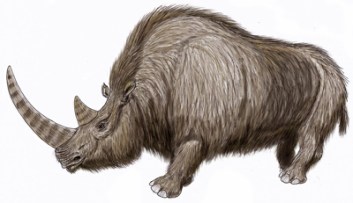
    Wooly RhinoPaleogenomics (the use of genetic analysis of DNA contained in ancient remains) has developed rapidly since Svante Pääbo first showed that DNA could be extracted in sufficient quantity and of sufficient quality to be useful in making evolutionary comparisons between, inter alia, modern Homo sapiens sapiens and Homo sapiens neanderthalisSee Krings, Stone, Schmitz, Krainitzki, Stoneking, and Pääbo, "Neandertal DNA sequences and the origin of modern humans," Cell. 90(1): 19–30 (1997).  Since then, ancient DNA (both genomic, gDNA, and mitochondrial, mtDNA) have been used to establish relationships, geographic localization, and patterns of extinction.  One such pattern involves the wooly rhinoceros (Coelodonta antiquitatis) whose extinction was believed to have arisen at the predacious hand of human beings.

    But in a recent paper, an international team of scientists* found this not to be the case.  The paper, entitled "Pre-extinction Demographic Stability and Genomic Signatures of Adaptation in the Wooly Rhinoceros," Current Biology (2020), presented evidence that this is not the case.  Wooly rhinoceros populations in northern Siberia went extinct about 14,000 years ago.  The species were "widely distributed" in northern Eurasia in late Pleistocene (2.58 million to 11,700 years ago).  These researchers determined the sequence of one sample of genome gDNA (from an ~18,500 year old specimen) and 14 mtDNA samples ranging in age from more than 50,000 years ago to about 14,000 years ago.  These authors identified more than 28 million single nucleotide polymorphisms (SNPs) in the gDNA sample, having an average heterozygosity of 1.7 sites per 1000 basepairs, which is higher than what has been reported for the mammoth genome (1.25 heterozygous sites/1000bp), the Sumatran rhinoceros Dicerorhinus sumatrensis (their closest living relative) (1.3 heterozygous sites/1000bp), or the Northern or Southern White rhinoceros (1.1 and 0.9 heterozygous sites/1000bp, respectively).  Runs of homozygosity (ROH) analysis was also consistent with relatively low levels of inbreeding, "on par with non-African human populations," although higher than that detected in the mainland mammoth from this period.

    A closer sequence comparison between the gDNA from the wooly rhinoceros and the Sumatran rhinoceros of 19,556 coding genes showed 1,524 genes with non-synonymous mutations, consisting of 1,386 missense mutations and 138 with loss-of-function or non-sense mutations.  These genes were associated with "cellular component organization or biogenesis, cellular process, localization, reproduction, biological regulation, response to stimulus, developmental processes, and metabolic processes."  Not detected were such mutations in genes relating to fat deposition or circadian rhythm changes, which was different from the patterns found inter alia in wooly mammoth.  There were 89 genes in both wooly mammoth and wooly rhinoceros that showed non-synonymous mutations, including Transient Receptor Potential subfamily A (involved in adaptation to cold tolerance), and a member of potassium channel subfamily K analogous to TWIK-Related Arachidonic Acid-Stimulated Potassium Channel Protein involved in cold perception.  Finally, a more in-depth assessment of the amino acid sequence changes these mutations caused (and their expected effects on encoded protein structure) showed 284 variants of the 17,888 genes analyzed having maximal change in protein structure, and 83 of these were in olfactory receptor genes.

    Shown below (in panel A) are the regions where the sample were obtained.  The importance of this Siberian region during interglacial periods in the Pleistocene is reflected in the putative origination of extant wolf species** in northeastern Siberia, highly divergent mtDNA lineages in horse, bison, and collared lemming populations, and admixing of human populations in the region prior to colonialization of North America (see "Genetic Research Continues to Reveal Ancestry Relationships in Early Human Migrations").

    Population genetic studies based on comparative mtDNA sequencing revealed a pattern of the development of two clades having the geographic distribution shown in panel B:

    2020-08-17 Image
    Panel B shows the phylogenetic relationship between the 14 specimens; the two main branches diverged ~205,000 years ago, with the Wangel Island branch diverging about 154,00 years ago (consistent with its island location).  The structure of the interrelationships between the various related groups consistent with isolation during interglacial periods.  The diversification in each branch estimated to have arisen between 86,000 and 22,000 years ago.

    Population genetic analysis via mtDNA showed a stable population without evidence on inbreeding or reduction in genetic heterogeneity that would have been indicative of being driven to extinction through, for example, human hunting.  Indeed, the population remained stable until about 4,500 years before the extinction event after an initial increase in population.  The effective population size increased gradually (i.e., there was no evidence of a population explosion) beginning at around 1 million years ago, reaching a peak of around 21,000 animals about 152,000 years ago during the Marine Isotope Stage 6 (MIS6) glaciation.  Thereafter, population size decreased 10-fold fold from 152,000 to 29,700 years ago, experiencing a minimum size at about 33,000 years ago.  The population then experienced a rapid expansion resulting in a stable population size until 4,500 prior to the extinction event.  These population dynamics are not shared by the wooly mammoth during this period.  This suggests that the wooly rhinoceros was particularly well-adapted to the climate during this period, and thus relatively more susceptible to population decline as a consequence of population changes with climate warming.  Overall, the authors' assessment was that this population pattern was more indicative of changes in climate, i.e., warming during the interglacial period with changes in local flora used by these animals as a food source.

    The authors conclude that:

    [O]ur analyses of nuclear and mitochondrial genomic diversity in the woolly rhinoceros provide no evidence for a decline in population size preceding the samples analyzed here, nor any indication of elevated inbreeding typical of small populations.  While we cannot exclude the role of humans in woolly rhinoceros' extinction, our results imply that the arrival of anatomically modern humans in northeastern Siberia was not correlated with a demographic decline in the woolly rhinoceros.

    The paper concludes with these thoughts:

    Taken together, these findings highlight the utility of genomic data in unraveling previously unknown evolutionary processes in extinct species and illustrate the need to investigate demographic trajectories in other megafauna to develop a better understanding of the timing and rate of demographic change during the Late Quaternary.

    * Edana Lord, Nicolas Dussex, Marcin Kierczak, David Díez-del-Molino, Oliver A. Ryder David W.G. Stanton, M. Thomas P. Gilbert, Fátima Sánchez-Barreiro ,Guojie Zhang, Mikkel-Eske Willerslev, Albert Protopopov, Fedor Shidlovskiy, Sergey Fedorov, Hervé Bocherens, Senthilvel K.S.S. Nathan, Benoit Goossens, Johannes van der Plicht, Yvonne L. Chan, Stefan Prost,  Olga Potapova, Irina Kirillova, Adrian M. Lister, Peter D. Heintzman, Joshua D. Kapp, Beth Shapiro, Sergey Vartanyan, Anders Götherström, and Love Dalén

    ** In an uncanny coincidence, CNN reported today that a "perfectly preserved" wolf pup, dating from ~14,000 years ago, was found to have wooly rhino meat in his stomach, thus providing another suspect for their extinction.  See CNN report.

    Image of Reconstruction of Wooly Rhinoceros – Coelodonta antiquitatis, from Late Pleistocene of Europe and Asia by ДиБгд, from the Wikimedia Commons under the Creative Commons Attribution-Share Alike 4.0 International license.

  • Common Sense Prevails

    By Joseph Herndon

    Federal Circuit SealB/E Aerospace, Inc. appealed a final written decision of the Patent Trial and Appeal Board (PTAB) that found certain claims of B/E's aircraft lavatory-related patents obvious.

    B/E contended that the Board's decision is erroneous because the Board incorporated a claim limitation that is not present in the prior art.  Ultimately, the Federal Circuit affirmed the Board's findings holding the patents invalid.

    Background

    This appeal arises from an inter partes review ("IPR") proceeding in which C&D Zodiac, Inc. ("Zodiac") challenged two patents owned by B/E Aerospace, Inc. ("B/E"):  U.S. Patent Nos. 9,073,641 and 9,440,742.  The '742 patent is a continuation of the '641 patent.

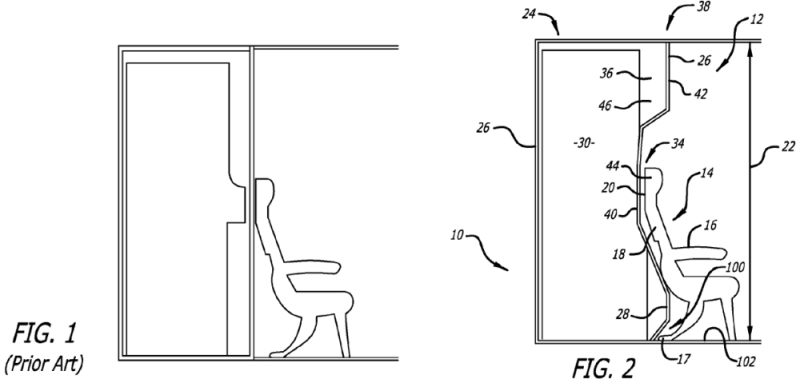
    The challenged patents relate to space-saving technologies for aircraft enclosures such as lavatory enclosures, closets, and galleys.  Each patent contains a two-page written description that teaches an enclosure with contoured walls designed to "reduce or eliminate the gaps and volumes of space required between lavatory enclosures and adjacent structures."  In other words, the patents are directed to space-saving modifications to the walls of aircraft enclosures; they are not directed to the structures contained within those walls.

    Figures 1-2 of the patents are reproduced below, and illustrate the prior art vs. the invention.

    Figures 1 & 2
    For the IPRs, Claim 1 of the '641 patent was representative of the challenged claims, and provides:

    1.  An aircraft lavatory for a cabin of an aircraft of a type that includes a forward-facing passenger seat that includes an upwardly and aftwardly inclined seat back and an aft-extending seat support dis-posed below the seat back, the lavatory comprising:
        a lavatory unit including a forward wall portion and defining an enclosed interior lavatory space, said forward wall portion configured to be disposed proximate to and aft of the passenger seat and including an exterior surface having a shape that is substantially not flat in a vertical plane; and
        wherein said forward wall portion is shaped to substantially conform to the shape of the upwardly and aftwardly inclined seat back of the passenger seat, and includes a first recess configured to receive at least a portion of the upwardly and aftwardly inclined seat back of the passenger seat therein, and further includes a second recess configured to receive at least a portion of the aft-extending seat support therein when at least a portion of the upwardly and aftwardly inclined seat back of the passenger seat is received within the first recess.

    This appeal focused on the "first recess" and "second recess" limitations, labeled as elements 34 and 100, respectively, in Figure 2 above.

    In its petition, Zodiac defined the "Admitted Prior Art" as certain portions of the challenged patents, including Figure 1, which discloses a flat, forward-facing lavatory wall immediately behind a passenger seat that has a rear seat leg extending toward the back of the plane (referred to as an "aft-extending seat support").

    The Board found that a skilled artisan would have found it obvious to further modify the Admitted Prior Art in view of U.S. Patent No. 3,738,497 ("Betts") to include the "second recess" to receive passenger seat supports.

    Zodiac argued that the logic of using a recess to receive the seat back applies equally to using another recess to receive the aft extending seat support.

    Zodiac's expert opined that the addition of a second recess "is nothing more than the application of a known technology (i.e., Betts) for its intended purpose with a predictable result (i.e., to position the seat as far back as possible).  Zodiac's expert explained that a skilled artisan "would be motivated to modify an enclosure, such as a lavatory, to include a second recess to receive aft facing seat supports"; that this "modification is nothing more than the application of known technology for its intended purpose"; and that the "result of such a modification is predictable, allowing the seat to be positioned further aft in an aircraft."

    Second, the Board found that Zodiac "established a strong case of obviousness based on the Admitted Prior Art and Betts, coupled with common sense and the knowledge of a person of ordinary skill in the art."

    On appeal, the Court found that there is no dispute that the prior art reference to Betts, which describes a contoured wall design, meets the "first recess" claim limitation.  Only the "second recess" limitation was at issue.

    The Federal Circuit ultimately agreed with the Board's conclusion that it would have been obvious to further modify the Admitted Prior Art/Betts combination to include the claimed "second recess" to receive passenger seat supports.

    First, the Federal Circuit found that such a modification recess was nothing more than the predictable application of known technology.  The prior art yields a predictable result, the "second recess," because a person of skill in the art would have applied a variation of the first recess and would have seen the benefit of doing so.

    Zodiac's expert found that as the seat is moved aft the feet of the seat support may come into contact with the lower section of the wall, and creating one or more recesses to accommodate whatever portion(s) of the seat support that would contact the forward wall of the enclosure is the obvious solution to this known problem.

    The Federal Circuit also noted that it would have been a matter of common sense to incorporate a second recess in the Admitted Prior Art/Betts combination.  Common sense teaches that familiar items may have obvious uses beyond their primary purposes, and in many cases a person of ordinary skill will be able to fit the teachings of multiple patents together like pieces of a puzzle.

    Common sense cannot be used as a "wholesale substitute for reasoned analysis and evidentiary support, especially when dealing with a limitation missing from the prior art references specified.  Here, the Board's invocation of common sense was properly accompanied by reasoned analysis and evidentiary support.  Here, the evidence shows that the technology of the claimed invention is simple, and the missing claim limitation (the "second recess") involves repetition of an existing element (the "first recess") until success is achieved.

    In sum, the Federal Circuit found no error in the Board's conclusion that a skilled artisan would have used common sense to incorporate a second recess in the Admitted Prior Art/Betts combination, and therefore, affirmed the Board's obviousness conclusion.

    B/E Aerospace, Inc. v. C&D Zodiac, Inc. (Fed. Cir. 2020)
    Panel: Circuit Judges Lourie, Reyna, and Hughes
    Opinion by Circuit Judge Reyna

  • CalendarAugust 18, 2020 – "CRISPR Ownership Disputes: Current Status and Future Prospects" (McDonnell Boehnen Hulbert & Berghoff LLP) – 10:00 am to 11:15 am (CT)

    September 11, 2020 – IP, Technology & Social Justice in the Age of Coronavirus (Center for Intellectual Property, Information & Privacy Law at UIC John Marshall Law School and Institute for Intellectual Property & Social Justice) – 7:40 am to 3:00 pm (CT)

    September 23-24, 2020 – Summit on Biosimilars: Legal, Regulatory, and Commercial Strategies for the Innovator and Biosimilars Marketplace (American Conference Institute) – virtual conference

  • ACIAmerican Conference Institute (ACI) will be holding is 11th Annual Summit on Biosimilars: Legal, Regulatory, and Commercial Strategies for the Innovator and Biosimilars Marketplace on September 23-24, 2020 as a VIRTUAL conference.  ACI faculty will offer presentations on the following topics:

    • Regulatory and Legislative Developments Impacting the Pharmaceutical Industry
    • Gauging the Impact of COVID-19 on the Global IP Marketplace
    • Federal Circuit, PTAB, and District Court Decisions and their Impact on the Biosimilars Landscape
    • Patent Eligibility and Biosimilar Patents
    • Biosimilar Economics: Market Access, Sustainable Pricing, and Reimbursement
    • The Pre-Suit BPCIA Tango: Production, Timing, and Notice of Commercial Marketing
    • Antitrust Regulatory Enforcement, Litigation, Settlements, and Economic Considerations
    • Comparison of Biosimilars Litigation in U.S. and Europe
    • Biologic Drugs Scheduled to Lose Patent Protection and "Forward-Thinking" Portfolio Strategies
    • Ethical Developments in Biologics and Biosimilars

    Keynote talks include FDA's insights on implementing interchangeability for biosimilar products and FTC perspectives on antitrust considerations involving innovator biologic companies and biosimilar competitors.  There will also be a panel of Administrative Patent Judges from the PTAB on practice before the Board, policies and procedures.  And there will be a "town hall" discussion amongst in-house counsel regarding their expectations of their outside counsel counterparts.

    An agenda for the conference and additional information regarding the workshops can be found here.  A complete brochure for this conference, including an agenda, detailed descriptions of conference sessions, list of speakers, and registration form can be obtained here.

    The early-bird registration fee if paid by September 4, 2020 is $1,595, and registration by September 22, 2020 is $1,795.  Patent Docs readers are entitled to a 10% discount off of registration using discount code D10-658-658DX09.  Those interested in registering for the conference can do so here, by e-mailing CustomerService@AmericanConference.com, or by calling 1-888-224-2480.

    Patent Docs is a media partner of ACI's 11th Annual Summit on Biosimilars.

  • By Kevin E. Noonan

    Federal Circuit SealThe Federal Circuit has spent the past few years applying the Supreme Court's most recent precedent, Nautilus, Inc. v. Biosig Instruments, Inc., on the indefiniteness standards in the patent statute.  35 U.S.C. § 112(b).  The Federal Circuit's latest decision, in IBSA Institut Biochimique, S.A. v. Teva Pharmaceuticals USA, Inc., affirmed a District Court's finding that the asserted claims to a pharmaceutical formulation were indefinite.

    The case arose in ANDA litigation over IBSA's Tirosint® product, which is a soft gel capsule formulation of the active ingredient levothyroxine sodium, as claimed in U.S. Patent No. 7,723,390.  Claim 1 is representative of the asserted claims:

    1.  A pharmaceutical composition comprising thyroid hormones or their sodium salts in the form of either:
        a)  a soft elastic capsule consisting of a shell of gelatin material containing a liquid or half-liquid inner phase comprising said thyroid hormones or their salts in a range between 0.001 and 1% by weight of said inner phase, dissolved in gelatin and/or glycerol, and optionally ethanol, said liquid or half-liquid inner phase being in direct contact with said shell without any interposed layers, or
        b)  a swallowable uniform soft-gel matrix comprising glycerol and said thyroid hormones or their salts in a range between 0.001 and 1% by weight of said matrix.

    (where the italicized claim limitation was at issue regarding indefiniteness).  Important to the District Court's determination appears to be that the priority document for the '390 patent was an Italian patent written, appropriately, in Italian that was translated into English upon filing in the U.S.

    IBSA urged below that "half-liquid" should be construed to mean "semi-liquid" to be interpreted as "having a thick consistency between solid and liquid."  Teva for its part argued that the term is indefinite, or in the alternative to mean "a non-solid, non-paste, non-gel, non-slurry, non-gas substance."  It was undisputed that the intrinsic evidence did not expressly define the term "half-liquid."  IBSA argued that the Italian priority document used the term "semiliquido" which was translated into "half-liquid" and that the skilled worker would understand from this translation that the terms were synonymous.  The District Court disagreed, noting "a number of differences between the certified translation and the '390 patent's specification" for terms other than "half-liquid."  Under these circumstances, the District Court held that the U.S. application that matured into the '390 patent was the document that "best reflected the applicant's intent" (which is somewhat paradoxical because it is unlikely that the applicant would intentionally rely on an ambiguous document).  Nevertheless, the District Court gave no weight to evidence regarding the disclosure of the Italian priority document.

    The District Court also relied on the prosecution history, during which IBSA submitted a dependent claim expressly reciting "semi-liquid," which the District Court interpreted to mean that the applicant did not intend term "half-liquid" in the corresponding independent claim to mean "semi-liquid."

    The District Court also considered citations in the patent specification of pharmaceutical references, finding that the term "half-liquid" did not mean "semi-liquid" as understood in the pharmacological arts.  The District Court also interpreted citation to such references to indicate that while the applicant understood the meaning of the term "semi-liquid" it intentionally did not use that term.

    Reaching the extrinsic evidence cited by IBSA the District Court was not convinced, terming this evidence "minimally probative" and "unpersuasive."  Proffered dictionary definitions were not in the context of the invention claimed by IBSA, nor were citations to third party patents persuasive to the District Court.  In toto, the District Court held that the term "half-liquid" was not a well-recognized term of art at the '390 patent's earliest filing date.  The final quantum of evidence, from IBSA's expert, was not persuasive to the District Court because it relied on evidence the court had already rejected as unpersuasive.

    The District Court rendered a decision on another aspect of its indefiniteness ruling, whether the skilled worker would have understood the term "half-liquid" to be synonymous with "semi-liquid" and finding that it would not.  Indeed, the District Court held in this portion of the opinion that the person of ordinary skill in the art (POSA) would only be able to interpret the term "half-liquid" as used in claim 1 to mean it was "neither a liquid nor a solid."  With regard to the specification, the District Court held that a "half-liquid" would not necessarily have been interpreted by a POSA to be a gel or a paste, based on this portion of the specification:

    In particular, said soft capsule contains an inner phase consisting of a liquid, a half-liquid, a paste, a gel, an emulsion or a suspension comprising the liquid (or half-liquid) vehicle and the thyroid hormones together with possible excipients in suspension or solution.

    As recited in this passage, "a liquid, a half-liquid, a paste, a gel, an emulsion or a suspension" are all different alternatives and not equivalent to one another as synonyms.

    The prosecution history contained but two instances where the applicant distinguished over the prior art on the basis of the composition of the claimed formulation:  in the first, applicant stated that "the claimed invention 'is not a macromolecular gel-lattice matrix'" (emphasis in PFH) and in the second that "the claimed invention is not a 'high concentration slurry.'"  The District Court interpreted these statements to constitute a disclaimer of "some portion of the claim's scope that might otherwise qualify as a half-liquid."

    Based on these analyses, the District Court found that asserted claims 1, 2, 4, and 7-9 were held indefinite on the grounds that IBSA's construction lacked support on the intrinsic evidence and there was no basis in the record to construe the claims as IBSA argued.  This appeal followed.

    The Federal Circuit affirmed, in a decision by Chief Judge Prost joined by Judges Reyna and Hughes, expressly relying on the Supreme Court's Nautilus v. Biosig Instruments decision.  Analyzing the intrinsic and extrinsic evidence de novo, the panel came to the same conclusions as the District Court.  The panel's analytical framework tracked the District Court's analysis, finding no support for IBSA's claim interpretation in the plain meaning of the claims, the specification, nor the prosecution history.  Particularly with regard to the specification, the panel agreed with the District Court's focus on the listing of alternatives containing the term "half-liquid," as well as another passage that recites "[s]oft capsules (SEC) with liquid, half-liquid, paste-like or gel-like inner phase."  The Federal Circuit rejected other portions of the specification IBSA asserted to be inconsistent with the District Court's and the Federal Circuit's own interpretation, as not establishing boundaries for the term "half-liquid" to render that term with a definite meaning.  The Court also rejected IBSA's assertion that the Italian priority document should be interpreted to render "half-liquid" and "semi-liquid" to be synonymous, based on inconsistencies with how parallel terms were used in that document and the '390 patent specification.  And the panel was persuaded by the dependent claim proffered and then withdrawn during prosecution that used the term "half-liquid" and "semi-liquid" to have separate meanings, as an indication that "the applicant knew the term "semi-liquid" yet elected to use "half-liquid" to mean something different."

    Finally, the panel considered the extrinsic evidence "including dictionary definitions, other patents, and expert testimony," and found no error in the District Court's conclusion that this evidence did not rebut the intrinsic evidence.  Indeed, the Federal Circuit used the difficulties IBSA's expert evinced in defining the boundaries of the term "half-liquid" to "demonstrate[] the difficulty a POSA would face in ascertaining" those same boundaries.

    Accordingly, the Federal Circuit affirmed the District Court's determination that asserted claims 1, 2, 4, and 7-9 of the '390 patent were invalid under 35 U.S.C. § 112(b) for indefiniteness.

    IBSA Institut Biochimique, S.A. v. Teva Pharmaceuticals USA, Inc. (Fed. Cir. 2020)
    Panel: Chief Judge Prost and Circuit Judges Reyna and Hughes
    Opinion by Circuit Judge Prost