• By Kevin E. Noonan

    USPTO SealHaving heard oral argument at a hearing held on Monday, May 18th, the Patent Trial and Appeal Board today entered its decision on these motions in Interference No 106,115 between Senior Party The Broad Institute, Harvard University, and the Massachusetts Institute of Technology (collectively, "Broad") and Junior Party the University of California/Berkeley, the University of Vienna, and Emmanuelle Charpentier (collectively, "CVC").

    The Broad had four substantive motions to be decided by the Board:  Broad's Substantive Motion No. 1, requesting the Board to find (as it had in the earlier, 105,048 interference between these parties) that there was no interference-in-fact; Substantive Motion No. 2 to Substitute the Count; Broad's Substantive Motion No. 3 to de-designate claims as not corresponding to Count 1; and Broad's Substantive Motion No. 4 for priority to U.S. Provisional Application No. 61/736,527.

    CVC for its part filed only two motions to be decided by the Board:  CVC's Motion No. 1 was to be accorded the benefit of priority to three earlier-filed provisional applications for Count 1 of the Interference as declared; and CVC's Responsive Contingent Motion No. 2 was to be accorded the benefit of priority to three earlier-filed provisional applications contingent on the PTAB granting the Broad's Motion No. 2 to Substitute the Count of the interference.

    CVC also filed Miscellaneous Motion No. 2 to Exclude Evidence on April 2nd to exclude four references proffered by the Broad on the grounds that four prior art references should not be considered by the Board because they were not cited in any of Broad's papers; declarations from several individuals, including some of Broad's inventors, are inadmissible as hearsay because these individuals had not been made available for deposition; and certain expert testimony fails the Supreme Court's Daubert test for expert testimony admissibility.

    In its decision today, the PTAB denied Broad's Motion No. 1 that the interference be dissolved because CVC was estopped by the decision in the earlier interference between the parties (No. 105,048).  This decision is the most significant of the decisions handed down on the parties' motions, because the interference will now proceed to the priority phase.  The Board also denied the Broad's Mo No. 2 to substitute the Count, and its Motion No. 3 to designate claims corresponding and not corresponding to the changed Count.  Finally, with regard to the Broad’s claims, the Board granted Motion No. 4 to be accorded priority benefit to U.S. Provisional Application No. 61/736,527, having a filing date of December 12, 2012.

    As for CVC's motions, the Board granted-in-part CVC's Motion No. 1, according priority benefit to USSN 61/757,640, filed January 28, 2013; because this application has a later filing date than the Broad's '527 application CVC remains the Junior Party.  The Board dismissed CVC's Motion No. 2, which was contingent on the Board granting Broad's motion to substitute the Count, and granted-in-part CVC's motion to exclude evidence as to Exhibits that were not relied upon by the parties or the Board.

    The consequences of these decisions are that the interference will proceed to the priority phase, and Broad's status as Senior Party is unchanged; accordingly, CVC has the burden of showing earlier conception of the subject matter defined in the Count as declared.  The Board redeclared the interference to reflect the benefit of priority decided in these motions.  It also issued an order establishing times for the parties to file priority motions, oppositions, replies, and other motions:

    TIME PERIOD 11 — 23 October 2020 — JUNIOR PARTY ONLY file priority motion

    TIME PERIOD 12 — 4 December 2020 — SENIOR PARTY ONLY file priority motion

    TIME PERIOD 13 — 29 January 2021 — File oppositions to all motions

    TIME PERIOD 14 — 26 February 2021 — File all replies

    TIME PERIOD 15 — 2 April 2021 — File request for oral argument, File list of issues to be considered, File motions to exclude File observations

    TIME PERIOD 16 — 23 April 2021 — File oppositions to motions to exclude, File response to observations

    TIME PERIOD 17 — 7 May 2021 — File replies to oppositions to motions to exclude

    ORAL ARGUMENT DATE (if ordered) — TBD

    More in depth analysis and discussion of these decisions and their consequences will be provided in future posts.

  •     By Donald Zuhn

    Federal Circuit SealEarlier today, the Federal Circuit vacated the final written decision by the U.S. Patent and Trademark Office Patent Trial and Appeal Board in an inter partes review involving Appellant Snyders Heart Valve LLC and Appellee St. Jude Medical, LLC, and remanded for proceedings consistent with the Court's decision in Arthrex, Inc. v. Smith & Nephew, Inc., 941 F.3d 1320 (Fed. Cir. 2019).  Snyders argued that the final written decision at issue on appeal violated the Constitution's Appointments Clause because it was rendered by an unconstitutionally appointed panel of Administrative Patent Judges.  Snyders also argued that the remedy in Arthrex is insufficient because it does not allow for review of the Board's decisions by a superior officer and is inconsistent with Congress' intent that Administrative Patent Judges act independently.  Snyders further argued that due to the unique circumstances of its case, it was entitled to greater relief than afforded under Arthrex.

    With respect to Snyders' first argument, the Court indicated that the issue had been decided in Arthrex, and that Snyders was entitled to vacatur and remand for a hearing before a properly appointed Board.  The Court did not address Snyders second argument, noting that it was bound by Arthrex.

    With respect to Snyders' third argument, Snyders explained that USPTO Director Andre Iancu had served as counsel for St. Jude Medical LLC in a parallel proceeding prior to his appointment as Director.  Although Director Iancu had recused himself from the instant case, Snyders argued that the Director's conflict should be imputed to all USPTO employees and that his recusal should impact the remedy available to Snyders.  The Court, however, found Snyders' argument to be without merit, noting that the Deputy Director has the authority, under 35 U.S.C. § 3(b)(1), "to act in the capacity of the Director in the event of the absence or incapacity of the Director," and that a conflict requiring recusal qualifies as an "incapacity" within the meaning of the statute.

    St. Jude's argued on appeal that because Snyders expressly waived its Arthrex-based challenge in a companion appeal, the Court should deem the argument to have been waived in the instant appeal.  The Court, however, explained that "Snyders was not obligated to press every argument available to it in a different appeal to maintain its rights in this one," noting that the companion appeal addressed inter partes reviews of a different patent than the one at issue in the instant appeal, and therefore determined that Snyders had not waived its Arthrex-based challenge in the instant appeal.

    The Court concluded that "Snyders is entitled to the same relief given to the Arthrex appellant and no more," and therefore vacated and remanded the Board's final written decision.

    Snyders Heart Valve LLC v. St. Jude Medical, LLC (Fed. Cir. 2020)
    Nonprecedential disposition
    Panel: Circuit Judges Newman, O'Malley, and Taranto
    Per curiam opinion

  • By Donald Zuhn

    USPTO Extends Cancer Immunotherapy Pilot Program

    USPTO SealIn a notice published earlier this summer in the Federal Register (85 Fed. Reg. 41570), the U.S. Patent and Trademark Office announced that it was extending the Cancer Immunotherapy Pilot Program.  According to the Office's notice, the Cancer Immunotherapy Pilot Program has been extended to June 30, 2022, and all parameters will remain the same as in the original pilot program.

    The Cancer Immunotherapy Pilot Program was initiated on June 29, 2016 (see "USPTO Implements Pilot Program to Support President's National Cancer Moonshot") to provide for earlier review of patent applications pertaining to cancer immunotherapy in support of the "National Cancer Moonshot," an initiative of the Obama Administration to achieve ten years' worth of cancer research from 2016 to 2021 (see "FACT SHEET: Investing in the National Cancer Moonshot").  Under the Cancer Immunotherapy Pilot Program, applications containing at least one claim reciting a method of treating a cancer using immunotherapy are advanced out of turn for examination if the applicant files a grantable petition to make special, with the goal of completing examination of the application within twelve months of special status being granted.  In order to participate in the Cancer Immunotherapy Pilot Program, an applicant must satisfy the following requirements:

    (1) File a petition to make special under 37 C.F.R. § 1.102(d) in a non-reissue, nonprovisional utility application filed under 35 U.S.C. § 111(a), or an international application that has entered national stage under 35 U.S.C. § 371.  The petition must be filed at least one day prior to the date that notice of a first Office action (which may be an Office action containing only a restriction requirement) appears on PAIR, or with a Request for Continued Examination (RCE).  For applications in which the claimed cancer immunotherapy is the subject of an active Investigational New Drug (IND) application, a petition to make special may be accepted any time prior to appeal or final rejection.  The Office recommends that applicants use form PTO/SB/443 for filing the petition, as the form contains check boxes that will allow the applicant to comply with several certification requirements under the pilot program.

    (2) The application cannot contain more than three independent claims, more than twenty total claims, or any multiple dependent claims.  For applications not meeting this requirement, an applicant must file a preliminary amendment to cancel the excess claims or multiple dependent claims at the time the petition to make special is filed.

    (3) The application must include at least one claim to a method of treating a cancer using immunotherapy, and such claim must "encompass[] a method of ameliorating, treating, or preventing a malignancy in a human subject wherein the steps of the method assist or boost the immune system in eradicating cancerous cells."  Examples of acceptable claims include those directed to "the administration of cells, antibodies, proteins, or nucleic acids that invoke an active (or achieve a passive) immune response to destroy cancerous cells," "the co-administration of biological adjuvants (e.g., interleukins, cytokines, Bacillus Comette-Guerin, monophosphoryl lipid A, etc.) in combination with conventional therapies for treating cancer such as chemotherapy, radiation, or surgery," "administering any vaccine that works by activating the immune system to prevent or destroy cancer cell growth," or "in vivo, ex vivo, and adoptive immunotherapies, including those using autologous and/or heterologous cells or immortalized cell lines."

    (4) If restriction is required, the applicant must agree to make an election without traverse in a telephonic interview, and elect an invention directed to a method of treating a cancer using immunotherapy.  The applicant will be given two working days to respond to an examiner's request for an election, and in the event that the applicant fails to respond within that period, the examiner will treat the first group of claims directed to a method of treating a cancer using immunotherapy as being constructively elected without traverse.

    (5) The application cannot have been previously granted special status.

    (6) The petition to make special must be filed electronically via the EFS-Web, and the document description "Petition for Cancer Immunotherapy Pilot" must be selected for the petition.

    (7) If the application has not been published, the applicant must file a request for early publication in compliance with 37 C.F.R § 1.219 with the petition to make special (or a rescission of a nonpublication request if one was filed).

    For the purposes of the pilot program, the fee for a petition to make special under 37 C.F.R. § 1.102(d) has been waived by the Office.

    In its notice extending the Cancer Immunotherapy Pilot Program, the Office noted that as of the date of the notice, more than 500 petitions requesting participation in the pilot program have been filed, and 167 patents have been granted under the pilot program.


    USPTO and IMPI Extend PPH Pilot Program

    Mexican Patent Office - Instituto Mexicano de la Propiedad IndustrialIn a notice published earlier this summer in the Official Gazette (1476 OG 56), the U.S. Patent and Trademark Office announced that the USPTO and Mexican Institute of Industrial Property (IMPI) have agreed to extend the Patent Prosecution Highway (PPH) Pilot Program between the two offices until June 30, 2022.  As a result of the extension, the USPTO will treat as timely any PPH request, based on IMPI work, filed with the USPTO on or before June 30, 2022.


    INAPI Transitioning to Global PPH Pilot Program

    INAPIIn a notice issued by the U.S. Patent and Trademark Office earlier this summer, the USPTO announced that it had been informed by the National Institute of Industrial Property of Chile (INAPI) that INAPI would be participating in the Global PPH pilot program effective July 6, 2020.  In November of 2018, the USPTO had commenced a Patent Prosecution Highway (PPH) pilot program in which an applicant whose claims were determined allowable/patentable in an application filed with INAPI could have the corresponding application filed with the USPTO advanced out of turn for examination.  In January of 2014, the USPTO began participating in the Global PPH pilot program, which consolidated and replaced numerous prior PPH programs, streamlining and simplifying the PPH process for both applicants and Global PPH participating offices.  INAPI's participation in the Global PPH pilot program will supersede the bilateral PPH pilot program that previously existed between the USPTO and INAPI.


    USPTO Releases Revised MPEP

    MPEP CoverThe U.S. Patent and Trademark Office announced via a Patent Alert e-mail distributed earlier this summer and a notice in the Federal Register (85 Fed. Reg. 41571) that it has released the latest version of the Manual of Patent Examining Procedure (MPEP).  The new version of the MPEP — the Ninth Edition, June 2020 Revision — incorporates updated information on patent examination policy and procedure related to a number of issues, including subject matter eligibility and examination of computer-implemented functional claim limitations.  In particular, chapters 100-1000, 1200-1500, and 1700-2800 of the MPEP have been revised.  The Office notes that updated sections are indicated by a revision indicator of [R-10.2019], which means these sections have been updated to reflect USPTO patent practice and relevant case law as of October 31, 2019.  The new version of the MPEP can be accessed here.  Suggestions for improving the form and content of the MPEP can be submitted via e-mail to mpepfeedback@uspto.gov, via the IdeaScale® tool at https://uspto-mpep.ideascale.com/a/index, or by regular mail addressed to the Commissioner for Patents, P.O. Box 1450, Alexandria, VA 22313–1450, marked to the attention of the Editor, Manual of Patent Examining Procedure.

  • CalendarSeptember 8, 2020 – "Compulife: Datascraping and Trade Secret Law" (Intellectual Property Owners Association) – 12:00 pm to 1:00 pm (ET)

    September 8, 2020 – IPWatchdog Virtual CON2020 – The Current State of Patent Eligibility Caselaw – 12:30 pm (ET)

    September 8, 2020 – IPWatchdog Virtual CON2020 – A Bridge of Tears for Life Sciences – 12:45 pm (ET)

    September 8, 2020 – IPWatchdog Virtual CON2020 – Hatch-Waxman and IPR Strategy – 2:15 pm (ET)

    September 9, 2020 – IPWatchdog Virtual CON2020 – Keynote: Tricia Thompkins, EVP, General Counsel and Secretary, Perry Ellis International, Inc. – 12:30 pm (ET)

    September 9, 2020 – IPWatchdog Virtual CON2020 – Leveraging Intellectual Property to Raise Structured Capital in Life Sciences – 12:30 pm (ET)

    September 9, 2020 – IPWatchdog Virtual CON2020 – IP as an Asset Class: Valuing Assets in Support of Monetization Strategy – 12:45 pm (ET)

    September 9, 2020 – IPWatchdog Virtual CON2020 – Litigation Finance: Funding Patent Infringement Litigation – 2:15 pm (ET)

    September 10, 2020 – "Myths of Litigated Patents" (LexisNexis IP and IPWatchdog) – 12:00 pm (ET).

    September 10, 2020 – "Is Alice Pulling Manufacturing Patents Down the Rabbit Hole?" (Intellectual Property Owners Association) – 12:45 pm to 1:45 pm (ET)

    September 11, 2020 – IP, Technology & Social Justice in the Age of Coronavirus (Center for Intellectual Property, Information & Privacy Law at UIC John Marshall Law School and Institute for Intellectual Property & Social Justice) – 7:40 am to 3:00 pm (CT)

    September 14, 2020 – IPWatchdog Virtual CON2020 – Enforcing & Licensing 5G SEPs: An Innovator’s Perspective – 12:45 pm (ET)

    September 14, 2020 – IPWatchdog Virtual CON2020 – High-Tech Patent Litigation Trends: 101 and the Return of Competitor Lawsuits – 2:15 pm (ET)

    September 14, 2020 – IPWatchdog Virtual CON2020 – Preparing and Prosecuting Patents that Hold up to Challenge – 3:45 pm (ET)

    September 15, 2020 – "Traps for the Unwary Prosecutor: What Practitioners Should Know About US and European Patent Practice" (McDonnell Boehnen Hulbert & Berghoff LLP) – 10:00 am to 11:15 am (CT)

    September 15, 2020 – IPWatchdog Virtual CON2020 – Keynote: Rochelle Blaustein, Associate General Counsel, Technology Transfer & Intellectual Property, United States Department of Energy – 12:05 pm (ET)

    September 15, 2020 – IPWatchdog Virtual CON2020 – The Growing Importance of Trade Secret Protection – 12:30 pm (ET)

    September 15, 2020 – IPWatchdog Virtual CON2020 – Identifying, Valuing and Protecting Trade Secrets in the 21st Century – 12:45 pm (ET)

    September 15, 2020 – IPWatchdog Virtual CON2020 – The Gender Gap: Addressing STEM Education, Funding & Inventorship – 2:15 pm (ET)

    September 16, 2020 – IPWatchdog Virtual CON2020 – Ethics for IP Attorneys – 1:50 pm (ET)

    September 17, 2020 – IPWatchdog Virtual CON2020 – Keynote: Alden Abbott, General Counsel, FTC – 12:05 pm (ET)

    September 17, 2020 – IPWatchdog Virtual CON2020 – Efficiency in Draftsman Communications – 12:30 pm (ET)

    September 17, 2020 – IPWatchdog Virtual CON2020 – Enhancing Value Throughout the Patent Life Cycle – 2:00 pm (ET)

    September 17, 2020 – IPWatchdog Virtual CON2020 – Establishing a Patent Strategy for the Innovation Lifecycle – 2:15 pm (ET)

    September 23-24, 2020 – Summit on Biosimilars: Legal, Regulatory, and Commercial Strategies for the Innovator and Biosimilars Marketplace (American Conference Institute) – virtual conference

    September 23-24, 2020 – FDA Boot Camp (American Conference Institute) – virtual conference

    September 29, 2020 – IPWatchdog Virtual CON2020 – The Future of Monetization – 12:45 pm (ET)

    September 29, 2020 – IPWatchdog Virtual CON2020 – What Can Armor on WWII Planes & Honeybees Tell Us about Innovation Strategy? – 2:00 pm (ET)

    September 29, 2020 – IPWatchdog Virtual CON2020 – Everyone Wants to Be a Unicorn – But What About Patents? – 2:15 pm (ET)

    September 30, 2020 – IPWatchdog Virtual CON2020 – Keynote: Louis Foreman, CEO, Enventys Partners, founder of Edison Nation – 12:05 pm (ET)

    September 30, 2020 – IPWatchdog Virtual CON2020 – How China is Changing the Global Patent System – 12:45 pm (ET)

    September 30, 2020 – IPWatchdog Virtual CON2020 – Solutions for the U.S. Patent System – 2:15 pm (ET)

  • IPO #2The Intellectual Property Owners Association (IPO) will offer a one-hour webinar entitled "Is Alice Pulling Manufacturing Patents Down the Rabbit Hole?" on September 10, 2020 from 12:45 pm to 1:45 pm (ET).  John Cheek of DRiV Inc. and Timothy McAnulty and Jeffrey Totten of Finnegan, Henderson, Farabow, Garrett & Dunner, LLP will discuss how recent decisions from the Federal Circuit in American Axle have put manufacturing, mechanical, and electrical patents at risk, and how the Alice/Mayo test for patent eligibility is not being applied to method of manufacturing patents.  The panel will discuss the following issues:

    • Do these cases push the Alice/Mayotest too far?
    • Do they further conflate patent eligibility with obviousness or enablement?
    • Do they put manufacturing, mechanical, and electrical patents more at risk for eligibility challenges (and cancellation)?

    The registration fee for the webinar is $135 (IPO member) or $150 (non-member) (government and academic rates are available upon request).  Those interested in registering for the webinar can do so here.

  • LexisNexisLexisNexis IP and IPWatchdog and will be offering a webinar entitled "Myths of Litigated Patents" on September 10, 2020 at 12:00 pm (ET).  Dr. Sean Tu, Professor, WVU College of Law; Megan McLoughlin of LexisNexis® IP; and Gene Quinn of IPWatchdog will discuss whether patent examiners who issue litigated patents have common characteristics?  While intuition would argue that those examiners who issue the most patents (approximately one patent every three business days) would exhibit a higher litigation rate, surprisingly, two studies by Professor Sean Tu suggest that this is wrong.  The panel will address the following issues:

    • Which types of examiners tend to issue patents that later undergo litigation
    • Whether examiners who are "rubber stamping" patents issue litigated patents at a disproportionately higher rate
    • Whether examiners with less experience are issuing more litigated patents
    • The issues at stake during prosecution for different types of examiners
    • How this knowledge can impact your prosecution practice

    There is no registration fee for this webinar.  However, those interested in registering for the webinar, should do so here.

  • IPO #2The Intellectual Property Owners Association (IPO) will offer a one-hour webinar entitled "Compulife: Datascraping and Trade Secret Law" on September 8, 2020 from 12:00 pm to 1:00 pm (ET).  David Conrad of Fish & Richardson, PC; Kenneth Corsello of IBM; and James Pooley of James Pooley, PLC will discuss Compulife v. Newman, an Eleventh Circuit decision that appears to offer publishers of data a novel way to pursue website scrapers by using trade secret law, and thus is also an important possible threat to companies that depend on others' data as fodder for their artificial intelligence solutions.  The panel will discuss:

    • Whether this case offers website publishers a new arrow in the quiver to combat unwanted website scrapers beyond "typical" claims under the Computer Fraud and Abuse Act (CFAA) and a contract claim for breach of the underlying terms of service.
    • Other important cases involving datascraping including Van Buren v. U.S. (recently granted certoriari before the U.S. Supreme Court), HiQ v. LinkedIn (cert petition pending), and Digidrill v. Petrolink (5th Circ., July 2020).

    The registration fee for the webinar is $135 (IPO member) or $150 (non-member) (government and academic rates are available upon request).  Those interested in registering for the webinar can do so here.

  • By Kevin E. Noonan

    Federal Circuit SealToday, the Federal Circuit affirmed under Rule 36 the decision by the District Court of Nevada (Du, J.) in March that the claims asserted by Amarin Pharma against West-Ward Pharmaceuticals International Ltd., Hikma Pharmaceuticals USA Inc., Dr. Reddy's Laboratories, Inc., and Dr. Reddy's Laboratories, Ltd. were invalid for obviousness, in Amarin Pharma, Inc. v. Hikma Pharmaceuticals USA Inc.  Rule 36 decisions are rarely further discussed; this case (while not particularly remarkable) does provide an opportunity to understand the factual and legal circumstances surrounding this increasingly frequent outcome.

    The case arose in ANDA litigation over Amarin's Vascepa® drug, which is a highly purified preparation of eicosapentaenoic acid (EPA).  Specifically the formulation used in the patented methods is specified as comprising at least 96% EPA by weight and (relevant to these claims) further comprises substantially no docosahexaenoic acid (DHA) or related esters.  The drug is used to treat hypertriglyceridemia (hyperTG), a condition where blood concentrations of triglycerides (TG) can be as high as 500-1500 mg/dL (normal blood levels are less than 150 mg/dL TG).  Prior art drugs, specifically Lovaza comprised a mixture of EPA and DHA, but suffered from the side effect that patients developed increased amounts of low-density lipoprotein-associated cholesterol (LDL-C) in their blood, increasing the risk of heart attacks.  As a consequence, Lovaza was administered with a statin to counteract this negative side effect.  Amarin's Vascepa® drug did not have this side effect and did not require concomitant statin administration.

    Amarin asserted U.S. Patent Nos. 8,293,728; 8,318,715; 8,357,677; 8,367,652; 8,431,560; and 8,518,929; claims 1 and 16 of the '728 patent are representative:

    1.  A method of reducing triglycerides in a subject having a fasting baseline triglyceride level of 500 mg/dl to about 1500 mg/dl who does not receive concurrent lipid altering therapy comprising: administering orally to the subject about 4 g per day of a pharmaceutical composition comprising at least about 96% by weight of all fatty acids present, ethyl eicosapentaenoate, and substantially no docosahexaenoic acid or its esters for a period of 12 weeks to effect a reduction in triglycerides without substantially increasing LDL-C compared to a second subject having a fasting baseline triglyceride level of 500 mg/dl to about 1500 mg/dl who has not received the pharmaceutical composition and a concurrent lipid altering therapy.

    16.  The method of claim 1, wherein no fatty acid of the pharmaceutical composition, except for ethyl-EPA, comprises more than about 0.6% by weight of all fatty acids combined.

    The District Court held that Defendants' label would induce infringement of all asserted claims of all Amarin's patents, a not uncommon outcome in ANDA litigation in view of FDA requirements for a generic drug to conform to the specifications of the corresponding branded version.  However, infringement liability of any kind was precluded by the court's further finding that all of the claims of all of Amarin's asserted patents were invalid for obviousness.

    Defendants asserted the following prior art references to support their obviousness arguments:

    1.  Lovaza as cited in the Physicians' Desk Reference (PDR), that disclosed the combination of EPA + DHA for hyperTG, administered at same dose as Amarin's patents prescribe; Lovaza was reported to have same effects as Vascepa® on LDL-C when used with a statin but had raised LDL-C when administered by itself

    2.  Mori et al., Purified Eicosapentaenoic and Docosahexaenoic Acids Have Differential Effects on Serum Lipids and Lipoproteins, LDL Particle Size, Glucose, and Insulin in Mildly Hyperlipidemic Men, 71 Am. J. Clinical Nutrition 1085- 94 (2000), which disclosed that administration of EPA alone reduced TG levels by 18.4% and DHA alone by 20%, stating these were essentially the same effects; also disclosed that serum LDL-C increased by 8% ("significantly") with DHA administration but by only 3.5% with EPA.

    3.  Hayashi et al., Decreases in Plasma Lipid Content and Thrombotic Activity by Ethyl Icosapentate Purified from Fish Oils, 56(1) Curr. Therap. Res. 24-31 (1995) disclosed that "at least one patient with hyperTG that improved with EPA treatment"; no disclosure of effects on LDL-C except that EPA did not increase LDL-C.

    4.  Kurabayashi et al., Eicosapentaenoic Acid Effect on Hyperlipidemia in Menopausal Japanese Women. Obstet. Gynecol. 96:521-8 (2000), which disclosed that EPA administration at ½ dosage with estrogen (which was known to increase TG); reported 27% reduction in serum TG levels.

    The Lovaza reference was the principal reference relied upon by the District Court in making its obviousness determination, for teaching that this formulation was effective at reducing TG levels in patients with hyperTG, but with the risk of pathological increases in LDL-C levels.  The Court considered the knowledge in the art regarding Lovaza in combination with the Mori reference for its teachings that the LDL-C raising effect was due to DHA in the Lovaza formulation.  The other cited art was relied upon for teaching that EPA alone could reduce TG levels, albeit on hyperTG patients as well as patients with elevated TG but not above 500 mg/dL.  Based on this art, the District Court found the person of skill in the art would have been motivated to combine the teachings of the Lovaza reference and the Mori reference because there would be a benefit in being able to administer one drug (EPA) rather than Lovaza plus a statin (for, inter alia, improved patient compliance reasons).  The District Court also perceived Plaintiff's expert as conceding this point, and that the prior art taken as a whole showed the desired effect known in the art to be associated with EPA administration alone.  The Court found that the skilled worker would have had a reasonable expectation of success in this combination, based on expert testimony and the District Court's understanding of what was disclosed in the prior art.

    The District Court then turned to the objective indicia of non-obviousness (termed the "secondary considerations in Graham v. John Deere & Co.).  In rendering its decision, the District Court characterized the procedural status of her deliberations by saying that Defendants had established a prima facie case of obviousness and she would then consider whether Plaintiffs had rebutted that case with evidence of secondary considerations; this analytical framework would be one of Plaintiff's arguments for errors of law on appeal.  Plaintiffs asserted the secondary considerations of unexpected benefits, satisfaction of long-felt but unmet need, skepticism, praise, and commercial success; after considering Plaintiff's evidence the Court found that certain of these secondary considerations (satisfaction of long-felt need, commercial success) provided evidence contrary to an obviousness determination but on balance Plaintiff's evidence of secondary considerations did not rebut the prima facie case.  (In an interesting twist recognized by the District Court, these patents were granted after the Examiner deemed the secondary considerations rebutted the Examiner's prima facie case.)

    On appeal, Amarin argued that the District Court erred by establishing the prima facie case before considering the secondary considerations, which Amarin argued was improper, citing In re Cyclobenzaprine, 676 F.3d 1063 (Fed. Cir. 2012).  Amarin also accused the District Court of engaging in hindsight bias, and for shifting the burden from Defendants in how it performed its obviousness analysis (again, but establishing the prima facie case and then placing the burden on Amarin to rebut it).  For their part, Defendants countered Amarin's Cyclobenzaprine citation with the Federal Circuit's later-decided Novo Nordisk A/S v. Caraco Pharm. Labs., Ltd., 719 F.3d 1346 (Fed. Cir. 2013) case, and further opposed Amarin's other grounds of appeal.

    The Federal Circuit heard oral argument on September 2nd, before a panel of Judges Dyk, Reyna, and Hughes (a recording of the oral argument can be obtained here).  Judge Dyk raised with Amarin's counsel the effect of the Novo decision regarding the prima facie case approach, stating by question that the panel was bound by earlier cases and Novo had affirmed the legal correctness of the District Court's approach.  Amarin's counsel argued that the District Court further erred by balancing the various species of secondary indicia but Judge Dyk appeared to believe that the one sentence Amarin pointed to in the District Court's opinion was insufficient evidence of analytical impropriety.  Judge Dyk asserted that merely weighing the secondary considerations versus the prima facie case seemed to satisfy the law in his view.  Judge Reyna's less extensive questioning focused on Amarin's argument that the District Court reached its conclusion before looking to secondary considerations, asking where in the record that would be.  Judge Hughes did not pose any questions to Amarin's counsel, and none of the judges questioned Defendants' counsel.  The Court's Rule 36 affirmance followed the next day.

    It is clear that the Court was not convinced the District Court had committed any legal error in how it performed its obviousness analysis and that Amarin did not show clear error in any of the District Court's factual findings.  Thus, the Rule 36 affirmance followed.

    Amarin Pharma, Inc. v. Hikma Pharmaceuticals USA Inc. (Fed. Cir. 2020)
    Nonprecedential disposition
    Panel: Circuit Judges Dyk, Reyna, and Hughes
    Per curiam

  • By Kevin E. Noonan

    Federal Circuit SealThe Federal Circuit recently applied well-established principles of obviousness in affirming the Patent Trial and Appeals Board's invalidation of several patents related to antifungal formulations in Anacor Pharmaceuticals, Inc. v. Flatwing Pharmaceuticals, LLC.

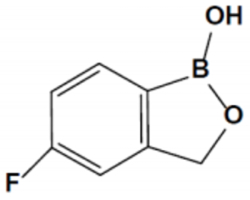
    The subject matter of the claimed invention was a topical formulation of 1,3-dihydro-5-fluoro-1-hydroxy-2,1-benzoxaborole (known as tavaborole):

    Structure
    and sold as KERYDIN® for treatment of a fungal infection (onychomycosis) caused by Trichophyton rubrum or T. mentagrophytes.  Flatwing Pharmaceuticals successfully initiated inter partes review of all claims of U.S. Patent Nos. 9,549,938 (the "'938 patent"), 9,566,289 (the "'289 patent"), 9,566,290 (the "'290 patent"), and 9,572,823 (the "'823 patent") for being as unpatentable for obviousness; the opinion characterizes dependent claim 2 of the '823 patent as being representative:

    1.  A method of delivering a compound, in a human, from a dorsal layer of a nail plate to a nail bed to treat onychomycosis caused by Trichophyton rubrum or Trichophyton mentagrophytes, the method comprising: contacting the dorsal layer of the nail plate with a pharmaceutical composition comprising a compound that penetrates the nail plate, the compound being [tavaborole] or a pharmaceutically acceptable salt thereof, thereby treating onychomycosis due to Trichophyton rubrum or Trichophyton mentagrophytes.

    2.  The method of claim 1, wherein the pharmaceutical composition is in the form of a topical solution comprising 5% w/w of [tavaborole], and wherein the pharmaceutical composition further comprises ethanol and propylene glycol [emphasis added].

    (Although other claims in the related patents in inter partes review recite ranges from 1-15%.)

    The PTAB had earlier found claims in two related patents to be invalid for obviousness (see "Anacor Pharmaceuticals, Inc. v. Iancu (Fed. Cir. 2018)").  Here, the PTAB applied some of the same art and arrived at the same conclusion of obviousness.  The Board decided that the prior art taught the use of antiifungal compounds (albeit not tavaborole) at concentrations overlapping the 5% recited in claim 2 of the '823 patent for treating fungal infections and thus the combination taught all the elements of the claimed invention.  The Board held that routine optimization by the skilled worker would have produced the claimed formulations which would have been reasonably expected to be effective against onchomycosis.  The Board also rejected Anacor's arguments regarding challenges posed by using organoboron compounds that would have precluded the existence of a reasonable expectation of success, based on expert testimony, and further rejected that the prior art (which taught 10% antifungal concentrations in prior art formulations) taught away from obviousness of the claimed invention teaching 5% tavaborole formulations.

    The Federal Circuit affirmed, in an opinion by Judge Lourie joined by Judges O'Malley and Chen.  Using the substantial evidence standard for factual questions arising before the PTAB, In re Gartside, 203 F.3d 1305, 1316 (Fed. Cir. 2000), and de novo review of questions of law, the panel agreed with the Board's conclusion that the choice of 5% tavaborole concentrations in the claimed in formulation was a matter of routine optimization.  The Federal Circuit recognized that tavaborole concentration was "a result-effective variable[] such that one could optimize nail penetration by routine experimentation within a predictable range of concentrations" in support of its opinion.  The evidence showed that screening techniques existed in the art for testing for efficacy.  The art also taught a relationship between nail penetration and antifungal effectiveness, for example, wherein the art taught that 5% econazole concentrations were effective for penetrating nails.  According to the opinion, because tavaborole is a smaller molecule than econazole the skilled worker would have expected it to be effective in penetrating nails and thus being effective as an antifungal agent in that milieu.

    The panel also rejected Anacor's teaching away argument, because the art showed that any diminution of effectiveness caused by lowering econazole concentration from 10% to 5% was modest and depended on other factors such as excipients used in the formulation.  The opinion characterized the attitude exhibited by the art as not amounting to discouragement against using 5% econazole formulations and thus concluded that the art did not teach away from them.

    Finally, with regard to Anacor's argument that the skilled worker would have recognized that using organoborane compounds posed some difficulties in formulation, the opinion states that "[prior art] describing in vivo inhibition of a common fungus with organoboron compositions—formulated in either mineral oil or petroleum jelly—is especially damaging to Anacor's arguments."  Moreover, the Federal Circuit found that any purported challenge was not reflected in the specification, wherein "the specification does not offer any guidance beyond citation of well-known guides to pharmaceutical formulation" for making the claimed organoborane formulations.

    Finding no error by the PTAB, the Federal Circuit affirmed its judgment of obviousness for all challenged claims.

    Anacor Pharmaceuticals, Inc. v. Flatwing Pharmaceuticals, LLC (Fed. Cir. 2020)
    Panel: Circuit Judges Lourie, O'Malley, and Chen
    Opinion by Circuit Judge Lourie

  • By Kevin E. Noonan

    Federal Circuit SealOne of the banes of any practicing patent attorney's professional existence is counseling clients on licensing agreements where the parties attempt to avoid setting forth definitive terms on contract provisions regarding circumstances expected to arise in future.  This is an understandable inclination, because such terms are likely to depend on such future circumstances that neither party wishes to anticipate and thus later find that they are at a disadvantage as a consequence.  But such an inclination neglects to consider other ways to structure a contract to avoid these risks, and also neglects to acknowledge the possible consequences of failing to address these issues during current contract negotiations.  For such clients, the Federal Circuit's recent decision in Phytelligence, Inc. v. Washington State University provides a cautionary tale (as well as an example for the intrepid attorney to use for convincing such clients of the pitfalls that can arise and problems that can be created by fainthearted conduct during contract negotiations).

    The predicate facts are these.  WSU and Phytelligence negotiated a Propagation Agreement for propagating a new apple cultivar named WA38 and patented by WSU.  The Propagation Agreement permitted Phytelligence to propagate the trees but not to sell them unless the company obtained permission under a separate license.  The relevant provision of the Propagation Agreement provided that:

    If [Phytelligence] is an authorized provider in good standing . . . by signing this Agreement, [Phytelligence] is hereby granted an option to participate as a provider and/or seller of Plant Materials listed in Exhibit A, if the Cultivar is officially released by WSU and becomes available for licensing by [WSU] . . . .  [Phytelligence] will need to sign a separate contract with [WSU], or an agent of [WSU], to exercise this option.

    Prior to executing the Propagation Agreement, Phytelligence requested clarification of this provision, with regard to whether WSU intended to require a separate license (to which WSU replied in the affirmative). But this clarification came with a caveat:  WSU informed Phytelligence that "there exists the possibility that if we license WA 38 to an exclusive licensee, that company/ person/ group may want to do his/her own plant propagation without outside assistance or may want to do that under contract with its own contractors."  And further:

    We [WSU] have no idea how WA 38 will be licensed at this time.  It would take any form: under an open release through a nursery group, for example, to an exclusive license with a company, group of individuals, coop., etc.  That decision has not yet been made, so there can be no guarantees made to anyone at this point.

    (Which turned out to be not much of a license or even an agreement to enter into a license.)  Under these circumstances, Phytelligence considered its agreement to be a "strictly research undertaking" that would permit the company to "experiment with propagation techniques"; WSU did not disagree.  Phytelligence proposed that it "might make more sense" to make a "fee-for-service" arrangement or experiment with propagation on its own; WSU responded that the "fact of the matter is that what happens from a commercialization/licensing point of view in regard to WA 38 and future apple releases is completely out of [our] hands at the moment."  Phytelligence ultimately signed the Propagation Agreement, specifically stating that in view of the need to sign this agreement as a precursor to any future licensing activity or agreement, this agreement was "fine as it is" (emphasis in opinion).

    As it turned out, that decision (or at least the basis for it) was a mistake.  Less than six months thereafter, WSU announced a Request for Proposals to companies interested in commercializing WA38 apples.  The proposal was for an exclusive license to manage commercialization of these apples, including contracting with nurseries to propagate the apples.  Phytelligence did not submit a proposal.

    In due course WSU executed an exclusive license with Proprietary Variety Management (PVM) to manage commercialization, and the right to subcontract for nursery services exclusively with Northwest Nursery Improvement Institute (NNII).  Under these contracts and licenses, as the opinion sets forth, "no industry participant could obtain a license to sell WA 38 without becoming a member of NNII."

    Three years later, Phytelligence notified WSU that it wanted to exercise its option under Section 4 of the Propagation Agreement.  Pursuant to the option clause in Section 4, WSU notified Phytelligence that it needed to sign a separate contract with PVM as WSU's agent.  In its turn PVM notified Phytelligence that it needed to join the NNMI, which the company refused to do and notified WSU that this requirement was not contained in Section 4 of the Propagation Agreement.  WSU provided Phytelligence with three options, two of which did not require membership in NNMI.  Phytelligence rejected these options and thereafter, WSU terminated the Propagation Agreement on the grounds that Phytelligence had materially breached the Propagation Agreement by selling and delivering WA38 to a third party without a license, and for patent and trademark (COSMIC CRISP) infringement.

    Phytelligence brought suit in Washington State court against WSU for breach of the Propagation Agreement for granting an exclusive license with PVM; Phytelligence sought damages and specific performance, to wit, "issuing a license to Phytelligence to propagate and sell commercially WA38 apples."  In counterclaims WSU alleged Phytelligence had infringed its patents and trademarks and removed the action to federal court.  The District Court granted summary judgment in favor of WSU on the University's motion that Section 4 was an "unenforceable agreement to agree."  The parties stipulated to an injunction to permit this appeal and WSU waived any money damages it had sought before the District Court.

    The Federal Circuit affirmed, in an opinion by Judge Reyna joined by Chief Judge Prost and Judge Stoll. With regard to the patency of Section 4 as an enforceable term of the Propagation Agreement, the Court analyzed this provision under Washington State contract law.  The law instructs the court to look at the "reasonable meaning of the contract language to determine the parties' intent," according to the opinion, citing Hearst Commc'ns, Inc. v. Seattle Times Co., 115 P.3d 262, 267 (Wash. 2005) (termed the "objective manifestation theory").  This analysis is based on the "ordinary, usual, and popular meaning" of contract terms absent the parties manifesting a different meaning when the court considers the entire agreement. Under Washington State law, an agreement to agree is unenforceable, because "[a]n agreement to agree is an agreement to do something which requires a further meeting of the minds of the parties and without which it would not be complete," quoting P.E. Sys., LLC v. CPI Corp., 289 P.3d 638, 644 (Wash. 2012). Citing this authority, the opinion contrasts an "agreement having open terms" as being one in which "the parties intend to be bound by the key points agreed upon with the remaining terms supplied by a court or another authoritative source, such as the Uniform Commercial Code."  Under these principles and precedent, the Federal Circuit considered Section 4 to be an unenforceable agreement to agree because under the plain meaning of the words in the Propagation Agreement the exercise of the option required a separate contract between the parties wherein the terms of such contract were not set forth, even in principle, in Section 4.  (Some of the Court's reasoning is practical:  the opinion states "the Propagation Agreement provides the court with no objective method for determining the terms of the 'separate contract' between Phytelligence and WSU (or its agent).")

    The Federal Circuit also rejected Phytelligence's attempt to introduce and rely on extrinsic evidence to support its appeal of the District Court's summary judgment decision.  This extrinsic evidence included a form constituting "WSU-approved standard licensing terms" which negated any need for future negotiations on the terms of the sought-after license.  To the extent Washington State law permits such extrinsic evidence (under what it terms "the context rule") it is limited "to determin[ing] the meaning of specific words and terms used and not to show an intention independent of the instrument or to vary, contradict or modify the written word" (emphasis in opinion).  On the merits, Phytelligence's theory fails as being "self-contradictory" according to the Court; the opinion states:

    According to Phytelligence, the parties agreed that Phytelligence would receive the terms contained in the Form License.  . . .  The Form License, however, requires the "Licensee" to "be a NNII member nursery in good standing" in order to license WA 38.  . . .  It is also undisputed that no propagator was offered a license to WA 38 unless it was a member of NNII.  Membership in NNII is the very requirement that Phytelligence alleges was not required by Section 4 and triggered WSU's breach. Thus, Phytelligence's claim of breach of contract fails under either premise.  On the one hand, if the parties agreed that the "separate contract" in Section 4 would contain the standard terms of the Form License, then WSU did not breach Section 4 by requiring Phytelligence to become a NNII member.  On the other hand, if the parties did not agree to such standard terms, Section 4 is unenforceable as an agreement to agree [citations to the record omitted].

    And the e-mail colloquy between the parties prior to executing the Propagation Agreement did not support Phytelligence's arguments regarding the form contract supplying the needed specificity on licensing terms. Considering this extrinsic evidence, the Federal Circuit held that "the email communications between the parties indisputably indicate that at the time the parties executed the Propagation Agreement, WSU did not commit to any definite terms of a future license with Phytelligence."

    And none of the other extrinsic evidence proffered by Phytelligence was any more persuasive to the Federal Circuit.  This evidence included a declaration from Phytelligence's CEO regarding his understanding of the agreement (which the Court held did not create a genuine material fact dispute) (indeed, the opinion notes that the CEO's deposition testimony supported the conclusion that there was no understanding between the parties at the time the Propagation Agreement was signed regarding the terms of a future commercialization license).  And the Court similarly rejected Phytelligence's allegation that WSU had established a "customary practice" of licensing its apple cultivars by licensing other cultivars, because there was no evidence that the parties agreed that any such customary practices would be followed in these licenses.  Finally, the Court rejected Phytelligence's argument that the parties' conduct created a genuine issue of material fact on this question, because the parties engaged in negotiations over the terms of a license and could not agree on such terms.

    The opinion lacks any mention of the principle that a contract can be construed against the drafter or that WSU, having the cultivar, the patent, and the trademark was in a position to strategically leave certain terms vague and then be in the position to make the best bargain for itself in future when the circumstances were more certain.  Perhaps such considerations would have been relevant if the case had gone to trial, but by being able to have the District Court grant summary judgment sufficiently supported by Washington State law WSU was able to avoid these issues, to Phytelligence's detriment.

    Phytelligence, Inc. v. Washington State University (Fed. Cir. 2020)
    Panel: Chief Judge Prost and Circuit Judges Reyna and Stoll
    Opinion by Circuit Judge Reyna