• LexisNexisLexisNexis IP and IPWatchdog and will be offering a webinar entitled "Myths of Litigated Patents" on October 15, 2020 at 12:00 pm (ET).  Dr. Sean Tu, Professor, WVU College of Law; Megan McLoughlin of LexisNexis® IP; and Gene Quinn of IPWatchdog will discuss whether patent examiners who issue litigated patents have common characteristics?  While intuition would argue that those examiners who issue the most patents (approximately one patent every three business days) would exhibit a higher litigation rate, surprisingly, two studies by Professor Sean Tu suggest that this is wrong.  The panel will address the following issues:

    • Which types of examiners tend to issue patents that later undergo litigation
    • Whether examiners who are "rubber stamping" patents issue litigated patents at a disproportionately higher rate
    • Whether examiners with less experience are issuing more litigated patents
     The issues at stake during prosecution for different types of examiners
    • How this knowledge can impact your prosecution practice

    There is no registration fee for this webinar.  However, those interested in registering for the webinar, should do so here.

  • MBHB Logo 2McDonnell Boehnen Hulbert & Berghoff LLP will be offering a live webinar entitled "An In-House Counsel’s Guide to Product Clearance: Best Practices in Freedoms-to-Operate, Landscaping and Opinions of Counsel" on October 13, 2020 from 10:00 am to 11:15 am (CT).  In this presentation, MBHB attorneys Grantland Drutchas and Jason Kray will address the steps in-house counsel need to take to protect their companies from assertions by competitors and NPE's and the goals and expectations they should you have for their outside counsel in conducting clearances and drafting opinions of counsel,  In addition, the panel will explore the following topics:

    • What steps you should take to explore the IP landscape when developing or on-boarding new products.
    • How to get the most from your freedom-to-operate opinions.
    • How to ensure that a search addresses the full scope of potential IP in all relevant countries.
    • What you need to do to make sure that your outside counsel's opinion will pass muster in litigation.
    • What you can do to evaluate NPE challenges, both in the U.S. and in the growing international NPE market.
    • How to evaluate risks of competitors re-crafting IP to cover your products.
    • What you should do to assess clearance risks for products from suppliers.

    While there is no fee to participate, attendees must register in advance.  Those wishing to register can do so here.  CLE credit is pending for the states of California, Illinois, New Jersey, New York, North Carolina, and Virginia.

  • LexisNexisLexisNexis IP and IPWatchdog and will be offering a webinar entitled "Preparing & Prosecuting Patents That Stand Up To Challenge" on October 13, 2020 at 12:00 pm (ET).  Todd Van Thomme of Nyemaster Goode P.C., Kristin Murphy of Honigman LLP, and Bernie Tomsa of Brooks Kushman P.C. will discuss: (1) Pros and cons of having a Background (101 vs. 103); (2) Carefully considering claim terms and infringers; (3) Fixing problems before and after allowance; (4) When should you be willing to take a case to appeal? (5) Portfolio building techniques: Identifying valuable claims to add.

    Those interested in registering for the webinar can do so here.

  • What Quantum of Culpable Conduct Is Required for an ANDA Applicant to Induce Infringement?

    By Kevin E. Noonan

    Federal Circuit SealThe back-and-forth, (almost) cat-and-mouse-like competition between branded innovator and generic drug makers sanctioned under the Hatch-Waxman Act has been on-going for over thirty years.  As part of this regime, Congress has provided a pathway for generic drug companies to obtain FDA approval for less than all the indications a branded drug has obtained, using a "carve out" strategy resulting in a so-called "skinny label."  This has raised the possibility of "off-label" use, where physicians prescribe the generic drug for an indication not approved for the generic drug but known to be clinically appropriate from the innovator's approval for the product.  The extent to which a generic drug company can use this strategy to avoid liability for inducing infringement was tested in the Federal Circuit's recent decision in GlaxoSmithKline LLC v. Teva Pharmaceuticals USA, Inc.

    The matter arose in litigation over GSK's Coreg® product (carvedilol) for treatment of hypertension (the initial approved indication; U.S. Patent No. 4,503,067), congestive heart failure (CHF) (the subject of U.S. Patent No. 5,760,069) and left ventricular dysfunction following myocardial infarction (LVD-MI).  The '069 patent recites a method of treating CHF with a combination of carvedilol and "one or more of an angiotensin-converting enzyme ("ACE") inhibitor, a diuretic, and digoxin."

    Teva's ANDA was filed with a Paragraph III certification over the '067 patent and a Paragraph IV certification over the '069 patent.  The FDA tentatively approved Teva's generic product for "treatment of hypertension and heart failure" which Teva launched on expiration of the '067 patent.  Teva's label indicated that the product was approved treatment of LVD-MI and hypertension and announced that FDA had given its product an "AB rating" (which the opinion explained "allow[s] users to determine quickly whether the Agency has evaluated a particular approved product as therapeutically equivalent to other pharmaceutically equivalent products").  Thereafter, FDA required Teva to amend its label to be identical to the GSK label for Coreg®, which introduced treatment of heart failure into the approved treatments recited in Teva's label.

    GSK filed for reissue of the '069 patent which was duly granted by the U.S. Patent and Trademark Office as Reissue Patent No. RE40,000; claim 1 is representative of the invention as claimed in the '000 reissue patent:

    1.  A method of decreasing mortality caused by congestive heart failure in a patient in need thereof which comprises administering a therapeutically acceptable amount of carvedilol in conjunction with one or more other therapeutic agents, said agents being selected from the group consisting of an angiotensin converting enzyme inhibitor (ACE), a diuretic, and digoxin,
        wherein the administering comprises administering to said patient daily maintenance dosages for a maintenance period to decrease a risk of mortality caused by congestive heart failure, and said maintenance period is greater than six months.

    (Where the italicized portion of the claim represents the modifications introduced in prosecution of the reissue application.)

    GSK filed suit against Teva for inducement of infringement based on the Teva label, based on direct infringement by physicians prescribing the drug for the label indications.  Teva argued that it had "carved out" the indication for CHF pursuant to 21 U.S.C. § 355(j)(2)(A)(viii), resulting in a "skinny label" with regard to this indication.  Thereafter, FDA compelled Teva to amend its label to include that indication.  In addition, Teva argued that it could be liable for inducement only if GSK could show that Teva had "directly communicated with the direct infringers and 'caused' them to directly infringe the method in the '000 patent."  In a jury instruction the court informed the jury that circumstantial evidence could be used to satisfy this burden.

    The jury found that Teva induced infringement of the '000 reissue patent both before and after the label amendment (albeit infringing several claims after but not before that change).  The District Court granted Teva's motion for judgment as a matter of law (JMOL) on the basis that GSK had not "caused" physicians to prescribe their product for the infringing uses.  Because proof of such causation was required, according to the District Court, its absence precluded the jury from basing its decision on substantial evidence.  The Court relied on the "many sources of information available to prescribing physicians" other than Teva's label (including paradoxically GSK's label and promotion of its Coreg® product) in finding this evidentiary deficiency.  Also, the Court based its decision on physician testimony that their prescribing behavior relied on "guidelines and research, as well as their own experience" and not Teva's label.  "In sum," the Court said, "substantial evidence [did] not support the jury's finding on causation, and therefore [did] not support its verdict that Teva is liable for induced infringement, during both the skinny and full label periods."  This appeal followed.

    The Federal Circuit reversed, in an opinion by Judge Newman joined by Judge Moore; Chief Judge Prost provided a lengthy, comprehensive dissent.  The panel majority relied on the Supreme Court's decision in Global-Tech Appliances, Inc. v. SEB S.A., 563 U.S. 754 (2011), that copying is evidence of inducement, as applied in to generic drugs (which are required by regulatory statutes to "copy") in Eli Lilly & Co. v. Teva Parenteral Meds., Inc., 845 F.3d 1357, 1369 (Fed. Cir. 2017), and Sanofi v. Watson Labs. Inc., 875 F.3d 636, 645 (Fed. Cir. 2017) (as well as the earlier precedent of AstraZeneca LP v. Apotex, Inc., 633 F.3d 1042, 1060 (Fed. Cir. 2010), and Mentor H/S, Inc. v. Med. Device All., Inc., 244 F.3d 1365, 1379 (Fed. Cir. 2001)).  The majority also found compelling evidence from Teva's website regarding its product's AB rating with GSK's Coreg® product and other promotional content, as well as testimony from GSK's witnesses regarding physician reliance on information from generic drug makers.

    Less persuasive to the Federal Circuit majority was Teva's evidence regarding "deliberately omit[ting]" reference to CHF in its skinny label, particularly in light of the continued promotion of the product by Teva in a manner not consistent with complete exclusion of the CHF indication (albeit without express inclusion of that indication).

    The panel majority opined that the District Court erred in applying the correct legal standard, stating that "precedent makes clear that when the provider of an identical product knows of and markets the same product for intended direct infringing activity, the criteria of induced infringement are met."  Considering this precedent, the majority held that "[t]here was ample record evidence of promotional materials, press releases, product catalogs, the FDA labels, and testimony of witnesses from both sides, to support the jury verdict of inducement to infringe the designated claims for the period of the '000 reissue patent."  The opinion cites Vanda Pharm. v. West-Ward Pharm. Int'l Ltd., 887 F.3d 1117, 1129 (Fed. Cir. 2018), and Sanofi for the principle that the label's contents can be evidence of inducement to infringe.

    The majority also takes its opportunity to address (briefly) the Chief Judge's dissent, stating that it is not proper for the appellate court to "find facts afresh" nor to engage in policy arguments regarding FDA approval standards.  In the majority's view, "[t]he implications of the dissent's position are vast, and if enforcement of patents on new discoveries varies with the extent to which the patentee has profited from past discoveries, this is a policy matter for Congress, not a factor in judicial review of jury verdicts."

    The majority's opinion concludes by considering Teva's objections to the bases for the District Court's damages instructions and calculations, affirming because they concluded that "the jury instructions are in conformity to law."

    Chief Judge Prost dissented based, as the majority noted, on her objections to the quanta of evidence adduced and policy consequences should the majority's position be sustained.  The Chief begins by referencing the need, in her view, for balance between the incentives patents provide for pharmaceutical innovation and the public's need for access to that innovation once the patent term has expired, noting that this was one motivation for Congress to establish the generic drug approval system.  In the Chief's view the majority's decision undermines these policy goals by finding Teva induced infringement by marketing its generic drug produce for unpatented uses (emphasis in dissent) using its skinny label.  The dissent sets out the opinion that Teva acted just as Congress intended when it enacted the skinny label provisions, by waiting (using its Paragraph III certification) until GSK's patent had expired before launching its product for unpatented indications.  And Teva's inclusion on its label of the CHF indication (recited in GSK's '000 reissue patent) was compelled by FDA; even then according to the dissent "there was still no inducement via the full label."  The Chief Judge believes that:

    The district court got it right: no evidence established that Teva actually caused the doctors' infringement for either label.  No communication from Teva encouraged doctors to use generic carvedilol to practice the patented method.  And no evidence showed that doctors relied on Teva's label.  Indeed, GSK's own expert admitted that he had not read Teva's label before prescribing generic carvedilol.  Rather than suggest inducement, the record established that doctors relied on other sources of information, not Teva, in making their decision to prescribe carvedilol.  And in any case, the record showed that the switch from Coreg® to generic carvedilol occurred "automatically," often without doctors' knowledge at all.

    The dissent not only disagrees with the majority's decision, but recognizes that "it nullifies Congress's statutory provision for skinny labels—creating liability for inducement where there should be none," contrary to Congressional intent and "slowing, rather than speeding, the introduction of low-cost generics."

    After stating her opinion, the Chief Judge spends the rest of her lengthy dissent (at 33 pages much longer than the majority opinion) setting forth the following subjects:  1. The Statutory Background; 2. The Factual n Procedural Background; 3. [That] The Majority Nullifies Congress's Provision for Skinny Labels; and 4. [That] The Majority Misapplies the Law and Misconstrues the Facts.  The bulk of the Chief's arguments are in the third and fourth sections of her dissent (as commented upon by the majority).  Regarding the Chief's opinion that the majority engaged in judicial nullification of the skinny label option enacted by Congress, the Chief stated that:

    To hold [that Teva infringes based on its label], as the Majority does, undermines Congress's provision for skinny labels by substantially nullifying section viii.  According to the Majority, a generic company that carves out from its label a patented method of use can nonetheless be found to infringe that patented method based on the content of the FDA-approved label.  See Maj. 16.  By finding inducement based on Teva's skinny label, which was not indicated for—and did not otherwise describe—the patented method, the Majority invites a claim of inducement for almost any generic that legally enters the market with a skinny label.  That is directly contrary to Congress's intent," citing Caraco Pharm. Labs., Ltd. v. Novo Nordisk, 566 U.S. 399 (2012) (emphasis in dissenting opinion).

    The Chief also found Federal Circuit precedent contrary to the majority's opinion in Takeda Pharmaceuticals U.S.A. v. West-Ward Pharmaceutical Corp., 785 F.3d 625 (Fed. Cir. 2015), and Warner-Lambert v. Apotex Corp., 316 F.3d 1348 (Fed. Cir. 2003).  And rather than finding anything nefarious in Teva's carveout, the Chief opined that Teva "was acting in accordance with Congress's goals for it" as sanctioned by the Supreme Court in Caraco Pharm.

    Chief Judge Prost's disapproval of the majority's application of the law to the facts revisited the jury's determination and the District Court's consideration that the jury lacked substantial evidence to support its verdict of induced infringement, unavoidably at least considering if not finding facts afresh as the majority noted in their opinion.

    While not expressly discussed by either the majority or the dissent, there is a hint that the majority was concerned with generic drug companies improperly relying on the skinny label strategy to profit from "off-label use" by physicians for the very indication excluded by the skinny label carveout.  The majority extended the scrutiny regarding this stratagem perhaps farther than it can reliably be stretched, not requiring the level of promotion of the carved out indication that would be expected to attract inducement liability.  And the dissent argued strongly regarding the impropriety of the policymaking consequences of the majority's decision usurping Congress's role in deciding the extent to which a generic drug company can use the skinny label strategy to avoid infringement inducement liability.  It is likely that (at a minimum) the Court will hear this case en banc; perhaps less likely but certainly within the realm of possibility is Supreme Court review in light of the important policy considerations raised by the majority and even more strongly by Chief Judge Prost's dissent.

    GlaxoSmithKline LLC v. Teva Pharmaceuticals USA, Inc. (Fed. Cir. 2020)
    Panel: Chief Judge Prost and Circuit Judges Newman and Moore
    Opinion by Circuit Judge Newman; dissenting opinion by Chief Judge Prost

  • By Kevin E. Noonan

    USPTO SealIn the Patent Trial and Appeal Board's decision on motions issued September 10th in Interference No. 106,115 (see "PTAB Decides Parties' Motions in CRISPR Interference") between Senior Party The Broad Institute, Harvard University, and the Massachusetts Institute of Technology (collectively, "Broad") and Junior Party the University of California/Berkeley, the University of Vienna, and Emmanuelle Charpentier (collectively, "CVC"), the Board granted Broad's Motion No. 4 for priority benefit to U.S. Provisional Application No. 61/736,527.  As a result, Broad will remain Senior Party during the Priority Phase of the interference.

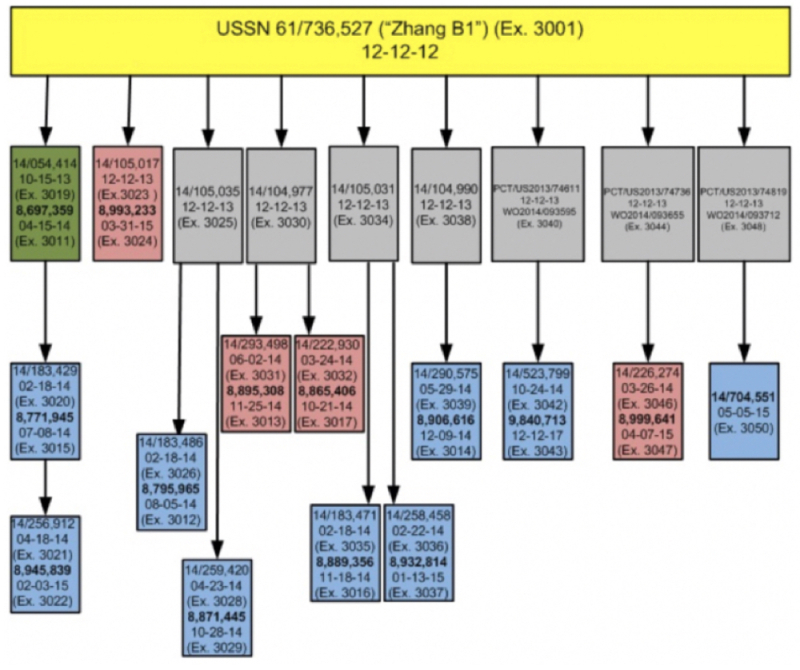
    Broad in its substantive Motion No. 4 argued that it had satisfied the standard for priority to USSN 61/736,527 to Zhang (termed "Zhang B1" in the motion).  The following diagram, showing the interrelatedness of the various Broad patents and applications in the interference, illustrates the basis of Broad's priority claim:

    Image 1The Board in its Decision on Motions pursuant to 37 C.F.R. § 41.125(a) set forth a recapitulation of Broad's arguments, in sum that Zhang B1 "provides working examples and embodiments that meet each and every limitation of both halves of Count 1" and thus evinces to the skilled worker possession of an embodiment within the scope of the Count.  The Board in its Decision cited (and provided as an illustration) what it deemed to be successful practice of CRISPR-Cas9 in eukaryotic cells by reference to Figure 1D:

    Image 2with the understanding that:

    Figure 1D depicts a nuclease assay for SpCas9 mediated insertions and deletions wherein different combinations of four components of a CRISPR-Cas system are tested in each lane.  Bands indicating a 367 bp and a 317 bp product are present in the lanes that include Cas9, tracrRNA, and EXM1-target spacer, but not in the lanes that are missing either tracrRNA or EXM1-target spacer.

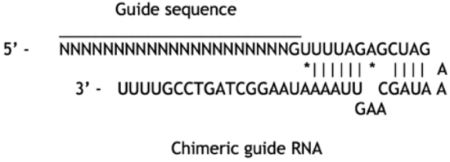
    The Board also sets forth CVC's arguments in opposition, specifically that the priority document was non-enabling for the invention set forth in the interference Count because it relies exclusively on a 'chimeric guide RNA' that a [person of ordinary skill in the art or] POSA could not have made and used in a cell without undue experimentation."  This argument focuses (as the Broad did in its brief and the Board does in its Decision) on "Embodiment 17" (E17), wherein a chimeric guide RNA is expressed by a cell comprising both U and T bases:

    Image 3
    In its Decision, the Board was convinced by Broad's evidence, particularly by expert testimony, that the skilled worker would have interpreted the "T's" in the sequence to be "U's."  Broad argued that describing Figure 2A as an RNA would have supported that interpretation (despite the contra designation as a "Chimeric guide RNA") and further states that Figures 12B and 8 would support this interpretation.  Further, the Board credited Broad's argument that the skilled worker would recognize that the disclosed vector would naturally produce the guide RNA having U's instead of T's:

    Image 4The Board criticized CVC's arguments on several points.  For example, the Decision states that while CVC argued that the Examiner in related applications recognized the disparity regarding U's and T's comprising the chimeric guide RNA but noted that 'in the Examiner's requirement for correction CVC highlights, the Examiner only required Broad to include sequence identification numbers, not correction of the actual sequence and that "CVC does not direct us to any comment by the Examiner regarding the sequence in Figure 2A or to any rejection based on lack of enablement because of it."  And specifically with regard to this argument, the Board voiced its agreement with Broad's witness that the skilled worker would have understood that the illustrated T's would have been produced as U's in the RNA produced in a eukaryotic cell.  (Nor, the Board notes, has there been any correction of the corresponding scientific paper, Cong et al., 2013, "Multiplex Genome Engineering Using CRISPR/Cas Systems," Science 339: 819–23, in the record, supporting the view that the skilled worker's understanding would be consistent with Broad's argument and expert testimony.)

    The Decision concludes on this issue that "[b]ecause Broad has persuaded us that Zhang B1 provides a constructive reduction to practice of an embodiment of Count 1, we are persuaded that Broad should be accorded its filing date."  Accordingly, the Board granted Broad Motion No 4.

    As a consequence, Broad will remain the Senior Party in this interference.

    The remainder of the Board's Decision with regard to CVC's motions will be discussed in future posts.

  • By Kevin E. Noonan

    USPTO SealIn the Patent Trial and Appeal Board's decision on motions issued September 10th in Interference No. 106,115 (see "PTAB Decides Parties' Motions in CRISPR Interference") between Senior Party The Broad Institute, Harvard University, and the Massachusetts Institute of Technology (collectively, "Broad") and Junior Party the University of California/Berkeley, the University of Vienna, and Emmanuelle Charpentier (collectively, "CVC"), the Board denied Broad's Motion No. 3 to De-designate Claims as Not Corresponding to Count No. 1.

    Broad's brief parsed its claims into three categories of claims that it argued do not correspond to the Count, depending on how the Board rules on Substantive Motions Nos. 1 and 2:

    • USP 8,865,406 – Claims 1-30 (all); 8,871,445 – Claims 1-30 (all); USP 8,889,356 – Claims 1-30 (all); USP 8,932,814 – Claims 1-30 (all); USP 8,945,839 – Claims 1-28 (all); USP 8,993,233 – Claims 1-43 (all); USP 8,999,641 – Claims 1-28 (all); USP 8,697,359 – Claims 1-3, 5-10, 12-17, and 19-20; USP 8,771,945 – Claims 1-4 and 6-29; USP 8,895,308 – Claims 1-9 and 11-28; USP 8,906,616 – Claims 1, 3-4, 6-30; USP 9,840,713 – Claims 1-7, 10-15, 17-26, and 28-41; and U.S. Patent Application No. 14/704,551: in the event that the Board denies both Motions No. 1 and 2.

    • USP 8,865,406 – Claims 1-30 (all) and USP 8,895,308 – Claims 1-30 (all): in any event, claims reciting Ca9 from Staphylococcus aureus (the SaCas9 claims).

    • USP 8,871,445 – Claims 1-30 (all); USP 8,932,814 – Claims 1-30 (all); USP 8,993,233 – Claim 7; USSN 14/704,551 – Claims 9-11: clams reciting two or more nuclear localization signal (the NLS claims).

    As set forth by the Board in its Decision on Motions pursuant to 37 C.F.R. § 41.125(a), the Board refutes Broad's assertion that denial of their Motions Nos. 1 and 2 was equivalent to a determination that "claims to a single-molecule RNA CRISPR-Cas9 system are separately patentable from non-limited guide RNA claims." "Rather," said the Board, "our denials of Broad Motions 1 and 2 are based on a failure of Broad to meet its burdens."  (Indeed, the Decision expressly disclaims any determination on patentability with regard to RNA molecule configuration.)

    On the merits, the Decision states that the standard it has applied is whether each involved claim in Broad's patents-in-interference would have been anticipated or rendered obvious by the subject matter of Count 1.  The Board notes that "[m]any of Broad's supporting reasons are similar to those put forth in Motion 2," setting forth examples.  The Board being specific in its language interprets some of Broad's arguments to be limited to its claims wherein reciting "fused" or "chimeric" RNA species should be construed to recite single RNA molecule CRISPR species.  The Board expressly rejects Broad's assertion that "all but 43 of Broad's 387 involved claims" should be designated as not corresponding to Count 1 on this rationale, which the Decision states is based on Broad's argument (rejected by the Board in its denial of Broad Motion No. 2) involving the claim term "guide RNA."

    The Board recognizes the Broad makes a different argument with regard to Claims 15 and 26 of the '713 patent:

    Claim 15:

    A CRISPR-Cas complex-mediated method for the production of a multicellular genetically modified non-human animal or multicellular genetically modified plant, the method comprising delivery to one or more target sequences in a cell of the multicellular non-human animal or plant of:
        a Cas9 protein;
        a guide sequence linked to a tracr mate sequence; and
        a tracr sequence;
    wherein the guide sequence directs sequence-specific binding of a CRISPR complex to the target sequence in the cell, whereby the multicellular genetically modified non-human animal or multicellular genetically modified plant is produced, and displays a phenotype or carries DNA to display a phenotype of the genetic modification.

    This claim, according to the Board, does not recite any linking, fusing, or other language to describe the relationship between the guide and tracr RNA molecules.

    Claim 26:

    A CRISPR-Cas complex-mediated method for the production of a multicellular genetically modified non-human animal or multicellular genetically modified plant, the method comprising delivery to a cell of the multicellular non-human animal or plant having one or more target sequences of a Cas9 protein, or a nucleic acid molecule encoding the Cas9 protein; and a guide sequence linked to a tracr mate sequence; and a tracr sequence, or one or more nucleic acid molecules encoding the guide sequence linked to the tracr mate sequence and the tracr sequence,
        wherein the guide sequence directs sequence-specific binding of a CRISPR complex to the target sequence in the cell, whereby the multicellular genetically modified non-human animal or multicellular genetically modified plant is produced, and displays a phenotype or carries DNA to display a phenotype of the genetic modification.

    This claim, according to the Board, recites a method for delivering nucleic acids comprising Cas9, a guide RNA and trace RNA separately, or nucleic acids "encoding the guide sequence linked to the tracr mate sequence and the tracr sequence."

    CVC had argued that claim 15 was limited to single RNA molecule CRISPR embodiments by the language of claim 26; the Board was not persuaded by this argument.  Under the broadest reasonable interpretation of claim 15 as found by the Board these species encompassed any physical relationship between the guide and tracr RNAs.  Likewise, claim 26 recites that the guide and tracr RNAs could be encoded by separate nucleic acid molecules.  Accepting this construction, the Board recites again the requirement for a claim to correspond to the Count, including the rule that "[a] count directed to a species, if prior in time, would typically anticipate a generic claim" under Rule 41.207(b)(2).  To the Broad's argument that this Rule merely recites "a presumption" (Board: "which apparently does not apply to Broad in this case") the Board states that it is not persuaded by Broad's argument (citing comment 186 in the Final Rulemaking) and that the cited comment was rather directed to Rule 41.207(b)(1), which specifies a "rebuttable presumption that all claims designated as corresponding to a count stand or fall together."

    The Board also addressed Broad's resort to fairness (that has been a theme throughout its briefing), stating that "Broad cites to no authority that holds unfairness or any other condition, such as facts beyond the relationship of the subject matter of the claims and the count, can be used to determine claim correspondence differently."

    And turning to specific citations to case law, the Board finds Broad's reliance on Eli Lilly & Co. v. Bd. of Regents of Univ. of Washington, 334 F.3d 1264 (Fed. Cir. 2003), to be "misplaced" because that case was about determination of whether there was an interference-in-fact using the two-way test rather than, as here, claim correspondence under the one-way test.  Nor did the Lilly court state that "a genus invented before a species is separately patentable," which the Board believes was Broad's argument.  In the Board's view, Broad must prove that the genus and species are separately patentable inventions.  In like manner, the Decisions states that none of Godtfredsen v. Banner, 598 F.2d 589, 590 (CCPA 1979); Theeuwes v. Bogentoft, 2 U.S.P.Q.2d 1378 (B.P.A.I. 1987); nor Ex Parte Hardman, 142 U.S.P.Q. 329 (CCPA 1964), stand for the proposition that claim correspondence can be determined by anything other than the test enunciated in Rule 207(b)(2).  And somewhat ironically in view of Broad's Motion No 1, the Board finds that comments to Final Rulemaking support their view that estoppel is determined by correspondence to the Count:

    [37 C.F.R. § 41.207(b)] simply formalizes the effect of estoppel arising out of cases like In re Deckler, 977 F.2d 1449, 1452 . . . (Fed. Cir. 1992), in which a party could not subsequently seek claims that were patentably indistinct from the subject matter of the count lost in the interference.  As discussed earlier, no one "wins" a count because surviving a priority contest for one count does not mean that one is thereby entitled to a claim. [Application of] Kyrides [159 F.2d 1019 (CCPA 1947)].

    There is no unfairness in proper application of the principles set forth in Deckler, the Board asserts.  Thus, if Broad's generic claims are found anticipated or rendered obvious by Count 1 the estoppel will apply to these claims.  Here, the Board finds that "Broad fails to meet the burden of persuading us that either its claims do not correspond to Count 1 or that we should add a separate count."  And the only Broad argument the Board appreciates as being directed to anticipation or obviousness is "a general reference to CVC's arguments that claims to CRISPR/Cas9 systems with single-molecule RNA configurations are separately patentable from claims to systems with generic RNA configurations."  In the Board's view, this argument is contradicted by Broad's argument in Motion No. 2 that "CVC's single-molecule RNA claims are not patentable over a generic count, such as proposed Count 2."  In this regard, the Decision states that "it is not clear that Broad could argue that a count reciting a single-molecule RNA configuration CRISPR-Cas9 system would not at least render obvious a claim reciting a generic RNA configuration."  The result is the Board's determination that Broad failed to set forth a sufficiently clear argument to support that claims 15 and 26 do not correspond to Count 1.

    Turning the SaCas9 claims, after reciting the positions and evidence adduced by the parties, the Board states that it was persuaded by one of the cited references to Sapranauskas et al. (2011, "The Streptococcus thermophilus CRISPR/Cas system provides immunity in Escherichia coli," Nucleic Acids Research, 39: 9275–82) that "S. aureus was considered to be a model CRISPR/Cas system in 2011."  This reference also persuaded the Board that Broad's arguments regarding lack of sequence homology or domain regions were insufficient to support Broad's arguments that the use of a different Cas9 source was sufficient for these claims not to correspond to the Count.  And the requisite motivation to try argued by CVC to exist in the art was supported by one of Broad's experts based on its advantageously smaller size compared with other Cas9 species.  Finally, the Decision states that the Board was not persuaded by Broad's expert that the skilled worker would not have had a reasonable expectation of success using CRISPR with SaCas9 nor that it would have been unexpected.  Accordingly, the Board states that "Broad fails to persuaded us that a CRISPR-Cas9 system using SaCas9 would not have been obvious over Count 1," citing the standard set forth in KSR Int'l Co. v. Teleflex Inc., 550 U.S. 398, 421 (2007).

    Finally, the Board similarly did not find persuasive Broad's argument that CRISPR embodiments comprising multiple nuclear localization sequences (the NLS claims) would not have been obvious over Count 1.  Broad provided its expert to support these assertions, comparing bacterial proteins acting in the bacterial milieu compared to how they act in a eukaryotic cell and testifying that the presence of these NLS sequences would have unpredictably influenced Cas9 activity.  The Board did not find convincing Broad's argument on this point, either.  In the Board's view, the efficacy of the use of one or more NLSs attached to a protein such as Cas9 would be a matter of no more than routine experimentation, relying on Fieck et al. (1992, "Modifications of the E. coli Lac repressor for expression in eukaryotic cells: effects of nuclear signal sequences on protein activity and nuclear accumulation," Nucl. Acids. Res. 20: 1785–91).  In addition, CVC asserted and the Board credited that it was known in the art that Cas9 could be functional when expressed as a chimeric protein, citing Jinek 2012, testimony of its expert witness, and U.S. Patent Application Publication No.  2010/0076057.  Broad's reliance on the outcome and reasoning of the prior interference between the parties, No. 105,048 was also unavailing because the question here is "whether adding two or more NLSs to the functional eukaryotic system of Count 1 would have been obvious" and Broad, in the Board's view, did not supply any such evidence.  And while Broad argues that modifying Cas9 with two or more NLSs "significantly improved localization and unexpectedly improved efficiency", the Board found no evidence that such improvements would have been unexpected, nor did Broad provide any evidence of secondary considerations to rebut the obviousness of these claims in view of Count 1 of the interference.

    "In summary," the Decision concludes on this issue, "Broad fails to persuade us that any of its claims should be designated as not corresponding to Count 1" and this Broad Motion No 3 was denied.

    The remainder of the Board's Decision will be discussed in future posts.

  • By Kevin E. Noonan

    Federal Circuit SealNovelty is perhaps the principal, most fundamental requirement for patentability, and depriving the public of anything in the prior art must be avoided.  The Federal Circuit recently reinforced the primacy of these rubrics in Biogen MA, Inc. v. EMD Serono, Inc.

    The issues arose in litigation over Biogen's Rebif* product for the treatment of multiple sclerosis comprising a recombinant interferon-β ("IFN-β").  Biogen asserted U.S. Patent No. 7,588,755 ("'755 patent") in this litigation; the Federal Circuit identified Claim 1 as being representative:

    1.  A method for immunomodulation or treating a viral condition[ ], a viral disease, cancers or tumors comprising the step of administering to a patient in need of such treatment a therapeutically effective amount of a composition comprising:
        a recombinant polypeptide produced by a non-human host transformed by a recombinant DNA molecule comprising a DNA sequence selected from the group consisting of:
            (a) DNA sequences which are capable of hybridizing to any of the DNA inserts of G-pBR322(Pst)/HFIF1, G-pBR322(Pst)/HFIF3 (DSM 1791), G-pBR322(Pst)/HFIF6 (DSM 1792), and GpBR322(Pst)/HFIF7 (DSM 1793) under hybridizing conditions of 0.75 M NaCl at 68° C. and washing conditions of 0.3 M NaCl at 68° C., and which code for a polypeptide displaying antiviral activity, and
            (b) DNA sequences which are degenerate as a result of the genetic code to the DNA sequences defined in (a);
        said DNA sequence being operatively linked to an expression control sequence in the recombinant DNA molecule.

    The jury found the patent to be invalid under 35 U.S.C. § 102(b) as being anticipated by two prior art references that taught MS treatment using naturally occurring IFN-β.  The jury also found that Defendants had not established by clear and convincing evidence that the asserted claims were invalid for obviousness, lack of enablement, or for failing to provide an adequate written description and that patients and prescribers directly infringed and Serono contributorily infringed but did not induce infringement.

    The District Court granted Biogen's motion for judgment as a matter of law that the cited art did not anticipate the '755 patent claims, and granted a new trial contingent on the outcome of this appeal.  Under the District Court's reasoning, the cited references did not disclose recombinant IFN-β and thus no reasonable jury could find these references anticipated the '755 patent claims.  The District Court also found no anticipation because the claims recited administration of a "therapeutically effective amount" of recombinant IFN-β that "displays antiviral activity" not taught in the cited art.  The District Court also held in this regard that "the jury lacked substantial evidence that the native IFN-β protein as disclosed in [the cited art] was structurally or functionally identical to the claimed three-dimensional recombinant IFN-β protein," based in part on differences in glycosylation patterns in the recombinant IFN-β protein compared with the naturally occurring human IFN-β protein; the District Court relied on expert testimony in coming to its conclusion.  Particularly, the District Court did not construe the claims as product-by-process claims.

    The District Court sustained the jury's determination in all other respects (as well as granting Biogen's motion that the claims recited patent-eligible subject matter).  This appeal followed.

    The Federal Circuit reversed the District Court grant of JMOL on anticipation and grant of a new trial, in an opinion by Judge Linn joined by Judges Newman and Hughes.  The panel found two sources of error in the District Court's grant of JMOL in favor of Biogen.  First, in the Federal Circuit's judgment that the claims were indeed product-by-process claims and should have been construed that way.  Second, the District Court's construction "required identity of three-dimensional structures not specifically recited in the claims rather than relying on the claimed and lexicographically defined 'polypeptide.'"

    With regard to the differences between naturally occurring and recombinant IFN-β proteins, the Federal Circuit opined that the District Court unnecessarily "categorized the 'produced; and 'transformed' limitations in the '755 claims as meaningful 'source limitations.'"  The District Court also identified the recombinant source of the recited IFN-β as "overcoming the shortcomings of the prior art" with regard to be able to access sufficient quantities of IFN-β to achieve practicable treatment of MS.

    The Federal Circuit agreed with Serono that "a source limitation alone cannot confer novelty unless the product itself is novel" and that the District Court erred by ignoring the "longstanding rule" that an "old" product (i.e., one in the prior art) is not patentable by being made by a new process (in contrast with the process, which if new and otherwise in satisfaction of the statute is patentable), citing (among more recent precedent) Cochrane v. Badische Anilin & Soda Fabrik, 111 U.S. 293, 311 (1884).  Amongst that more recent (and in many ways more apt) precedent was Amgen Inc. v. Hoffman-La Roche Ltd., 580 F.3d 1340 (Fed. Cir. 2009), regarding comparison between recombinant erythropoietin and prior art human urinary EPO.  The key question there, and here, is whether production of a protein recombinantly resulted in a new product (which, if the primary amino acid sequence is identical devolves into a comparison of glycosylation patterns).  Merely reciting the recombinant origins of the protein at issue does not produce additional structural limitations distinguishing the proteins according to the opinion, the Court citing Purdue Pharma L.P. v. Epic Pharma, LLC, 811 F.3d 1345, 1353 (Fed. Cir. 2016), for this proposition.

    Here, the panel properly recognized that the only point of novelty Biogen can rely upon is that a therapeutically effective amount of recombinant IFN-β is administered (which was not in the prior art). The composition itself is claimed by its method of making ("recombinant") and to recognize novelty here based solely on administration would in the Court's opinion "defy all reason," because in that case "a recombinant composition could be non-novel, the method of administration could be non-novel, but the method of administration of the composition defined by the process of its manufacture would be novel as a matter of law."

    And with regard to using a product-by-process analysis within a method of treatment claim, the panel cited to Purdue Pharma for the proposition that it is the novelty of the composition itself, rather than how it was made, that is the proper basis for deciding whether the claim recites novel subject matter.

    The Court provided two rubrics for the principles it set forth.  First, put succinctly, "the recombinant origin of the recited composition cannot alone confer novelty on that composition if the product itself is identical to the prior art non-recombinant product."  And further, "an old method of administration of an old product made by a new process is not novel and cannot be patented."

    The District Court's final point of error according to the panel was in considering the novelty of the process of making IFN-β — recombinantly — as giving "force and effect" to the "heart of the claimed invention."  The error is in the consequence:  by doing so the claim removed old products from the public domain, the cardinal sin that the novelty requirement seeks to avoid.

    The Federal Circuit also found error in the District Court's emphasis on the three-dimensional structure (and differences between) naturally occurring and recombinant IFN-β.  This preoccupation was contrary to the definition of the term "polypeptide" in the specification as "[a] linear array of amino acids connected one to the other by peptide bonds between the α-amino and carboxy groups of adjacent amino acids."  This art-recognized definition is without regard to the three-dimensional structure of the polypeptide (indeed, it is a fundamental rubric of protein chemistry that the linear array — termed the polypeptide's "primary structure" — determines, with some limitations, its three-dimensional structure).  Biogen acknowledged the identity of the "sequential order" of amino acids between naturally occurring and recombinant IFN-β as claimed, which should have been the end of it.  But the District Court considered the further claim limitation that the recombinant IFN-β must be "therapeutically effective" and have "antiviral activity" as imparting significance to identity of three-dimensional structure.

    The District Court's errors, according to the Federal Circuit, were three-fold.  First, consideration of the three-dimensional structure was contrary to the definition in the specification, and thus a contradiction of the inventor's lexicographic choices.  Second, there was no disclosure in the specification or limitation recited in the claims relating the three-dimensional structure of recombinant IFN-β to antiviral activity.  And finally the jury was not given and Biogen did not request an instruction that required comparison of the three-dimensional structures of prior art naturally occurring IFN-β and recombinant IFN-β.  But the jury was given proper instruction on the definition of novelty and that the linear amino acid sequence of naturally occurring IFN-β was identical to that of recombinant IFN-β and in the panel's opinion came to the right conclusion.

    For these reasons the Federal Circuit remanded with instructions that the jury verdict of invalidity for lack of novelty be reinstated by the District Court.

    * Although the Federal Circuit opinion identified Biogen's drug in this way, a review of the District Court litigation reveals that Biogen's drug is Avonex®; Rebif® is the trademark for Merck's IFN-beta product.  We thank Henry Einav for the correction.

    Biogen MA, Inc. v. EMD Serono, Inc. (Fed. Cir. 2020)
    Panel: Circuit Judges Newman, Linn, and Hughes
    Opinion by Circuit Judge Linn

  • By Kevin E. Noonan

    USPTO SealFor those with long memories, last August the Patent Trial and Appeal Board received proposed motions from the parties (University of California/Berkeley, the University of Vienna, and Emmanuelle Charpentier, Junior Party, and The Broad Institute, Massachusetts Institute of Technology, and Harvard University, Senior Party) in Interference No. 106,115.  Thereafter, the Board authorized the parties to file some but not all of these motions; the Decision on these Motions was issued by the Board on September 10th (see "PTAB Decides Parties' Motions in CRISPR Interference").

    But several of each parties' motions were deferred until the priority phase.  Last week, CVC requested and the Board granted leave to file one of them:  CVC's Motion 5, under 37 C.F.R. § 41.121(a)(1) that asks for judgment of unpatentability under 35 U.S.C. § 102(f) or (if post-AIA) 35 U.S.C. § 115(a) for "failure to name all inventors of the alleged invention."  In support of its request, CVC argued that it would "demonstrate that Broad deliberately misidentified the inventors on its involved patents and applications . . . ."  Proper inventorship is important in the interference, inter alia, because the Board needs to know whose testimony can corroborate and whose needs to be corroborated under interference practice, where the uncorroborated testimony of an inventor is given no weight; seeKolcraft Enters. v. Graco Children's Prods., Nos. 2018-1259, 2018-1260, 2019 U.S. App. LEXIS 19751 (Fed. Cir. July 2, 2019).  The factual bases for this motion are differences between the named inventors in the patents- and applications-in-interference and the inventors named in a declaration by the Broad's patent attorney during a European opposition (EP 277146); it may be recalled that such irregularities involving a Rockefeller University inventor (Dr. Luciano Marraffini) not named in the EP application were the basis for that patent to be invalidated (see "The CRISPR Chronicles — Broad Institute Wins One and Loses One").

    It will be appreciated that, as in Europe, a determination in CVC's favor would be dispositive for some if not all of Broad's claims.  The Board granted CVC leave to file its motion during Priority Phase No. 1, having a deadline of October 23rd (with Broad having the opportunity thereafter to oppose and CVC the opportunity to reply to any opposition).  It is somewhat ironic that CVC will now be in a position Broad sought in its Motion No. 1 regarding estoppel recently denied by the Board, to be able to get judgment in its favor without having to "prove up" priority (with all the attendant uncertainties and risk of that endeavor).

    Posts on these efforts will appear shortly after the motion/opposition/reply are filed with the PTAB.

  • By Kevin E. Noonan

    USPTO SealIn the Patent Trial and Appeal Board's decision on motions issued September 10th in Interference No. 106,115 (see "PTAB Decides Parties' Motions in CRISPR Interference") between Senior Party The Broad Institute, Harvard University, and the Massachusetts Institute of Technology (collectively, "Broad") and Junior Party the University of California/Berkeley, the University of Vienna, and Emmanuelle Charpentier (collectively, "CVC") the Board denied Broad's Motion No. 2 to substitute the Count.

    To recap, the Count in the '115 interference as declared recited in the alternative either claim 18 of the Broad's U.S. Patent No. 8,697,359 (dependent on claim 15), which taken together recites the following invention:

    An engineered, programmable, non-naturally occurring Type II CRISPR-Cas system comprising a Cas9 protein and at least one guide RNA that targets and hybridizes to a target sequence of a DNA molecule in a eukaryotic cell, wherein the DNA molecule encodes and the eukaryotic cell expresses at least one gene product and the Cas9 protein cleaves the DNA molecules, whereby expression of the at least one gene product is altered; and, wherein the Cas9 protein and the guide RNA do not naturally occur togetherwherein the guide RNAs comprise a guide sequence fused to a tracr sequence.

    (where the underlined portion recites the relevant language from claim 18), or Claim 156 of Berkeley's U.S. Patent Application No. 15/981,807:

    A eukaryotic cell comprising a target DNA molecule and an engineered and/or non-naturally occurring Type II Clustered Regularly Interspaced Short Palindromic Repeats (CRISPR)-— CRISPR associated (Cas) (CRISPR-Cas) system comprising
        a) a Cas9 protein, or a nucleic acid comprising a nucleotide sequence encoding said Cas9 protein; and
        b) a single molecule DNA-targeting RNA, or a nucleic acid comprising a nucleotide sequence encoding said single molecule DNA-targeting RNA; wherein the single molecule DNA-targeting RNA comprises:
            i) a targeter-RNA that is capable of hybridizing with a target sequence in the target DNA molecule, and
            ii) an activator-RNA that is capable of hybridizing with the targeter-RNA to form a double-stranded RNA duplex of a protein- binding segment,
        wherein the activator-RNA and the targeter-RNA are covalently linked to one another with intervening nucleotides; and
        wherein the single molecule DNA-targeting RNA is capable of forming a complex with the Cas9 protein, thereby targeting the Cas9 protein to the target DNA molecule, whereby said system is capable of cleaving or editing the target DNA molecule or modulating transcription of at least one gene encoded by the target DNA molecule.

    Broad's Motion No. 2 requested that the Board substitute proposed Count 2:

    A method, in a eukaryotic cell, of cleaving or editing a target DNA molecule or modulating transcription of at least one gene encoded by the target DNA molecule, the method comprising:
        contacting, in a eukaryotic cell, a target DNA molecule having a target sequence with an engineered and/or non-naturally-occurring Type II Clustered Regularly lnterspaced Short Palindromic Repeats (CRISPR)-CRISPR associated Cas) (CRISPR-Cas) system comprising:
            a) a Cas9 protein, and
            b) RNA comprising
                i) a targeter-RNA that is capable of hybridizing with the target sequence of the DNA molecule or a first RNA comprising (A) a first sequence capable of hybridizing with the target sequence of the DNA molecule and (B) a second sequence; and
                ii) an activator-RNA that is capable of hybridizing to the targeter-RNA to form an RNA duplex in the eukaryotic cell or a second RNA comprising a tracr sequence that is capable of hybridizing to the second sequence to form an RNA duplex in the eukaryotic cell,
        wherein, in the eukaryotic cell, the targeter-RNA or the first sequence directs the Cas9 protein to the target sequence and the DNA molecule is cleaved or edited or at least one product of the DNA molecule is altered.

    The distinction Broad made was between embodiments of CRISPR methods that are limited to "single-molecule guide RNA" (aka "fused" or "covalently linked" species), versus embodiments that encompass single-molecule and "dual molecule" species (wherein in the latter versions, the "targeter-RNA" and "activator-RNA" as recited in the proposed Count are not covalently linked).  Broad argued that its Proposed Count 2 should be adopted by the Board because it "properly describes the full scope of the interfering subject matter between the parties because both parties have involved claims that are generic, non-limited RNA claims."  The brief also argued that Proposed Count 2 "sets the correct scope of admissible proofs [i.e., their own] for the breakthrough invention described by the generic claims at issue in these proceedings—the successful adaption of CRISPR-Cas9 systems for use in eukaryotic environments," which Broad contended current Court 1 (in either alternative) does not.

    The Board denied this motion for the simple reason that, in its opinion, "Broad fails to provide a sufficient reason why the count should be changed."  Citing Louis v. Okada, 59 U.S.P.Q.2d 1073, 1076 (BPAI 2001) (relied upon in opposition by CVC), the Board notes that it will only change the Count when reasons for doing so are "compelling."  Broad's motion argued that their claims (and CVC's) were directed to eukaryotic embodiments of CRISPR that were not limited to either single- or dual-molecule RNA species, but that the phrase "guide RNA" was generic.  Based on the claim construction, the Board rejected this construction, limiting the claims to single-molecule RNA embodiments.

    The Decision also states that "Broad's argument for broadening the scope of the count to be generic as to RNA configuration is unpersuasive."  According to the Decision, CVC convinced the Board that there were other differences between Count 1 (as declared in the interference) and Broad's proposed Count 2.  These include that Count 2 is directed to a method whereas Count 1 recites system or eukaryotic cell.  This is enough, the Board states, for the PTAB to deny Broad's Motion No. 2 simply on these grounds.  The Board also was persuaded by CVC's argument that all of the Broad's claims are directed to "guide RNA" or "chimeric RNA" and thus to single-RNA molecule eukaryotic CRISPR embodiments.  Further, the Board faulted the Broad for not specifically identifying all the claims it contends recite generic eukaryotic CRISPR embodiments with regard to its RNA components.  Continuing, the Decision asserts that Broad also failed to convince the Board that the few claims that expressly recited "fused" RNA embodiments were sufficient under the doctrine of claim differentiation to construe the independent claims as encompassing both single- and dual-RNA molecule eukaryotic CRISPR embodiments.

    As is its wont, the Board identified formal deficiencies in some Broad arguments that were sufficient to deny the relief requested under the rubric set forth in 37 C.F.R. § 41.121(b) that "the party filing the motion has the burden of proof to establish that it is entitled to the requested relief."  These include instances where the Broad's brief cited a footnote that does not stand for the cited proposition, and hence that "CVC did not have notice of arguments regarding claim 15 or of any other claim Broad asserts is directed to a generic RNA configuration without using the term 'guide RNA'".  Accordingly, the Board concluded that "[b]ecause Broad did not provide arguments about the interpretation of specific claims in its Motion 2 we are not persuaded by its argument that the scope of the 'vast majority' of its claims requires a broader count."

    The Board's Decision also turns on its head the Broad's argument (recited throughout its briefing) that this interference is unfair to Broad due to "CVC's strategic decisions" in earlier Interference No. 105,048 between the parties.  The Board notes that the outcome in that interference, that there was no interference-in-fact, "achiev[ed] Broad's desired remedy–ending the interference."  "Had Broad wished to remain in a priority contest with CVC under the count in that interference, it could have chosen not to file the motion for no interference-in-fact," according to the decision, and thus the Board saw "no unfairness in Broad not having had a chance to present its best proofs in a priority contest with CVC in the '048 interference under these circumstances."

    This portion of the decision concludes by denying Broad's alternative remedy of redeclaring the interference with both Counts, the Board stating its reasoning that "Broad fails to explain why this would be an appropriate remedy, given that we are not persuaded that a majority, or even a significant number, of its claims are drawn to a generic RNA configuration."

    The remainder of the Board's Decision will be discussed in future posts.

  • By Kevin E. Noonan

    USPTO SealJudge Giles Sutherland Rich's most famous aphorism in patent law is "the name of the game is the claim."* This rubric is important to keep in mind when considering the Patent Trial and Appeal Board's decision on motions issued September 10th in Interference No. 106,115 (see "PTAB Decides Parties' Motions in CRISPR Interference") between Senior Party The Broad Institute, Harvard University, and the Massachusetts Institute of Technology (collectively, "Broad") and Junior Party the University of California/Berkeley, the University of Vienna, and Emmanuelle Charpentier (collectively, "CVC").

    The focus of the claim construction issue was the meaning of the term "guide RNA," specifically whether it was a generic term encompassing dual-species or single-species ("fused") RNA components of the CRISPR-Cas9 complex, as illustrated in the Decision (taken from the Jinek 2012 reference; Jinek et al., 2012, "A Programmable Dual-RNA-Guided DNA Endonuclease in Adaptive Bacterial Immunity," Science 337: 816–21):
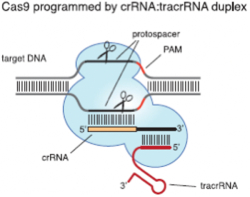
    Image 1 Image 2


    In its Motions Nos. 2 and 3, Broad asserted this distinction, relying on portions of the specifications of several of its patents-in-interference.  While the term "crRNA" is recited in these Broad specifications, the involved claims recite "guide RNA," "chimeric RNA," and "guide sequence," and as the Decision states, the parties disputed the meaning of this term.  Broad noted that "the majority" of their involved claims recite "guide RNA" and that term was not limited to single- or dual-(RNA) molecule embodiments.  CVC, for its part, argued that the term should be limited to single-(RNA) molecule species for all Broad's claims-in-interference.

    The Board used the "broadest reasonable interpretation" test (that standard was not changed when the Patent and Trademark Office adopted the Phillips test for post-grant review proceedings; see "PTAB Adopts Litigation Standards for Claim Construction in AIA Proceedings"), noting that in applying that standard "the Board's construction cannot be divorced from the specification and the record evidence, and must be consistent with the one that those skilled in the art would reach," citing Microsoft Corp. v. Proxycom, Inc., 789 F.3d 1292, 1298 (Fed. Cir. 2015).

    Broad's argument in favor of construing "guide RNA" as a generic term encompassing both single- and dual-molecule embodiments was based on claims that distinguished between "guide RNA" and "fused guide RNA." Under the principle of claim differentiation, Broad argued that a claim reciting "fused guide RNA" that was dependent on a claim reciting "guide RNA" indicates that the latter term is broader than "fused" guide RNA (citing claim 18, dependent on claim 15, of Broad's Patent No. 8,697,359 in support of this argument).  Similarly, Broad cited claim 3 of its Patent No. 8,993,233 that recites a limitation wherein the guide RNA comprises a tracrRNA sequence on a different vector than the nucleic acid encoding the Cas9 protein.

    CVC in opposition countered that claim differentiation is not "a rigid rule" and the segregation of guide RNA and Cas9-encoding RNA in the '233 patent did not mandate either guide RNA configuration.

    The Board stated that while it agrees with Broad that some of its claims suggest that the term "guide RNA" is generic, in other instances the claims are amenable to a contrary construction of the term.  Accordingly, the Decision went on to consider other evidence to see if it rebutted the presumption that these claims had raised.

    That evidence included support for Broad's argument that there is no "clear disavowal of scope" not to include both species of guide RNAs in the claims.  Broad contended that the phrase is a "term of art" having a plain meaning that encompasses both single- and dual-RNA species.  Broad relied on the Jinek reference for support, citing this figure:
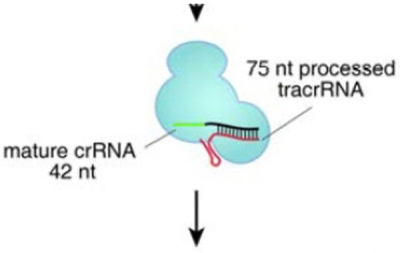
    Image 3accompanied by the caption "In this ternary complex, the dual tracrRNA:crRNA structure acts as guide RNA that directs the endonuclease Cas9 to the cognate target DNA" (emphasis in opinion).  Broad further supported this argument with expert testimony (consistent with Broad's interpretation of the figure) that:

    The "ternary complex" refers to the three part complex that consists of (1) Cas9, (2) a mature crRNA molecule and (3) a tracrRNA molecule.  This is significant because "the dual tracrRNA:crRNA structure" makes up two parts of the three part complex.  Otherwise, Jinek 2012 would not have referred to the Cas9:RNA complex as a "ternary complex," but as a binary complex.  Thus, the "guide RNA" in that sentence references the dual-guide RNA consisting of separate strands of tracrRNA and crRNA.

    The Board found other evidence from the Broad to be "less persuasive."  This included expert testimony evaluating CVC's specification in U.S. Serial No. 15/947,680 as reciting "[t]he term 'DNA-targeting RNA' or 'gRNA' is inclusive, referring both to double-molecule DNA-targeting RNAs and to single-molecule DNA-targeting RNAs (i.e., sgRNAs)," which the Board professed was not conclusive with regard to an interpretation that the meaning of "gRNA" meant "guide RNA."  Similarly, Broad's expert testified that CVC inventors used the term "guide RNA" inclusively to mean "all crRNA:tracrRNA complexes, whether present as a single or a double-molecule" in a scientific paper (Sternberg et al., 2014, "DNA interrogation by the CRISPR RNA-guided endonuclease Cas9," Nature 507: 62), but the Board stated that "without an explanation of how these specific instances of the terms would have been understood by those in the art at the time, we are not certain they demonstrate uses of 'guide RNA' as a generic term."  The same expert also cited CVC witness testimony from earlier Interference No. 105,048 that "guide DNA targeting RNA" includes either single- or dual-guide species, but the Board noted that this term is not the same as the "guide RNA" term as used in Broad's motions in this interference.  And the Board rejected out of hand similar statements by CVC counsel in the '048 interference, because counsel "is not one of skill in the art and we are not persuaded that his use of technical terms indicates anything about how they would have been understood by those in the art at the time."

    The Board then turned to Broad's assertion of extrinsic evidence, including several contemporaneous scientific journal articles and references, all of which (being published prior to 2011) the Board found irrelevant.  In summary the Board states that:

    We are not persuaded from the extrinsic evidence cited by Broad that the term "guide RNA" was well known in the art to mean either a single or a dual RNA molecule configuration.  In some publications cited by Broad, such as Jinek 2012, the term "guide RNA" is used to refer to a dual molecule RNA configuration.  But in other examples, such as CVC's '680 application and Drs. Geider and Carroll's declarations in the prior '048 interference, the specific term "guide RNA" was not actually used.  In yet other references, such as Bhaya, Horvath, Rand, and Tolia, the term is used, but not for a complex of the crRNA and tracrRNA.  This evidence does not persuade us that the term "guide RNA" had a plain meaning in the art, which "indisputably" included both single- and dual- molecule RNA configurations, as Broad argues.

    From this determination that the term "guide RNA" was not understood to be generic at the time of Broad's filings, the Board states that it is not convinced that "the specification must provide a clear intent to exclude a dual-molecule RNA configuration from the term," citing Trs. of Columbia Univ. v. Symantec Corp., 811 F.3d 1359, 1363 (Fed. Cir. 2016), for an explication of the requirements under Phillips v. AWH Corp., 415 F.3d 1303, 1320 (Fed. Cir. 2005 (en banc), in this regard.  Broad cited a portion of its specification in support of its argument:

    In aspects of the invention the terms "chimeric RNA", "chimeric guide RNA", "guide RNA", "single guide RNA" and "synthetic guide RNA" are used interchangeably and refer to the polynucleotide sequence comprising the guide sequence, the tracr sequence and the tracr mate sequence.  The term "guide sequence" refers to the about 20 bp sequence within the guide RNA that specifies the target site and may be used interchangeably with the terms "guide" or "spacer".  The term "tracr mate sequence" may also be used interchangeably with the term "direct repeat(s)".  An exemplary CRISPR-Cas system is illustrated in FIG. 1.

    Broad argued this portion of the specification referenced some (but not all) aspects of the invention to encompass single RNA guide RNA species.  Broad also argued that "used interchangeably" does not mean that the listed terms are themselves the same molecules.  CVC disputed these characterizations, arguing that "the specification specifically states that the terms 'guide RNA,' 'chimeric RNA,' 'chimeric guide RNA,' and 'single guide RNA' all 'refer to the polynucleotide sequence comprising the guide sequence, the tracr sequence and the tracr mate sequence.'"  And CVC further argued that "this portion of the specification defines "guide RNA" as a singular polynucleotide sequence comprising a guide sequence, a tracr sequence, and a tracr mate sequence and corresponding to the fused crRNA and the tracrRNA."

    These arguments were persuasive to the Board, which stated that "this paragraph of the Broad specification indicates that 'chimeric RNA,' 'chimeric guide RNA,' 'single guide RNA,' as well as 'guide RNA' include these three components."

    The Decision further explicated other portions of the various Broad specifications, to the same effect:  the Board is persuaded by CVC's arguments (or not persuaded by Broad's arguments) regarding the status of the term "guide RNA" as a generic term encompassing both single- and dual-RNA species.

    The Board offers this conclusion regarding its construction of this sole term:

    Our review of the parties' arguments leads us to the conclusion that Broad's use of the term "guide RNA" in its involved claims is not a generic term, but is limited to a single-molecule RNA configuration of the guide sequence and tracrmate, which together make the crRNA, and the tracrRNA sequences.  Although some dependent claims, such as claim 18 of the '359 patent, might indicate by claim differentiation that the term "guide RNA" is generic, that presumption is overcome by Broad's specification.  The specification of Broad's involved patents, specifically the sentence providing that "guide RNA" and other terms "refer to the polynucleotide sequence comprising the guide sequence, the tracr sequence and the tracr mate sequence" ('359 patent, Ex. 3011, 12:6–10), limits the interpretation of the term.  Broad fails to direct us to other uses of the term "guide RNA" in the specification that indicate a dual-molecule RNA configuration and we are not persuaded that the term was so clearly understood  the art to be a generic term that only a clear disavowal in the specification would define it to mean a single-molecule RNA configuration.  Thus, we are persuaded that the broadest reasonable interpretation of Broad claim term "guide RNA" encompasses only a single-molecule RNA configuration.

    The consequences of this claim construction will be the subject of future posts.

    *And then there is this ditty sung to the tune of "Camelot":

    A law was made 200 years ago here
    Grant patents, help promote inventive thought
    Today the system's thriving and our credo
    Is claim-a-lot

    We push the envelope,
    Expand the boundaries
    Create a circle from a tiny dot
    Our product's forged with words
    and not in foundries
    We claim a lot

    Claim-a-lot (claim-a-lot)
    I know it sounds a bit bizarre
    Lord, we claim-a-lot (oh yes, we claim-a-lot)
    Stretch out those claims so far

    Though prior art may set some limitations
    Restricts our flights of fancy, clever thought
    Our efforts, not for naught
    Results, so boldly wrought
    Construct our patent juggernauts
    By claiming quite a lot.

    Kramer, Levin, Naftalis & Frankel LLP, Claim-a-Lot, in Pamphlet for N.Y. Intellectual Property Law Association 78th Annual Dinner (Mar. 24, 2000).