• By Kevin E. Noonan

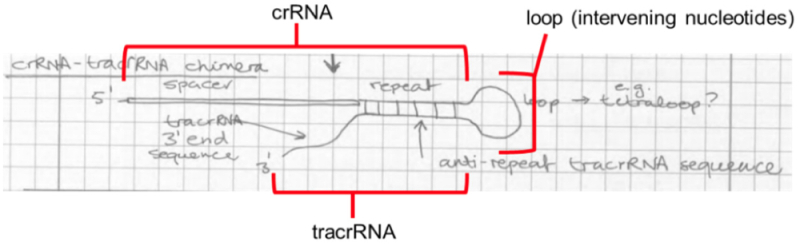
    Almost three weeks ago, on October 31st, Junior Party the University of California/Berkeley, the University of Vienna, and Emmanuelle Charpentier (collectively, "CVC") filed its priority motion in Interference No. 106,115, setting forth for the first time its earliest conception date (March 1, 2012) and evidence of that conception for practicing CRISPR in eukaryotic cells:

    Image 1
    In the remainder of its 50 page brief, CVC set out its arguments for serial events of conception (April 11, May 28, or June 28, 2012), when the invention encompassed by the Interference Court was serially reduced to practice (earliest date, August 9, 2012, and thereafter on October 31, November 1, 5, and 18, 2012), and its assertions that it pursued reduction to practice with the statutorily required diligence and never abandoned, suppressed, or concealed their invention.

    That evidence is critical, because mere assertions or uncorroborated testimony by the inventors is entitled to no weight in an interference.  Apator Miitors v. Kamstrup (Fed. Cir. 1996).  However, consistent with PTAB rules the affidavits, copies of laboratory notebooks and other evidence that corroborate CVC's explication of these events is not yet available on the PTAB website; the brief, however, discloses this table:

    Table
    Nevertheless, the story told in the brief in support of the priority motion is compelling.  The brief sets forth the initial conception by inventors Jennifer Doudna, Emmanuelle Charpentier, Martin Jinek, and Krzysztof Chylinski as the date when the concept of introducing the CRISPR system comprising Cas9 protein and a single-molecule guide RNA (comprising truncated crRNA and tracrRNAs covalently linked via a short polynucleotide spacer) into eukaryotic cells first arose.  The brief asserts that "only ordinary skill was needed to reduce [the invention] to practice."  As CVC argued in the first interference (No. 105,048), "the inventors had multiple, straightforward actual reductions to practice (ARTP) within a few months" and (as they did not have the opportunity to argue in the '048 Interference) "before Broad's accorded benefit date" (emphasis in brief).

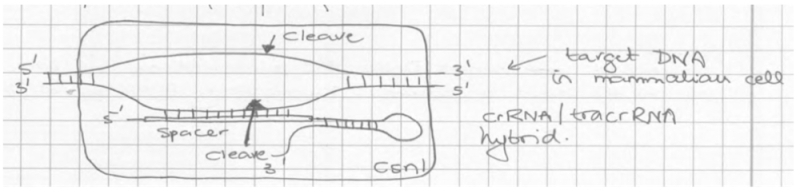
    The brief mentions the in vitro work done prior to March 1, 2012, which one of CVC's experts hailed as the "gold standard" for understanding the necessary components of the CRISPR_Cas9 system.  This work also presaged the use of first truncated and then single molecule guide RNA specifies for performing CRISPR. Turning to specifics and details, the brief tells the story of the months between their conception on March 1, 2012 and first actual reduction to practice on August 9, 2012.  According to their recounting of this origin story for eukaryotic CRISPR, Dr. Doudna sent Mr. Jinek an e-mail the very next day to write up in his laboratory notebook (Exhibit 4381) how CRISPR could be adapted for use in eukaryotic cells, including getting the disclosure signed and witnessed (introduced as evidence herein at Ex. 4349, ¶34; Ex. 4381, 63-65).  As for Jennifer Doudna, the brief explains that "Doudna so appreciated the significance of this invention that, for the first time in her career, she deliberately ensured it was promptly memorialized and witnessed" (Ex. 4350, ¶45).  The elements of the count set forth in Jinek's notebook are illustrated in this version of the notebook page set forth above:

    Image 2
    including embodiments where the crRNA and tracrRNA were fused and separated by a short look of intervening nucleotides.  The brief illustrates that this conception was "definite and permanent" by comparing the original design from Jinek's notebook dated March 1, 2012 with the (more refined) embodiment of the same components in the Jinek 2012 Science paper and the drawing in U.S. Provisional Application No. 61/757,640 (designated "P3").

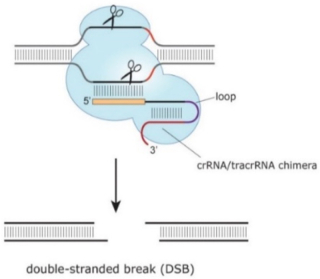
    In further support for conception, the brief sets forth diagrams of the invention as disclosed in an Invention Disclosure Form (IDF) submitted on April 11, 2012 (Ex. 5105, 7, 9) containing this diagram:

    Image 3
    which highlighted (in red) the NGG (PAM) sequence necessary for CRISPR alterations of specific DNA sequences as well as this diagram illustrating the components and their alignment needed for cleavage:

    Image 4
    The brief also sets forth further conception for practicing CRISPR in eukaryotic cells using the gene for green fluorescence protein (on May 28, 2012), human CTLA gene ("[b]y April 28 and no later than May 28, 2012") and in June 28, 2012 arranged for a colleague to practice eukaryotic CRISPR in zebrafish as evidenced by an e-mail (Ex. 4799).

    In support of expert testimony that the invention could be reduced to practice by nothing more than the exercise of ordinary skill, the brief then sets forth details of actual reduction to practice.  In the first successful experiment, the zebrafish rx3 gene was targeted; successful cleavage resulted in eyeless zebrafish that are otherwise normal.  (Not reproduced here are pictures of the resulting zebrafish; see Exs. 4913-4915.)  The brief sets forth in detail the course of these experiments from June 28th to August 9th, including toxicity testing of Cas9 protein in zebrafish and the use of alternative 20-nt target sequences and development of these RNA sequences for performing rx3-specific CRISPR in zebrafish:

    Image 5
    The fact that these experiments were performed by researchers other than the named inventors does not negatively impact their status as the sole true inventors, because under Genentech, Inc. v. Chiron Corp., 220 F.3d 1345, 1354 (Fed. Cir. 2000), work of others can inure to the inventor's benefit.

    Another example of actual reduction to practice occurred according to the brief on October 31, 2012 when (significantly) a first-year graduate student (whom the brief is certain to say was one of less than ordinary skill in the art having "with introductory lab skills") successfully performed CRISPR on the CLTA6 gene in human cells (Ex. 4353, ¶92; Ex. 4366, 31-33) using these RNA sequences:

    Image 6
    (These experiments were disclosed in the P3 application.)  This correspondence is important, because the PTAB has conferred priority to the P3 application in its decision on motions (see "PTAB Decides Parties' Motions in CRISPR Interference").

    Finally, the brief describes successful performance of CRISPR in human U2OS cells on November 1, 2012 targeting the CTLA6 gene, and then achieving CRISPR on this gene in human HEK293T cells on November 5th and 18th.

    The brief also uses scientific journal articles (including ones from the Broad inventors) to illustrate the routine nature of the experiments needed to practice CRISPR in eukaryotic cells using single-molecule RNA guide elements identical to the design set forth in Jinek's laboratory notebook.

    In view of the relative speed and ease with which these experiments demonstrated actual reduction to practice of eukaryotic CRISPR, one can only imagine the frustration the CVC inventors must have felt regarding the basis for the outcome of the '048 Interference and their chagrin in how unfortunate comments were considered out of context by the PTAB and Federal Circuit.

    At each step of this saga, the brief is careful to note that the invention disclosed in its evidence also corroborates the CVC inventors' conception and reduction to practice of all the limitations of Broad's half of the count.  And of course all of the evidence and testimony was corroborated by witnesses other than the inventors themselves.

    These recollections were interspersed with assertions regarding the pioneering nature of the inventors' work, their work is described as "groundbreaking," and of course the brief mentions the recent decision of the Nobel committee to award the Nobel Prize to Doudna and Charpentier alone.  And the brief also sets forth evidence that the CVC inventors appreciated all the potential obstacles used to great effect in convincing the PTAB (and the Federal Circuit) in the '048 Interference that there was no interference in fact between CVC's applications and the Broad's eukaryotic CRISPR patent.

    The brief also contains two statements from Broad scientists (or attributed to Broad scientists) meant to make it difficult for those scientists to argue prior conception and/or to support an argument that their conception was derived from CVC's invention.  These include this portion of the brief:

    According to Dr. Luciano Marraffini, who collaborated with Broad's Feng Zhang and co-filed Broad's first provisional application, the idea for sgRNA originated from the Jinek 2012 paper:

    The Doudna–Charpentier paper is when we all learned about the single-guide RNA.  That was online in June 2012 . . . .  In the end, after seeing the paper, we recognized the value of the single guide RNA.

    Dr. Shuailiang Lin, another collaborator of Zhang's and co-inventor on Broad's first provisional, independently confirmed this in a 2015 email he wrote to Dr. Doudna:

    After seeing your in virto [sic] paper, Feng Zhang and Le Cong quickly jumped to the project . . . .  We did not work it out before seeing your paper, it's really a pity.

    The brief concludes with evidence and testimony of diligence from conception and actual reduction to practice of eukaryotic CRISPR, and that CVC did not abandon, suppress, or conceal the invention.

    The Broad (whom as Senior Party is not obliged to do so) can file its Priority Motion on December 11th. Alternatively (or in addition) Broad can file an opposition on February 5, 2021.

  • By Michael Borella

    USPTO SealOne of the more intellectually dishonest aspects of current patent eligibility law is that it allows one to ignore certain claim elements when evaluating claims under 35 U.S.C. § 101.  In Mayo v. Prometheus, it was stated that once one has identified a judicial exception to patentability (e.g., a law of nature, natural phenomena, or abstract idea) in a claim, further claim elements that are "well-understood, routine, conventional activity [that] when viewed as a whole, add nothing significant beyond the sum of their parts taken separately" essentially have no patentable weight in the eligibility inquiry.  This is despite the Court's acknowledgement that Diamond v. Diehr stood for the notion that claims "must be considered as a whole."[1]

    Further, the Supreme Court never dug into the details of whether or how this holding should be squared with prior art analyses under §§ 102 and 103.  The Mayo opinion asserted that "in evaluating the significance of additional steps, the § 101 patent-eligibility inquiry and, say, the § 102 novelty inquiry might sometimes overlap."  But the nature of this overlap was not explored.  Instead, in both Mayo and the subsequent Alice v. CLS Bank decision, the "well-understood, routine, conventional" test appears to allow judicial notice that certain claim features are so generic that one need not provide any factual evidence that this is the case.  The Federal Circuit has attempted to rectify this matter in Berkheimer v. HP, holding that — in at least some situations — the § 101 analysis involves underlying factual matters of whether elements are "well-understood, routine, conventional."

    And yet, the division of claims into "judicial exceptions" and "additional elements" can be tricky, as can knowing when one should ignore certain elements.  And the Federal Circuit has not provided clear guidance.  It is common to view a claim at a high level (and therefore ignore at least some of its elements) to declare the claim to be directed to a judicial exception.  In some cases, claims have been found to be directed to an exception because what they recite assumed to be known, and in other cases additional elements have been found to incorporate further exceptions that were subsequently ignored.

    The problem with this element-oriented, reductionist approach is that it obscures the actual invention being considered.  There was wisdom in Diehr's instruction to study the whole claim because inventions consisting of nothing but judicial exceptions and well-understood, routine, conventional additional elements are some of the most important to our current and future economy (e.g., cryptography, machine learning, quantum computing, diagnostic methods, analysis of genetic sequences).  The value is in the combination of these features, not the features in isolation.  Ignoring any claim element under § 101, without a very good reason,[2] does violence to the invention.

    As we will see, the printed matter doctrine is another avenue in which claim elements can be discounted.

    Bard launched an infringement action against AngioDynamics in the District of Delaware.  At issue were Bard's U.S. Patent Nos. 8,475,417, 8,545,460, and 8,805,478.  As a representative example, claim 1, of the '417 patent recites:

    An assembly for identifying a power injectable vascular access port, comprising:
        a vascular access port comprising a body defining a cavity, a septum, and an outlet in communication with the cavity;
        a first identifiable feature incorporated into the access port perceivable following subcutaneous implantation of the access port, the first feature identifying the access port as suitable for flowing fluid at a fluid flow rate of at least 1 milliliter per second through the access port;
        a second identifiable feature incorporated into the access port perceivable following subcutaneous implantation of the access port, the second feature identifying the access port as suitable for accommodating a pressure within the cavity of at least 35 psi, wherein one of the first and second features is a radiographic marker perceivable via x-ray; and
        a third identifiable feature separated from the subcutaneously implanted access port, the third feature confirming that the implanted access port is both suitable for flowing fluid at a rate of at least 1 milliliter per second through the access port and for accommodating a pressure within the cavity of at least 35 psi.

    The invention is directed to "vascular access ports, which are devices implanted underneath a patient's skin that allow medical providers to inject fluid into the patient's veins on a regular basis without needing to start an intravenous line each time."  Notably, "the FDA cautioned medical providers in 2004 and 2005 that they should not use vascular access ports for power injection unless the ports were specifically and identifiably labeled for such use."  Accordingly, Bard developed such identifying labels for its ports, which the Court described as follows:

    The primary identifying feature Bard developed was a radiographic marker in the form of the letters "CT" etched in titanium foil on the device.  This marker could be detected during an x-ray scan such as the "scout scan" typically performed at the start of a CT procedure.  Other identifiers incorporated into the device included a triangular shape and small bumps that were palpable through the skin.

    In any event, the District Court judge asked a magistrate to help determine whether the identifiable features of the claims should be given patentable weight in view of the printed matter doctrine.  The magistrate "determined that these limitations were not entitled to patentable weight because they were directed to the content of information that was not functionally or structurally related to the claimed ports."  The judge went with this conclusion.

    At the end of the trial, AngioDynamics filed a JMOL motion, and the judge asked the parties whether this printed matter issue was ripe for decision.  While the parties did not come to an agreement, the judge terminated the trial and granted the JMOL.  Among other rulings, the judge found the claims "invalid because they were directed to printed matter as ineligible subject matter and were not inventive."

    Regarding this § 101 issue, the Federal Circuit began its analysis by acknowledging that printed matter has long been held to fall outside the scope of patentable subject matter.  In particular, "printed matter encompasses any information claimed for its communicative content, and the doctrine prohibits patenting such printed matter unless it is functionally related to its substrate, which encompasses the structural elements of the claimed invention.  Thus, the main concern is whether "the printed matter merely informs people of the claimed information, or whether it instead interacts with the other elements of the claim to create a new functionality in a claimed device or to cause a specific action in a claimed process."

    As examples, the Court has previously decided that markings on dice have no functional relationship with the dice themselves.  On the other hand, digits printed on a circular band exploited the band's endless nature and made it useful for performing mathematical operations, and thus there was a functional relationship between the two.  Likewise, volumetric indicia on a measuring cup made the cup useful for measuring partial recipes.

    In this case, the parties stipulated that the claimed identifiable features constitute printed matter, but disagreed over whether these features are functionally related to the port.  Bard contended that "the information conveyed by the markers provides new functionality to the port because it makes the port self-identifying."  The Court did not buy into this point, as "mere identification of a device's own functionality is sufficient to constitute new functionality for purposes of the printed matter doctrine" would eviscerate the doctrine.

    Turning to the subject matter eligibility issue, the Court admitted that, since Alice, it had not "directly addressed whether a patent claim as a whole can be deemed patent ineligible on the grounds that it is directed to printed matter at step one and contains no additional inventive concept at step two."  But it found reason to do so here, as such a position is consistent with its prior holdings that "the mere conveyance of information that does not improve the functioning of the claimed technology is not patent-eligible subject matter under § 101.  Notably, the Court pointed to the claims found ineligible in Two-Way Media Ltd. v. Comcast Cable Commc'ns, LLC, Elec. Power Grp., LLC v. Alstom S.A., and Digitech Image Techs., LLC v. Elecs. for Imaging, Inc. as examples that stand for the principle that the processing of information does not improve the functioning on a computer.

    Applying these notions to Bard's claims, the Court found that "the focus of the claimed advance is not solely on the content of the information conveyed, but also on the means by which that information is conveyed."  Particularly, the claims address "a specific need for easy vascular access during CT imaging, and it is the radiographic marker in the claimed invention that makes the claimed port particularly useful for that purpose because the marker allows the implanted device to be readily and reliably identified via x-ray, as used during CT imaging.  With respect to the Alice framework, the Court concluded that there was insufficient evidence that "the use of a radiographic marker, in the ordered combination of elements claimed, was not an inventive concept."  Notably, "[e]ven if the prior art asserted by AngioDynamics demonstrated that it would have been obvious to combine radiographic marking with the other claim elements, that evidence does not establish that radiographic marking was routine and conventional under Alice."  Thus, in accordance with Berkheimer, not all obvious elements would also be routine and conventional.

    Therefore, the asserted claims are patent-eligible because they are not solely directed to printed matter.

    One of the subtle points of this case is that the Federal Circuit seems to be equating printed matter with the notion of an abstract idea under step one of Alice.  Therefore, if a claim includes printed matter, it would have to also include additional elements that amount to significantly more to be eligible.  One way of establishing that this is the case is if the printed matter, in combination with the additional elements, provides functionality that the additional elements on their own do not provide.

    But taking this a step further, printed matter doctrine provides more opportunities to ignore claim elements.  While that did not happen in this case, it would not be surprising for this holding to be expanded in a way that provides yet one more avenue for to do so.  It is conceivable that some courts could apply the doctrine to user interface claims in an attempt to establish that at least some of the displayed information therein is not related to the functionality of the computing system, thus rendering those claims ineligible.

    C R Bard Inc. v. AngioDynamics, Inc. (Fed. Cir. 2020)
    Panel: Circuit Judges Reyna, Schall, and Stoll
    Opinion by Circuit Judge Reyna

    [1] The Court attempted to synthesize this apparent contradiction between Mayo and Diehr by stating that "[b]ecause the approach we made explicit in Mayo considers all claim elements, both individually and in combination, it is consistent with the general rule that patent claims must be considered as a whole."  But in practice, the consideration of claim elements in combination was and is given short shrift. 

    [2] Elements that are redundant with other elements and preambles reciting intended use are examples in which parts of claims can be disregarded.

  • MBHB Logo 2McDonnell Boehnen Hulbert & Berghoff LLP will be offering a live webinar entitled "PTAB Top Stories 2020: Discretionary Denials, Motions to Amend, and Arthrex, Oh My!" on November 18, 2020 from 10:00 am to 11:15 am (CT).  In this presentation, MBHB attorneys James Lovsin and George "Trey" Lyons, III will take a look at four key topics concerning AIA Trial Proceedings that should be at the forefront of every PTAB practitioner's renewed focus this year, including:

    • Discretionary Denials: What are Patent Owner strategies for obtaining discretionary denials? What are Petitioner strategies for avoiding them?
    • Motions to Amend: What benefit (or not) does the Patent Owner get for participating in the motion to amend pilot program? Can the Petitioner rely on the PTAB to present its own grounds to oppose the motions to amend? What are strategies for § 101 challenges to motions to amend?
    • Constitutionality: What are the updates and potential outcomes/impacts from Supreme Court action in Arthrex?
    • Appealability: What procedural issues are reviewable after Thryv and Windy City?

    While there is no fee to participate, attendees must register in advance.  Those wishing to register can do so here.  CLE credit is pending for the states of California, Illinois, New Jersey, New York, North Carolina, and Virginia.

  • By Kevin E. Noonan

    Federal Circuit SealSomewhat remarkably, there is no settled Federal Circuit precedent regarding where a patentee can bring suit against a generic competitor in Hatch-Waxman litigation under 35 U.S.C. § 271(e)(2).  While recognizing that this situation has arisen in large part to the disruption created by the Supreme Court in TC Heartland LLC v. Kraft Foods Grp. Brands LLC of prior Federal Circuit interpretations that venue was coincident with personal jurisdiction, last Thursday the Federal Circuit arrived at a decision regarding where proper venue does not lie in ANDA litigation, in Valeant Pharmaceuticals North America LLC v. Mylan Pharmaceuticals Inc.

    The issue arose in ANDA litigation brought in the District of New Jersey by Valeant Pharmaceuticals against a trio of Mylan entities:  Mylan Pharmaceuticals, Inc., (MPI) "a West Virginia corporation with a principal place of business in Morgantown, West Virginia"; Mylan Laboratories Ltd. (MLL), "Indian corporation with a principal place of business in Hyderabad, India"; and Mylan Inc., "a Pennsylvania corporation with a principal place of business in Canonsburg, Pennsylvania."  The underlying dispute involves Dow Pharmaceutical Sciences' anti-fungal drug Jublia® (efinaconazole) protected by nine Orange Book-listed patents.  Because geography is important to the venue issue, the opinion notes that MPI "executed" its ANDA in its West Virginia corporate headquarters and filed at the FDA in White Oak, Maryland.  Valeant's suit was supported by several allegations that venue was proper in New Jersey, including:

    • Each Mylan defendant "directly, or indirectly, develops, manufactures, markets, and sells generic drug products throughout the United States and in this judicial district, and this judicial district is a likely destination for Mylan's generic efinaconazole topical solution." . . .
    • Each Mylan defendant does business in New Jersey and is registered to do so. . . .
    • Each defendant has previously submitted to the jurisdiction of the court and has a place of business in New Jersey.
    • MPI applied for FDA approval of its generic drug, which will be "purposefully directed at, upon information and belief, New Jersey and elsewhere.  [MPI's] ANDA filings constitute formal acts that reliably indicate plans to engage in marketing of the proposed generic drugs."  And MPI plans to market and sell its generic drug in into New Jersey upon FDA approval[.]

    The Mylan defendants moved to dismiss under Fed. R. Civ. P. 12(b)(3) for improper venue (and under Rule 12(b)(6) as to the MLL and Mylan Inc. defendants for failure to state a claim).  Mylan did not dispute Valeant's assertions as set forth above; rather, the basis for the motion was that venue was improper under 28 U.S.C. § 1400(b) because none of the defendants resided in New Jersey, was incorporated there, or has "regular and established places of business" in the state, and no act of infringement occurred there.  Valeant argued in response that infringement under § 271(e)(2) was prospective, intended to address "planned future [infringing] conduct," an argument supported by Bristol-Myers Squibb Co. v. Mylan Pharmaceuticals Inc. from the District Court in Delaware.  And with regard to the (12)(b)(6) motion, Valeant argued that infringement liability under the statute was not limited to the ultimate ANDA filer in these situations, citing In re Rosuvastatin Calcium Patent Litig., 703 F.3d 511, 527–28 (Fed. Cir. 2012).

    The District Court granted the Mylan motions on improper venue grounds, based on Federal Circuit precedent in In re Cray and In re ZTE, for the principle that "requirements of the venue statute are specific, unambiguous, and not amenable to liberal construction based on policy concerns . . ." (although the opinion notes that the District Court did not address the (12)(b)(6) motion directly).

    The Federal Circuit affirmed in part, reversed in part, and remanded, in an opinion by Judge O'Malley joined by Judges Newman and Taranto.  The panel first considered as a "case of first impression" the question of the situs of proper venue in Hatch-Waxman litigation (in view of the TC Heartland decision).  The Court performed this analysis by first assessing where the infringing act occurred (a requirement expressly recited in the statute).  This raised the issue of the nature of the infringing act under § 271(e)(2), which specifies that it is an act of infringement to submit an ANDA for a drug protected by an Orange Book-listed patent.  While the litigation is focused on infringement vel non of a defendant's future approval and sale of a generic drug, the act of infringement set forth in the statute is an ANDA filing itself.  The effects on venue of these two infringing acts formed the basis for the Court's decision.

    Prior to TC Heartland, the opinion recounted, the Federal Circuit had found venue to be proper where personal jurisdiction against the defendant was proper, citing Acorda Therapeutics Inc. v. Mylan Pharmaceuticals Inc., 817 F.3d 755 (Fed. Cir. 2016), and VE Holding Corp. v. Johnson Gas Appliance Co., 917 F.2d 1574, 1584 (Fed. Cir. 1990), and thus considered "planned future acts" of infringement.  These precedents were overturned by TC Heartland according to the opinion, and thus the venue question before the Court in this case became unsettled.  The opinion noted that other cases involving venue questions post-TC Heartland (Cray, ZTE) were decided narrowly, given the specific statutory language.  Other attempts by the Court to address venue in ANDA cases (pre-TC Heartland) had recognized the issue that the statute recites "where the defendant has committed acts of infringement" (emphasis added) regarding "potential future acts" of infringement.  Cases like Bristol-Myers Squibb concluded that the statute was directed towards such future acts of infringement and not the administrative act of filing the ANDA and that thus venue was proper in a district in which infringing generic drugs were intended to be sold.  This precedent has been followed (Celgene Corp. v. Hetero Labs Ltd., No. 17-cv-3387-ES-MAH, 2018 WL 1135334, at *3 (D.N.J. Mar. 2, 2018)) and abjured (Galderma Labs., L.P. v. Teva Pharms. USA, Inc., 290 F. Supp. 3d 599, 606–09 (N.D. Tex. 2017)) in practice and here the Court resolved the issue by deciding that the District Court was correct that venue was improper in New Jersey under these circumstances in view of TC Heartland.

    The basis for this decision followed the (narrow) statutory construction rubrics followed in other post-TC Heartland venue cases, particularly the plain meaning of the language of the statute.  This includes the clear object that venue was proper where infringement had occurred (identified through the use of the present perfect verb tense by Congress, particularly in view of the statute's use of the present tense regarding "where the defendant resides" and "where the defendant . . . has a regular and established place of business").  This returned the opinion to the question of the act of infringement embodied in § 271(e)(2), which the panel identified as the act of submitting the ANDA.  The Court rejected Valeant's arguments to the contrary on the grounds that the venue statute should be narrowly construed and not affected by policy determinations.  Thus, arguments regarding the "artificiality" of infringement under § 271(e)(2) fell on deaf ears, even while the opinion conceded that the Supreme Court, the Federal Circuit itself, and district courts had termed § 271(e)(2) to recite an "artificial act of infringement," citing Eli Lilly & Co. v. Medtronic, Inc., 496 U.S. 661, 678 (1990); Acorda, 817 F.3d at 760; and Belcher Pharms., LLC v. Int'l Medication Sys., Ltd., 379 F. Supp. 3d 326, 330 (D. Del. 2019).  Despite this precedent, the opinion asserted that the statute evinced no such ambiguity; submitting an ANDA "is the infringing act" (emphasis in opinion) according to the Court, noting the paradox that the complementary section of the statute, § 271(e)(1) "declares certain very real acts of infringement to be non-infringing acts."  The panel also rejected any effects of the focus of Hatch-Waxman litigation on future approval and infringing generic drug sales, saying that "[t]he content of the litigation does not, however, turn potential future acts into past infringement" (and of course there is no post-litigation infringement in any case, either because approval is stayed until the patent(s) expire or they are found invalid, unenforceable, or not infringed).  And Valeant's arguments regarding Congressional intent foundered on the Supreme Court's understanding that Congress could have expressed differing intent when amending § 1400(b) in 1988 (post-Hatch-Waxman) or again when adopting a general venue statute in 2011.  Even arguments the Court clearly found appealing on policy grounds (the possibility that generic companies could "game" the system to avoid venue in some jurisdictions, and that innovator companies might need to bring and maintain suit in multiple districts) could not overcome the plain meaning of the statute in view of Supreme Court precedent.  Thus the opinion stated succinctly:

    Accordingly, we hold that, in Hatch-Waxman cases, venue is not proper in all judicial districts where a generic product specified in an ANDA is likely to be distributed.  It is proper only in those districts that are sufficiently related to the ANDA submission—in those districts where acts occurred that would suffice to categorize those taking them as a "submitter" under § 271(e).

    (It must be recognized, however, that in a footnote the opinion asserts: "The district court's suggestion that an act of infringement for purposes of this case may have occurred in the District of Maryland where the FDA received the ANDA is not challenged in this appeal.  While it may well be that the District of Maryland satisfies the test for venue that we have laid out here, we do not resolve that question.  We also do not define what all relevant acts involved in the preparation and submission of an ANDA might be, leaving those questions for other cases where the precise contours are presented and briefed.")

    Finally, the Federal Circuit reversed the District Court with regard to the MLL defendant, on the grounds that a foreign defendant can be sued in any judicial district, and remanded for the District Court to consider whether this defendant was sufficiently involved to overcome the motion to dismiss under Rule 12(b)(6).

    Valeant Pharmaceuticals North America LLC v. Mylan Pharmaceuticals Inc. (Fed. Cir. 2020)
    Panel: Circuit Judges Newman, O'Malley, and Taranto
    Opinion by Circuit Judge O'Malley

  • By Michael Borella

    This article is Part II of a study on the patent eligibility of graphical user interfaces.  Part I was published yesterday.  We continue from where we left off, with overviews of a handful of Federal Circuit § 101 decisions addressing claims to graphical user interfaces and a discussion of how the three properties of specificity, technical character, and an advance over the prior art can be used to predict whether a claim meets the requirements of 35 U.S.C. § 101.

    D.  Mobile User Interfaces

    In Intellectual Ventures I LLC v. Erie Indemnity Company, claim 40 of U.S. Patent No. 6,546,002 was under dispute.  Particularly, this claim recites:

    A system for storing and accessing user specific resources and information, the system comprising:    
        a network for accessing the user specific resources and information stored in a network server;
        
    and a local device communicating with the network and having a local memory and a mobile interface, wherein the local memory also includes user specific resources and information, and the mobile interface includes pointers corresponding to the user specific resources and information that are stored either on the local device or the network server, wherein the pointers provide links to access the corresponding user specific resources and information.

    At issue was the mobile interface's use of pointers.  The plaintiff argued that the claim involved "a particular software-driven machine that performs specific operations to solve a problem unique to the field of computer networks."  But the Court did not concur, writing:

    Yet the claimed invention does not recite any particular unique delivery of information through this mobile interface. Rather, it merely recites retrieving the information through the mobile interface. Nor do the claims describe how the mobile interface communicates with other devices or any attributes of the mobile interface, aside from its broadly recited function. Thus, the mobile interface here does little more than provide a generic technological environment to allow users to access information.

    Finding the claims directed to an abstract idea, the Court moved on to part two of Alice.  Here, the plaintiff again focused its arguments on the mobile interface, contending that "the claims are limited to a specific use of multiple pointers to retrieve the user-specific data via a mobile interface in a network with a server and local device," thus providing users "with access to their files and data from any location irrespective of the device used."

    Again, the Court disagreed, finding that "[t]he claimed mobile interface is so lacking in implementation details that it amounts to merely a generic component . . . that permits the performance of the abstract idea, i.e., to retrieve the user-specific resources," and "this interface provides no more than similar user interfaces recited in claims that we have previously held ineligible."  Moreover, the Court deemed the use of pointers to retrieve information over a network as conventional activity, claimed too functionally to provide an inventive concept.

    A different story played out in Core Wireless Licensing S.A.R.L. v. LG Electronics, Inc.  At issue was claim 1 of U.S. Patent. No. 8,434,020, which recites:

    A computing device comprising a display screen,
        the computing device being configured to display on the screen a menu listing one or more applications,
        
    and additionally being configured to display on the screen an application summary that can be reached directly from the menu,
        
    wherein the application summary displays a limited list of data offered within the one or more applications, each of the data in the list being selectable to launch the respective application and enable the selected data to be seen within the respective application, and
        
    wherein the application summary is displayed while the one or more applications are in an un-launched state.

    The defendant contended that the invention as claimed was directed to the abstract idea of an index.  This point did not gain any traction with the Court, which found the claims "directed to a particular manner of summarizing and presenting information in electronic devices."  The Court continued:

    The claim further requires the application summary window list a limited set of data, "each of the data in the list being selectable to launch the respective application and enable the selected data to be seen within the respective application."  This claim limitation restrains the type of data that can be displayed in the summary window.  Finally, the claim recites that the summary window "is displayed while the one or more applications are in an un-launched state," a requirement that the device applications exist in a particular state.  These limitations disclose a specific manner of displaying a limited set of information to the user, rather than using conventional user interface methods to display a generic index on a computer.

    To back up its position, the Court looked to the patent's specification, observing that it discusses the problems associated with prior art interfaces, especially with respect to displaying information on devices with small screens.  Particularly, users had to "drill down through many layers to get to desired data or functionality [which] could seem slow, complex and difficult to learn, particularly to novice users."  In contrast, the claimed invention involves "[d]isplaying selected data or functions of interest in the summary window allows the user to see the most relevant data or functions without actually opening the application up."  Doing so "saves the user from navigating to the required application, opening it up, and then navigating within that application to enable the data of interest to be seen or a function of interest to be activated."

    Based on this understanding, the Court concluded that the claim was not abstract, and that part two of the Alice test need not be carried out because the invention was eligible.

    E.  Support for Tabs and Change Tracking in Spreadsheets

    Examples of claims directed to spreadsheets that fell on both sides of § 101 can be found in Data Engine Technologies LLC v. Google LLC.  Under dispute were U.S. Patent Nos. 5,590,259, 5,784,545, 6,282,551, and 5,303,146.  For purposes of the Alice analysis, the Federal Circuit divided the patents into two groups:  the '259, '545, and '551 patents in one and the '146 patent in the other.

    The patents of the first group are directed to tabbed interfaces in spreadsheets.  With priority dates going back to 1992, these patents allege improvements over spreadsheets (at the time) that did not use tabbed interfaces.  In the words of the Court:

    In contrast to conventional electronic spreadsheets, the method claimed in the Tab Patents includes user-familiar objects, i.e., paradigms of real-world objects which the user already knows how to use such as notebook tabs.  In this manner, complexities of the system are hidden under ordinary, everyday object metaphors, providing a highly intuitive interface—one in which advanced features (e.g., three-dimensionality) are easily learned.

    In essence, the invention involves tabs familiar to anyone who has used a modern spreadsheet such as Microsoft Excel.  According to the patents, this interface has several advantages.  Notably, "instead of finding information by scrolling different parts of a large spreadsheet, or by invoking multiple windows of a conventional three-dimensional spreadsheet, the present invention allows the user to simply and conveniently 'flip through' several pages of the notebook to rapidly locate information of interest."

    In what may have been a determinative move, the plaintiff submitted several articles from popular magazines (e.g., PC World and InfoWorld) at the time of the invention lauding the advantages of new spreadsheet software packages that used tabs.  The articles noted that managing the complexity of large spreadsheets had long been a problem for users, and existing, non-tabbed spreadsheets would have data and results distributed in an unorganized fashion.  The introduction of tabbing elegantly solved this problem.

    Claim 12 of the '259 patent, which was representative of that patent and claims of the '545 patent, recites:

    In an electronic spreadsheet system for storing and manipulating information, a computer-implemented method of representing a three-dimensional spreadsheet on a screen display, the method comprising:    
        displaying on said screen display a first spreadsheet page from a plurality of spreadsheet pages, each of said spreadsheet pages comprising an array of information cells arranged in row and column format, at least some of said information cells storing user-supplied information and formulas operative on said user-supplied information, each of said information cells being uniquely identified by a spreadsheet page identifier, a column identifier, and a row identifier;
        
    while displaying said first spreadsheet page, displaying a row of spreadsheet page identifiers along one side of said first spreadsheet page, each said spreadsheet page identifier being displayed as an image of a notebook tab on said screen display and indicating a single respective spreadsheet page, wherein at least one spreadsheet page identifier of said displayed row of spreadsheet page identifiers comprises at least one user-settable identifying character;
        
    receiving user input for requesting display of a second spreadsheet page in response to selection with an input device of a spreadsheet page identifier for said second spreadsheet page;
        
    in response to said receiving user input step, displaying said second spreadsheet page on said screen display in a manner so as to obscure said first spreadsheet page from display while continuing to display at least a portion of said row of spreadsheet page identifiers; and
        
    receiving user input for entering a formula in a cell on said second spreadsheet page, said formula including a cell reference to a particular cell on another of said spreadsheet pages having a particular spreadsheet page identifier comprising at least one user-supplied identifying character, said cell reference comprising said at least one user-supplied identifying character for said particular spreadsheet page identifier together with said column identifier and said row identifier for said particular cell.

    The Court quickly concluded that the invention as claimed was "directed to a specific method for navigating through three-dimensional electronic spreadsheets" rather than an abstract idea.  Relying on the teachings of the specification that prior art spreadsheet technology was not user-friendly, the Court found that the claimed method "provides a specific solution to then-existing technological problems" that were unique to computers.  Particularly, the tabbed interface offers "a highly intuitive, user-friendly interface with familiar notebook tabs for navigating the three-dimensional worksheet environment."  The Court also seemed persuaded by the contemporaneous articles lauding the benefits of the tabbed interface.  As a consequence, both the '259 and '545 patents were found to be eligible.

    In contrast, claim 1 of the '551 patent was struck down under § 101.  This claim recites:

    In an electronic spreadsheet for processing alphanumeric information, said . . . electronic spreadsheet comprising a three-dimensional spreadsheet operative in a digital computer and including a plurality of cells for entering data and formulas, a method for organizing the three-dimensional spreadsheet comprising:
        partitioning said plurality of cells into a plurality of two-dimensional cell matrices so that each of the two-dimensional cell matrices can be presented to a user as a spreadsheet page;
        
    associating each of the cell matrices with a user-settable page identifier which serves as a unique identifier for said each cell matrix;
        
    creating in a first cell of a first page at least one formula referencing a second cell of a second page said formula including the user-settable page identifier for the second page; and
        
    storing said first and second pages of the plurality of cell matrices such that they appear to the user as being stored within a single file.

    When compared to claim 12, this claim "generically recites associating each of the cell matrices with a user-settable page identifier and does not recite the specific implementation of a notebook tab interface."  Therefore, claim 1 is "not limited to the specific technical solution and improvement in electronic spreadsheet functionality that rendered representative claim 12 of the '259 patent eligible . . . [i]nstead, claim 1 . . . covers any means for identifying electronic spreadsheet pages."  Thus, the claim was deemed abstract.  Under part two of Alice, the Court found that the elements of "partitioning cells to be presented as a spreadsheet, referencing in one cell of a page a formula referencing a second page, and saving the pages such that they appear as being stored as one file . . . merely recite the method of implementing the abstract idea itself."

    Unlike those of the first group, the '146 patent is "directed to methods that allow electronic spreadsheet users to track their changes."  In the prior art, spreadsheets "provided little or no tools for creating and managing such a multitude of [what-if] scenarios."  This resulted in users having to "resort to manually creating separate copies of the underlying model, with the user responsible for tracking any modifications made in the various copies."

    The solution provided by the '146 patent is "an electronic spreadsheet system having a preferred interface and methods for creating and tracking various versions or scenarios of a data model."  The invention "includes tools for specifying a capture area, that is, a specific set of information cells to be tracked and an Identify Scenario tool for automatically determining changes between a captured parent or baseline model and a new scenario."

    Claim 1 of the '146 patent recites:

    In an electronic spreadsheet system for modeling user-specified information in a data model comprising a plurality of information cells, a method for automatically tracking different versions of the data model, the method comprising:
        (a) specifying a base set of information cells for the system to track changes;
        
    (b) creating a new version of the data model by modifying at least one information cell from the specified base set; and
        
    (c) automatically determining cells of the data model which have changed by comparing cells in the new version against corresponding ones in the base set.

    The Court rapidly concluded that the claim was directed to the abstract idea of "collecting spreadsheet data, recognizing changes to spreadsheet data, and storing information about the changes" because "[t]he concept of manually tracking modifications across multiple sheets is an abstract idea."  Further, the Court found that the claimed invention does not improve spreadsheet technology in a specific, non-abstract fashion.  Moving on to step two of Alice, the Court stated that there was nothing more in the claims aside from "simply stating the abstract idea while adding the words 'apply it.'"

    Again this case demonstrates how fine a line exists between eligible and ineligible claims to a graphical user interface.  Here, the valid claims explicitly recited navigation of a tabbed spreadsheet interface, were specific in doing so, and were supported by statements in their specification regarding the technological problems solved thereby.  This latter point was bolstered by extrinsic evidence from contemporaneous publications.  On the other hand, the invalid claims were broader and not specific to navigating a tabbed interface.  Despite evidence that all claims under review were directed to an improvement in spreadsheet technology, the claims ultimately found invalid were viewed by the Court as conceptual rather than concrete, most likely due to their relative lack of specificity.

    IV.  Conclusion

    Based on the detailed case law analyses provided above, a few recommendations regarding the eligibility of graphical user interfaces can be made.  First, like all inventions, claims to graphical user interfaces are evaluated on a case-by-case basis.  There is no categorical inclusion or exclusion of these types of claims.  Second, to be eligible, at least some aspect of the claim must be specifically recited to address a technical improvement over the prior art.  Each of the claims discussed above that failed the Alice test lacked at least one of these three factors.  In order to establish that an invention is such an improvement, it can be helpful to disclose in the specification or perhaps in a later declaration, the problems with the prior art and how the claimed invention overcomes these problems using a technical solution.

    Even with this framework, not all marketable inventions are going to be found eligible under § 101.  But focusing on the innovative displaying of data — whether a particular layout, workflow, real-time updating, or involving adaptation to screen size — with claims drawn to specific embodiments is almost certain to help improve your odds of a favorable outcome.

  • By Michael Borella

    I.  Introduction

    The evolution of graphical user interfaces parallels the evolution of computing technology itself.  As computers grow more powerful and sophisticated, so does their ability to display cutting-edge representations of information to users.  Indeed, an entire field of academia, Human-Computer Interaction, has been established to address how to best allow humans to interface with computers, and graphical user interfaces are one of several modalities that are frequently studied.

    The importance of providing a suitable experience for users of software applications cannot be overstated.  One of the most visible aspects of any application is its user interface, which is often graphical.  Good graphical user interfaces can help applications become successful, while poor graphical user interfaces have the opposite effect and are regularly the subject of frustration and criticism.

    It would be sensible to assume that, as a field ripe with innovation, graphical user interfaces would be commensurately well-disposed for patenting.  But this is not the case.  Due to a series of Supreme Court decisions, as well as restrictive interpretations thereof by the Federal Circuit, patenting a graphical user interface can be fraught with peril.

    This article applies current state of patent eligibility to inventions involving graphical user interfaces.  In doing so, we develop a framework for assessing the patentability of such inventions and provide examples of claims that have both succeeded and failed to meet the eligibility standard.

    Today we post Part I of this study and tomorrow we will port Part II

    II.  Subject Matter Eligibility Overview

    A series of decisions by the Supreme Court from 2010 to 2014 significantly narrowed the scope of what is patentable under 35 U.S.C. § 101.  This culminated in Alice Corp. v. CLS Bank Int'l, which held that claims of all statutory categories must have their eligibility determined by a two part test.

    In a nutshell, the first part was described as "determin[ing] whether the claims at issue are directed to one of [the] patent-ineligible concepts" of laws of nature, natural phenomena, and abstract ideas.  If this is the case, then for the second part one must "consider the elements of each claim both individually and 'as an ordered combination' to determine whether the additional elements transform the nature of the claim into a patent-eligible application."  The Court described the second part as "a search for an 'inventive concept'—i.e., an element or combination of elements that is 'sufficient to ensure that the patent in practice amounts to significantly more than a patent upon the ineligible concept itself.'"

    While finding the claims in Alice directed to an abstract idea, the Court declined to actually define the term "abstract idea" in any meaningful fashion, noting that "we need not labor to delimit the precise contours of the abstract ideas category in this case."  The Court's treatment of the "search for an inventive concept" was similarly elusive.  Consistent with the prior holding of Mayo Collaborative Servs. v. Prometheus Labs., Inc., so-called "well-understood, routine, conventional activities previously known to the industry" would not clear this hurdle.

    Recently, the Federal Circuit provided a major clue as to how to think about patent eligibility in practice.  In Dropbox Inc. v. Synchronoss Techs. Inc. the Court wrote that "an inventive concept exists when a claim recites a specific, discrete implementation of the abstract idea where the particular arrangement of elements is a technical improvement over the prior art."  This suggests that in order for a claim to be successful under § 101, it should have three qualities: specificity, a technical solution that it provides, and some degree of novelty.  More particularly, there should be a nexus between these three factors — specificity, technical character, and an advance over the prior art should appear in the same claim element or at least be explicitly linked in some fashion in the recitation of the claim.

    Support for the three factors being a more suitable proxy for eligibility than the Alice test can be found in case law.  This point was argued at length with empirical support in a pair of previous articles: What is an Abstract Idea, Anyway? and The Three Properties of Patent-Eligibility: An Empirical Study.

    Claim specificity is not the same thing as claim breadth, although in practice the two are correlated.  Specificity, though, refers to whether and how much the claim recites a series of steps or set of elements that can be used to achieve a goal, rather than the goal itself.  The latter style has been referred to as "result-oriented," "outcome-oriented," and "black box" claiming, where the claim recites what the inventor hopes to achieve without reciting how the inventor purports to have achieved that goal.  The Federal Circuit often lauds the specificity of claims that it eventually finds eligible, while disparaging claims that lack this property.

    Technical character is a bit trickier to explain.  Notably, § 101 lacks any requirement that inventions be technical, and even Alice only hinted that such a requirement might be the case.  But the Federal Circuit has run with these sub-dicta suggestions, using terms similar to "technical solution to a technical problem" among others to describe what it is looking for in eligible claims.  To understand this property, it helps to imagine all inventions on a spectrum of technical character.  Those at one extreme are clearly technical because they improve the operation of machines (e.g., engine control, error correction coding, image sharpening, memory management in a computer).  Those at the other extreme are clearly more business-oriented than technical (e.g., derivative trading, annuity calculations, retail schemes).  Put another way, the former improves how a machine works, while the latter improves how a business works.  The fact that business-oriented inventions can be run on computers (and may even require computers to obtain meaningful results) is largely irrelevant to this analysis — such claims are still "non-technical."  Finally, in the middle of the spectrum we have inventions that improve how a person works (e.g., video game animations, livestock management, and in particular relevance to this discussion, graphical user interfaces).  These could be viewed as either technical or non-technical depending on the actual claim language at play.

    Novelty is a simple enough concept, and is well-understood in patent law, though the exact nature of the de facto prior art analysis under § 101 is unclear.  Nonetheless, comparisons between claimed inventions and prior art are found in a vast number of § 101 decisions including the aforementioned Enfish and McRO cases, as well as Koninklijke KPN N.V. v. Gemalto M2M GmbH, Chamberlain Group, Inc. v. Techtronic Indus. Co., and Cellspin Soft, Inc. v. Fitbit, Inc., just to name a few.  Claims reciting features that are not in the universe of prior art being considered by the Court tend to fare much better than those that fall squarely within the prior art's confines.

    To sum up, the three properties appear not only to be a reasonably useful way of thinking about patent-eligibility in a world where the two-part test is bewildering and obtuse, it is also highly predictive of patent-eligibility outcomes.  Of course, when you are before the USPTO or a court, you need to argue the two parts of Alice.  But keeping the three properties in mind can help you hone those arguments.

    III.  Graphical User Interfaces

    With Alice and the three factors in mind, let's discuss how to successfully claim an invention based around a graphical user interface in such a way that the claims are unlikely to run afoul of § 101.  But first let's define what we are talking about.

    Graphical user interfaces facilitate user interaction with computing devices by way of graphical elements (and in some cases display links to audio elements as well), instead of through use of a pure text-based interface.  These graphical elements may include windows, icons, widgets, sliders, text boxes, buttons, and menus that can be selected, highlighted, moved, and so on through use of a pointing device (e.g., a mouse).  Modern smartphones expand these features to support touch and multi-touch manipulation.  Often, two or more screens of a graphical user interface are linked together into a workflow.  Navigation between these screens may be possible in particular orderings.  Graphical user interfaces may be web-based, for example, with parts of each page being loaded from a server and/or a database, or natively-compiled to execute on a client device even when no network is available.

    An ongoing challenge in graphical user interface design is to maximize the user experience by providing sought-after information in a consistent, logical, and low-effort fashion.  This has, in turn, been an area that is ripe for innovation and in which many patents have been filed over the years.  But not all of these patents have survived § 101 scrutiny.

    In the following sub-sections, we explore a handful of Federal Circuit § 101 decisions addressing claims to graphical user interfaces.  An understanding of these examples, as well as application of the three factors discussed above, can better guide claiming efforts in directions that are more likely to avoid § 101 pitfalls.

    A.  Simple Generation and Display of Information

    As a first point of order, the generation and display of generic, mathematical, or financial information at a high level is almost certainly going to be viewed as ineligible.  For an example, one need not look further than SAP America, Inc. v. InvestPic, LLC.  Claim 1 of InvestPic's U.S. Patent No. 6,349,291 recites:

    A method for calculating, analyzing and displaying investment data comprising the steps of:
        (a) selecting a sample space, wherein the sample space includes at least one investment data sample;
        (b) generating a distribution function using a re-sampled statistical method and a bias parameter, wherein the bias parameter determines a degree of randomness in a resampling process; and,
        (c) generating a plot of the distribution function.

    It is relatively easy to glance at this claim, observe how non-specific it is (strike one) and how it appears to be focused on plotting a mathematical function (strike two) related to financial services (strike three), and then conclude that it is directed to an abstract idea.  Indeed, that is more or less what the Federal Circuit did, as it wrote that "[t]he focus of the claims . . . is on selecting certain information, analyzing it using mathematical techniques, and reporting or displaying the results of the analysis."  All of these aspects had been previously found to be abstract.

    There was some evidence in the specification that the invention entailed an improvement over the prior art.  Notably, it states that "conventional financial information sites on the World Wide Web perform rudimentary statistical functions that are not useful to investors in forecasting the behavior of financial markets because they rely upon assumptions that the underlying probability distribution function ('PDF') for the financial data follows a normal or Gaussian distribution."  The Court observed that "[such an] assumption, the patent says, is generally false: the PDF for financial market data is heavy tailed . . . rather than symmetric like a normal distribution."  As a consequence, traditional "analyses understate the true risk and overstate the potential rewards for an investment or trading strategy."  In other words, real-world financial data does not fit a so-called bell curve, and any statistics based on the incorrect assumption that it does will be flawed.

    But this was insufficient to establish eligibility.  The Court ultimately concluded that:

    There is, in short, nothing inventive about any claim details, individually or in combination, that are not themselves in the realm of abstract ideas.  In the absence of the required "inventive concept" in application, the claims here are legally equivalent to claims simply to the asserted advance in the realm of abstract ideas—an advance in mathematical techniques in finance.  Under the principles developed in interpreting § 101, patent law does not protect such claims, without more, no matter how groundbreaking the advance.

    Or, specific, technical advances are necessary to establish patent eligibly, and the claimed invention here was neither.

    B.  Web Navigation

    Internet Patents Corporation (IPC) filed infringement suits against Active Network, Inc. and several other parties alleging infringement of U.S. Patent No. 7,707,505.  Of dispute was claim 1 of the '505 patent, which recites:

    A method of providing an intelligent user interface to an online application comprising the steps of:
        furnishing a plurality of icons on a web page displayed to a user of a web browser, wherein each of said icons is a hyperlink to a dynamically generated online application form set, and wherein said web browser comprises Back and Forward navigation functionalities;
        displaying said dynamically generated online application form set in response to the activation of said hyperlink, wherein said dynamically generated online application form set comprises a state determined by at least one user input; and
        maintaining said state upon the activation of another of said icons, wherein said maintaining allows use of said Back and Forward navigation functionalities without loss of said state.

    In a nutshell, the claimed invention is directed to a web browser that stores state representing what a user has typed into a web-based form, even if that information has not yet been submitted.  Then, if the user navigates away from and back to the web-based form, the stored state is usable in the form.  In this way, the user does not have to retype the information.

    The Court focused on what the specification of the '505 patent discloses regarding claim elements that were new and those encompassed by the prior art.  Particularly, the '505 patent asserts that "the end result of 'maintaining the state' is described as the innovation over the prior art, and the essential, 'most important aspect'" thereof.  On the other hand, the '505 patent describes the "browser Back and Forward button functionality" as "conventional," "well-known," and "common."

    Ultimately, the Court was influenced by the claim's lack of specificity, writing that "claim 1 contains no restriction on how the result is accomplished," and "[t]he mechanism for maintaining the state is not described, although this is stated to be the essential innovation."  Thus, "IPC's proposed interpretation of 'maintaining state' describes the effect or result dissociated from any method by which maintaining the state is accomplished upon the activation of an icon."  As a result of this outcome-oriented claiming, the Court ruled that the claim was patent-ineligible.

    C.  Securities Trading

    In Trading Technologies Int'l v. CQG, Inc., U.S. Patent Nos. 6,772,132 and 6,766,304 were found eligible in district court, and defendant CQG appealed.  Claim 1 of the '304 patent was found to be representative for purposes of the § 101 analysis:

    A method for displaying market information relating to and facilitating trading of a commodity being traded in an electronic exchange having an inside market with a highest bid price and a lowest ask price on a graphical user interface, the method comprising;
        dynamically displaying a first indicator in one of a plurality of locations in a bid display region, each location in the bid display region corresponding to a price level along a common static price axis, the first indicator representing quantity associated with at least one order to buy the commodity at the highest bid price currently available in the market;
        dynamically displaying a second indicator in one of a plurality of locations in an ask display region, each location in the ask display region corresponding to a price level along the common static price axis, the second indicator representing quantity associated with at least one order to sell the commodity at the lowest ask price currently available in the market;
        displaying the bid and ask display regions in relation to fixed price levels positioned along the common static price axis such that when the inside market changes, the price levels along the common static price axis do not move and at least one of the first and second indicators moves in the bid or ask display regions relative to the common static price axis;
        displaying an order entry region comprising a plurality of locations for receiving commands to send trade orders, each location corresponding to a price level along the common static price axis; and
        in response to a selection of a particular location of the order entry region by a single action of a user input device, setting a plurality of parameters for a trade order relating to the commodity and sending the trade order to the electronic exchange.

    In the words of the Federal Circuit, the patents "describe and claim a method and system for the electronic trading of stocks, bonds, futures, options and similar products," and "explain problems that arise when a trader attempts to enter an order at a particular price, but misses the price because the market moved before the order was entered and executed."  The claimed graphical user interface involves "bid and asked prices [that] are displayed dynamically along the static display, and the system pairs orders with the static display of prices and prevents order entry at a changed price."

    This dynamic display appears to be the nugget of eligibility in the claim, providing a specific technical advance over the prior art.  The Federal Circuit agreed with the district court that the claims "solve problems of prior graphical user interface devices . . . in the context of computerized trading relating to speed, accuracy and usability," and that these improvements have "no pre-electronic trading analog."  Furthermore, rather than merely claiming the displaying of information on a graphical user interface, the claims "require a specific, structured graphical user interface paired with a prescribed functionality directly related to the graphical user interface's structure that is addressed to and resolves a specifically identified problem in the prior state of the art."  Thus, the claims were not abstract under part one of Alice.  Further, the static price index was an "inventive concept" under step two of Alice, because it "allows traders to more efficiently and accurately place trades using this electronic trading system."

    The same plaintiff did not fare so well in Trading Technologies Int'l v. IBG LLC.  At issue was claim 1 of U.S. Patent No. 7,783,556, which had been held ineligible in a Covered Business Method Review procedure at USPTO's Patent Trial and Appeal Board (PTAB).  The claim recites:

    A method for displaying market information on a graphical user interface, the method comprising:
        receiving by a computing device a current highest bid price and a current lowest ask price for a tradeable object from an electronic exchange;
        identifying by the computing device a long or short position taken by a user with respect to the tradeable object, wherein the long position is associated with a quantity of the tradeable object that has been bought by the user at a price, and wherein the short position is associated with a quantity of the tradeable object that has been sold by the user at a price;
        computing by the computing device a plurality of values based on the long or short position, wherein each of the plurality of values represents a profit or loss if the long or short position is closed at a price level among a range of price levels for the tradeable object;
        displaying via the computing device the plurality of values along a value axis;
        displaying via the computing device a first indicator at a first location corresponding to a first value along the value axis, wherein the first indicator represents a particular price based on any of the following prices: current best bid, current best ask, and a last traded price, and wherein the first value represents a profit or loss incurred by the user if the long or short position is closed at the particular price; and
        moving the first indicator relative to the value axis to a second location corresponding to a second value along the value axis responsive to receipt of an update to the particular price, wherein the second value represents a profit or loss incurred by the user if the position is closed at the update to the particular price.

    The Court rapidly found the claims abstract, noting that "[t]he only difference between the trading screen of [the prior art] and the one claimed is that the axis in [the prior art] displays price values, and the claimed axis displays P&L values."  Further, the Court concluded that the identifying and computing steps were "nothing more than mere automation of manual processes using generic computers, which does not constitute a patentable improvement in computer technology."

    Despite the plaintiff arguing that the displaying and moving steps "provide a particular graphical user interface that improves usability, visualization, and efficiency," the Court disagreed.  Instead, it found that the claims focus on "providing information to traders in a way that helps them process information more quickly, not on improving computers or technology" and they fail to be non-abstract "because arranging information along an axis does not improve the functioning of the computer, make it operate more efficiently, or solve any technological problem."  The Court also found no inventive concept in the combination of claim elements.

    Thus, unlike the static price index of the '304 patent, there apparently was not enough daylight between the prior art and the displaying and moving of first indicator in the '556 patent.  This goes to show how some graphical user interface decisions could easily go one way or another not just based on the claim language under review, but also the context of the invention with respect to the prior art.

  • By Kevin E. Noonan

    SARS-CoV-2Svante Pääbo created the science of detecting Neanderthal DNA in archeological samples (and living humans) almost single-handedly (see Neanderthal Man: In Search of Lost Genomes).  So it will come as little surprise to many that he published a paper in September describing his discovery of a gene derived from our Neanderthal ancestors (and inherited by modern humans) that encodes a risk factor for infection with the etiological agent for COVID-19, SARS-CoV-2.

    The paper, entitled "The major genetic risk factor for severe COVID-19 is inherited from Neanderthals" and published in Nature, builds on genetic association studies that disclosed a gene cluster located on human chromosome 3 that relates to respiratory failure in response to COVID infection.  Separately, other researchers had shown that this cluster was a "major risk factor" for severe COVID symptoms in 3,200 infected, hospitalized patients.  In this paper, Dr. Pääbo and his collaborator show that the genetic element responsible for this phenotype resides in a 50 kilobase (kb) genomic segment inherited from our Neanderthal ancestors and is disproportionately found in humans from South Asia (50%) as compared with Europeans (16%).

    The portion of the human genome on chromosome 3 showed high linkage disequilibrium in non-African populations (meaning that the genes in this region tend to be co-inherited at higher frequencies than expected for random parts of the chromosome), indicating the action of some selective pressure in favor of co-inheritance.  The "risk" alleles in this segment are associated with the genome of a ~50,000 year-old Neanderthal specimen from Croatia reported by Dr. Pääbo and his collaborators in 2017 in Science, as reflected in the presence of 11 single nucleotide polymorphisms (SNPs) in common between Neanderthal and modern human DNA from this segment.  None of these diagnostic SNPs are found in Denisovan specimens, whereas some (3) of them are found in older Neanderthal specimens (60000 – 120,000 years old) from Siberia.  The paper thus hypothesizes that the presence of these genes in modern human DNA was the result of Neanderthal-human crossbreeding.

    The paper also reports that the alternative hypothesis — that this segment in inherited from the common ancestor between Neanderthals and modern humans — was not supported (albeit a conclusion reliant on a number of reasonable yet hypothetical conditions).  In addition, the conclusion that this segment was the result of Neanderthal-human crossbreeding is consistent with other studies regarding "gene flow" from Neanderthal ancestors in this region of the chromosome.

    From a population genetic perspective, the Neanderthal-derived risk segment (or "haplotype) is almost completely absent from Africa, which is consistent with most human-Neanderthal interbreeding occurring in populations that had migrated from Africa (see Who We Are and How We Got Here: Ancient DNA and the New Science of the Human Past).  The paper reports that the "core" Neanderthal risk haplotype occurs "in south Asia at an allele frequency of 30%, in Europe at an allele frequency of 8%, among admixed Americans with an allele frequency of 4% and at lower allele frequencies in east Asia," resulting in their finding that "50% of people in South Asia carry at least one copy of the risk haplotype, whereas 16% of people in Europe and 9% of admixed American individuals carry at least one copy of the risk haplotype."  Perhaps surprisingly, the highest frequency of modern carriers was found in Bangladesh where 63% of the population carries at least one copy of the risk factor DNA and 13% of the population is homozygous for this haplotype.  This result its consistent with the experience in the UK of individuals from Bangladesh, who have about twice the risk of dying from COVID than members of the general population.  There is also some evidence that these population differences reflect initial positive selection in South Asia in ancestral populations (although the only speculative basis for positive selection the authors provide would be against another unknown pathogen).

    Unfortunately, the paper does not report what is encoded in this segment inherited from Neanderthals. When elucidated, such results may be beneficial, providing for example a genetic screen for individuals at particular risk (and hence motivated to take particular cautions) of SRAS-CoV-2 infection.  Nevertheless, the paper provides a fascinating (albeit tragic) insight into the consequences of the persistent presence of Neanderthal-derived DNA in modern humans, particularly as they relate to resistance and susceptibility to even the most novel of diseases.

  • By Michael Borella

    With apologies to David Letterman.

    If we have learned anything from the last six-and-a-half years of patent eligibility jurisprudence, it is that nobody knows what's going on.

    Subject matter eligibility is a fundamental requirement for an invention to be patentable.  According to 35 U.S.C. § 101, "[w]hoever invents or discovers any new and useful process, machine, manufacture, or composition of matter, or any new and useful improvement thereof, may obtain a patent therefor, subject to the conditions and requirements of this title."  This definition is quite broad, covering virtually any physical thing (machines, articles of manufacture, and compositions of matter) and any series of steps used to achieve a goal (processes).  Indeed, 40 years ago, the Supreme Court ruled that Congress had intended the statute to "include anything under the sun that is made by man."

    But a series of decisions by the Court from 2010 to 2014 significantly narrowed the scope of what is patentable.  This culminated in Alice Corp. v. CLS Bank Int'l, which held that claims of all statutory categories must have their eligibility determined by a two part test.

    In a nutshell, the first part was described as "determin[ing] whether the claims at issue are directed to one of [the] patent-ineligible concepts" of laws of nature, natural phenomena, and abstract ideas.  If this is the case, then for the second part one must "consider the elements of each claim both individually and 'as an ordered combination' to determine whether the additional elements transform the nature of the claim into a patent-eligible application."  The Court described the second part as "a search for an 'inventive concept'—i.e., an element or combination of elements that is 'sufficient to ensure that the patent in practice amounts to significantly more than a patent upon the ineligible concept itself.'"

    While finding the claims in Alice directed to an abstract idea, the Court declined to actually define the term "abstract idea" in any meaningful fashion, noting that "we need not labor to delimit the precise contours of the abstract ideas category in this case."  The Court's treatment of the "search for an inventive concept" was similarly elusive.  Consistent with the prior holding of Mayo Collaborative Servs. v. Prometheus Labs., Inc., so-called "well-understood, routine, conventional activities previously known to the industry" would not clear this hurdle.  Regarding the computer-implemented claims of Alice, the Court wrote that:

    [M]ere recitation of a generic computer cannot transform a patent-ineligible abstract idea into a patent-eligible invention.  Stating an abstract idea while adding the words 'apply it' is not enough for patent eligibility.  Nor is limiting the use of an abstract idea to a particular technological environment.  Stating an abstract idea while adding the words 'apply it with a computer' simply combines those two steps, with the same deficient result.  Thus, if a patent's recitation of a computer amounts to a mere instruction to implement an abstract idea on . . . a computer, that addition cannot impart patent eligibility.

    In practice, the introduction of this test effectively made it more difficult to patent certain types of inventions — particularly, diagnostic methods, software, and business methods.  As a result, there has been consternation over the Court's opinions not only in how they have reduced the ability to protect critical innovations that drive the U.S. economy, but also how vague the Justices left the line between inventions that are eligible for patent and those that are not.

    Indeed, a number of federal judges have strongly criticized Alice and its progeny.  Judge Wu of the U.S. District Court for the Central District of California panned Alice for setting forth an "I know it when I see it" test.  Judge Pfaelzer, a colleague of Judge Wu, wrote that the Supreme Court's patent eligibility cases "often confuse more than they clarify [and] appear to contradict each other on important issues."  More recently, Judge Plager of the Federal Circuit wrote that the post-Alice § 101 inquiry "renders it near impossible to know with any certainty whether the invention is or is not patent eligible."  Former Chief Judge of the Federal Circuit Paul Michel stated that Alice "create[d] a standard that is too vague, too subjective, too unpredictable and impossible to administer in a coherent consistent way in the patent office or in the district courts or even in the federal circuit."  And these are just a few examples of judicial confusion.  There are more.

    Having said that, there are a few lines of attack that have been used by judges and patent examiners over the few last years that are particularly egregious.  Using these patterns allows a quick kill — rejection of pending claims or invalidation of granted claims on grounds of ineligibly without the legal or factual reasoning that one would expect from the USPTO and the federal courts.  We'll call these "Stupid § 101 Tricks" for lack of a better term.

    Trick 1: Abstract Is As Abstract Does

    What does it mean to be "directed to" an abstract idea?  There is no clear answer, but all too often it involves a process that resembles a self-fulfilling prophecy.  Particularly, one takes a claim, removes most or all of the technical detail, views what is left at a 10,000 foot level, and then declares that this drastically summarized version of the claim language is abstract.  The logical fallacy comes in the next step, where one then declares that because the summarized version is abstract, the whole claim is directed to an abstract idea.  Or, in other words, you remove everything that is concrete in a claim and then assert that the claim is abstract based on what little is left.

    The Supreme Court specifically warned against doing this, noting in Alice that "at some level, all inventions embody, use, reflect, rest upon, or apply laws of nature, natural phenomena, or abstract ideas," and that one must "tread carefully in construing this exclusionary principle lest it swallow all of patent law."  And yet, the Federal Circuit is guilty of this summarizing-to-abstraction.  In Recognicorp, LLC v. Nintendo Co. Ltd., it took a 154-word claim directed to a particular type of data compression technology, and declared it to be directed to the abstract idea of "encoding and decoding image data."  For those of you doing not doing the math at home, the Court compressed 154 words into 5 words without the benefit of any algorithm like that of Recognicorp.

    And Recognicorp was not the only victim of this trick.  The Federal Circuit effectively rubber-stamped a district court's oversimplifying of claims essentially down to their preambles in Two-Way Media Ltd. v. Comcast Cable Communications, LLC, and also summarized a 155-word claim in Intellectual Ventures I v. Symantec Corp. down to the abstract idea of "backing up data."

    There are numerous further examples in the courts as well as in USPTO examination.

    Trick 2: Prima Facie Case?  What Prima Facie Case?

    Speaking of the USPTO examination, let's pick on that for a while.  According to the USPTO's guidance entitled October 2019 Update: Subject Matter Eligibility, "the initial burden is on the examiner to explain why a claim or claims are ineligible for patenting clearly and specifically, so that the applicant has sufficient notice and is able to effectively respond."  Further, "[o]nce the examiner has satisfied the initial burden, the burden of coming forward with evidence or argument shifts to the applicant."  Sounds good, right?  But what can happen in practice is quite different.

    Examiners often avoid truly establishing a prima facie case of ineligibility by instead following a three step process: (i) quote claim language, (ii) quote boilerplate rejection language, and (iii) conclude that the claim is ineligible.  Here's a generic example modeled after actual USPTO rejections:

    Claim is directed to [quote claim 1 in its entirety].  This claim recites a [mathematical concept / mental process / method of organizing human activity] and is not meaningfully different from concepts found to be abstract ideas by the courts.  The claim does not include additional elements that are sufficient to amount to significantly more than the judicial exception because the additional elements when considered both individually and as an ordered combination do not amount to significantly more than the abstract idea.  Therefore, the claim does not meet the requirements of § 101.

    You'll note that rejections of this style can be quite long but they do not say much.  Particularly, there is no actual reasoning pertaining to why the claim is abstract.  There is no identification of particular claim elements that are abstract or that are analogous to other claims previously found abstract by the courts.

    But when interviewed, examiners who issue these types of rejections often believe that they did meet their prima facie burden even though they did not.[1]  Such examiners frequently contend that if the claim is not abstract, it is the applicant's job to explain why.  When challenged, examiners that issue these conclusory rejections often write more words defending their non-analysis than explaining why the claim was rejected.  The result is improper burden shifting from the USPTO to the applicant, an increased cost to the applicant, and an uphill battle for the applicant to be able to be provided with "sufficient notice and [to] able to effectively respond."

    Trick 3: Wither the Dependent Claim?

    On a related note, pity the dependent claim rejected under § 101.  Often, all dependent claims are rejected summarily with vacuous reasoning such as "the dependent claims merely further define the abstract idea or recite mechanisms of a generic computer, and therefore also lack eligibility."  Doing so also goes against the grain of MPEP § 2106.07, which states that the § 101 evaluation "should be made on a claim-by-claim basis, because claims do not automatically rise or fall with similar claims in an application," "even if an independent claim is determined to be ineligible, the dependent claims may be eligible because they add limitations amounting to significantly more than the judicial exception recited in the independent claim," and "each claim in an application should be considered separately based on the particular elements recited therein."

    And yet, pointing this out to examiners rarely makes a difference.  Examiners challenged on this point again apply improper burden-shifting, stating that if the applicant does not argue for the eligibility of the dependent claims separately (even though these were rejected en masse), the rejections will stand.  If you think that appealing this point to the PTAB would set the record straight, think again.

    It is now well-established that, during litigation, the parties can agree upon a representative claim to analyze in lieu of a separate § 101 analysis for each.  But doing so during examination without the applicant's consent essentially provides the examiner with a short-cut to ignore the dependent claims.  The USPTO either needs to clarify its guidance or enforce it.

    Trick 4: Ghosting the Technical Improvement

    One way to overcome an Alice rejection in the USPTO or an Alice challenge in court is to establish that the claimed invention provides a technical improvement over the state of the art.  In many cases, this can be done by pointing to such an improvement (when it exists) in the claim language or the specification, as was done in Enfish, LLC v. Microsoft Corp. and McRO, Inc. v. Bandai Namco Games America Inc., for example.

    Similar arguments can be successful in the USPTO.  Moreover, according to the October 2019 Update, "[t]he claim itself does not need to explicitly recite the improvement described in the specification," and "[t]he specification need not explicitly set forth the improvement, but it must describe the invention such that the improvement would be apparent to one of ordinary skill in the art."  Thus, when the claims and specification do not overtly describe the technical improvement provided, one can still argue that it is inherent.

    Nonetheless, both courts and the USPTO have been known to summarily dismiss, downplay, or outright ignore purported technical improvements in claimed inventions.  In the courts, this can happen when the claims are analogous — even at a high level — to those of a case in which a § 101 ruling went against the patentee.  One need look no further than Recognicorp for an example, where the patentee argued that the invention provided a technical improvement.  The Federal Circuit concluded — after a non-substantive dismissal of this argument — that claims "directed to encoding and decoding image data [are not] a software method that improves the functioning of a computer."  Such a statement is hard to square with the image processing claims of McRO that were found eligible by the same court just a few months earlier.  An even more glaring example was in American Axle & Mfg. v. Neapco Holdings LLC, where Judge Moore of the Federal Circuit dissented from the majority view that a claim was invalid under § 101 and pointed out that there were numerous disclosures of the invention's technical improvements in the specification and that were made during oral argument.

    In the USPTO, it is commonplace for an initial Office action to completely ignore any technical improvement disclosed in the claims or specification.  Boilerplate that we see in these rejections goes like this:  "The combination of these [claimed] elements offers nothing more than generally linking the use of the judicial exception to a particular technological environment or field of use because the claimed machine is not particular, and the claim as a whole monopolizes the abstract idea."  This standard rejection language shows up even when a specification has several paragraphs describing the improvements in detail.

    If the examiner disagrees with the applicant as to whether these stated technical improvements are indeed enough to meet the § 101 requirements, that is fine.  But the examiner should make that case.  Without any substantive reasoning, the applicant is provided with a rejection and nothing to rebut.

    Even worse, after an applicant files a response describing the technical improvements (and perhaps pointing to relevant sections of the specification when doing so), a subsequent Office action arrives with the exact same rejection and no discussion (or minimal, conclusory discussion) of the applicant's arguments.  Again, if the examiner disagrees, the grounds for that disagreement should be made of record.

    Trick 5: Forgetting That If You Can Drop the Invention on Your Foot, It Probably Is Not Abstract

    Much hay has been made about the Federal Circuit's recent expansion of the judicial exceptions to patent eligibility beyond pure math, software, and business methods, and into inarguably tangible inventions.  In addition to American Axle (involving the manufacture of driveline system shaft assemblies), judicial exceptions have metastasized in The Chamberlain Group, Inc. v. Techtronic Industries Co. (involving a garage door opener) and ChargePoint, Inc. v. SemaConnect, Inc. (involving a charging station for electric vehicles).  Admittedly, the judicial exception in American Axle was a law of nature, but the Court's reasoning was so similar to that used in its abstract idea analyses that any differentiation on these grounds is largely academic.

    A legal definition of abstract idea remains difficult — if not impossible — to pin down.  The Google-provided dictionary definition of "abstract" is "existing in thought or as an idea but not having a physical or concrete existence."  But one cannot square such a definition with the case law.  Some of the claims in Alice were found abstract despite reciting physical, tangible computer hardware.  To be sure, pure software written in code is stored on a physical tangible medium, such as a disk drive, flash memory, CDROM, etc.  While thinking about software is abstract, the code and equipment that makes your computer display or print this article — or do anything else for that matter — is not.  The dictionary definition does not help us decode how the courts are applying § 101.

    Instead, the abstract idea is an elaborate legal fiction that has little to do with the layperson's understanding of what might or might not be abstract.  Without being grounded in statute or plain meaning, it is not hard to see why patentees, patent attorneys, the USPTO, and federal judges remain unable to agree on whether certain types of inventions are eligible for patenting.  And this gray area covers many types of inventions that are not only at the bleeding edge of research, but also crucial to the U.S. economy and competitiveness.  Artificial intelligence, machine learning, data science, and quantum computing innovations are more difficult to patent due to the current interpretation of § 101.

    Which brings us back to a point made earlier.  If a goal of the § 101 analysis is to avoid letting the exclusions swallow all of patent law, then we need to draw the line somewhere.  Reasonable minds can differs on the exact contours of this line, but we have to ensure that it does not rule out what the law is intended to protect — innovative new technologies.

    [1] To be fair, only a minority of examiners engage in this behavior and this minority has gotten smaller since the USPTO revised its § 101 examination procedures in 2019.  But it still happens and it is still wrong.

  • By Kevin E. Noonan

    USPTO SealSince the Patent Trial and Appeal Board (PTAB) rendered its decisions on Motions in Interference No. 106,115, Senior Party The Broad Institute, Harvard University, and the Massachusetts Institute of Technology (collectively, "Broad") and Junior Party the University of California/Berkeley, the University of Vienna, and Emmanuelle Charpentier (collectively, "CVC") have filed a number of miscellaneous motions, and the Board has issued several Orders in response.

    The most significant of these was a joint stipulation to extend Time Periods 11-13, each by a week.  The Board granted this request under 37 C.F.R. § 41.104(c), and thus the deadlines for filing the Junior Party priority motion, the Senior Party priority motion (should Broad deign to file one) and Oppositions to those motions are now:

    TIME PERIOD 11 ………………………………………………..23 October 2020
    JUNIOR PARTY ONLY file priority motion                                  30 October 2020

    TIME PERIOD 12 ……………………………………………….4 December 2020
    SENIOR PARTY ONLY file priority motion                               11 December 2020

    TIME PERIOD 13 …………………………………………………29 January 2021
    File oppositions to all motions                                                   5 February 2021

    TIME PERIOD 14 ………………………………………………..26 February 2021
    File all replies

    TIME PERIOD 15 ……………………………………………………..2 April 2021
    File request for oral argument
    File list of issues to be considered
    File motions to exclude
    File observations

    TIME PERIOD 16 …………………………………………………….23 April 2021
    File oppositions to motions to exclude
    File response to observations

    TIME PERIOD 17 ……………………………………………………….7 May 2021
    File replies to oppositions to motions to exclude

    ORAL ARGUMENT DATE (if ordered) …………………………………………TBD

    The remaining time periods are unaffected by this change.

    CVC also requested that the Board waive the requirement for the parties to file a separate statement of material facts and that any such statement not count towards the page limit (50 pages) for each party's priority briefs.  The Board denied the request to waive the requirement that the parties each include a statement of material facts by ordering that each priority brief have such a statement, limited to 20 pages, submitted as an appendix to the parties' priority brief.  These pages will not be counted as part of the 50 page limit.  In addition, the Board modified the Standing Order ¶ 121.5.2 to the effect that the material facts enumerated in each parties' statement "need not reiterate each and every fact asserted in the Motion" but "[r]ather, the enumerated facts should support the central issues argued by the parties."

    Finally, CVC requested that the Board permit CVC to subpoena discovery from Luciano Marraffini and Shuailiang Lin, neither of whom is a party to this interference.  (Readers may remember that Dr. Marraffini, faculty at The Rockefeller University, was involved in a dispute over inventorship of certain of the Broad's patents that resulted ultimately in some of the European counterparts of these patents to be revoked by the European Patent Office; see "The CRISPR Chronicles — Broad Institute Wins One and Loses One").  CVC proposes to pursue such subpoenas through application to U.S. District Court under 35 U.S.C. § 24.

    Although opposed by Broad, the Board consented to CVC's request that it file a miscellaneous motion under 37 C.F.R. § 41.156(a) for Board authorization, limited to 5 pages by November 6, 2020.  The Board further ordered that CVC's motion must:

    • describe the general relevance of testimony by Dr. Marraffini and Dr. Lin;
    • present the basis on which CVC reasonably believes that Dr. Marraffini and Dr. Lin have knowledge of Broad's priority proofs and can refute them;
    • outline the scope of the testimony they will be seeking; and
    • explain why subpoena is necessary to obtain the testimony of Dr. Marraffini and Dr. Lin and why an attempt to obtain a subpoena will be successful.

    As it has done for other Party motions, no opposition is authorized yet (but should CVC make a convincing argument the Board will undoubtedly permit Broad to respond in opposition).

    CVC's Priority Motion is due tomorrow, October 30th.

  • By Aaron Gin

    USPTO SealToday, the U.S. Patent and Trademark Office released a study entitled "Inventing AI", which highlights the increasing prevalence of artificial intelligence (AI)-based patent applications in the U.S. over the past few decades.  The study, released by the Office of the Chief Economist of the USPTO, surveyed publicaly available granted U.S. patents and U.S. patent application pre-grant publications (PGPub) published from 1976 through 2018.

    In a very "meta" analysis method, the study authors utilized a machine learning neural network classification model to identify patent documents relevant to AI.  The author's neural network classifier identified patent documents that fit into one or more of eight "AI component technologies":  Knowledge processing, Speech, AI hardware, Evolutionary computation, Natural language processing, Machine learning, Vision, and Planning and control.  Once the relevant patent landscape was identified, the study examined various patent trends and diffusion across technologies, inventor-patentees, organizations, and geography.

    2020-10-27 Image 1

    Source: https://www.uspto.gov/sites/default/files/documents/OCE-ai-supplementary-materials.pdf

    Interestingly, the study utilized text from patent document abstracts as well as from the corresponding claims to train its classifier system while previous research in this area had focused on the abstract text only.  In describing its methodology, the authors claim that their machine learning model classifier achieved results comparable to that of a manual evaluator and more than 92% accurate in properly classifying patent documents into AI component technologies.

    One of the main themes of the study is that AI-based patents are diffusing throughout the U.S. patent system.  For example, while it may be perhaps unsurprising that the number of AI patent applications has increased by more than 100% between 2002 and 2018, the study found that the share of applications relating to AI grew from 9% to nearly 16% of all patent applications over that time period.  That is, as of 2018, the study suggests that almost one out of every six patent applications relates to at least one AI component technology.  Furthermore, the authors indicate that AI-related patent documents appeared in about 9% of all technology subclasses in 1976 while such documents spread to over 42% of all technology subclasses by 2018.

    2020-10-27 Image 2
    Source: https://www.uspto.gov/sites/default/files/documents/OCE-DH-AI.pdf

    Infographics from the USPTO study indicated that AI-based technologies are also diffusing geographically throughout the U.S.  For example, the study compared the location of inventor-patentees between two periods:  1976-2000 and 2001-2018, which indicates substantial growth of AI-based patenting in the Midwest and other "non-traditional" technology hubs.

    Furthermore, the USPTO study found that a greater variety of companies seek to patent AI-based technologies.  For example, while most of the group of the top 30 AI-based patent owners are in the information and communications technology (ICT) sector, AI technologies are now being increasingly adopted and patented by companies in other technology sectors, including multi-sector conglomerates (General Electric), aerospace (Boeing), and financial (Bank of America).

    In its role to advise Under Secretary of Commerce for Intellectual Property and Director of the USPTO Andrei Iancu on the economic implications of policies and programs affecting the U.S. intellectual property system, the Office of the Chief Economist apparently believes that AI-based patents are poised to continue their dramatic expansion.  In closing, the study authors state that:

    Whether AI turns out to be as revolutionary as electricity or the semiconductor depends, in part, on the ability of innovators and firm to successfully incorporate AI inventions into existing and new products, processes, and services.  Our results suggest that AI has this potential.

    Regardless of whether AI will become as revolutionary as electricity, however, it is clear that AI-based patents will remain an important part of the U.S. patent landscape going forward.

    For additional information, please see:

    • United States Patent and Trademark Office, Office of the Chief Economist, "Inventing AI; Tracing the diffusion of artificial intelligence with U.S. patents" Number 5, October 2020. https://www.uspto.gov/sites/default/files/documents/OCE-DH-AI.pdf
    • United States Patent and Trademark Office, Office of the Chief Economist, "Supplementary Material; Inventing AI: Tracing the diffusion of artificial intelligence with U.S. patents" Number 5, October 2020. https://www.uspto.gov/sites/default/files/documents/OCE-ai-supplementary-materials.pdf
    • Aaron Abood and Dave Feltenberger, "Automated patent landscaping" Artificial Intelligence and Law, June 2018. https://dl.acm.org/doi/abs/10.1007/s10506-018-9222-4