• By Michael Borella

    Federal Circuit SealThis decision is bad.  Not an American Axle level of bad, but still quite far from good.

    Simio sued FlexSim in the District of Utah for alleged infringement of its U.S. Patent No. 8,156,468.  FlexSim moved for dismissal on the pleadings under 35 U.S.C. § 101, on the grounds that the claims were directed to no more than an abstract idea.  The District Court granted the motion, and Simio appealed.

    The claimed invention relates to object-oriented simulations by way of graphical user interfaces.  In the past, these simulations had required at least some programming.  The '468 patent describes its advance as simplifying this process by facilitating the development of simulations in a completely graphical manner, with no programming necessary.  Claim 1 of the patent recites:

    A computer-based system for developing simulation models on a physical computing device, the system comprising:
        one or more graphical processes;
        one or more base objects created from the one or more graphical processes,
        wherein a new object is created from a base object of the one or more base objects by a user by assigning the one or more graphical processes to the base object of the one or more base objects;
        wherein the new object is implemented in a 3-tier structure comprising:
            an object definition, wherein the object definition includes a behavior,
            one or more object instances related to the object definition, and
            one or more object realizations related to the one or more object instances;
        wherein the behavior of the object definition is shared by the one or more object instances and the one or more object realizations; and
        an executable process to add a new behavior directly to an object instance of the one or more object instances without changing the object definition and the added new behavior is executed only for that one instance of the object.

    In Alice Corp. v. CLS Bank Int'l, the Supreme Court set forth a two-part test to determine whether claims are directed to patent-eligible subject matter under § 101.  One must first decide whether the claim at hand involves a judicially-excluded law of nature, a natural phenomenon, or an abstract idea.  If so, then one must further decide whether any element or combination of elements in the claim is sufficient to ensure that the claim amounts to significantly more than the judicial exclusion.  But elements or combinations of elements that are well-understood, routine, and conventional will not lift the claim over the § 101 hurdle.  While this inquiry is generally carried out as a matter of law, factual issues can come into play when determining whether something is well-understood, routine, and conventional.

    Recently, the Federal Circuit provided a major clue as to how to think about patent eligibility in practice.  In Dropbox Inc. v. Synchronoss Techs. Inc., the Court wrote that "an inventive concept exists when a claim recites a specific, discrete implementation of the abstract idea where the particular arrangement of elements is a technical improvement over the prior art."  This suggests that in order for a claim that is otherwise directed to an abstract idea to be successful under § 101, it should have three qualities: specificity, a technical solution that it provides, and some degree of novelty.  More particularly, there should be a nexus between these three factors — specificity, technical character, and novelty should appear in the same claim element or at least be explicitly linked in some fashion in the recitation of the claim.

    Starting with part one of Alice, the Federal Circuit focused almost entirely on how the specification describes the invention rather than how it is claimed.  The portion of the specification that the Court considered is at a higher level and is less detailed than the actual claim language, and describes how the claimed invention makes it easier for non-programmers to construct object-oriented simulations.  The Court summarized the preamble of claim 1 and a few of its broader elements, waving its hands over the rest (the Court was apparently willing to ignore any claim elements that Simio did not rely on in its arguments).  Staying at this high level, the Court also noted that the '468 patent "acknowledges, using graphical processes to simplify simulation building has been done since the 1980s and 1990s."

    All of this led the Court to conclude that "[s]imply applying the already-widespread practice of using graphics instead of programming to the environment of object-oriented simulations is no more than an abstract idea."  The Court justified its analysis by stating that when "the abstract idea tracks the claim language and accurately captures what the patent asserts to be the focus of the claimed advance, characterizing the claim as being directed to an abstract idea is appropriate."

    The problem here is that the Court rendered its decision based on what the claimed invention purports to do (as described in the parts of the specification that the Court considered and the preamble), rather than how it gets done (recited in the claim as a whole).  This type of superficial reasoning is unfortunately common in § 101 cases, and does violence to the actual language of the claim by relegating it to secondary status.

    Simio argued that "claim 1 is not directed to an abstract idea because it presents improvements to computer-implemented simulation, resulting in improvements in the computers' capabilities."  Particularly, Simio stated that the claim "improves on the functionality of prior simulation systems through the use of graphical or process modeling flowcharts with no programming code required."  The Court, however, did not buy into this point, stating that "this argument does not explain how the computer's functionality is improved beyond the inherent improvement of the experience of a user who cannot (or maybe, would rather not) use programming."

    This dichotomy between an improvement to a computer versus an improvement to one's experience when using the computer is a sticky one at best.  To be sure, an improvement in user experience is fundamentally rooted in computer technology itself.  The Court's distinction is that software for improving a computer (by making the computer faster, better, more efficient) can be the basis of an eligible invention whereas software for improving a use of the computer (by making the user's interaction with the computer faster, better, more efficient) cannot.

    But this reasoning does not stand up to logical scrutiny or even the Court's prior case law.  One of the main purposes of invention (perhaps the main purpose) is to improve lives through technological advancement.  If a device is not eligible for patenting because it merely improves user experience, then there is a long list of classic inventions that would not be patentable (sorry Alex Bell, sorry Tom Edison).  But the invention of claim 1 does improve the device — it makes the computer perform new and useful functions that (at least according to the specification) were not previously performed.  The Federal Circuit, however, often takes a reductionist view that differentiates between improvements to the "computer" (the hardware, operating system, and certain utilities) and "other applications" that run thereon (pretty much all the other software aside from the operating system and the aforementioned utilities).  The former are much more likely to be eligible than the latter, presumably because improving a "computer" is more technical than improving the usefulness of the computer — never mind that trying to drawn a line between improvements to the "computer" and the "other applications" is an exercise in futility.  Try to square the reasoning in this case with that of Trading Technologies Int'l, Inc. v. CQG, Inc., Data Engine Technologies LLC v. Google LLC, and McRO, Inc. v. Bandai Namco Games America Inc., all of which involved an interface that improved user experience and that the Court deemed eligible.[1]  Hint: you can't.

    In any event, Simio also argued that the final limitation of claim 1 ("an executable process . . ."), was a sufficiently significant improvement to computer technology.  The Court looked to the specification and found that it "dedicates relatively little attention to the functionality reflected in the executable-process limitation."  Once again, the specification appears to have primacy over the claims.  Notably, the Court wrote, that "disparity—in both quality and quantity—between how the specification treats the abstract idea and how it treats the executable-process limitation suggests that the former remains the claim's focus."

    Finding the claim directed to an abstract idea, the Court moved on to part two of Alice.  Not helping its own case, Simio argued again for eligibility based on the executable process limitation but ended up admitting that this feature was conventional in object-oriented programming.  Simio attempted to render this admission harmless in further arguments.  In the words of the Court, "while Simio acknowledges that implementing the executable process's functionality through programming was conventional or known, it contends that doing so with graphics in a simulation provides the inventive concept necessary to confer eligibility."  But according to the Court, this purported inventive concept was "just the abstract idea itself, which cannot supply the inventive concept that renders the invention significantly more than that abstract idea at step two."

    Simio's further arguments that limitation exhibited some novelty fell on deaf ears.[2]  The Court wrote that what it had in front of it was "a claim directed to the idea of using graphics instead of programming to create object-oriented simulations—maybe a new idea, but still an abstract one—and lacking any inventive concept, any meaningful application of this idea, sufficient to save the claim's eligibility."  Thus, the Court found the claim invalid under § 101.

    Put in terms of the Dropbox factors, the Court found the claim to be non-technical and to lack a requisite degree of specificity.  Despite the Court appearing to be willing to grant that the claim may exhibit a modicum of novelty, two factors out of three working against the claim was enough for it to be patent-ineligible.

    Again, we have the Federal Circuit playing prior art games under the guise of a § 101 decision.  The claim's "conventional" elements counted toward it being found ineligible because conventional elements are, by definition, in the prior art.  But arguments that the elements exhibit novelty — and therefore are not in the prior art — had no weight at all.  In other words, if someone contends that a claim element is in the prior art, the claim can be considered abstract.  Rebutting this contention is not possible.

    [1] To be fair, the Court addressed McRO, stating that its "claims were eligible at step one because they used a combined order of specific rules to achieve an improved technological result."  This still does not sit well with the Court's reasoning in this case because the outcome of McRO was a patent-eligibile invention that improved animated lip-synching — still an improvement to user experience. 

    [2] Here, the opinion is confusing, as the Court seems to indicate that Simio admitted the limitation in question is conventional but argued that it is novel.  These positions are contradictory.

    Simio, LLC v. FlexSim Software Products, Inc. (Fed. Cir. 2020)
    Panel: Chief Judge Prost and Circuit Judges Clevenger and Stoll
    Opinion by Chief Judge Prost

  • By Kevin E. Noonan

    At the end of October, in Interference No. 106,115 between Senior Party The Broad Institute, Harvard University, and the Massachusetts Institute of Technology (collectively, "Broad") and Junior Party the University of California/Berkeley, the University of Vienna, and Emmanuelle Charpentier (collectively, "CVC"), the Patent Trial and Appeal Board (PTAB) consented to CVC's request that they file a motion under 37 C.F.R. § 41.156(a) for leave to subpoena discovery from Luciano Marraffini and Shuailiang Lin, neither of whom is a party to this interference.  (Readers may remember that Dr. Marraffini, faculty at The Rockefeller University, was involved in a dispute over inventorship of certain of the Broad's patents that resulted ultimately in some of the European counterparts of these patents to be revoked by the European Patent Office; see "The CRISPR Chronicles — Broad Institute Wins One and Loses One").

    University of California-BerkleyCVC filed its motion on November 6th, circumscribed by the contours of the Board's order that its motion (limited to 5 pages) must:

    • describe the general relevance of testimony by Dr. Marraffini and Dr. Lin;
    • present the basis on which CVC reasonably believes that Dr. Marraffini and Dr. Lin have knowledge of Broad's priority proofs and can refute them;
    • outline the scope of the testimony they will be seeking; and
    • explain why subpoena is necessary to obtain the testimony of Dr. Marraffini and Dr. Lin and why an attempt to obtain a subpoena will be successful.

    CVC's motion was based on the knowledge these witnesses had from their work with Feng Zhang and their prior statements CVC characterized as being "material to Broad's priority proofs [and] that contradict its priority statement allegations."  This testimony, CVC asserts, is in the interest of justice because the Broad is likely not to proffer their testimony and without it "the PTAB's fair assessment of Broad's priority case will be frustrated."

    Substantively, CVC asserted that Dr. Marraffini was expected to testify that Dr. Zhang did not conceive of an embodiment falling within the scope of the Count before publication of the Jinek 2012 reference (disclosing CVC's invention).  This testimony would be consistent with assertions CVC made in its priority motion, stating without alleging that Broad derived its invention from CVC's disclosures (formal and otherwise).  The motion further places Dr. Marraffini in collaboration with Dr. Zhang from December 2011 as evidenced by publications and patent applications filed by research teams including Dr. Marraffini and Zhang.

    The motion then sets out quotations from Dr. Marraffini attributing development of single-guide RNA embodiments of CRISPR to CVC's inventors ("[t]he Doudna-Charpentier paper [i.e., Jinek (2012)] is when we all learned about single-guide RNA").  The motion characterizes this statement as contradicting Broad's assertion in its priority statement that Dr. Zhang conceived an invention within the scope of the Count prior to publication of the Jinek 2012 reference.  In addition ("[b]ut there is more"), the motion asserts that Dr. Marraffini was named as a co-inventor on several Broad provisional patent applications, including significantly the Zhang provisional that was the subject of the Board's grant of priority benefit (see "PTAB Grants Broad Motion No. 4 for Priority Benefit to U.S. Provisional Application No. 61/736,527"), a status that Broad has acknowledged.  The motion identifies four categories of testimony from Dr. Marraffini:

    (1)     his knowledge of Zhang's work on CRISPR-Cas9 systems, particularly the status of that work before publication of Jinek 2012;

    (2)     his knowledge of Zhang's failures to conceive and reduce to practice a single-guide RNA CRISPR-Cas9 system;

    (3)     his communications with Zhang before the filing of [Application No. 61/736,527] about the use of single-guide RNA in a CRISPR-Cas9 system; and

    (4)     related testimony that contradicts Broad's allegations of priority.

    CVC recounts for the Board its attempts to obtain this testimony voluntarily and Dr. Marraffini (and his employer The Rockefeller University) refusing to have him testify, and speculates that a recent settlement of an inventorship dispute might have resulted in an agreement between Broad and Rockefeller that Dr. Marraffini not voluntarily testify "against the Broad's interests."  Therefore, CVC argues, the requested subpoena is necessary.

    Regarding Dr Lin, CVC attests that, like Dr. Marraffini he is expected to testify that Dr. Zhang had not invented single-guide RNA species of CRISPR-Cas9 prior to publication of the Jinek 2012 reference.  This expectation is based on correspondence between Dr. Lin and Jennifer Doudna from 2015 that:

    • "After seeing [the Jinek 2012] in vitro paper, Feng Zhang and Le Cong quickly jumped to the project without letting me know."

    • "My lab notebooks, emails, and other files like dropbox or gel pictures recorded every step of the lab's failure process."

    • "We did not work it out before seeing [the Jinek 2012] paper.  It is really a pity."

    In addition, the motion contends that Dr. Jin prepared a laboratory presentation in June 2012 where he stated that "the lab had been unsuccessful in implementing a CRISPR-Cas9 system in eukaryotes."

    Once again, ("[b]ut there is more"), the motion asserts Lin has "direct and personal knowledge of Broad's priority proofs," including use of his laboratory notebook included as exhibits in another witness's (Dr. Sanjana) affidavit.  And as with Dr. Marraffini, Dr. Lin was named as a co-inventor in Zhang's priority Application No. 61/736,527 and in addition Broad has admitted that Dr. Lin is a co-inventor of "certain methods of using CRISPR-Cas9 in eukaryotes."

    Consistent with the Board's Order, CVC asserts that Dr. Lin is expected to testify regarding these topics (and that his deposition will be limited to them):

    (1) his involvement with Zhang's experiments;

    (2) the circumstances surrounding Zhang's first awareness of a single-guide RNA in a CRISPR-Cas9 system;

    (3) Zhang's failures in reducing a CRISPR-Cas9 system to practice before learning of the CVC inventors' work; and

    (4) related communications between Lin and Zhang concerning such issues.

    As with Dr. Marraffini, CVC argues that the subpoena is necessary because Dr. Lin has refused to testify voluntarily.

    The motion concludes with a brief recitation of the law regarding the standards for the Board to grant leave to a party for such a subpoena, and that these circumstances warrant it; most importantly CVC asserts that it does not need the Board's authorization, citing Brown v. Braddick, 595 F.2d 961, 967 (5th Cir. 1979) (but noting conflicting precedent).

    Broad InstituteThe Board having granted Broad leave to file an opposition to CVC's motion, the Senior Party did so on December 18th.  Predictably, Broad argued that granting leave to subpoena these witnesses and their purportedly expected testimony would not be in the interests of justice.  But, according to Broad, should the Board grant leave to subpoena these witnesses then Broad should be awarded half of the maximum 7 hours for each deposition.

    Broad's rebuttal of CVC's arguments in favor of subpoenaing this testimony is grounded in CVC not satisfying the requirements under 37 C.F.R. § 41.150(c) that in addition to being in the interest of justice CVC had proffered relevant testimony from these witnessed.  In Broad's view, the purported evidence proffered by CVC was duplicative or could be obtained from other witnesses or documentary evidence.

    According to Broad, CVC's category 3 evidence can be obtained from a series of e-mails between Drs. Zhang and Marraffini from January through October 2012.  These same e-mails are the source of category 1 and 2 evidence and suffer the same deficiencies with regard to the need for Dr. Marraffini's testimony.  And Broad cites Tropix, Inc. v. Lumigen, Inc., 53 U.S.P.Q.2d 2018 (B.P.A.I. 2000), for the proposition that category 4 testimony is too broad "to show relevance, the interests of justice, or that Dr. Marraffini has any information related to Dr. Zhang's conception and actual reductions to practice as set forth in detail in Broad's Priority Motion."

    Broad further argued that "there is no distinction between Dr. Marraffini's statements [cited by CVC] and the evidence Broad is presenting with its Priority Motion" and that his status as a Zhang collaborator is "immaterial."  And Broad asserts that its Priority Motion and the evidence contained therein "confirm that CVC has no legitimate reason for taking the testimony of Dr. Marraffini."

    Turning to Dr. Lin, Broad contends that CVC's category 1 evidence — relating to the experiments performed in the Zhang lab — were available from other Broad declarants, particularly because they were members of the Zhang lab as opposed to Dr. Lin's status as a visiting graduate student (nicely supporting an effort to discredit the competence of his testimony).  Similar, according to Broad CVC's category 2 evidence has been presented in Dr. Zhang's declaration, and certain of the e-mails referenced with regard to this evidence were not shared while Dr. Lin was in the Zhang lab.  Broad interprets this statement, ". . . Feng Zhang and Le Cong quickly jumped to the project without letting me know," as evidence that Dr. Lin lacked knowledge.  For CVC's category 3, Broad characterizes the cited statements as being "incredible, after-the-fact assertions that should not open up the record to a fishing expedition through additional discovery" (while noting parenthetically that at the time of these e-mails Dr. Lin was seeking a position in the Doudna lab).  Further casting suspicion on the veracity of Dr. Lin's statements, the opposition cites his biographical blurb as Director of Genome Engineering at Ligandal, Inc. to suggest that contrary to these statements he "again embraced his contributions to CRISPR"

    2020-12-28 Lin Image
    And for category 4, as with Dr. Marraffini Broad asserts that the testimony sought was too broad under Tropix, Inc. v. Lumigen, Inc. for the Board to properly permit CVC to subpoena Dr. Lin.

    For all these reasons, Broad asks the Board to deny CVC's motion or, in the alternative, to grant leave for Broad to depose these witnesses equally during the 7-hour deposition period.

  • By Kevin E. Noonan

    USPTO SealAfter more than two decades of being the red-headed stepchild of patent infringement before the Federal Circuit, infringement under the doctrine of equivalents has made a dramatic comeback in the past few years, the Court affirming plaintiffs asserting their patents under the doctrine six times (versus denying DOE infringement on the basis of prosecution history estoppel twice, on the basis of the dedication-disclaimer estoppel twice, and finding no equivalents twice).  One of those affirmances was in Eli Lilly & Co. v. Hospira, Inc., directed to the same patent and with assertion of infringement under the doctrine of equivalents as in the most recent case decided by the Federal Circuit, Eli Lilly & Co. v. Apotex, Inc.

    This case arose in ANDA litigation over Apotex's generic version of Eli Lilly's ALIMTA® (premetrexed disodium) drug product for treating mesothelioma and certain lung cancers.  Lilly asserted Orange Book-listed U.S. Patent No. 7,772,209 against Apotex for infringement under the doctrine of equivalents pursuant to 35 U.S.C. § 271(e)(2); claims 1 and 12 are representative:

    1.  A method for administering pemetrexed disodium to a patient in need thereof comprising administering an effective amount of folic acid and an effective amount of a methylmalonic acid lowering agent followed by administering an effective amount of pemetrexed disodium, wherein
        the methylmalonic acid lowering agent is selected from the group consisting of vitamin B12, hydroxycobalamin, cyano-10-chlorocobalamin, aquocobalamin perchlorate, aquo-10-cobalamin perchlorate, azidocobalamin, cobalamin, cyanocobalamin, or chlorocobalamin. . . .

    12.  An improved method for administering pemetrexed disodium to a patient in need of chemotherapeutic treatment, wherein the improvement comprises:
        a) administration of between about 350 μg and about 1000 μg of folic acid prior to the first administration of pemetrexed disodium;
        b) administration of about 500 μg to about 1500 μg of vitamin B12, prior to the first administration of pemetrexed disodium; and
        c) administration of pemetrexed disodium.

    The accused infringing article, Apotex's generic version of ALIMTA®, comprised pemetrexed dipotassium (instead of the disodium salt).  As explained in this opinion, while the District Court was considering the parties' cross-motions for summary judgment, the Federal Circuit handed down its decision in Eli Lilly v Hospira for infringing generic versions of ALIMTA® comprising pemetrexed ditromenthamine.  In applying this decision, the District Court considered whether, in the face of rejection, Lilly's change from ALIMTA to "pemetrexed disodium" raised an estoppel sufficient for the Court to find infringement under the doctrine of equivalents for dipotassium species.  Neither this substitution nor expressly reciting "pemetrexed disodium" in the claim was sufficient to raise prosecution estoppel in the District Court's opinion.  The District Court having granted summary judgment against Apotex for infringement under the doctrine of equivalents, this appeal followed.

    The Federal Circuit affirmed, in an opinion by Judge Stoll joined by Chief Judge Prost and Judge Bryson.  In the panel's view, Lilly's substitution of "ALIMTA" with "pemetrexed disodium" was not a narrowing amendment that raises prosecution history estoppel, the Court expressly relying on its earlier Eli Lilly v. Hospira precedent.  One basis for this conclusion was that the '209 specification expressly equated ALIMTA with pemetrexed disodium, thereby introducing no narrowing amendment (being in the panel's view merely a change in nomenclature).  This equivalence was supported by the Examiner's rejection of claims reciting ALIMTA for indefiniteness, the opinion quoting MPEP § 2173.05(u) (2004) for the proposition that "[i]f the trademark or trade name is used in a claim as a limitation to identify or describe a particular material or product, the claim does not comply with the requirements of 35 U.S.C. 112, second paragraph," that "claim scope is uncertain since the trademark or trade name cannot be used properly to identify any particular material or product," and that the "value of a trademark would be lost to the extent that it became descriptive of a product, rather than used as an identification of a source or origin of a product."  In response Lilly swapped "ALIMTA" with "pemetrexed disodium" in its claims, which in due course passed to issue in the '209 patent.  In the Court's view "[n]othing in the prosecution history suggests that Lilly's amendment narrowed the claims, that the Examiner understood Lilly to be narrowing the claims, or that either Lilly or the Examiner understood "ALIMTA" to mean anything other than pemetrexed disodium."

    The Court considered Apotex's reading of the District Court's reasoning, that the Examiner's indefiniteness rejection rested on ALIMTA meaning either pemetrexed disodium or pemetrexed alone, to be a "misread[ing] of the prosecution history."  It was not the case that the Examiner rejected claims reciting ALIMTA for being indefinite and for reciting a trade name; rather, in the Court's view the rejection was raised that such claims were indefinite because they recited the ALIMTA trade name.

    And finally, the panel also did not credit Apotex's argument that in a corresponding European Patent Convention application the Applicant had substituted pemetrexed disodium for pemetrexed per se, saying "[i]n light of the European prosecution history as a whole, we do not read Lilly's statement that it was "refocus[ing]" the claims in its application to suggest that Lilly equated "ALIMTA" with "pemetrexed."

    Eli Lilly & Co. v. Apotex, Inc. (Fed. Cir. 2020)
    Nonprecedential disposition
    Panel: Chief Judge Prost and Circuit Judges Bryson and Stoll
    Opinion by Circuit Judge Stoll

  • Holiday StarsThe authors and contributors of Patent Docs wish their readers and families a Happy Holidays!  It is also our hope that all of our readers, along with their families and friends, stay safe during the holiday.  Publication of Patent Docs will resume on December 27th.

  • By Kevin E. Noonan

    Federal Circuit SealAny patent litigant unwilling to acquiesce to an adverse judgment from the Patent Trial and Appeal Board (PTAB) can appeal to the Federal Circuit.  28 U.S. Code § 141.  But the right to appeal is not the same as the wisdom of filing an appeal, as illustrated by the decision of the Federal Circuit last week in Board of Regents of the University of Texas System v. Baylor College of Medicine.

    The case arose over an inter partes review petitions filed by Baylor against the University of Texas Board of Regents (UT).  The Board filed motions to dismiss both petitions, asserting that as an arm of the state, sovereign immunity precluded being subjected to the proceedings.  The PTAB denied the motions, citing the Federal Circuit's determination that state sovereign immunity did not prevent a petitioner from instituting an IPR against a state or arm of the state, in Regents of the University of Minnesota v. LSI Corp., 926 F.3d 1327 (Fed. Cir. 2019), cert. denied, 140 S. Ct. 908 (2020).  As set out in a per curiam opinion by the Court:

    As UT recognizes, we held in University of Minnesota that "sovereign immunity does not apply to IPR proceedings when the patent owner is a state."  . . .  UT contends, however, that "the University of Minnesota panel applied the wrong standards and reached the wrong conclusion when it held" that state sovereign immunity does not apply to IPR proceedings.  . . .  But, as UT also recognizes, "[t]his panel is bound by the University of Minnesota decision."

    Agreeing it was so bound, the panel affirmed the PTAB's denial of UT's motion.

    It can only be surmised that UT is now preparing a certiorari petition of its own to test whether "the University of Minnesota panel applied the wrong standards and reached the wrong conclusion" in its decision denying sovereign immunity from PTAB proceedings for state universities.  On the other hand, perhaps UT has a licensee with a license provision mandating an appeal on any matter involving a licensed patent.  More unlikely is the possibility that being UT they believed they could be more persuasive than MN in making their case.  But not having been the beneficiary of a Christmas miracle, the IPR proceeding should proceed against UT before the PTAB in due course.

    Board of Regents of the University of Texas System v. Baylor College of Medicine (Fed. Cir. 2020)
    Nonprecedential disposition
    Panel: Chief Judge Prost and Circuit Judges Lourie and Stoll
    Per curiam

  • By Michael Borella

    Federal Circuit SealAdaptive Streaming, the owner of U.S. Patent No. 7,047,305, sued Netflix in the Central District of California for alleged infringement.  Netflix moved to dismiss the case on the pleadings under Rule 12(b)(6), asserting that the claims did not meet the subject matter eligibility requirements of 35 U.S.C. § 101.  The District Court agreed, and Adaptive appealed.

    Representative claim 39 of the '305 patent recites:

    A system to broadcast to at least one client device, the system comprising:
        a processor; and
        a broadcasting server coupled to the processor, the broadcasting server including:
        an image retrieval portion to retrieve at least one incoming video signal having a first format;
        a data structure usable to determine parameters for second compression formats for the at least one incoming video signal; and
        at least one transcoding module coupled to the image retrieval portion and which has access to the data structure, the transcoding module being capable to transcode the at least one incoming video signal from the first format into multiple compressed output video signals having respective second compression formats based at least in part on the parameters;
        wherein at least one of the second compression formats is more suitable for the at least one client device than the first format; and
        wherein the multiple compressed output video signals having the at least one second compression format more suitable for the at least one client device can be provided by the broadcasting server, wherein any one of the multiple compressed output video signals can be selected to be presented at the at least one client device.

    According to the specification, the claimed invention "provides a technique including a system for capturing audio and video information from a first source and displaying such video and audio information at a second source, where the format of the first source and the format of the second source are different from each other."

    In Alice Corp. v. CLS Bank Int'l, the Supreme Court set forth a two-part test to determine whether claims are directed to patent-eligible subject matter under § 101.  One must first decide whether the claim at hand involves a judicially-excluded law of nature, a natural phenomenon, or an abstract idea.  If so, then one must further decide whether any element or combination of elements in the claim is sufficient to ensure that the claim amounts to significantly more than the judicial exclusion.  But elements or combinations of elements that are well-understood, routine, and conventional will not lift the claim over the § 101 hurdle.  While this inquiry is generally carried out as a matter of law, factual issues can come into play when determining whether something is well-understood, routine, and conventional.

    Recently, the Federal Circuit provided a major clue as to how to think about patent eligibility in practice.  In Dropbox Inc. v. Synchronoss Techs. Inc., the Court wrote that "an inventive concept exists when a claim recites a specific, discrete implementation of the abstract idea where the particular arrangement of elements is a technical improvement over the prior art."  This suggests that in order for a claim that is otherwise directed to an abstract idea to be successful under § 101, it should have three qualities: specificity, a technical solution that it provides, and some degree of novelty.  More particularly, there should be a nexus between these three factors — specificity, technical character, and novelty should appear in the same claim element or at least be explicitly linked in some fashion in the recitation of the claim.

    Applying the first part of Alice, the District Court found the claims directed to the abstract idea of "collecting information and transcoding it into multiple formats."  The Federal Circuit found no error in this assessment, and noted that the claims and specification "make clear that the focus of the claimed advance is the abstract idea of format conversion" and not "any specific advance in coding or other techniques for implementing that idea; no such specific technique is required."  Further, the specification included, through incorporation by reference, what amounted to an admission that such translation of content was a known communication practice.  Moreover, the Court cited a number of recent cases in which it found other claims encompassing basic communication practices to be abstract.  Based on these observations, the Court concluded that the claims were directed to an abstract idea.

    Turning to part two of Alice, the Court noted that the claims recite only generic computer hardware.  The Court put particular weight on there being "no identification in the claims or written description of specific, unconventional encoding, decoding, compression, or broadcasting techniques."

    Put in the context of the Dropbox factors, the Court determined that the claims lacked specificity and novelty to an extent that rendered them no more than abstract, regardless of whether they provided a technical solution.

    Adaptive argued that the USPTO's finding the claims to be novel and non-obvious cut against the Court's position.  The Court disagreed, observing that "satisfying the requirements of novelty and non-obviousness does not imply eligibility under § 101, including under the second step of the Alice inquiry, because what may be novel and non-obvious may still be abstract."

    But this statement reflects the intellectual dishonesty that underlies the current interpretation of Alice — claim elements that are deemed "conventional" — i.e., in the prior art — count against the patentee in the § 101 inquiry.  But arguments that the claimed invention exhibits an overall novelty are given no weight in that analysis.  Until the exact nature of the prior art consideration under § 101 is clarified, this is an area that will continue lack consistency and render patent-eligibility procedurally unclear.

    In any event, this apparent hypocrisy did not bother the Federal Circuit, as it affirmed the District Court's invalidity ruling.

  • By Kevin E. Noonan

    Federal Circuit SealStipulating to infringement after a contrary claim construction is a conventional stratagem for a losing party to have a final judgment that can be challenged before the Federal Circuit.  The risk of course, is that if the Court finds the district court's construction to be correct, the stipulation precludes appellate challenge of the infringement judgment.  Defendant Maia Pharmaceuticals suffered those consequences recently in Bracco Diagnostics Inc. v. Maia Pharmaceuticals, Inc.

    The case arose as ANDA litigation over Maia's generic sincalide product, that Bracco asserted infringed Orange Book-listed U.S. Patent No. 6,803,046 concerning its Kinevac® product.  This product is a synthetic peptide hormone used to stimulate gallbladder contraction, pancreatic secretion, and "accelerate the transit of a barium meal through the small bowel."  The '046 claims encompass drug formulations "purer than prior art formulations, and have fewer degradants and more consistent potency" than prior art forms, achieved according to the specification "through addition of excipients such as buffers, surfactants/solubilizers, and surfactants."  Claim 1 is representative of the asserted claims:

    1.  A stabilized, physiologically acceptable formulation of sincalide comprising:
        (a) an effective amount of sincalide,
        (b) at least one stabilizer,
        (c) a surfactant/solubilizer,
        (d) a chelator,
        (e) a bulking agent/tonicity adjuster, and
        (f) a buffer.

    [Wherein the italicized limitations were relevant to the District Court's claim construction and this appeal.]

    Maia's products contain amino acids in addition to the synthetic peptide hormone, which Bracco contended satisfy the "buffer," "surfactant" and/or "solubilizer" limitations recited in the claims.  The issue thus resolved as whether these claim limitations encompassed amino acids.  One aspect of the District Court's construction was that dependent claims recited Markush groups for these limitations that contained amino acids for each.  Another aspect was that the specification recited particular definitions of these terms that encompassed amino acids within their scope.  These characteristics of the specification formed the basis for the District Court's construction of the terms "buffer," "surfactant," and "solubilizer" to include amino acids (among in each instance many other species).  Following claim construction, Maia stipulated infringement of certain claims and dismissal of all other claims and defenses without prejudice, and the District Court entered judgment against defendant; this appeal followed.

    The Federal Circuit affirmed in an opinion by Judge Lourie, joined by Judges Clevenger and Chen.  The issue for the panel was whether the District Court erred in including amino acids within the generically claimed limitations for buffers, solubilizer, and surfactants, concluding that it had not.  (The panel also reviewed and affirmed how the District Court construed "the backslash between surfactant/solubilizer to mean "and" or "or," and erroneously included "may" in its definition of surfactant.)

    The Court started, consistent with Phillips v. AWH Corp., 415 F.3d 1303 (Fed. Cir. 2005) (en banc), with the language of the claims.  The opinion notes that the use of Markush language in the dependent claims removes the responsibility (or the option) for construction by the Court, due to the closed nature of this claim form (a cautionary tale with regard to using Markush claims).  With regard to the term "buffer" in the independent claims, the Court rejected Maia's contention that the claim should be construed with regard to its function in the claimed formulation, and that the District Court had improperly imported limitations from the specification into the claims (a perennial problem in claim construction (see "Claim Construction at the Federal Circuit: A District Court Judge's View").  Maia supported this argument, ultimately to no avail, on the grounds that many amino acids have no buffering capacity, and that to the extent an amino acid comprising its sincalide formulation is not a buffer its infringement stipulation should not preclude its ability to litigate infringement (i.e., it should not be construed as an admission).  The Federal Circuit agreed that the District Court's construction was technically in error regarding the difference in various amino acids in buffering capacity, but also agreed with Bracco that the error was harmless.  And with regard to whether the stipulation should be given effect as an admission of infringement, the panel was clear:

    The key language of its stipulation reads as follows: "Under the Court's construction of the disputed claim terms of the '046 patent, . . . Maia's 505(b)(2) NDA Product would literally infringe the 36 claims. ". . . That stipulation forecloses the argument for noninfringement.

    To rule otherwise, according to the opinion, would be to "reinterpret the [district] court's construction to mean" what Maia now contends it should have meant (which of course the Federal Circuit refused to do).  The panel similarly refused Maia's other arguments (claim inoperability for inoperativeness), and affirmed without recourse to remand, citing SUFI Network Servs., inc. v. United States, 755 F.3d 1305, 1312 (Fed. Cir. 2014), and Shinyei Corp. of Am. v. United States, 524 F.3d 1274, 1284 n.3 (Fed. Cir. 2008).

    Maia made substantially the same arguments with regard to the surfactant/solubilizer limitation(s), with the same effect on the Federal Circuit.  Once again, the panel considered the District Court erred in its claim construction, but held that the error was harmless because "inclusion of the list of exemplary surfactant/solubilizer agents, while technically incorrect, is essentially correct in its functional definition." And once again:

    When Maia stipulated to infringement under the court's claim construction, it stipulated to infringing every limitation of the claims, not just to having amino acids. Having entered into a stipulation, Maia is bound by it [emphasis in opinion].

    Regarding the District Court's consideration of the "/" between surfactant and solubilizer to mean "and" or "or" rather than that surfactants falling within the scope of the claims were also solubilizers, the panel agreed with Bracco's argument that this was an attempt to improperly read a limitation from the specification into the claims.  (To be fair, the patentee's repeated use of "/" in the specification for species having both surfactant and solubilizer properties could just as readily been seen to be construing the claims in light of the specification and how this convention was used by the patentee.)  But to the panel the use of "/" in the specification was "ambiguous" and other claim language could be construed to describe sincalide formulations not to have surfactants at all.

    Regarding construction of the term "surfactant," Maia argued error for including "an excipient that may reduce the interfacial tension" (emphasis in opinion), and argued that the District Court should have used the plain and ordinary meaning of the term, wherein the compound "must" reduce interfacial tension.  Maia also cited portions of the specification supporting (in its view) this construction.  The panel expressly rejected Maia's argument that "may" rendered the term ambiguous, saying "'may,' standing alone, presents some ambiguity.  However, the plain and ordinary meaning of "may" within the context of this specification is properly understood as indicating an inherent measure of likelihood or possibility.  It is not used by a person of skill to describe an event that has no likelihood of occurring."  In addition, the Federal Circuit expressly rejected Maia's argument that the specification requires that a surfactant "must" reduce interfacial tension, saying "none of Maia's references indicates that the patentee intended to limit the claim scope in the manner that it asserts" and "[w]e have repeatedly 'cautioned against limiting the claimed invention to preferred embodiments or specific examples in the specification,' where, like here, the patentee has not made a clear disavowal of the claim scope," citing Imaginal Systematic, LLC v. Leggett & Platt, Inc., 805 F.3d 1102, 1109–10 (Fed. Cir. 2015).  Finally, the opinion states that the District Court's construction was supported by extrinsic evidence (expert testimony), which can properly be used to support a construction consistent with the intrinsic evidence.

    Bracco Diagnostics Inc. v. Maia Pharmaceuticals, Inc. (Fed. Cir. 2020)
    Panel: Circuit Judges Lourie, Clevenger, and Chen
    Opinion by Circuit Judge Lourie

  • By Kevin E. Noonan

    The transcendental conundrum in patent law in these times is how to overcome the misinterpretation of the Supreme Court's decisions on patent eligibility law by district courts and the Federal Circuit.  That these courts cannot overcome the precedential tangle they have created is firmly established by the Court's own decisions; Judge Moore in Athena Diagnostics, Inc. v. Mayo Collaborative Services, LLC stated the obvious when she said in her dissent:

    My colleagues' refusal deflates the Amici's hopeful suggestion that our precedent leaves the eligibility of a diagnostic claim in front of the Federal Circuit "uncertain."  It is no longer uncertain.  Since Mayo, every diagnostic claim to come before this court has been held ineligible.  While we believe that such claims should be eligible for patent protection, the majority of this court has definitively concluded that the Supreme Court prevents us from so holding.  No need to waste resources with additional en banc requests.

    And in response, the Supreme Court has eschewed any and every opportunity to revisit their twisted precedent denying certiorari in over 50 cases (see "U.S. Supreme Court on Eligibility: Nothing to See Here, Move Along").

    Part of the problem is that it has been maddeningly difficult to define not what patent eligibility is (you cannot go wrong with "anything under the sun made by man") but rather what it is not.  In the high technology class of inventions, this has come down to deciding without defining what an abstract idea is and when its abstractness prevents patent eligibility; see, e.g., "Stupid §101 Tricks").  (The other, related type of ineligible subject matter are business method patents, the exclusion of which is almost categorical (see "Bilski v. Kappos, Alice Corp. Pty. Ltd. v. CLS Bank Int'l"; "CyberSource Corp. v. Retail Decisions, Inc."); this has the benefit is requiring little interpretation and hence maximal certainty regarding what is ineligible.)

    But the ineligibility of the latest iGadget, while sometimes tragic, is not as existentially problematic as the havoc that these precedents have wreaked on life sciences patenting.  For both diagnostic methods and to a slightly lesser extent natural products, the philosophically lost proscriptions by the Court, bolstered by plain illogic in district court (see "Ariosa Diagnostics, Inc. v. Sequenom, Inc.") and Federal Circuit (see "Federal Circuit Denies Rehearing en banc in Ariosa v. Sequenom") decisions, has rendered pursuit of patent protection for these inventions to be relegated to the ranks of the foolhardy.  The effect on investment and hence progress and innovation has been as expected; perhaps the only silver lining from the SARS-Cov-2 epidemic has been that in the frantic and desperate struggle for both diagnostics and vaccines the usual market forces have been collapsed by government investment (which is not usually a recipe for economic success).

    But if policymakers cannot find a path to resolve the political differences that have prevented a legislative solution to the patent eligibility issue (see "The Zombie Apocalypse of Patent Eligibility Reform and a Possible Escape Route"), perhaps it is because the various stakeholders have not been able to arrive at a consensus over what should and should not be eligible (besides interest groups like the ACLU shouting "hands off my DNA"; see "ACLU (Predictably) Opposes Patent Subject Matter Eligibility Proposal").  This situation suggests it might be better to start with examples of what should be patent eligible (or at least something that would focus the basis for opposition to eligibility) and walk backwards to the point where various stakeholder groups could raise objections that might define the metes and bounds of why certain inventions have or should be deemed unprotectable under patent law.

    For diagnostic methods, it might be best to start with that most tangible of subject matter classes, a machine (see "American Axle v. Neapco Holdings" and "Ex parte Itagaki and Nishihara" perhaps to the contrary).  In this example, the claimed invention would be a machine configured to perform a diagnostic assay on a biological sample, wherein the machine provides a diagnosis based on detecting the presence of a naturally occurring biomarker in the sample.  The specifications on the machine can be limited so that each embodiment of the machine is calibrated to perform only specific diagnostic assays on specific samples to detect specific biomarkers that are specific for only a specific disease or class of diseases.  As so limited, should this machine be patent-eligible?  Why or why not?  And in making these determinations of course the patent eligibility of other diagnostic machines, from the MRI to the EKG to the stethoscope should guide the eligibility decision.

    If this machine passes the eligibility test, the next-level question could be whether the processes used by the machine (e.g., the chemistry) is patent-eligible, and does eligibility depend on whether these assays are novel?  What is the significance of whether they are adapted to detecting the biological phenomenon informative for the diagnosis?  And what if they are specifically adapted (along with all the specificities considered above regarding patent eligibility for the machine) to use with the machine?

    Another consideration is whether these processes need to be performed by the machine or whether they could be performed outside the machine itself?  Would eligibility of the diagnostic assay depend on claim infringement requiring use of the machine, i.e., producing the "inputs" from the biological sample cannot be interpreted unless evaluated by the machine?

    And does the complexity of the biomarker inputs make a difference, i.e., should it matter if the machine evaluates the input information using a computer, for example?  Does it matter if the inputs are so complex they can only be understood using a computer?

    The answers to these questions can then be used to evaluate the distinction(s) between these features/characteristics of these different embodiments of the invention that vitiate patent-eligibility.  In other words, where do we draw the line?

    For natural products, the issue may be less complex, based on the distinction drawn by the Court in Myriad that "mere" isolation of genomic DNA rendered that DNA ineligible for patenting, and that conversion of naturally occurring messenger RNA (mRNA) to complementary DNA (cDNA) involved sufficient human intervention to render cDNA patent-eligible.  But as a general rule, this distinction with other natural products is not satisfactory for at least two reasons.  First, it flies in the face of established practice that "mere" isolation could pass the patent eligibility test.  And second, because natural products in their natural state are not usually useful, their utility arising from isolation (and purification, and concentration) and use in applications for which they are not used in nature (the canonical example being the anticancer drug taxol which, while intrinsically having anticancer properties does not exhibit this capability naturally because trees don't get cancer).

    The issue may be as simple as recognizing (as District Court Judge Sweet did in his opinion invalidating Myriad's claims) that DNA is sui generis, the "physical embodiment of genetic information."  "Mere" isolation of DNA was (perhaps) less relevant because the function of the DNA was unchanged by its isolation; before this statement enrages biotechnologists it should be recalled that all the ways that isolated DNA has been used remain patent-eligible (incorporated into vectors, introduced into heterologous cells, producing valuable biological molecules, etc.).  For almost every other natural product, however, its utility is not found in nature, so perhaps that transformation, produced by human intellect, should be enough to render most important "natural" products, converted most unnaturally, to be patent eligible.  After all, a claim to "Penicillin" per se has never been patent-eligible because it reads on penicillin as it exists in nature, and a claim to "a pharmaceutical composition comprising penicillin [at a useful dose and formulated for pharmaceutical use]" has always been (and still is) patent eligible.  What is uncertain today is whether a claim to "an isolated/purified preparation of penicillin [having a specific utility, claimed or disclosed in the specification]" is patent eligible, and the outcome of this thought experiment on this subject matter is to determine why or why not?

    It may only be by "walking backwards" from exemplars of these different technologies that must be patent-eligible to the point where that eligibility can be called into question that some insight may be gained as to why some subject matter (or embodiments thereof) are patent-eligible sheep and others patent-ineligible goats.  Almost a decade of letting courts try to come to these distinctions in their case law has failed to arrive at any clarity, Blackstone be damned; maybe it's enough to make the case for a more analytical approach to recognize that the result can't be any worse.

  • By Kevin E. Noonan

    The Fountain of Youth — an enduring aspiration, particularly as the ravages of age reduce human faculties prior to leading inexorably to death.  Reduction in sight is the human faculty that can have the greatest effect on quality of life in the aged — a faculty that begins to decline in the 4th or 5th decade of life and doesn't get better (when it does) without medical intervention.

    But what if there were a way to rejuvenate sight?  That prospect is the tantalizing suggestion in a paper published on December 2nd entitled "Reprogramming to recover youthful epigenetic information and restore vision," Nature 588: 124-29*.  The basis of the report is the recognition that many of the age-related effects on vision are an example of gene expression differences associated with epigenetic changes in chromosomal DNA.  Epigenetics is a phenomenon of gene structure and expression involving small differences in nucleotide bases, typically methylation of cytosine residues at specific (CpG) sites.  These changes have been studied in normal development, where gene expression changes arise as different cell types properly differentiate and act as a molecular "clock" reflecting age.  The ability to turn back cellular time has been demonstrated by the development of induced pluripotent stem cells (iPSCs), wherein terminally differentiated somatic cells (typically fibroblasts) can be turned into pluripotent cells.  Pluripotent cells are capable of differentiating into cells of each embryonic germinal layer (ectoderm, mesoderm, endoderm), and iPSCs can be produced by expressing four specific genes: OCT4, SOX2, KLF4 and MYC.  All of these genes encode transcription factors capable of affecting (and effecting) developmentally relevant gene expression.  Consequent to this "de-differentiation" occasioned by expression of these genes is a "resetting" of the epigenetic patterns associated with development.  In this paper the researchers hypothesized that resetting these epigenetic patterns could also rejuvenate neuroretinal cells to reinvigorate and overcome the ocular nerve damages by glaucoma in an animal model.

    Because one of these genes (MYC) is also associated with cancer development (i.e., it is an oncogene) the researchers developed an inducible expression construct that expressed only the  OCT4, SOX2, and KLF4 members of the quartet (OSK).  (This decision was also informed by the experience of other researchers that continuous expression of all four genes in animal models resulted in teratomas or was fatal within days of introduction.)  Their system used a polycistronic (i.e., all the genes in one linear array) construct of all three genes regulated by a tetracycline response element (TRE) promoter in a adeno-associated viral vector.  This construct was tested by introduction into fibroblasts from aged (20 month old) mice and gene expression related to aging (i.e., that showed differential expression with age) was evaluated.  These studies showed that OSK expression for 5 days resulted in a "youthful" mRNA expression pattern in these genes (without any effect on the terminal differentiation state of the fibroblasts).

    The TRE promoter enabled selection for or against expression of the OSK gene cassette; as the authors explain "[t]he TRE promoter can be activated either by reverse tetracycline-controlled transactivator (rtTA) in the presence of the tetracycline derivative doxycycline (DOX) ('Tet-On') or by tetracycline-controlled transactivator (tTA) in the absence of DOX ('Tet-Off')."  Simply put, the presence of absence of DOX in the animal's drinking water determined whether the expression cassette is "on" or "off," as illustrated in this figure:

    2020-12-14 Panel (a)
    Long-term (10-18 months) expression of this cassette was achieved in both young (5 months-old) and aged mice with no tumorigenesis or other negative side effects being observed.

    To test the ability of induced OSK expression to rejuvenate optical nerve cells the researchers examined retinal ganglion cells (RGC, which project axons away from the retina informing the optic nerve) in an optic nerve crush injury model (which mimics the effects of optic nerve injury due to inter alia glaucoma).  The construct was delivered by injection into the vitreous humor and resulted in about 37% of the RGCs taking up and expressing the OSK genes in response to DOX administration.  A separate cohort of mice were administered versions of the construct where DOX inhibited OSK expression.  In these experiments, "the greatest extent of axon regeneration and RGC survival occurred when all three genes were delivered and expressed as a polycistron within the same AAV particle" according to the researchers.  In contrast, inhibition of OSK expression in the "Tet-Off" mice showed no axonal growth.  Moreover, delivery of the OSK genes individually in separate viral vectors or in pairs also did not show axonal growth, indicating the need for these genes to be expressed together in proper relative amounts provided by the polycistronic construct.  The researchers also found OSK expression induced expression of Stat3, a gene know to encourage regeneration.  These results were obtained in using 12-month-old mice as well as 1- and 3-month-old mice, which indicated, as the authors note, that "ageing does not greatly diminish the ability of OSK transcription factors to induce axon regeneration."  Increased axonal growth from RGCs was found even after crush injury, an effect found with no other treatment modalities.

    The researchers then determined whether these reinvigorated RGCs showed changes in DNA methylation patterns.  In the absence of DOX-induced OSK expression injury in this model caused an "accelerated" aging pattern, whereas in the presence of DOX-induced OSK expression counteracted this effect according to the results reported in this paper.  Interestingly, this preservation of a "youthful" pattern of DNA methylation was found to be enriched at genes "associated with light detection and synaptic transmission."  Having shown this association the researchers then investigated whether axonal regeneration required youthful changes in DNA methylation.  These experiments were performed by reducing expression of genes that caused DNA demethylation in RGCs (and whose expression was known to be increased in cells expressing OSK) and detecting that axonal regeneration did not occur in these mice even in the presence of DOX-induced OSK expression.

    Whether these effects of OSK expression would also be seen in human neurons was investigated using differentiated human neurons in vitro.  Neurons harboring an OSK-encoding construct were treated with vincristine (a drug that occasions axon injury) and DOX-induced OSK expression was shown to "counteract[] axonal loss and the advancement of DNA methylation age," showing a 15-fold greater area of proliferation in OSK-expressing cells than control vincristine-treated neural cells.  These cells also showed the demethylation-dependent characteristics that were shown in RGCs in the mouse optic nerve crush injury model.

    The most clinically significant result disclosed in this paper involved the effect of OSK expression in a glaucoma model in vivo.  Intraocular pressure was increased to pathological levels by injecting microbeads unilaterally into the anterior chamber of mouse eye for 21 days.  At 4 weeks, after these animals showed correspondingly unilateral decreases in axonal density and the number of RGCs present in the treated eye.  The viral vector encoding inducible OSK expression thereafter was introduced by intravitreal injection followed by DOX-induced OSK expression for 4 weeks.  Compared with control (introduction of saline or viral vectors not encoding OSK into the microbead-treated eyes) the OSK vector-treated eyes showed "restored axon density equivalent to that in the non-glaucomatous eyes, with no evidence of RGC proliferation."  These mice also showed a reversal of vision loss caused by the glaucomatous injury.  Together these results indicated that OSK expression could be a therapy for glaucoma in humans.

    Finally, the paper reports efforts to determine whether OSK expression could improve age-related (as opposed to injury- or pathology-related) vision problems.  In these experiments, 3-and 11-month-old mice were treated by intravitreal injection of DOX-inducible OSK encoding constructs and OSK expression induced for 4 weeks.  Twelve-month-old mice showed age-related visual acuity and RGS electrical activity diminution which was reversed by DOX-induced OSK expression.  However, these phenotypic changes were not observed to be associated with an increased number of RGCs or axon density, which prompted these researchers to hypothesize that the effect were dependent on changes in gene expression ("transcriptomic changes" as these were termed in the paper).  RGCs from treated or untreated 12-month-old mice were isolated and compared with RGCs from 5-month-old mice and expression of 464 genes were found to be altered: expression of almost all (90%) of these genes were found to be restored to youthful levels in OSK-expressing RGCs.  The participation of DNA methylation changes in aged RGCs in producing a youthful pattern of gene expression was further assessed and validated using artificial intelligence/machine learning approaches.

    The results reported in this paper suggest therapeutic interventions that could improve vision in the aged human population even in the absence of vision-impairing pathologies such as glaucoma.  Although cautious to mention that "we do not wish to imply that DNA methylation is the only epigenetic mark involved in this process" and "[i]t is likely to involve other transcription factors and epigenetic modifications," the authors are not blind to the implication that:

    [W]e show that it is possible to safely reverse the age of a complex tissue and restore its biological function in vivo.  Using the eye as a model system, we present evidence that the ectopic expression of OSK transcription factors safely induces in vivo epigenetic restoration of aged CNS neurons, without causing a loss of cell identity or pluripotency.  Instead, OSK promotes a youthful epigenetic signature and gene-expression pattern that causes the neurons to function as though they were young again.  The requirement for active demethylation in this process supports the idea that changes in DNA methylation patterns are involved in the ageing process and its functional reversal.

    * By researchers from Harvard Medical School, Yale University School of Medicine, Massachusetts General Hospital, UCLA Geffen School of Medicine, and The University of New South Wales Medical School.

  • By Kevin E. Noonan

    Over the past decade, genetic archeology has revealed two branches of the human family tree, one known since the 19th Century (the Neanderthals) and the other more recently discovered (the Denisovans, an Asian relative of the Neanderthal population).  These populations evolved without genetic intermingling with Homo sapiens sapiens for about 500,000 years, which resulted in the accumulation of genetic variants specific for these populations.  But the migration of modern human populations out of Africa and throughout the world resulted in interbreeding between humans and Neanderthals or Denisovans about 60,00-40,000 years ago, and as a result there are genetic sequences inherited from them in modern human DNA that can be distinguished on the basis of these population-specific genetic alterations (see, e.g., Inherited Neanderthal Gene Encodes Genetic Risk for COVID-19).

    Recent work* has found a cluster of genetic alterations ultimately inherited by modern humans from Neanderthals in a paper entitled "A Neanderthal Sodium Channel Increases Pain Sensitivity in Present-Day Humans," published in Cell Current Biology 30: P3465-69.  These alterations were found in a Neanderthal version of a gene, the SCN9A gene, that encodes Nav1.7 voltage-gated sodium ion channel involved in nerve transmission in peripheral nerves and implicated in pain sensation.  In modern humans, mutations in this gene causing a "loss of function" phenotype (inactivation of this gene) are associated with pain insensitivity and anosmia, while "gain of function" mutations  (increased activity) are associated with idiopathic small-fiber neuropathy and increased sensitivity to pain.

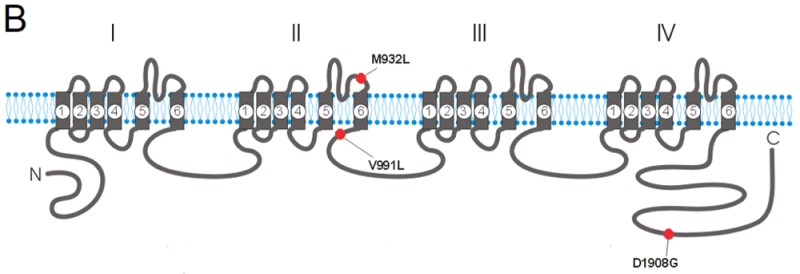
    The Neanderthal-specific alleles reported in this paper contained three amino acid variants (M932L, V991L, and D1908G) compared with the gene found in modern humans; alleles containing all three of these variant amino acids are not found in any living primate other than humans (see below).  These researchers performed a series of experiments to determine the physiological effects of these variants assessed alone, in pairs, and in the presence of all three variant amino acids.  These experiments involved synthesizing messenger RNAs (mRNAs) corresponding to each species of variant and introducing them into Xenopus laevis oocytes (which provided a more easily manipulated experimental platform for establish the effects) and then human cells.  The oocyte experiments, which involved co-expression with a human gene encoding a protein (termed the "β3 subunit") that forms a functional complex with Nav1.7 protein, evaluated the electrophysiological function of the channel and showed a shift compared to the human gene product indicating increased sensitivity.  Physiologically, the channel having the Neanderthal variants remained "open" for a longer time and, the researchers wrote, "is expected to lower the threshold for the generation of an action potential" (i.e., activate the physiological mediator of nerve activity that can be perceived as pain).

    When tested individually and in combinations (M932L+V991L, V991L+D1908G, M932L+D1908G, and M932L, V991L, and D1908G), none of the single amino acid variant-containing species showed any differential effect on function.  When tested in pairs, two of the variants (M932L+D1908G and M932L+V991L) also showed no effect.  However the third combination (V991L+D1908G) showed the same type of shift detected in the triple variant.  When these amino acids were mapped to the protein (shown below) the V991L and D1908G residues were found on the intracellular portion of the protein while the M932L residue was found extracellularly, perhaps indicating a need for an interaction prevented by the intervening cell membrane for the M932L variant.  The D1908G variant (but not the other two) is also found in Denisovan DNA and can be inherited homozygously; as the authors speculate, "[t]his suggests that the D1908G substitution occurred in the common ancestor of Neanderthals and Denisovans but that it may have had a functional effect only in Neanderthals, where also the V991L substitution occurred."

    2020-12-13 Panel B
    Similar experiments were performed using human embryonic kidney cells, where similar results were obtained for these variant Nav1.7 protein species.

    The authors next reported the results of their investigations of whether any of these variants are found in DNA from present-day humans, examining 2,535 genomes in the 1000 Genomes database.  None of these variants were found in DNA from African or European populations, but the M932L and V991L variants were found in Asian and American populations at low frequencies (0.9-7.8% and 0.5-23.8%, respectively) but in a pattern indicting co-inheritance (termed "linkage disequilibrium").  The D1908G variant was also detected in these populations, at frequencies of 0-17.1% in Asia and 0.5-52.9% in America; where present this variant is in linkage disequilibrium with the M932L and V991L variants.

    These researchers also tested whether these variants were inherited from a common ancestor to Neanderthals, Denisovans, and modern humans or whether they arose in ancient Neanderthal and Denisovan populations and were introduced later by cross-breeding with Homo sapiens sapiens.  The genetic signal providing the assay was the size of the genetic element in which these variants are found, which were expected to be larger if the introduction was more recent than a common ancestor because the "genetic reshuffling" caused by meiotic recombination would not have had as long a time to disrupt co-inheritance.  Indeed this was the found to be the case, when a comparison was made between DNA fragments from Yoruba individuals and ones from Neanderthal and Denisovan samples containing alleles likely to have been co-inherited.  The researchers found one ~26 kilobasepair (kb) fragment containing the M932L and V991L variants and another ~110 kb fragment containing the D1908G variant whose inheritance patterns were consistent with later introgression of these variants from interbreeding between the different populations.

    The M932L and V991L variants have also been associated in modern populations with increased sensitivity to pain, and small-fiber neuropathy, consistent with the experimental results reported in this paper.  A survey of 362,944 unrelated "individuals of British ancestry" revealed  none that while were homozygous for the three variants, 1,327 (0.4%) carried an allele bearing all three variants in heterozygous form.  And their genetic makeup correlated to their responses to questions about their sensitivity to pain, which was that they "had experienced one or more forms of pain more often than non-carriers."  However, there were no individuals in this dataset having both V991L and D1908G variants.  And while gender was not a factor, age seemed to be, with "an approximately linear and positive correlation with reported pain between the ages of 40 and 70."

    The authors conclude with reasoned speculation on the significance of their findings:

    [G]iven the electrophysiological effects of the [amino acid] substitutions, nociception, i.e., the input to the central nervous system from peripheral nerves in response to harmful or potentially harmful stimuli, is likely to have been higher in Neanderthals than in modern humans.  The translation of such input into the conscious perception of pain is modulated both at the level of the spinal cord and the brain.  Thus, it is not possible to conclude that Neanderthals necessarily experienced more pain than modern humans do.  Yet the input from Neanderthal peripheral nerve endings would have allowed Neanderthals to be more sensitive to stimuli, as suggested by the observations in present-day people heterozygous for the Neanderthal Nav1.7 variant.

    *H. Zeberg, M. Dannemann, K. Sahlholm, K. Tsuo, T. Maricic, V. Wiebe, W. Hevers, H. Robinson, J. Kelso, and S. Pääbo