By Kevin E. Noonan —
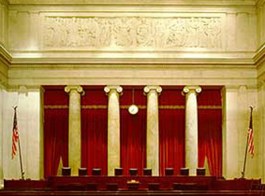 The Supreme Court heard argument on Monday in U.S. v. Arthrex, involving the question of whether appointment of Administrative Patent Judges (APJs) and their authority under the Leahy-Smith America Invents Act violates the Appointments Clause of the Constitution. Both the Government and Smith & Nephew, who lost this argument below, opposed Arthrex in this regard. At argument, the U.S. Government was represented by Malcolm l. Stewart, Deputy Solicitor General, Department of Justice; Smith & Nephew was represented by Mark A. Perry; and Arthrex was represented by Jeffrey A. Lamken.
The Government argued first; in what is clearly a procedural pattern, the Court permitted each advocate to make their argument in brief before the Chief Justice started the questioning. Deputy Solicitor General Stewart began with reference to Edmond v. United States, where the Court held that Coast Guard Court of Criminal Appeals judges were inferior officers. Here, he argued, the USPTO Director's supervisory powers exceed those in the Edmonds case. For example, the Director can "promulgate binding guidance concerning substantive patent law," "designate particular board opinions as precedential," "decide whether any particular review will be instituted and which judges will sit on the panel," and "de-institute a review even after it has been commenced." When included with the Director's power to convene a new panel and overturn any decision against PTO policy, the DSG argued that "[t]aken together, the Director's supervisory powers are fully sufficient to render administrative patent judges inferior officers."
The Chief Justice's first question was directed to the limitations of the list of supervisory powers Mr. Stewart had mentioned, which the Chief considered to be "more or less ways of twisting the arms of the APJs" because the Director "can't . . . just change the decision of the APJ." This system, the Chief seemed to believe, is "directly opposite to what the Appointments Clause was designed to do, which is transparency and make it clear who's responsible." Mr. Stewart countered by saying the "supervisory mechanisms" available to the Director "are transparent." But the Chief maintained that it is the APJ that applies "hypothetical" guidance from the Director and that is the executive decision.
Justice Thomas followed up on Mr. Stewart's comment that the Director's powers are not plenary but are substantial, asking "what's substantial"? Mr. Stewart admitted there isn't a bright-line test, and returned to Edmonds for the principle that "the mark of an inferior officer is that the inferior has a superior and is supervised at some level by Executive Branch officials who are appointed by the President and confirmed by the Senate." He asked the Court to focus on "the mechanisms of control that are available in the first instance, issuing binding guidance and so forth, because the usual hallmark of supervisory authority is that the supervisor can tell the subordinate how to do the job before the subordinate does it."
Justice Breyer noted that in Free Enterprise Fund v. Public Company Accounting Oversight Board, 561 U.S. 477 (2010) ("PCAOB") he dissented, citing a long list of civil servants of "various stripes and titles" where his question had been (and is in this case), are they officers of the U.S. and how do you tell? What is the distinction here? Mr. Stewart said the Government had acquiesced in its briefing that APJs are officers not employees, and Congress changed the law to make them officers and not civil servants. Justice Breyer anticipated that answer and asked again, what is the difference between officers and civil servants in PCAOB? Mr. Stewart enunciated a line ("exercising substantial authority under the laws of the United States") but admitted that it is "something very far from a bright line." He noted that the removal provisions for APJs are the same as the removal provisions for all PTO employees, which he contends means that "Congress didn't intend for these officers to exercise any unusual level of independence from the Director."
Justice Alito asked a "what if" question: if Congress passed a law granting a deputy solicitor general to have "final and unreviewable authority" to decide if the government will appeal with regard to a particular statute, and the SG or Attorney General can decide which DSG will make the decision, would this be constitutional? Mr. Stewart said it is "a close call," citing Morrison v. Olson, 487 U.S. 654 (1988), for the consequence of the DSG having authority limited to a narrow category of cases, and that the SG could specify the "substantive standards" that would cabin the DSG's decisions, which would make APJs inferior officers. But he distinguished this case on the basis that here an APJ's decisions are reviewable. Justice Alito asked whether having review extend to all the DSGs would change the hypo and Mr. Stewart said "somewhat" but it would be more apt if the SG could sit on the review panel and promulgate guidance that would govern the substantive standards.
Justice Sotomayor asked whether Arthrex's argument comes down to "you're not an inferior officer if you can make final decisions that are unreviewable by the Director," which she characterizes as "a fairly straightforward line," while the Government's case is "a bit more amorphous." She then asked Mr. Stewart to enunciate the Government's position on "what is your final test being judged against?" Is the Government's "baseline" that the Director sets the policies and procedures governing the APJs? Mr. Stewart said this was part of it, in the context of the Court's having "emphasized that there is no exclusive criterion for determining inferior versus principal officer status." He distinguished "two different forms of control": the Director "issue[s] policy guidance that will be binding on board panels in cases generally," but he is also "a member of the board, can participate in the board's decision-making process in individual cases." In that case, the Justice said, "what is the advantage of us keeping the Edmonds test"? To which Mr. Stewart said that the government is so big ("multifarious"), and has many officers of different types and responsibilities, that any attempt to craft a bright-line rule would give an "anomalous result" in certain cases.
Justice Kagan focused on the weight the government gives on the Director being part of the Board in a rehearing, asking for clarification on how the appeals process works at the PTO. She dug into the specifics, with regard to the Precedential Opinions Panel over which the Director doesn't have "full authority" (because it is made up of the Commissioner for Patents and the Chief Administrative Patent Judge as well as the Director). Mr. Stewart admitted that here the Director's authority isn't plenary, and stated that even in Edmonds "[f]actual determinations could slip through the cracks." But he noted that the Director could promulgate the policy guidance that would govern the decision, providing another means of exercising his authority.
Justice Gorsuch asked: in Seila Law LLC v. Consumer Financial Protection Bureau, 591 U.S. 321 (2020), the Court said that the chain of "executive officials must always remain subject to the ongoing supervision and control of the elected President through the President's oversight chain of dependence" so that the Executive authority is based on the President who must answer to the people. Under this authority the Justice asked how this squares with the argument that even the Director cannot overturn the APJs? Mr. Stewart in reply focused on the removal power while the Justice was concerned with the supervisory authority — and the CAFC doesn't count, because that is "a separate branch of government." Mr. Stewart admitted that "there is no ability to ensure that the factual findings of two other members of the . . . panel could be overridden" but said that deciding for Arthrex wouldn't change that.
Justice Kavanaugh had two concerns, saying "this structure is a real break from tradition, which we've said in cases like Free Enterprise Fund and many others, perhaps the most telling indication of a constitutional problem is the departure — the lack of historical precedent. The lack of agency review of the ALJ decision by someone who's appointed by the President with advice and consent of the Senate is absent here and is ordinarily present and historically has been present." And second, he noted that "these are multimillion, sometimes billion-dollar decisions being made not by someone who's accountable in the usual way that the Appointments Clause demands. And the Director, on rehearing, does not have the unilateral power to reverse." His question: "How am I wrong?" Mr. Stewart said the way APJs are appointed is not unusual, but the Justice said that "it is very unusual for them not to have agency review." Mr. Stewart said it is "the norm" for agency heads to be able to review inferior officers' decisions but, citing Edmonds, such review does not need to be plenary. But he counseled that the Court could take comfort in the ability for the Director to "instruct" APJ's on the Director's interpretation of the patent laws and ensure compliance with those interpretations. His proposed remedy is for the Court to "sever the provision in the statute that said only the board can grant rehearings."
Justice Barrett brought up the provisions of the MSPB that protects APJs from arbitrary firing, meaning (for her) that "at the end of the day, the Director is actually not the official in the Executive Branch that has the last word on the continuation in service." Mr. Stewart said they can be removed as APJs without being removed from government service entirely, but the Justice wants to know what that means, if what they do is being an APJ? Are they "benched without pay" or "benched with pay"? Mr. Stewart set out their career options, saying that this is enough and that "the fact that the APJs are subject to the same removal protection as officers and employees generally indicates that Congress didn't intend for them to have any sort of special independence from — from the Director."
Mr. Stewart closed by emphasizing that the Court has said there is "no exclusive criterion" to be applied to determine inferior officer status but here the tools the Director has are enough.
Mr. Perry (for Smith & Nephew) attacked Arthrex's position immediately, saying it is based on one line from the Edmonds decision to the effect that "military judges couldn't render a final decision unless permitted to do so by other executive officers." He distinguished the circumstances in Edmonds and the officers in that case with the PTO Director, whom he said "can and does give substantive guidance to APJs," having "unilateral institution and assignment power" and the authority to "order review of any board decision."
The Chief began the questioning by saying well, if you won a case today there is the possibility that the next day the Director could grant rehearing, "stack" the panel with himself and two APJ's who agree with him, and reach the opposite conclusion, based on newly issued guidance; wouldn't this be a violation of due process? Mr. Perry responded by denying that the due process question had anything to do with the Appointments Clause question before the Court (a position opposite to the position Mr. Lamken would take on behalf of Arthrex).
Justice Thomas asked (as he had asked the Government) about the test Smith & Nephew would espouse for determining whether an APJ is an inferior officer. Mr. Perry said that principal officers are one step removed from the President while APJs are three steps removed. This "chain of command" test is one test, and another is "supervisions and control." But Justice Thomas wanted to know "how much" supervision and control? And Mr. Perry said that "the ultimate test is whether the President and his direct reports remain accountable for the operations of the agency." Under the "totality of the circumstances," his position was that this principle is satisfied here.
Justice Breyer asked whether there are any other examples similar to these for certain areas of authority that are "pretty unreviewable." Mr. Perry said there are many such cases, such as AUSAs making decisions in court, which is how he characterized the priority date question at issue here ("Remember Alice? It's a song about Alice").
Justice Alito asked about a metaphor in their brief he called "the Goldilocks test" and went through a series of instances of control to get to the point where Mr. Perry agreed that "there's no longer sufficient control." These included where the Director does not control, provide or direct:
• whether to institute IPRs in the first place;
• how many and which APJs sit on which panels;
• exemplary applications of patent law to fact patterns that are binding on APJs;
• whether a panel's decision will be precedential;
• whether a panel's decision will be reheard by controlling whether a Precedential Opinion Panel on which he sits votes to rehear a case;
• how many and which APJs rehear a case
• whether to dismiss an entire APR proceeding rather than allow a panel's decision to become final.
Mr. Perry said that if all these powers (which the Director has) were removed, then the possibility of an inferior officer acting as a "sleeper agent" could arise, and in actuality "the suite of powers together, including one the Court didn't mention, which is the Director's final authority to confirm or cancel the patent claims, ensure that the political accountability rests at all times with the Director, not with the APJs." When this answer did not satisfy the Justice, Mr. Perry suggested that an appropriate "magic divider" would be the relationship to the President (how many steps removed).
Justice Sotomayor asked whether the idea of "the right or the need to have someone in the direct control of the President" is "totally at odds with an adjudicatory system of any kind." Mr. Perry answered by conceding that "there is an inherent tension in agency adjudicatory-type proceedings between adjudicative independence and presidential control" for which Congress has struck an appropriate balance in many different ways. Here, it is the "advance offering of guidance" that makes the difference — this enables the Director to "identify problems coming out of PTAB panels and direct future PTAB panels not to make those mistakes" and "preserves both the political accountability and avoids those due process-type problems that may arise in individual circumstances."
Justice Kagan asked about how this structure arose, where there is no opportunity for direct review of adjudicatory decisions by the agency head? Mr. Perry cited history, specifically USPTO officers who presided over interferences going back to the 19th Century, whom have always been appointed by the Secretary of Commerce, calling it a "patent-specific tradition." But Justice Kagan wanted to know if Congress has ever specifically considered this "long tradition" with regard to the Appointments Clause, to which Mr. Perry said Congress first had the Director making the appointments and then changed to the Secretary to avoid Appointments Clause issues.
Justice Gorsuch asked if it is fair to say this is a "rare bird" related to PTO history? Mr. Perry seemed to admit that the USPTO acts outside some of the provisions of the APA. The Justice raised the due process issue once again, and Mr. Perry reiterated that this question isn't before the Court.
Justice Kavanaugh followed the "significant departure from general historical practice since the APA" aspect raised by Justice Gorsuch, calling it "a yellow flag, if not a red flag" and said that his worry is that "this gives a model for Congress to eliminate agency review of ALJ decisions and kind of fragment and take away from agency control going forward, because this — however this came about, to Justice Kagan's question, this would be a model going forward, and that would allow Congress to give extraordinary power to inferior officers, which is not how our government is ordinarily structured." To this Justice there are two choices between principal and inferior officers, and this "hybrid" structure "gives enormous power to inferior officers, and it's really just out of the norm" — a comment that hit the nail on the head. Mr. Perry cited Justice Scalia's dissent in Morrison v. Olson in response, and also stated that "the Director maintains the final authority under 318(b) to confirm or cancel any patent."
Justice Barrett asked about the remedy should the Court hold against Smith & Nephew on the Appointments Clause issue, and whether the Court should be exercising its discretion to "save" the PTAB regime by making APJs employees-at-will? Mr. Perry said if the problem the Court wishes to solve is agency reviewability, then the most direct solution would be to permit the Director to unilaterally review by severing the provision requiring board rehearing.
Mr. Perry summarized his argument by using a "sitting at the right hand of the President" standard for determining principal versus inferior officers.
Arguing for Arthrex, Mr. Lamken emphasized the adjudicatory role of APJs, that "no superior in the executive has authority to review their decisions" and for that reason "accountability suffers." Under usual circumstances, he said, if an agency head refused to review and overturn improvident decisions s/he could be removed from office. But here, the principal officer is not accountable if the answer is "I have no authority [because] Congress made my supposed underlings the final word." He further argued that the ability to remedy error in future cases doesn't provide a remedy the party at issue, thus introducing the due process argument. This isn't how the Court ruled in Edmond, he said, which "emphasizes review by presidentially appointed, Senate-confirmed officers." And the Federal Circuit's remedy — "striking APJ tenure protection" — isn't a remedy. Congress is how the situation needs to be remedied.
The Chief asked why it shouldn't be permissible for the Director to exercise "soft power of review" — "the executive allow the adjudicators a significant degree of leeway because they're just that . . . adjudicators"? He suggested as a fair balance that "you don't want the politically accountable people to have the authority to overturn [factual decisions with large sums at stake] but, at the same time, in terms of basic patent rules and approaches and guidance, you do want them to have that responsibility." Mr. Lamken argued that the Constitution permits adjudication by Executive branch agencies under circumstances where "the key protections against executive overreach, which is accountability to the people for the decisions, has to be observed." Here, the current regime permits "unaccountable officers to decide those cases finally, stripping any accountable principal of authority to overturn them, [which] defeats that structural protection." In addition, Mr. Lamken maintained that someone cannot be an inferior officer if there is no superior to review her decisions. He continued to counter the Chief's citing the remedial procedures in the Office on substantially due process grounds for the individual litigant before the PTAB. "For the public and aggrieved parties wanting to know who to hold accountable for the decision, there's just nobody."
The Chief then raised the practicality issue, that "[with h]undreds and hundreds of administrative hearing examiners . . . making these sorts of decisions, the notion of meaningful review of each one seems to me to be fanciful." To which Mr. Lamken replied that the inability of the Director to fulfill his duties is why he is accountable as a principal officer.
Justice Thomas asked why accountability matters here? Does it imply that the Director could render a better decision? And Mr. Lamken said yes, as a matter of fact, but the point is that the APJs need to know that they are subject to review and reversal by the Director as a principal officer. The Justice asked (as he had asked Mr. Perry) how much review? Pro forma/rubber stamp review? Mr. Lamken avoided that issue by saying it is the availability of review that matters, making an analogy between the district courts and the Supreme Court despite the relative rarity of certiorari. "[W]hat you can't have is what we have here, which is not only can you not remove . . . the supposedly lower officers, but the director simply does not have authority to overturn their decisions no matter how vehemently . . . he may disagree with them." The Justice then asked whether Congress could fix the problem by giving the Director discretionary review, which Mr. Lamken said is how the TTAB was restructured. However, he did say that "this Court can't pencil in that sort of authority." The Justice suggested that if Congress gave the Director the power to delegate his reviewing authority we would be in the same position, but Mr. Lamken countered by saying there the Director could decide not to delegate.
Justice Breyer asked for analogies with other discretionary decisions in other contexts (such as whistleblowers, doctors), pointing out the failure of a "one-size-fits-all" approach. Mr. Lamken returned to the due process/accountability theme adjudication by adjudication. Bringing the argument back to the adjudicatory realm, he stated that "[f]or adjudication, being an inferior means having a superior who can review and overturn your decisions."
Justice Alito asked about the remedy, saying the Arthrex brief argues that the Court should make the Appointments Clause decision and let Congress fashion the remedy. In this case, what remedy is Arthrex seeking? Mr. Lamken said if the IPR system is unconstitutional, the IPR should be dismissed. But Justice Alito asked whether there is an alternative, permitting the Director to review. Mr. Lamken resisted acknowledging judicial re-writing of the statute, saying this is "a sort of fundamental policy choice this Court does not make." Mr. Lamken cited to the precedent in the Sorrell v. IMS Health Inc., 564 U.S. 552 (2011), where the Court said "there's multiple possibilities of how the statute could be changed, but we are not the institution to be . . . doing it. The legislature has to make that change."
Justice Sotomayor addressed the development of the Appointments Clause jurisprudence by the Court, stating that originally "the founding generation conceived of principal officers as synonymous with heads of departments," but that early statutes permitted inferior officers to make final adjudicatory decisions as early as 1793 in patents and 1803 in land grants. Under this view, the person who is "responsible" is the person who makes the policy, not the person who implements it. Because it is undisputed that APJs are not policymakers, the Director as a principal officer is responsible for the policies the PTAB and APJs implement them. Mr. Lamken replied that if the Director is prevented by statute from reviewing and reversing the APJs then he isn't accountable. To the Justice's assertion that the PTAB's decisions are reviewable by the courts, Mr. Lamken said the same is true for principal officers. When the Justice said his position is equivalent to just ignoring the history, Mr. Lamken disagreed, distinguishing precedent regarding arbitrators who decide a single case without an enduring position to the status of APJs in this case.
Justice Kagan asked whether it would be sufficient if the Director's review was limited to clear error, which Mr. Lamken said would be consistent with Edmonds. But he balked at the Justice's suggestion for an egregious error standard, saying that at some point "where the authority of the Director is so cut off that he is not able to say with any accountability that the final decision of the APJ represents the views of the United States, that this is a decision that he is willing to stand behind as the word of the PTO" then that would be where he would draw the line. The Justice suggested that the Edmonds case may be much closer to the current situation at the PTAB, on the basis that the standard just requires competent evidence, analogizing this situation to court cases and reviewing questions of fact. Mr. Lamken said that "one thing that Congress can't do and still maintain you as an inferior officer is to say that your adjudicative decisions are not subject to review by any principal officer under any circumstances." The Justice thought the situation is more complicated, being combined with a "raft" of other things/considerations. And this situation is not completely analogous with Edmonds because the Director "couldn't possibly conceive — come up with every conceivable along the way." Mr. Lamken characterized the various forms of control enunciated by Mr. Stewart for the Government as "contrivances" that "just show that Congress didn't give the Director the critical authority you need for adjudications: the authority to review and overturn decisions so he can stand behind them as the final word of the United States."
Justice Gorsuch asked whether this case isn't like other recent cases where the Court was able to sever the removal conditions and solve the constitutional issues, in particular Mr. Stewart's suggestion that the issue would be resolved if the Court severed the provision in Section 6(c) that said only the PTAB can grant a rehearing. Mr. Lamken responded that this wouldn't fix the problem, because "the Director still wouldn't have unilateral authority to decide cases on rehearing." The Justice attempted to define exactly what amendments would be needed, and Mr. Lamken referred to Congress needing to rewrite the statute. The Justice also turned to the remedy and delay in getting resolution; Mr. Lamken referred again to the TTAB and how Congress fixed that issue. He said "[t]his Court shouldn't be placing a thumb on the scale and giving judicial imprimatur to one of multiple diametrically opposed solutions."
Justice Kavanaugh asked about severability, characterizing Arthrex's position as ALJ's have an historically settled position in the Executive branch with due process provided by agency review by principal officers. The Justice said that "here, the problem is Congress departed from that tradition by keeping the due process part without the agency review part, and you can either keep the review if you want to keep them as inferior officers, or if you want to avoid agency — any agency review, Congress can do that too, but that, they'd have to do presidential appointment and Senate confirmation of the APJs." The Justice said that the Court has "frowned upon repeatedly" the remedy of "taking down the whole system" and that "Isn't the nature of the constitutional problem here the lack of director review, which would mean us saying 6(c) is the constitutional problem?" Mr. Lamken disagreed with that formulation, his answer being cut off (for time most likely) by the Chief.
Justice Barrett referred to Arthrex's brief for the argument that "if there are multiple ways to cure a constitutional problem in a statutory scheme, then the judiciary ought not be blue-penciling it" and asked, "Can you think of any situation in which we have said, okay, well, there are multiple flaws in this scheme, but, you know, as Justice Kavanaugh was just saying, 6(c) seems to be the big problem, so we're going to think it's the cleanest to go that route? . . . Can you tell me the negative, that we've never done it?" Mr. Lamken said in fact the Court had done this, citing Sorrell, but the Justice corrected him, saying she wanted to know if the Court has ever made a judicial policy choice: "let's say that Justice Kavanaugh is right and that it seems very sensible and makes a lot of sense to solve this problem, assuming that we say there is one, by saying 6(c) is the problem, so that's the locus of the constitutional problem here, and we're going to say that that's what we're holding unconstitutional so that going forward, it's just that the PTAB can't have the final word." Mr. Lamken said the Justice is right that the Court doesn't make policy choices.
She then "pivots" to the Appointments Clause issue, saying there seem to be several "front-end controls," including "hiring and and firing and the ability of the director to set policy that the APJs must follow," which would indicate they are inferior officers and that this "case-specific review authority" is an anomaly to their role as inferior officers otherwise. Mr. Lamken said the Court's precedent in Freytag v. Commissioner of Internal Revenue, 501 U.S. 868 (1991), held that "a single officer has many responsibilities to those of inferior officers, but if that officer has authority that goes beyond that for an inferior officer, if the officer is the final decision maker for the Executive Branch where no — he has no superior in that context, that officer is then a principal officer for all purposes and cannot continue in that office absent a proper appointment."
Mr. Lamken wrapped up by saying that adjudicators must have a superior who can overrule their decisions "before they become the final word of the Executive Branch," which is not the case here. Accordingly, APJs under the current statutory regime are principal officers whose appointment must satisfy the Appointments Clause. And because the only solutions "point in opposite directions," the remedy must come from Congress.
Mr. Stewart's rebuttal is directed to Arthrex's arguments without any colloquy from the bench.
As is typically the case, the Justices' questioning did not reveal any particular hints to how they were thinking about the question before them, because their questions can often be posed as a counterfactual to test whether their preliminary understanding is correct. It is clear that the due process question is top-of-mind for some of the Justices, as is the reticence of some to overturn the statutory regime on Appointments Clause grounds. But the principal impression from the argument is the measured, ordered, almost step-by-step (and Justice-by-Justice) way the arguments played out. Undoubtedly a consequence of the virtual platform, the Chief Justice began each round of questioning and then called on each Justice in seniority order. While there was continuity to some of the questioning, with a Justice pursuing a line of questioning initiated by an earlier-questioning Justice, there was little of the free-for-all aspect that some arguments produced from the bench when arguments were heard in-person. The overall tenor of the arguments reinforced the conventional wisdom that the Justices were using oral argument to test the limits of the question before them, with Justice Breyer taking his traditional role of using hypotheticals to illustrate the issues. It seems clear that the Justices understood that Arthrex was asking them to invalidate how the Leahy-Smith America Invents Act altered the authority of the PTAB in the post-grant review scheme on constitutional grounds, and that before doing so they would consider the propriety of "blue-penciling" the current regime to avoid having to do so. The patent world awaits how they come down on this choice.

 HGF Limited will be offering a webinar entitled "What Happens When It Goes Wrong? Avoiding Loss of Patent Rights in Portfolio Management" on March 11, 2021 at 6:00 am (ET). Vanessa Stainthorpe of HGF Limited will use case studies to help recognise risky practices in portfolio management and outline what can be done when something goes wrong, explain the circumstances in which patent applications can (and can't) be restored, for example using the European Patent Office's further processing and reinstatement procedures, discuss recent case law decisions, and give practical advice on how to avoid losing valuable patent rights.







 Patent Docs