
By
Donald Zuhn —
 On
On
Monday, the American Antitrust Institute
(AAI) sent a letter
to Speaker of the House Nancy Pelosi (D-CA) and Senate Majority Leader Harry
Reid (D-NV), urging the House and Senate to include provisions in their health
care reform bills that would prohibit exclusion payments in pharmaceutical
patent settlements. These
payments, also known as pay-for delay settlements or reverse payments, are made
by brand name drug companies to generic drug companies in order to delay the
entry of a generic drug into the market.
Co-signatories on the letter included Families USA,
U.S. PIRG, the Consumer Federation of America,
Consumers Union, Community Catalyst,
and the National Legislative Association on Prescription Drug Prices.
 In
In
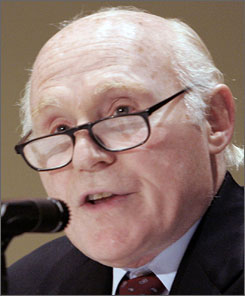
a press release issued on Monday, the AAI noted that a group of Senators, led
by Sen. Herb Kohl (D-WI) (at left), had tried unsuccessfully to add a pay-for-delay
provision to the Senate health care bill last month. The proposed amendment was based on a bill (S. 369)
Sen. Kohl introduced in February 2009, which would "prohibit payments from
brand name to generic drug manufacturers with the purpose to prevent or delay
the entry of competition from generic drugs" (see "Bill to Prohibit Reverse Payments Introduced in the
Senate"). Last fall, the bill was passed out of
Senate Judiciary Committee by a 12-7 vote (see
"Anti-Reverse Payment Legislation Introduced in the House").
 In
In
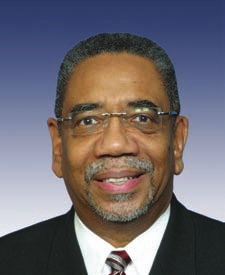
its letter to the Speaker and Senate Majority Leader, the consumer advocacy groups seek support
for the pay-for-delay legislation being proposed by Rep. Bobby Rush (D-IL) (at right). The anti-reverse payment provision
being proposed by Rep. Rush is presumably similar to the bill (H.R. 1706) he
introduced in April 2009, which would prohibit brand name drug companies from
compensating generic drug companies for delaying the entry of generic drugs
into the market (see "Senate
Judiciary Committee Acts on Reverse Payments").
 The
The
groups also seek support for a bill (S. 1315)
introduced by Sen. Bill Nelson (D-FL) (at left), which would provide an incentive for multiple
generic manufacturers to challenge patents. The bill, which was introduced in June and then referred to
the Senate Committee on Health, Education, Labor, and Pensions (HELP), would
amend the Federal Food, Drug, and Cosmetic Act to expand the definition of
"first applicant" under the Act to allow a generic drug manufacturer
that is currently considered an applicant subsequent to a brand-name
manufacturer's 180-day exclusivity period to qualify as a first applicant for
purposes of filing an abbreviated application for a new drug. Currently, Sen. Nelson's bill has only
one co-sponsor: Sen. Kohl.
The
AAI letter states that Rep. Rush's and Sen. Nelson's provisions "will help
open up the market for affordable prescription drugs." The letter notes that "[w]hen
patents are weak or illegitimate, drug manufacturers have the opportunity to
challenge those patents and, if successful, to introduce affordable generics to
the market in a shorter timeframe than they otherwise would." However, when a first-to-challenge
generic manufacturer is "paid off by the branded drug manufacturer to stay
out of the market," the generic manufacturer gets to keep its 180-day
exclusivity period, thereby preventing other manufacturers from bringing the
same generic drug to market.
According to the letter, this results in consumer harm. As a result, the letter contends that
reverse payments "should be considered per se illegal: they prevent any generic manufacturer with a legitimate challenge to a patent
from potentially entering the market."
With
regard Sen. Nelson's modification of the 180-day exclusivity period, the letter
argues that "[e]xpanding the exclusivity period is vitally important,
since it removes the barrier to entry that has protected collusive settlements
between brands and first-filing generics." The letter contends that including Sen. Nelson's provision
in the final health reform legislation "would provide a strong complement
to Representative Rush's per se ban on these payments."
 Patent Docs
Leave a comment