
Implications for Patent Protection for Avonex®
Anti-Multiple Sclerosis Drug
By Kevin E. Noonan —
There is a tendency to blame the process when an
undesired outcome occurs. That is
happening in the wake of regulatory filings with the Securities and Exchange
Commission regarding U.S. Patent 7,588,755 (the '755 patent), issued on
September 15, 2009, and owned by Biogen Idec. The undesired outcome (by some) is the possibility that this
patent will protect Biogen Idec's blockbuster multiple sclerosis drug, Avonex®
(human interferon beta 1a), from generic competition for an additional 13 years
(until September 15, 2026) after expiration of current patents in May 2013. That may happen, but a review of the
history of the application shows that the patenting process worked as it is
supposed to, with no evidence that Biogen Idec was not diligent in prosecuting
this application within Patent Office rules. If anything, it is the diligence with which the Office
examined the application that resulted in the delay that may extend Biogen Idec's
exclusivity period.
The '755 patent claims priority to a first
application filed in 1981 and a divisional application filed in 1989, both
abandoned. The application that
resulted in the '755 patent was filed on May 25, 1995, and thus has a patent
term of 17 years from issue, determined by U.S. law prior to the adoption of
the GATT provision limiting U.S. patent term to 20 years from the earliest
priority date. A history of
patent prosecution reveals "why it took so long" for this patent to
issue:
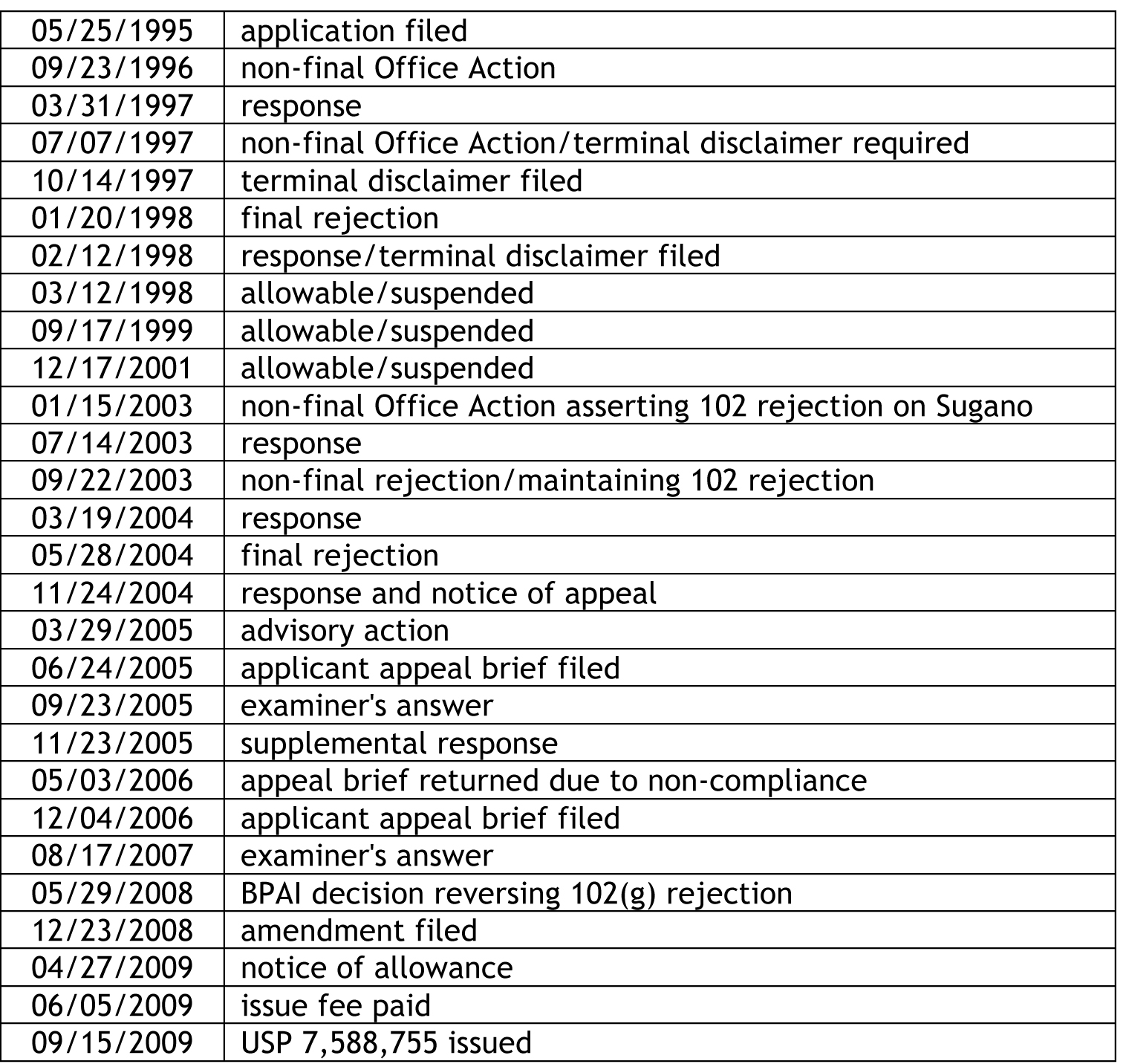
The longest period of delay extended from March 12,
1998 to January 15, 2003 — almost five years — while prosecution was suspended
because of a potential interference. (For those uninitiated in the arcane world of interferences, the most
likely reason for this delay was to give a potential interfering application
time to be prosecuted until interfering claims were deemed allowable.) As it turns out, no interference was
declared, and the Examiner renewed prosecution by asserting anticipation
rejections based on two patents to Sugano (U.S. Patent Nos. 5,514,567 or
5,326,859). (Ironically, '755
patent applicant Fiers was involved in an earlier interference against Sugano,
and a second party, Revel, almost 20 years ago, in which Sugano prevailed in
claims for human ß-interferon.) The second extensive period of delay involved the appeal of the asserted
anticipation rejection, which was complicated by the new formalities rules for
appeal briefs promulgated (and strictly enforced) by the Office. This delayed prosecution of the
application to allowance by another 3 years, from June 24, 2005 to May 29,
2008. Ultimately, the Board of
Patent Appeals and Interferences reversed the rejections based on the Sugano
patents, paving the way for allowance and issue of the '755 patent (a process
that took another 16 months).

In addition to these Patent Office delays, the
extended term of this patent is, of course, an artifact of the change in patent
term in the U.S. — the reason the term seems so long today is that we have
become accustomed to a 20-year maximum from the earliest priority date, and the
prior norm of 17 years from grant date seems anomalous, especially when the
term is as extended as it is in this case (31 years from the application filing
date, and 45 years from the earliest priority date). Something like this could not occur today.
Besides these procedural aspects, whether the '755
patent will be useful for preventing generic competition for Avonex® will
depend on the scope of the granted claims. The '755 patent has but three claims, set forth below:
1. A method for
immunomodulation or treating a viral conditions, a viral disease, cancers or
tumors comprising the step of administering to a patient in need of such
treatment a therapeutically effective amount of a composition comprising:
a
recombinant polypeptide produced by a non-human host transformed by a
recombinant DNA molecule comprising a DNA sequence selected from the group
consisting of:
(a) DNA sequences which are capable of hybridizing to any of the
DNA inserts of G-pBR322(Pst)/HFIF1, G-pBR322(Pst)/HFIF3 (DSM 1791),
G-pBR322(Pst)/HFIF6 (DSM 1792), and G-pBR322(Pst)/HFIF7 (DSM 1793) under
hybridizing conditions of 0.75 M NaCl at 68.degree. C. and washing conditions
of 0.3 M NaCl at 68.degree. C., and which code for a polypeptide displaying
antiviral activity, and (b) DNA sequences which are degenerate as a result of
the genetic code to the DNA sequences defined in (a);
said DNA sequence being
operatively linked to an expression control sequence in the recombinant DNA
molecule.2. The method according
to claim 1, wherein said DNA sequence is selected from DNA sequences of the
formulae:ATGACCAACAAGTGTCTCCTCCAAATTGCTCTCCTGTTGTGCTTCTCCACTA
CAGCTCTTTCCATGAGCTACAACTTGCTTGGATTCCTACAAAGAAGCAGCAA
TTTTCAGTGTCAGAAGCTCCTGTGGCAATTGAATGGGAGGCTTGAATACTGC
CTCAAGGACAGGATGAACTTTGACATCCCTGAGGAGATTAAGCAGCTGCAGC
AGTTCCAGAAGGAGGACGCCGCATTGACCATCTATGAGATGCTCCAGAACAT
CTTTGCTATTTTCAGACAAGATTCATCTAGCACTGGCTGGAATGAGACTATT
GTTGAGAACCTCCTGGCTAATGTCTATCATCAGATAAACCATCTGAAGACAG
TCCTGGAAGAAAAACTGGAGAAAGAAGATTTCACCAGGGGAAAACTCATGAG
CAGTCTGCACCTGAAAAGATATTATGGGAGGATTCTGCATTACCTGAAGGCC
AAGGAGTACAGTCACTGTGCCTGGACCATAGTCAGAGTGGAAATCCTAAGGA
ACTTTTACTTCATTAACAGACTTACAGGTTACCTCCGAAAC,
and
ATGAGCTACAACTTGCTTGGATTCCTACAAAGAAGCAGCAATTTTCAGTGTC
AGAAGCTCCTGTGGCAATTGAATGGGAGGCTTGAATACTGCCTCAAGGACAG
GATGAACTTTGACATCCCTGAGGAGATTAAGCAGCTGCAGCAGTTCCAGAAG
GAGGACGCCGCATTGACCATCTATGAGATGCTCCAGAACATCTTTGCTATTT
TCAGACAAGATTCATCTAGCACTGGCTGGAATGAGACTATTGTTGAGAACCT
CCTGGCTAATGTCTATCATCAGATAAACCATCTGAAGACAGTCCTGGAAGAA
AAACTGGAGAAAGAAGATTTCACCAGGGGAAAACTCATGAGCAGTCTGCACC
TGAAAAGATATTATGGGAGGATTCTGCATTACCTGAAGGCCAAGGAGTACAG
TCACTGTGCCTGGACCATAGTCAGAGTGGAAATCCTAAGGAACTTTTACTTC
ATTAACAGACTTACAGGTTACCTCCGAAAC.3. The method according
to claim 1 wherein the polypeptide is selected from polypeptides of the
formulae:Met-Thr-Asn-Lys-Cys-Leu-Leu-Gln-Ile-Ala-Leu-Leu-
Leu-Cys-Phe-Ser-Thr-Thr-Ala-Leu-Ser-Met-Ser-Tyr-
Asn-Leu-Leu-Gly-Phe-Leu-Gln-Arg-Ser-Ser-Asn-Phe-
Gln-Cys-Gln-Lys-Leu-Leu-Trp-Gln-Leu-Asn-Gly-Arg-
Leu-Glu-Tyr-Cys-Leu-Lys-Asp-Arg-Met-Asn-Phe-Asp-
Ile-Pro-Glu-Glu-Ile-Lys-Gln-Leu-Gln-Gln-Phe-Gln-
Lys-Glu-Asp-Ala-Ala-Leu-Thr-Ile-Tyr-Glu-Met-Leu-
Gln-Asn-Ile-Phe-Ala-Ile-Phe-Arg-Gln-Asp-Ser-Ser-
Ser-Thr-Gly-Trp-Asn-Glu-Thr-Ile-Val-Glu-Asn-Leu-
Leu-Ala-Asn-Val-Tyr-His-Gln-Ile-Asn-His-Leu-Lys-
Thr-Val-Leu-Glu-Glu-Lys-Leu-Glu-Lys-Glu-Asp-Phe-
Thr-Arg-Gly-Lys-Leu-Met-Ser-Ser-Leu-His-Leu-Lys-
Arg-Tyr-Tyr-Gly-Arg-Ile-Leu-His-Tyr-Leu-Lys-Ala-
Lys-Glu-Tyr-Ser-His-Cys-Ala-Trp-Thr-Ile-Val-Arg-
Val-Glu-Ile-Leu-Arg-Asn-Phe-Tyr-Phe-Ile-Asn-Arg-
Leu-Thr-Gly-Tyr-Leu-Arg-Asn,and
Met-Ser-Tyr-Asn-Leu-Leu-Gly-Phe-Leu-Gln-Arg-Ser-
Ser-Asn-Phe-Gln-Cys-Gln-Lys-Leu-Leu-Trp-Gln-Leu-
Asn-Gly-Arg-Leu-Glu-Tyr-Cys-Leu-Lys-Asp-Arg-Met-
Asn-Phe-Asp-Ile-Pro-Glu-Glu-Ile-Lys-Gln-Leu-Gln-
Gln-Phe-Gln-Lys-Glu-Asp-Ala-Ala-Leu-Thr-Ile-Tyr-
Glu-Met-Leu-Gln-Asn-Ile-Phe-Ala-Ile-Phe-Arg-Gln-
Asp-Ser-Ser-Ser-Thr-Gly-Trp-Asn-Glu-Thr-Ile-Val-
Glu-Asn-Leu-Leu-Ala-Asn-Val-Tyr-His-Gln-Ile-Asn-
His-Leu-Lys-Thr-Val-Leu-Glu-Glu-Lys-Leu-Glu-Lys-
Glu-Asp-Phe-Thr-Arg-Gly-Lys-Leu-Met-Ser-Ser-Leu-
His-Leu-Lys-Arg-Tyr-Tyr-Gly-Arg-Ile-Leu-His-Tyr-
Leu-Lys-Ala-Lys-Glu-Tyr-Ser-His-Cys-Ala-Trp-Thr-
Ile-Val-Arg-Val-Glu-Ile-Leu-Arg-Asn-Phe-Tyr-Phe-
Ile-Asn-Arg-Leu-Thr-Gly-Tyr-Leu-Arg-Asn.
The relevance of these claims to Avonex® will
depend on whether Avonex® administration falls within the ambit of the method
claim, which requires:
a) immunomodulation or
b) treating a viral condition, a viral
disease, cancers or tumors
c) administering to a patient in need of
such treatment
d) a therapeutically effective amount of a
composition comprising:
e) a recombinant polypeptide
f) produced by a non-human host
transformed by a recombinant DNA molecule comprising a DNA sequence
g) encoding human ß-interferon or sequence
homolog thereof
h) which code for a polypeptide displaying
antiviral activity
While elements e)
through h) are apparently encompassed by Avonex®, whether these
claims will be useful for precluding generic entry will depend on whether
treatment of MS involves immunomodulation or viral disease (since it is
self-evidently neither cancer or a tumor). In this regard the scientific literature is littered with
reports linking MS with a variety of viral infections (including Epstein-Barr
virus and measles virus), but no definitive linkage has been established. While MS treatment is likely to involve some type of immunomodulation, Biogen Idec would have the burden of establishing such a mechanism should they sue an ANDA filer for infringement.
The importance of the
question about the scope of this patent, and its effects on generic competition
over Avonex® can be appreciated from the sales figures for the drug
in the second quarter of 2009, which amount to almost $600 million (or $2.4
billion per year), according to an Associated Press article cited in Forbes magazine.
As the Forbes article suggests, the outcome of the Avonex® patent regime has
relevance to the current follow-on biologics legislation, at least because of
the emotional appeal regarding the length of patent protection. Understanding the history of this
patent defuses any apprehension about the likelihood of similar outcomes going
forward, and the Avonex® patent estate can be seen to be nothing more than a
historical accident that cannot be replicated. However, the tendency for dissatisfaction with outcomes like
this one to guide political activity, and legislation, should not be
underestimated.


 Patent Docs
Leave a comment