
By
Donald Zuhn —
Last
week, a divided panel of the Federal Circuit affirmed a determination by the
District Court for the District of Delaware that the claims of U.S. Patent No. 4,663,318 were invalid for lack of enablement. The
'318 patent, which issued on May 5, 1987 from U.S. Application No. 06/819,141, is directed to a method for treating
Alzheimer’s disease with galanthamine.
The lone independent claim of the '318 patent recites:
1. A method of treating Alzheimer's
disease and related dementias which comprises administering to a patient
suffering from such a disease a therapeutically effective amount of
galanthamine or a pharmaceutically-acceptable acid addition salt thereof.

The
majority opinion notes that at the time the '141 application was filed (January 1986), researchers had
observed a correlation between Alzheimer’s disease symptoms and a reduced level
of the neurotransmitter acetylcholine in the brain (acetylcholine is released by a transmitting neuron and binds
to nicotinic receptors and muscarinic receptors on a receiving neuron). The majority opinion also notes that at the
time the '141 application was filed, the small molecule galanthamine (at right; also known as galantamine) was known
to inhibit acetylcholinesterase, an enzyme that breaks down acetylcholine. The majority opinion states that the
specification for the '318 patent is "only just over one page in length"
and provides "almost no basis for its stated conclusion that it was
possible to administer 'an effective Alzheimer's disease cognitively-enhancing
amount of galanthamine.'" The
majority opinion also states that the specification provides "short summaries"
of six scientific papers in which galanthamine had been administered to humans
or animals, but "did not provide analysis or insight connecting the
results of any of these six studies to galanthamine's potential to treat
Alzheimer's disease in humans" or "refer to any then-existing animal
test results involving the administration of galantamine in connection with
this animal model of Alzheimer's disease."
During
prosecution of the '318 patent, the examiner rejected the claims for
indefiniteness and obviousness. In
attempting to overcome the rejection, the inventor, Dr. Bonnie Davis, informed
the Patent Office that "experiments [are] underway using animal models
which are expected to show that treatment with galanthamine does result in an
improvement in the condition of those suffering from Alzheimer's disease,"
and that it was "expected that data from this experimental work will be
available in two to three months and will be submitted to the Examiner promptly
thereafter." The majority opinion
notes that the results of these experiments were not known until July 1987, after
the '318 patent issued, that the studies "required several months and
considerable effort by researchers at the Johns Hopkins University," and
that the results were never submitted to the Patent Office. In November 1995, Dr. Davis licensed
the '318 patent to Plaintiffs-Appellants Janssen Pharmaceutica N.V., Janssen
L.P., and Synaptech, Inc. (Janssen).
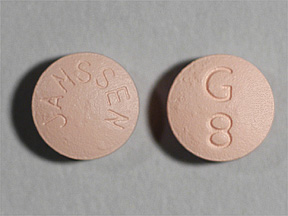
Seeking
approval to market a generic version of Janssen's galanthamine-based therapeutic
for treating mild to moderate Alzheimer's disease, several generic drug
manufacturers filed Abbreviated New Drug Applications (ANDAs) with the
FDA. In response, Janssen filed
infringement suits against each ANDA filer. These infringement suits were consolidated.
Following
a bench trial, the District Court determined that the '318 patent was invalid
for lack of enablement. The
District Court based its determination on two grounds: (1) the specification of the '318
patent did not demonstrate utility because relevant animal testing experiments
were "not finished . . . by the time the '318 patent was allowed" and
the specification provided only "minimal disclosure" of utility, and
(2) the specification and claims did not "teach one of skill in the art
how to use the claimed method" because the application "only
surmise[d] how the claimed method could be used" without providing
sufficient galanthamine dosage information.

Writing
for the majority, Judge Dyk, joined by Judge Mayer, cites Process Control Corp. v. HydReclaim Corp., 190 F.3d 1350, 1358
(Fed. Cir. 1999), for the proposition that "a patent claim [that] fails to
meet the utility requirement because it is not useful or operative, . . . also
fails to meet the how-to-use aspect of the enablement requirement." Judge Dyk observes that "[t]ypically,
patent applications claiming new methods of treatment are supported by test
results," adding that "[o]ur predecessor court held in Krimmel
[292 F.2d 948, 954 (CCPA 1961)] that animal tests showing that a new nonobvious
compound 'exhibits some useful pharmaceutical property' are sufficient to
demonstrate utility" and that "under appropriate circumstances, . . .
the first link in the screening chain, in vitro testing, may establish a
practical utility for the [pharmaceutical] compound in question," citing Cross v. Iizuka, 753 F.2d 1040, 1051
(Fed. Cir. 1985).
In
affirming the District Court's judgment of invalidity for lack of enablement, Judge
Dyk states that:
In
this case, however, neither in vitro test results nor animal test results
involving the use of galantamine to treat Alzheimer's-like conditions were
provided. The results from the
'318 patent's proposed animal tests of galantamine for treating symptoms of
Alzheimer's disease were not available at the time of the application, and the
district court properly held that they could not be used to establish
enablement.
In
addition, Judge Dyk notes that Janssen did not contend, either during
prosecution or at trial, that the six scientific papers discussed in the
specification of the '318 patent established utility. Instead, Janssen argued on appeal that utility may be
established by analytic reasoning.
In particular, Janssen argued that the specification "set[] forth
the evidence from existing studies demonstrating galantamine's effects on
central nicotinic as well as muscarinic receptors and connect[ed] it to a model
for Alzheimer's therapy rendering those effects therapeutically relevant." Judge Dyk, however, states that
"[t]hese insights . . . are nowhere described in the specification." He also states that "at the end of the
day, the specification, even read in the light of the knowledge of those
skilled in the art, does no more than state a hypothesis and propose testing to
determine the accuracy of that hypothesis," which is "not
sufficient." Judge Dyk,
therefore, concludes that "[t]he '318 patent's description of using
galantamine to treat Alzheimer’s disease thus does not satisfy the enablement
requirement because the '318 patent's application did not establish utility."
Writing
in dissent, Judge Gajarsa contends that District Court's determination of
non-enablement should have been vacated because the lower court "did not
undertake the required legal analysis to determine whether an ordinarily
skilled artisan reading the patent would understand it to reveal a credible
utility for the invention," and further, "failed to make the factual
findings necessary to support the ultimate legal conclusion regarding
enablement." Noting that
"[t]he parties do not dispute that Dr. Davis's insight regarding
galantamine's utility for treating Alzheimer's Disease (AD) was correct,"
Judge Gajarsa states that "[t]he relevant question here is whether, at the
time Dr. Davis filed her application, the patent's written description would
have credibly revealed to an ordinarily skilled artisan galantamine's utility
for AD treatment."
With
respect to the issues of obviousness and enablement, Judge Gajarsa argues that:
In
terms of the present case, if Dr. Davis used her unique neuroendocrine
perspective to examine the prior art and arrive at a novel insight about
galantamine based on selected prior art findings, then the invention may be
nonobvious; and if her patent disclosed those selected findings in such a
manner that a person of ordinary skill would credit her insight regarding
galantamine's utility, then the invention is enabled.
However, in the instant case:
[T]he
district court committed error . . . by focusing generally on what the prior
art does or does not teach — the primary factual consideration underlying
obviousness — while neglecting to consider what the patent text discloses to
an ordinarily skilled artisan — the primary factual consideration underlying enablement.
In
particular, Judge Gajarsa contends that the District Court failed to "determine
how one of ordinary skill would understand [the findings of the six prior art studies
described in the specification], either independently or in combination with
one another."
Judge
Gajarsa also finds fault with "the majority opinion's emphasis on the
sufficiency of the evidence presented by Janssen." Stating that "the majority fails
to establish the defendants' burden and instead focuses almost exclusively on
the sufficiency of Janssen's showing and the merit of Janssen's arguments,"
Judge Gajarsa argues that such focus is improper. Moreover, "[b]ecause the district court erred as a
matter of law and failed to make certain required factual
findings," Judge Gajarsa contends that "we cannot defer to the
district court's legal conclusion or fact-findings, and thus, it is
particularly problematic for the majority to require Janssen to demonstrate on
appeal that its patent is valid."
In re '318 Patent
Infringement Litigation (Fed. Cir. 2009)
Panel:
Circuit Judges Mayer, Gajarsa, and Dyk
Opinion
by Circuit Judge Dyk; dissenting opinion by Circuit Judge Gajarsa


 Patent Docs
Leave a comment