By Christopher P. Singer

EPO logo
One of our European associates, Forresters, alerted us today about change to Rule 36 EPC that was enacted on March 26, 2009 by the EPO Administrative Council.  The rule change is expected to limit the opportunities for divisional application filings in Europe, relative to the current rule, in an effort to curtail the current "abusive" practice of divisional application filing in Europe.  Forresters' website has posted an announcement with an overview of how the new rule is likely to impact divisional practice.
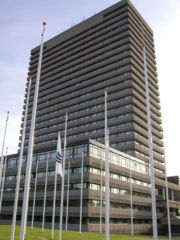
EPO Hague branch (wiki)
Briefly, the changed rule now features a two year window provision within which applicants must file any and all divisional applications based off of an original application.  Two distinct situations are envisioned that will trigger the two year window.  In one circumstance, if the EPO does not make an objection based on unity of invention the two year window starts on the date of the first communication from the examining division.  In the other circumstance, if the EPO raises an objection based on a lack of unity, the two year window starts on the date of the first communication from the EPO which asserts that the claims encompass more than one invention (except when it acts as the International Search Authority).

The effective date of the rule change is expected to be April 1, 2010, and will include a six-month grace period for filing of divisional applications that would fall outside of the two year window provision.  The EPO is also expected to provide further clarifications regarding this rule over the course of the next year.

Posted in

4 responses to “Changes Coming to Divisional Application Practice in Europe”

  1. Humorless Democrat Avatar
    Humorless Democrat

    I bet that in the pro-bureaucrat, anti-democratic EU there won’t be so much as a whimper about this, since complaining won’t do any good anyway.

    Like

  2. Derek Avatar
    Derek

    What is interesting about this change is the “abuse” it is intended to discourage – a de facto continuation practice in the EPO where one could file a divisional application that is identical – claims and all – to the parent when the parent was about to die (final refusal), and just pick up the “divisional” and have another bite at prosecution of the same case.

    Like

  3. Chris Singer Avatar
    Chris Singer

    H. Democrat & Derek:
    This change, if enacted, will certainly require EP applicants to rethink prosecution strategy and prosecution budgets (potential simultaneous filing and prosecution of multiple DV applications). This rule change sounds eerily similar to what Judge Bryson outlined as a potential solution to the Rule 78–35 USC 120 conflict in his concurring opinion in the Tafas v. Doll appeal.
    I have no idea if there exists any procedure for challenging such actions of the EPO Administrative Council. If one does exist, perhaps some entity will give it a shot.
    Thanks for the comments.
    Chris

    Like

  4. gusarapez Avatar
    gusarapez

    Could you imagine the Board of Directors of Sony being formed of the presidents of Philips, Fujitsu, Hitachi and similar? One could imagine that, under this situation, the decisions taken by the Board of Directors would not particularly favour Sony.
    A similar situation happens at the EPO as the Administrative council is formed by the Directors of the National Patent offices, most of which consider the EPO as a competitor which is going to leave the examiners in the national offices out of work since the national application is going to disappear in favour of first filings before the EPO.
    Having this in mind, it is no wonder that the AC enacts decisions that are so counterproductive to the industry.

    Like

Leave a comment