
Court Finds That HDI’s Glucometer Does Not Infringe Roche Patent
By Robert Dailey

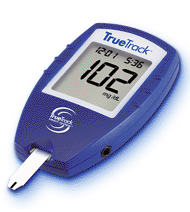
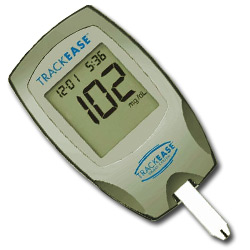
A District Court in Indianapolis ruled last week that Home Diagnostics’ TrueTrack® and TrackEASE® blood glucose monitoring systems do not infringe U.S. Patent No. 5,366,609, owned by Roche. The lawsuit had pitted Roche, one of the leaders in the medical diagnostics industry, against a discount seller of competing products.
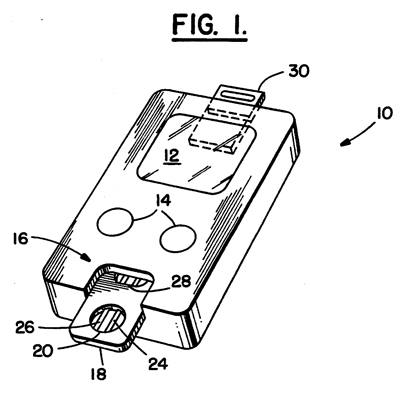
The Roche patent is directed to a biosensing meter that has a pluggable ROM key. The pluggable key contains data that enable the meter to perform certain test functions. The asserted claim contained several means-plus-function elements. The case largely turned on the District Court’s construction of these elements (see Court’s Order on Claim Construction).
In typical claim construction, courts should resist reading limitations from the specification into the claims. The text of the claims establishes their scope. If the accused device falls within the scope of the claim’s periphery, the device infringes.
But the infringement analysis differs for means-plus-function claims. "Literal infringement of a means-plus-function claim limitation requires that the relevant structure in the accused device perform the identical function recited in the claim and be identical or equivalent to the corresponding structure in the specification." Even for doctrine of equivalents (DOE) infringement of a means-plus-function limitation, the accused device must "perform the identical function in substantially the same way, with substantially the same result."
Means-plus-function claims can ease some of the headaches of patent prosecution, but they can come back to bite patentees when they try to enforce the claims against an accused infringer. In drafting means-plus-function claims, patentees should be careful to: (i) define the function very broadly, and (ii) provide a wealth of embodiments that can serve as corresponding structures. Otherwise, would-be licensees may find little difficulty designing around the claimed invention.
In this instance, the Court’s claim construction left Roche with relatively narrow claims that had little power to exclude potential infringers.
Roche Diagnostics Corp. v. Home Diagnostics, Inc., 04-cv-1187-LJM-JMS (S.D. Ind. 2007).
Robert Dailey, Ph.D., is a physical chemist and a third-year law
student at the University of North Carolina at Chapel Hill. Dr. Dailey
was a member of MBHB’s 2006 class of summer associates, and is a
regular Patent Docs contributor.
 Patent Docs
Leave a comment