
Five years ago, reports from the University of Minnesota promised to reconcile the budding science of human stem cell biology with the restrictive regulations the Bush administration had imposed on federally funded embryonic stem cell research. These reports indicated that adult stem cells, specifically hematopoietic stem cells that are among the most plentiful and easily harvested, could be induced to grow into a variety of different tissues, including nerve, heart, lung, and liver tissue.
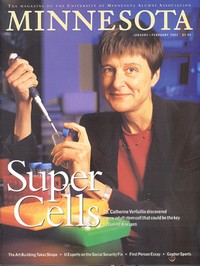
This early promise seems to have evaporated in the face of further research. Indeed, a panel of scientific experts comprised of Minnesota faculty has concluded that the initial studies were "significantly flawed" and their conclusions incorrect. The work was performed by Dr. Catherine Verfaillie when she was on the Minnesota faculty. Although Dr. Verfaillie, now at the Catholic University of Leuven in Belgium, maintains that the basic conclusions of the work are sound (and there has been no allegations of misconduct), others are less sure. And even Dr. Verfaillie acknowledges that there were flaws in how the early studies were performed.
These criticisms of the work are bolstered by the failure of others to replicate Dr. Verfaillie’s results. However, adult stem cells are notoriously difficult to work with, which would account for these negative results. Dr. Verfaillie’s reputation as an "impeccable" and "careful" scientist, according to Dr. Diane Krause of Yale University, have convinced many in the stem cell community that her work will ultimately be vindicated.
For now, however, the only reliable source of stem cells for a wide variety of different tissues are those derived from the inner cell mass of human embryos. In the face of the continuing restrictions on federal funding for this research (President Bush having vetoed a bill that would have lifted these restrictions less than a year ago), states such as California and private entities such as Stanford University have mounted extensive efforts to fund embryonic stem cell research. It is indisputable that the federal restrictions have retarded stem cell research in the U.S., driven scientists and technology overseas, and injured American competitiveness in this new biotechnology frontier. These recent conclusions reduce the possibility that a politically safe "middle ground" may exist that could reverse some of these negative trends in a way acceptable to the more dogmatic of our political leaders and their constituencies.

 Patent Docs
Leave a comment